Jim Thompson House guide: the Thai silk legend's home
Bangkok: Jim Thompson House and Baan Krua Community Tour
What is the Jim Thompson House?
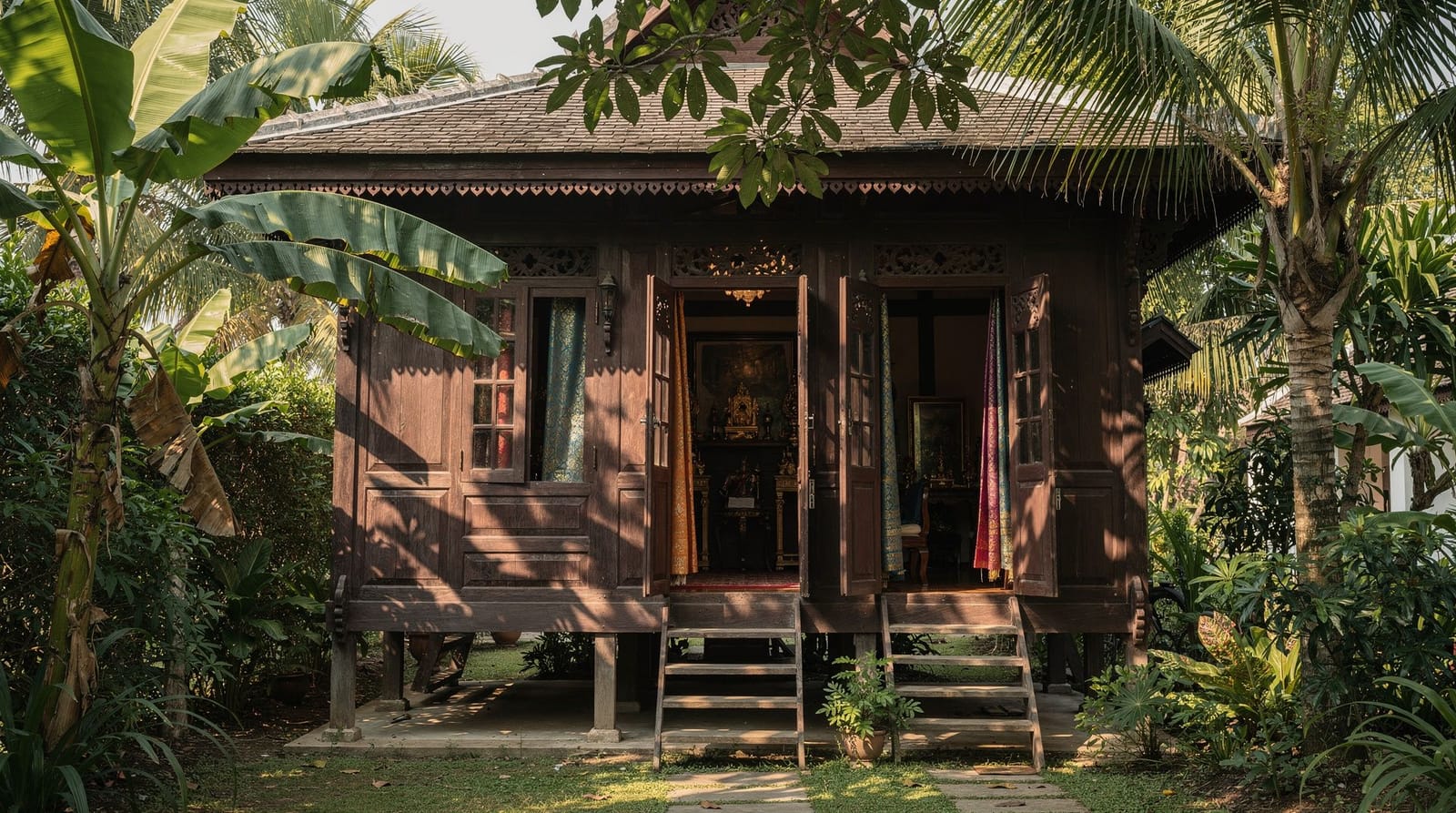
The Jim Thompson House is a museum in central Bangkok built from six traditional teak houses, the former home of the American who revived the Thai silk industry after World War II and then mysteriously vanished in Malaysia in 1967. You visit by guided tour through the house and its Asian art collection, set in a lush garden beside a canal. Entry is around 250 THB and it is a short walk from National Stadium BTS.
The Jim Thompson House is the most atmospheric small museum in Bangkok — a cluster of six traditional teak houses set in a lush canal-side garden, the former home of the American who revived Thai silk and then vanished without trace. It is a green, shaded oasis in the middle of the city’s shopping district, told through a guided tour of beautiful architecture, Asian art and one of Asia’s great unsolved mysteries. This guide covers the story, the tickets, the tour, and how to visit.
At a glance
| Tickets | ~250 THB adult; discount for ages 10–21 |
| Hours | Daily, roughly 10:00–17:00 |
| Getting there | National Stadium BTS (Silom Line), short walk down Soi Kasemsan 2 |
| Time needed | 1–1.5 hours (guided tour ~30-40 min, plus garden and shop) |
| Tour | Compulsory guided tour to see the house interior, included in the ticket |
Jim Thompson was an American architect who served in the OSS (a forerunner of the CIA) in Southeast Asia during World War II. He stayed on in Bangkok afterwards and recognised the dormant potential of Thailand’s hand-woven silk, then a fading cottage craft. He organised the weavers, improved the dyes and designs, and built Thai silk into an internationally famous luxury product — supplying, among others, the costumes for the Broadway musical The King and I.
The house and the man
In 1959 Thompson assembled his home from six old teak houses he bought and relocated from around the country — including some from Ban Krua, the Muslim silk-weaving community just across the canal whose weavers had helped build his business. He combined them, in traditional style raised on stilts, into a single elegant residence arranged around a garden, and filled it with his collection of Southeast Asian art, antiques and Buddha images.
The house is preserved as he left it. Thompson’s story took its famous turn in 1967, when he disappeared while out walking in the Cameron Highlands of Malaysia during a holiday. No trace of him was ever found, and theories — accident, tiger, abduction, espionage — have circulated for decades. The mystery is part of what draws visitors, told as part of the tour. For more on his silk legacy, see the Jim Thompson Thai silk guide.
The guided tour
Admission to the house interior is by guided tour only, included in your ticket and offered in several languages. A guide walks you through the teak rooms — the placement of the buildings, the art and antiques, and Thompson’s life and disappearance — in about 30-40 minutes. The garden, canal frontage, silk shop, café and restaurant are open to explore on your own before or after.
A deeper experience adds the silk-weaving community across the water: a Jim Thompson House and Ban Krua tour takes you to the Muslim weavers’ neighbourhood where the silk story began. If transport is a concern, a Jim Thompson House visit with transfers handles the logistics, and food-lovers can pair it with a Jim Thompson House visit with a cooking class.
Tickets, hours and getting there
Entry: around 250 THB (discount for ages 10–21) Hours: roughly 10:00-17:00 daily Nearest transit: National Stadium BTS (Silom Line), a short walk; or Saen Saep canal boat to Hua Chang pier
The house is tucked down a quiet lane (Soi Kasemsan 2) off Rama I Road, near the MBK and Siam shopping district — very central and easy to combine with a day around Siam. See the Siam-Ratchaprasong destination guide, the BTS Skytrain guide, and the iconic landmarks of Bangkok guide.
How long to spend and what else is there
Allow about 1 to 1.5 hours: the house tour is 30-40 minutes, plus time for the garden, the silk shop, and the café or restaurant. The on-site Jim Thompson shop sells scarves, fabric and homeware — a good place to buy authentic Thai silk as a quality souvenir, though at premium-brand prices. See the best souvenirs in Bangkok guide and the Bangkok shopping guide for more.
The house is a genuinely calming green contrast to the surrounding malls, and for anyone interested in Thai culture, craft and architecture it is one of Bangkok’s most rewarding stops — see the broader Bangkok culture guide.
Photography and etiquette
Photography without flash is generally allowed in the garden, but some guides ask visitors not to photograph inside certain rooms to protect light-sensitive art — follow your guide rather than assuming. There is no strict dress code, but modest clothing suits the setting. Groups move together, so arrive on time; latecomers may wait for the next slot.
Which visit option suits you
| Option | Best for | Adds to the standard visit |
|---|---|---|
| Standard entry ticket | Independent visitors on a budget | Just the house, garden and shop |
| House and Ban Krua tour | Anyone wanting the silk-weaving backstory in full | The living weavers’ neighbourhood across the canal |
| House with transfers | Travellers without easy BTS access | Hotel pickup and drop-off |
| House with cooking class | Food-focused itineraries | A hands-on Thai cooking session |
The Ban Krua option above is the deepest way to see it — see the Jim Thompson Thai silk guide for the full weaving-community backstory before you book.
Reading the house as you walk through it
The house rewards a slow eye. Because it was assembled from several older buildings rather than built as one, you can sense the joins: rooflines that step at different heights, rooms that open onto covered terraces, and a layout that feels more like a small village than a single villa. Listen to the guide on why the buildings were raised on stilts and how the timber was fitted together, then look for the same logic in the temples you visit elsewhere. The Wat Pho guide and the best temples in Bangkok make a useful comparison, since religious architecture and domestic architecture share many of the same proportions and decorative habits.
The collection is the other half of the story. Thompson was a collector with a personal eye rather than a museum curator, so the rooms feel lived in: Buddha images, ceramics and antiques arranged the way a host would arrange them for guests. Take a moment in each room to look beyond the guide’s pointing finger. The small details, the way objects sit against dark teak, are what make the place feel like a home that happens to be open to visitors.
Making the most of the garden
Do not rush the garden. It is the part of the visit you control, and it is where the contrast with the surrounding city is strongest. Traffic and shopping-centre noise fade quickly once you are among the plants and the water. Walk the paths slowly, look at the buildings from the outside as well as the inside, and use the canal frontage to understand how the property sat beside the weaving community of Ban Krua on the far bank.
If the heat is wearing you down, the garden is a sensible place to pause before or after the tour. Shade, water and a seat make a real difference on a hot day, and the Bangkok in the rain guide and rainy season guide are worth a look if the weather is unsettled, because much of the visit sits under cover and still works well on a wet day. For a wider look at green space in the capital, the Bangkok parks guide and the Lumphini Park guide show where else to find a break from the concrete.
The silk shop, the café and the restaurant
The silk shop is part of the experience, not an afterthought. It is the most direct way to connect what you have just heard about weavers, dyes and design with something you can touch. Look at the fabrics, compare the weights and finishes, and ask staff to explain what you are looking at before you decide. If you are shopping for gifts, the best souvenirs in Bangkok and the Jim Thompson Thai silk guide will help you judge quality and avoid buying something you will regret.
The café and restaurant on the grounds suit a quiet pause rather than a full food adventure. If food is a main reason you are in Bangkok, save your appetite for the city’s street stalls and markets: the Bangkok street food guide, the what to eat in Bangkok guide and the best food markets cover those far better than any single museum café can.
Building a day around Siam
The house sits at the edge of one of the busiest parts of the city, which makes it an easy anchor for a half day. A sensible shape is to visit the house when you are fresh, then move on to the shopping and entertainment of the surrounding district. The Siam-Ratchaprasong destination guide sets out what is nearby, the best malls in Bangkok helps you choose where to spend the afternoon, and the Pratunam Platinum market guide is an option for bargain hunters who want a very different kind of shopping.
If you are working out how this fits into a larger plan, the one-day Bangkok itinerary and the two-day itinerary show how a short stay can be divided, while the first-timer itinerary and the must-see guide for first-time visitors help you decide how much room a small museum deserves. Travellers staying longer can browse the things to do in Bangkok and the Bangkok with elderly travellers guide if the group includes anyone who needs a calmer, more compact outing.
Why the story still draws people
Part of the appeal is that the place holds two stories at once. One is a business story: a foreigner who saw value in a craft that locals were letting fade, and who gave weavers a market, better materials and a reputation. The other is a human mystery that has never been resolved. A visitor who comes only for the architecture will leave thinking about the disappearance, and a visitor who comes for the mystery will leave appreciating the silk.
It also helps to see the house in its setting. Bangkok has many places that explain Thai history through palaces and temples, such as the Grand Palace guide and the old city Rattanakosin guide. This house tells a quieter, more personal chapter, about trade, craft and an outsider’s life in the city, and that contrast is why it sits so well beside the bigger sights. For the wider cultural background, the Buddhism in Bangkok and Thai customs and etiquette guides are good companions.
Practical habits that make the visit smoother
- Arrive with some margin before your tour slot so you are not hurrying past the first rooms.
- Keep your voice low and follow your guide’s instructions on where to stand and what to photograph.
- Wear shoes that are easy to take on and off, since traditional houses often have their own customs about footwear; ask your guide if you are unsure.
- Carry water and a light layer, because the garden is warm and indoor rooms can feel different.
- Check the temple etiquette and dress code guide for general guidance on respectful clothing, which also suits this house.
- Confirm current prices and opening times before you go, since details can change.
Who will enjoy it most
Some visitors will find this one of the highlights of their trip, others will treat it as a pleasant hour. Knowing which group you belong to helps you plan.
- Culture and craft lovers. The combination of architecture, art and the silk story is exactly the kind of thing you came to Thailand to see. Pair it with the Bangkok culture guide and the Bangkok Art and Culture Centre guide for a day built around creativity.
- Shoppers. The silk shop and the nearby malls make a natural pairing, and the visit gives the shopping some context.
- Couples and solo travellers. The calm pace suits both. Solo visitors will find the guided format sociable without being demanding, and the solo travel in Bangkok guide has more ideas for travelling alone.
- Families. Children who enjoy stories will respond to the mystery of the disappearance, although a guided tour in quiet rooms is not for everyone. The Bangkok with kids guide offers more active alternatives for a day that needs variety.
Planning the rest of your trip around it
A small museum like this works best as one piece of a balanced day rather than the whole plan. Pair a calm morning here with something more energetic later: a river trip from the Chao Phraya boats guide, an evening out using the Bangkok at night guide, or a temple route from the temple hopping route. If you are still deciding how long to stay in the city, the how many days in Bangkok and plan a trip to Bangkok pages are the best places to start.
Getting around is simple once you have your bearings. The getting around Bangkok guide compares the main options, and the Rabbit card guide is worth reading if you plan to use the BTS several times in a day.
Is it worth it?
Frequently asked questions about Jim Thompson House guide: the Thai silk legend's home
How much is the Jim Thompson House and what are the hours?
Who was Jim Thompson?
Do you have to take a guided tour at Jim Thompson House?
Why is the Jim Thompson House made of teak?
How do you get to the Jim Thompson House?
How long do you need at the Jim Thompson House?
Is the Jim Thompson House worth visiting?
Can you buy Thai silk at the Jim Thompson House?
Top experiences
Bookable activities with verified prices and instant confirmation on GetYourGuide.