BTS Skytrain guide: lines, fares and how to ride it
Bangkok: Chao Phraya River Hop-On Hop-Off Boat Pass
How does the BTS Skytrain work in Bangkok?
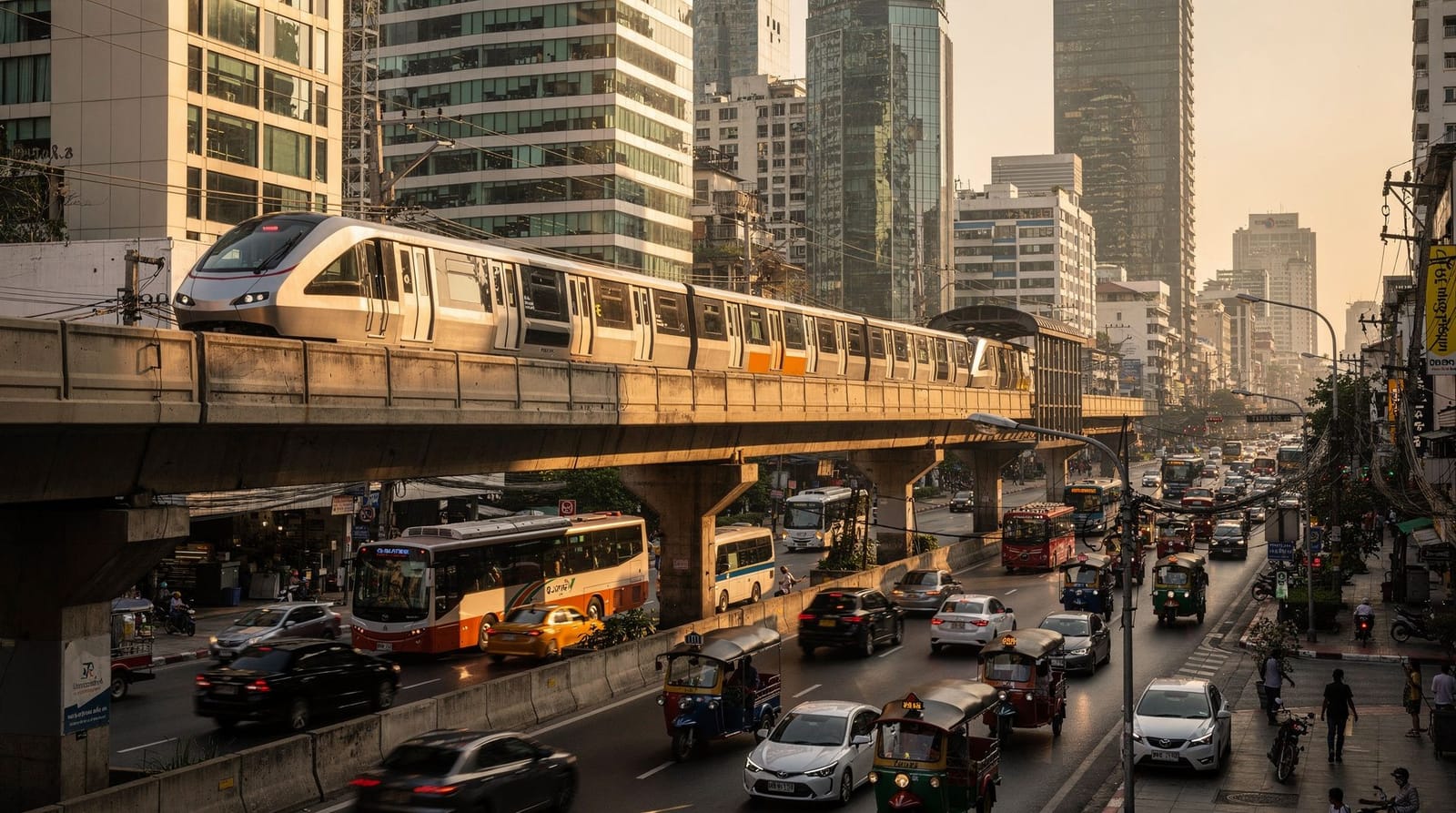
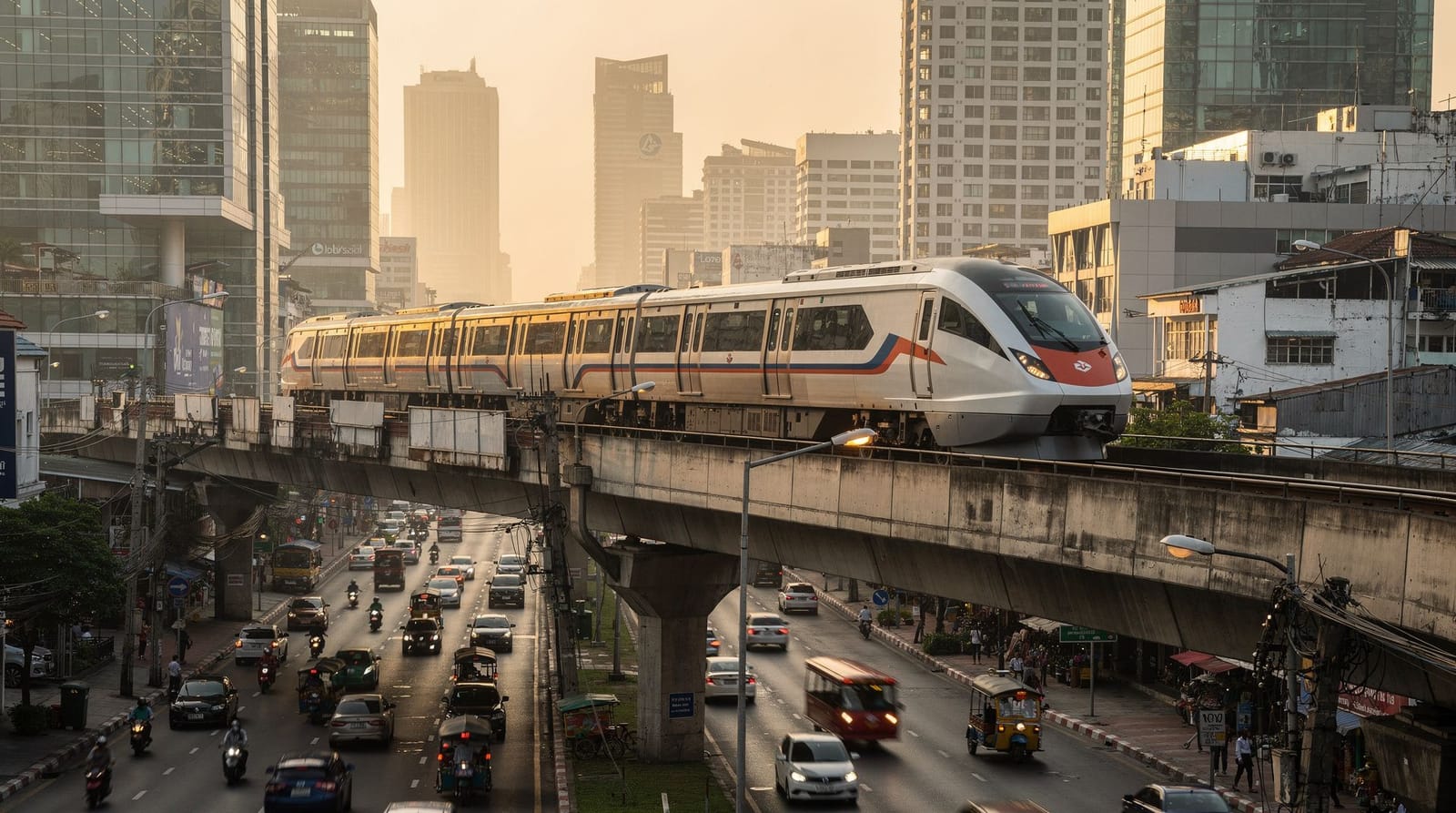
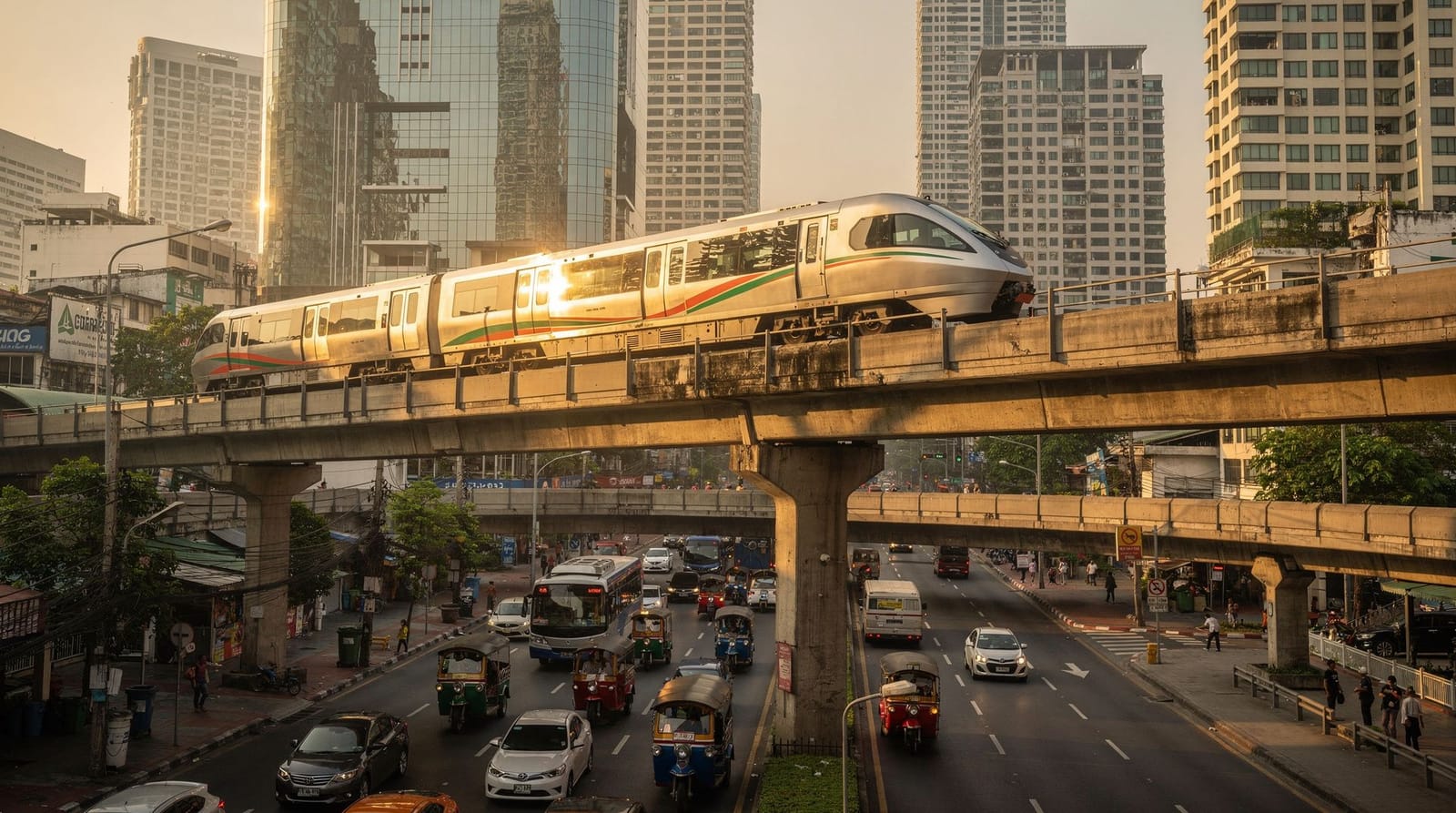
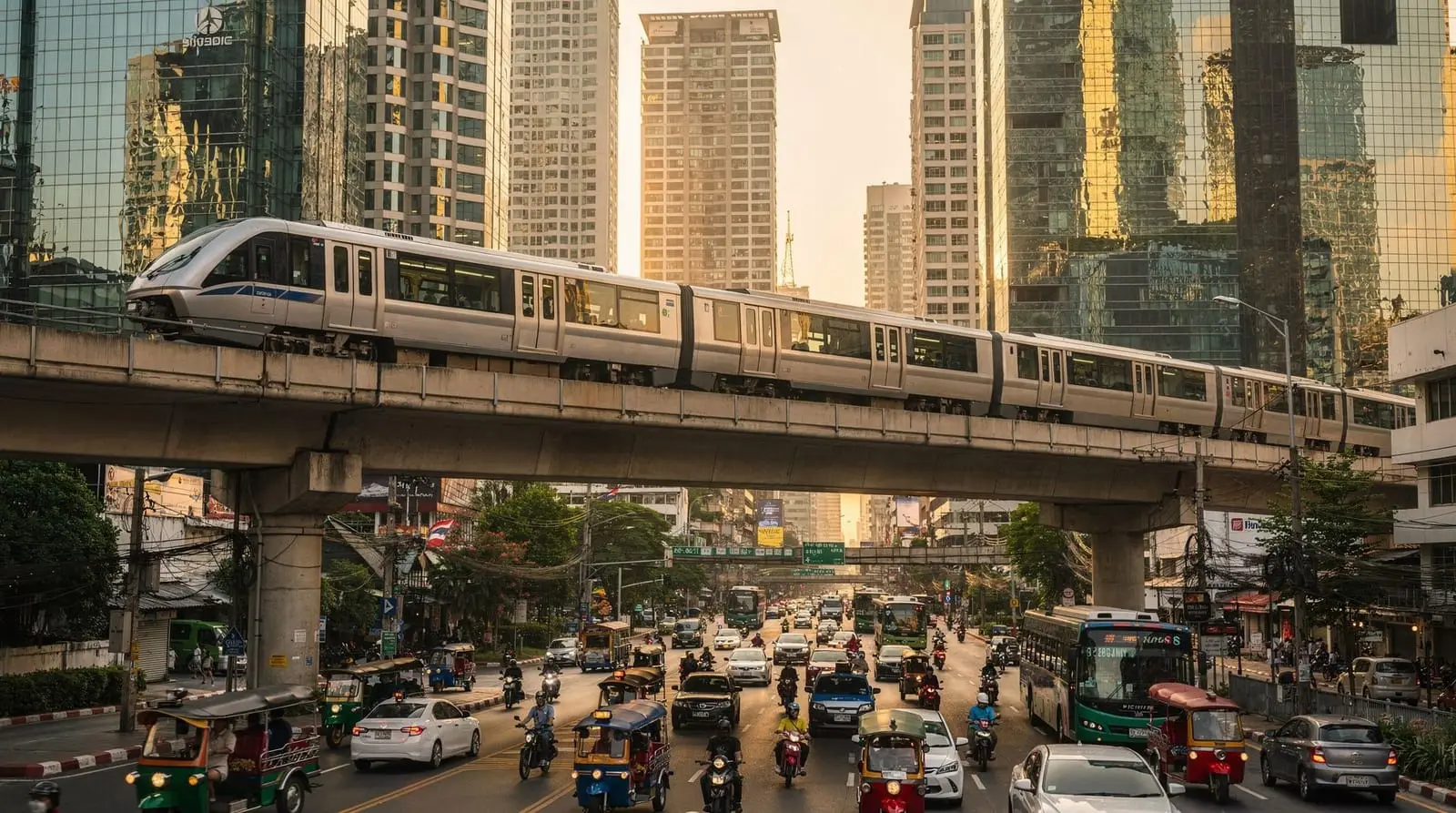
The BTS Skytrain is Bangkok's elevated rail network with two main lines — the light-green Sukhumvit Line and the dark-green Silom Line — that interchange at Siam station. You buy a single-journey ticket from a machine (17–62 THB) or tap through with a stored-value Rabbit Card. Trains run roughly 06h00 to midnight every few minutes, above the traffic, covering the shopping, hotel and nightlife heart of the city.
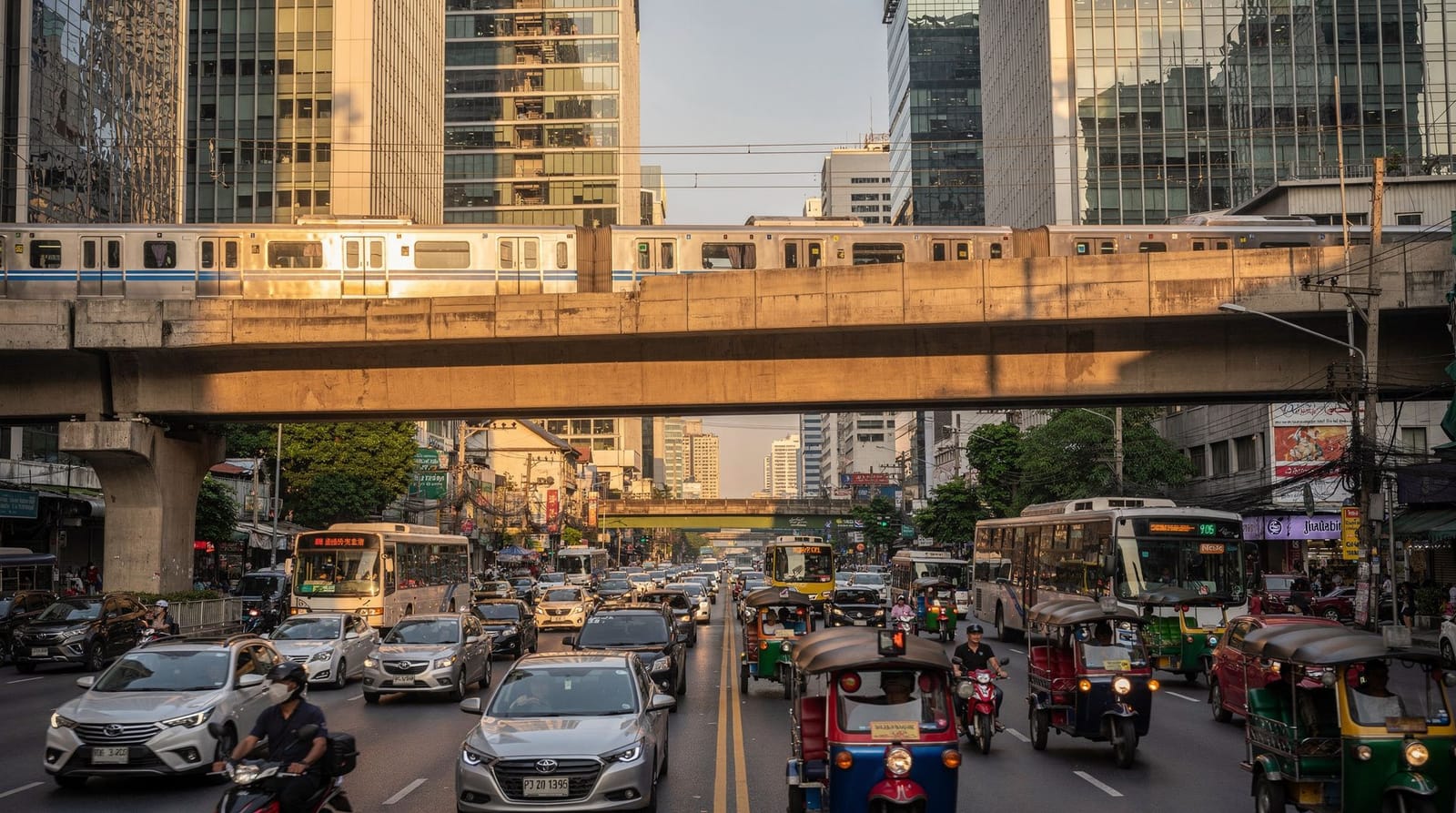
The BTS Skytrain is the backbone of independent travel in central Bangkok. Elevated above the traffic-choked roads, air-conditioned, frequent and cheap, it turns the modern half of the city — the shopping, the hotels, the rooftop bars and the nightlife — into a quick and predictable network. Learn its two lines and one interchange and you’ve solved most of your Bangkok logistics.
| Where | elevated track above central Bangkok, two lines |
| Cost | 17–62 THB per journey, distance-based |
| Time needed | trains every few minutes, most rides 10–30 min |
| Getting there | station entrances at street level, stairs/escalators up |
| Best time | ride 10h00–16h00 or after 20h00 to avoid rush-hour crush |
This guide breaks down the lines, the fares, the ticketing, the stations that matter for sightseeing, and the practical habits that make riding it effortless. It pairs with the getting around Bangkok overview, which compares the BTS against the MRT, river boats, Grab and taxis.
The two lines and the one interchange
The BTS core network is beautifully simple: two lines that cross once.
The Sukhumvit Line (light green) is the longer and busier of the two. It runs broadly north to south-east: from Mo Chit in the north (next to the MRT interchange and Chatuchak Weekend Market), down through Siam (the central hub), and out along the entire length of Sukhumvit Road — Nana, Asok, Phrom Phong, Thong Lo, Ekkamai, On Nut and beyond into the eastern suburbs. This is the line you’ll ride to reach most modern hotels, the malls of Sukhumvit, and the bar districts of Thonglor and Ekkamai.
The Silom Line (dark green) runs from National Stadium (next to MBK), through Siam, then down to Sala Daeng (for Silom Road and Patpong night market), Chong Nonsi, Saphan Taksin (the all-important river-boat pier), and across the river into Thonburi to Wongwian Yai and onward.
The two lines interchange at Siam station — and only Siam. To switch from one to the other you simply walk between the platform levels inside the same station; you don’t exit the gates or pay again. Because Siam sits at the centre of the shopping universe (Siam Paragon, Siam Center, MBK across the road), it’s also the station where most first-time visitors orient themselves.
Fares and how to pay
BTS fares are distance-based, ranging from about 17 THB for a hop of one or two stations to 62 THB for the longest cross-network journeys — roughly USD 0.50 to 1.90. You have two practical ways to pay:
Single-journey tickets. Buy from the machines in every station concourse. Touch the screen, select your destination station on the map, insert coins or notes, and collect a plastic token card. Tap it at the gate to enter and feed it into the slot to exit. The machines have an English option; staff at the booth can help and break large notes.
Rabbit Card. This is the stored-value contactless card you tap at the gate, skipping the queue and the coin-fumbling. You load it with credit at the ticket booth and top up as needed. For a visitor riding the BTS several times a day across several days, the Rabbit Card is a real convenience — though it charges the same fares as single tickets, so the saving is time, not money. The full mechanics, where to buy it and whether it’s worth it for your trip are in the Rabbit Card guide.
Note the key limitation: the Rabbit Card works on the BTS only. The MRT subway uses an entirely separate token-and-card system.
Stations that matter for sightseeing
Not every station is equal for a visitor. These are the ones you’ll actually use:
- Siam — the central interchange and shopping epicentre. Siam Paragon, Siam Center, Siam Discovery and (across the road) MBK. Everyone passes through here.
- Chit Lom / Ratchadamri — for the Erawan Shrine, CentralWorld, and the Ratchaprasong shopping district.
- Saphan Taksin — the single most important station for sightseeing, because it connects directly to Sathorn Pier and the Chao Phraya river boats that serve the Grand Palace, Wat Pho, Wat Arun and Chinatown.
- Sala Daeng — for Silom and Sathorn, the Patpong night market, and an interchange to the MRT Blue Line at Si Lom.
- Asok — Sukhumvit’s central node, with an interchange to the MRT at Sukhumvit, plus Terminal 21 mall and the Nana nightlife area.
- Phrom Phong — for the EmQuartier and Emporium malls and the upscale Phrom Phong neighbourhood.
- Mo Chit — northern terminus, interchange to the MRT, and the gateway to Chatuchak Weekend Market.
- Ekkamai — for the Eastern Bus Terminal (buses to Pattaya) and the Thonglor–Ekkamai bar scene.
How to ride it like a local
A few habits make the BTS painless. Stand on the platform behind the marked lines and let passengers off before boarding. Keep right on escalators so people can walk on the left. Move into the centre of the carriage rather than blocking the doors. The priority seats at car ends are for monks, the elderly, pregnant women and people with disabilities — give them up readily.
Avoid the crush at rush hour if you can: roughly 07h00–09h30 in the morning and 16h30–19h30 in the evening, the central stations and trains are genuinely packed, and at Siam you may have to let one or two trains pass before you can squeeze on. Travelling mid-morning, midday or after 20h00 is far more comfortable.
There’s no eating or drinking on the trains or platforms — it’s enforced and locals respect it. And keep your token or Rabbit Card handy: you tap in and tap out, and the gate won’t release you on exit without it.
The BTS plus river combination
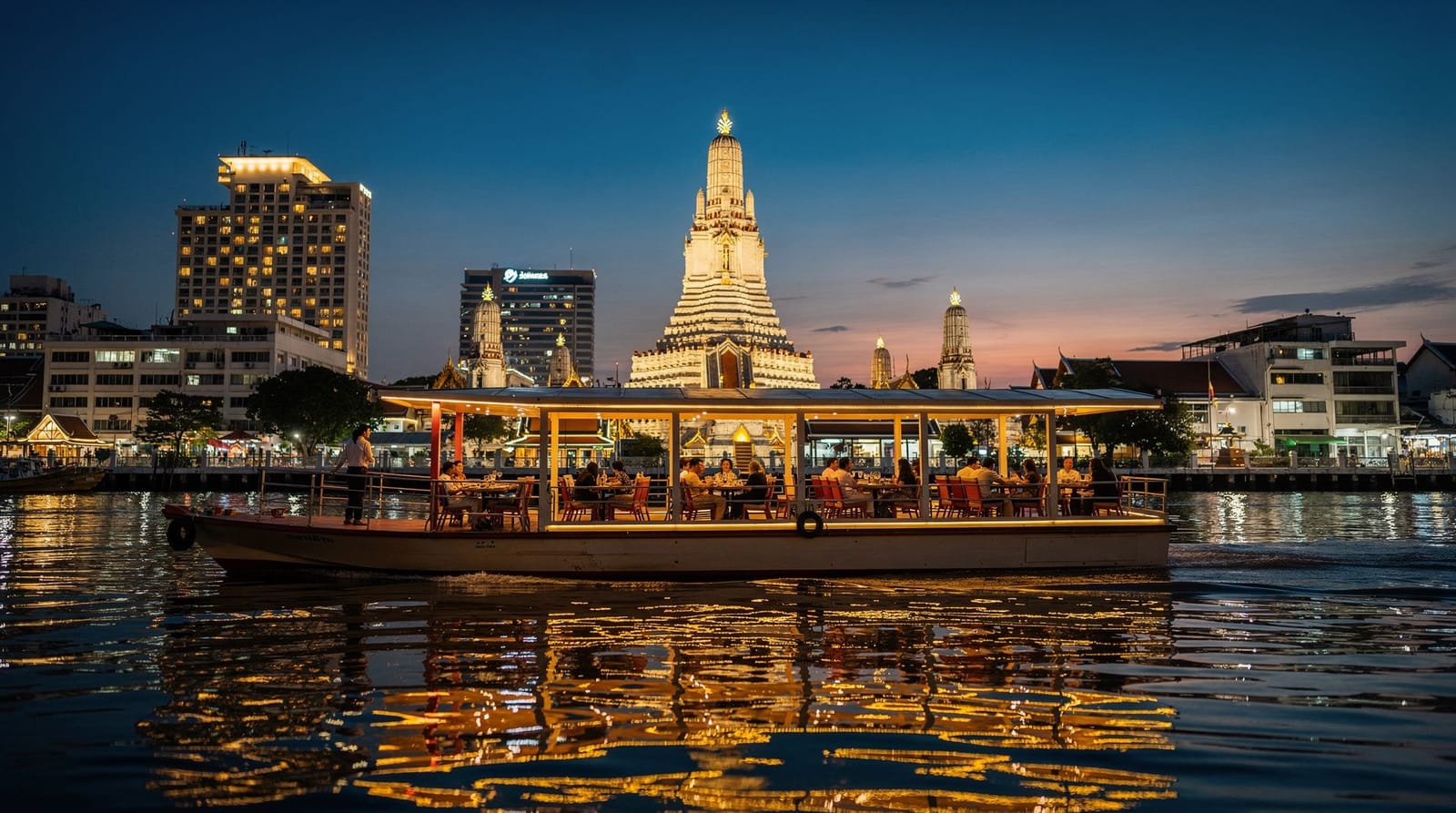
The BTS doesn’t reach the historic Old City — and that’s by design, since the river already serves it. The standard move for temple sightseeing is to ride the Silom Line to Saphan Taksin, walk two minutes down to Sathorn Pier, and board a Chao Phraya boat. From there the river delivers you to Wat Pho, the Grand Palace, the cross-river ferry to Wat Arun, and onward to Chinatown and the flower market.
This BTS-to-boat handoff is the most useful single piece of Bangkok transport knowledge, and it’s why Saphan Taksin punches above its weight. For a relaxed temple day, a Chao Phraya hop-on-hop-off river boat pass picks up from the same pier and lets you cruise the riverside sights at your own pace.
BTS and the airport
The BTS connects to the Airport Rail Link at Phaya Thai station (Sukhumvit Line). Arriving at Suvarnabhumi, you take the Airport Rail Link train to Phaya Thai in about 30 minutes, then transfer to the BTS to reach your hotel — a fast, traffic-proof route into town. The full options, including when a taxi beats the train, are in the Suvarnabhumi airport to city guide. Note that the budget airport, Don Mueang, is not on the BTS — see the Don Mueang guide for that.
BTS versus the other ways to get around
| Mode | Cost | Speed | Best for |
|---|---|---|---|
| BTS Skytrain | 17–62 THB | fast, dodges traffic | central sightseeing and malls |
| MRT subway | 17–70 THB | fast, dodges traffic | Chinatown, old-city fringes |
| Grab / taxi | 60–200+ THB | slow in traffic, fast off-peak | door-to-door, luggage, late nights |
| River boat | 15–40 THB | scenic, moderate speed | temples and the Old City |
None of these fully replaces the others — most visitors end up combining BTS with a Grab for the last mile and a river boat for the temples. The getting around Bangkok guide walks through when each mode wins, and the Grab, taxi and tuk-tuk guide covers fares and meter etiquette for the road-based options above.
Landmarks you can reach directly from a BTS station
A few sights sit close enough to a BTS exit that no further transport is needed. Chong Nonsi puts you at the foot of the Mahanakhon SkyWalk, Thailand’s tallest building. National Stadium is a short walk from the Jim Thompson House museum and its silk shop. Mo Chit is the gateway not just to the MRT interchange but to Chatuchak Weekend Market, best visited Saturday or Sunday. Knowing these direct station-to-sight links saves a Grab fare and a wait in traffic on days when you are moving between several attractions.
Budgeting BTS fares for a multi-day trip
A visitor riding the BTS four or five times a day for a week can expect to spend somewhere between 150 and 300 THB a day on fares alone, depending on how far each trip runs. That is modest against a typical daily budget, but it adds up over a longer stay — the Bangkok travel costs guide breaks down where transport sits relative to food, sights and accommodation, which is useful when deciding whether a Rabbit Card’s convenience is worth the upfront top-up.