Bangkok weather month by month
Bangkok: Chao Phraya Princess Dinner Cruise Ticket
What is Bangkok weather like month by month?
November to February is cool and dry with 22 to 31C days and little rain, the most comfortable months. March to May is hot, peaking at 35 to 40C in April. June to October is the rainy season, with hot mornings and heavy late-afternoon downpours, wettest in September and October. Humidity stays high, 70 to 80 percent, all year.
Bangkok lies at about 14 degrees north, so it is warm to hot every month of the year, with daytime temperatures ranging from a cool-season 22C to a hot-season 40C and humidity that hovers around 70 to 80 percent throughout. The three seasons, cool and dry from November to February, hot from March to May, and rainy from June to October, shape what each month actually feels like on the ground. This guide walks through all twelve months in 2026 with real temperatures, rainfall patterns and practical notes, so you can match your dates to your tolerance for heat, rain and crowds.
| Best months | December–January |
| Hottest month | April (35–40C) |
| Wettest month | September |
| Humidity | 70–80% year-round |
| Best for outdoor days | November–February |
The year at a glance
| Month | Typical high | Rain | Crowd level |
|---|---|---|---|
| January | 26–31C | Minimal | Peak |
| February | 28–33C | Minimal | High |
| March | 33–36C | Occasional shower | Moderate |
| April | 35–40C | Occasional shower | High (Songkran) |
| May | 34–37C | First monsoon rains | Moderate |
| June | ~33C | Frequent afternoon | Low |
| July | 32–34C | Frequent afternoon | Low |
| August | 32–34C | Frequent afternoon | Low |
| September | ~31–33C | Heaviest of the year | Lowest |
| October | ~31–33C | Heavy, easing late-month | Low |
| November | 28–31C | Easing, mostly dry | Rising |
| December | 26–31C | Minimal | Peak |
How to read Bangkok’s weather
Two numbers matter most: temperature and rain timing. Temperature climbs from a comfortable cool-season floor in December and January to a punishing peak in April, then eases slightly once the monsoon rains begin to cool things in the afternoons. Rain in Bangkok is rarely an all-day affair. For most of the year, and especially in the monsoon, the pattern is a hot, humid morning, a heavy downpour of roughly an hour in the late afternoon, then a clearing, steamy evening. Humidity is the constant, sitting high enough year-round that even the cool months feel sticky to first-time visitors. For the bigger-picture decision of when to come, pair this with the best time to visit Bangkok guide.
January: cool, dry, peak season
January is the coolest, driest month and arguably the most comfortable. Daytime highs sit around 26 to 31C, mornings can dip to a pleasant 21 to 24C, humidity is at its lowest, and rain is rare. It is ideal for long walking days around the Rattanakosin old city and the temples. The catch is that it is peak tourist season, so the Grand Palace and other top sights are busy and hotel prices are high. Chinese New Year sometimes falls in late January, lighting up Chinatown around Yaowarat.
February: still excellent, slightly warmer
February continues the cool, dry pattern with highs creeping up to 28 to 33C by month’s end. Rain stays minimal and humidity is still manageable. Crowds ease a little from the December and January peak, making February a strong choice for great weather with marginally lower prices. It is a good month for outdoor day trips from Bangkok, from Ayutthaya to the Damnoen Saduak floating market, before the real heat sets in.
March: the heat begins
March marks the turn into the hot season. Highs climb to 33 to 36C, humidity rises, and the midday sun starts to bite, especially in the open courtyards of the temples. It is still essentially dry, with only the occasional shower. The strategy shifts here: sightsee early, build in a midday break, and lean on the Bangkok with a view rooftop bars for cooler evenings. Crowds are moderate and prices sit below the December peak.
April: the hottest month and Songkran
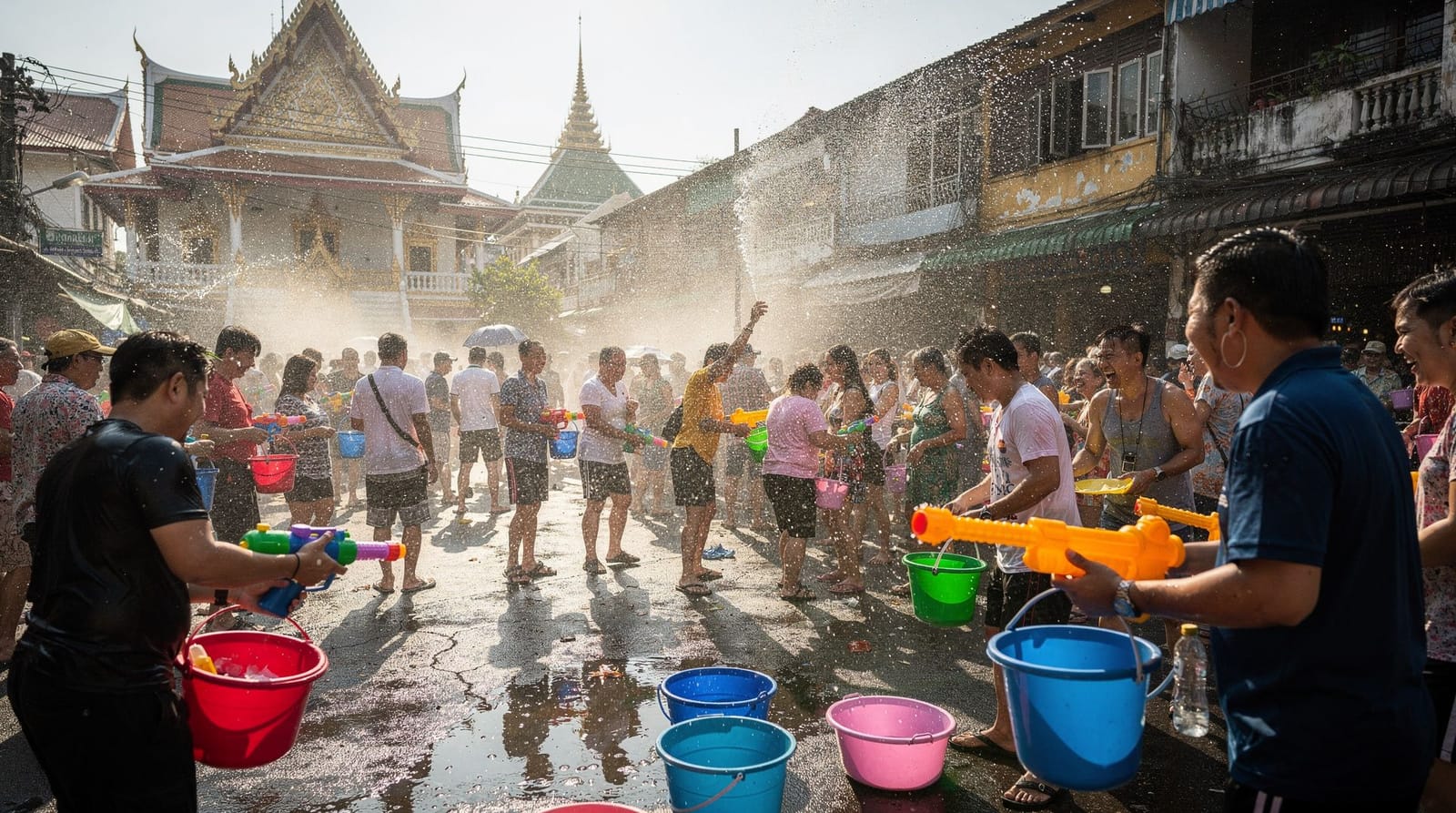
April is the cruellest month for heat, with highs of 35 to 40C and high humidity that makes the air feel hotter still. Midday sightseeing is genuinely exhausting, so plan around it. April also brings the year’s biggest celebration: Songkran, the Thai New Year water festival, runs 13 to 15 April 2026 and turns Khao San and Banglamphu and Silom into city-wide water fights, a brilliant way to cool off. The streets are very crowded, so read the Songkran in Bangkok guide and book accommodation early.
May: hot, with the first rains
May stays hot, with highs around 34 to 37C, but the southwest monsoon usually arrives late in the month, bringing the first proper downpours. These early rains take a little edge off the heat in the afternoons but add humidity. It is a transitional month: still warm enough to need a heat plan, but with rising odds of an afternoon shower. Prices begin to soften as the high season fades.
June: rainy season opens
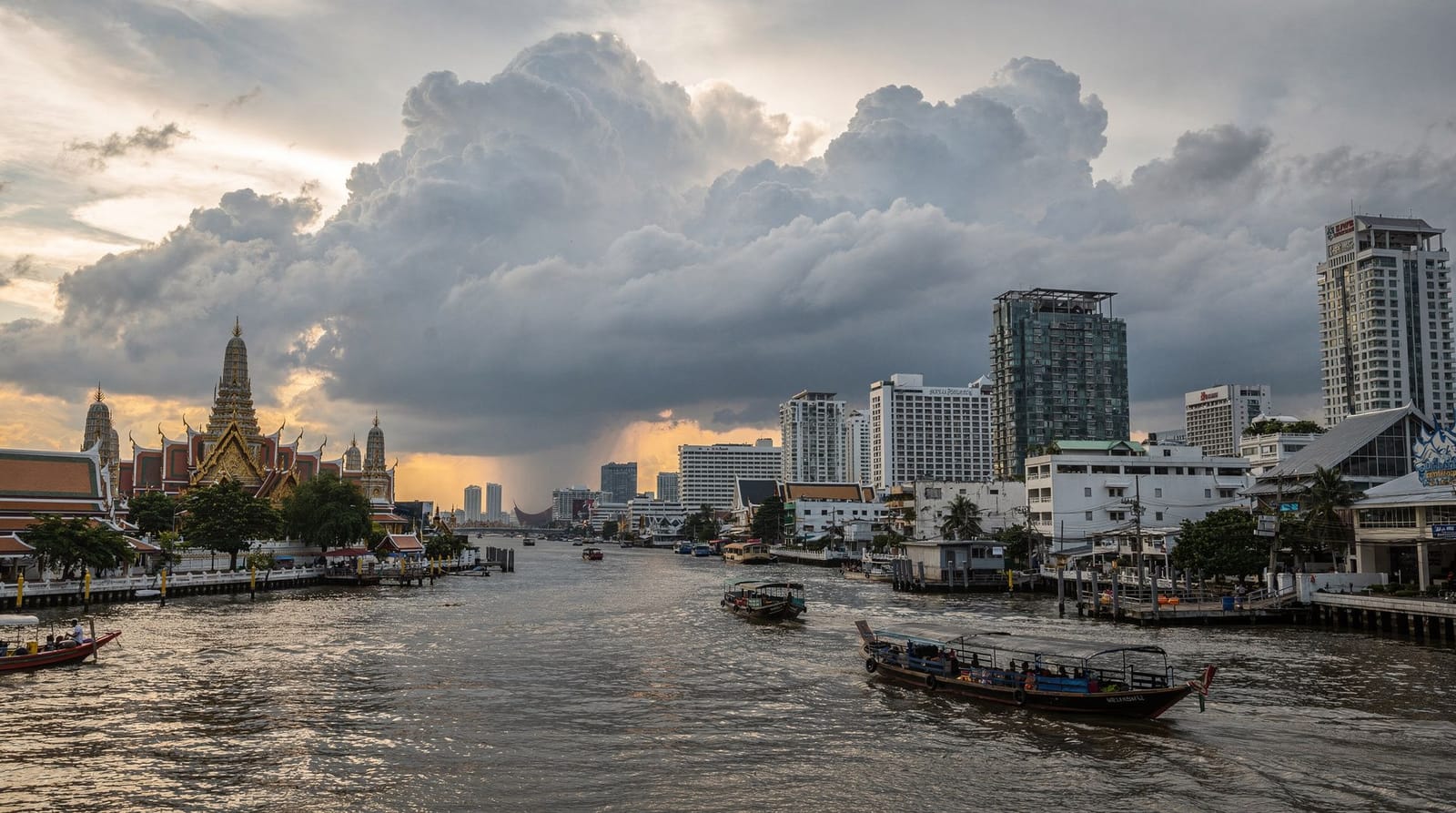
June is the first full month of the rainy season. Expect hot, humid mornings around 33C and frequent late-afternoon downpours, though rarely all day. Mornings are generally still good for sightseeing, with the rain holding off until later. Hotel rates start dropping toward their low-season levels and crowds thin noticeably. The rainy season in Bangkok guide covers how to plan around the showers, and a dinner cruise makes a reliable wet-evening plan:
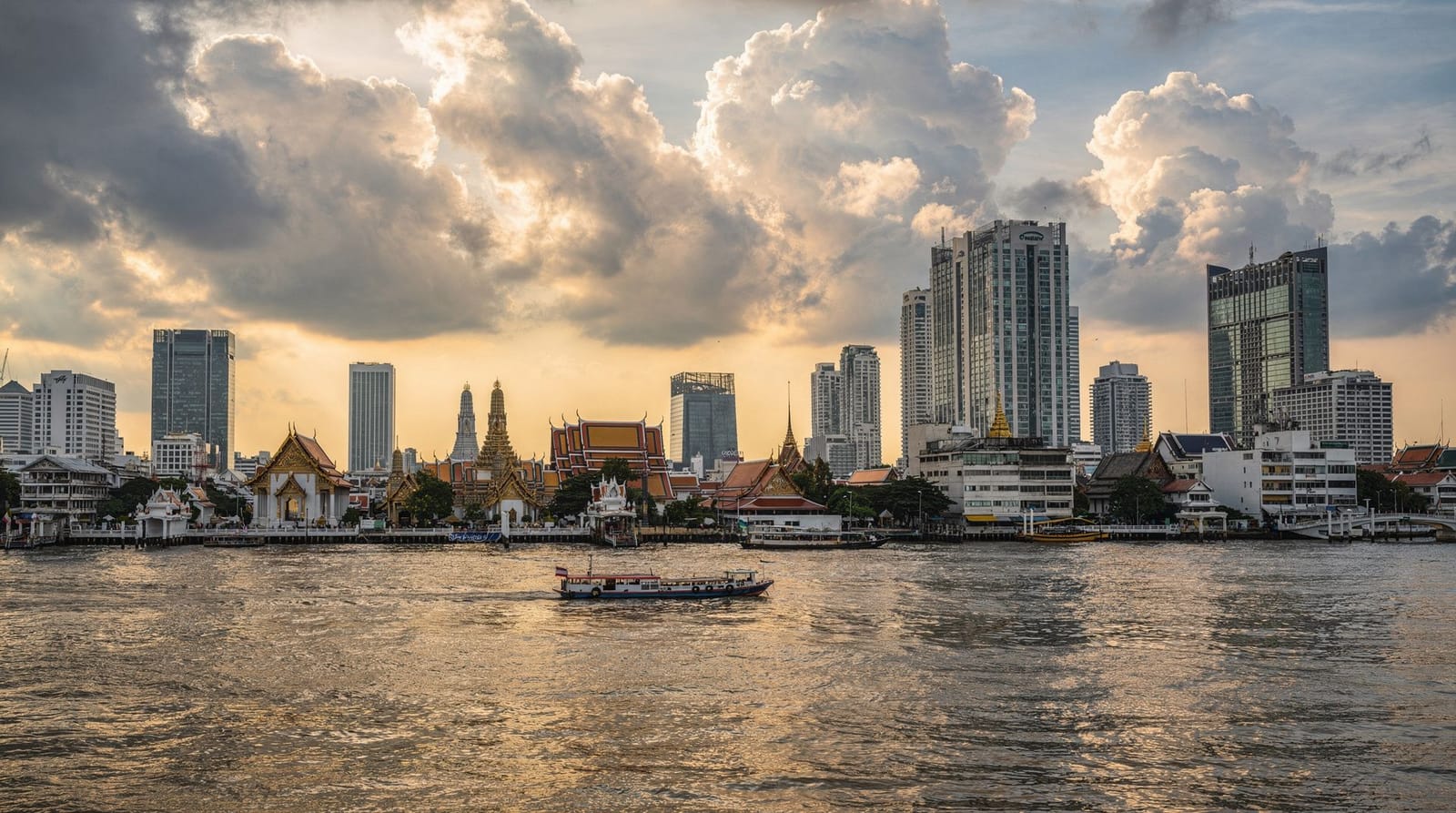
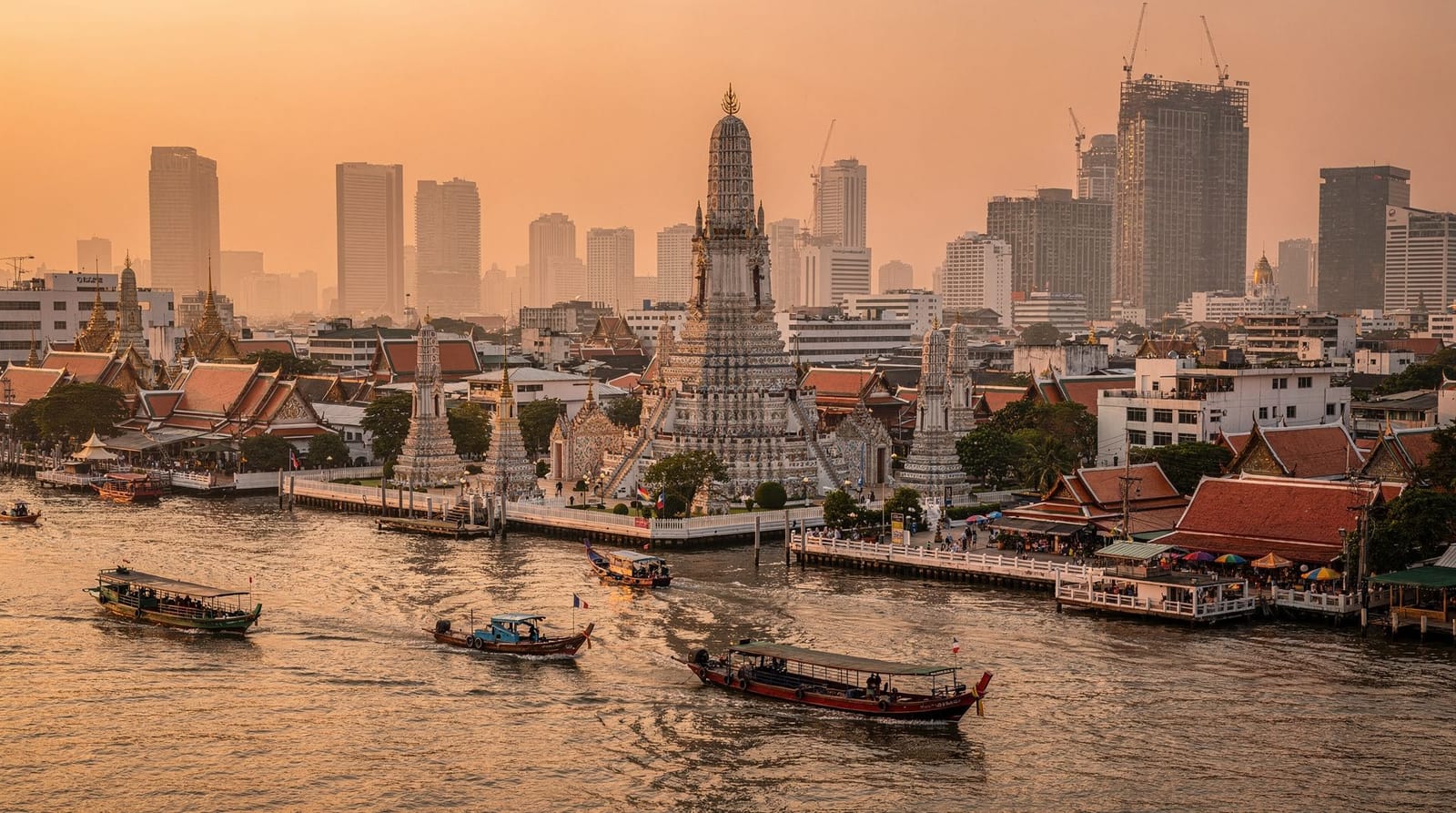
An evening Chao Phraya dinner cruise is a dependable rainy-season plan, since it keeps you covered and the river is at its atmospheric best after dark.
July and August: warm, wet, good value
July and August continue the monsoon pattern, with highs around 32 to 34C and regular late-afternoon rain. They are not the wettest months, but rain is frequent enough that an umbrella becomes a daily companion. The upside is strong: hotel prices are 30 to 50 percent below peak, the Grand Palace and Wat Arun are quiet, and restaurants are easy to walk into. Build indoor options like the city’s malls or the Bangkok in the rain list into the late-afternoon slot.
September and October: the wettest stretch
September is the wettest month of the year, with October close behind. The downpours are heaviest and most frequent now, and some low-lying streets near the river can flood after sustained rain. Mornings are often still usable, but you should plan flexibly and keep indoor backups ready. The reward is the cheapest prices and emptiest sights of the year. October also brings the Vegetarian Festival in Chinatown, a striking culinary event. By late October the rains begin to ease.
November: the monsoon breaks
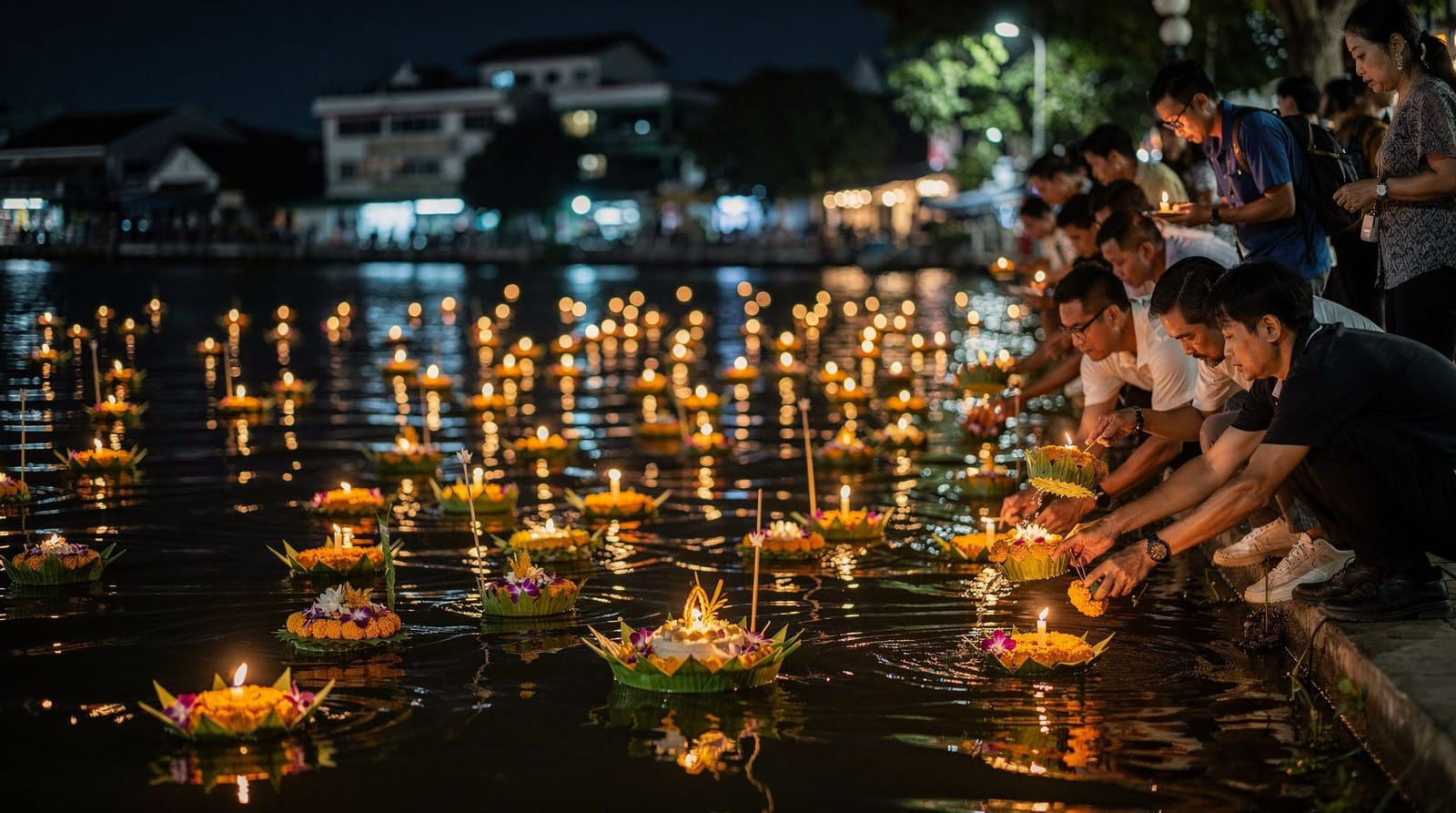
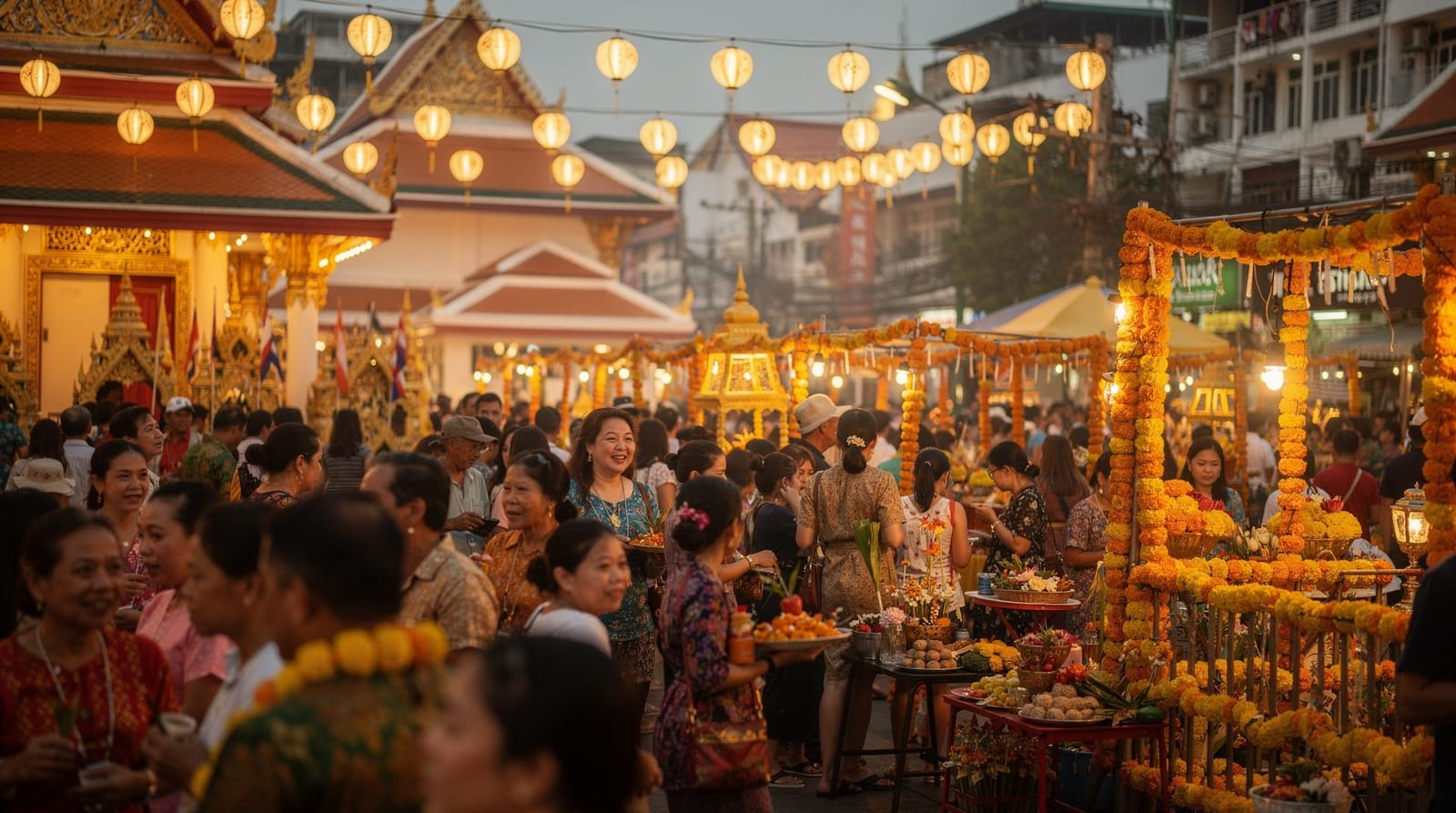
November is the turning point and, for many, the best single month. The monsoon usually breaks in the first half of the month, so the heaviest rain is behind you, while humidity falls and highs settle to a comfortable 28 to 31C. It is the sweet spot before the December crowds. November also carries Loy Krathong, the festival of lights, on 25 November 2026, when decorated rafts float down the Chao Phraya riverside and the city’s canals. See the Loy Krathong in Bangkok guide for the best viewing spots.
December: cool, festive, busiest
December brings the cool, dry season back in full, with highs of 26 to 31C, low humidity and almost no rain, the most comfortable conditions of the year alongside January. It is also the busiest and most expensive month, overlapping with Christmas and New Year. Book hotels and popular tours well ahead. The cooler evenings make December ideal for rooftop bars and outdoor markets.
A quick comparison across the year
If you lay the months side by side, three clear bands emerge. The comfort band, November through February, offers the lowest humidity, the most agreeable temperatures and almost no rain, at the cost of peak crowds and prices. The heat band, March through May, is dry but punishing, with April the standout for raw temperature; it suits travellers who can adapt their schedule around the midday sun and want shoulder-season prices. The rain band, June through October, trades an afternoon umbrella for the steepest discounts of the year and the quietest sights, with September and October the wettest. No month is unvisitable, the question is simply which trade-off suits you, and the best time to visit Bangkok pillar weighs them in full.
Two transitional months deserve special mention because they sit on the seam between bands. May straddles the end of the heat and the start of the rains, so you may get either hot, dry days or the first downpours. November straddles the end of the rains and the start of the cool season, and in most years it lands beautifully on the dry side while still carrying lower prices than December, which is why so many travellers single it out. If your dates are flexible, leaning toward these seams can give you the best of two seasons.
What the numbers mean on the ground
Raw temperatures undersell how Bangkok actually feels, because the humidity is doing so much of the work. A 33C day in the dry cool season feels manageable, while a 33C day in the humid monsoon, or worse a 38C April afternoon, feels considerably hotter than the figure suggests, because sweat does not evaporate efficiently in saturated air. This is why pacing matters more than the headline number: the same temperature is far more tiring in the wet, sticky months. It also explains why the cool season feels so much more pleasant than a two or three degree drop alone would imply, the humidity falls alongside the temperature. Drinking plenty of water, remembering the tap water is not drinkable, and taking regular shade or air-conditioned breaks does more for your comfort than chasing a slightly cooler month.
Packing for the month you choose
The right kit shifts with the season. For the cool months, light layers cover the warm days and the occasional cool evening, plus something for fierce indoor air-conditioning. For the hot months, prioritise loose, breathable, quick-drying fabrics and sun protection. For the monsoon, add a compact umbrella or light rain jacket and quick-drying shoes. The what to pack for Bangkok guide has the full list, and remember the tap water is not drinkable in any month, so plan for bottled water year-round. Once your dates are set, the Bangkok festivals calendar flags any celebrations worth timing around, and the planning a trip to Bangkok guide pulls the logistics together.
Air quality and the burning season
One factor that does not show up on a temperature chart but can shape a trip is air quality. From roughly January to March, agricultural burning across the region and stagnant cool-season air can push Bangkok’s particulate pollution up, with hazy days more common in February and March. It is usually milder in the capital than in northern cities like Chiang Mai, but travellers sensitive to air quality may want to check a pollution index for their dates and pack a mask for the worst days. The rainy season, by contrast, has the cleanest air of the year, as the downpours wash particulates out, one more quiet point in the monsoon’s favour for anyone with respiratory concerns. It is rarely a reason to change your dates on its own, but it is worth being aware of if you are choosing between the cool, dry months.
How day-trip destinations compare
Weather near Bangkok isn’t perfectly uniform, and it’s worth knowing before you commit a whole day to an excursion. Ayutthaya and Kanchanaburi, both inland, follow essentially the same three-season pattern as Bangkok, so the monthly notes above apply directly — just add a little extra shade planning for Ayutthaya’s open temple ruins in the hot season. Pattaya and Hua Hin, both on the coast, run slightly cooler and breezier thanks to the sea, though they share the same rainy-season timing as Bangkok. Khao Yai, at higher elevation inland, is noticeably cooler than Bangkok year-round, sometimes by several degrees, and mornings there in the cool season can feel genuinely chilly by Thai standards — worth an extra layer if you’re visiting between November and February. None of these differences should change which month you choose for the overall trip, but they’re useful for deciding what to pack on the specific day. If a single day trip is the deciding factor in your dates, weight it toward Bangkok’s own pattern first, then adjust the packing list once the destination is confirmed, rather than the other way around.
Sunrise, sunset and daylight
Sitting close to the equator, Bangkok has remarkably stable day length all year, roughly 11 to 13 hours of daylight, so you never face the short winter afternoons of higher latitudes. Sunrise lands around 06:00 to 06:40 and sunset around 18:00 to 18:50 depending on the month, which means you can reliably plan early-morning temple visits and golden-hour river views whatever the season. The practical upshot is that your daily sightseeing window is consistent year-round, and the season changes how you use it, racing the heat in April, dodging the afternoon rain in September, rather than how long it lasts. Evenings come alive after dark in every month, when the night markets and rooftop bars hit their stride and the temperature finally drops.
Frequently asked questions about Bangkok weather month by month
Which months have the best weather in Bangkok?
Which is the hottest month in Bangkok?
Which is the wettest month in Bangkok?
How humid is Bangkok?
Does Bangkok have a winter?
When does the rainy season start and end in Bangkok?
Is December a good month to visit Bangkok?
Top experiences
Bookable activities with verified prices and instant confirmation on GetYourGuide.