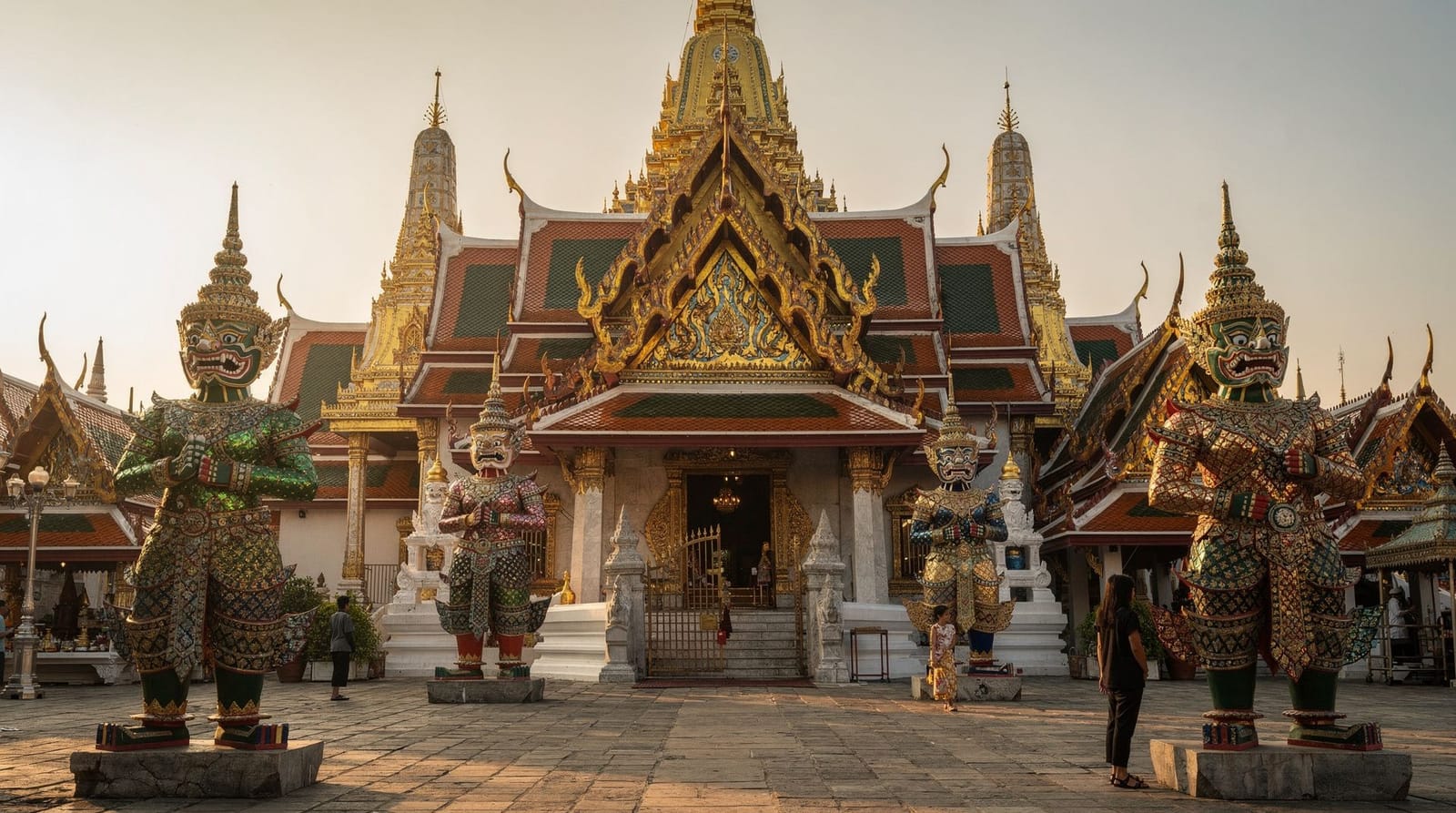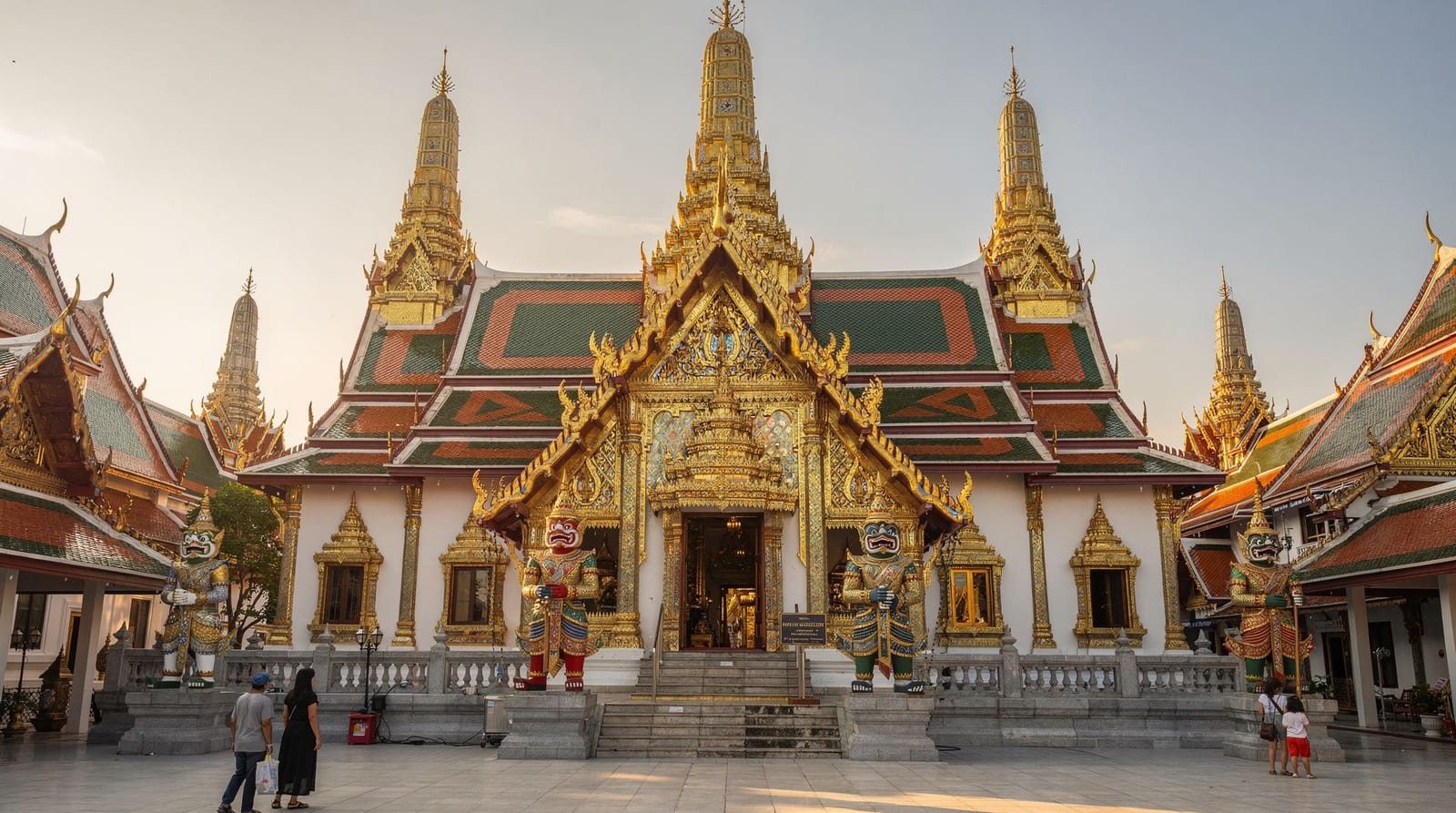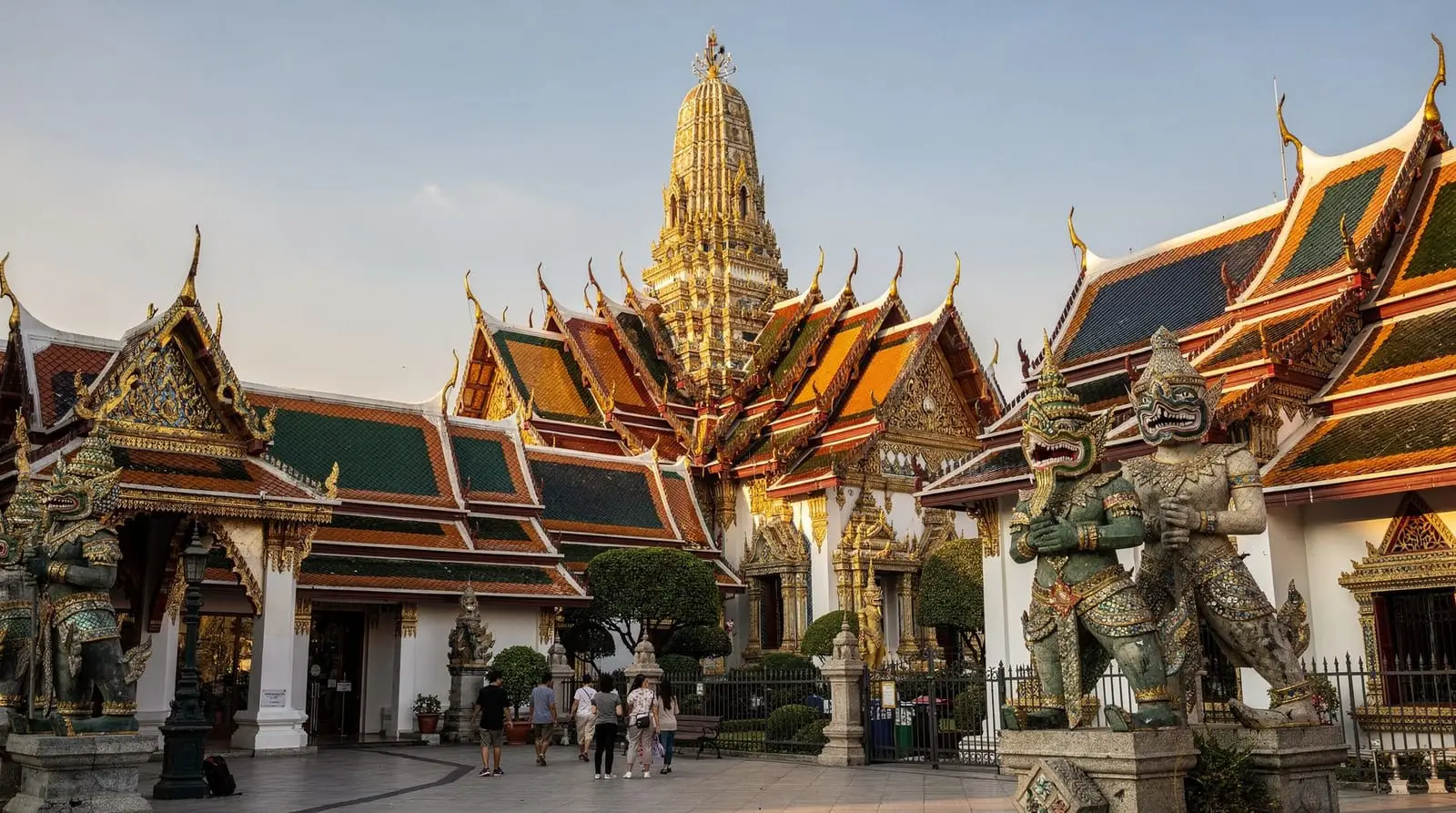
Grand Palace dress code: what to wear and what is banned
Bangkok: Grand Palace Skip-the-Line Entry Ticket
What is the dress code for the Grand Palace in Bangkok?
You must cover your shoulders and your knees. No tank tops, sleeveless shirts, shorts, short skirts, ripped jeans, see-through fabric, or leggings worn alone. The dress code is strictly enforced at the gate and applies equally to men and women. If you arrive underdressed you can rent a cover-up for a refundable deposit of about 200 THB, or buy elephant pants nearby for 100-150 THB.
The Grand Palace has the strictest dress code of any sight in Bangkok, and it is enforced at the gate by staff who genuinely turn people away. The rule is simple — cover your shoulders and your knees — but the details trip up visitors every day, and a wrong outfit means either renting a cover-up or trekking back to a stall before you can enter. This guide spells out exactly what is allowed, what is banned, and how to avoid losing time at the entrance.
| Rule | Shoulders and knees covered, both men and women |
| Rental cost | ~200 THB refundable deposit, at the gate |
| Buy instead | 100–150 THB for elephant pants/wrap from nearby stalls |
| Strictness | Enforced firmly, more so than any other Bangkok temple |
| Applies to | Everyone, all ages, though children get more latitude |
The core rule: shoulders and knees covered
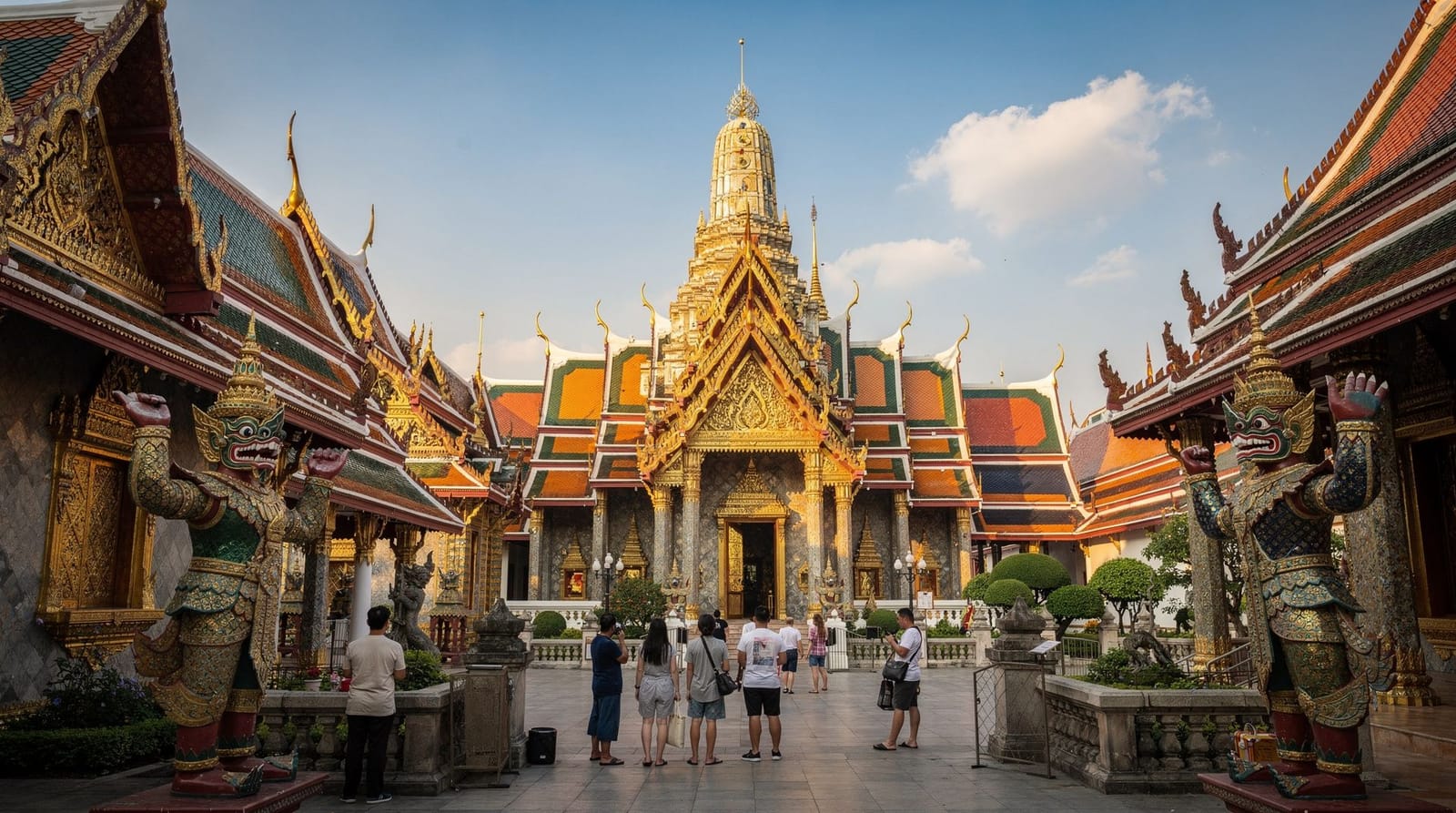
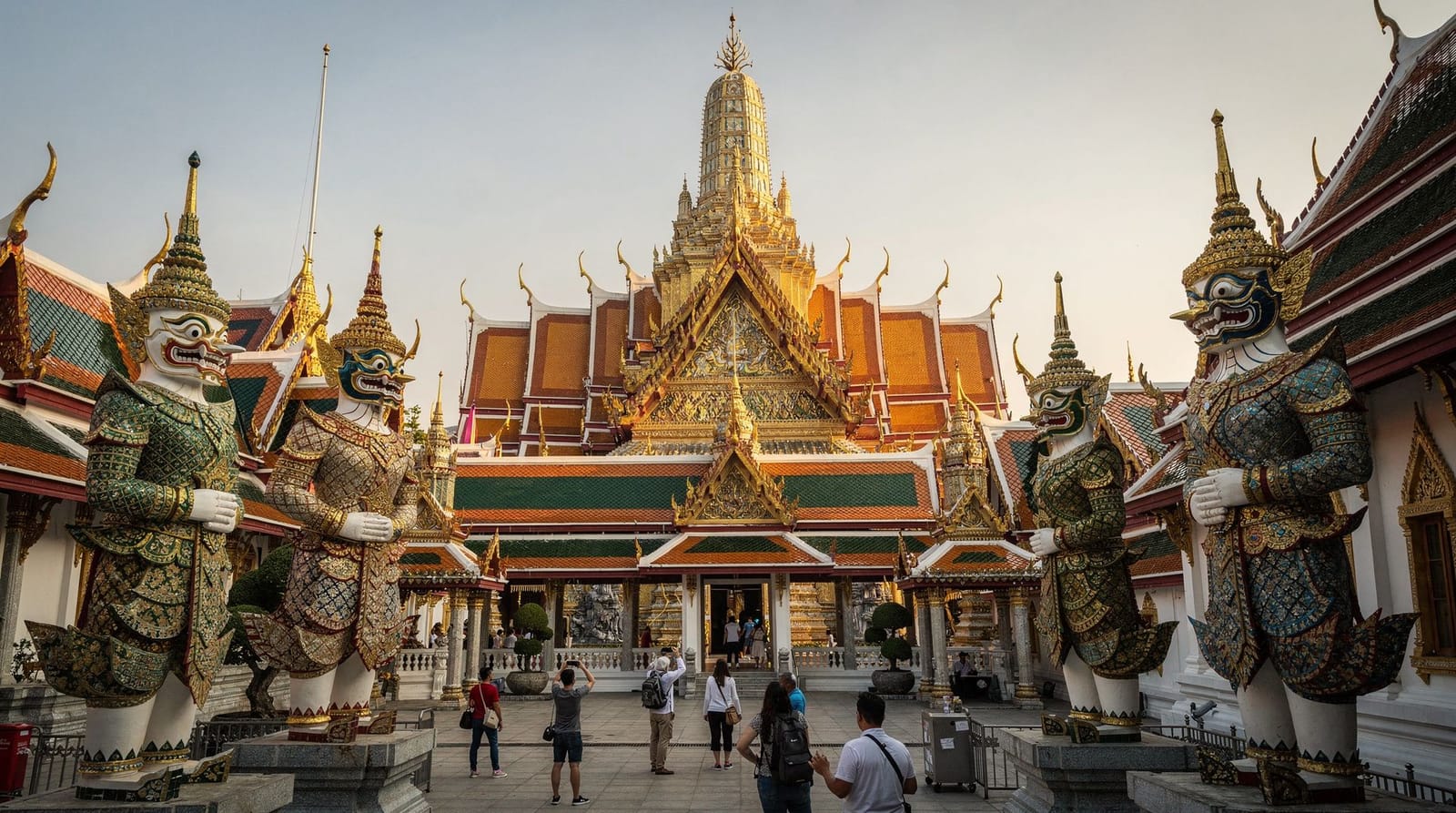
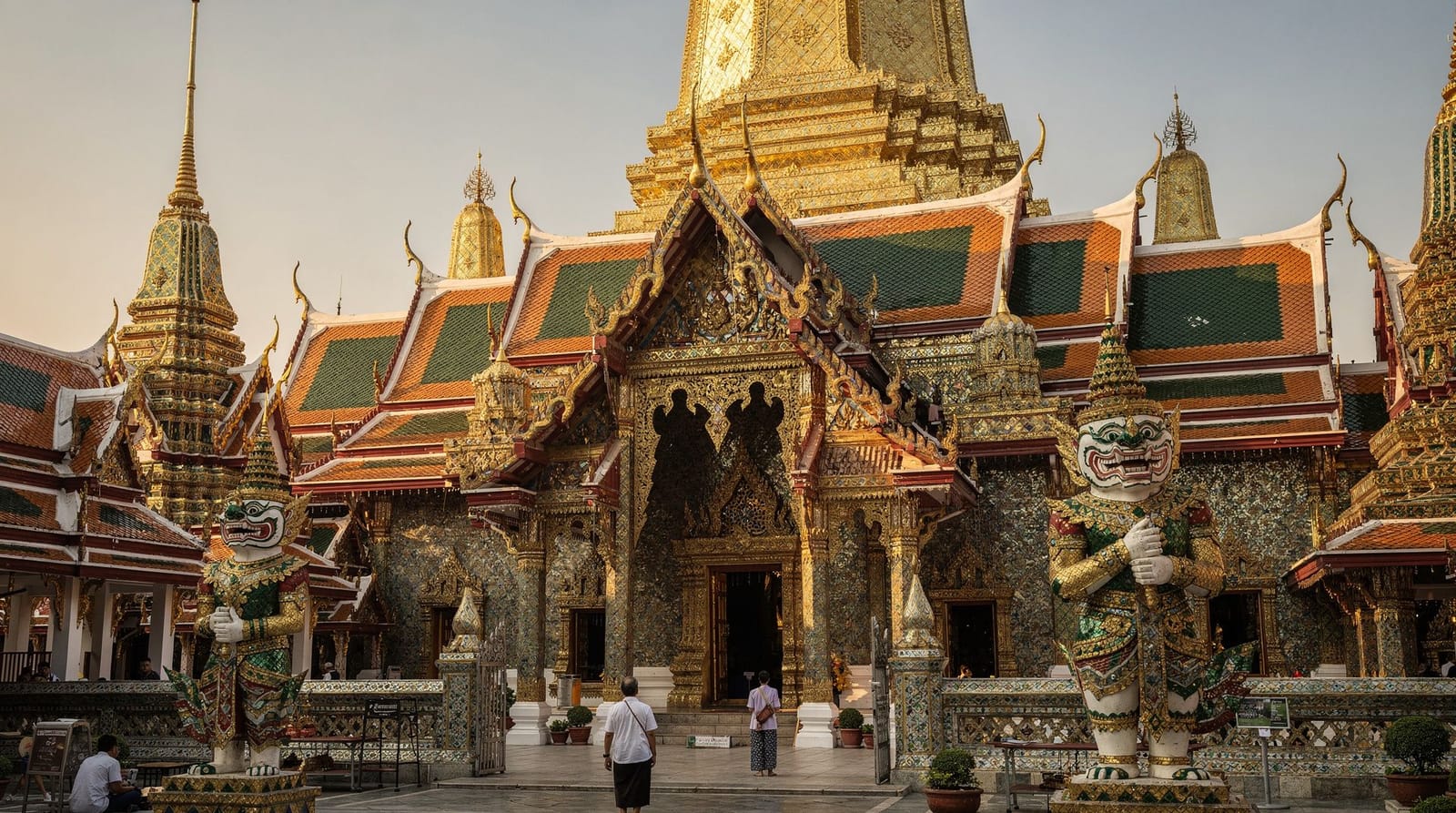
Everything about the Grand Palace dress code comes back to one principle: your shoulders and your knees must be covered, for both men and women, at all times inside the grounds. This is not a suggestion or a guideline that staff relax for tourists. The Grand Palace is the royal chapel of Thailand and the home of the Emerald Buddha, the kingdom’s most sacred image, and the dress standard reflects that.
When you reach the gate on Na Phra Lan Road, staff visually check every visitor. If your shoulders are bare or your knees are showing, you are stopped and directed to cover up before you can buy or use your ticket. Getting the outfit right before you leave your hotel is the single biggest time-saver of the whole visit. The same logic underpins the broader temple etiquette and dress code across the city, but nowhere applies it as firmly as here.
What is banned
It helps to see the no list explicitly, because several of these surprise visitors who think they are dressed conservatively.
Tank tops and sleeveless shirts are out — your shoulders and upper arms need to be covered, so spaghetti straps, vests and singlets are all refused. Shorts of any length are banned, including long Bermuda or cargo shorts that finish above the knee. Short skirts and dresses that end above the knee are not allowed. Ripped or distressed jeans that expose skin through the tears are refused, even if they are full-length. See-through or sheer fabric does not count as covered, regardless of what is underneath. Leggings worn as a sole bottom are not accepted, and tight, revealing athletic wear is turned away too.
The thread running through all of these is that “technically full-length” is not enough if skin shows through or the cut is too revealing. When in doubt, choose loose and opaque. If you are still assembling your trip wardrobe, our what to pack for Bangkok guide covers temple-appropriate clothing that also survives the heat.
What to wear instead
The good news is that comfortable, heat-friendly clothing can also be temple-appropriate. For the lower body, loose long trousers in light cotton or linen are ideal — they cover the knee, breathe in the heat, and look respectful. A maxi skirt or a long dress works equally well for women. For the upper body, any shirt or top with sleeves that cover the shoulders is fine; a loose cotton shirt or a t-shirt both pass easily.
The famous fisherman or elephant pants sold all over Bangkok are genuinely practical here: they are loose, cool, cheap, and fully compliant. A light scarf or shawl thrown in your bag is the best insurance policy you can carry — it can cover bare shoulders in seconds if you misjudged the rules. Plan to dress for the climate as well as the code; our best time to visit Bangkok guide explains just how hot the cloisters get between March and May.
Footwear
Footwear is less strict than clothing, but worth getting right. Closed shoes are the safest choice and avoid any debate at the gate. Sandals and flip-flops have historically been tolerated for walking the grounds, though standards can vary. The more important footwear point is practical: you must remove your shoes entirely before entering the Emerald Buddha chapel and other prayer halls, so slip-on shoes you can take off and put back on quickly will save you fumbling. Bring socks if you dislike standing barefoot on hot stone.
How to fix a wrong outfit on the spot
If you arrive underdressed, you have two easy fixes and you are never permanently turned away.
The first is the official rental counter near the entrance, which lends sarongs, wraps and shirts for a refundable deposit of around 200 THB. You hand over the deposit, borrow the item, and get your money back when you return it on the way out. The catch is the queue — during the 09:00-12:00 peak, the rental counter is busy, and that is exactly when you do not want to be waiting.
The second is to buy your own from the stalls clustered just outside the Palace, where elephant pants, wraps and shawls go for 100-150 THB. You keep the clothing, it is yours, and you have a souvenir you will actually wear for the rest of the trip. Either way, factor a few extra minutes in if you are cutting it fine. If you want to bypass the on-site queues entirely — both for clothing and for tickets — a pre-booked skip-the-line Grand Palace entry at least removes the ticket-office wait, leaving you only the dress check. The full ticket picture is in our Grand Palace tickets and skip-the-line guide.
Renting vs buying, at a glance:
| Rental counter | Stall outside | |
|---|---|---|
| Cost | ~200 THB refundable deposit | 100–150 THB, keep it |
| Speed | Queue during 09:00–12:00 peak | Quick, no queue |
| You keep it | No, return for refund | Yes — a wearable souvenir |
| Best for | A quick, no-commitment fix | Anyone who’ll wear elephant pants again |
What to pack so you never need either option
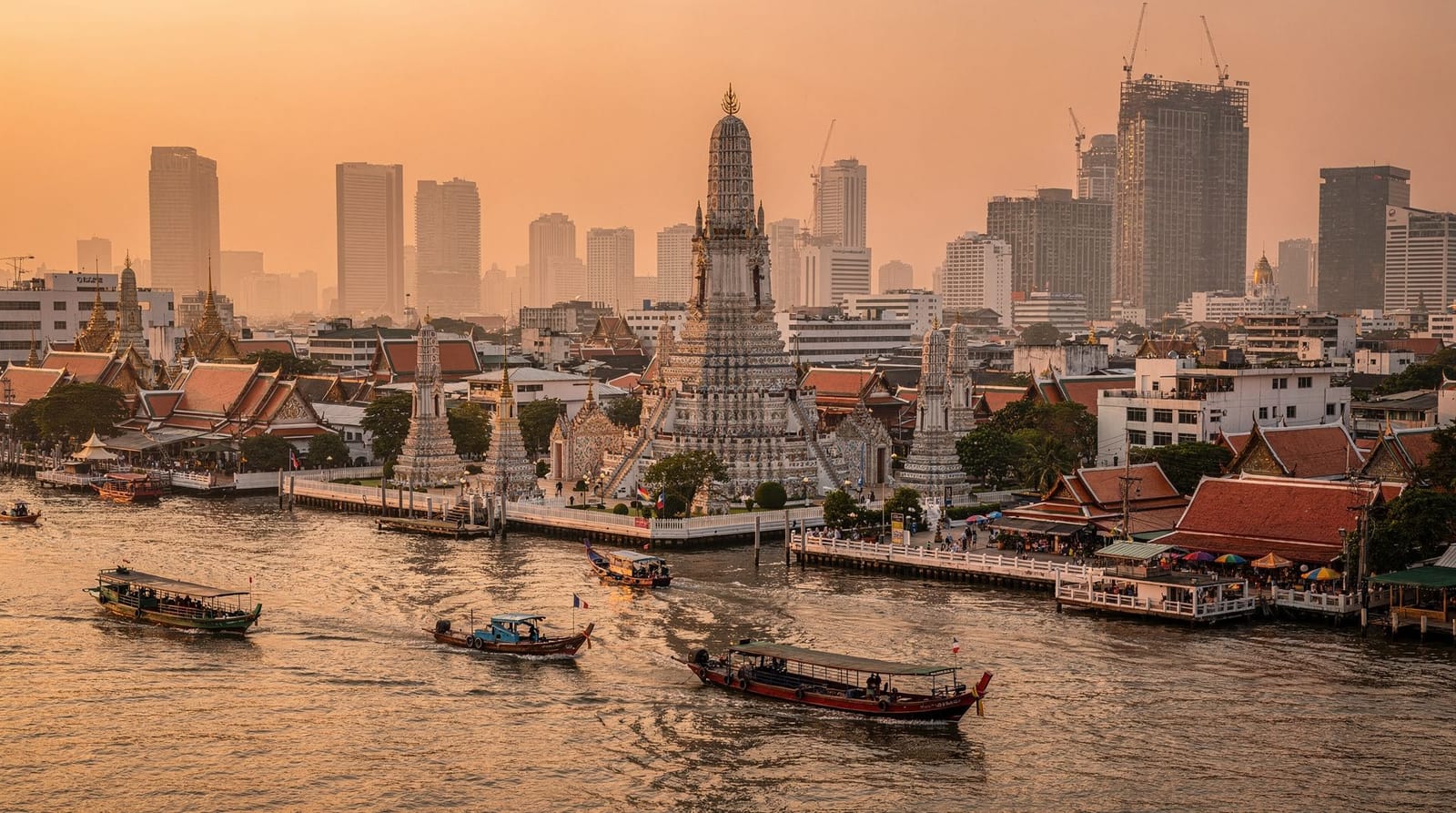
The most reliable fix is never needing the rental counter or the stalls at all. A single lightweight, long-sleeve cotton shirt and a pair of loose linen trousers rolled into your day bag cost nothing extra to carry and remove the entire dilemma. If you’re building a packing list for the whole trip rather than just this one visit, our what to pack for Bangkok guide has the fuller temple-and-heat-appropriate wardrobe, and it’s worth applying the same standard to Wat Pho and Wat Arun too, since both sit in the same Rattanakosin old city loop and expect similar modesty even if enforcement is gentler.
Inside the prayer halls: extra respect
Once you are correctly dressed and inside, the prayer halls carry their own etiquette layered on top of the dress code. Remove your shoes before entering any bot or wihan. Inside the Emerald Buddha chapel, sit on the floor with your legs folded so that your feet never point toward the Buddha — pointing your feet at a sacred image or a person is a serious sign of disrespect in Thai culture. Keep your voice low, do not photograph inside the chapel, and never climb on or pose irreverently beside Buddha images.
These gestures matter more at the Grand Palace than almost anywhere because it is bound up with the monarchy as well as the faith. Our Thai customs and etiquette and monarchy respect and lèse-majesté guides explain why behaviour here is taken so seriously, and our buddhism in Bangkok guide gives the wider context for what you are looking at.
The dress code in the heat: a real planning problem
There is a genuine tension at the Grand Palace that the official rules never mention: you must cover your shoulders and your knees in a place where the temperature regularly hits 33-38°C and the open courtyards offer almost no shade. Getting this balance wrong makes the visit miserable, so the fabric you choose matters as much as the coverage.
The answer is lightweight, loose, light-coloured natural fibres. Thin cotton and linen breathe and dry quickly; loose cuts let air move against your skin. Avoid dark colours, which absorb heat, and avoid synthetic fabrics that trap sweat. A loose long-sleeve cotton shirt is paradoxically cooler in direct sun than bare skin, because it keeps the sun off you. Elephant pants exist for exactly this reason — they look touristy, but locals quietly acknowledge they are the most sensible thing a visitor can wear in the heat.
Plan your timing around the dress code too. Because you cannot strip down to stay cool, the early 08:30 start matters even more here than at less strict sights: you do your covered-up walking before the sun is high. By midday in the hot season, fully dressed in an unshaded courtyard, even fit visitors flag. Carry water, and use the air-conditioned Queen Sirikit Museum of Textiles inside the grounds as a cooling break. Our best time to visit Bangkok guide explains which months make the covered-up rule hardest to bear.
Common mistakes that get people turned away
A handful of outfits trip up visitors over and over, often because they seem modest enough at a glance. Long shorts or capri-length trousers that end just below the knee are a frequent rejection — the knee itself must be covered, not merely approached. Ripped or distressed full-length jeans catch people out because they are technically long but expose skin through the tears. Sheer or loosely woven tops that look opaque indoors turn translucent in bright sunlight and fail the shoulder rule.
Off-the-shoulder tops, cold-shoulder cutouts and tops with very wide armholes all expose too much shoulder. Sleeveless dresses worn with a thin cardigan can pass if the cardigan genuinely covers the shoulders and stays on, but a shawl that slips off does not. And athletic leggings worn alone, however opaque, are refused as too revealing. The safe mental test before you leave your hotel: would this cover me if I raised my arms and bent to sit on the floor? If yes, you are fine.
Men are checked too
It is a common misconception that the dress code is aimed only at women. Men are stopped at the gate just as often, usually for shorts. Bangkok’s heat tempts male visitors into shorts and a t-shirt, and the t-shirt is fine but the shorts are not — knees must be covered for men exactly as for women. Sleeveless gym vests and tank tops are also refused on men. The simplest compliant male outfit is light long trousers and any t-shirt or shirt with sleeves. Men who arrive in shorts face the same rental-or-buy choice as anyone else.
Dressing kids and travelling as a family
The dress code is enforced most firmly on adults, but it’s worth dressing children sensibly too, both out of respect inside the prayer halls and for their own comfort in the heat. Light cotton trousers or a knee-length skirt and a t-shirt with sleeves work for children exactly as for adults, and the same elephant-pants stalls sell child sizes. Strollers are manageable on the palace’s paved courtyards but awkward on some of the raised thresholds into the halls, so a baby carrier is worth considering for very young children. Children under 120 cm enter free, which softens the cost of an outfit you may only need once. Our Bangkok with kids guide covers the wider logistics of a family day in the old city, including pacing the visit around nap times and the worst of the midday heat.
If you’re only viewing from outside
Not everyone plans to go through the ticket gate. If you’re simply walking past the walls, photographing the exterior from Sanam Luang or the river, or admiring the complex from a boat, the dress code does not apply — it is enforced at the entry gate itself, not on the surrounding streets. That said, if there’s any chance you’ll change your mind and go in once you see it, carrying a light scarf and knowing the rule in advance means you’re never caught out. This distinction also matters because of the closed-today scam: touts sometimes claim a fabricated dress-code problem to strangers who were only ever planning to look from outside, using confusion about the rule as another opening. Knowing exactly where the rule starts and stops removes that opening entirely.
Rainy season and the dress code
The rainy season, roughly June to October, adds a wrinkle: covered shoulders and knees in a sudden downpour is genuinely uncomfortable, and wet fabric clinging to skin can occasionally draw a second look at the gate even when it technically meets the rule. Quick-dry synthetic-blend trousers and a light rain jacket that still covers the shoulders underneath handle this better than cotton, which stays damp for hours. Carry a small umbrella or poncho rather than relying on finding cover, since the courtyards offer little shelter. Our rainy season Bangkok guide covers the wider pattern of when the showers hit and how to plan sightseeing around them, which matters more here than at sights where you can simply duck indoors.
Why the dress code exists — and why it pays to respect it
It is easy to read the dress code as a tourist hassle, but it is the same standard Thai worshippers hold themselves to in a place that is genuinely sacred to them. Dressing correctly is not only about getting through the gate; it is a small act of respect in a country where temple decorum still matters deeply. Visitors who treat it that way tend to have a far smoother, warmer experience.
Practically, getting it right also makes the rest of your temple day effortless. Wat Pho and Wat Arun apply the same shoulders-and-knees rule more loosely, so an outfit that passes the Grand Palace passes everywhere. If you are weighing which temples to prioritise, our Grand Palace versus Wat Pho comparison and best temples in Bangkok ranking will help you plan a full, comfortable temple morning. A guided Grand Palace and Emerald Buddha half-day tour will also prep you on the etiquette before you reach the gate.
For the complete visit logistics — prices, hours, transport and the closed-today scam — start with our main Grand Palace guide, and for help building it into a wider plan see the Bangkok temples itinerary.
Frequently asked questions about Grand Palace dress code: what to wear and what is banned
Can I wear shorts to the Grand Palace?
Can women wear leggings to the Grand Palace?
Is there clothing rental at the Grand Palace?
What shoes can I wear to the Grand Palace?
Does the dress code apply to children?
What happens if I show up dressed wrong?
Is the Grand Palace dress code stricter than other Bangkok temples?
Top experiences
Bookable activities with verified prices and instant confirmation on GetYourGuide.