Bangkok for first-timers: everything you need to know
Bangkok: Half-Day Guided City Tour with Temples
What should first-time visitors know about Bangkok?
Bangkok is hot, chaotic and wonderful, and easier than its reputation suggests. Get around by the traffic-proof BTS Skytrain, MRT and river boats rather than fighting traffic in taxis. Cover shoulders and knees for temples, complete the free TDAC before arrival, carry cash for street food, and learn the handful of classic scams (the 'closed today' temple trick, the gem scam, tuk-tuk commission tours). Three to four days covers the essentials comfortably.
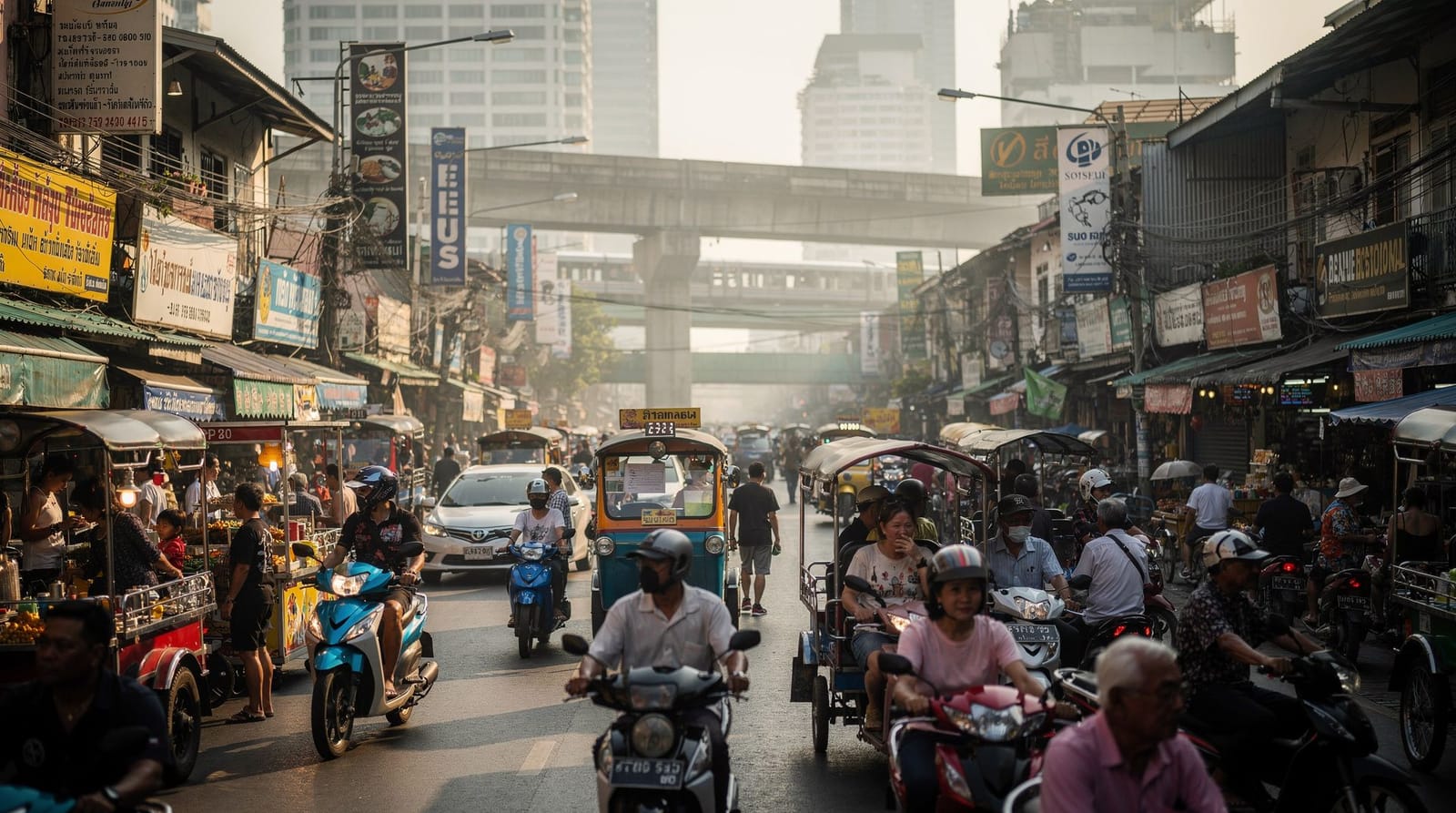
Bangkok overwhelms first-timers in the best and most exhausting ways — gilded temples beside skyscrapers, the smell of grilling street food, tuk-tuks roaring past gridlocked traffic, and a heat that hits you the moment you step outside. It’s also far easier to navigate than its chaotic reputation suggests, once you know a handful of essentials. This guide is the orientation a first-time visitor needs: what to expect, how to get around, what to see, the scams to dodge, the etiquette to respect, and how to plan a smooth first trip.
It works alongside the step-by-step plan a trip to Bangkok guide; think of this as the friendly first-timer’s overview.
| Best for | First-time visitors to Bangkok or Southeast Asia |
| Days needed | Around 3–4 days for the essentials |
| Daily budget (excl. flights/hotel) | Roughly 700–5,000+ THB depending on style |
| Getting around | BTS/MRT, river boats, Grab — skip street taxis and tuk-tuks as transport |
| Book ahead | Popular guided tours and festival-period accommodation |
What to expect when you arrive
Bangkok is hot and humid year-round, often 30–40°C, so the heat is the first adjustment — pace yourself and hydrate. It’s a megacity of around 10 million with notorious traffic, but a brilliant rail and river network that lets you skip most of it. English is widely understood in tourist areas but drops off at local stalls and with some taxi drivers. The city is generally safe, with the main risks being scams and petty theft rather than violence.
Before you even land, sort two things: complete the free TDAC arrival card online and check your visa-free allowance (currently 30 days for most, but recently changed) — both covered in the Thailand visa and TDAC guide. And buy a SIM or eSIM so you have data for Grab and maps from the start.
Getting around without the stress
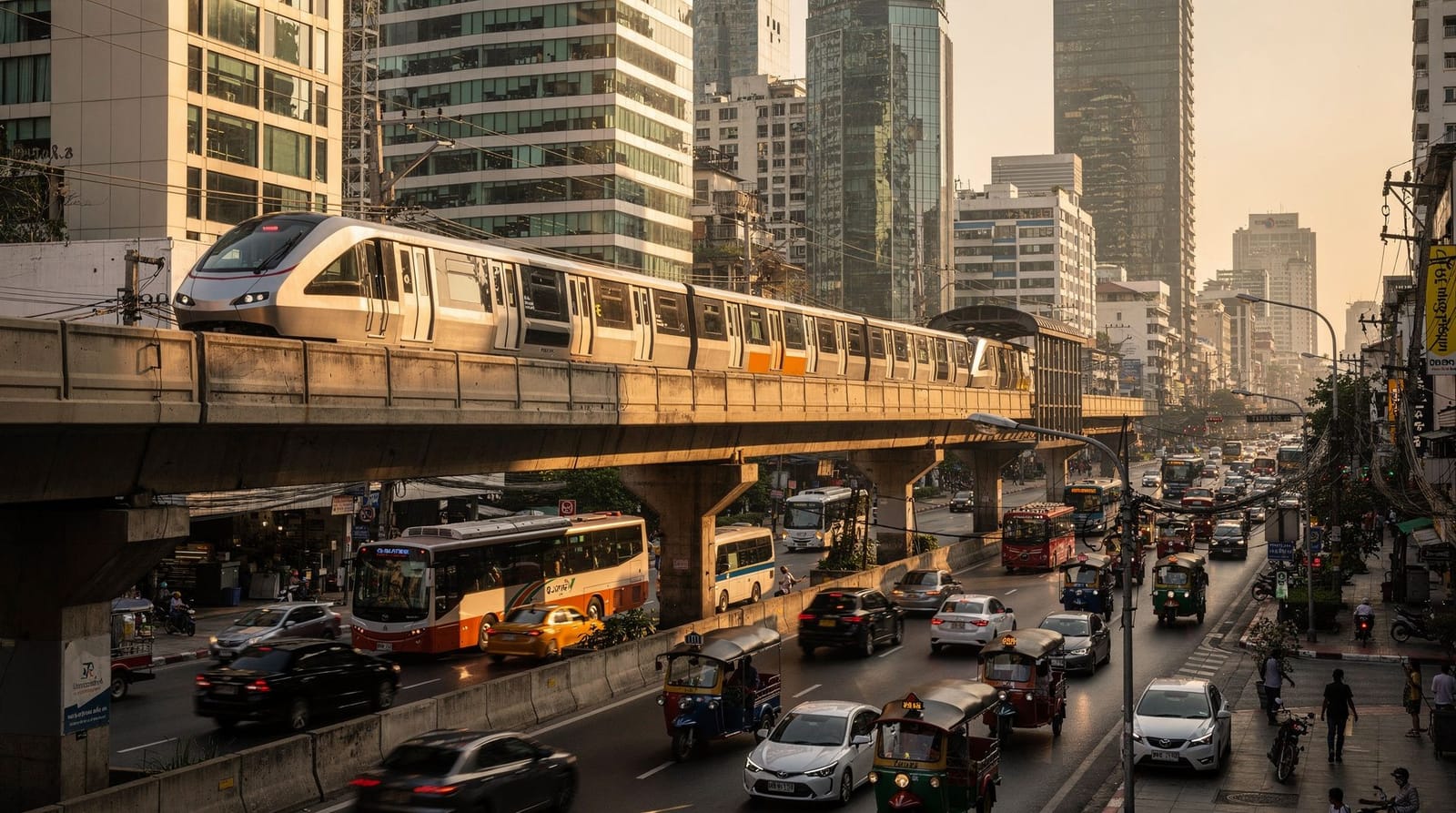
This is the single most useful thing for a first-timer to grasp: don’t fight the traffic — go above and around it.
- BTS Skytrain and MRT subway — fast, cheap, air-conditioned, traffic-proof; your default for the modern city.
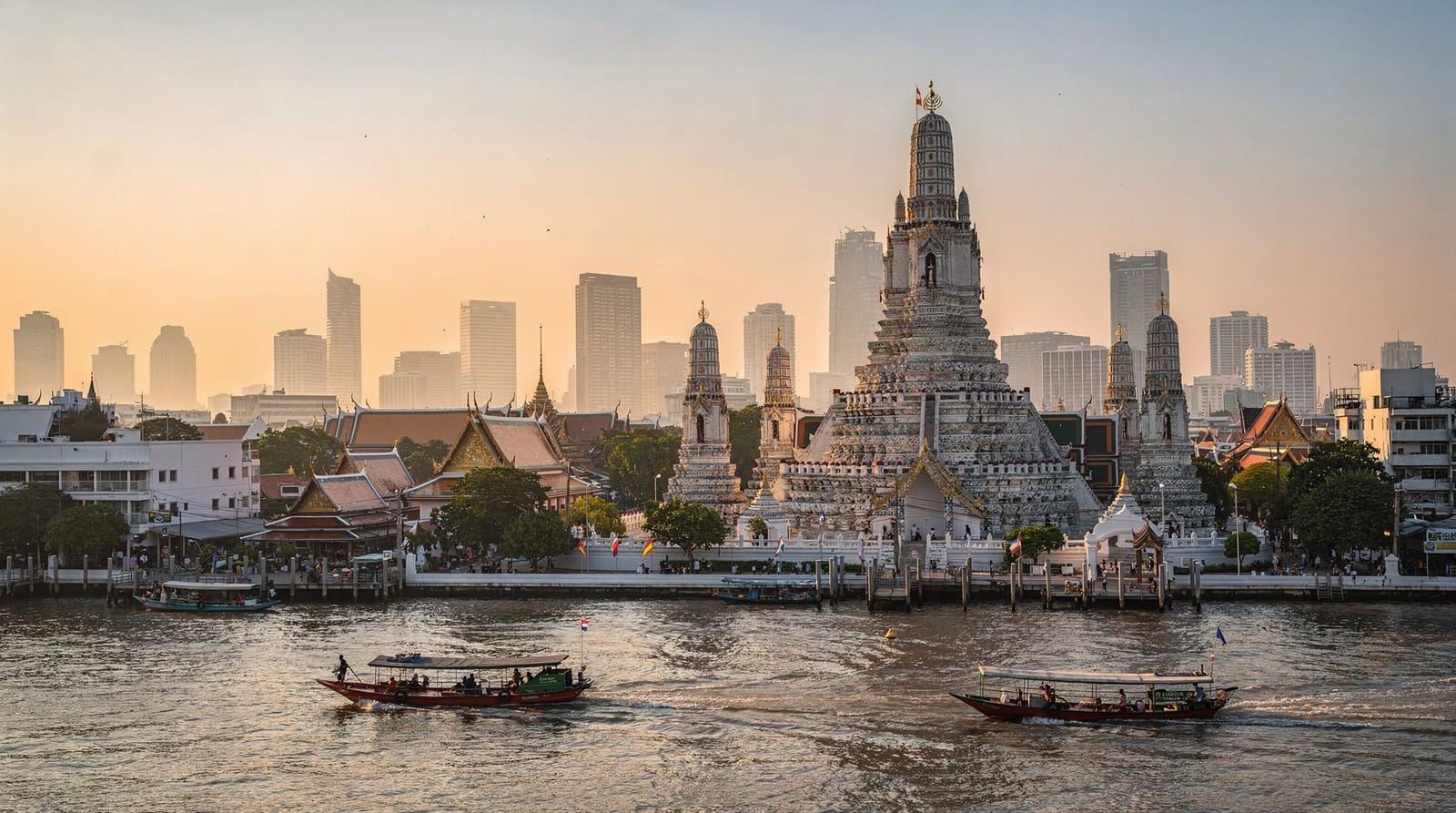
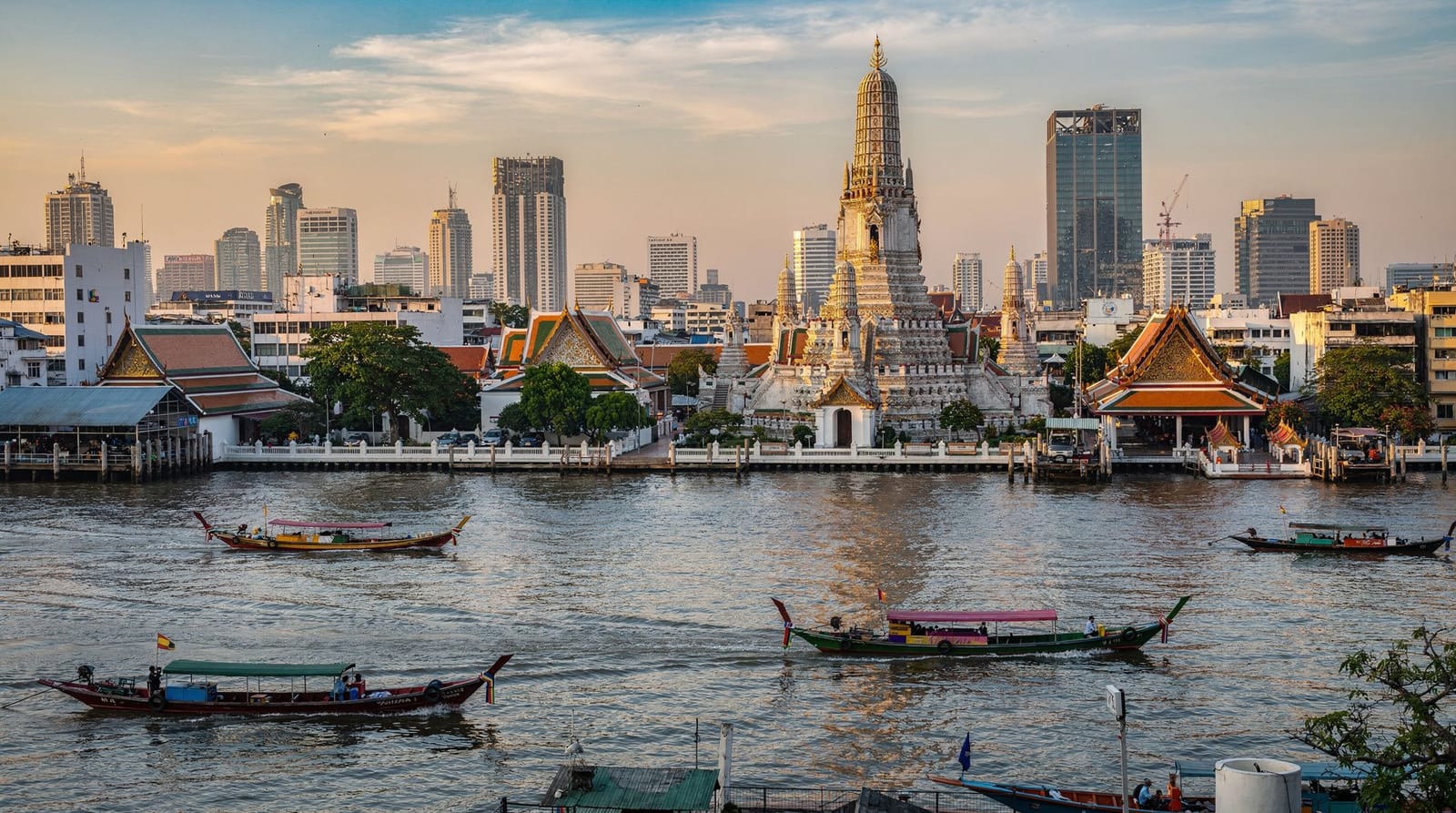
- Chao Phraya river boats — the scenic, traffic-free way to reach the Old City temples and Chinatown.
- Grab — ride-hailing with fixed upfront fares for everything off the rail lines; no haggling.
Avoid relying on street taxis (insist “meter, please”) and treat tuk-tuks as a one-time novelty, not transport. The full strategy is in the getting around Bangkok guide, with the airport routes in the Suvarnabhumi and Don Mueang guides.
The must-see first-timer sights
For a first visit, prioritise the icons:
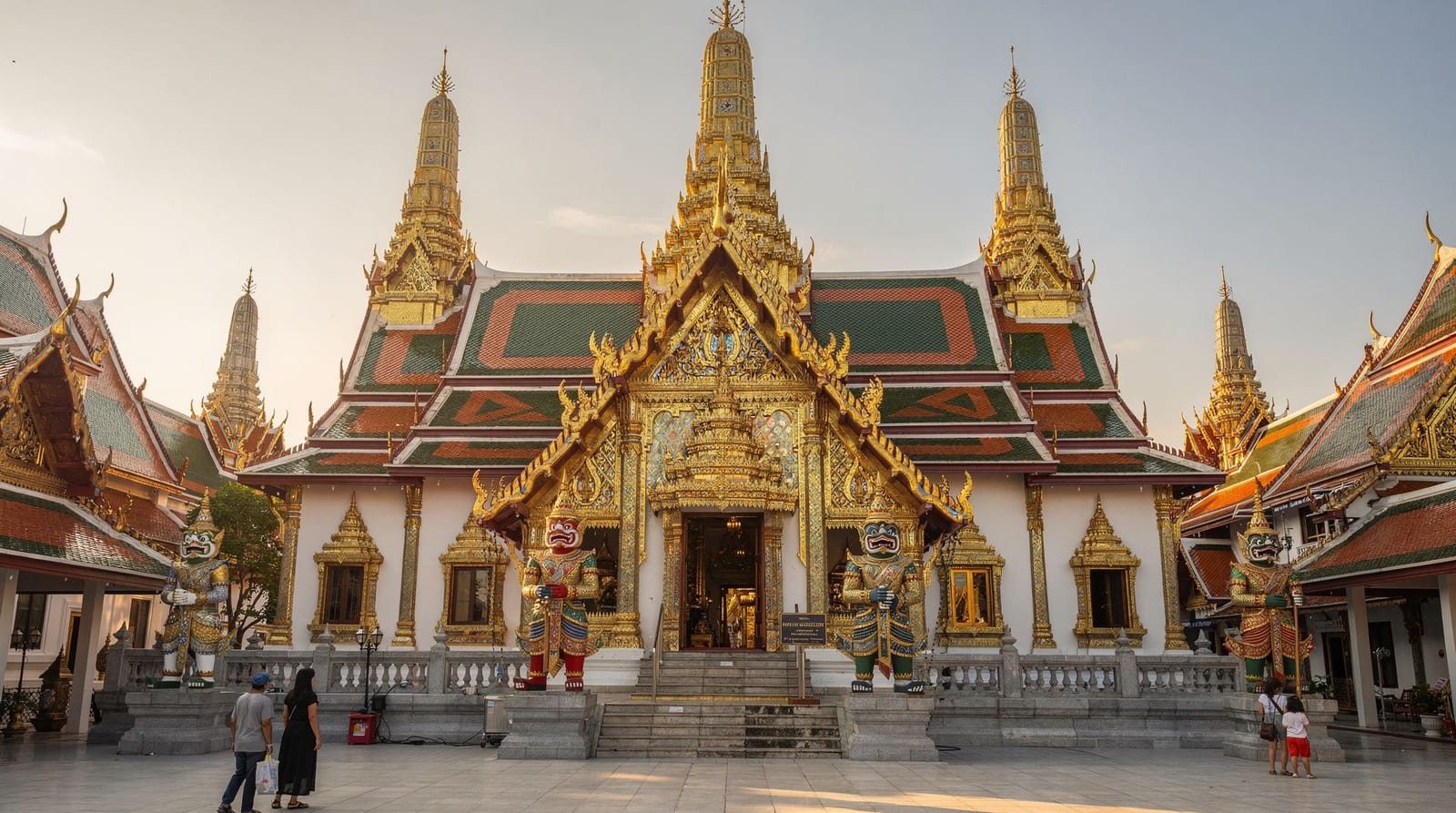
- The Grand Palace and Wat Phra Kaew — the dazzling royal complex and the Emerald Buddha. Go early, dress modestly. A Grand Palace skip-the-line ticket saves you the worst of the queue.
- Wat Pho — the giant reclining Buddha and the home of traditional Thai massage.
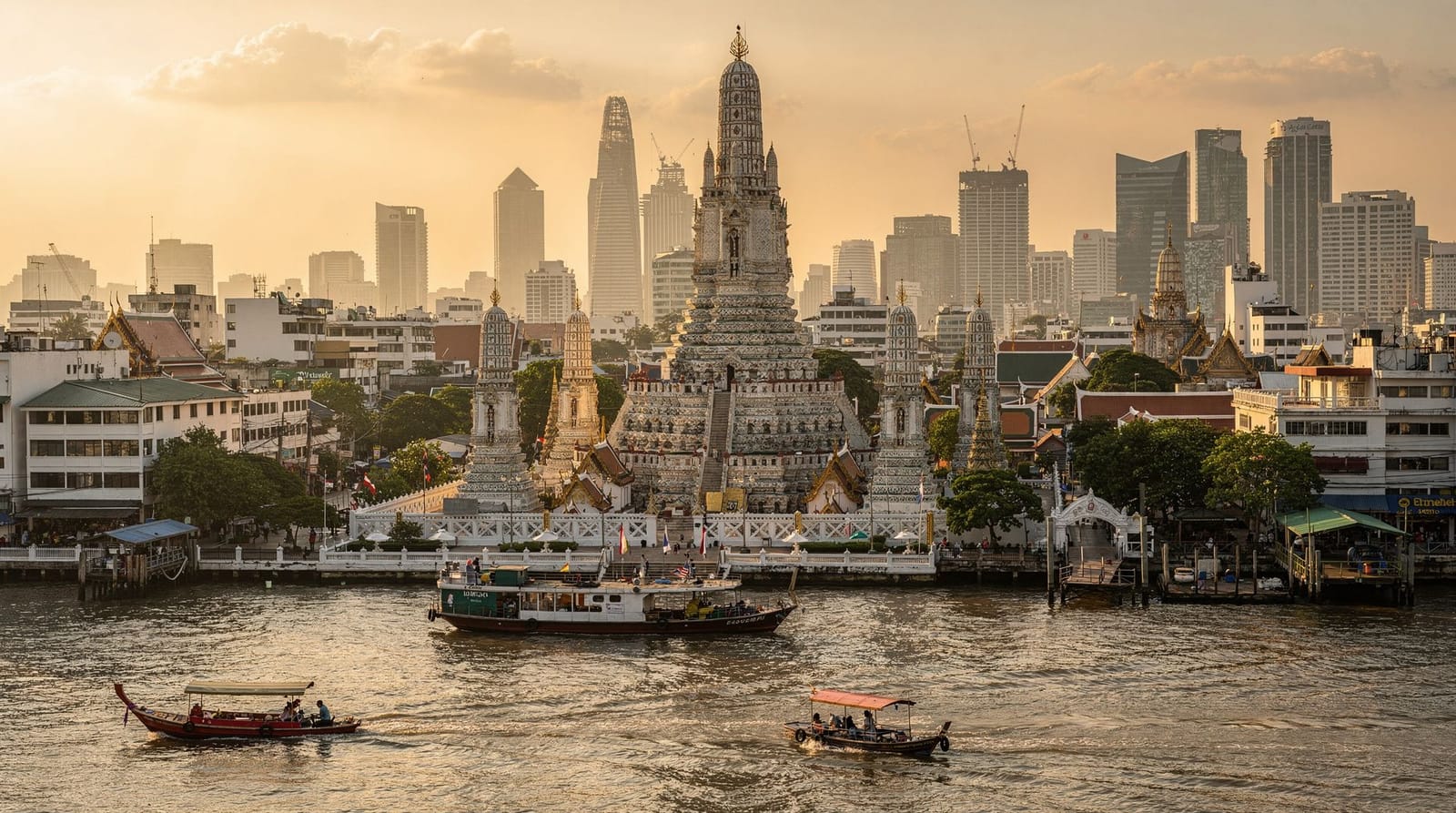
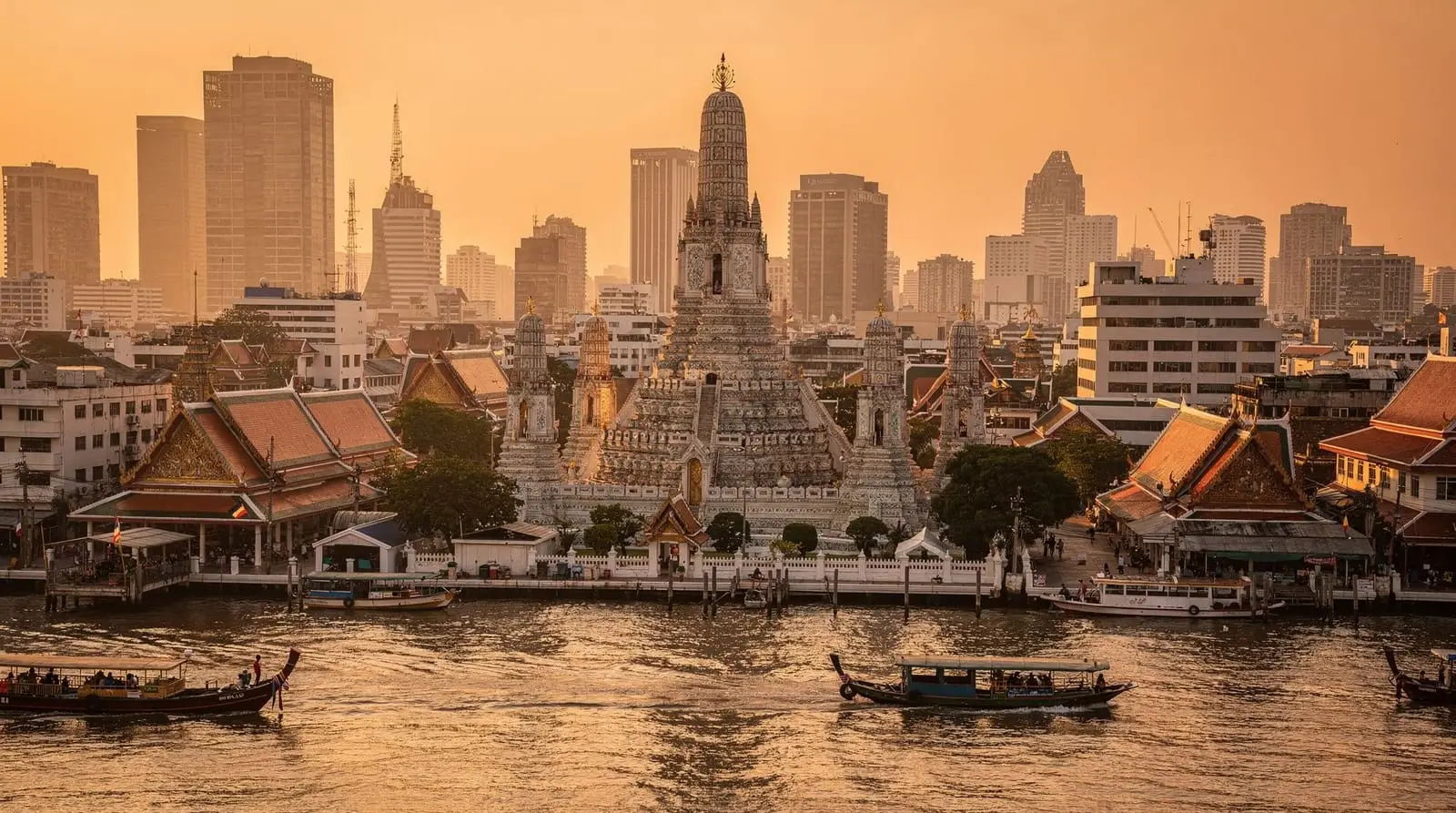
- Wat Arun — the riverside temple of dawn, reached by a short cross-river ferry.
- Chinatown / Yaowarat — the best street-food crawl in the city, especially at night.
- A market — the vast Chatuchak Weekend Market or a floating market day trip.
- A river experience — a daytime boat or an evening dinner cruise.
A guided temple morning is a great way for first-timers to get oriented and absorb the context efficiently. A half-day guided city and temples tour covers the highlights with a guide who explains what you’re seeing. For the evening, a Chao Phraya dinner cruise with hotel transfer is a memorable first-night experience. The ready-made first-timer itinerary and the 3-day itinerary sequence it all.
The scams to dodge
Bangkok’s scams are well-worn and easy to sidestep once you know them:
- The “it’s closed today” trick — near the Grand Palace, a friendly stranger says the sight is shut for a holiday and offers a cheap tuk-tuk tour, which leads to gem and tailor shops. The Palace is almost never closed. Ignore unsolicited help and verify at the official entrance. See the Grand Palace scam warning.
- The gem scam — never buy gems as an “investment”; they’re overpriced or fake. The gem scam guide explains.
- Tuk-tuk commission “tours” — the suspiciously cheap all-day tour that drags you to shops. Decline. See tuk-tuk scams.
- Taxi meter refusal — insist on the meter or use Grab.
The full set is in the common Bangkok scams guide. None of them are dangerous — they’re about your wallet, and awareness defeats all of them.
Etiquette that matters
A little cultural respect smooths everything:
- Temples: cover shoulders and knees, remove shoes inside. Carry a light layer or sarong.
- The monarchy: lèse-majesté laws are strict — never disrespect the King or his image, and stand for the national anthem when it plays.
- Buddha images are sacred — treat them respectfully; disrespectful tattoos or photos can cause serious trouble.
- Head and feet: the head is sacred, the feet lowest — don’t touch people’s heads or point your feet at people or Buddha images.
- The wai: return the prayer-like greeting when offered, but don’t initiate it toward staff.
- Stay calm: shouting and visible anger cause loss of “face” and backfire.
The deeper picture is in the Thai customs and etiquette guide and the temple etiquette guide.
Where to base yourself
Picking the right neighbourhood does more for a smooth first trip than almost any other decision, because it determines how much time you lose to traffic each day. The full breakdown is in the where to stay in Bangkok guide, but as a quick comparison:
| Area | Vibe | Best for |
|---|---|---|
| Sukhumvit | Modern, malls, BTS-connected | Nightlife, dining, easy transport links |
| Riverside | Hotels with river views, boat access | A scenic base near the Old City temples |
| Silom/Sathorn | Business district by day, nightlife by night | Central location, good BTS/MRT access |
| Old City (Rattanakosin) | Historic, low-rise, near the temples | Walking to the Grand Palace and Wat Pho, fewer modern conveniences |
None of these is a wrong choice — Sukhumvit or Silom/Sathorn suit most first-timers best because they sit on the rail lines, keeping every other decision in this guide easier.
What actually surprises most first-timers
A few things catch newcomers off guard beyond the heat and traffic already mentioned. Crossing the street where there is no signal takes a moment of nerve — traffic rarely stops for pedestrians, so cross with a gap in the flow or alongside locals. Street numbering and soi (side-street) systems can feel confusing; a soi branches off a main road and is numbered, so an address like “Sukhumvit Soi 11” makes sense once you know the pattern. Malls and BTS stations are aggressively air-conditioned, often cold enough to want a light layer even in the tropical heat. And a handful of attractions are simply overpriced for what they deliver — the Bangkok tourist traps guide flags the ones worth skipping so your limited days go toward the sights that earn them.
Practical first-timer tips
- Carry cash for street food, markets and boats; cards work at malls and hotels. See the Bangkok travel costs guide.
- Don’t drink the tap water — bottled is cheap; restaurant ice is usually fine.
- Eat street food — busy stalls with high turnover are the heart of Bangkok and generally safe.
- Pace yourself in the heat — build in air-conditioned breaks; the what to pack guide covers staying cool.
- Don’t over-plan — leave room to wander Chinatown and the markets; serendipity is half the joy.
How long, and a simple first-trip shape
Three to four days covers the essentials comfortably, as the how many days in Bangkok guide explains. A simple shape: Day 1 Old City temples and a sunset rooftop; Day 2 Chinatown and markets; Day 3 a cooking class, spa and a river cruise, or a day trip to Ayutthaya. With the essentials above in hand, your first Bangkok trip will feel less like a battle with chaos and more like the thrilling, easy introduction to Asia it should be.
Frequently asked questions about Bangkok for first-timers: everything you need to know
Is Bangkok a good first destination in Southeast Asia?
How do first-timers get around Bangkok easily?
What are the must-see sights for a first visit to Bangkok?
What scams should first-time visitors in Bangkok watch for?
What etiquette should first-timers know in Bangkok?
How much should first-timers budget for Bangkok?
What's the biggest mistake first-time visitors make in Bangkok?
Top experiences
Bookable activities with verified prices and instant confirmation on GetYourGuide.