Common Bangkok scams and how to avoid them
What are the most common scams in Bangkok?
The big ones are the fake closed temple redirect, the gem scam, the cheap tuk-tuk shop tour, taxi meter refusal, pushy tailor shops, tea-house and friendly-local cons, and ping-pong show bill ambushes. Nearly all start with a friendly stranger or a price that is too good to be true. Use Grab and the metro, walk to official ticket gates, and never buy gems as an investment.
Bangkok is a safe and welcoming city for visitors, but it has a well-developed menu of tourist scams, and they all share a family resemblance. Learn the patterns once and you are protected for the whole trip. This guide is the complete honest rundown: every common con, how it starts, what it costs you, the exact location and transport details that matter, and the simple defence for each. None of it should make you paranoid; the city rewards friendliness. It should just sharpen your instinct for the two warning signs that precede almost every scam.
| Biggest risk | The fake closed-temple redirect and the gem scam that follows it |
| Typical loss | A few hundred THB (tuk-tuk detours) up to thousands (gems) |
| Red flag | A stranger who approaches you first, or a price too good to be true |
| Defense | Walk to official gates, use Grab/metro, never buy gems on a resale promise |
| Emergency | Tourist Police, 1155, free and English-speaking |
Every common scam, at a glance
| Scam | Where it happens | Defense |
|---|---|---|
| Fake closed temple | Grand Palace, Wat Pho, Wat Arun, Golden Mount area | Walk to the official gate; ignore the approach |
| Gem scam | Follows the fake-closure tuk-tuk detour | Never buy gems as an investment |
| Tuk-tuk shop tour | City-wide, especially near sights | Refuse cheap tours; agree fares in advance |
| Taxi meter refusal | Anywhere, worst at the airports | Say “meter please”; use Grab/Bolt instead |
| Tailor and tea-house | Tourist areas, friendly strangers | Distrust unsolicited approaches |
| Ping-pong bill ambush | Patpong, around Nana | Avoid touted shows; ask drink prices first |
| ATM/card skimming | Standalone tourist-area ATMs | Use bank-branch machines; keep card in sight |
The two red flags
Before the list, the meta-rule. Almost every Bangkok scam begins with one of two things: a stranger who approaches you first, or a price that is too good to be true. A person who walks up to tell you a temple is closed, a tuk-tuk offering an all-day tour for 20 THB, a friendly local who steers the conversation toward a shop, these are the openings. Treat both red flags as automatic cues to politely disengage and you have defused most of what follows. Our Bangkok tourist traps pillar and what to skip in Bangkok guide expand on the worst offenders.
The fake closed temple scam
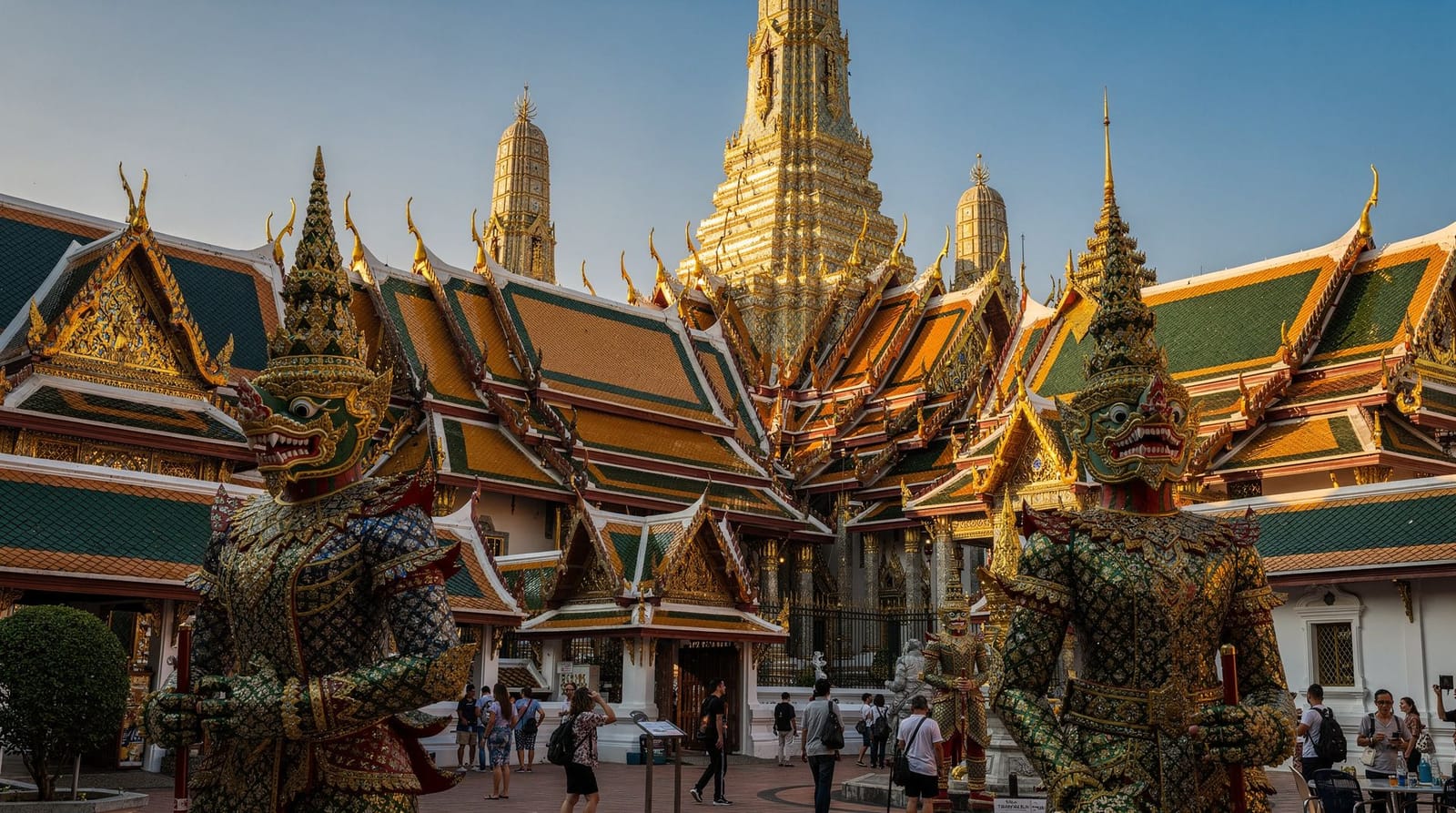
This is the most common scam in the city, run all day around Rattanakosin old city. A well-dressed, English-speaking stranger near the Grand Palace, Wat Pho, Wat Arun or the Golden Mount tells you it is closed today for a ceremony or holiday and offers a cheap tuk-tuk tour instead, which detours to commission-paying shops. The truth: the Grand Palace is open daily 08:30 to 15:30 and almost never closed. Walk straight to the official ticket gate and ignore the approach. Our Grand Palace scam warning covers this con in full, and the best temples in Bangkok guide gets you to each one informed.
The gem scam
The fake closure delivers you to the gem shop. There you are pitched a government gem sale, tax-free, today only, with the promise of reselling sapphires at home for profit. The stones are worthless or wildly overpriced and the resale market does not exist, so people lose thousands. The rule is absolute: never buy gems as an investment in Thailand. The dedicated gem scam guide tells the full story; treat any unsolicited shop detour as the warning sign it is.
The tuk-tuk shop tour
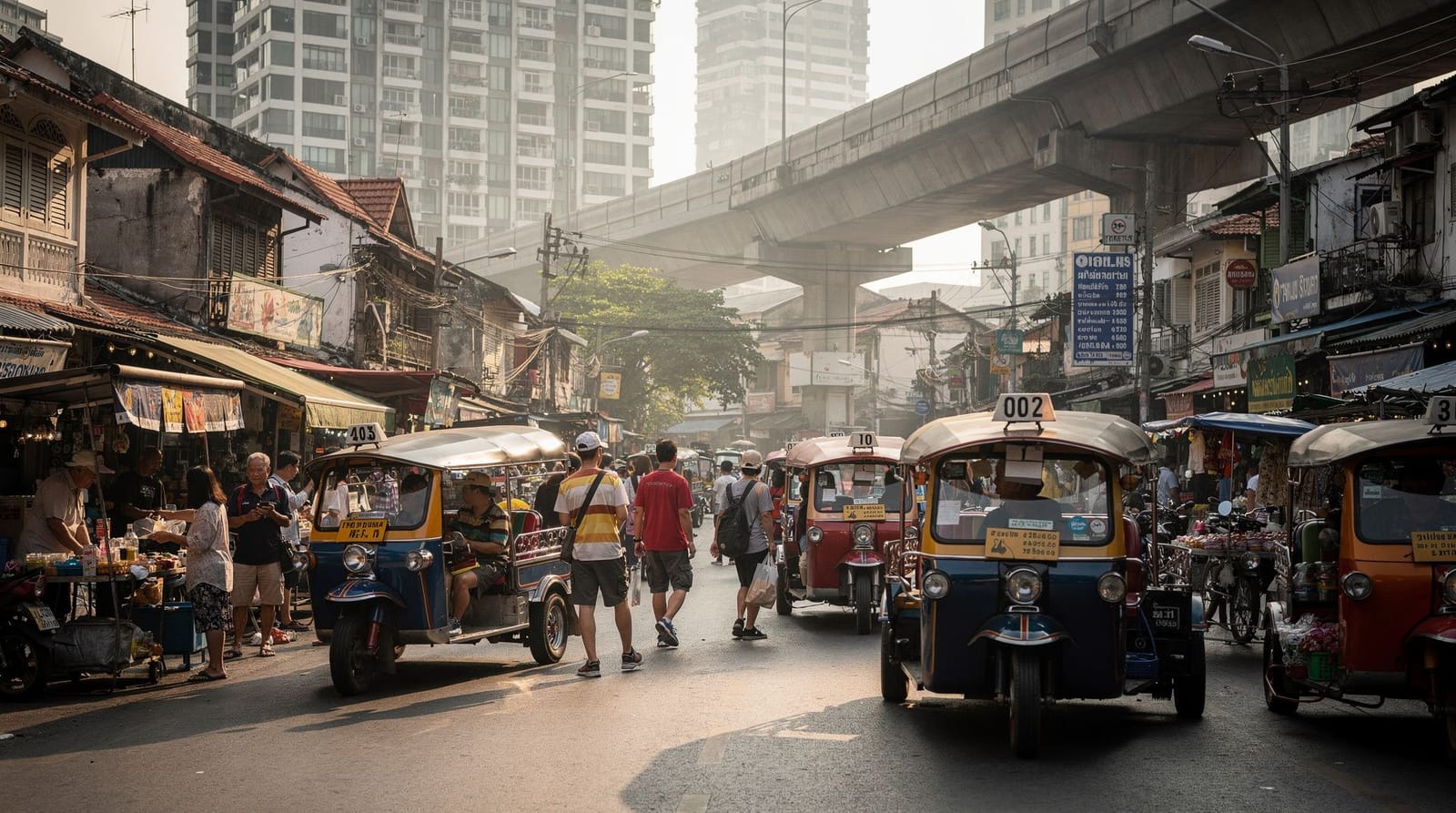
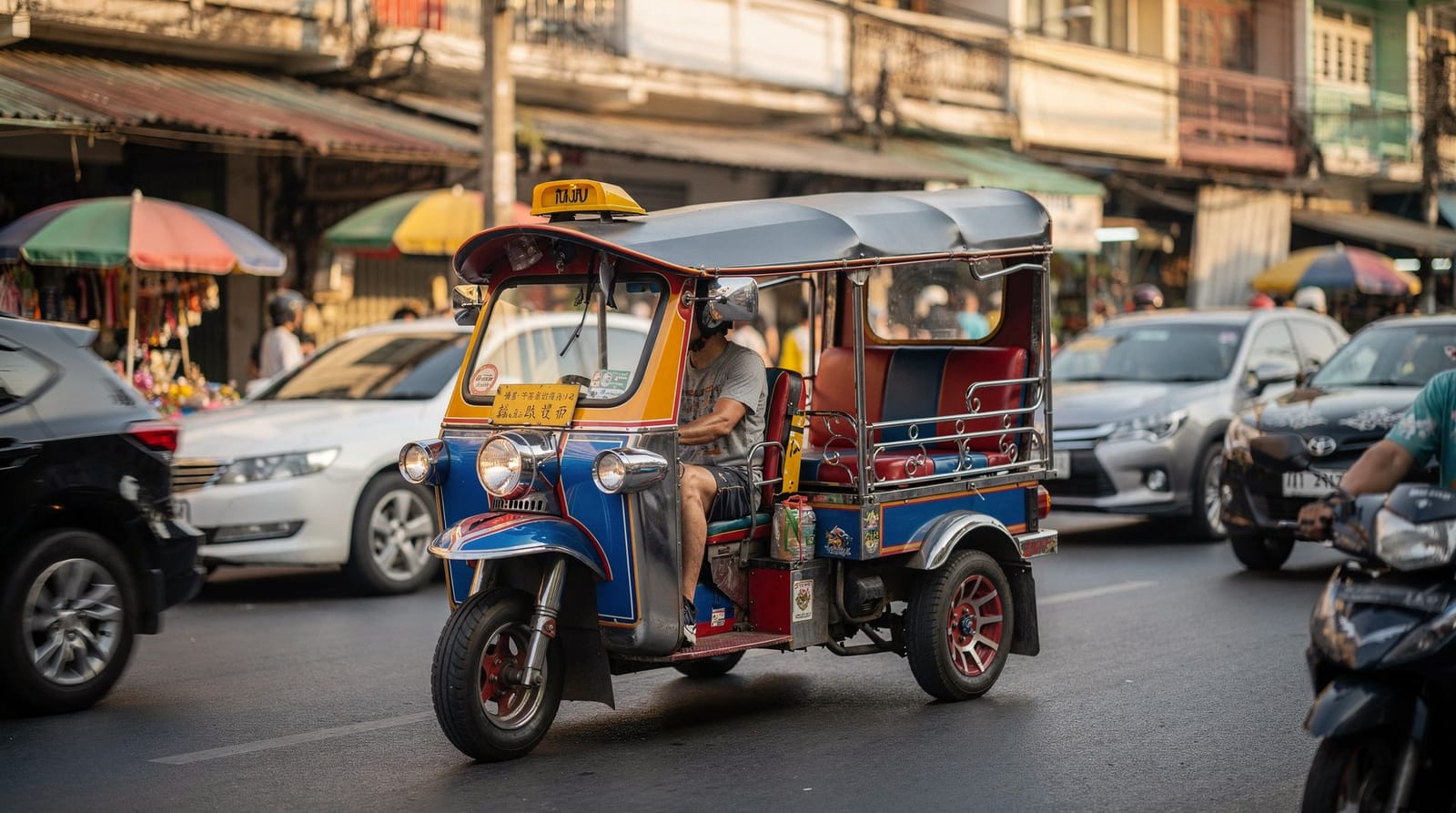
The vehicle for both scams above is the cheap tuk-tuk. A driver offers a city tour for 10 to 20 THB, an impossible price that he recovers by detouring you to gem and tailor shops for fuel coupons and commission. Real tuk-tuk fares are negotiated and often pricier than a Grab car. Refuse the cheap tour, agree any fare in advance, and say no shops. The tuk-tuk scams and Grab, taxi and tuk-tuk guides cover the detail. For honest sightseeing transport, the apps and the tuk-tuk tours in Bangkok guide point you to legitimate options.
Taxi meter refusal
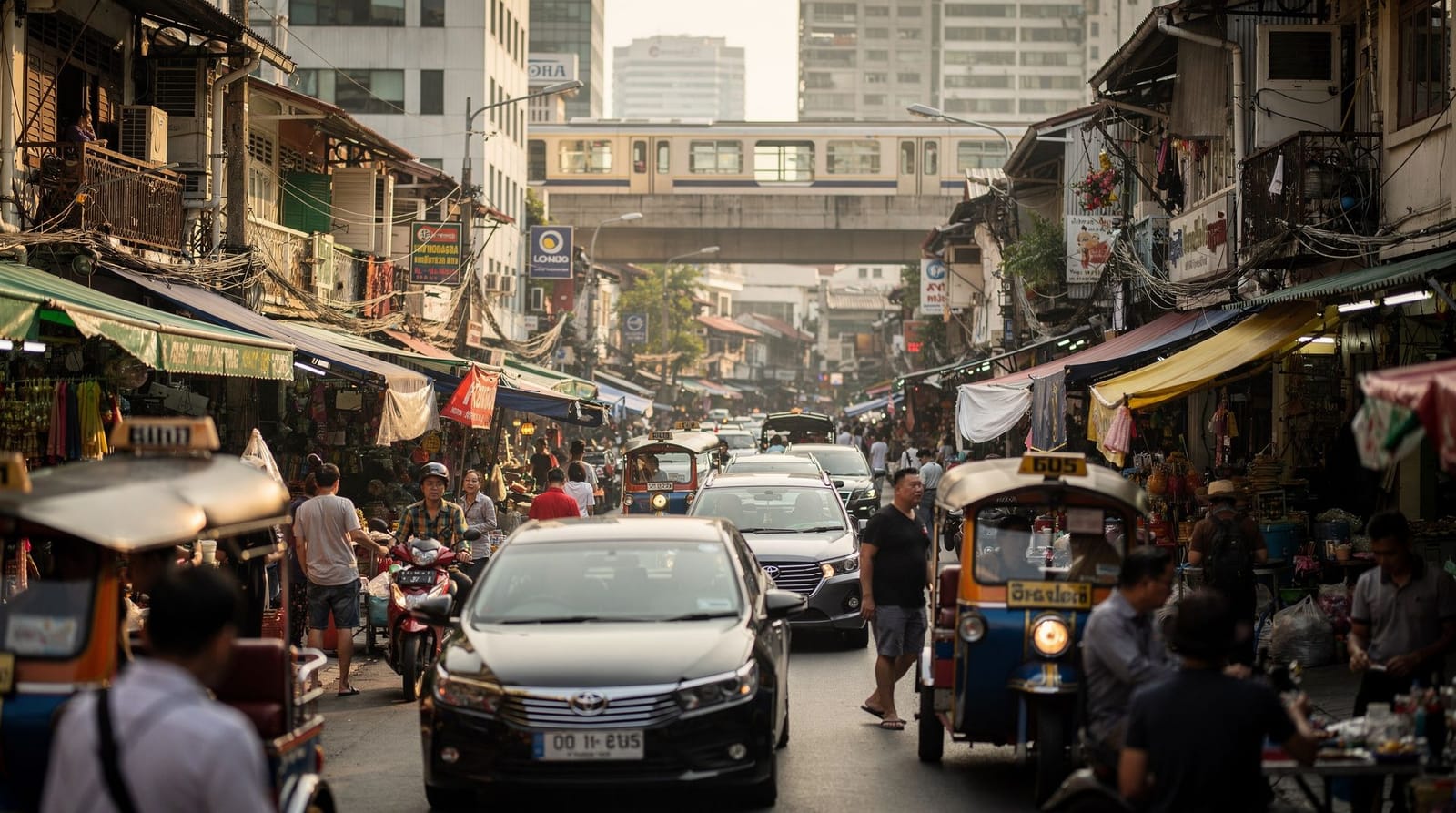
The taxi version is the broken-meter line. A driver refuses the meter and quotes an inflated flat fare. Say “meter, please” before getting in, and if he refuses, wave him on; the legitimate flagfall is 35 THB. The cleaner fix is Grab or Bolt, which lock the fare in the app. This matters most from the airports, where touts inside the terminal quote double or triple the real fare. Use the official public taxi queue, where a roughly 50 THB airport surcharge plus meter applies, or take the Airport Rail Link to Phaya Thai. The Suvarnabhumi airport to city and Don Mueang airport to city guides spell out the routes.
Tailor, tea-house and friendly-local cons
A cluster of softer scams rely on charm. Pushy tailor and suit shops promise a today-only price and pressure you into a rushed, overpriced order. Tea-house and friendly-local scams begin with a stranger striking up a warm conversation, then leading you to a shop, tea house or gem store where you are pressured to buy or where a card scam follows. The defence is the same red flag: be wary of any stranger who approaches you first and steers you toward a purchase. Keep your card in sight when paying anywhere, and do not be rushed by a deadline that conveniently expires today.
Bird seed, blessings and minor street hustles
Smaller annoyances round out the list. Around temples, someone may press bird seed, a bird in a cage to release, or incense into your hand, then demand payment for the lucky blessing. A firm, smiling no ends it. The temple etiquette and dress code guide helps you move through temple areas confidently so you are not an easy target. These hustles cost little, but they thrive on hesitation, so decline clearly and keep walking.
Beach-town scams to know before day trips
If your trip extends to Pattaya or the islands, two extra scams matter. Jet ski and motorbike rental operators claim you caused pre-existing damage and demand large sums; photograph and video any rental thoroughly before you use it, and choose reputable operators. The principle carries back to the city: document, use trusted operators, and do not hand over passports as deposits. For day-trip planning that keeps you on the safe side, the Bangkok with day trips itinerary helps.
The ATM, card and currency tricks
A quieter set of scams targets your money directly. Some ATMs, especially standalone machines in tourist areas, carry high foreign-withdrawal fees, so use bank-branch machines and withdraw larger amounts less often. When paying by card, never let it leave your sight; the skimming and double-charge risk rises the moment a card disappears behind a counter. Dynamic currency conversion is another soft sting: a card machine offers to charge you in your home currency at a poor rate, so always choose to be charged in Thai baht. And at busy markets, check your change, since a rushed vendor handing back the wrong amount is an easy, deniable way to overcharge. None of these are dramatic, but together they can quietly drain a trip’s budget, which is why the Bangkok travel costs guide is worth reading before you arrive.
Nightlife bill ambushes
The most aggressive scams cluster in parts of the nightlife scene. Ping-pong shows and some bars in the Patpong area and around Nana advertise a cheap or free entry, then spring a padded drinks bill, a surprise minimum charge and intimidation when you try to leave, with totals that routinely reach several thousand THB. The shows are also exploitative of the performers. The defence is simple: avoid the touted shows entirely, and in any bar, ask the price of drinks before you order and keep an eye on the tab. Bangkok has plenty of honest, enjoyable nightlife, covered in the Bangkok nightlife guide and Nana and Soi Cowboy explained, so there is no reason to risk the ambush venues. The what to skip in Bangkok guide lists the ones to walk past.
Scams that target solo and first-time travellers
Some cons are aimed squarely at people who look new or alone. A friendly stranger offering to be your guide for the day, a too-good offer to a remote temple, or an invitation to a private card game or a tea ceremony can all end in pressure to spend or worse. The pattern is the same red flag in a warmer disguise: a stranger who sought you out and steers you somewhere private or commercial. Solo travellers should keep plans flexible but not be rushed into anyone else’s, share their rough itinerary with someone, and trust the instinct that says a deal is too convenient. Our solo travel in Bangkok guide covers staying safe and sociable without being a target, and Bangkok with kids helps families stay alert while still relaxing into the city.
The clean way to do the famous things
The reassuring part is that every scam has a legitimate version of the thing it imitates. You can visit the Grand Palace by walking to the official gate, see the floating markets through a reputable early tour, ride a tuk-tuk once at an agreed fare, and reach anywhere by Grab, BTS Skytrain, MRT subway or the cheap Chao Phraya commuter boat. Booking trusted tours in advance also removes the on-the-spot tout pricing entirely. First-time visitors should anchor their defences with Bangkok for first-timers, plan your trip to Bangkok and, for those going alone, solo travel in Bangkok.
What to do if you are caught
If you realise mid-scam, disengage calmly and stop spending; arguing rarely helps and politeness keeps things safe. Pressured purchases like gems are almost never refundable, which is why prevention matters most. If you feel harassed or unsafe, the Tourist Police number is 1155. For any card problem, contact your bank immediately and never let your card leave your sight when paying. Keep copies of your documents and use the getting around Bangkok guide so you are never the lost tourist a scammer looks for.
Scams before you even arrive
Not every scam happens on the street. Fake visa websites charge inflated “processing fees” for the Thailand visa and TDAC arrival card, which is free on the official government site — search carefully and never pay a third party for a document the government issues free. Similarly, fake tour and hotel booking sites mimic real operators to take a deposit and vanish; book through recognised platforms or the operator’s verified page. A newer variant targets connectivity: unofficial “Bangkok eSIM” resellers outside the official channels sometimes oversell or misrepresent data plans, so compare against the Bangkok SIM and eSIM guide before buying. None of these are dramatic, but they can cost real money before your trip even starts.
Reporting a scam and getting help
If you do lose money, act quickly rather than staying quiet out of embarrassment. Call the Tourist Police on 1155 — a free, English-speaking line set up specifically for visitor issues, and they can intervene directly with a shop or driver in some cases. For card fraud, contact your bank immediately to freeze the card and dispute the charge; banks are used to Southeast Asia travel scams and can move fast if you report promptly. Keep any receipts, photos or messages as evidence. For the general cost context so you know when a price is genuinely out of line, see the Bangkok travel costs guide, and if the issue arose from a fare dispute, a Rabbit Card on the BTS/MRT sidesteps most transport scams entirely by removing cash negotiation from the equation.