Bangkok markets guide: every type of market explained
Bangkok: Chatuchak Weekend Market & Floating Market Tour
What are the best markets to visit in Bangkok?
Bangkok's essential markets span several types: Chatuchak Weekend Market (the giant, for everything), the night markets (Rod Fai, Asiatique, Jodd Fairs, for vintage, food, and atmosphere), the floating markets near the city (Amphawa, Damnoen Saduak, Khlong Lat Mayom), the flower market (Pak Khlong Talat), and wholesale zones like Pratunam for cheap fashion. The best for you depends on whether you want shopping, food, atmosphere, or a cultural experience — this guide maps them all by type.
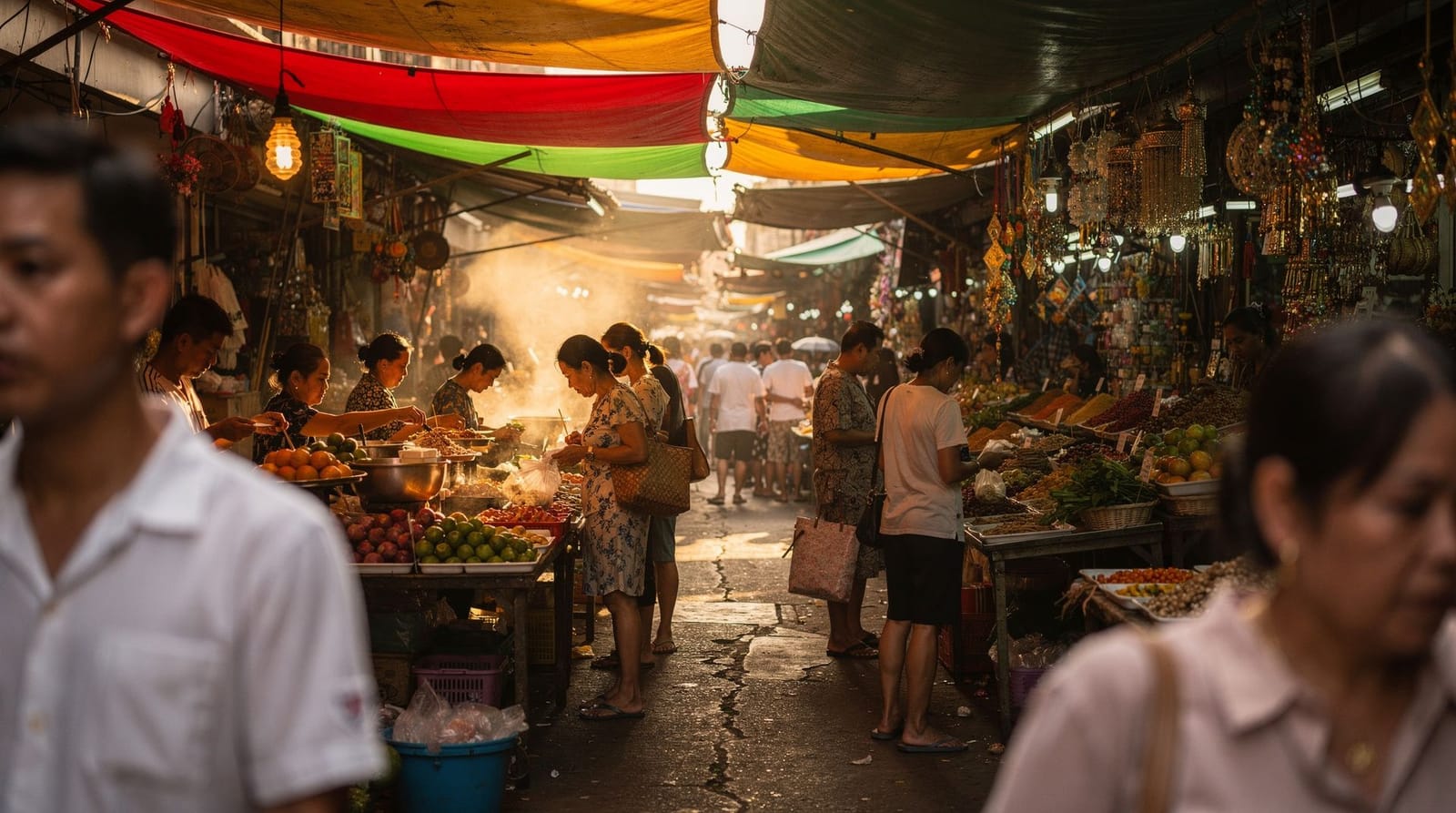
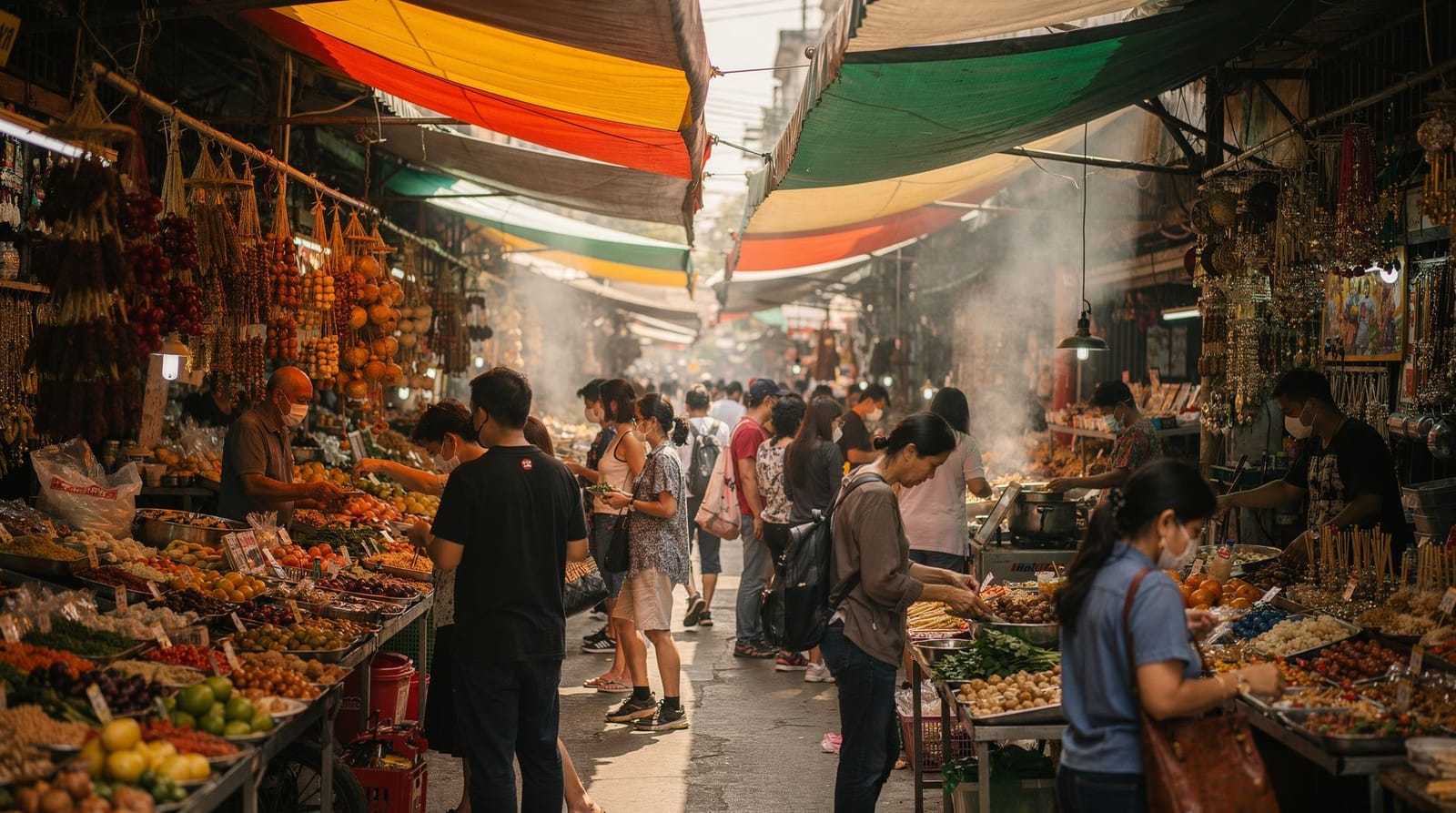
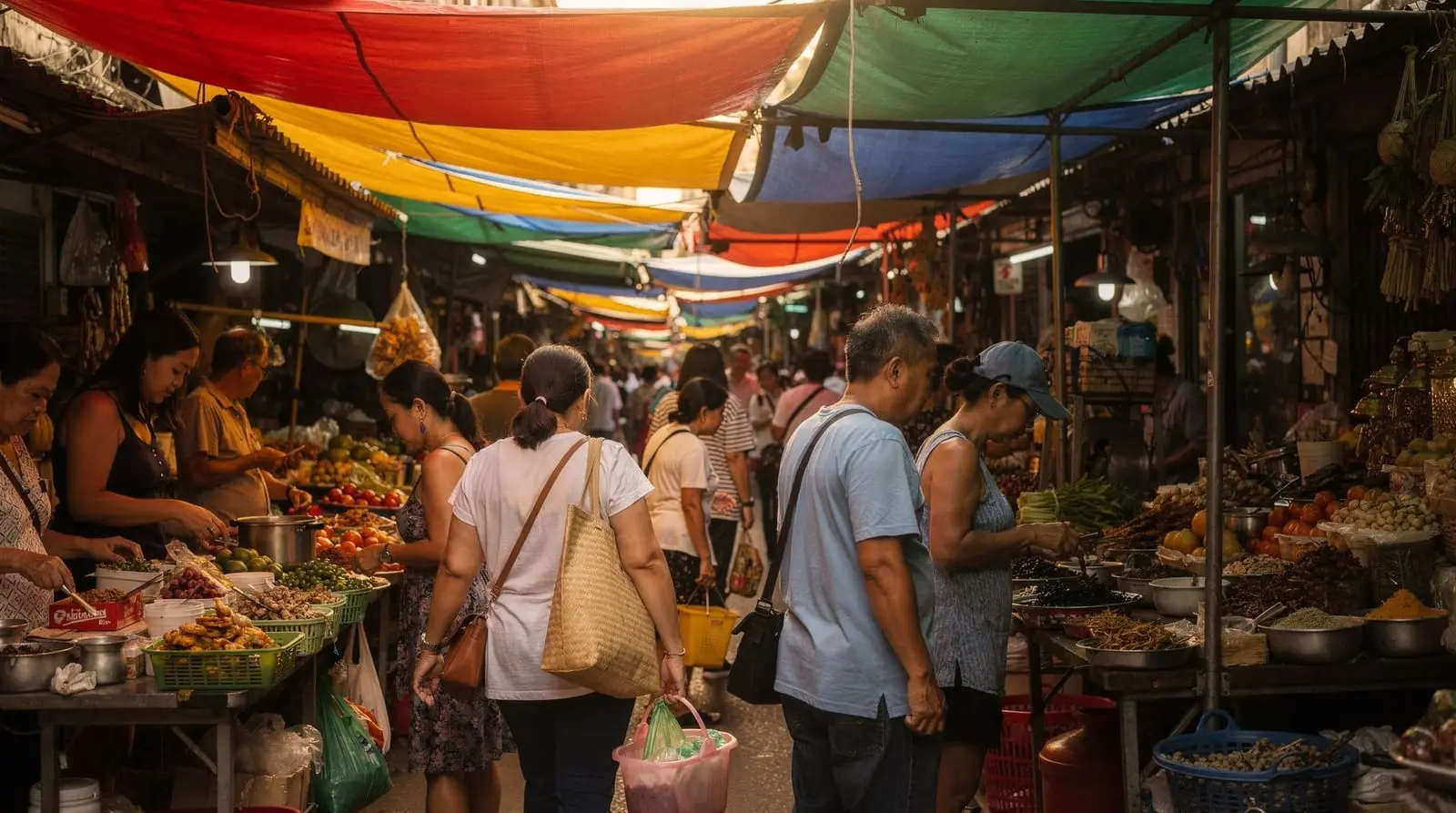
Markets are the beating heart of Bangkok — and the city has an extraordinary variety of them, from the 15,000-stall colossus of Chatuchak to neon night markets, canal-side floating markets, a 24-hour flower market, wholesale fashion warrens, and world-class fresh-produce halls. With so many types, the challenge isn’t finding a market but choosing the right ones for what you want, and timing your visits to their wildly varying schedules. This guide maps every type of Bangkok market — what each is best for, when it’s open, and how to combine them — so you can build a varied, efficient market itinerary rather than wandering at random.
Think of Bangkok’s markets in types, each serving a different purpose: weekend, night, floating, flower, wholesale, and food markets. Match the type to your goal — shopping, food, atmosphere, or cultural experience — and you’ll get the most from the city’s greatest pastime. For the shopping angle specifically, see the Bangkok shopping guide.
| Market type | Best for | When |
|---|---|---|
| Weekend (Chatuchak) | Everything — a shopping marathon | Sat–Sun |
| Night (Rod Fai, Jodd Fairs, Asiatique) | Food, vintage, atmosphere | Evening–midnight |
| Floating (Amphawa, Damnoen Saduak) | Cultural experience, photos | Fri–Sun evening / daily mornings |
| Flower (Pak Khlong Talat) | Sensory, photogenic | 24 hours, best at night |
| Wholesale (Pratunam) | Cheap fashion in bulk | Daytime, most days |
| Fresh produce (Or Tor Kor) | Quality ingredients, food court | Daytime |
Weekend markets: Chatuchak, the giant
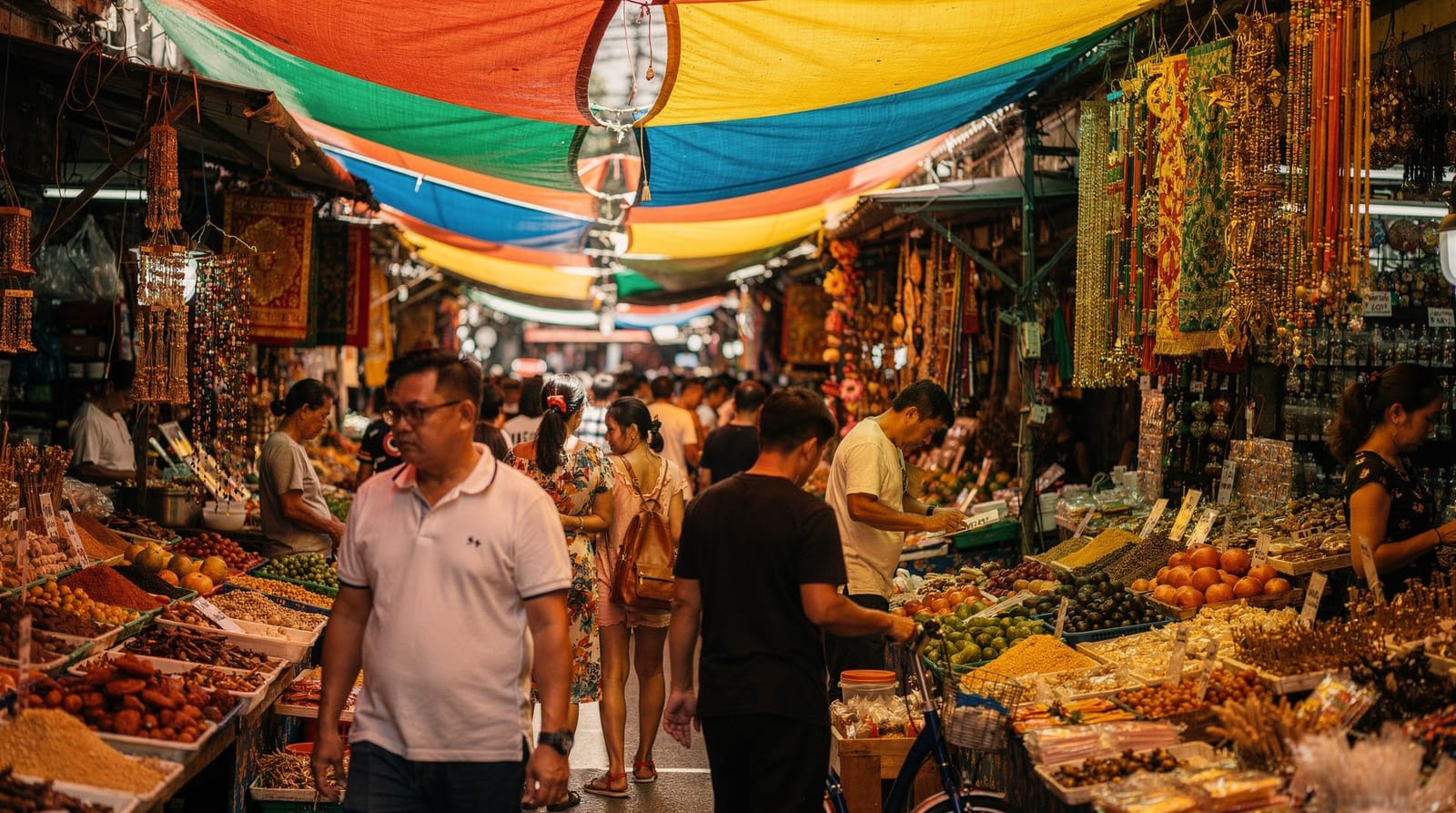
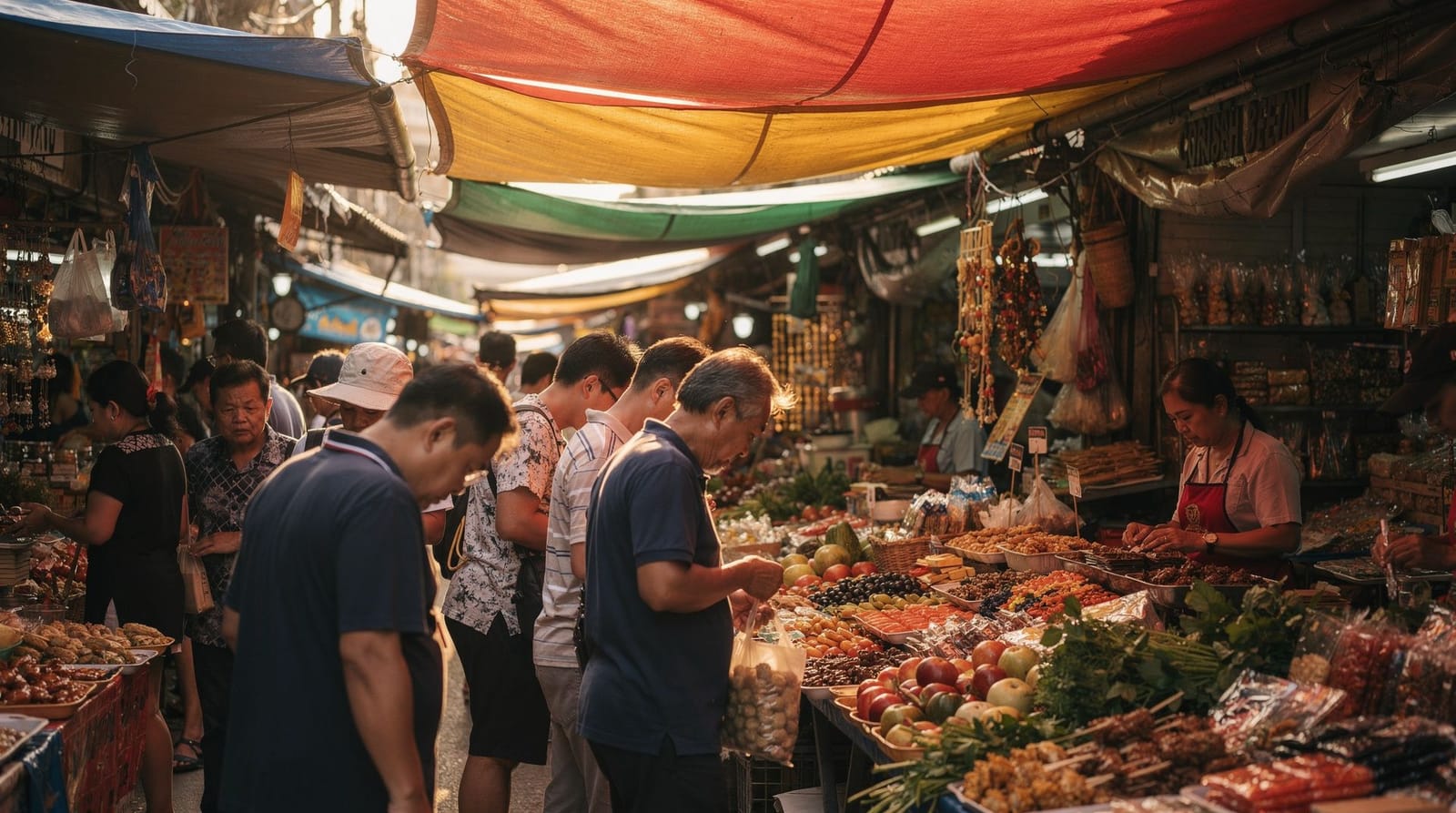
Chatuchak Weekend Market is the essential Bangkok market — roughly 15,000 stalls across 27 sections selling handicrafts, vintage, fashion, art, plants, antiques, and almost everything else, with superb street food throughout. It runs Saturday and Sunday (plus a Friday-night wholesale session) and rewards an early start. It’s a quintessential Bangkok experience and the best single market for shopping and variety. See the Chatuchak Weekend Market guide for navigation and the Chatuchak shopping guide for buying strategy.
A gentle guided introduction such as the local weekend markets tour eases first-timers into the scale.
Night markets: vintage, food, and neon
When the heat lifts, Bangkok’s night markets switch on:
- Rod Fai (Train) Market — vintage, antiques, and a lively bar-and-food scene (Ratchada and Srinakarin branches).
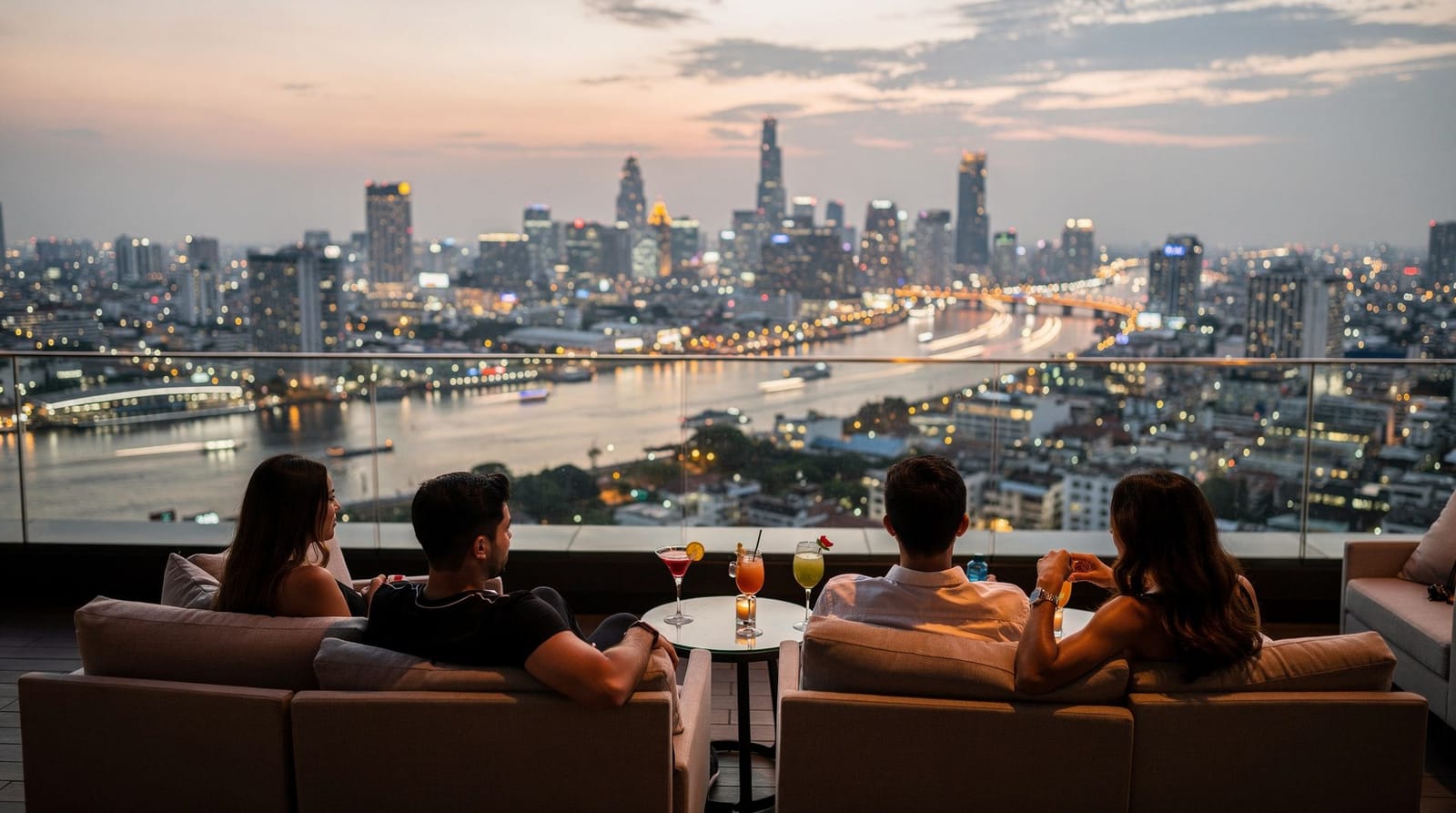
- Asiatique the Riverfront — polished, family-friendly, riverside, with a Ferris wheel.
- Jodd Fairs — trend-driven street food and a young Bangkok crowd.
- Chinatown/Yaowarat — not a stall market but the city’s greatest after-dark street-food district.
Each is best at something different — the best night markets guide ranks them by purpose, with deeper dives in the Rod Fai guide and Asiatique guide. One caveat: the night-market scene changes constantly, with venues opening, closing, and relocating — confirm before you go.
Floating markets: the canal tradition
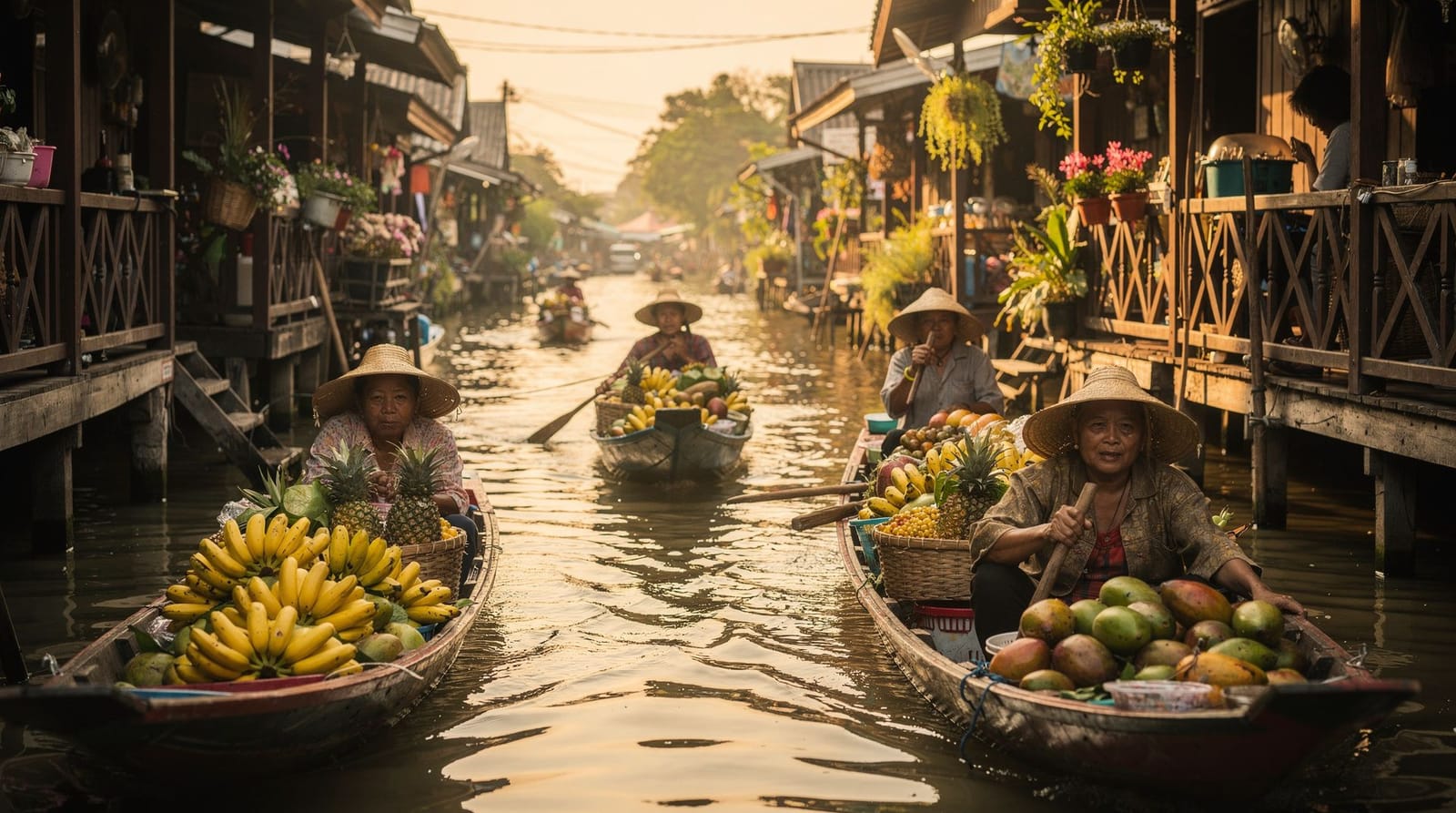
Near the city, the floating markets offer a cultural experience rooted in the Chao Phraya delta’s canal heritage:
- Amphawa — the best overall, weekend evenings, with a firefly cruise (mostly Thai visitors).
- Damnoen Saduak — the famous, photogenic, touristy one (daily, mornings).
- Khlong Lat Mayom — the easy, local, weekend option within Bangkok.
The floating markets guide ranks them, with detail in the Amphawa, Damnoen Saduak, and Khlong Lat Mayom guides. The famous Maeklong Railway Market (vendors trading on the train tracks) pairs naturally with them — see the Maeklong guide. A combined trip such as the Damnoen Saduak half-day guided tour handles the logistics.
The flower market: Pak Khlong Talat
Pak Khlong Talat, by the river at the edge of the Old City, is Bangkok’s great 24-hour flower market — walls of marigolds, jasmine garlands, orchids, and roses, most spectacular at night. Free to enter, endlessly photogenic, and a sensory experience rather than a shopping stop. See the Pak Khlong flower market guide. The flower market and Little India tour pairs it with the nearby Phahurat fabric district.
Wholesale markets: Pratunam
For cheap fashion in volume, the Pratunam district and its Platinum Fashion Mall are the wholesale fashion hub — clothing and accessories at wholesale prices, best bought in multiples. Functional rather than leisurely, but unbeatable value for clothes. See the Pratunam and Platinum market guide.
Fresh produce and food markets
For food and ingredients:
- Or Tor Kor — one of the world’s best fresh-produce markets, near Chatuchak, with premium fruit, prepared food, and a renowned food court.
- Klong Toey — Bangkok’s vast, raw wholesale market, a sensory immersion in the city’s food supply.
- Neighbourhood fresh markets — everywhere, the everyday markets of local life.
These are where cooking classes often shop — see the cooking class with market guide — and the best food markets guide covers them in depth.
Weather, timing and crowds
Bangkok’s markets behave differently by season. In the June–October wet months, floating markets and night markets are most affected — a downpour can empty stalls fast, so build in flexibility and see our Bangkok in the rain guide for backup plans. Chatuchak’s covered sections stay busy through rain, but the exposed lanes get slippery. Heat is the bigger factor most of the year: arrive at Chatuchak or a floating market by mid-morning at the latest, since both turn punishing by midday. Night markets dodge the heat entirely by design. The month-by-month weather guide and rainy season guide help you plan market days around the forecast rather than around luck.
Photographing the markets
Bangkok’s markets are among its most photogenic subjects — the flower market’s colour walls, Damnoen Saduak’s boats, and Chatuchak’s maze of stalls all reward a camera. Early morning and blue-hour evening light work best; midday sun is harsh and the crowds are thickest. Ask before photographing vendors closely, and buy something if you linger at a stall for shots. The best photo spots and Instagram spots guides map the most rewarding angles across the city, several of them market-based.
Comparing the market types
| Market type | Time needed | Crowd level | Tourist vs local mix | Price level |
|---|---|---|---|---|
| Chatuchak | Half day or more | Very high on weekends | Mixed, leaning tourist | Wide range, bargain hard |
| Night markets | 2–3 hours | High, buzzy | Mixed | Budget to mid-range |
| Floating markets | 2–4 hours incl. transport | High at Damnoen Saduak, low at Khlong Lat Mayom | Damnoen Saduak mostly tourist; Amphawa/Khlong Lat Mayom mostly local | Moderate, transport adds up |
| Flower market | 30–60 minutes | Low to moderate | Mostly local/wholesale | Free to browse |
| Pratunam | 1–2 hours | Moderate | Mostly local/wholesale buyers | Cheap, bulk pricing |
| Or Tor Kor | About 1 hour | Moderate | Mixed | Mid-range, quality produce |
How to choose and combine
- Want serious shopping? Chatuchak (weekend) + Pratunam (cheap fashion).
- Want food and atmosphere? A night market (Jodd Fairs/Rod Fai) + Yaowarat.
- Want a cultural experience? A floating market + the flower market + Maeklong.
- Want produce and ingredients? Or Tor Kor + a cooking class.
Match markets to their opening days (the most common planning error), and pair each with nearby attractions. For most trips, two to four markets across different types is ideal — vary the type, not just the number. See the getting around Bangkok guide for transport.
Practicalities
- Opening days vary wildly — Chatuchak (Sat–Sun), Amphawa (Fri–Sun), Khlong Lat Mayom (weekends), Damnoen Saduak (daily mornings), night markets (evening), flower market (24h). Always confirm.
- Carry small cash — most stalls are cash-only.
- Bargain politely on non-food goods at the markets; food and wholesale prices are largely set.
- Stay safe in crowds — bag in front, only the cash you need, ignore unsolicited ‘deals’, never buy gems as investments. See common Bangkok scams.
- Beat the heat — early for daytime markets, evening for night markets; stay hydrated.
The honest verdict
Bangkok’s markets are the city’s greatest pleasure and come in remarkable variety — weekend, night, floating, flower, wholesale, and food markets, each best at something different. Chatuchak is the essential all-rounder for shopping; the night markets for food and atmosphere; the floating markets and flower market for cultural experience; Pratunam for cheap fashion; Or Tor Kor for produce. The keys are to choose by type, match each to its opening days, carry small cash, bargain politely, and visit two to four across different types rather than many of the same. Do that, and Bangkok’s markets become the highlight of the trip. To go deeper, see the Chatuchak Weekend Market guide, best night markets guide, and floating markets guide.
Frequently asked questions about Bangkok markets guide: every type of market explained
What types of markets does Bangkok have?
Which Bangkok market is best for food?
Do you bargain at Bangkok markets?
When are Bangkok's markets open?
Which market is best for first-time visitors to Bangkok?
Are Bangkok's markets safe?
How many markets should I visit in Bangkok?
Top experiences
Bookable activities with verified prices and instant confirmation on GetYourGuide.