Silom and Sathorn: an honest guide to Bangkok's financial heart
Bangkok: Bar and Club Crawl
What is Silom-Sathorn in Bangkok, and what is there to do?
Silom and Sathorn form Bangkok's financial district: office towers and business lunches by day, a lively scene by night. Highlights include Lumphini Park (the city's central green lung), the Patpong night market, the buzzing LGBTQ+ bars of Silom Soi 2 and Soi 4, and a dense, excellent restaurant and street-food scene. It is compact, walkable and served by both the BTS Silom line and the MRT, making it a strong, central base. Key stations are BTS Sala Daeng, BTS Chong Nonsi and MRT Si Lom and MRT Lumphini.
Silom and Sathorn form Bangkok’s financial district — the closest thing the city has to a downtown. By day it is office towers, suited workers and busy lunch counters; by night it transforms into one of the liveliest corners of the city, with the Patpong night market, the buzzing LGBTQ+ bars of Silom Soi 2 and Soi 4, and a dense, genuinely excellent food scene. Anchoring its northern edge is Lumphini Park, the central green lung where joggers and monitor lizards share the lawns at dawn. Compact, walkable and served by both the BTS Silom line and the MRT, Silom-Sathorn is a strong, central base. This guide gives an honest read on staying, eating and going out, with the stations, prices and the one scam you must not fall for.
| Where | Financial district south of Lumphini Park, along Silom and Sathorn roads |
| Getting there | BTS Sala Daeng/Chong Nonsi, MRT Si Lom/Lumphini |
| Best for | Central, walkable base; nightlife; Lumphini Park |
| Character | Business by day, lively bars and markets by night |
| Quieter on | Weekends, when the office crowd is away |
The character of the district: finance by day, nightlife by night
Silom-Sathorn has a split personality. Silom Road runs from Lumphini Park down toward the river, lined with banks, office towers and hotels; Sathorn Road, a parallel artery to the south, is the embassy-and-corporate spine. On weekday mornings and lunchtimes the area hums with office workers, and the daytime street-food stalls feeding them are some of the best-value eating in central Bangkok.
After dark, the personality flips. Silom Road’s lower sois light up with the Patpong night market, the LGBTQ+ scene on Soi 2 and Soi 4, and a wave of restaurants and bars. It is a more compact and walkable district than sprawling Sukhumvit, and a little more grown-up in feel. The trade-off is that it can go quiet on weekends, when the office crowd disappears. The Silom-Sathorn destination page maps it, and the pillar Bangkok neighbourhoods guide places it in the wider city.
Lumphini Park — the central green lung
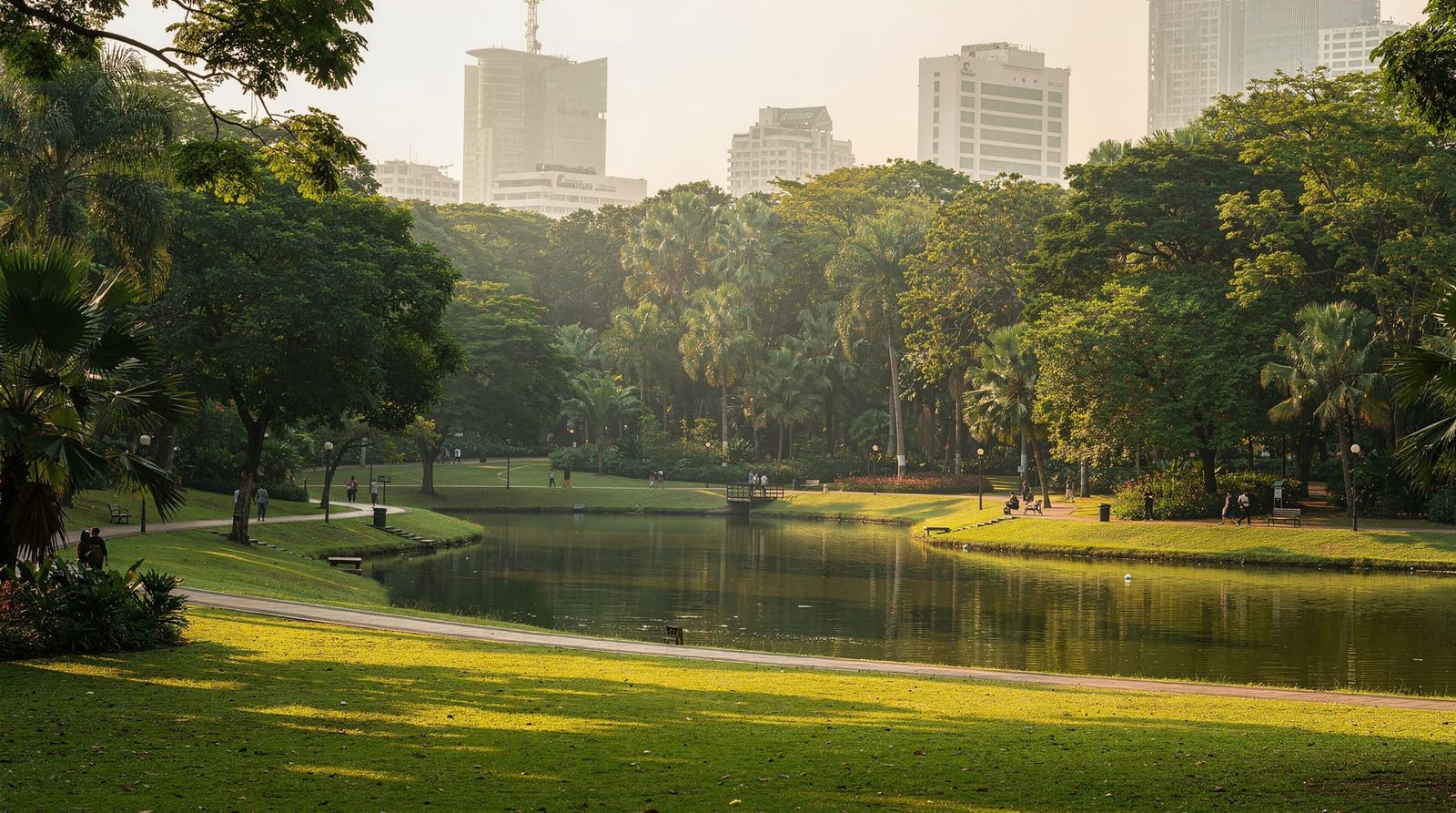
The district’s standout sight isn’t a temple or a bar — it’s a park. Lumphini Park, 57 hectares of lawns, lakes and shaded paths on Silom-Sathorn’s northern edge, is Bangkok’s central green escape, opened in the 1920s and named after the Buddha’s birthplace. It is free and open roughly 04h30 to 21h00.
Come at dawn or dusk, when the heat eases and the park comes alive: joggers loop the paths, tai-chi and aerobics groups gather, old men play chess, and you can rent a pedal boat (around 40 THB for half an hour) on the lakes. The park’s famous residents are the large monitor lizards that sun themselves on the banks and swim the canals — harmless, prehistoric-looking and a genuine highlight. The dedicated Lumphini Park guide and the Lumphini Park nature guide cover what to see; the Bangkok parks guide compares it with the city’s other green spaces. MRT Lumphini and MRT Si Lom both sit at its corners.
Patpong — the night market and the scam to avoid
Patpong is Bangkok’s original red-light district: two parallel sois off the lower end of Silom Road, lined with go-go bars and overlaid every evening with a tourist night market selling souvenirs, knock-off watches, T-shirts and bags. The market itself is fine for a browse — just expect heavy touting and bargain hard, starting at roughly a third of the asking price.
The critical warning concerns the go-go bars. Patpong is notorious for the “ping-pong show” upsell scam: touts lure you in with a cheap or “free” cover charge, then present a wildly inflated bill (thousands of baht) when you try to leave, sometimes with intimidation. The honest advice is simple — decline the show touts entirely. Browse the market if you like, watch the spectacle of the street, then move on. The Bangkok tourist traps guide, the common Bangkok scams guide and the overpriced attractions guide detail this and other traps.
The LGBTQ+ scene: Silom Soi 2 and Soi 4
Silom is the heart of Bangkok’s gay nightlife, and Bangkok is one of Asia’s most LGBTQ-friendly cities. Silom Soi 2 and Silom Soi 4, two short lanes off Silom Road near Sala Daeng, form a compact, lively, welcoming cluster of bars, clubs and cabaret venues, busiest from late evening into the early hours.
Soi 4 leans more bar-and-restaurant and mixed-crowd; Soi 2 has the bigger dance clubs. The scene is open, safe and friendly, and the area hosts major events during Bangkok Pride. The dedicated LGBTQ Bangkok guide covers venues, drag and cabaret shows and the calendar in full, and the cabaret shows guide covers the famous ladyboy revues. A guided night out is an easy, low-stress way to see the best of it.
Bangkok LGBTQ+ nightlife tour with a drag show — Silom’s best bars with a local hostNightlife beyond the headline sois
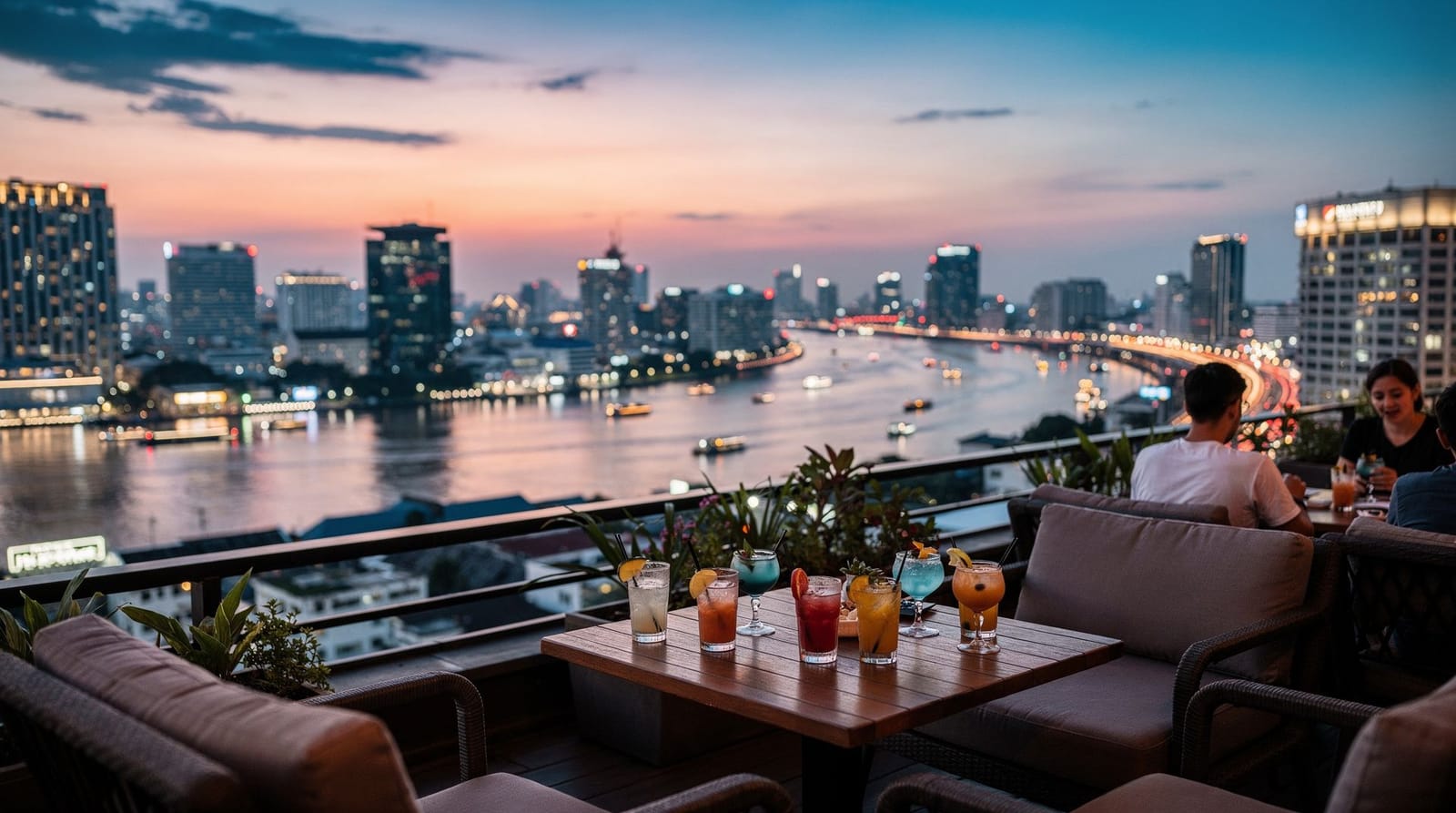
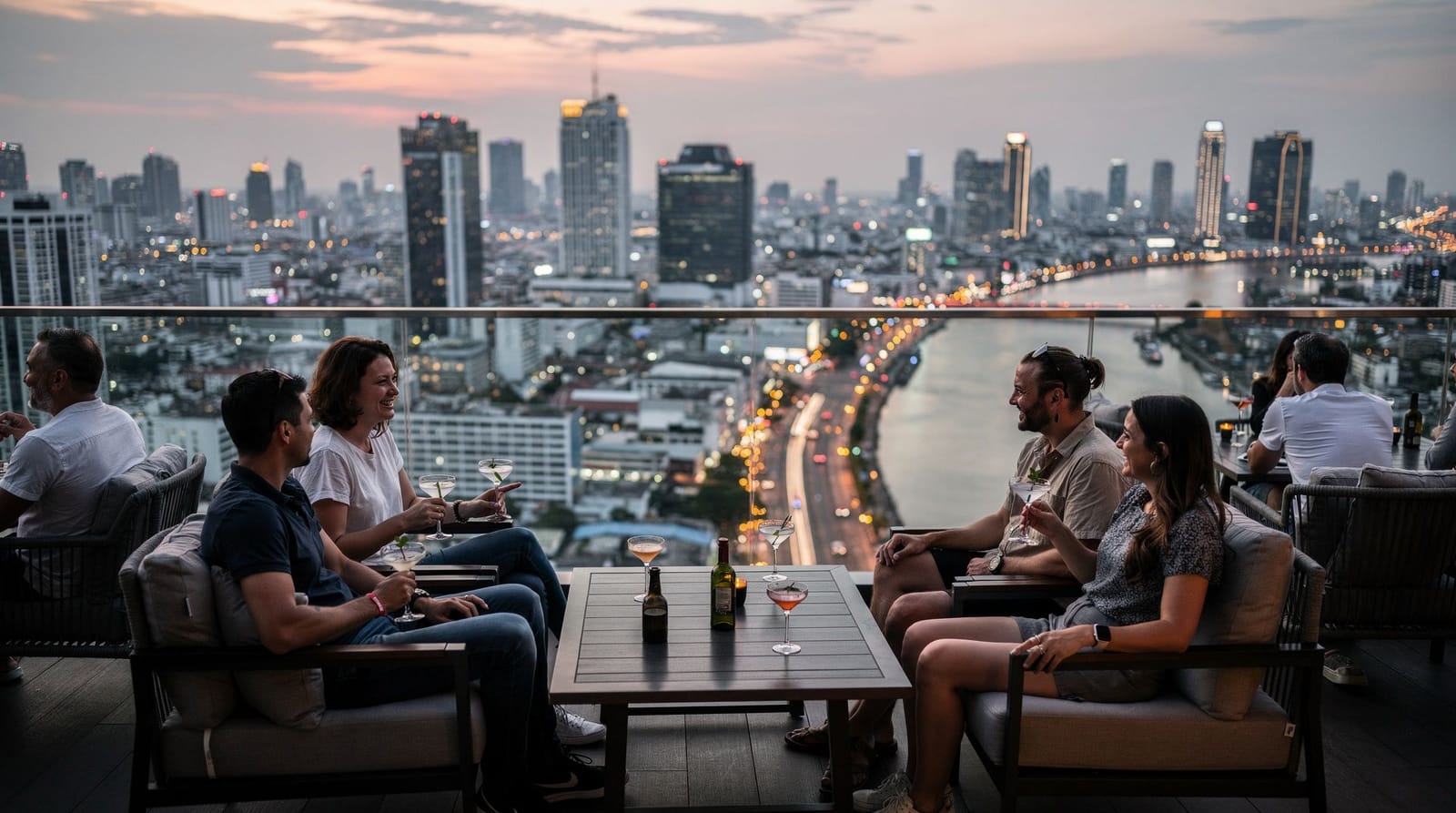
Silom’s after-dark appeal isn’t only Patpong and the gay sois. The district has a strong general nightlife spread — rooftop bars on the taller hotels, cocktail lounges, live-music spots and late restaurants. Sala Daeng and the lanes around it stay busy, and the area links easily to the riverside and Sukhumvit by rail. For an organised night out that skips the tourist traps, a bar-and-club crawl is the efficient option.
Bangkok bar and club crawl — a guided night across the city’s best venuesThe city-wide Bangkok nightlife guide, the Bangkok at night guide and the best rooftop bars in Bangkok guide set the wider scene.
Weather matters more here than in some districts, because much of the appeal — the park, the outdoor bar terraces, the Patpong market’s open-air stalls — is exposed to the sky. During the rainy season (roughly June to October) a sudden downpour can empty the streets and send you sheltering under a mall awning for twenty minutes; check the Bangkok weather month by month guide if you are planning an evening built around the outdoor scene. Cool-season evenings (November to February) are the most comfortable for walking the district end to end, while the hot season (March to May) rewards sticking closer to air-conditioned malls and BTS stations between sights.
Eating in Silom-Sathorn
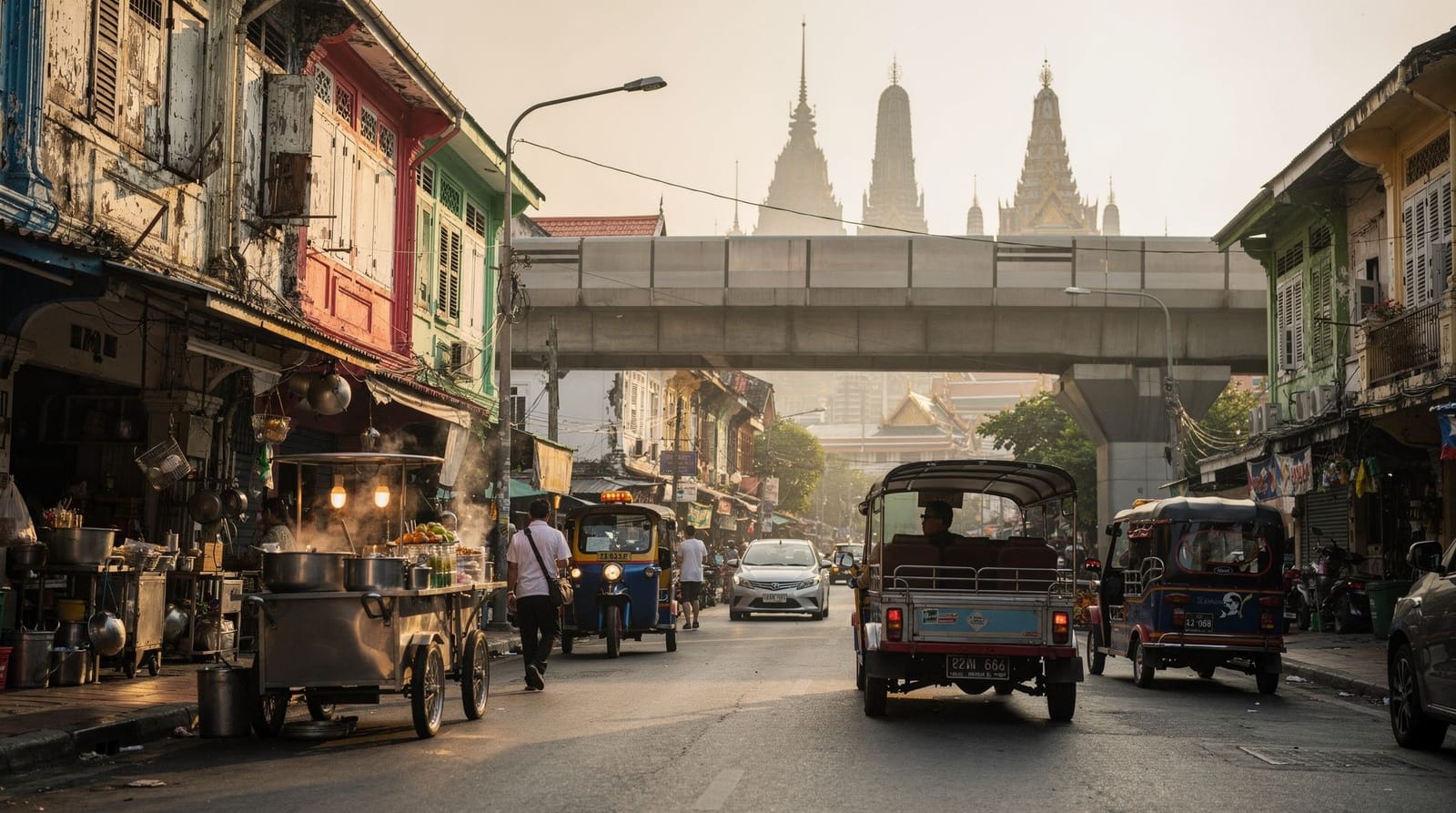
Silom is an underrated food district, kept honest by the daily flood of office workers who demand quick, cheap, excellent lunches. The lanes around Soi Convent and Silom Soi 20 are reliable for noodle soups, rice dishes and grilled skewers at roughly 50–100 THB. There is a strong Indian cluster near the Sri Mariamman Hindu temple and Pan Road, plus Japanese, Thai and international restaurants across the price range.
Just west toward the river, Bang Rak is one of the city’s most underrated food neighbourhoods — old shophouse restaurants, Muslim-Thai eateries and Michelin-listed street stalls. The Bang Rak food guide, the best Thai restaurants guide and the what to eat in Bangkok guide point to specifics, and the halal food in Bangkok guide covers the Muslim-Thai options near Bang Rak.
Getting around Silom-Sathorn
The district is rail-rich. BTS Sala Daeng (Silom line) sits at the heart of Silom Road and interchanges directly with MRT Si Lom; BTS Chong Nonsi covers mid-Silom and connects toward Sathorn; and MRT Lumphini anchors the park end. Much of the area is walkable. The BTS Silom line also runs straight to Saphan Taksin for Chao Phraya river boats — making temple day-trips to the Old City and the riverside easy.
The getting around Bangkok guide, the BTS Skytrain guide and the MRT subway guide explain the network; get a Rabbit Card to skip ticket queues on the BTS. Late at night, use registered Grab rides or insist on the taxi meter — the Grab, taxi and tuk-tuk guide covers the meter-refusal issue.
Winding down: spas and wellness
After a day of walking Silom-Sathorn’s grid, the district also holds a strong cluster of spas and massage shops, from cheap, no-frills traditional-massage shopfronts along Silom Road to polished day spas aimed at the business and hotel crowd on Sathorn. It is a convenient place to book an hour of recovery between sightseeing and a night out, rather than a special trip elsewhere in the city, and many shopfronts stay open into the evening for a post-dinner foot massage. The best spas in Bangkok guide and the Thai massage guide cover the options and how to tell a good one from a tourist-trap one.
Silom-Sathorn vs Sukhumvit, at a glance
Both are strong, rail-connected central bases, but they suit different travellers:
| Silom-Sathorn | Sukhumvit | |
|---|---|---|
| Feel | Compact, walkable, business-grown-up | Sprawling, modern, endlessly varied |
| Rail | BTS Silom line + MRT interchange | BTS Sukhumvit line + MRT at Asok |
| Standout | Lumphini Park, LGBTQ+ scene, river links | Malls, hotel choice, nightlife density |
| Weekends | Quieter, office crowd away | Busy all week |
| Best for | Couples, solo travellers, less sprawl | First-timers wanting maximum choice |
The full district-by-district comparison is in the Sukhumvit guide and the pillar Bangkok neighbourhoods guide.
Honest verdict: who should base in Silom-Sathorn
Silom-Sathorn is an excellent base for travellers who want central, walkable and slightly more grown-up — with the bonus of Lumphini Park on the doorstep, strong food, a vibrant LGBTQ+ scene and quick links to both the river and Sukhumvit. It suits couples, solo travellers, business visitors and anyone who finds Sukhumvit too sprawling.
It is less ideal for travellers who want a buzzy resort-style strip of nightlife and shopping (Sukhumvit does that better) or who want to be quiet and weekend-lively at once (Silom empties on Sundays). And the lower Silom Road around Patpong is best treated with eyes open — enjoy the spectacle, skip the show touts. Done right, Silom-Sathorn is one of the smartest central bases in Bangkok. Pair it with a Bangkok 3-days itinerary or the where to stay in Bangkok guide to lock in a hotel area, and consider a guided orientation on your first day.
Private Bangkok highlights tour — an efficient first-day orientation from a Silom baseFrequently asked questions about Silom and Sathorn: an honest guide to Bangkok's financial heart
Is Silom-Sathorn a good area to stay in Bangkok?
Is Lumphini Park worth visiting?
What is Patpong and is the night market a tourist trap?
What is the LGBTQ+ scene in Silom like?
How do I get around Silom-Sathorn?
Is Silom-Sathorn good for food?
Is Silom-Sathorn safe at night?
Is Silom better than Sukhumvit?
Top experiences
Bookable activities with verified prices and instant confirmation on GetYourGuide.