Hidden gems of Bangkok: beyond the tour buses
Bangkok: Half-Day Guided City Tour with Temples
What are the best hidden gems in Bangkok?
The best off-the-radar spots are Talat Noi (an old Chinese quarter full of street art and vintage cars), Bang Krachao (a jungle 'green lung' across the river with cycle paths and a weekend floating market), Wat Paknam's emerald glass stupa, the Loha Prasat metal castle at Wat Ratchanatdaram, and Koh Kret, a car-free pottery island. All are free or cheap and reachable by ferry, bike or BTS without a tour.
Bangkok rewards anyone willing to stray a few streets from the Grand Palace and the river piers. Beyond the tour-bus circuit lies a quieter city — an old Chinese quarter strung with street art, a jungle island where bicycles outnumber cars, a metal castle bristling with iron spires, and temples whose ceilings glow like emerald galaxies. This guide gathers the spots that locals and repeat visitors love, with honest detail on how to reach each one, what it actually costs in baht, and when to go. None of them need a tour, though a couple are easier with a guide, and almost all are free or close to it.
| Where | Talat Noi, Bang Krachao, Wat Paknam, Loha Prasat, Koh Kret |
| Cost | Mostly free; ferries and bike rental a few baht to ~80 THB |
| Time needed | 1–2 hours per spot; a half day for Bang Krachao or Koh Kret |
| Getting there | BTS/MRT plus a ferry or Grab for the river-edge spots |
| Best time | Weekday mornings for temples; weekends for Bang Krachao and Koh Kret markets |
The gems compared
| Spot | Cost | Effort to reach | Best for |
|---|---|---|---|
| Talat Noi | Free | Easy — walkable from Chinatown | Street art, photography |
| Bang Krachao | ~80 THB bike rental | Moderate — taxi/BTS plus ferry | Cycling, nature, weekend market |
| Wat Paknam | Free | Easy — BTS/taxi to Phasi Charoen | The glass stupa ceiling |
| Loha Prasat | Free/donation | Easy — old city, near Golden Mount | Quiet city views |
| Koh Kret | Ferry fare only | Moderate — taxi/boat to Pak Kret, then ferry | Pottery, weekend food stalls |
The honest headline: these places are quieter precisely because they take a little more effort to reach. Several sit off the BTS and MRT network, on the river’s edges or across the water, so factor in taxi or ferry time. That friction is the point — it is what keeps the crowds away. Pick one or two to pair with a famous sight and you will see a Bangkok most visitors miss entirely.
Talat Noi: the photogenic old quarter
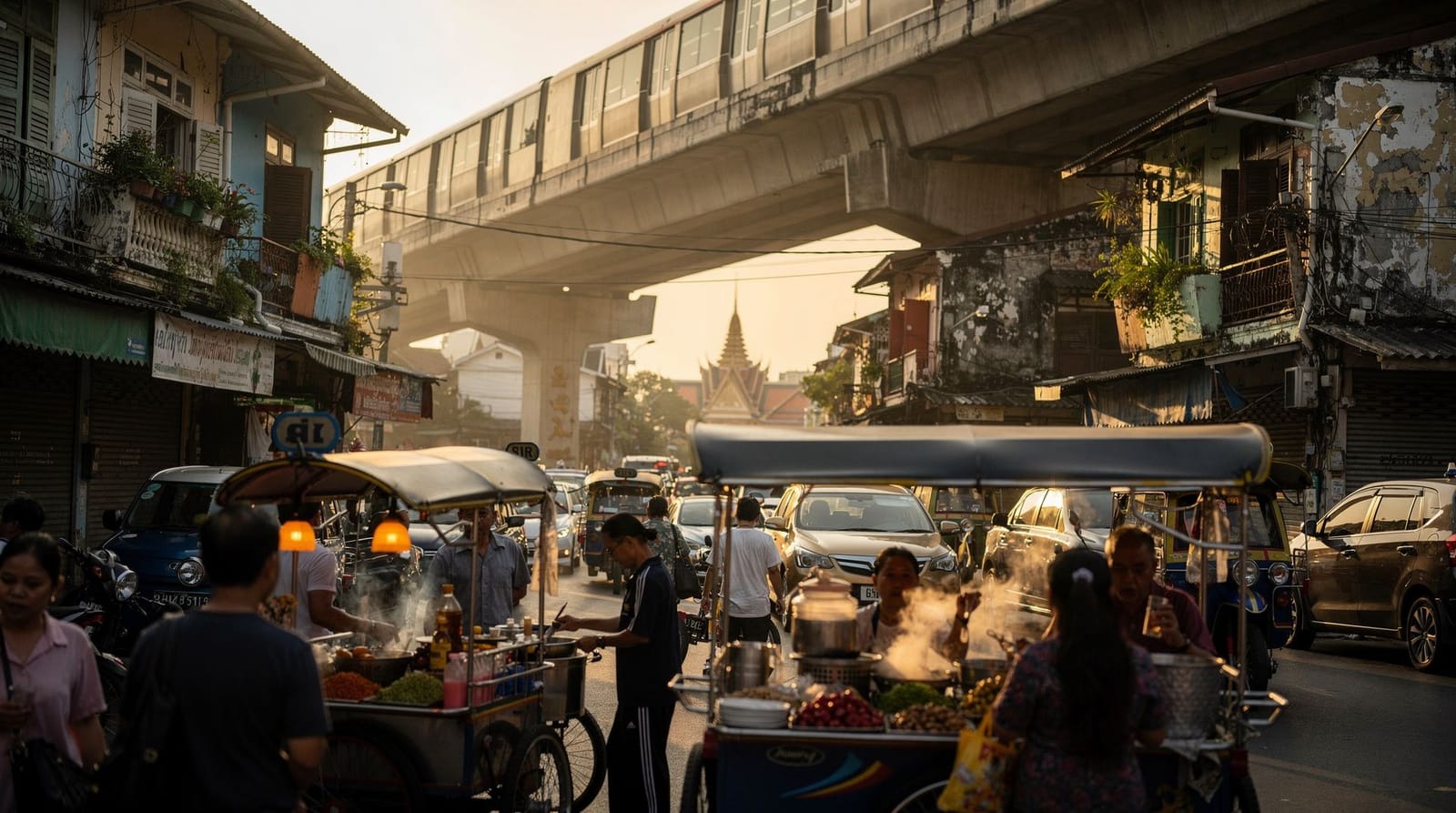
Wedged between Chinatown and the river, Talat Noi is a knot of narrow lanes where century-old Chinese shophouses sit beside working machine-part shops, rusting vintage cars and some of the best street art in the city. It is entirely free to wander, intensely photogenic, and best explored slowly on a weekday morning before the cafe crowd arrives. You will find a Portuguese-era church, hidden shrines and murals around every corner. Our Talat Noi guide maps a walking loop, and the area links neatly into a wider stroll through the old city along the river.
Bang Krachao: the jungle green lung
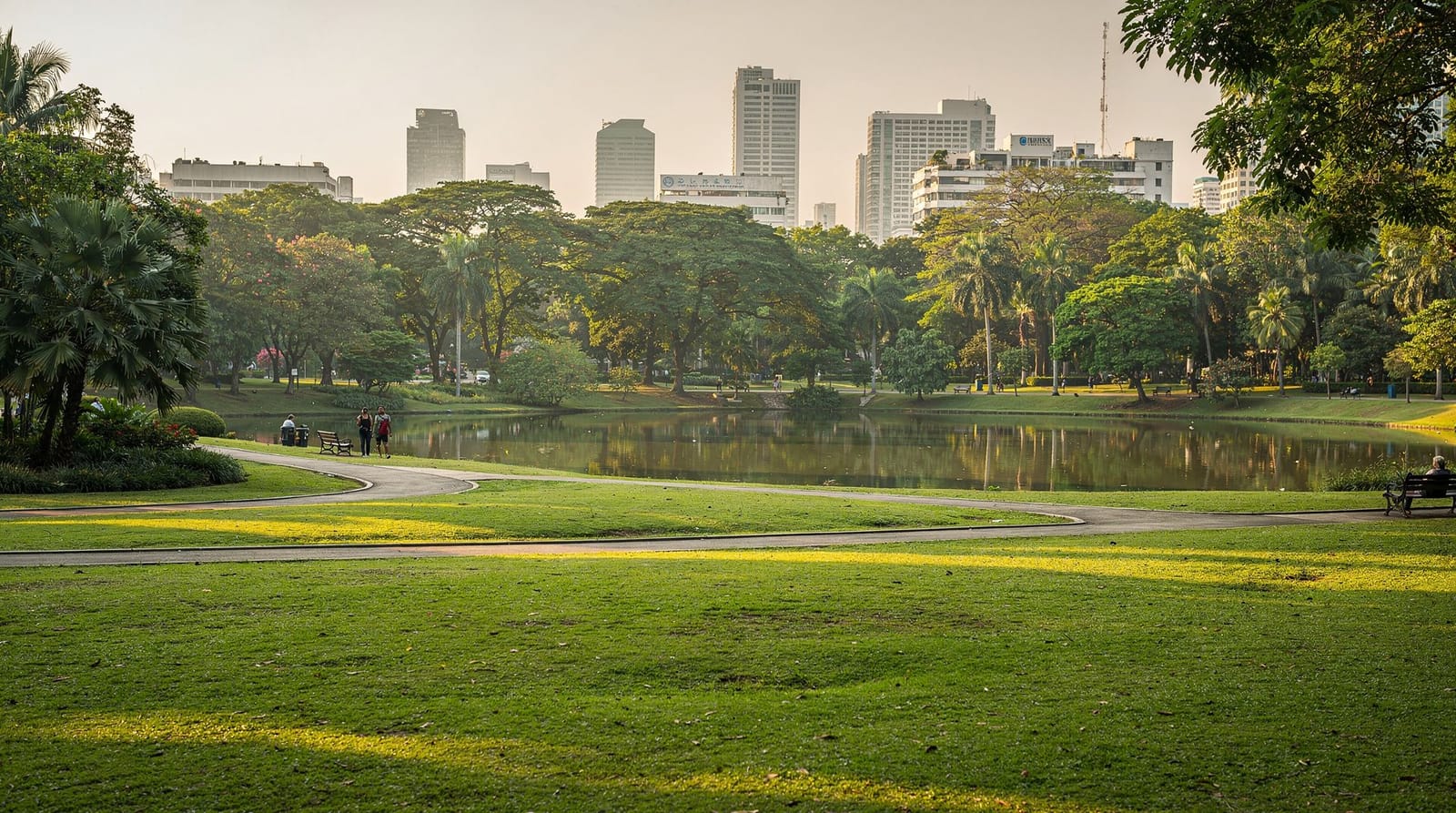
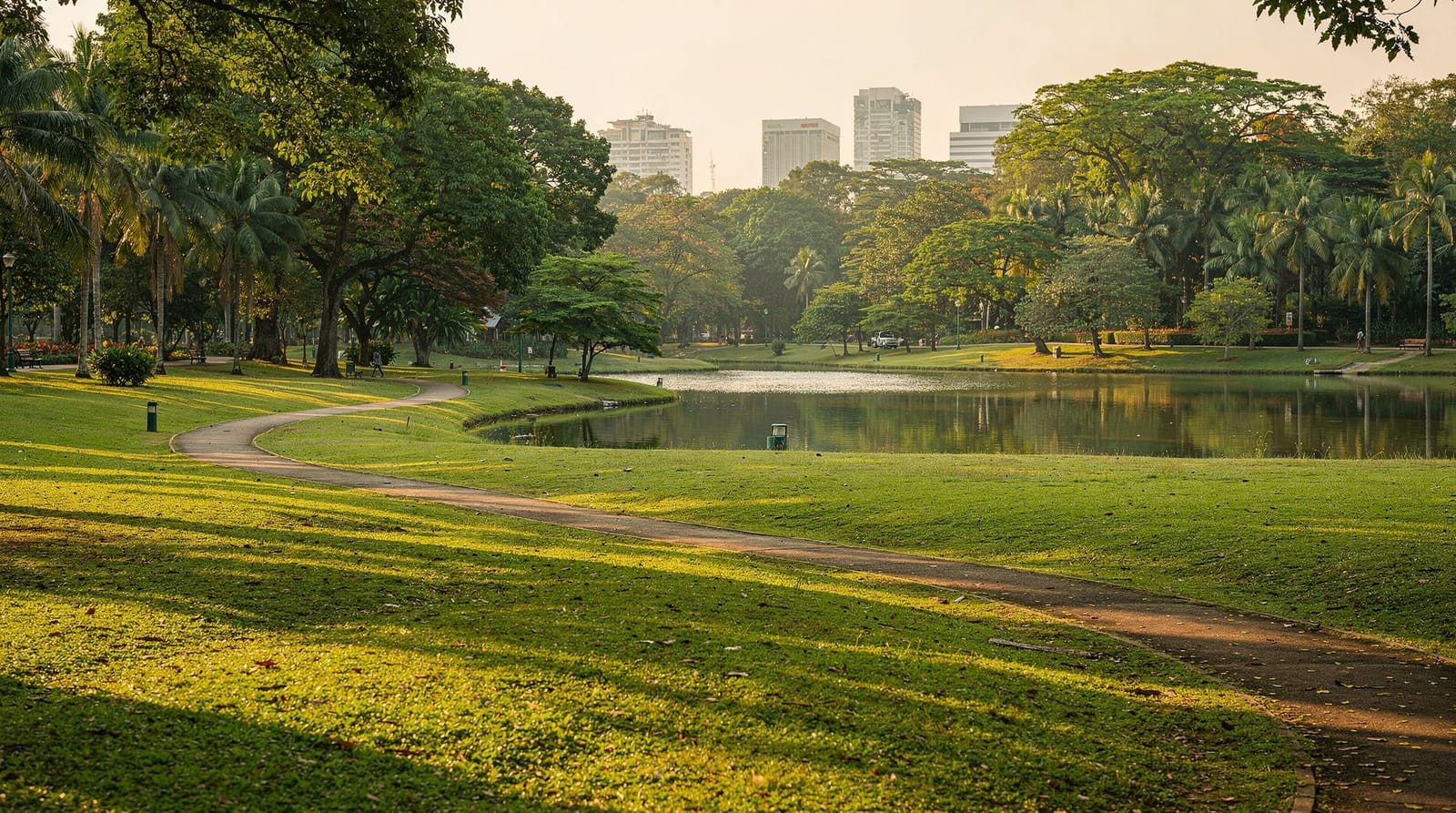
The single most rewarding escape is Bang Krachao, an oxbow of dense jungle across the river that locals call the city’s “green lung.” Crossed by raised concrete cycle paths, lotus ponds and stilt houses, it feels a world away from the towers that loom beyond the trees. A bicycle rents for around 80 THB (~2.50 USD), and on weekend mornings the Bang Nam Phueng floating market fills with food stalls and local crafts. Get there by taking a taxi or BTS to the Klong Toey or Bang Na side, then a short longtail ferry across the water (a few baht) to the pier where the bikes wait — full detail in our Bang Krachao green lung guide. If the maze of unmarked paths sounds daunting, a guided ride solves it: the bike tour Bang Krachao guide explains the options, and you can add a guided half-day around the old city to bookend the day. The full area is covered in the Bang Krachao destination page.
The temples nobody queues for
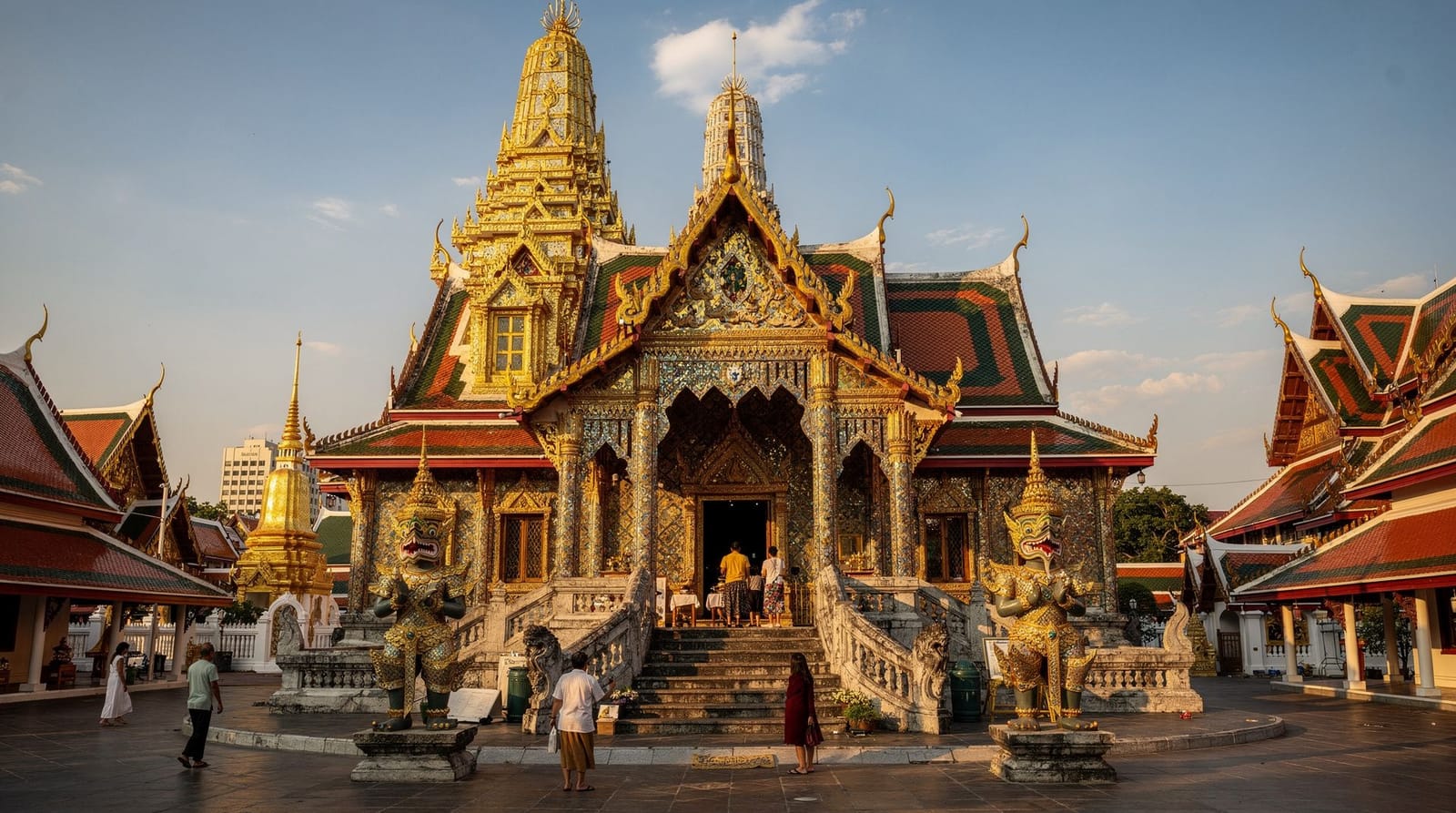
While crowds funnel into the Grand Palace, two extraordinary temples sit almost empty. Wat Paknam in Phasi Charoen hides a giant green glass stupa, its ceiling lit from below into a swirling emerald cosmos — entry is free and the awe-per-baht ratio is unbeatable. See our Wat Paknam guide.
In the old city near Democracy Monument, Wat Ratchanatdaram shelters the Loha Prasat, a 37m “metal castle” crowned with 37 black iron spires — one of only a handful ever built anywhere. Climb its spiral core for a quiet view over the rooftops, free or for a small donation, with none of the queues of the Golden Mount a few minutes’ walk away. It pairs naturally with the Wat Saket Golden Mount for a half-day in the Golden Mount–Phra Nakhon area.
Artists, gardens and the riverside
Across the river in Thonburi’s canal district, the Baan Silapin Artist House is a wooden teak house on a khlong where puppet shows and art studios sit over the water — a serene, free spot reached by longtail boat. Nearby, the Princess Mother Memorial Park in Wongwian Yai preserves a tranquil garden and museum on the site of the late king’s mother’s childhood home. And the riverside lanes of Kudeejeen/Kudichin, a centuries-old Portuguese-Thai community, hide a Catholic church and the famous khanom farang sponge cake baked to a 200-year-old recipe — a genuinely unusual corner of old Thonburi.
Markets the tour buses skip
For a night market with almost no foreign tourists, the Saphan Phut night flower and clothes market spreads beneath the Memorial Bridge after dark — gritty, local and cheap. To eat your way through this lesser-known corner with someone who knows the stalls, you can join an evening street-food tasting tour that ventures beyond the obvious tourist haunts. For something further afield, Koh Kret is a car-free island in the Chao Phraya up in Nonthaburi, home to the Mon community’s celebrated terracotta pottery, riverside food stalls and a leaning temple chedi. Reach it by taxi or boat to Pak Kret pier, then a few-baht cross-river ferry; it is liveliest on weekends. Allow a half day including the travel out.
The neighbourhoods worth wandering
Hidden gems are not only single sights — sometimes the gem is a district. Ari, a leafy enclave a couple of BTS stops north of the centre, has become the city’s coolest cafe-and-bistro neighbourhood without losing its local feel; our Ari neighborhood guide maps the best of it. For a different texture, the spice-scented lanes of Phahurat Little India sit right beside Chinatown yet feel like another country. Wandering these on foot, with no fixed plan, is itself one of the city’s quiet pleasures — and our free things to do in Bangkok guide collects more of them.
How to plan a hidden-gems day
The honest logistics: cluster by geography. Talat Noi, Chinatown and the riverside form one walkable loop; the old-city temples (Loha Prasat, Golden Mount) form another; Thonburi’s artist house and Portuguese community sit together across the river; and Bang Krachao or Koh Kret each deserve a half day on their own because of the travel. Most are reachable by a mix of BTS, MRT, Chao Phraya ferry and Grab, and the river itself is often the fastest, prettiest connector — see our Chao Phraya river boats guide. Pair one hidden gem with one famous sight per day and you will balance the icons with the quiet, which is how Bangkok is best seen — balancing the icons everyone photographs with the quiet corners that make the city feel like yours.
Timing it around the seasons
Weather changes which of these spots reward the effort most. In the cool season (November–February), Bang Krachao and Koh Kret are at their best — comfortable cycling temperatures and clear river light for photos. In the hot season (March–May), prioritise the indoor and shaded gems: Wat Paknam’s cool stupa hall and the covered lanes of Talat Noi are far more bearable at midday than an open bike ride. The rainy season (roughly June–October) brings sudden afternoon downpours, so front-load outdoor spots like Bang Krachao and Koh Kret into the morning and keep Loha Prasat or Talat Noi as an indoor-adjacent backup if the sky turns. Whatever the season, mornings beat afternoons across the board, both for light and for dodging the heat.
Frequently asked questions about Hidden gems of Bangkok: beyond the tour buses
What is the most underrated place in Bangkok?
How do I get to Bang Krachao?
Is Talat Noi worth visiting?
What is the Loha Prasat metal castle?
How do I get to Koh Kret island?
Are Bangkok's hidden gems free?
Top experiences
Bookable activities with verified prices and instant confirmation on GetYourGuide.