Songkran in Bangkok: the complete festival guide
What is Songkran and when is it in Bangkok in 2026?
Songkran is the Thai New Year, celebrated 13 to 15 April 2026, and it is famous worldwide as a giant water festival. Behind the street water fights lies a genuine tradition of cleansing and renewal — gently pouring water over Buddha images and the hands of elders for blessing. In Bangkok the wildest action is on Khao San Road and Silom Road, but you can also experience the quieter, respectful side at temples across the city. Protect your phone, embrace getting soaked, and watch out for the heat — April is the hottest month.
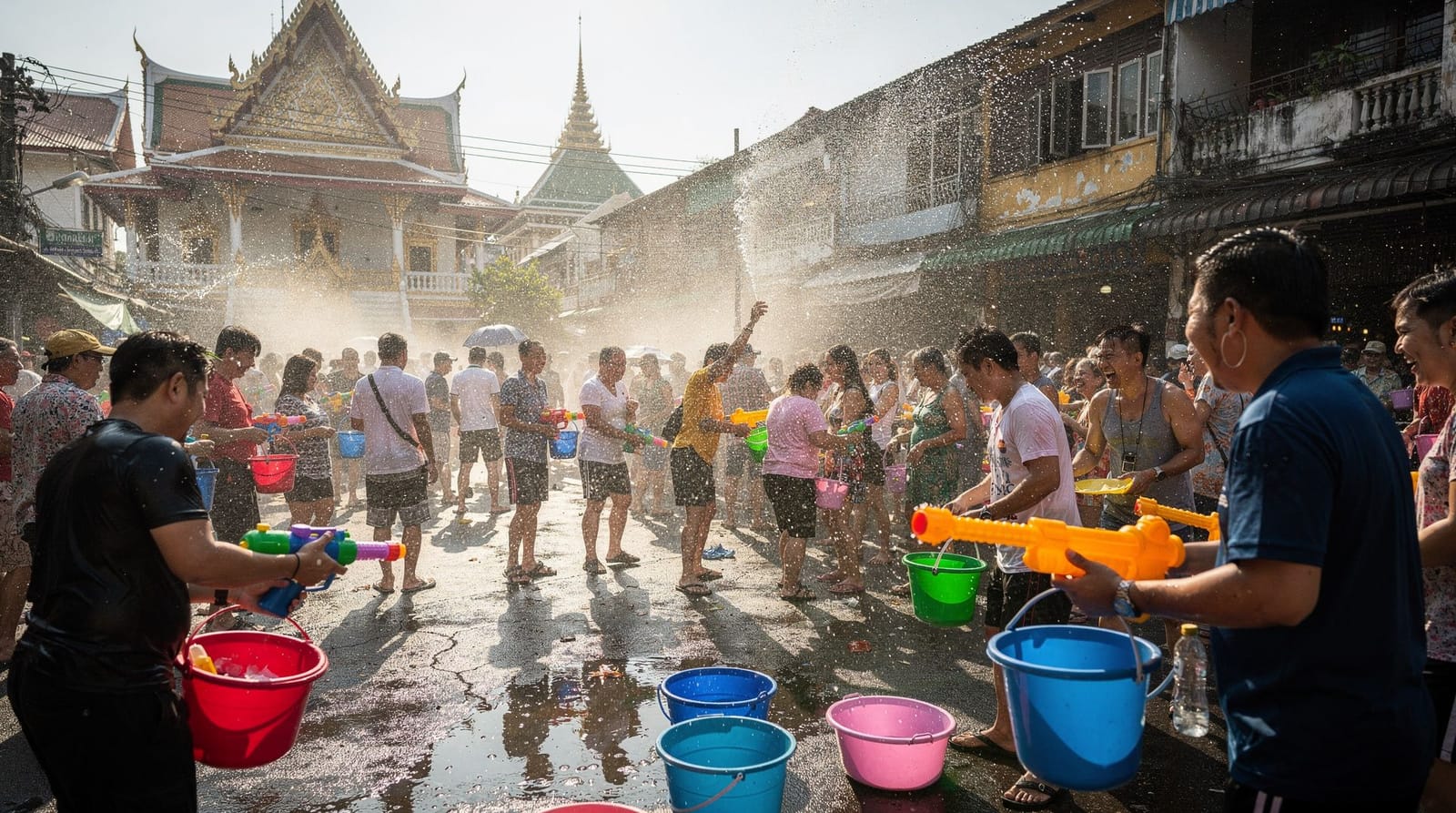
Songkran is the Thai New Year, and in Bangkok it is the most exuberant event of the calendar — three days when the city turns into the world’s biggest water fight. But behind the soakings and the super-soakers lies a genuine tradition of cleansing and renewal: pouring scented water over Buddha images and over the hands of elders to wash away the old year and invite blessings for the new. In 2026 Songkran runs 13 to 15 April, the hottest stretch of the Thai year, which is exactly why dousing the entire city in water makes joyful sense. This guide covers the dates, the meaning, where to go, and how to survive it dry-eyed and happy.
| Dates | 13–15 April 2026 (spills a day either side in tourist zones) |
| Meaning | Thai New Year; water symbolises cleansing and renewal |
| Where | Khao San (wild), Silom (biggest), temples (traditional) |
| Cost | Free to join; water gun and dry bag under 300 THB |
| Best for | Full-immersion travellers; less so for calm sightseeing |
When Songkran happens in 2026
Songkran officially falls on 13 to 15 April 2026, with the 13th as the main day and the others continuing the celebrations. In practice, the street water-throwing in Bangkok often begins a day early and can linger slightly afterward, and some venues stretch their events across the surrounding days. It always lands in mid-April, the hottest month of the Thai year, when daytime temperatures regularly reach 35 to 40 degrees — context that makes a water festival feel less like novelty and more like relief.
These are public holidays, so the city’s rhythm changes: many local businesses close, traffic patterns shift around the closed party streets, and both Thais and tourists are out in force. The seasonal overview, including how April heat shapes the whole experience, is in the best time to visit Bangkok guide and the month-by-month detail in the Bangkok weather guide.
What Songkran actually means
It is worth understanding the tradition, because it changes how you experience the festival. Songkran marks the traditional Thai New Year, tied to the sun’s astrological movement into Aries. Water is the central symbol — it represents cleansing, washing away the misfortunes and impurities of the past year so the new one can begin fresh.
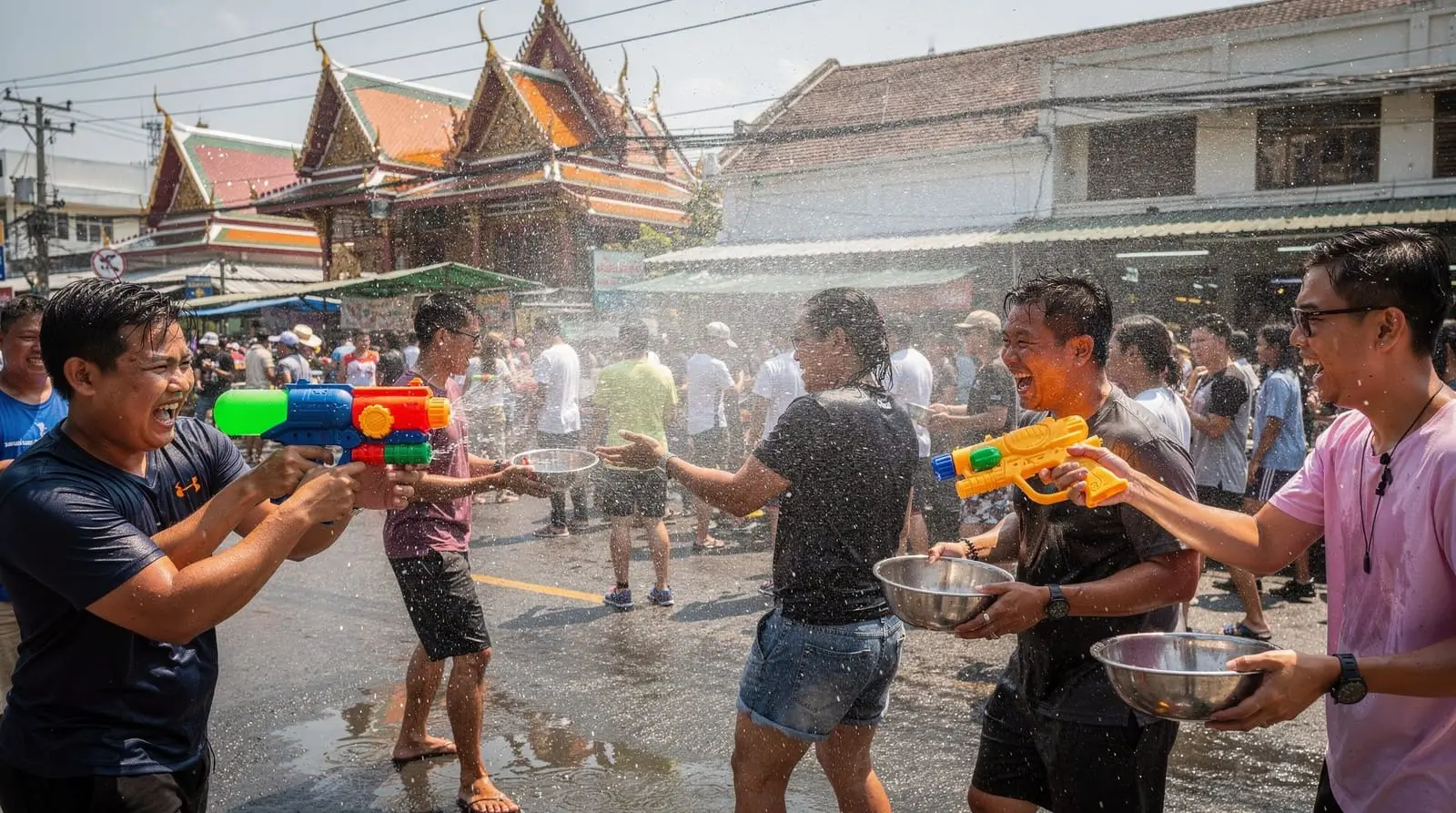
The authentic rituals are gentle. People visit temples to bathe Buddha images with scented water, an act of merit and respect. Younger people pour water reverently over the hands of elders and monks — a ceremony called rod nam dam hua — to show respect and ask for blessings, often receiving a tied string or a word of good fortune in return. Families gather, homes are cleaned, and offerings are made. The boisterous street water fight grew out of these blessing rituals: what began as a respectful sprinkling became, over time, a citywide celebration of buckets, hoses and water guns. Knowing this lets you appreciate both sides — the tender morning rituals at the temples and the joyful afternoon chaos on the streets. The wider cultural framing is in the Bangkok culture guide, and the religious dimension in the Buddhism in Bangkok guide.
If you are invited to join a Thai family’s rod nam dam hua at home or a temple, treat it with the same care as any respectful gesture toward elders elsewhere in the world: pour gently over the palms rather than splashing, use both hands to hold the small bowl, and wait to be shown the custom rather than assuming you know it. This quieter side of Songkran connects to the wider fabric of Thai respect customs covered in the monarchy and lèse-majesté guide — Thailand’s public life runs on visible respect for elders and institutions, and Songkran’s gentle rituals are one of its clearest everyday expressions.
Where to go in Bangkok
Bangkok offers Songkran at every intensity, from drenching mayhem to quiet ritual.
For the full-throttle water battle, Khao San Road in Banglamphu is the backpacker epicentre — a tightly packed, music-blasting, soaking-wet party that runs all day and into the night. Silom Road closes its long, straight stretch to traffic and becomes one enormous water-fight corridor, with the BTS Skytrain running overhead so you can arrive dry and leave soaked; it is also a major hub for LGBTQ Bangkok celebrations. The Siam area and RCA host large organised events with stages and foam. These zones are unforgettable but intense, crowded and not for everyone.
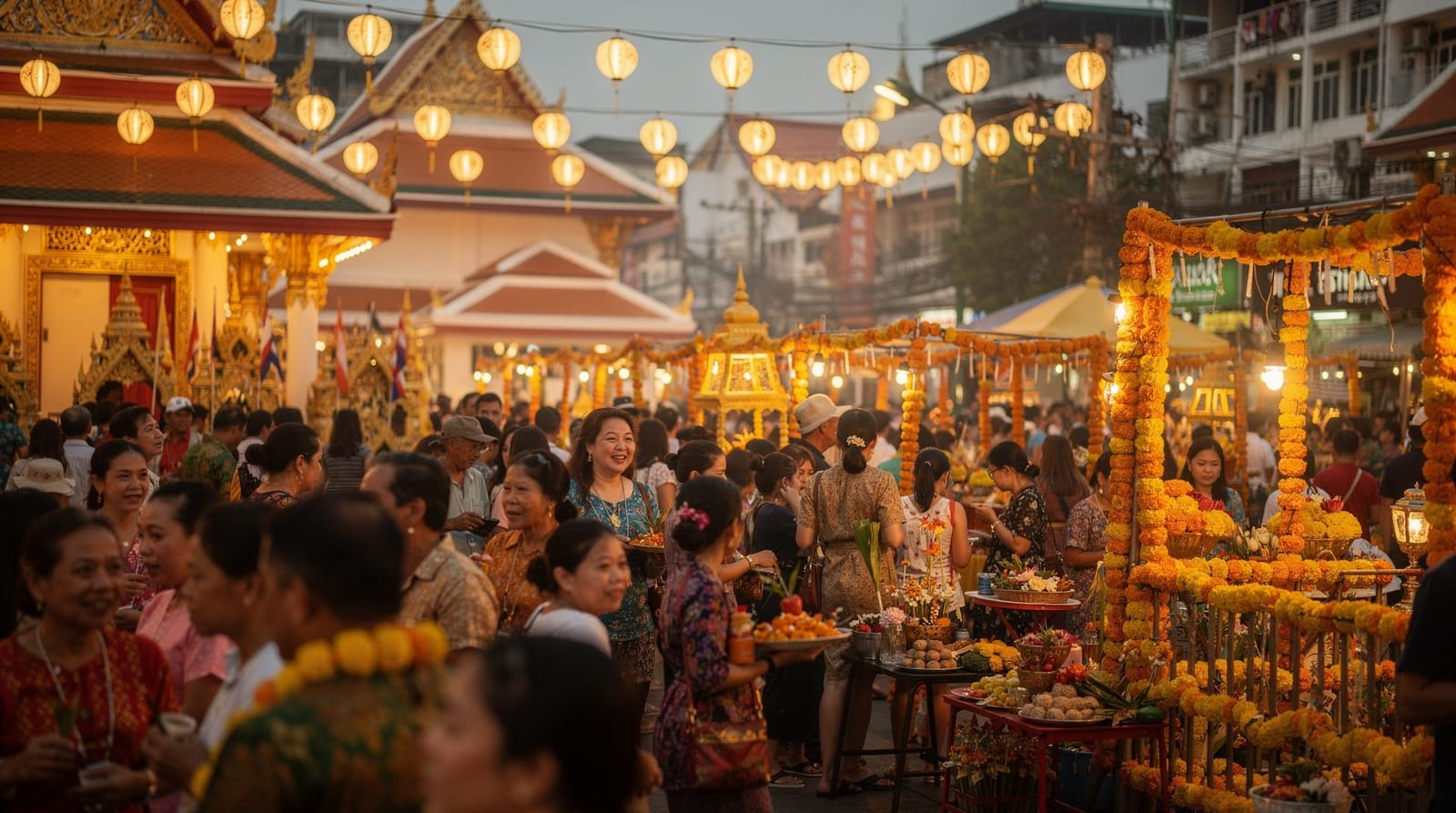
For the cultural, respectful side, go to temples in Rattanakosin old city in the morning — many host the traditional Buddha-bathing and blessing ceremonies before the street battles dominate the afternoon. Wat Pho and other major temples mark the festival, and you can take part in the gentle water-pouring rituals respectfully. This morning-versus-afternoon split is the key to enjoying both faces of Songkran. The seasonal page with venue-by-venue specifics is the Songkran in Bangkok guide.
How to survive it: the practical kit
Assume you will be completely, head-to-toe soaked the moment you step into a celebration zone — there is no staying dry, and resisting only makes it less fun. Plan accordingly.
Waterproof everything that matters. Put your phone, wallet, cards and cash in a sealed waterproof pouch or dry bag (these are sold on every corner in the run-up). Leave your passport in the hotel safe and carry only a copy. Wear quick-drying clothes you do not mind getting wet, and sandals or shoes with grip, because wet pavements get slippery. Bring sunglasses or goggles — water jets and the chalky white powder people smear on faces both sting the eyes. Carry only what can get wet and what you can afford to lose in a dense crowd.
Stay hydrated and watch the heat: April in Bangkok is brutally hot, and dehydration is a genuine risk even when you are soaking wet, so drink water steadily. The festival is good-natured, but ice water and high-pressure jets to the face are common and unpleasant, so be ready to laugh it off or move along.
Honest safety notes
Songkran is overwhelmingly fun, but a few realities deserve a clear-eyed mention.
Road accidents spike sharply during Songkran — it is one of the deadliest periods on Thai roads, driven by holiday travel, slippery streets and drinking. Do not ride motorbikes during the festival, and take extra care crossing roads. Pickpocketing increases in the packed, distracted, wet crowds, so secure your valuables and stay aware. The main party zones get rowdy at night, with heavy drinking; if that is not your scene, enjoy the daytime and the temples instead. And be considerate yourself: do not throw water at monks, elderly people, babies, or people clearly trying to stay dry (those carrying shopping or in business clothes), and never aim for the face or use freezing ice water aggressively. For general street-smarts that apply year-round, see the common Bangkok scams guide.
If you’d rather avoid the water
Not everyone wants to be drenched, and that is fine — you can largely opt out in the city centre, though not entirely during the main days. The simplest tactic is to stay away from the known battle zones (Khao San, Silom, Siam). Malls, the BTS and MRT systems, hotels, museums and indoor attractions stay dry, and early mornings are far calmer than afternoons. If you have a plan that requires staying presentable — an important meeting, a nice dinner reservation — schedule it for the morning or keep it indoors and air-conditioned.
That said, if you are in Bangkok during Songkran, getting at least a little wet is part of the experience, and joining a friendly neighbourhood water fight for even an hour is one of the warmest, most joyful memories Thailand offers.
Should you plan a trip around it?
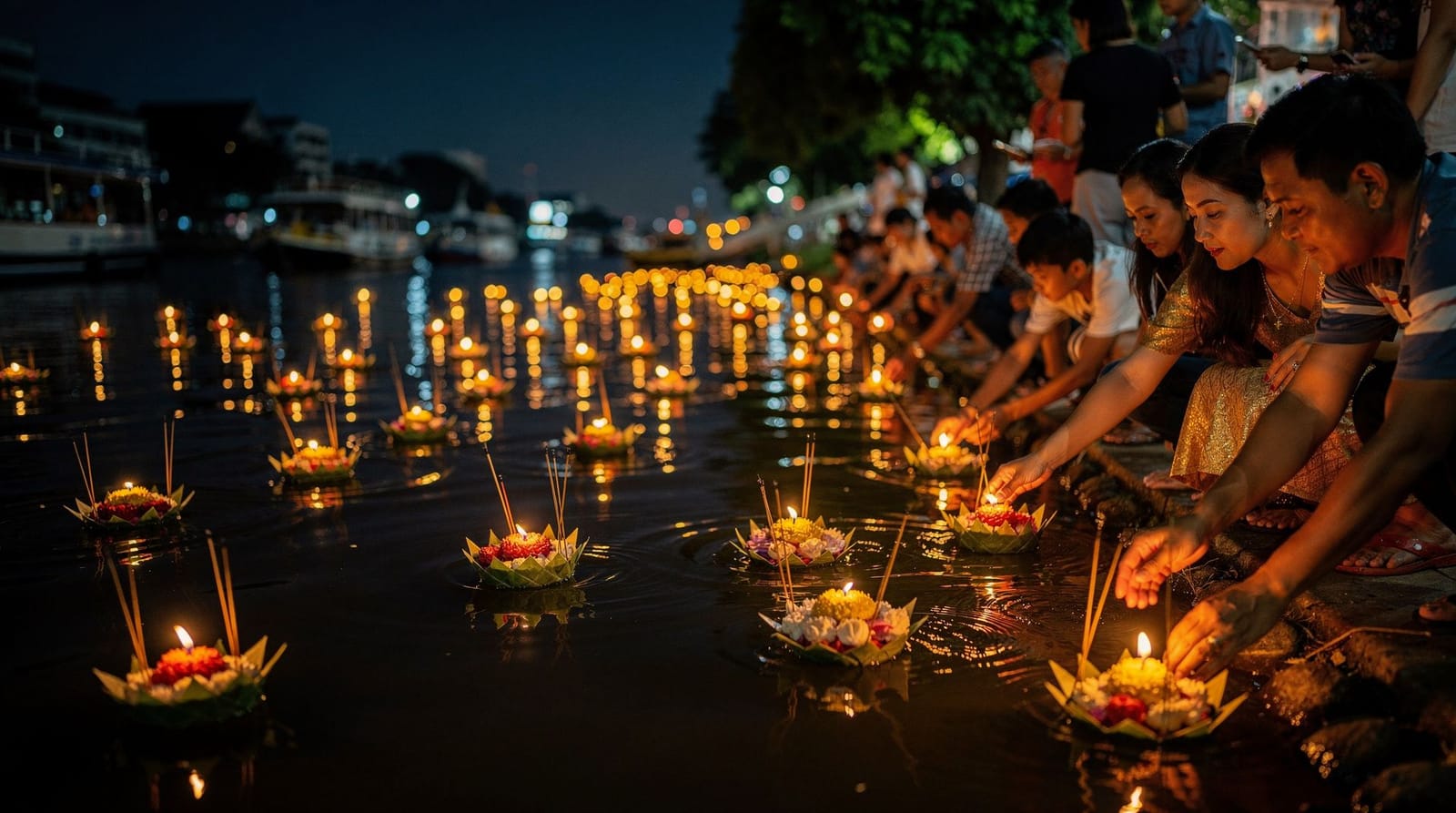
Songkran is genuinely special, but plan with clear expectations. The upside is an unforgettable, citywide celebration with a deep cultural core. The downsides are real: it is the hottest time of year, the crowds are huge, flights and hotels book out and prices climb, and ordinary sightseeing — calm visits to the Grand Palace, unhurried temple-hopping — is disrupted by closures and the water chaos. If a soaking party with cultural roots is exactly what you want, time your trip for mid-April and book early. If you would rather explore Bangkok’s temples and markets in peace, choose other dates and read about the gentler Loy Krathong in November instead. The full annual picture is mapped in the Bangkok festivals calendar.
Songkran vs Loy Krathong
The two festivals worth building a Bangkok trip around are opposites in almost every way:
| Songkran (13–15 April) | Loy Krathong (25 Nov 2026) | |
|---|---|---|
| Mood | Exuberant, chaotic, wet | Gentle, luminous, calm |
| Main activity | Street water fights | Floating candlelit baskets on the water |
| Weather | Hottest month of the year | Cool season, comfortable |
| Best for | Full-immersion party seekers | Romantic, photogenic evenings |
Read the Loy Krathong guide for the full festival-of-lights picture if your dates could go either way.
Practical planning: packing, transport and where to stay
A little logistics planning goes a long way. On clothing, follow the temple etiquette and dress code guide for the morning temple visits — shoulders and knees covered, even though you will be soaked minutes later on the street — and the what to pack for Bangkok guide for quick-dry fabrics that suit both the heat and the water. For getting around, Grab and a topped-up Rabbit Card keep you mobile once the main roads close to cars. On accommodation, the where to stay in Bangkok guide is worth reading before booking, since a room right inside a battle zone means constant noise, while one a few sois away gives you a dry retreat. Families should also check the Bangkok with kids guide for the calmer, mall-based Songkran events that suit younger children better than the full street mayhem.