Bangkok unique experiences: the honest guide to doing more than temples
Bangkok: Cooking Class with Market Visit & Tuk Tuk Ride
What are the most unique experiences to have in Bangkok?
Beyond the temples, Bangkok rewards visitors who get active and local: a hands-on Thai cooking class that starts in a wet market, a bicycle ride through the jungle paths of Bang Krachao (the city's green lung), a guided e-scooter loop of the Old City, a private longtail boat through the Thonburi canals, and a photographer-led shoot at Wat Arun. Each costs far less than equivalent experiences in Western cities, and each shows you a side of Bangkok the Grand Palace crowds never see.
Most first trips to Bangkok follow the same script: the Grand Palace, Wat Pho, Wat Arun, a rooftop bar, a shopping mall, maybe a floating market day trip. That script is fine, and the temples genuinely earn their reputation. But after two or three days of air-conditioned coaches and ticketed monuments, many visitors feel they have seen Bangkok’s surface without ever touching the city itself. The experiences in this guide fix that. They are active, local, hands-on, and — by the standards of any major world capital — astonishingly cheap.
This is the overview page for Bangkok’s standout experiences. It explains what each one is, who it suits, what it honestly costs in 2026, and when to do it, then points you to a dedicated deep-dive guide for each. Throughout, prices are given in Thai baht (THB) with an approximate US dollar conversion at the mid-2026 rate of roughly 33 THB to 1 USD. Treat all figures as realistic ballparks, not fixed tariffs — Bangkok prices drift, and the gap between a fair price and a tourist price is exactly what this guide helps you close.
| Best value | Thai cooking class, 1,000–2,500 THB |
| Best outdoor | Bang Krachao bicycle ride, dawn start |
| Best for couples | Private photoshoot or longtail canal boat |
| Booking window | A few days ahead in high season (Dec–Feb) |
| Typical cost range | 1,000–4,000 THB per experience |
Why go beyond the temples
Bangkok is a city of layers. The temple-and-mall layer is the one tour operators sell hardest because it is the easiest to package. Underneath it is a far more interesting city: the jungle bend of Bang Krachao where the air actually cools down; the lattice of canals across Thonburi where life still happens on the water; the wet markets where every Thai cook still shops; the back lanes of Talat Noi and Chinatown that reward a slow walk with a camera.
The experiences below are the most reliable ways into those layers. None of them requires you to already know Bangkok, speak Thai, or be especially fit. What they require is a willingness to do something rather than just look at something — and that single shift is what turns a competent Bangkok trip into a memorable one. If you are building a full plan, the things to do in Bangkok overview and the Bangkok for first-timers guide set the wider context.
Thai cooking class — the highest-value experience in Bangkok
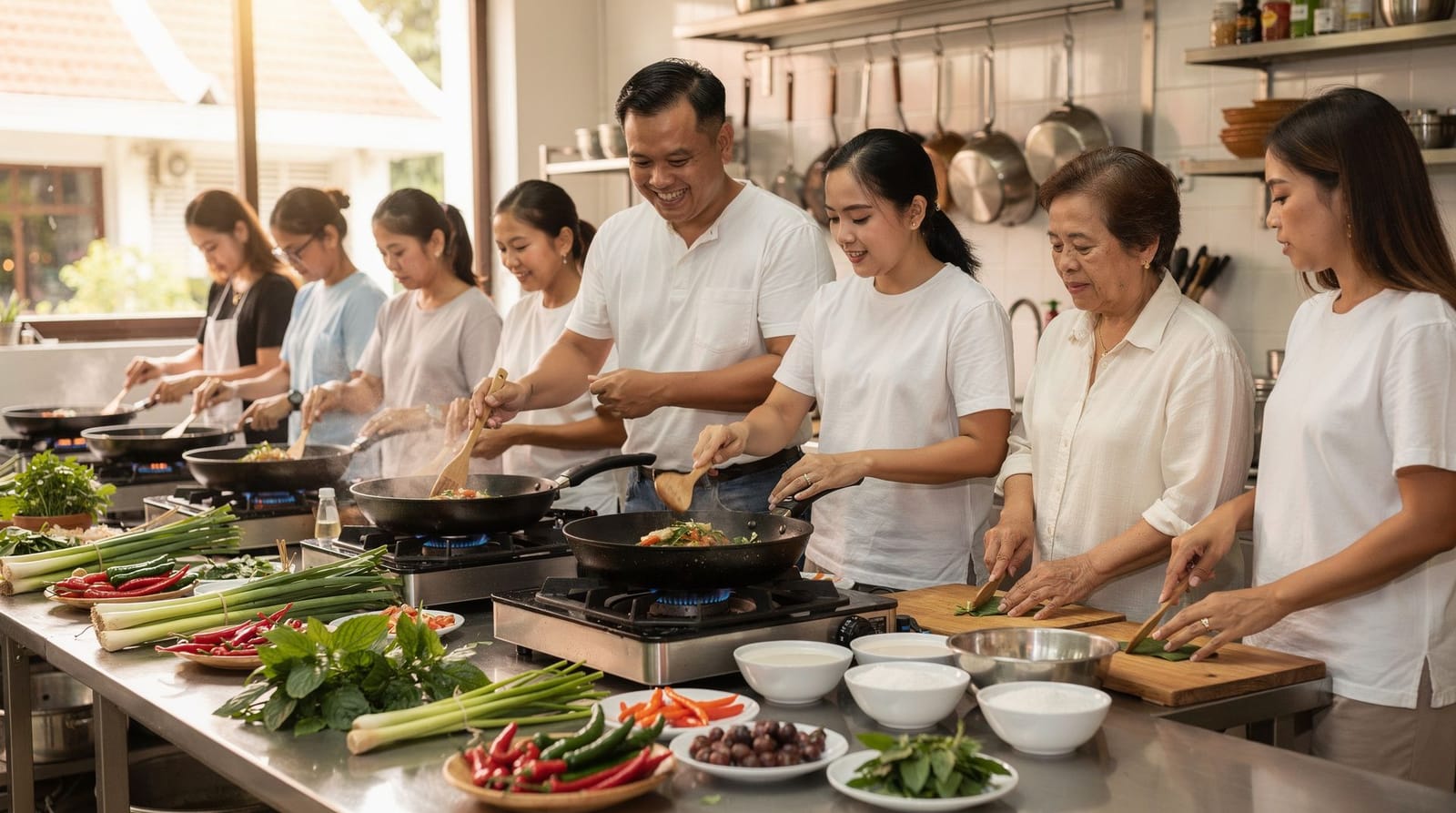
A hands-on cooking class is, for most visitors, the single best-value experience in the city. A typical half-day class begins with a guided walk through a fresh market — often the cavernous Or Tor Kor market or a smaller neighbourhood one — where the chef shows you galangal, lemongrass, kaffir lime, Thai basil, palm sugar, fish sauce, and the chilli paste that anchors half of Thai cooking. You then return to a kitchen and cook four or five classics yourself: usually pad thai, a curry (green or red) pounded from scratch, tom yum or tom kha soup, and mango sticky rice for dessert.
Expect to pay 1,000–2,500 THB (USD 30–75) for a half-day class, depending on whether it is a group class in a converted shophouse or an upscale class such as the one at Blue Elephant, set in a heritage mansion near Surasak BTS. You eat everything you cook, you leave with a recipe booklet, and — unlike almost any other holiday activity — you take the skill home. Many classes run in the morning to beat the heat, with a market visit included before the kitchen work.
Thai cooking class with market visit by tuk-tuk — small group, hands-onThe dedicated cooking class experience guide compares the main schools, explains the difference between a market-included and kitchen-only class, and covers fruit and vegetable carving, which is a wonderful add-on for anyone who loves the visual side of Thai food. For broader food context, the what to eat in Bangkok and Bangkok street food guide pages map the dishes you will learn against where to eat the best versions out in the city.
Cycling Bang Krachao — the green lung
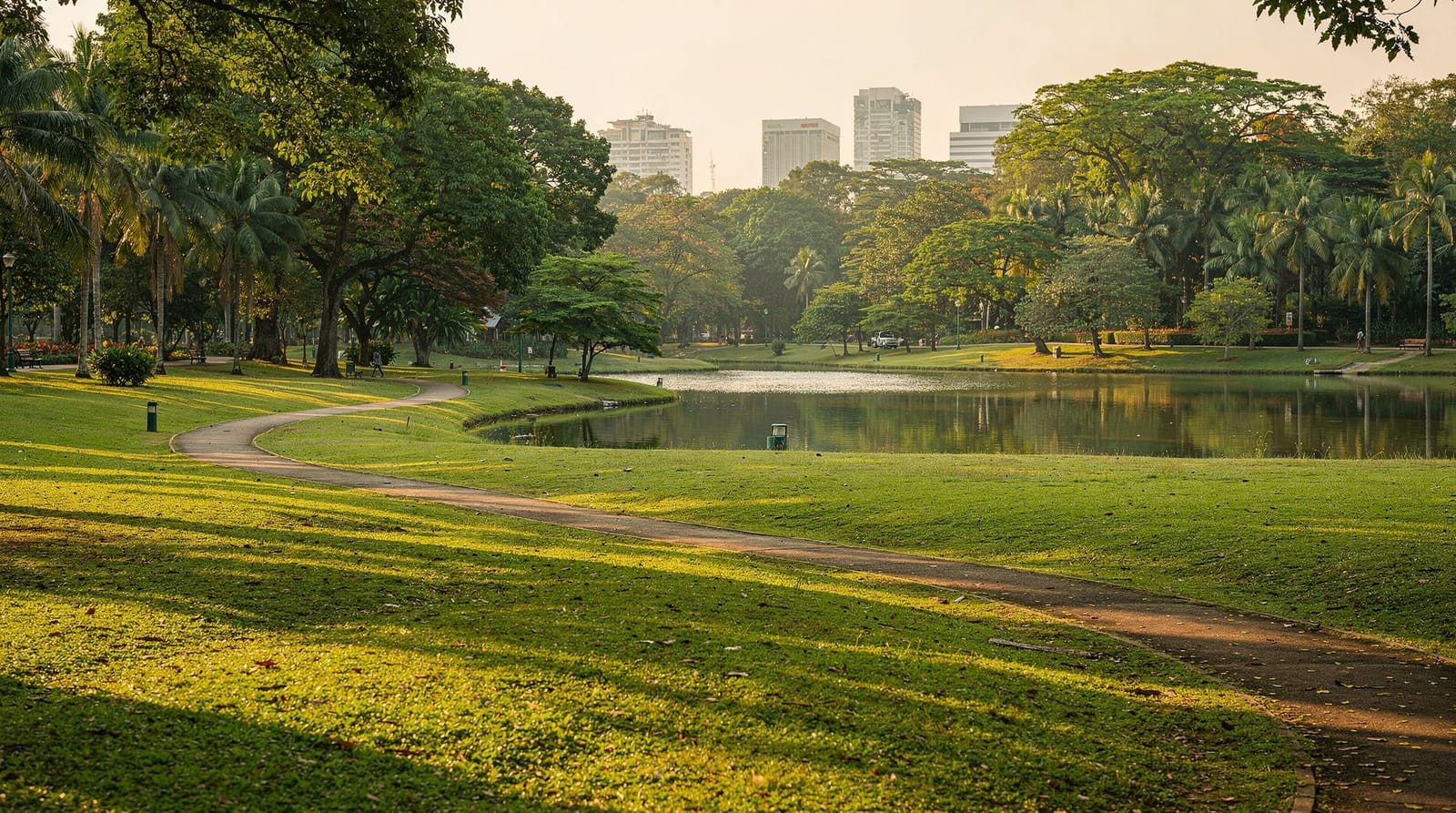
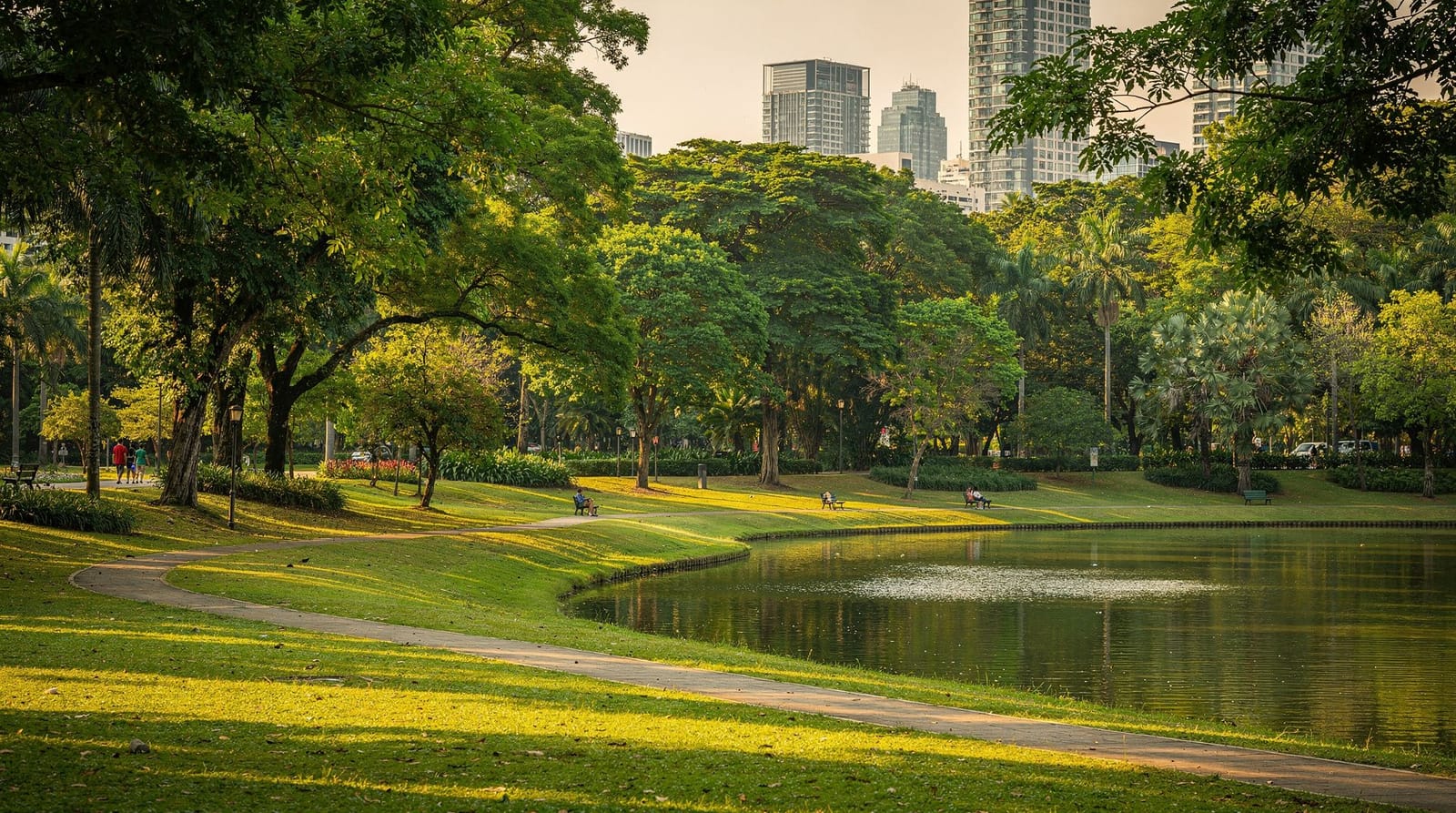
If you do one outdoor activity in Bangkok, make it a bicycle ride through Bang Krachao. This is an artificial-island bend of the Chao Phraya, technically in Phra Pradaeng district of Samut Prakan, that has somehow stayed almost entirely undeveloped — a tangle of jungle, banana and coconut plantations, and stilt houses laced together by narrow elevated concrete paths just wide enough for a bicycle. Bangkok calls it the green lung, and on a bike at 08h00 with the air still cool, you will understand why.
You reach it by taking a short ferry across the river — usually from the Khlong Toey or Bang Nam Phueng pier for about 4 THB, bicycle included. Guided tours handle all of this for you, supply the bike, and lead you along the best paths through the Sri Nakhon Khuean Khan Park and, on weekends, the Bang Nam Phueng floating market. The paths are flat but narrow and occasionally slick, so basic cycling confidence helps. Half-day guided rides run roughly 1,000–1,800 THB (USD 30–55).
Classical Bangkok bicycle tour through Bang Krachao — half day with guideGo early. By late morning in the hot season (March–May) the green lung is still cooler than central Bangkok but no longer pleasant, and weekend afternoons get busy. The full bike tour Bang Krachao guide covers ferry points, what to bring, and the difference between the various tour styles, while the Bang Krachao green lung guide and the Bang Krachao destination page cover the area for those exploring independently.
E-scooter loops of the Old City
For visitors who want the coverage of a bike tour without the pedalling — or who simply find e-scooters fun — guided e-scooter and e-bike tours of Rattanakosin, the historic Old City core, are a genuinely good way to connect the major sights with the back lanes between them. A guide leads a small group on a fixed route past temples, the flower market, and quiet residential sois, with helmets provided and a strict rule that you stay behind the guide.
These are not free-roam scooter rentals — Bangkok traffic makes that a bad idea — but escorted loops at gentle speeds on pre-scouted routes. Expect 1,200–2,200 THB (USD 36–67) for a half-day or evening loop. Night versions, gliding past floodlit temples and the Golden Mount with the day’s heat gone, are especially atmospheric.
Old City e-scooter and e-bike tour — guided Rattanakosin loopMost operators require riders to be 18 or over and comfortable with balance; they are not suitable for young children. The e-scooter tours Bangkok guide compares the day and night options, explains the safety setup, and helps you decide between an e-scooter loop and the classic bicycle tour. If you would rather see the Old City on foot, the Rattanakosin Old City page covers a walking route.
A private photographer at Wat Arun and the Old Town
Bangkok is one of the most photogenic cities in Asia, and one of the more affordable places in the world to hire a private photographer for a couple of hours. A photoshoot tour pairs you with a photographer who knows the best light and the best angles at Wat Arun, the Grand Palace exterior, the flower market, and the colourful lanes of the Old Town. You walk, they shoot, and you come away with a properly edited set of images rather than the usual blurry phone selfies.
Prices run roughly 1,500–4,000 THB (USD 45–120) depending on duration, number of locations, and whether transport between spots is included. It is a particularly good choice for couples, honeymooners, solo travellers who never appear in their own photos, and anyone marking a special trip.
Bangkok photoshoot tour with a private photographer — Wat Arun and Old TownThe photoshoot Bangkok guide explains how the shoots work, what to wear, and how delivery of edited images is handled, and it cross-references the Instagram spots Bangkok, best photo spots Bangkok and Wat Arun photography guides for anyone who would rather shoot independently.
A longtail boat through the Thonburi canals
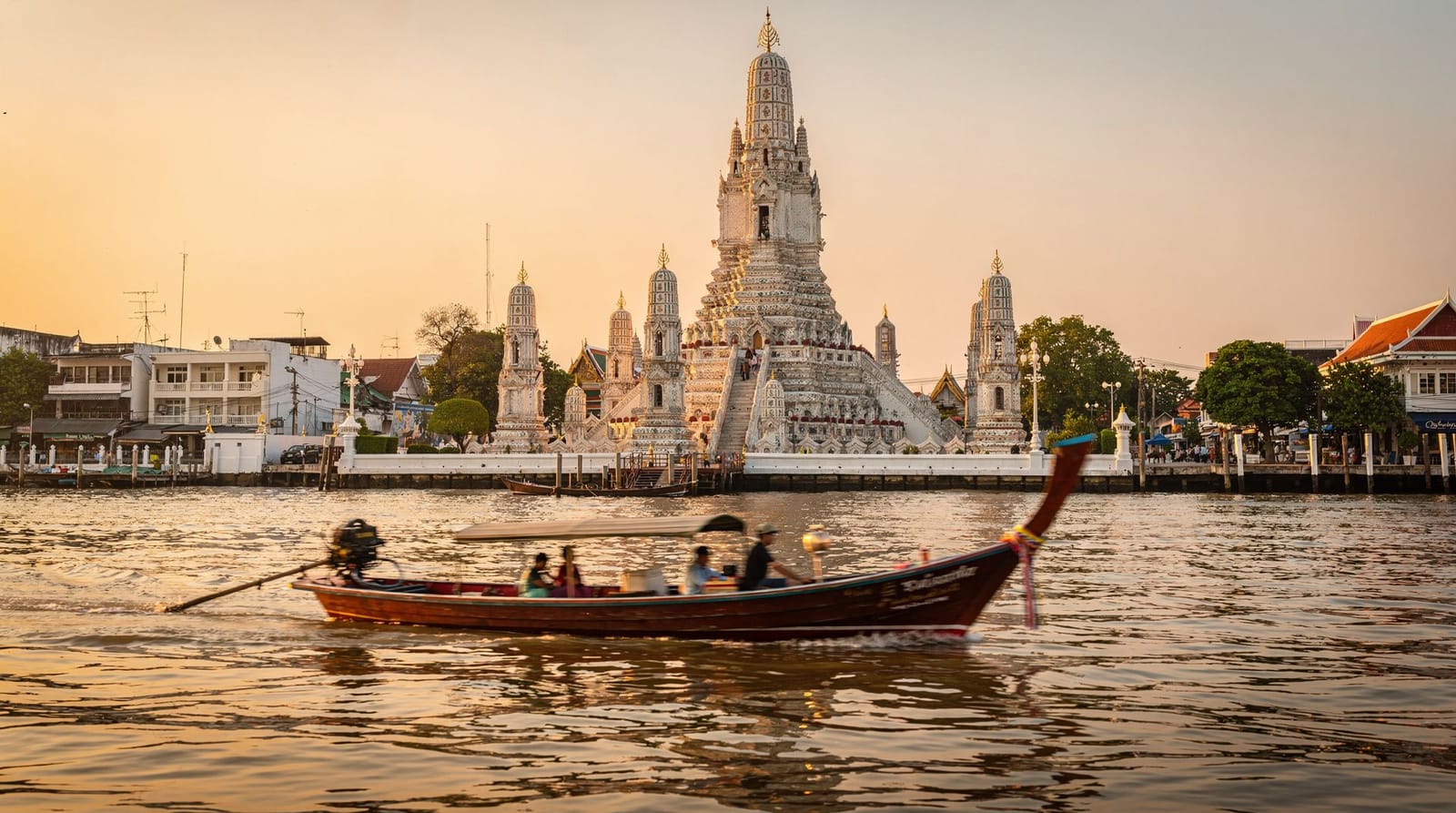
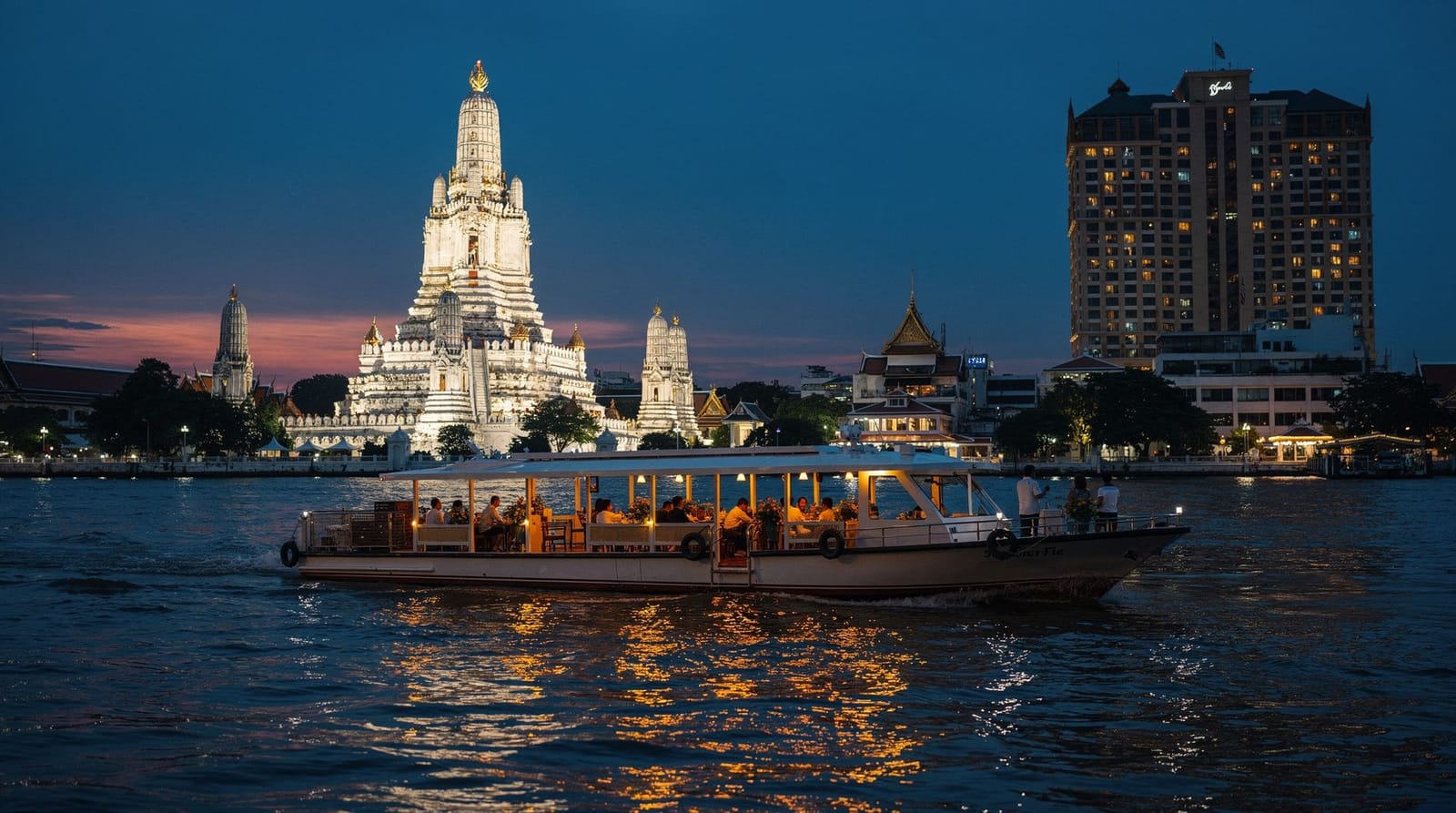
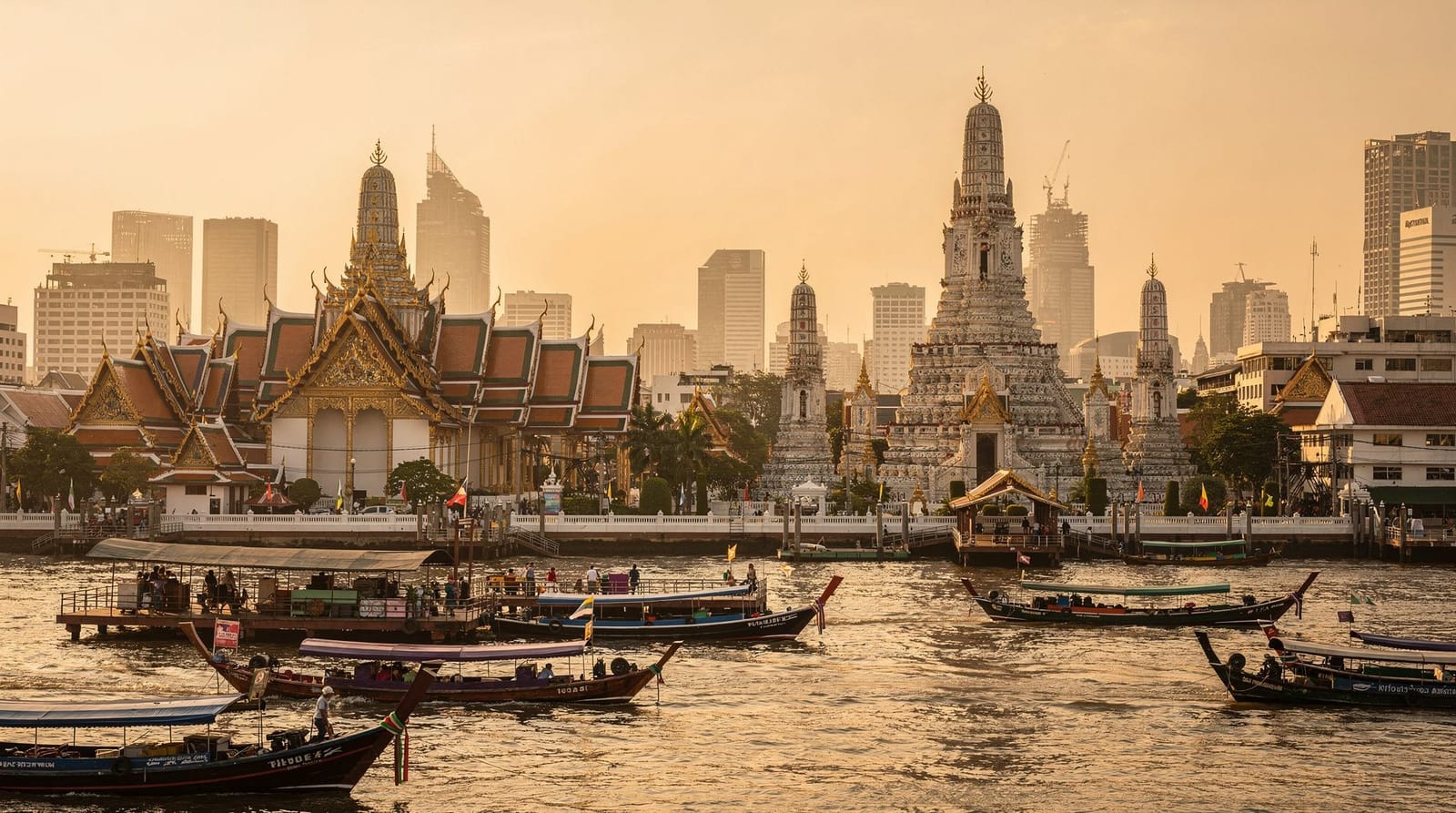
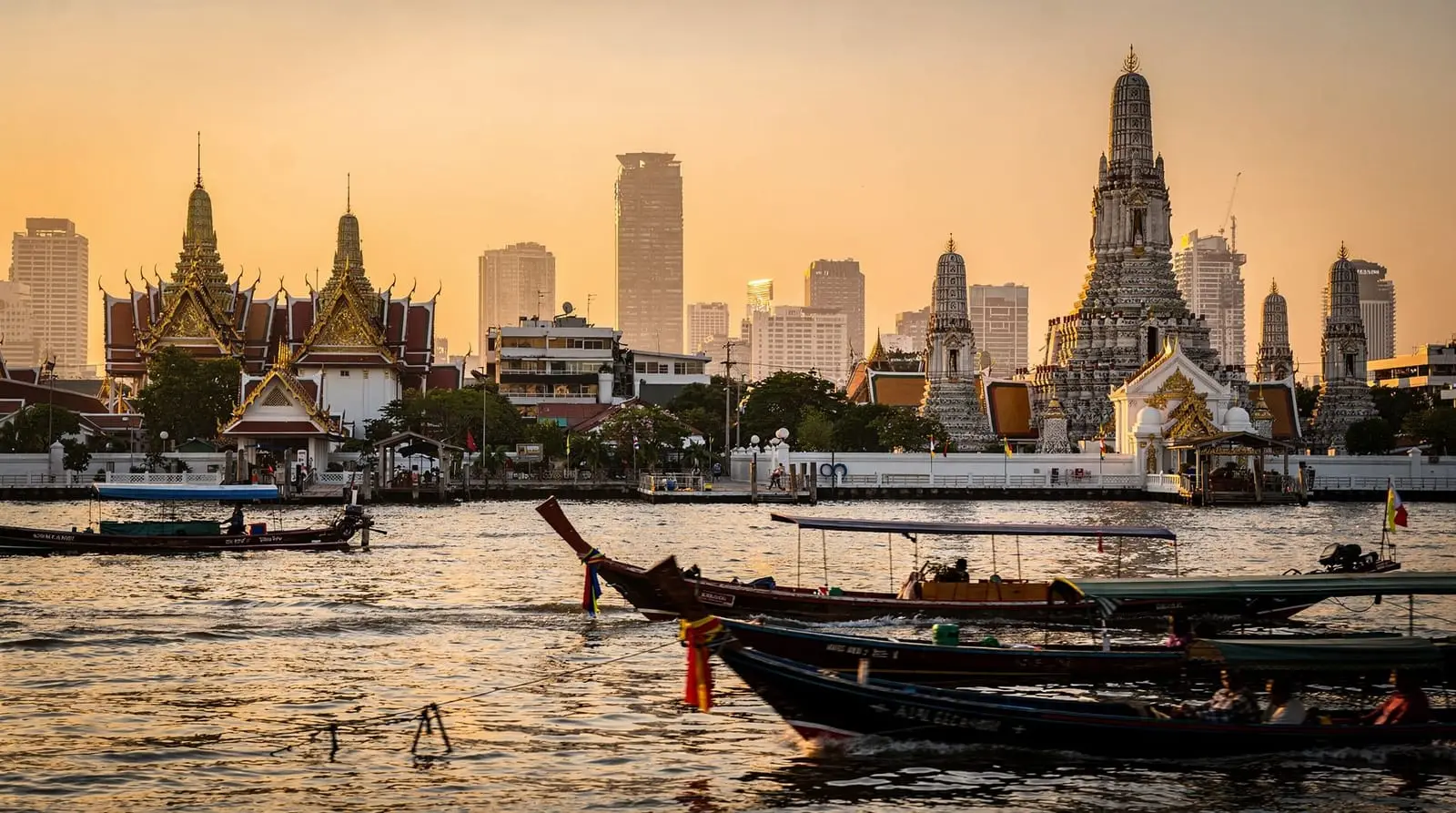
Before the roads, Bangkok moved on water, and the western bank — Thonburi — still keeps that older city alive in its khlongs (canals). A longtail boat, the long, narrow craft powered by an exposed car engine on a swivelling pole, takes you off the wide Chao Phraya and into the Bangkok Yai and Bangkok Noi canals: past stilt houses, canal-side temples, the Royal Barge Museum, and the lovely Artist’s House (Baan Silapin) on Khlong Bang Luang, all while Wat Arun rises behind you from the water.
This is the experience most distorted by pier touts. A fair private longtail runs about 1,200–2,500 THB (USD 36–75) for an hour or two, but touts at the main piers routinely quote double, and the classic trick is selling you a “private” boat that you then share with strangers. Agreeing the price, route and duration before you step aboard — or booking a fixed-price tour — removes all of that.
Private longtail boat through the Thonburi canals — fixed price, set routeThe longtail canal experience guide details the route, the realistic prices, and exactly how the pier scams work, with further depth in the canal longtail boat tours and Chao Phraya river boats guides. For the area itself, see the Thonburi khlongs and Wat Arun area destination pages.
Learn Muay Thai — a beginner class, not just a spectator ticket
Watching a fight night is one way into Thailand’s national sport; training a session yourself is a different and, for many visitors, more memorable one. Beginner-friendly gyms across the city run one-off sessions covering pad work, basic strikes and clinch fundamentals, no experience or fitness level required beyond a willingness to sweat. Sessions typically run 800–1,800 THB (USD 24–55) for around 90 minutes to two hours, usually including gloves and wraps. It pairs naturally with watching a real bout later in the trip — the Muay Thai class for beginners guide covers what a first session actually involves, and the Muay Thai in Bangkok guide explains how a training session and a stadium night fit together into one sport-focused day.
A hands-on Thai massage or wellness workshop
Beyond simply receiving a massage, a handful of studios run short workshops teaching the basic strokes and stretches of traditional Thai massage, a nice complement to the many spas covered in the best spas in Bangkok guide. A two-to-three-hour beginner workshop, often held in a quiet studio away from the tourist spa strip, runs roughly 1,200–2,500 THB (USD 36–75) and leaves you able to give a basic Thai massage at home — a genuinely unusual souvenir. It fits well alongside the wider wellness scene covered in the wellness Bangkok guide and the dedicated Thai massage in Bangkok guide, which explains the difference between a spa massage, a traditional Wat Pho-style session, and a hands-on workshop like this one.
Fruit and vegetable carving — a photogenic 90-minute add-on
A smaller, quieter cousin of the cooking class, fruit and vegetable carving teaches the traditional Thai craft of turning a melon, pumpkin or soap into an intricate floral pattern using nothing but small hand knives. Sessions run around 60–90 minutes, cost roughly 800–1,500 THB (USD 24–45), and suit anyone who enjoys a slow, meditative, highly visual activity rather than something physical. It slots neatly onto the end of a market-based cooking class or stands alone as a short afternoon activity, and the results make an unusually good travel photo. The fruit and vegetable carving class guide covers where to book and what skill level to expect — no prior craft experience is needed.
How prices and bookings actually work in Bangkok
A word on money, because it shapes how you should approach all of these. Bangkok operates on two parallel price systems: the local price and the tourist price, and the gap between them is widest exactly where tourists cluster — the river piers, the Grand Palace approaches, and the tuk-tuk ranks outside the big temples. The experiences in this guide split cleanly along that fault line. Cooking classes, guided bike and e-scooter tours, and photoshoots are sold mostly through fixed-price bookings, so the tourist-price problem barely touches them — what you see is what you pay, and the operators compete on quality and reviews. Longtail boats arranged at the pier are the opposite: a pure negotiation where not knowing the fair rate costs you double.
The practical rule that follows is simple. For anything you would otherwise haggle for at a pier or roadside, pre-book a fixed-price version instead — it usually costs about the same as a fairly negotiated rate, removes the haggling, and protects you from the shared-as-private trick. For everything else, read recent reviews, confirm exactly what is included (transport, water, entry fees, equipment), and book a few days ahead in high season. Pay attention to the start time too: in the hot months the difference between a 07h30 and an 11h00 start is the difference between a pleasant morning and a sweat-soaked ordeal.
It is also worth knowing that almost every experience here is cheaper than its equivalent anywhere in the developed world — often dramatically so. That changes the calculus of what is “worth it.” A private photographer or an upscale cooking class that you would never splurge on at home becomes an easy yes in Bangkok, where the same quality costs a third or less. Use that to your advantage and try things you would normally skip.
How to combine these into a trip
You do not have to choose just one. A well-balanced few days might pair a morning cooking class with an afternoon at the temples, a green-lung bike ride at dawn on another day, and a longtail canal trip combined with Wat Arun on a third. The Bangkok 3 days itinerary and the longer Bangkok 1 week plan both build experiences like these around the standard sights. Couples planning a romantic trip will find the longtail boat and a private photoshoot slot neatly into the Bangkok for couples itinerary, while food-focused travellers can anchor a day around a cooking class using the Bangkok foodie itinerary.
One combined option worth knowing about pairs a guided bike ride with a canal boat segment and lunch in a single half-day, which is an efficient way to get both the green lung and the water in one outing.
Combined Bangkok bike and canal-boat tour with lunch — green lung and khlongs in oneHonest assessment: what is worth it and what to skip
Genuinely worth it: Cooking classes (the best value in the city by a distance), the Bang Krachao bike ride (the only place in Bangkok the air noticeably cools), and a private photographer if you care about coming home with real photos. These three deliver consistently and are hard to do badly.
Worth it with care: Longtail canal trips are wonderful but are the most scam-prone experience here — book or pre-agree everything and they become superb. E-scooter tours are fun and efficient but are not the right pick if you are nervous about balance or traffic.
What to skip: The “tuk-tuk all-day tour for 20 baht” pitched near the Grand Palace, which is a commission scam funnelling you through gem and tailor shops — see the common Bangkok scams guide. Also skip any unsolicited “the Grand Palace is closed today, let me take you somewhere special” offer; it is always false. And be wary of generic floating-market coach day trips sold as unique experiences — they are heavily touristed and a poor substitute for the hands-on activities above.
A practical note on getting to all of these: Bangkok’s traffic is genuinely punishing, so lean on the BTS, MRT and river boats for the trunk of every journey and use Grab over street tuk-tuks for the last stretch. Tap water is not potable, so carry bottled water on any outdoor activity, and in the hot months start everything as early as you can.
Frequently asked questions about Bangkok unique experiences: the honest guide to doing more than temples
What is the single most worthwhile experience in Bangkok?
How much do Bangkok experiences cost compared to Western cities?
Are these experiences suitable for first-time visitors?
When is the best time of year for active experiences in Bangkok?
Do I need to book experiences in advance or can I arrange them on arrival?
Which experiences work for families with children?
How do I avoid scams when arranging these experiences myself?
Top experiences
Bookable activities with verified prices and instant confirmation on GetYourGuide.