Chao Phraya river boats: the honest how-to
Bangkok: Chao Phraya River Hop-On Hop-Off Boat Pass
How do the Chao Phraya river boats work in Bangkok?
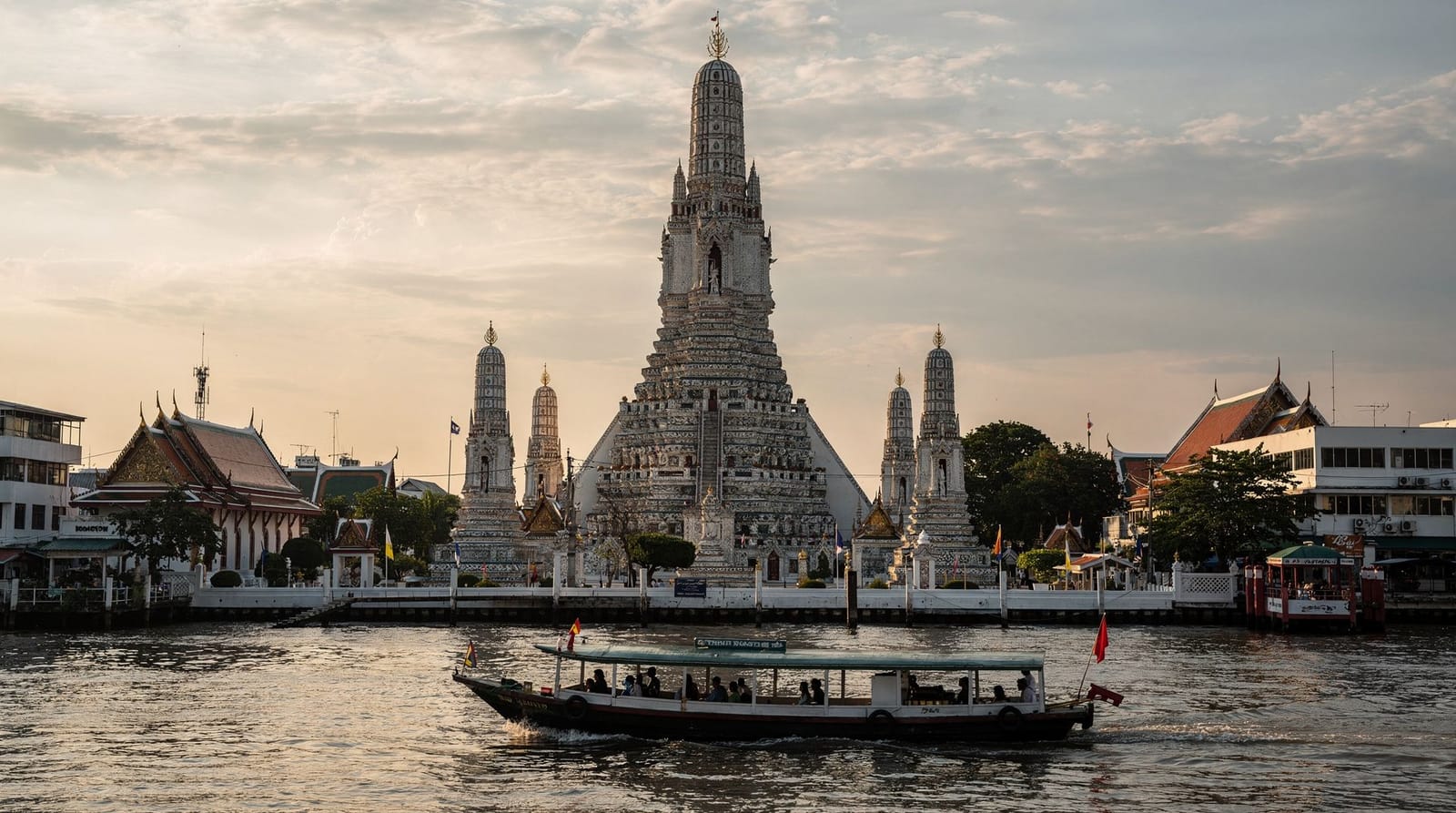
Public boats run by flag colour from Sathorn pier at Saphan Taksin BTS. The orange-flag commuter boat is the cheapest at about 16 THB. The blue-flag Chao Phraya Tourist Boat is a hop-on hop-off service at around 30 THB single or roughly 200 THB for a day pass, stopping at the main sights like Wat Arun and the Grand Palace.
The Chao Phraya is not just a backdrop in Bangkok; it is a working highway. Public boats have shuttled commuters and goods along it for generations, and for visitors they remain the cheapest, most scenic and frequently the fastest way to reach the riverside sights. The system looks intimidating at first, with its coded flag colours and shouting conductors, but it follows a simple logic. Once you understand the flags, the piers and the fares, the river becomes the most enjoyable form of transport in the city. This guide decodes it honestly, and pairs well with the broader Chao Phraya boats guide and the city-wide getting around Bangkok guide.
| Where | Sathorn Central Pier (Saphan Taksin BTS) north to the Old City, south to Asiatique |
| Cost | Orange-flag ~16 THB flat; tourist boat ~30 THB single or ~200 THB day pass |
| Time needed | 10–35 minutes pier to pier, plus a short wait for the next boat |
| Getting there | BTS Silom Line to Saphan Taksin, stairs straight down to the pier |
| Best time | Outside 07h30–09h00 and 17h00–19h00 commuter peaks |
The hub: Sathorn pier at Saphan Taksin
Everything starts at Sathorn Central Pier, which sits directly at the foot of Saphan Taksin BTS station on the Silom Line. This is the one pier every visitor needs to know. From here, all the tourist-relevant boat lines call, you can head upriver to the temples or downriver to Asiatique, and you can connect seamlessly to the elevated train network with a Rabbit Card.
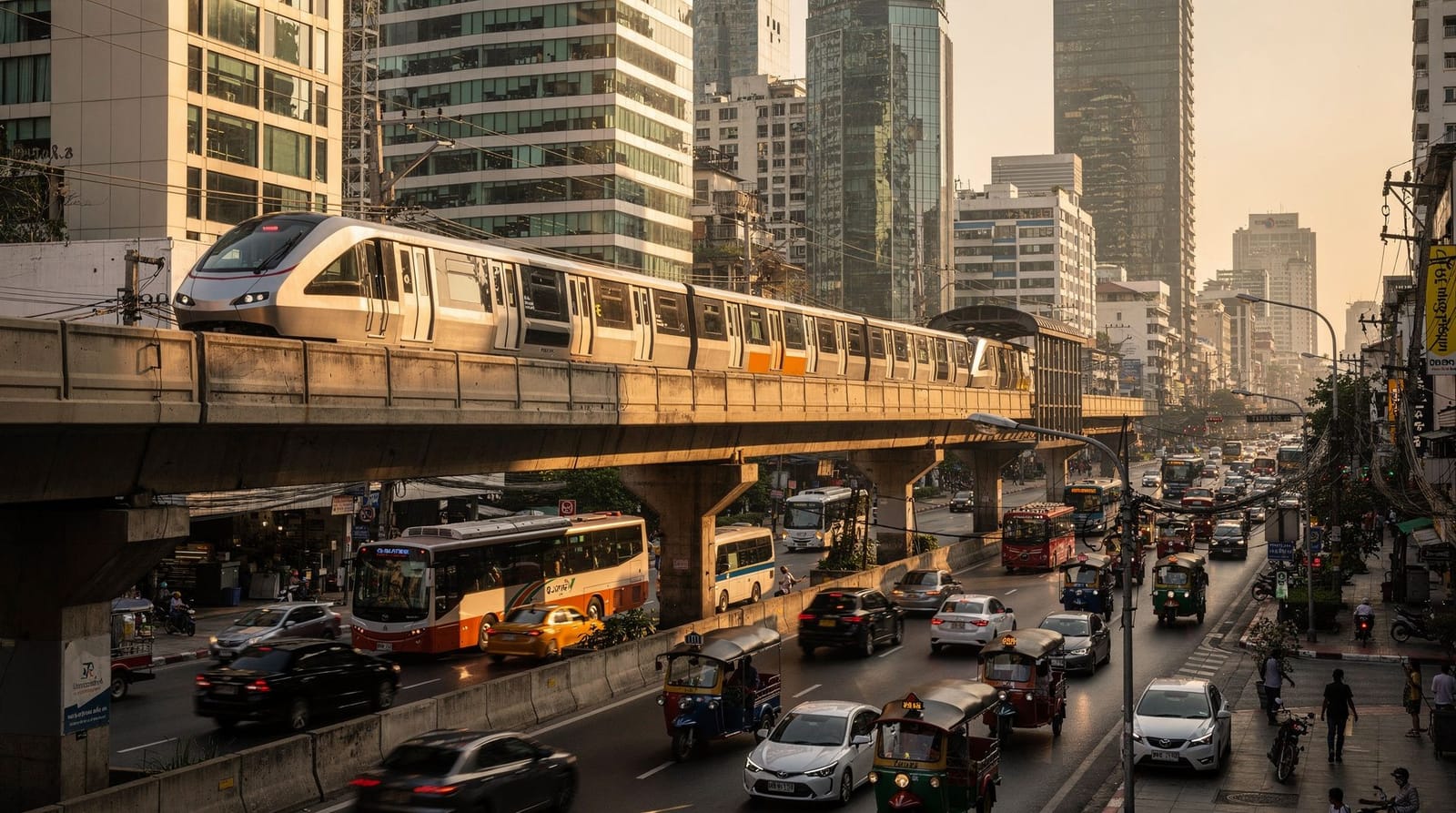
Because it links the river to the BTS, Sathorn is the key to using the Chao Phraya to dodge Bangkok’s notorious road traffic. Ride the train to Saphan Taksin, step down to the pier, and continue your journey on the water. For riverside destinations this combination routinely beats a taxi crawling through gridlock.
Decoding the flag colours
Bangkok’s public boats are organised by coloured flags flown at the bow and stern. The flag tells you the route and how many piers the boat skips. You do not need to memorise the whole system, but you do need to recognise the two that matter for sightseeing.
Orange flag — the commuter workhorse. This is the line most travellers actually use. It stops at nearly every pier, runs frequently, and charges a flat fare of about 16 THB (0.50 USD) no matter how far you go. It is crowded and quick at the dock, but it is unbeatable value and reaches all the central piers.
Blue flag — the Chao Phraya Tourist Boat. A dedicated hop-on hop-off service aimed at visitors, with English signage, a calmer pace, and stops at the main sights. It costs more than the commuter boat but is far easier for first-timers, and a day pass makes it economical if you plan several hops. The full breakdown is in the hop-on hop-off boat guide.
Green, yellow and red flags — express commuter lines. These skip minor piers to move office workers quickly between outer and central districts during rush hours. Fares run roughly 13–33 THB. They are useful only if your destination happens to be on the line; for general sightseeing, stick with orange or blue so you do not sail past the pier you wanted.
No-flag local boats. Slow, all-stops local services. Rarely the most useful choice for visitors.
What the boats cost
Fares are some of the best value in Bangkok. The orange-flag commuter boat is a flat 16 THB (0.50 USD). Express lines run roughly 13–33 THB depending on flag and distance. The blue-flag tourist boat is around 30 THB for a single hop, or about 200 THB (6 USD) for a one-day unlimited pass, which pays for itself after a handful of stops.
On the commuter and express boats you pay the roving conductor on board, who carries a metal coin cylinder and will find you, so keep small notes and coins handy. For the tourist boat, buy your single ticket or day pass at the pier ticket booth before boarding. The convenient way to lock in the tourist day pass is the Chao Phraya tourist boat hop-on hop-off pass, which you simply show at the pier.
The piers that matter
You do not need all the piers, only the handful that reach the major sights. Working upriver from Sathorn:
Tha Tien (for Wat Arun and Wat Pho). Step off here for Wat Pho, home of the Reclining Buddha, which is right by the pier. To reach Wat Arun itself, take the tiny cross-river ferry from Tha Tien to the Thonburi bank for a few baht; the Temple of Dawn stands directly across the water.
Tha Chang (for the Grand Palace). The closest pier to the Grand Palace and the heart of Rattanakosin old city. A short walk inland brings you to the palace walls.
ICONSIAM. The grand pier serving the huge riverside mall on the Khlong San side, with its own free shuttle boats from Sathorn.
Asiatique (downriver). Reached by a free shuttle boat from Sathorn in the evening, serving the Asiatique night market and Ferris wheel.
For the full neighbourhood context of these stops, the riverside Bangkok guide maps the river bank by bank.
How to ride without stress
Boarding at busy piers is quick and can feel chaotic, but it follows a rhythm. Staff hold the boat against the pier with ropes for a few seconds while passengers pile on and off, then a whistle signals departure. Move decisively, mind the gap to the moving hull, and keep your bag in front of you.
A few honest pointers make it smoother. Stand near the pier edge so you are ready when the boat arrives. Tell the conductor or check the signage for your destination, since boats do not always announce stops in English. Sit toward the back or the open sides for the best views and breeze. And avoid the very busiest commuter peaks of roughly 07h30–09h00 and 17h00–19h00 if you want a calmer ride.
River boats versus a dinner cruise
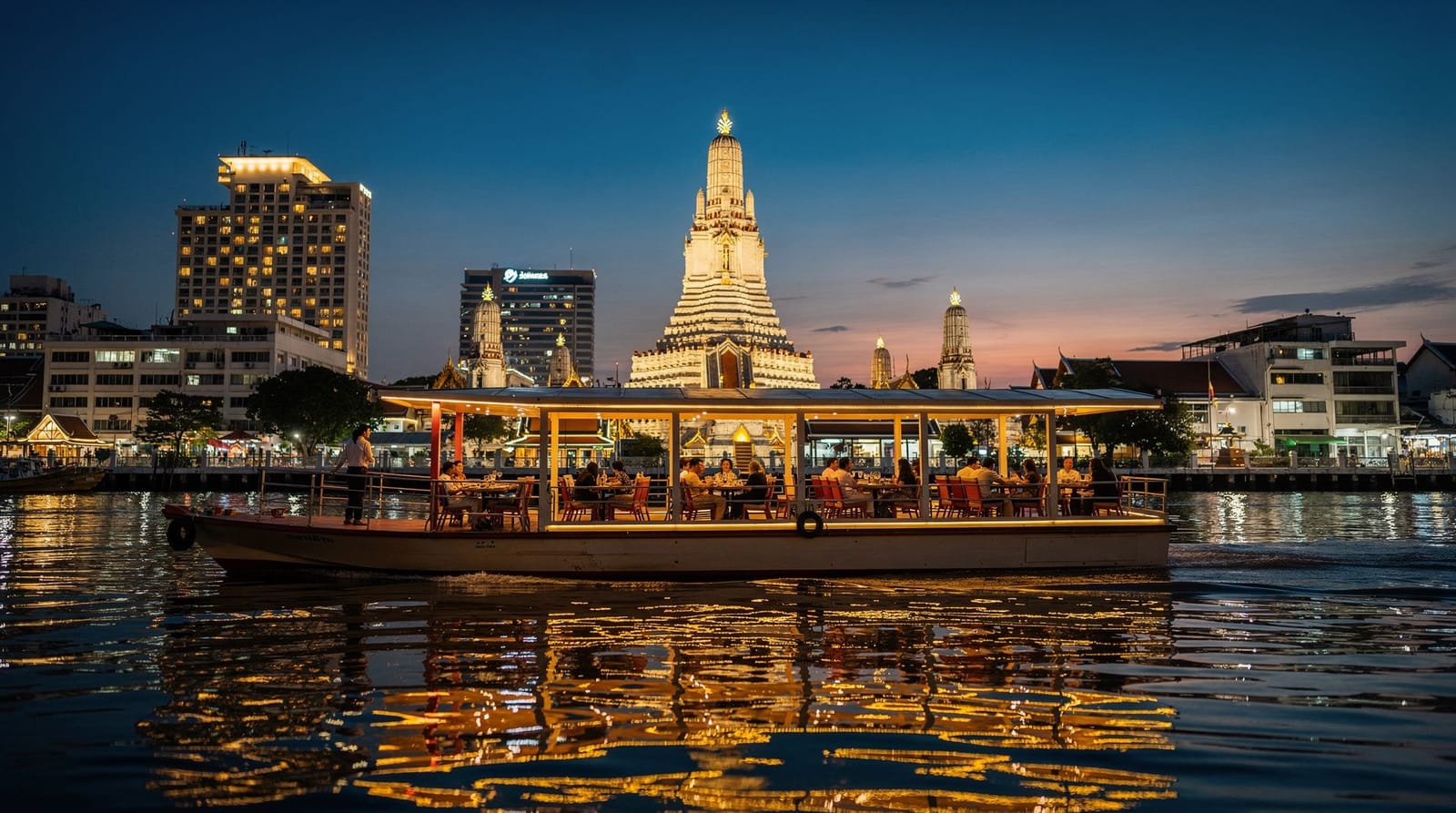
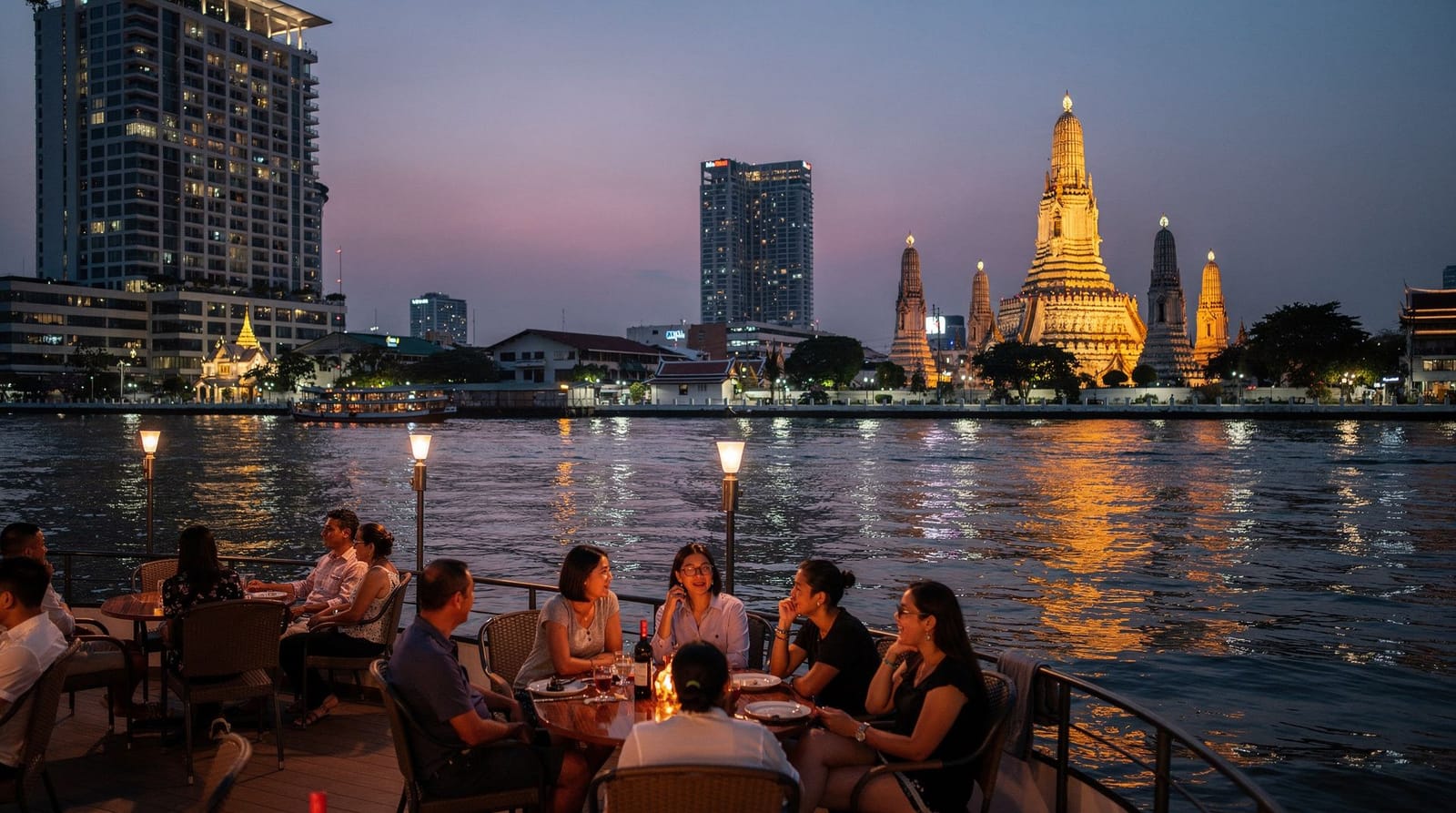
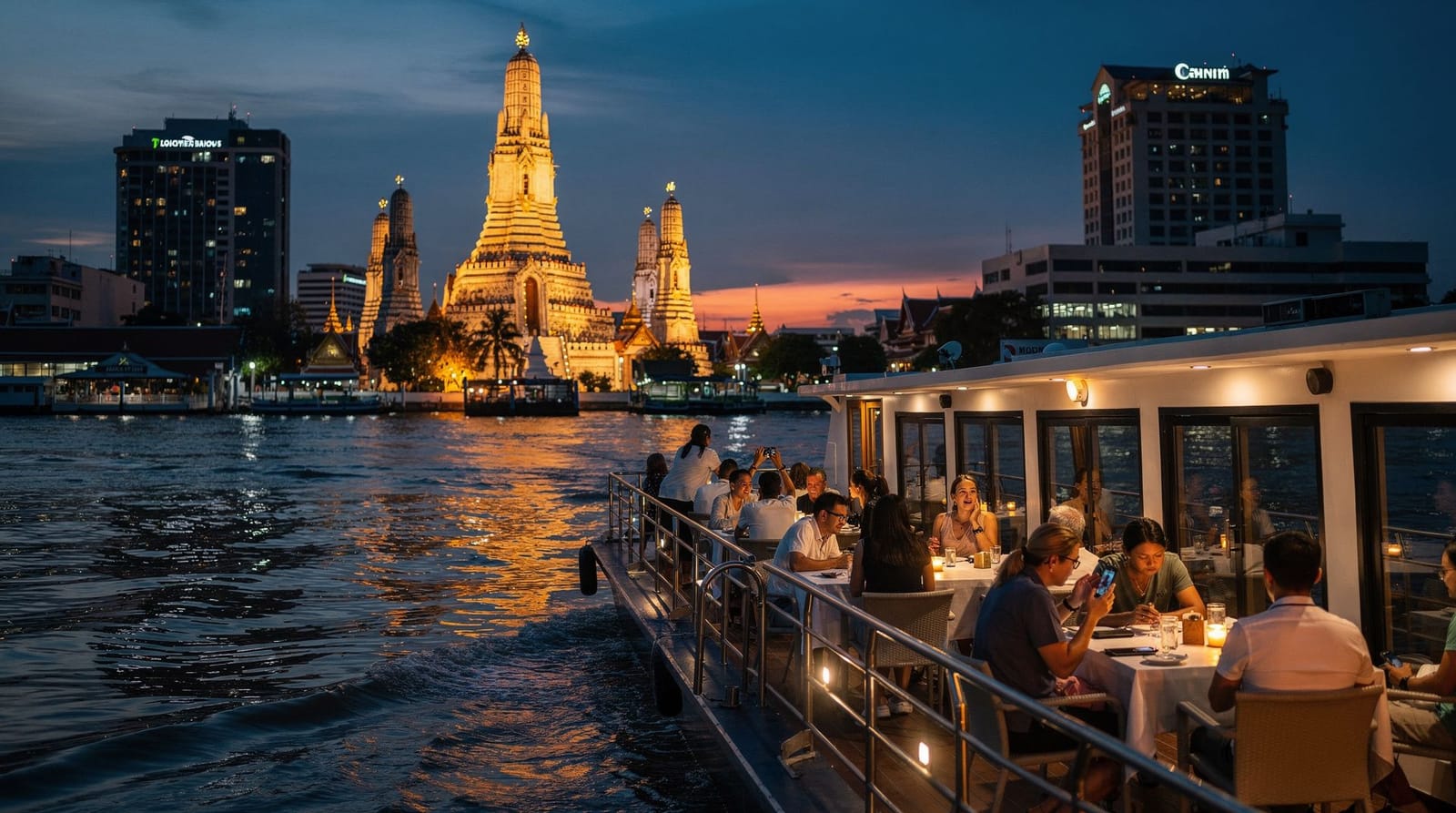
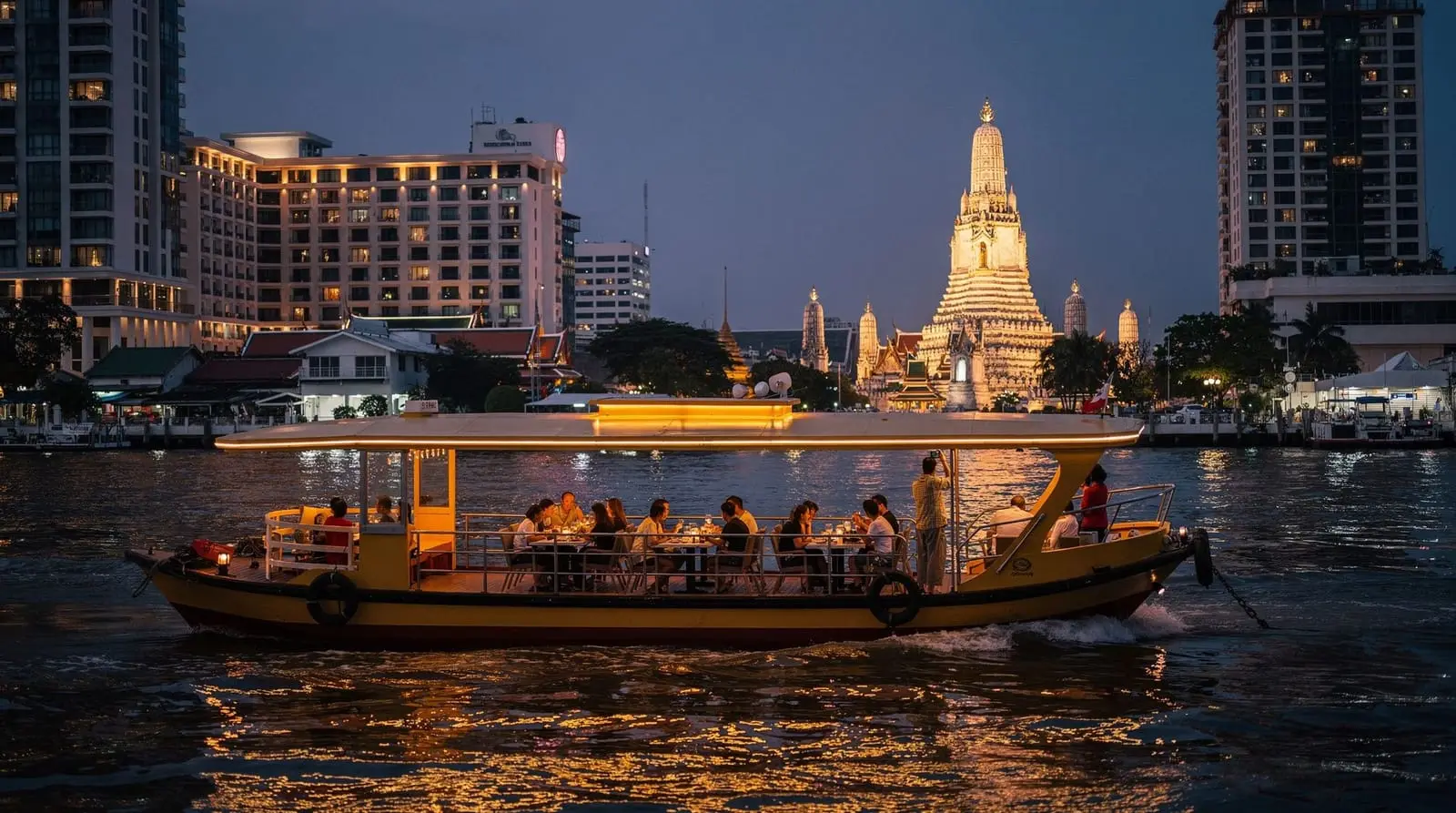
Public river boats and the Chao Phraya dinner cruise are different animals. The public boats are cheap daytime transport that happens to be scenic; the dinner cruise is a paid evening experience built around the floodlit temples and a meal. Many travellers use the boats by day to reach the temples and book a cruise for one special evening. They complement each other rather than compete.
If you only want a short scenic ride at golden hour without committing to dinner, the sunset cruise guide covers the lighter options.
Avoiding the small traps
The river is honest by Bangkok standards, but a couple of things catch the unwary. Around the major piers, touts and unofficial operators offer “special” tourist boats, private long-tail rides and tickets at inflated prices; ignore them and use the official ticket booths and clearly marked public boats. The long-tail canal experience is genuinely worth doing, but on your terms, as covered in the canal long-tail boat tours guide, not at a marked-up rate pushed by a pier tout.
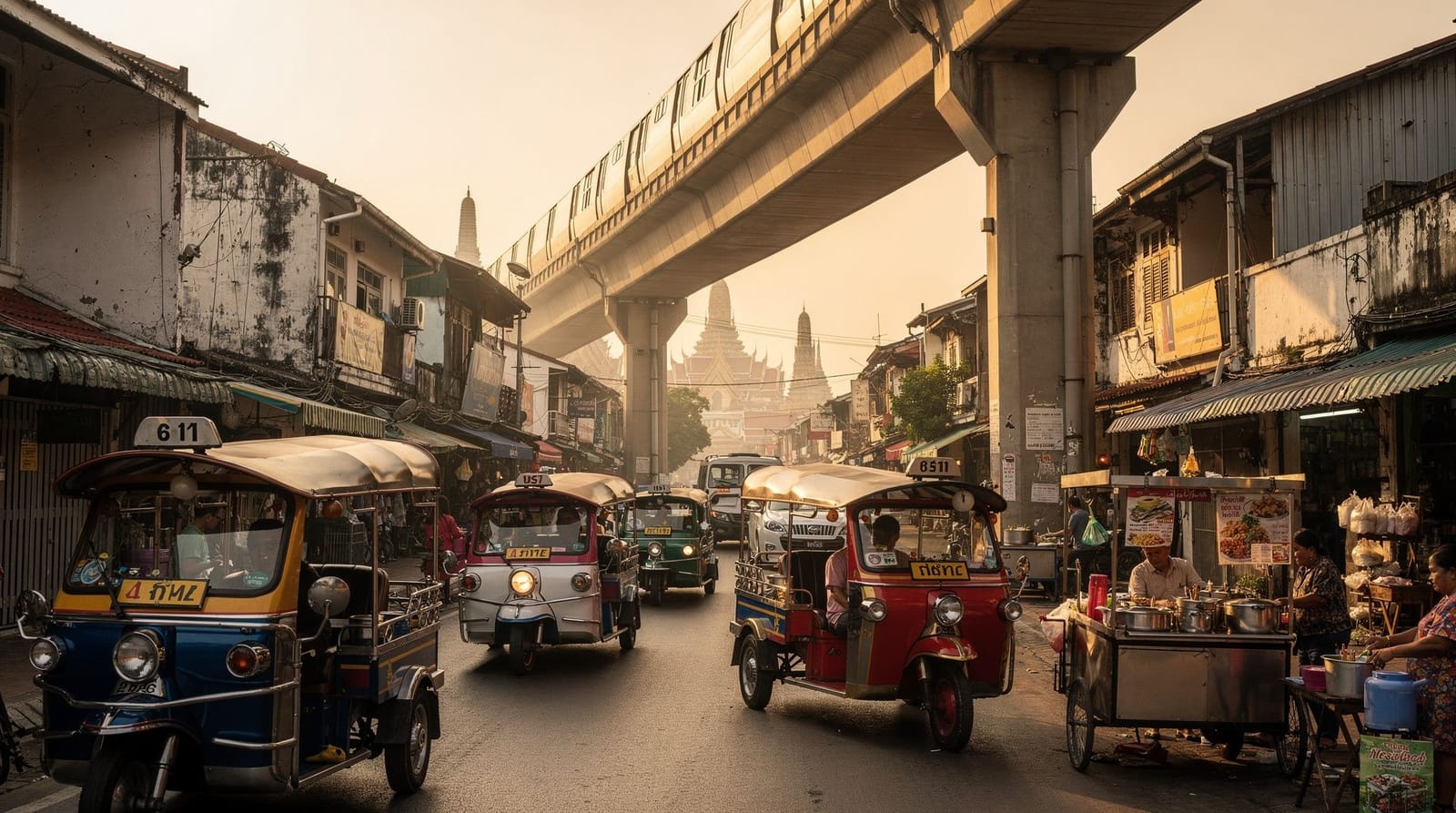
For getting to and from the piers by road, the meter-refusal and overcharging issues are covered in the Grab, taxi and tuk-tuk guide and the common Bangkok scams guide.
Fares by flag, at a glance
| Flag | Fare | Stops |
|---|---|---|
| Orange | ~16 THB flat | Nearly every pier |
| No flag (local) | Cheaper than orange | Every pier, limited hours |
| Green-yellow / yellow / red | ~13–33 THB | Skips minor piers, rush-hour focused |
| Blue (tourist boat) | ~30 THB single / ~200 THB day pass | Main sightseeing piers only |
Riding further upriver: Koh Kret and Nonthaburi
The orange-flag and express boats do not stop at Sathorn alone — ridden further north, the river continues past the tourist piers into Nonthaburi, the gateway to Koh Kret, a car-free river island known for pottery workshops and a laid-back Mon community. It is a longer ride than the temple hop, but it turns the same boats you use for sightseeing into a genuine half-day escape from the city, entirely by water. Check the pier board for a boat that terminates at or near Nonthaburi rather than turning back at the central piers.
Boat etiquette worth knowing
A few small habits mark you as someone who has ridden the river before rather than a first-timer holding up the queue. Have your fare or pass ready before the boat docks rather than fumbling once aboard. Let passengers off before you step on. Keep bags and elbows in, since the boats run close to piers and other hulls. And if a seat is clearly reserved for monks or the elderly (marked in some sections), leave it free — a small courtesy that is noticed.
Rainy season and the river
During the rainy season (roughly June–October), the Chao Phraya runs higher, faster and occasionally muddier, and the piers can get briefly slippery in a downpour. Services keep running in ordinary rain, but very heavy storms can cause short delays or a rougher ride, so build in a little slack if a boat trip is time-critical during a monsoon downpour. The rainy season in Bangkok guide and the Bangkok weather month-by-month guide cover what to expect more broadly, and the monsoon travel tips blog post has first-hand notes on riding the boats in a downpour.
Frequently asked questions about Chao Phraya river boats: the honest how-to
What do the flag colours on Chao Phraya boats mean?
How much does the Chao Phraya river boat cost?
Which boat goes to Wat Arun and the Grand Palace?
Where do I catch the Chao Phraya river boats?
Is the orange-flag boat or the tourist boat better?
Are the Chao Phraya river boats safe?
Can I use the Chao Phraya boats to avoid Bangkok traffic?
Top experiences
Bookable activities with verified prices and instant confirmation on GetYourGuide.