Instagram spots in Bangkok: the honest photo guide
Bangkok: Grand Palace, Wat Pho, Wat Arun Sacred & Local Tour
Where are the best Instagram spots in Bangkok?
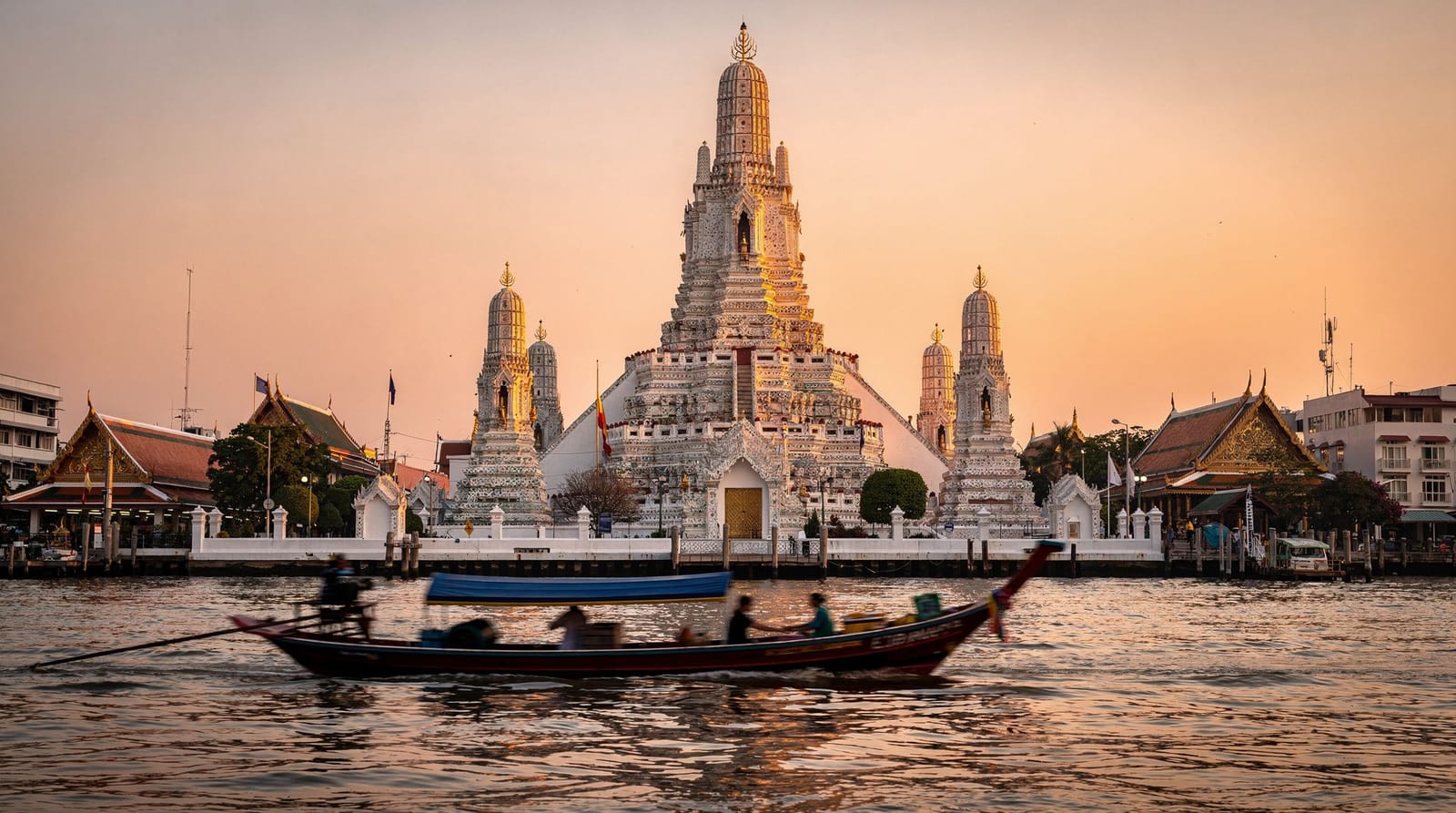
The most photogenic spots are Wat Arun at sunset (shot from the Tha Tien side), Wat Paknam's giant green glass stupa, the colourful Pak Khlong flower market at dawn (free), and Yaowarat's neon at night. The Golden Mount at Wat Saket gives the best city panorama. Most are at their best early or late — go off-peak to avoid the crowds that fill every famous frame by mid-morning.
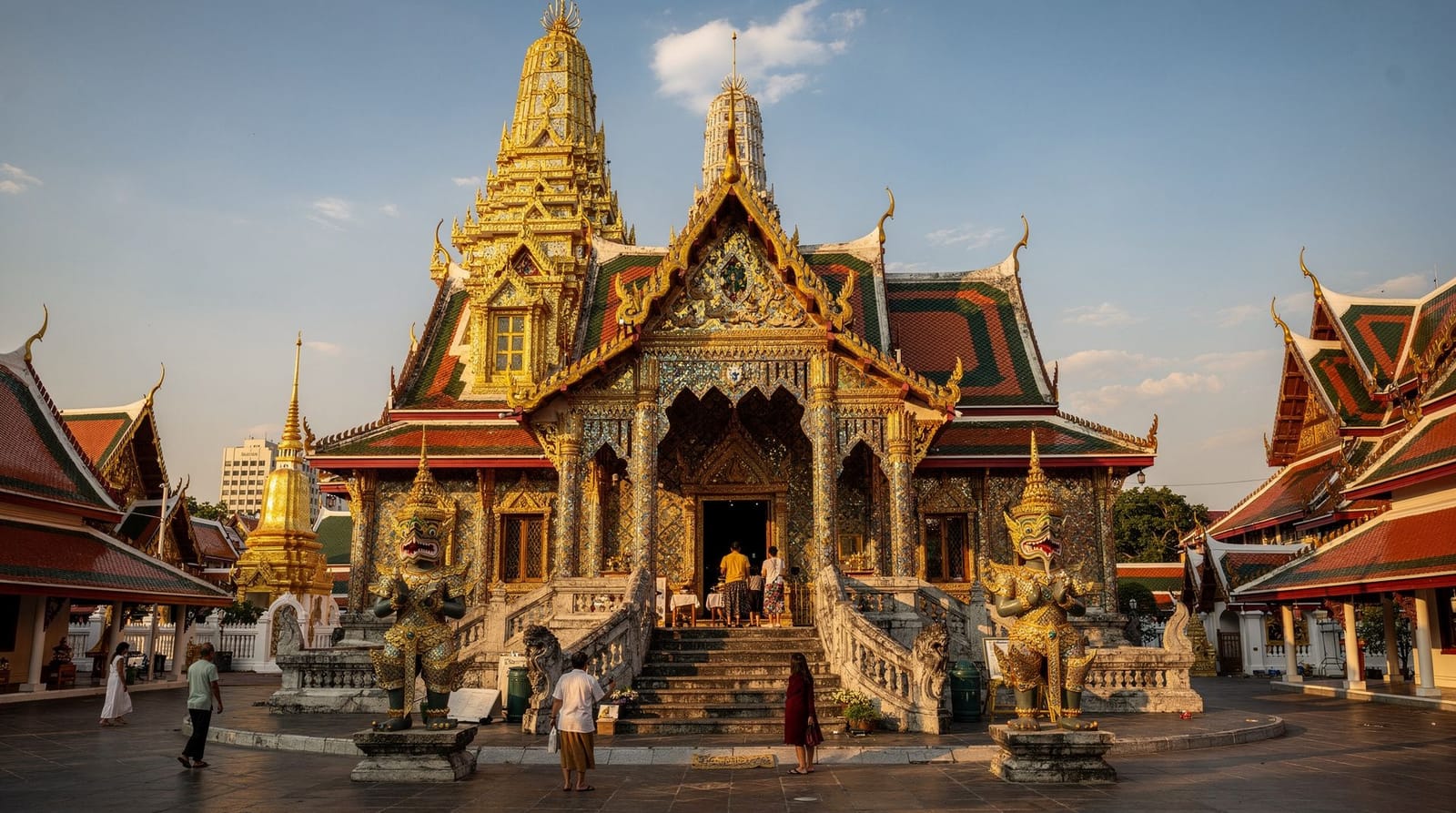
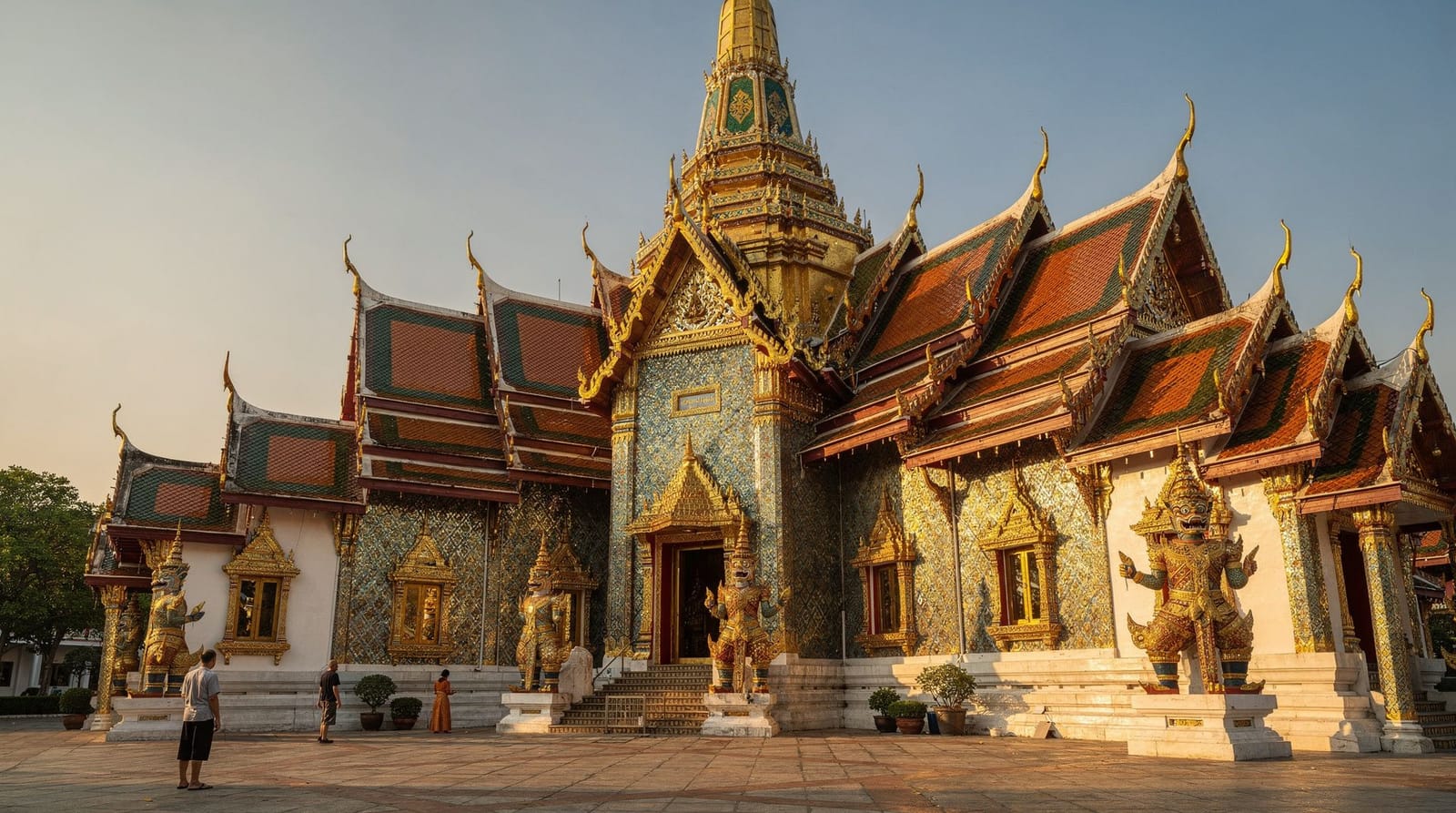
Bangkok is a photographer’s city — gold spires against a tropical sky, neon spilling across noodle stalls, monks in saffron crossing a brown river. But the famous frames you have seen online are also the busiest, and half the skill is knowing when the light is right and the crowds are not. This guide ranks the city’s most photogenic spots honestly, with real entry prices in baht, the best time of day for each, and a clear warning about the scams that target camera-toting visitors. The aim is decision-ready: turn up at the right hour, at the right angle, without the disappointment of a hero shot ruined by a hundred other phones.
| Where | Wat Arun, Wat Paknam, Pak Khlong Market, Yaowarat, Golden Mount |
| Cost | Free to ~200 THB per spot |
| Time needed | 30–60 minutes per spot |
| Getting there | Chao Phraya boat and BTS/MRT cover most spots |
| Best time | Dawn or the last hour before sunset |
The spots compared
| Spot | Best time | Cost | Crowd level |
|---|---|---|---|
| Wat Arun (from Tha Tien) | Sunset | Free to view from across the river | Moderate, worse at golden hour |
| Wat Paknam | Any time, calmer at opening | Free | Low–moderate, growing |
| Pak Khlong flower market | Dawn | Free | Low at dawn, busy by mid-morning |
| Yaowarat (Chinatown) | After dark | Free (street food extra) | High but part of the atmosphere |
| Golden Mount (Wat Saket) | Dusk | Check Wat Saket’s official site | Moderate |
The honest headline: every spot in this guide is genuinely beautiful, but most are also genuinely crowded between mid-morning and mid-afternoon. The difference between a great photo and a frustrating one is almost always timing. Go at dawn or in the last hour of light, choose weekdays over weekends, and you will have the icons of Bangkok nearly to yourself.
The temples that photograph best
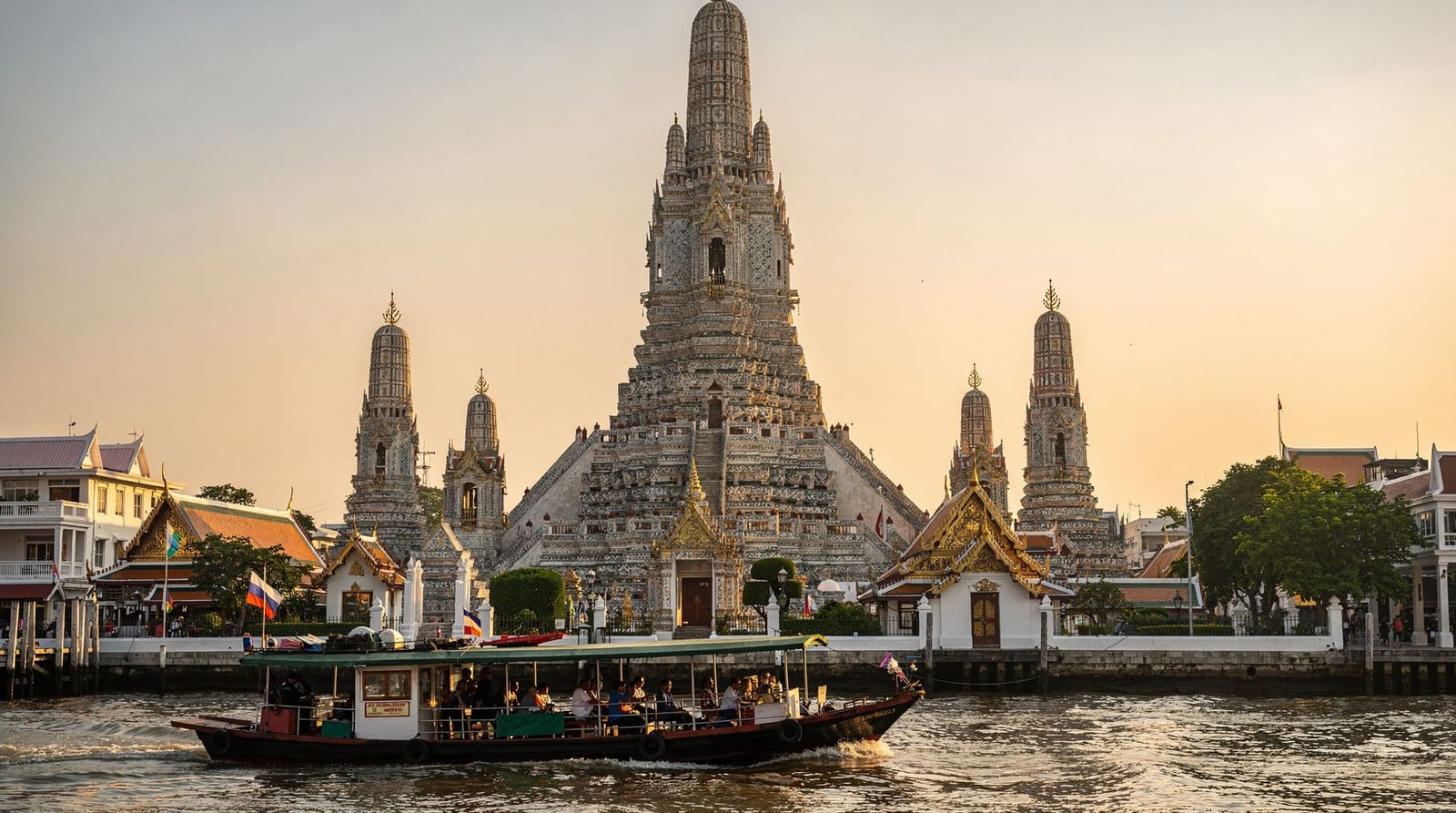
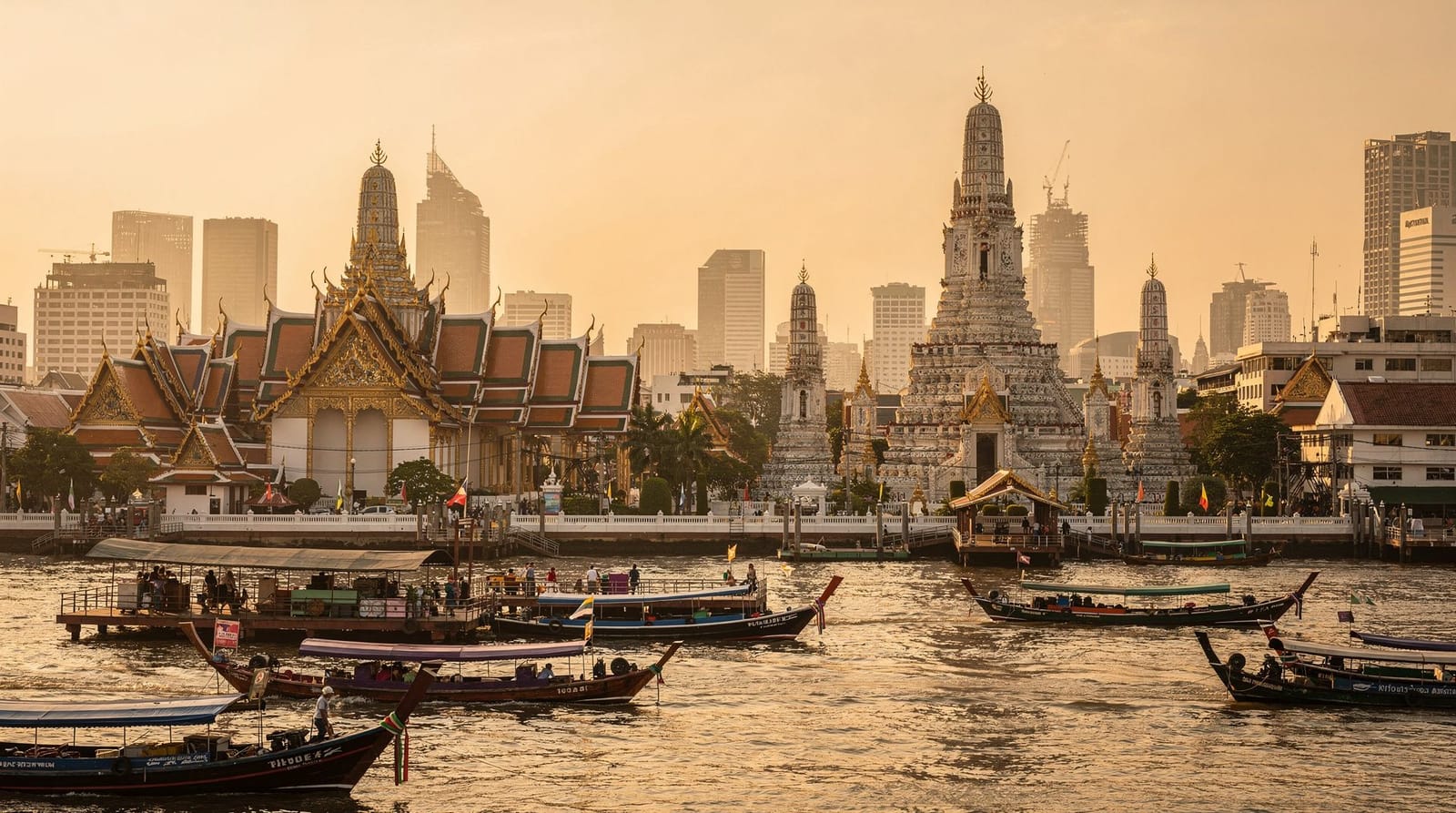
The undisputed star is Wat Arun, the Temple of Dawn, whose 70m porcelain-encrusted spire rises over the Thonburi bank of the river. The trick most visitors miss: the best photo is not from inside but from the Tha Tien side opposite, at sunset, when the spire glows orange and the river ferries cross the frame. Entry to climb the temple itself is around 250 THB (~8 USD). Our Wat Arun photography guide maps the exact riverside spots and the boat angle, while the Wat Arun guide covers visiting hours and dress code.
The rising star of Bangkok Instagram is Wat Paknam in Phasi Charoen, where a green glass stupa ceiling, lit from below, fills the frame like an emerald galaxy. Entry is free and, because it sits well outside the central tourist circuit, it is calmer than the riverside temples — though its online fame is catching up with it. The full story is in our Wat Paknam guide.
For the best city panorama, climb the 318 steps of the Golden Mount at Wat Saket — for a 360-degree view over the old city rooftops, best at dusk. Our Wat Saket Golden Mount guide has the timing. And the Grand Palace with its Emerald Buddha temple is dazzling in any frame, though it is also the single most crowded site in the city — arrive at the 08h30 opening to beat the tour buses. If you want a guide to handle the timing and the river crossing between the three riverside temples, you can join a guided Grand Palace, Wat Pho and Wat Arun tour and concentrate on the photos.
The colourful markets and streets
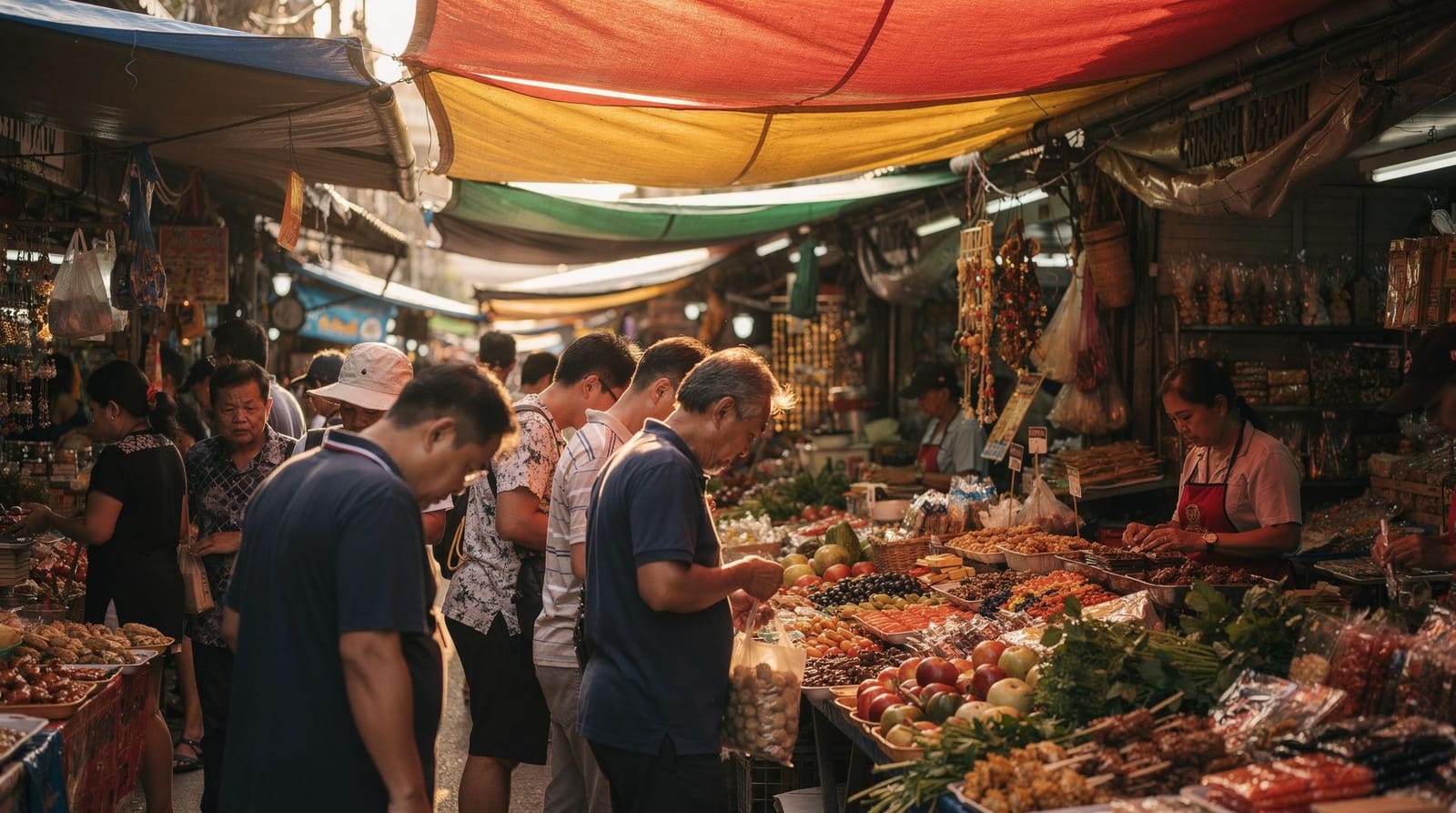
For pure colour, nothing beats the Pak Khlong flower market (Pak Khlong Talat) near the river, where wholesalers pile marigolds, roses and orchids in vivid heaps. It runs 24 hours and is free, but the magic is at dawn, when the deliveries arrive and the light is soft — our Pak Khlong flower market guide explains the rhythm of the market day. By mid-morning the crowds and the heat have flattened both the flowers and the light.
After dark, Yaowarat, the main artery of Chinatown, erupts in neon Chinese signage above a river of street-food smoke — one of the most cinematic night scenes in Asia. Our Yaowarat Chinatown food guide covers where to stand and what to eat while you shoot.
For street art and a vintage aesthetic, the lanes of Talat Noi are an open-air gallery of murals, rusting machine shops and old Chinese shophouses — covered in our Talat Noi guide. And the Erawan Shrine at the Ratchaprasong crossroads, with its gilded four-faced Brahma and constant dancers, makes a striking contrast of devotion against luxury malls — see our Erawan Shrine guide.
The green escapes
Not every photogenic spot is a temple or a market. Bang Krachao, the “green lung” across the river in Bang Krachao, is a maze of jungle, elevated cycle paths and lotus ponds, with the Bangkok skyline rising improbably beyond the trees — a striking nature-meets-megacity contrast. Our Bang Krachao green lung guide covers how to get there and rent a bike. And the vast Chatuchak weekend market is a riot of colour, vintage finds and quirky storefronts, with photogenic sections of plant stalls, art and pet markets worth seeking out early before the midday heat and crush.
How to actually get the shot
Three honest rules make the difference. First, timing beats everything: dawn and the last hour of light give you soft colour and thin crowds, while midday gives you harsh shadows and a hundred other phones in your frame. Second, weekdays beat weekends at every major site. Third, dress for the temples — shoulders and knees covered, shoes off in the halls — both out of respect and because being turned away ruins the shoot. Our temple photography tips guide goes deeper on composition and etiquette, and the broader best photo spots in Bangkok guide maps a full day’s photo route.
If you would rather have a guide handle the logistics and timing of the temple trio, a structured tour can be efficient — though it will not give you the dawn-and-dusk windows a self-planned shoot allows. You can book a half-day guided city-temples tour for the context and the convenience, weighing it against the freedom of shooting solo at first and last light.
A warning for camera-carrying visitors
Bangkok’s photo spots attract scammers who read tourists easily. The most common is the Grand Palace “closed” scam: a friendly, well-dressed stranger near the entrance tells you the palace is shut for a ceremony or a holiday and offers a tuk-tuk tour to “other temples” instead. It is a lie — the palace keeps standard 08h30–15h30 hours — and the tuk-tuk run ends at a gem shop where the driver earns a commission and you are pressured to buy fake stones. Walk past, go straight to the official ticket window, and read our Grand Palace scam warning guide before you go. The same applies to “free” photo helpers who snatch your phone and then demand a tip — hand it to no one you do not trust.
With the scams sidestepped and the light on your side, Bangkok rewards the photographer generously. Plan around the hours, not the convenience, and the city’s icons — Wat Arun aflame at sunset, the flower market at dawn, Yaowarat under neon — will give you the frames you came for.
Gear and settings worth knowing
You do not need a professional kit for any of these spots, but a few practical choices help. A phone with a night mode handles Yaowarat’s neon and the flower market’s dawn light well; for Wat Arun at sunset, a small tripod or a steady railing helps with the lower light once the sun drops. Humidity fogs lenses when you step from air-conditioning into the heat, so give a camera or phone a few minutes to acclimatise before shooting. At temples, switch off flash out of respect and because it flattens the gold detail you are trying to capture. None of the spots in this guide need a paid photo permit for personal, non-commercial shooting, but professional shoots with lighting rigs or models may require separate permission — check with temple staff if in doubt.
Building a photo day around the light
The simplest way to use this guide is to stop thinking in terms of a checklist and start thinking in terms of a clock. Begin the day where the morning light is gentle and the crowds are thin: the flower market near the river is the obvious opener, and it sits close enough to the old city that you can drift on to the temples afterwards. Our Old City and Rattanakosin guide and the Rattanakosin destination page show how the main sights cluster, so you are not zig-zagging across town in the heat. If you would rather follow a ready-made route, the temple-hopping route strings the big riverside sites together in a sensible order.
Midday is the moment to put the camera away or move indoors. That is when a long lunch, a cooling drink or a museum visit makes more sense than standing in a queue for a frame that will be washed out anyway. The Bangkok Art and Culture Centre is a calm, covered alternative, and a covered river boat ride, described in the Chao Phraya boats guide, lets you rest while still collecting views of the riverbank. Then return to the shoot for the last stretch of daylight, finishing with the neon of Chinatown once the sky has gone dark.
Seeing the city from above and from the water
Some of the best photographs of Bangkok are not taken at ground level. The skyline is dense, the river is wide, and a raised viewpoint turns the chaos into a pattern. Our Bangkok with a view guide compares the high points, and the Mahanakhon Skywalk guide covers one of the most dramatic. If you prefer a drink in your hand while you shoot, the rooftop bars guide lists the places that frame the skyline best at dusk, and the rooftop restaurants guide does the same for those who want dinner with the view.
On the water, the mood changes completely. A sunset cruise puts the temples and towers in warm light and removes the need to fight for a spot on the bank, while the Chao Phraya dinner cruise guide suits anyone who wants to photograph the illuminated riverfront after dark. For a quieter, more human-scale view, the canal longtail boat tours glide past wooden houses and temple walls that most visitors never see, and the Thonburi canals destination page explains the backwater side of the river.
Beyond the famous frames
The danger of any Instagram guide is that everyone follows it and everyone ends up with the same picture. If you want something less repeated, spend part of your trip on places that are photogenic without being famous. The hidden gems of Bangkok guide is a good starting point, and the Wat Benchamabophit marble temple guide covers a temple whose symmetry and calm photograph beautifully with far fewer people in the frame. The Wat Pho guide and the Wat Traimit golden Buddha guide add two more temples where patient framing pays off, and the Wat Phra Kaew Emerald Buddha guide explains what you are looking at inside the palace complex.
Markets are another reliable source of original pictures, because the subjects keep changing. The Bangkok markets guide and the night markets guide point you to places where light, steam and colour combine, and the Rod Fai train night market guide offers vintage stalls and retro scenery that suit a more nostalgic look. For a completely different texture, the floating markets guide and the Maeklong railway market give you boats, awnings and everyday life in motion, though both are best treated as a separate outing rather than squeezed into the same day.
Photographing people and places with respect
Bangkok is not a film set. The monks, vendors and worshippers in your frame are going about their day, and a little courtesy goes a long way. Ask before you point a camera at someone’s face, keep a respectful distance from anyone praying, and never step in front of a person kneeling at a shrine for a better angle. Our Thai customs and etiquette guide explains the habits that matter, and the temple etiquette and dress code guide covers what to wear and how to behave inside the grounds. Photographs of the monarchy and royal imagery call for particular care, so read the monarchy and respect guide before you decide what to shoot and how to caption it.
A good rule of thumb is that if you would feel awkward being photographed doing the same thing, wait, or ask. Vendors are often delighted to be photographed if you buy something first, and a smile and a nod open more doors than a long lens ever will.
Planning around weather and season
Light and weather shape the result as much as location does. A clear dry-season morning gives crisp colour, while a rainy afternoon can turn the same temple into something moody and reflective, with wet stone catching the gold. Check the month-by-month weather guide and the best time to visit Bangkok guide before you fix your dates, and read the Bangkok in the rain guide if your trip falls in the wetter months. A small waterproof cover for your camera or phone is worth carrying, and storms often clear quickly, leaving dramatic skies for the evening.
Festivals add another layer of colour for photographers. The festivals calendar shows what is happening when, and the Loy Krathong guide and Songkran guide explain two of the most visual events of the year. Both are wonderful for pictures and both are crowded and wet or busy, so protect your equipment and expect to move slowly.
Hiring help for the shoot
If you want portraits rather than landscapes, a local professional can save you hours of trial and error. The Bangkok photoshoot guide explains how a session works and what to ask before you book. For a more relaxed way of reaching viewpoints, the tuk-tuk tours guide and the walking tours guide offer two different paces, and the Bangkok first-timers guide helps you decide how much of the city to attempt in one trip. Whatever you choose, build in slack: the best pictures often arrive in the quiet gaps between planned stops.
Frequently asked questions about Instagram spots in Bangkok: the honest photo
What is the most Instagrammable place in Bangkok?
When is the best light for photos in Bangkok?
Is Wat Paknam free to photograph?
How do I avoid crowds at Bangkok photo spots?
Are there photo scams at Bangkok temples?
Can I use a tripod or drone at Bangkok temples?
Top experiences
Bookable activities with verified prices and instant confirmation on GetYourGuide.