Wat Arun area
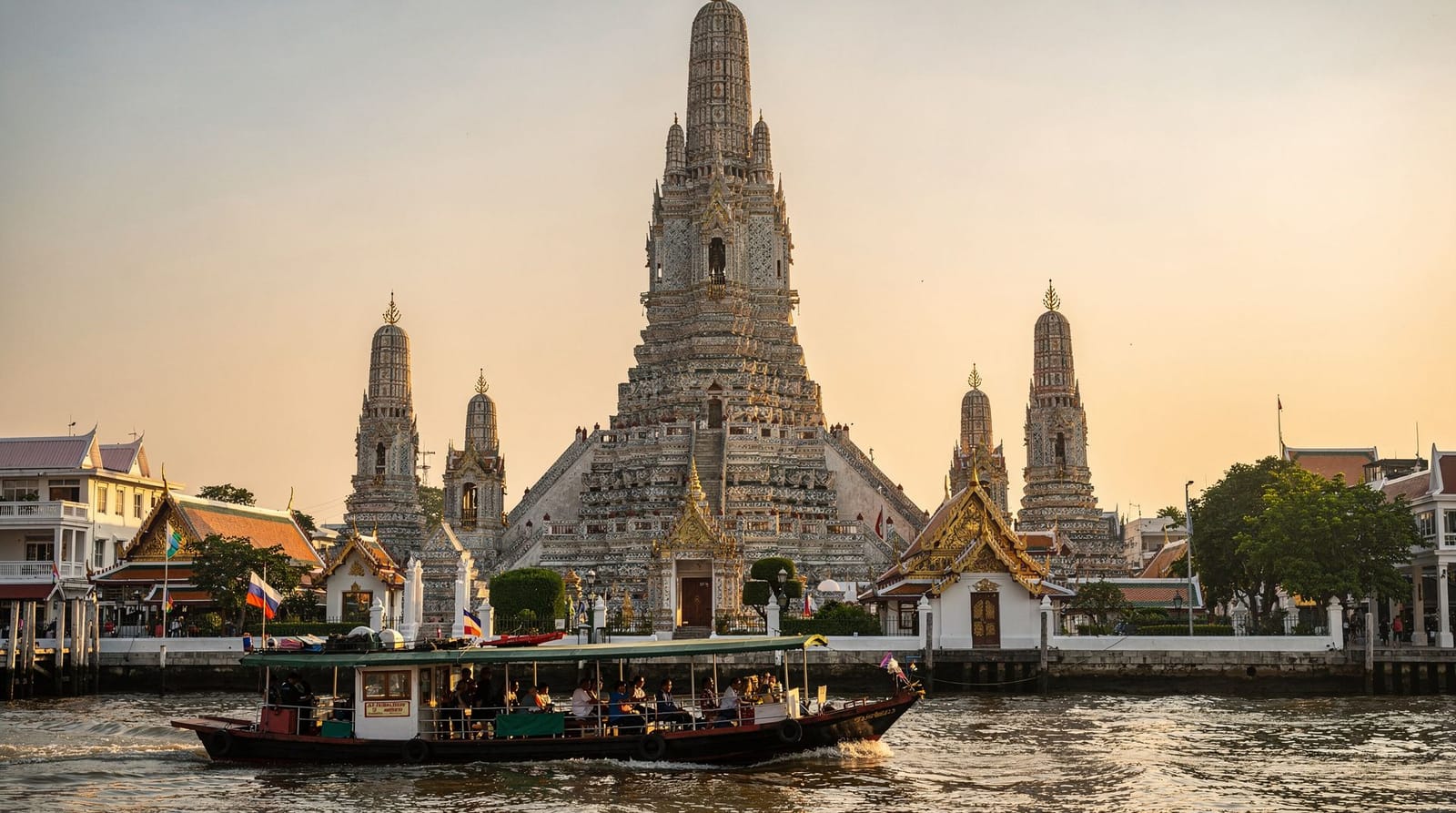
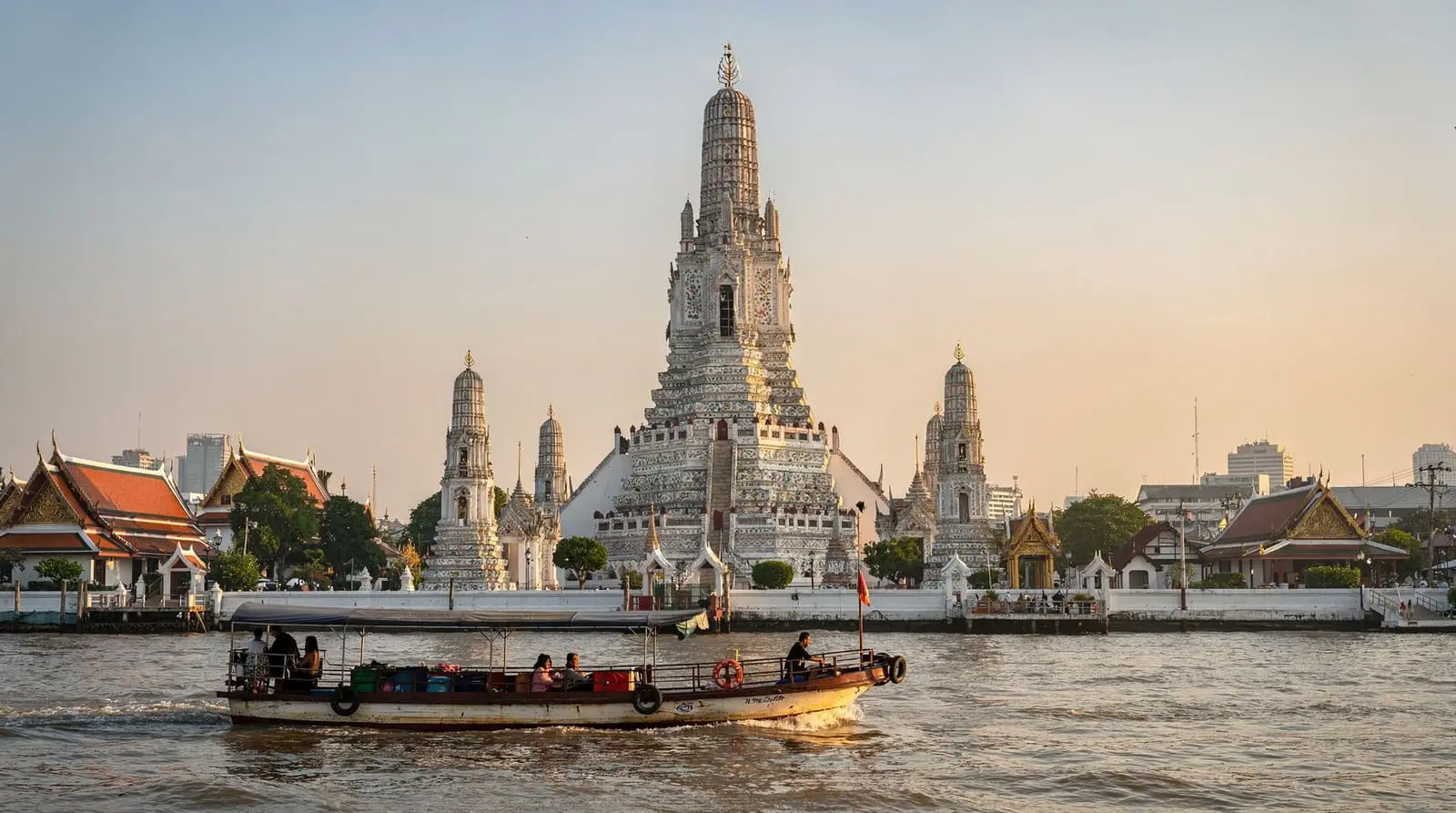
Wat Arun, the Temple of Dawn, is Bangkok's most photographed spire — climb its porcelain-clad prang and catch the sunset from across the river.
Bangkok: Longtail Boat Canal Tour to Wat Arun
Quick facts
- Nearest transit
- Cross-river ferry from Tha Tien pier (5 THB); MRT Sanam Chai then ferry; no BTS
- Character
- Iconic riverside temple on the Thonburi bank, ringed by old-Bangkok lanes and cafes
- Key food
- Riverside cafes and sunset-view restaurants facing the spire; old-Thonburi stalls
- Key sight
- Wat Arun's 70 m porcelain-clad central prang; sunset views from the opposite bank
- Best time
- Late afternoon to sunset for the golden light; early morning to climb crowd-free
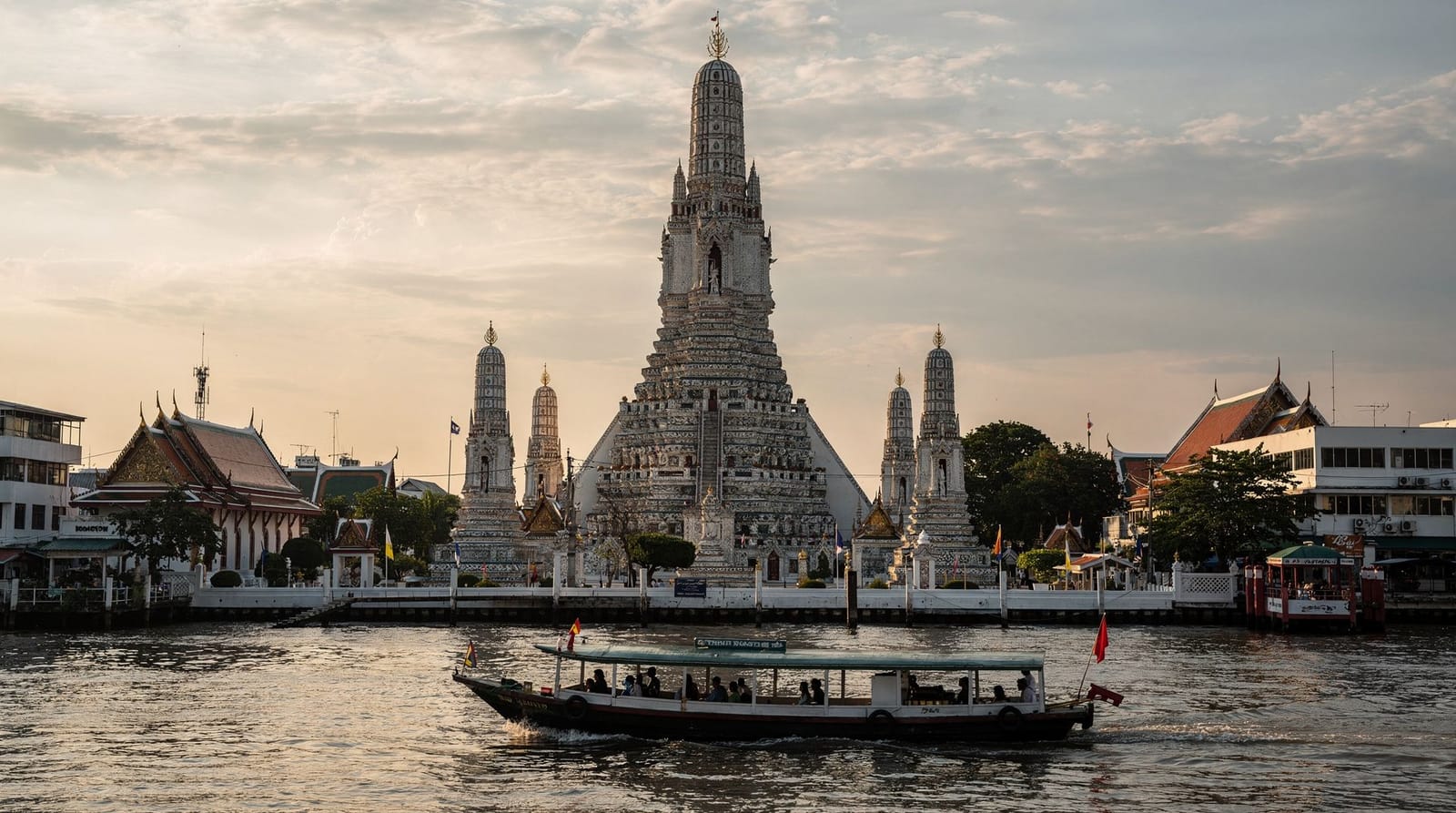
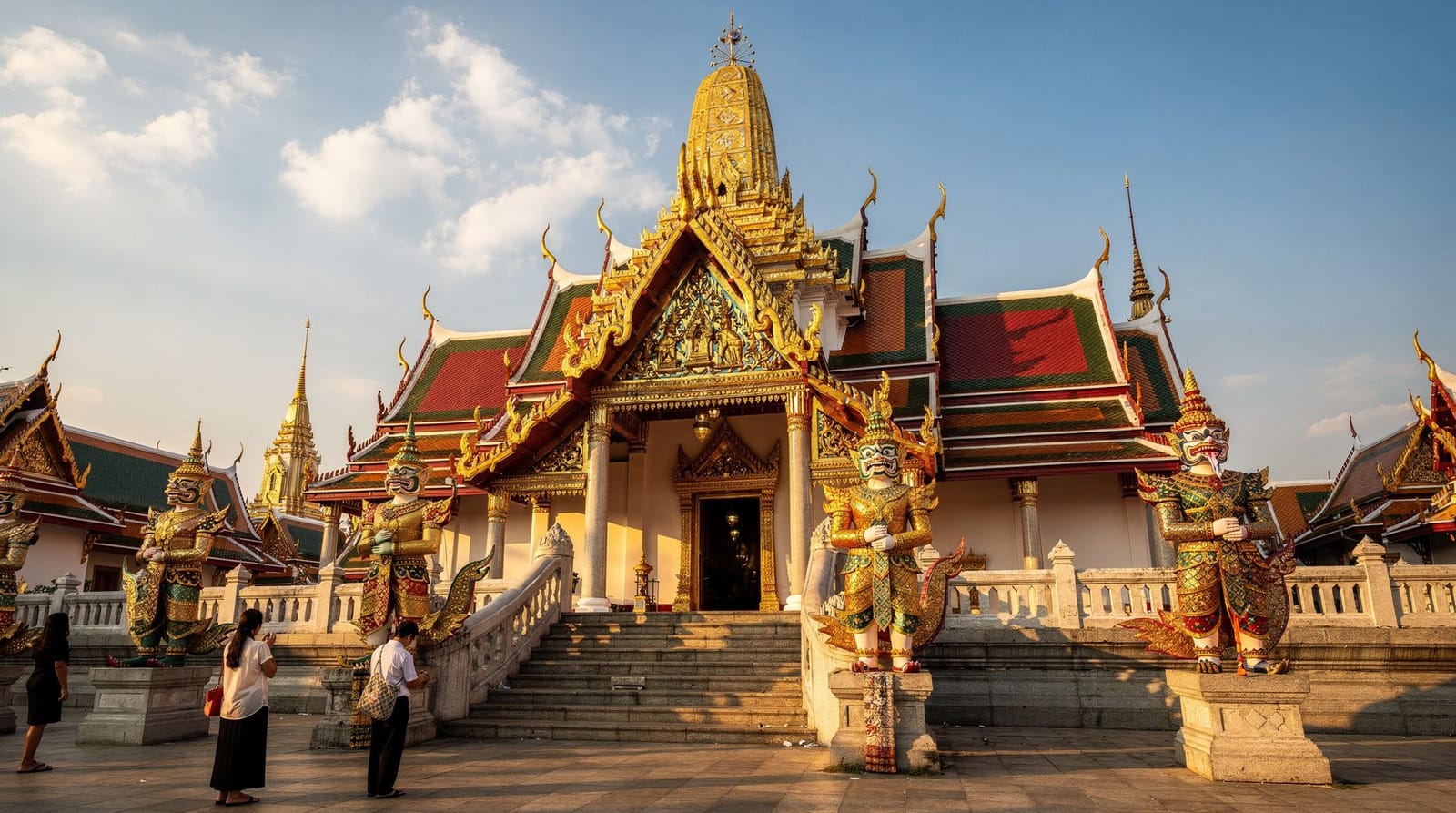
Wat Arun — the Temple of Dawn — is the image that says “Bangkok” more than any other: a towering, slender spire encrusted with millions of fragments of coloured porcelain and seashell, rising 70 metres from the Thonburi bank of the Chao Phraya and glowing rose-gold at sunset. Despite the name, the temple is most magical not at dawn but at dusk, viewed from across the river as the sky behind it catches fire. The area around it, on the quieter west bank, is a pocket of old Thonburi — narrow lanes, riverside cafes, small temples and the launch point for the longtail-boat canal tours that reveal Bangkok’s hidden, water-bound side.
| Where | Thonburi (west) bank of the Chao Phraya, opposite Rattanakosin |
| Cost | Around 200 THB entry |
| Time needed | 1–2 hours; a few hours if combined with the trio |
| Getting there | Cross-river ferry from Tha Tien pier (5 THB, 3 min); no BTS |
| Best time | Late afternoon to sunset; early morning to climb crowd-free |
Wat Arun — climbing the Temple of Dawn
The temple’s centrepiece is its central prang, a steep Khmer-style tower decorated with a mosaic of broken Chinese porcelain (originally used as ballast in trading ships) and topped with a trident of the Hindu god Indra. You can climb the lower terraces by a set of very steep, narrow stairs for close-up views of the porcelain detail and a panorama back across the river to the Grand Palace and Wat Pho. The steps are genuinely steep — hold the rail, take your time, and skip the climb if you are unsteady or afraid of heights.
Entry is around 200 THB (about USD 6). The temple’s name honours Aruna, the Indian god of dawn, and it dates in its current grand form to the early 19th century under Rama II and Rama III. The temple dress code applies: cover shoulders and knees, remove shoes where required. For the full visit details see the Wat Arun guide and, for shooting it, the Wat Arun photography guide.
The sunset view — from the other bank
Here is the key piece of local knowledge: the most famous view of Wat Arun is not from inside the temple but from the opposite (eastern) bank, around Tha Tien and the riverside restaurants and rooftop bars there. Late in the afternoon, the sun drops behind the prang and silhouettes it against a flaming sky, reflected in the river — the classic postcard shot. Many visitors climb Wat Arun in the afternoon, then cross back to the eastern bank for a sunset drink or dinner facing the temple as it lights up. See the best photo spots guide for timing and angles. A guided sunset loop like the Grand Palace, Wat Arun and Wat Pho evening tour is built around exactly this light.
Completing the temple trio
Wat Arun is the third point of Bangkok’s essential temple triangle, alongside the Grand Palace and Wat Pho across the river in Rattanakosin. The three are linked by a 5-baht, three-minute cross-river ferry from Tha Tien pier, which makes doing all three in a day straightforward. The natural rhythm is the Grand Palace and Wat Pho in the cooler morning, lunch, then ferry across to Wat Arun in the afternoon for the sunset light. Guided versions that handle the crossings and the timing include the Grand Palace, Wat Pho and Wat Arun sacred tour and the three major royal temples walking tour. See the temple-hopping route and the temples itinerary.
Longtail canal tours from Wat Arun
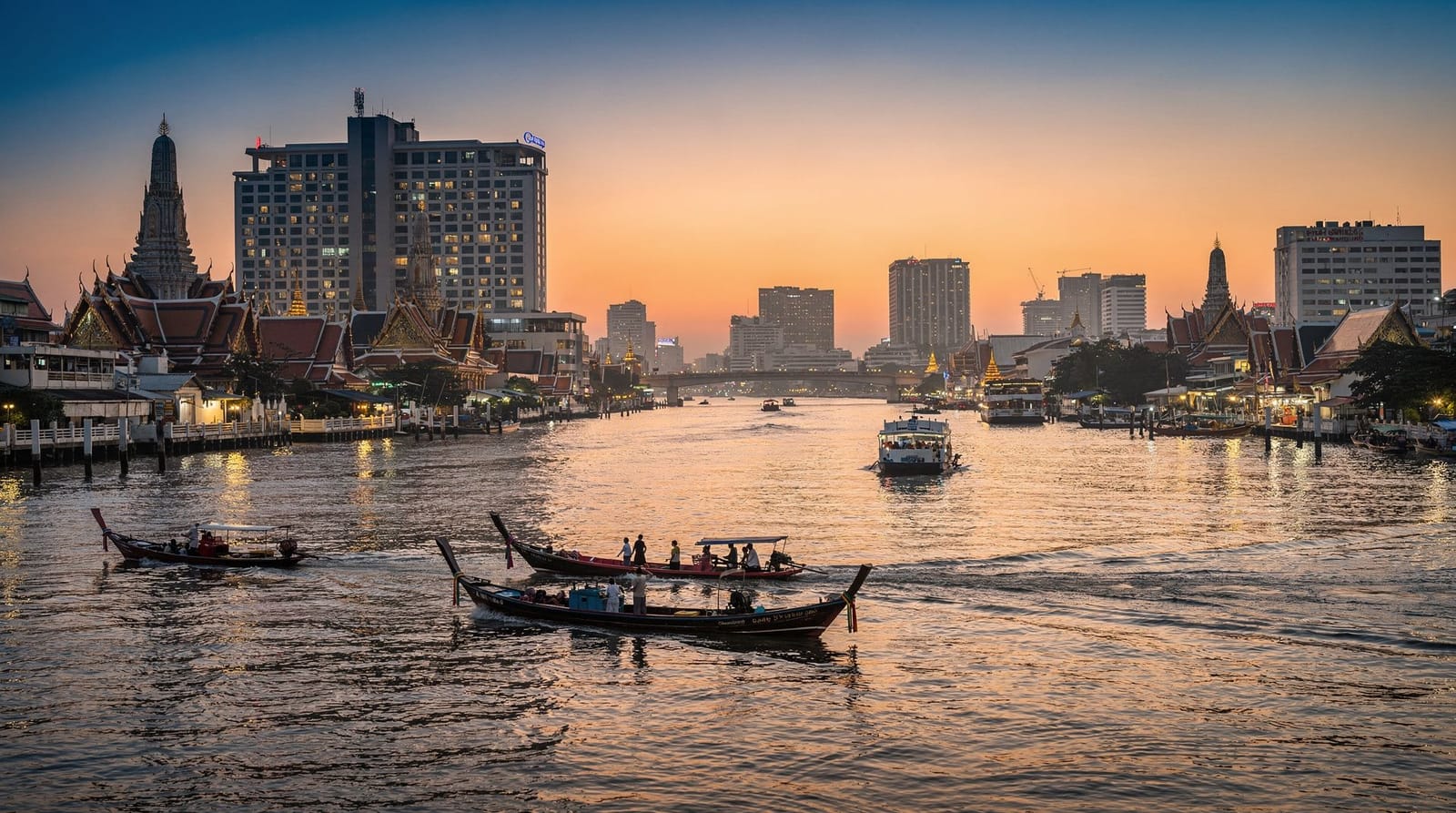
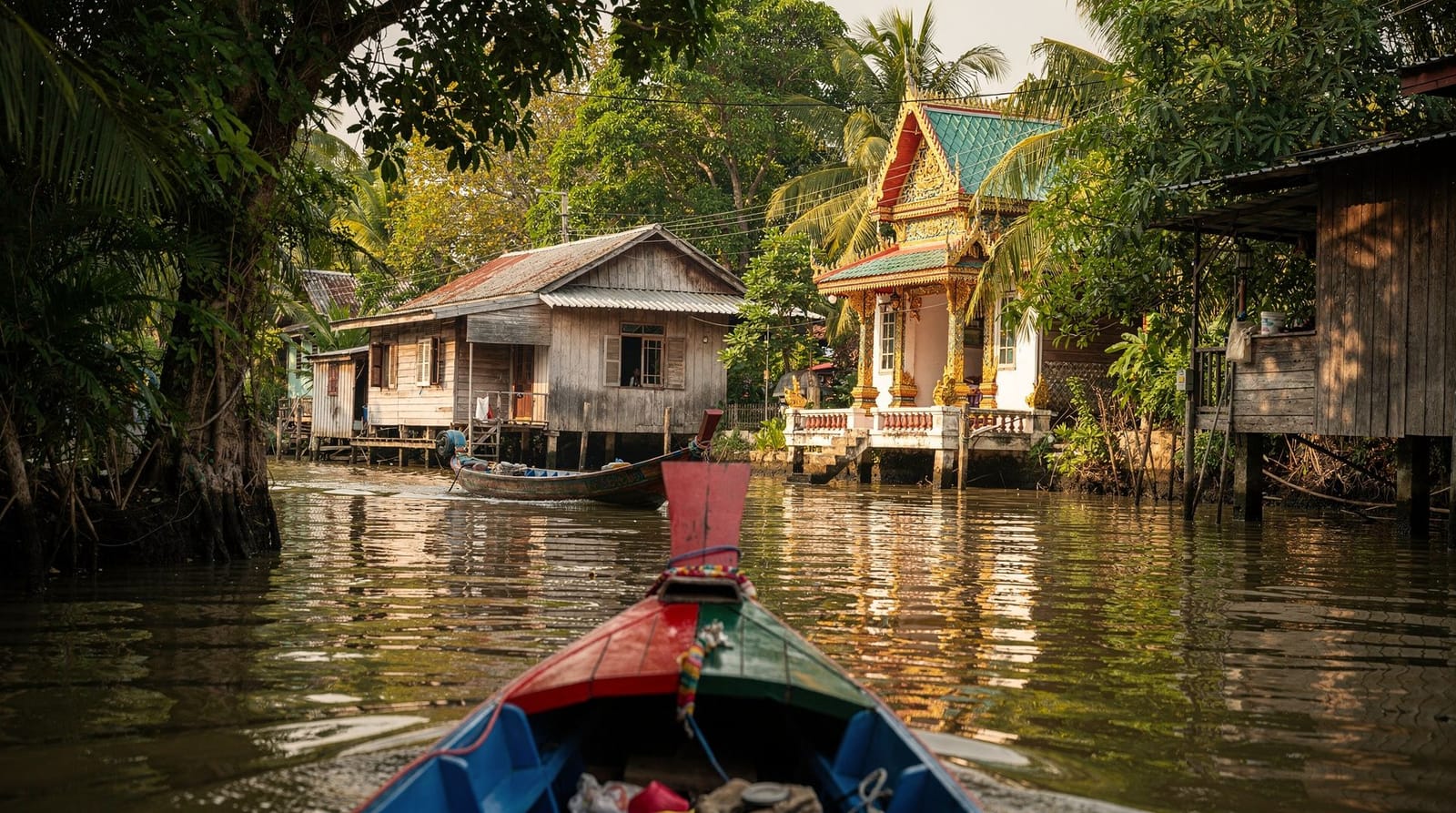
The Thonburi bank around Wat Arun is the gateway to Bangkok’s khlongs (canals), the watery network that earned the city its old nickname “Venice of the East.” Longtail boats — narrow, loud, fast wooden craft — set off from the piers here to thread the canals of Thonburi, passing stilt houses, riverside temples, orchid sellers and a slower, water-bound way of life that has largely vanished from the eastern bank. It is one of the most rewarding half-day experiences in Bangkok. The longtail canal tour with Wat Arun and the canal longtail sightseeing cruise both depart from this area; see the longtail canal experience guide and the canal boat tours guide.
The Thonburi-side neighbourhood
The lanes immediately around Wat Arun are part of old Thonburi — quieter, more local and more atmospheric than the busy eastern bank. You will find small riverside cafes with temple views, a few sunset-facing restaurants, local temples and the kind of relaxed neighbourhood feel that disappears across the river. It connects directly to the wider Thonburi khlongs district and, downriver, to ICONSIAM and Khlong San. Spending an hour wandering here after climbing the temple, before the sunset crossing, is time well spent.
Eating and drinking around Wat Arun
The best dining experience here is a sunset view of the temple. On the eastern bank, a cluster of riverside restaurants and rooftop bars around Tha Tien face directly onto Wat Arun — book a table or a terrace spot for golden hour and you have one of Bangkok’s most romantic settings, though prices reflect the view. On the Thonburi side, cosy riverside cafes serve coffee and Thai food with quieter, equally lovely angles on the prang. For more, see the riverside Bangkok guide and rooftop restaurants guide.
Why it’s called the Temple of Dawn
The name has a specific historical origin worth knowing before you visit. After the fall of Ayutthaya to the Burmese army in 1767, King Taksin sailed down the Chao Phraya searching for a new capital and is said to have arrived at this spot at first light — hence Wat Arun, named for Aruna, the Hindu god of dawn. Taksin made Thonburi his capital and kept a royal palace beside the temple, though the site itself predates him by centuries as a local shrine. The soaring porcelain-clad prang visitors climb today is a later addition, built up under Rama II and completed under Rama III in the early 19th century, after the capital had already moved across the river to Rattanakosin. It’s a useful piece of context for the old-city Rattanakosin guide, since Wat Arun and the Grand Palace share this same founding-era history despite standing on opposite banks.
Best time of year to visit
Wat Arun is outdoors and exposed, so the season shapes the visit more than most Bangkok sights:
| Season | Months | What to expect |
|---|---|---|
| Cool season | Nov–Feb | Clearest light and skies — the best sunset photography and most comfortable climbing conditions; also the busiest months |
| Hot season | Mar–May | Intense midday heat on the unshaded prang; go at opening time or late afternoon, and carry water |
| Rainy season | Jun–Oct | Short, heavy afternoon downpours are common, but they often clear into dramatic, colourful sunset skies over the river |
Whatever the season, the late-afternoon-to-sunset window stays the best time to be on the eastern bank for the view, and early morning is consistently the quietest time to climb.
Crossing to Chinatown, Silom and beyond
Wat Arun’s position on the river makes it a natural hinge for a wider day out, not just a stop on the temple trio. Heading north along the Thonburi bank connects to the Thonburi khlongs canal network; crossing back to the eastern bank and heading downriver by boat reaches Chinatown and Yaowarat for street food, or further south to Silom and Sathorn for rooftop bars and the business district. Because the ferry and river-boat network ties all of these together, it’s easy to build a full day around Wat Arun without ever needing a Grab: temples in the morning, canals or Chinatown in the afternoon, sunset back at Tha Tien. See the old Rattanakosin guide for how the historic core connects on foot.
Getting there and around
By cross-river ferry: The simplest way — the 5-baht ferry from Tha Tien pier (behind Wat Pho) takes three minutes and lands right at Wat Arun.
By MRT plus ferry: Take the Blue Line to Sanam Chai, walk to Tha Tien, and cross. There is no BTS on this side of the river.
By river boat: The Chao Phraya Express and Blue Flag tourist boats stop nearby on the eastern bank; combine with the cross-river ferry. See the Chao Phraya boats guide.
By longtail or Grab: Longtail tours arrive by water; Grab and taxis can reach the Thonburi-side lanes but traffic and the river crossing make the ferry far more convenient. See the Grab and taxi guide.
Frequently asked questions about the Wat Arun area
What is the best time to visit Wat Arun?
Late afternoon to sunset is the classic choice — the warm light makes the porcelain-clad prang glow, and the across-the-river view from the eastern bank at dusk is iconic. Alternatively, go early in the morning to climb the tower before the heat and crowds. The temple is also beautifully floodlit at night.
Can you climb Wat Arun?
Yes — you can climb the lower terraces of the central prang via very steep, narrow staircases for close-up views of the porcelain mosaic and a panorama across the river. The steps are genuinely steep, so hold the railings and take your time; skip the climb if you are unsteady on your feet or uncomfortable with heights.
How do I get to Wat Arun from Wat Pho or the Grand Palace?
Take the cross-river ferry from Tha Tien pier, just behind Wat Pho — it costs 5 THB and takes about three minutes, landing right at Wat Arun. This makes doing the Grand Palace, Wat Pho and Wat Arun together in one day straightforward.
Where is the best place to photograph Wat Arun?
The most famous shot is from the opposite (eastern) bank, around Tha Tien, where riverside restaurants and rooftop bars face the temple — especially at sunset, when the prang is silhouetted against the sky and reflected in the river. Climbing the temple itself gives close-ups of the porcelain detail and views back toward the Grand Palace.
Is there a dress code at Wat Arun?
Yes, the standard temple dress code applies: cover your shoulders and knees, and remove your shoes where required. Wat Arun is an active temple, so dress and behave respectfully, as you would at the Grand Palace and Wat Pho.
What else is there to do around Wat Arun?
The Thonburi-side lanes around the temple are quiet and atmospheric, with riverside cafes and small temples. This area is also the main launch point for longtail-boat canal tours through Thonburi’s khlongs, which reveal a hidden, water-bound side of Bangkok — one of the most rewarding half-day trips in the city.
How much does it cost to enter Wat Arun?
Entry is around 200 THB (roughly USD 6) for foreign visitors, payable at the gate. There’s no need to pre-book — queues are rarely long except during the busiest cool-season weekends. The cross-river ferry from Tha Tien pier that gets you there costs a separate 5 THB.
Top experiences
Bookable activities with verified prices and instant confirmation on GetYourGuide.