Cooking class experience in Bangkok: market, wok and what to expect
Bangkok: Cooking Class with Market Visit & Tuk Tuk Ride
What happens in a Bangkok cooking class?
A typical half-day Bangkok cooking class starts with a guided walk through a fresh market, where the chef introduces Thai ingredients like galangal, lemongrass and palm sugar. You then cook four or five classic dishes yourself — usually pad thai, a curry pounded from scratch, tom yum or tom kha soup, and mango sticky rice — and eat everything you make. Expect to pay 1,000–2,500 THB (USD 30–75) and to leave with a recipe booklet and a genuinely useful skill.
A Thai cooking class is, dish for dish and baht for baht, the best-value experience in Bangkok. For roughly the price of two cocktails at a rooftop bar you spend half a day shopping a fresh market with a chef, cooking four or five classic dishes with your own hands, eating every one of them, and walking out with a recipe booklet and a skill you keep for life. This guide explains exactly what a class involves, what the dishes and prices honestly are in 2026, how the main schools differ, and how to pick the right one — with all prices in Thai baht (THB) and an approximate conversion at the mid-2026 rate of about 33 THB to 1 USD.
| Where | Central Bangkok, schools across Silom, Chinatown and beyond |
| Cost | 1,000–2,500 THB half-day; 2,800–3,500 THB upscale |
| Time needed | 3.5–5 hours, including the market visit |
| Getting there | Most schools are BTS/MRT-reachable or include pickup |
| Best time | Morning (08h30–09h00 start), especially in hot season |
What actually happens in a class
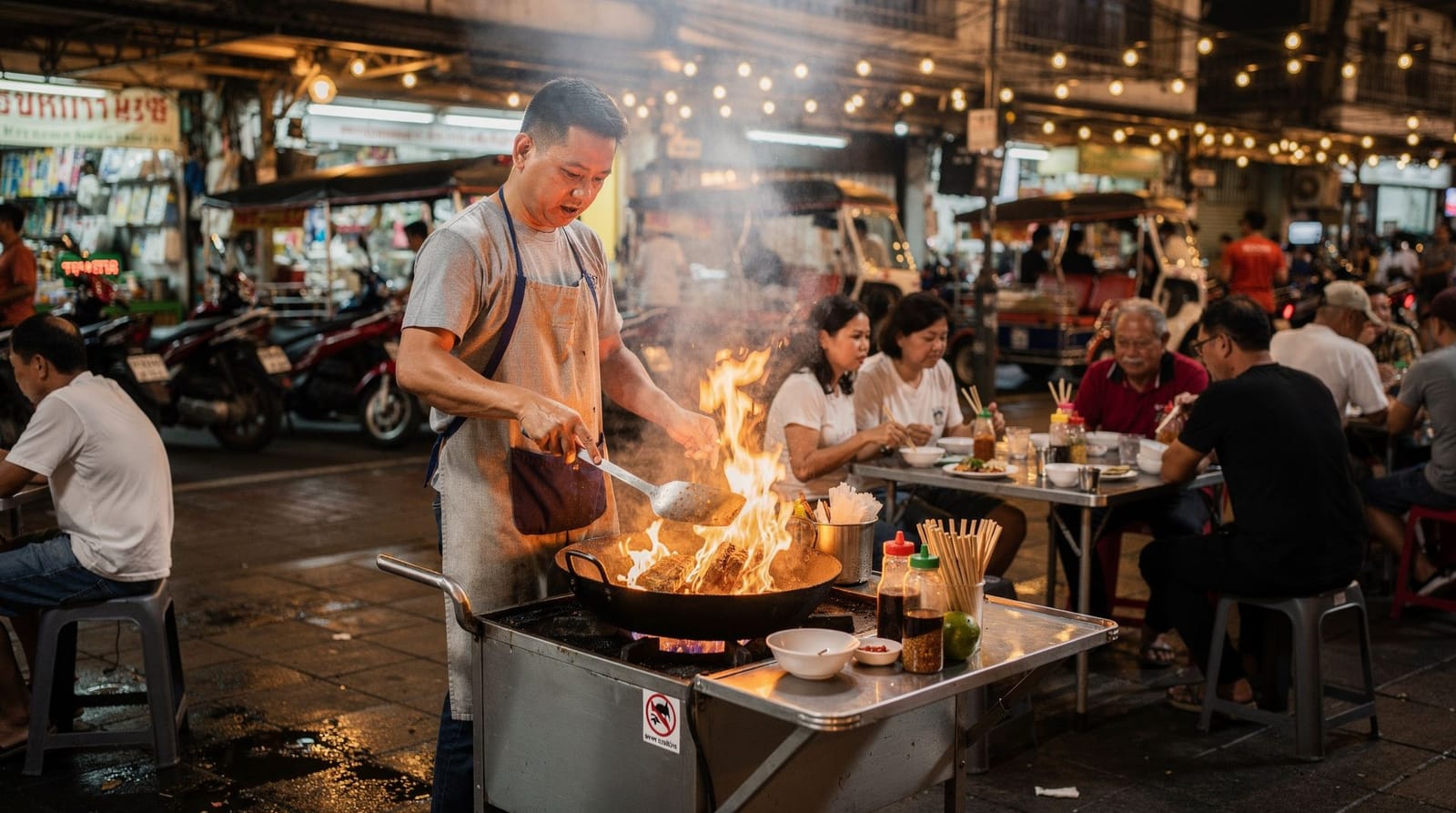
A standard half-day class has three parts. First, the market visit: the chef walks you through a fresh market — sometimes the big Or Tor Kor market, sometimes a smaller neighbourhood one — pointing out galangal versus ginger, the three kinds of Thai basil, kaffir lime leaves, palm sugar, fish sauce, shrimp paste, and the chillies that set the heat level of everything. You learn what to buy and how to tell quality, which quietly transforms how you shop for the rest of your trip and after you get home.
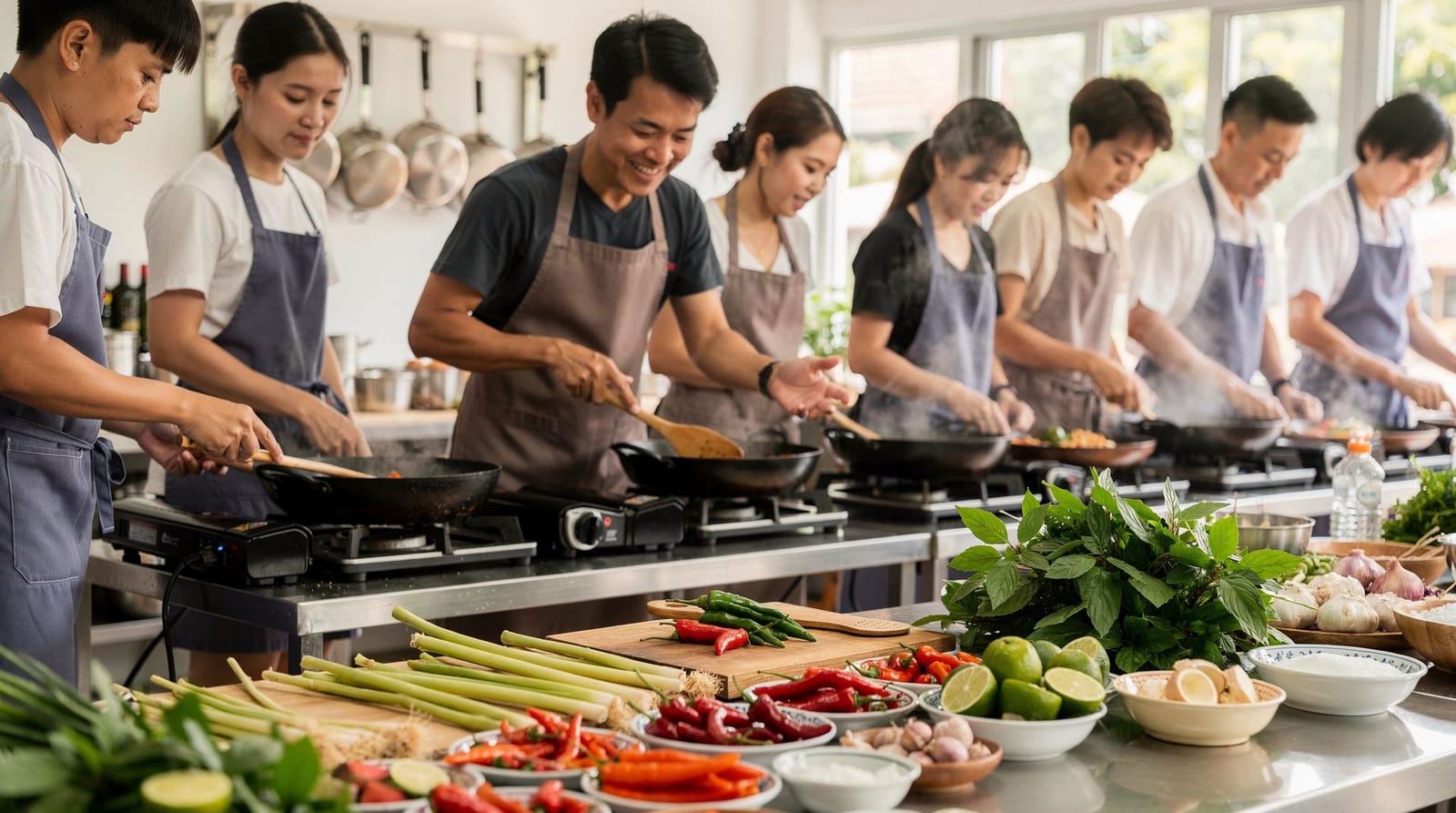
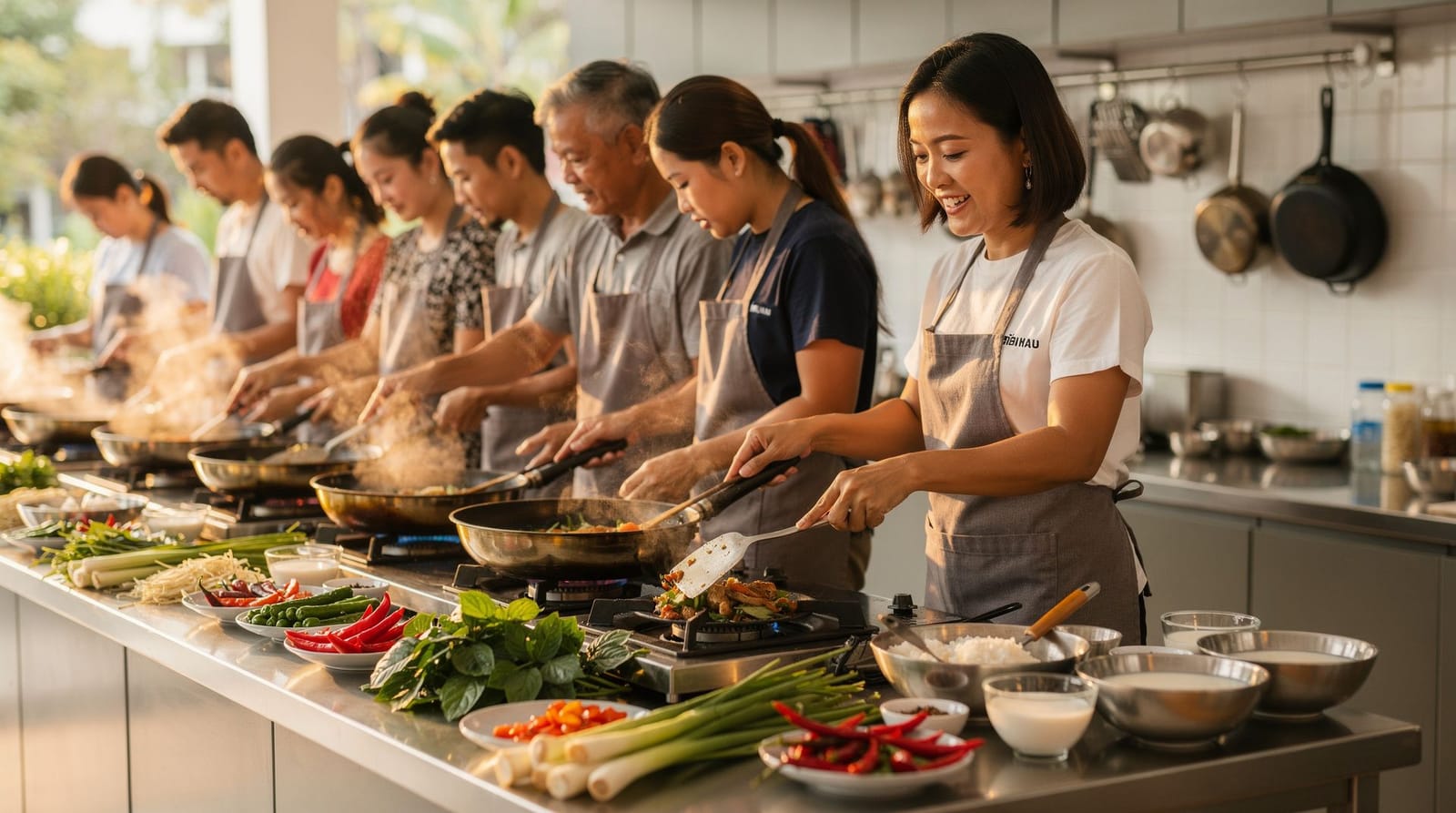
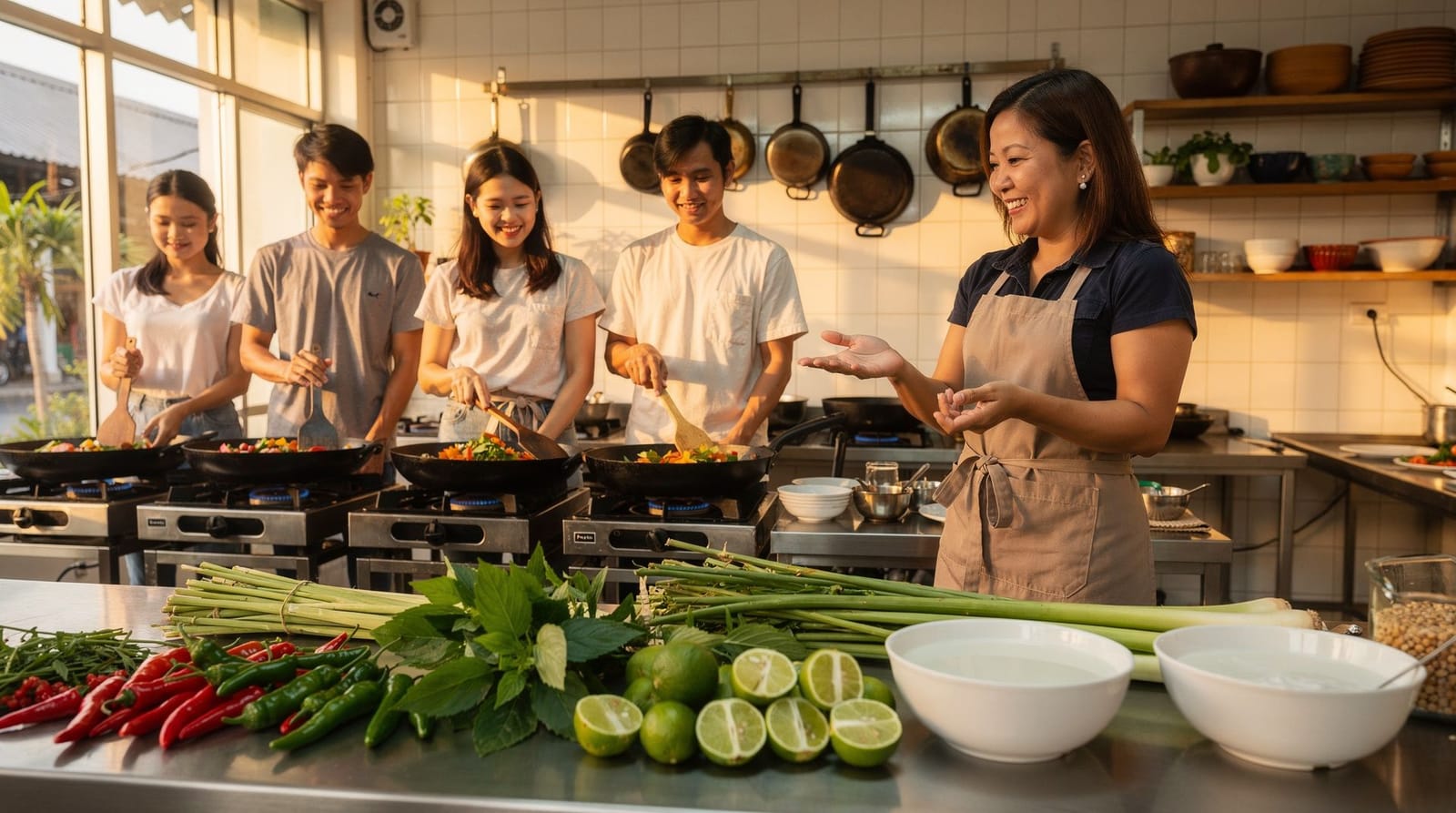
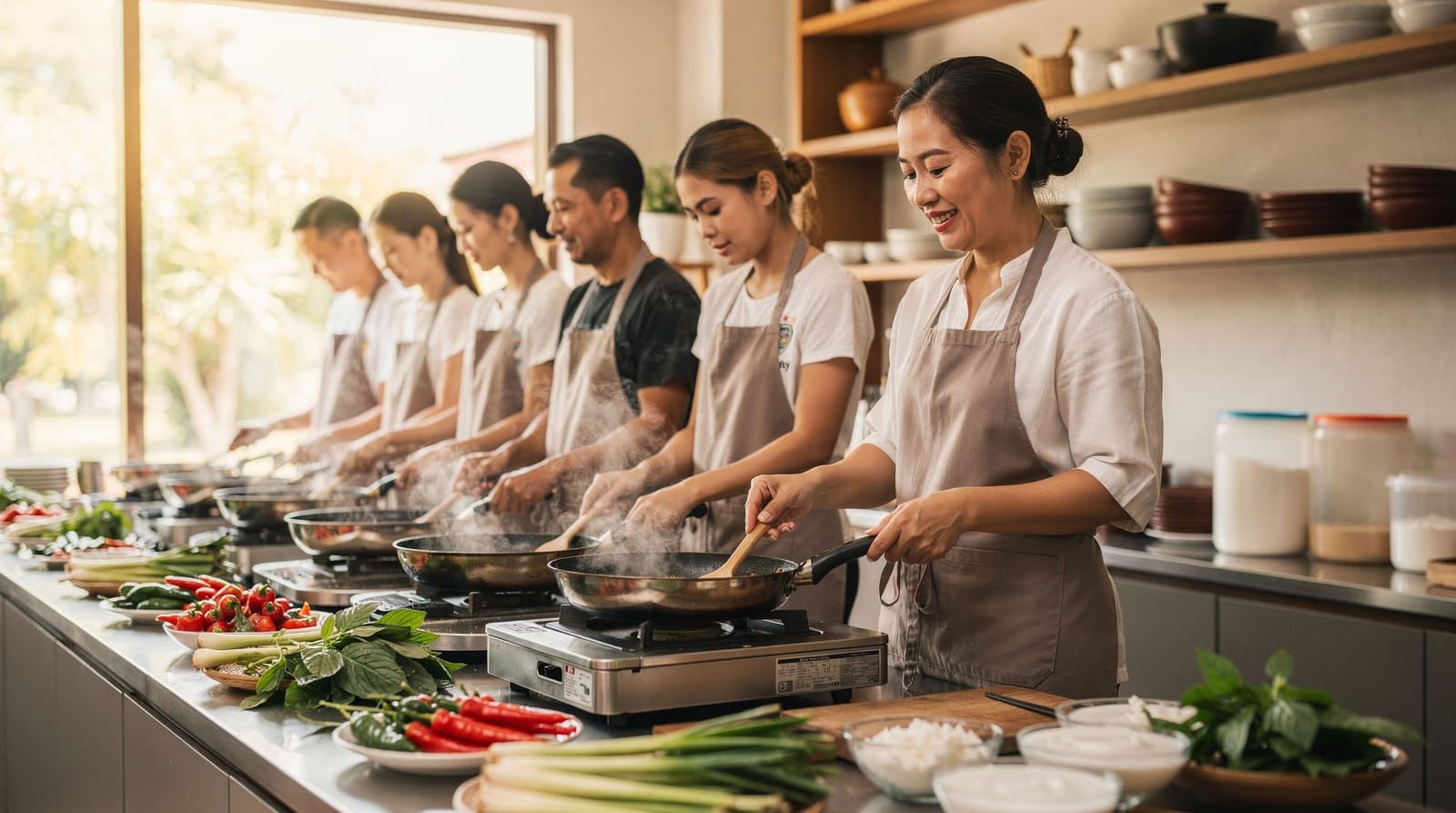
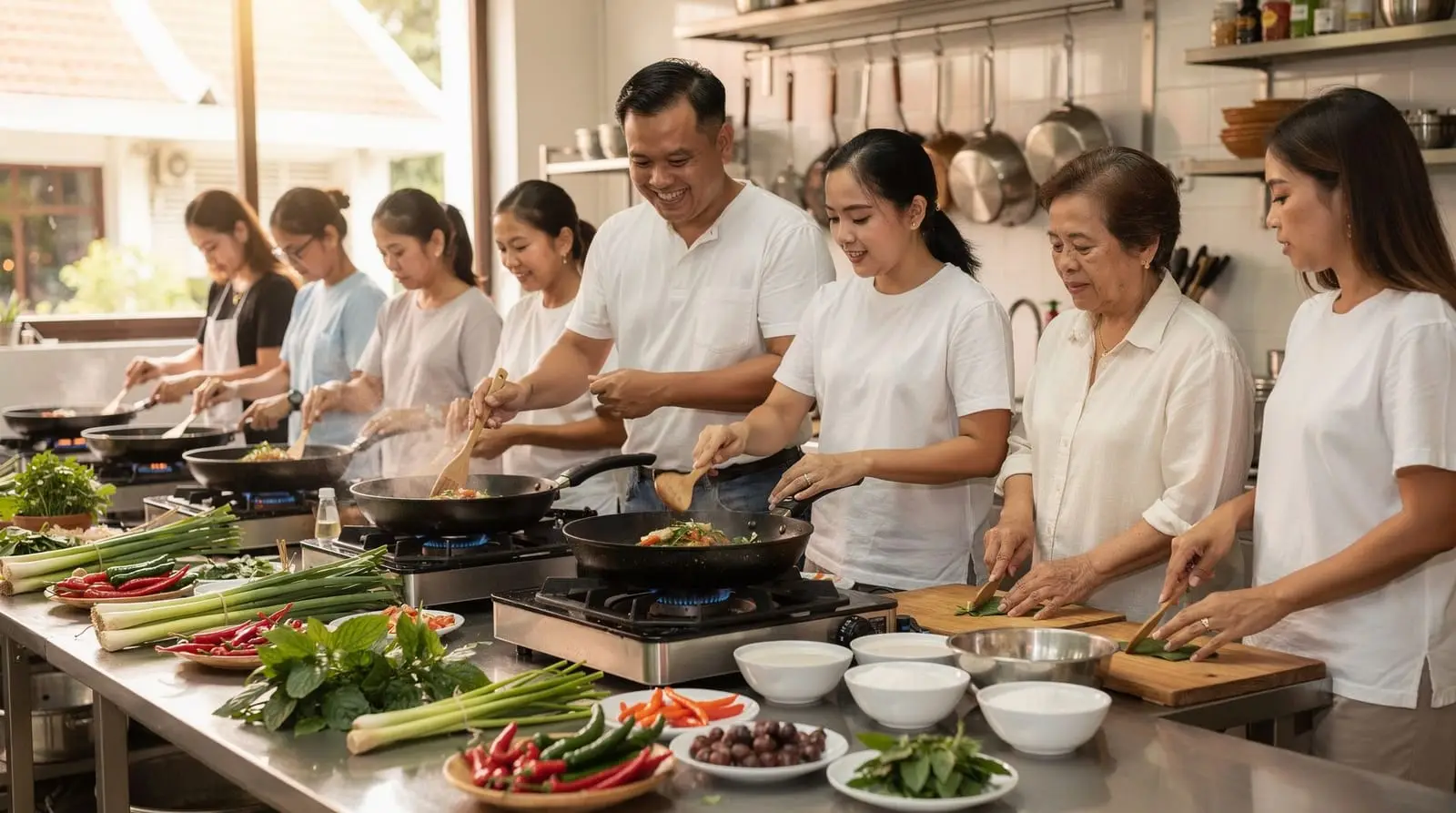
Second, the kitchen. Back at the school you cook, usually at your own station with your own wok and mortar and pestle. The chef demonstrates each dish, then you make it yourself while they circulate and correct. You will pound a curry paste from raw aromatics — the single most eye-opening moment for most people, who never realised that is where the flavour comes from — and you will hear a wok hit the right temperature for the first time.
Third, you eat. Everything you cook becomes your meal, course by course, which is why most people barely need to eat again that day. Many classes finish with the dessert, almost always mango sticky rice, and hand you a printed recipe booklet so you can reproduce it at home.
What it costs in 2026
Pricing is refreshingly transparent compared with some Bangkok activities. A half-day group class runs 1,000–2,500 THB (USD 30–75), with most good classes around 1,200–1,800 THB. That price almost always includes the market visit, all ingredients, the meal you cook, and the recipe booklet — there are rarely hidden extras. Tuk-tuk transfers to the market are a frequent and fun inclusion.
At the upper end, an upscale class such as the one at Blue Elephant — set in a restored heritage mansion near Surasak BTS — costs more, typically 2,800–3,500 THB, for a longer, more polished programme and a beautiful setting. Private and in-home classes cost more again but suit families or anyone wanting a bespoke menu. The honest takeaway: even the most expensive cooking class in Bangkok costs a fraction of an equivalent class in Europe or North America, so this is one area where spending a little more for a better experience is easy to justify.
Thai cooking class with market visit by tuk-tuk — small group, hands-onThe dishes you will learn
Most menus draw from a familiar core, and many schools let you choose two or three dishes from a list:
Pad thai — the stir-fried rice noodle dish everyone knows, done properly with tamarind, palm sugar and fish sauce balanced by you rather than from a bottle. Compare your version against the city’s best using the best pad thai Bangkok context.
A curry from scratch — green (gaeng keow wan), red, or massaman, built on a paste you pound yourself from lemongrass, galangal, garlic, shallots, chilli and shrimp paste. This is the class’s centrepiece.
A soup — tom yum goong (hot and sour prawn) or tom kha gai (coconut and galangal chicken), where you learn to layer aromatics rather than boil them all at once.
A stir-fry — often pad kra pao (holy basil with minced pork or chicken), Thailand’s true everyday national dish.
Mango sticky rice — the dessert, where the trick is the salted coconut cream over perfectly steamed glutinous rice.
Vegetarian and vegan versions are widely available across all of these — flag it when you book and the chef substitutes fish sauce, shrimp paste and meat without fuss.
Half-day Bangkok cooking class with market tour — choose your own dishesThe main schools, honestly compared
Silom Thai Cooking School is a long-running favourite: well-priced, a proper market visit, and a friendly garden kitchen. It is the reliable middle choice — good value, good teaching, no pretension. A solid default if you want a classic class without overthinking it.
Silom Thai cooking class with market visit and garden kitchenBlue Elephant is the upscale option, run inside a century-old heritage mansion near Surasak BTS by the family behind the international Blue Elephant restaurants. The setting is genuinely special and the programme is longer and more refined, which justifies the higher price for a celebration or a serious food enthusiast — but it is not the place to go if value is your priority.
Smaller market-and-tuk-tuk schools run all over the city and often deliver the most fun for the lowest price, with the tuk-tuk ride to the market as part of the experience. Quality varies, so check recent reviews, but the best of them are every bit as good as the famous names.
If you want a full head-to-head, the best cooking classes guide ranks them in detail, the Thai cooking class Bangkok guide goes deeper on the classic format, and the cooking class with market guide focuses specifically on the market-included options.
| School | Price band | Best for |
|---|---|---|
| Silom Thai Cooking School | 1,200–1,800 THB | Reliable value, no pretension |
| Blue Elephant | 2,800–3,500 THB | A heritage-mansion setting, celebrations |
| Smaller market-and-tuk-tuk schools | 1,000–2,000 THB | Fun, budget-friendly, variable quality |
Fruit and vegetable carving — the beautiful add-on
If the cooking itself is the savoury heart of Thai cuisine, fruit and vegetable carving is its decorative soul. This is the royal-court art of sculpting melons, carrots, papayas and bars of soap into roses, leaves and lattice patterns, traditionally for palace banquets. A dedicated carving class — usually two to three hours, 1,000–1,800 THB — teaches you the small curved knife and walks you through finishing one piece to take home (or photograph before it wilts).
It is slower and more meditative than a cooking class, and it suits anyone who loves the visual side of food or simply wants something calmer than a hot wok. It also pairs beautifully as a second-day activity after a cooking class.
Thai fruit and vegetable carving class — hands-on with a master carverThe fruit carving class guide covers what to expect, how long pieces last, and whether it suits children.
Group, private or in-home — which format
Beyond the choice of school, the format shapes the experience. Group classes are the standard and the best value: typically six to twelve students at individual stations, a sociable atmosphere, and a fixed menu. They are the right default for most visitors and a good way to meet other travellers. Private classes cost more but give you the chef’s full attention, a flexible menu, and the freedom to go at your own pace — worth it for serious cooks, food-focused couples, or anyone with specific dishes they want to nail. In-home classes, where a Thai cook teaches you in their own kitchen or home, are the most intimate and personal, often including a family meal, and give the strongest sense of how Thai food is actually cooked day to day rather than in a teaching kitchen.
There is also a meaningful split between classes that pound their curry pastes from raw aromatics and those that use pre-made pastes to save time. The from-scratch version is slower but far more instructive — pounding your own paste is the moment most people understand Thai flavour for the first time. If learning the real technique matters to you, confirm that the class makes pastes from scratch rather than opening a tub. The best schools, including the market-and-tuk-tuk classes, almost always do.
Practical planning
When to go: Morning classes (starting 08h30–09h00) are the popular pick because the market is liveliest early and you finish around lunchtime having eaten. Afternoon and evening classes exist if your mornings are spoken for. In the hot season (March–May) the morning slot also spares you the worst heat during the market walk.
Getting there: Most schools are central and reachable by BTS or MRT; many include hotel or tuk-tuk pickup. Use the getting around Bangkok guide to plan, and lean on the trains rather than fighting traffic to make your start time.
What to bring: Just an appetite and a phone for photos. Wear something you do not mind smelling of wok smoke. Closed shoes are sensible in the kitchen. The schools provide aprons and everything else.
Where it fits in a trip: A cooking class slots neatly into a food-focused day — anchor the Bangkok foodie itinerary around a morning class and an afternoon of eating through Chinatown Yaowarat. It also features in the Bangkok 3 days plan. For the wider experience landscape, the Bangkok unique experiences overview puts cooking classes alongside the city’s other standout activities.
Tipping and taking the recipes home
Tipping is not obligatory but is genuinely appreciated — 100–200 THB per person for the chef, handed over directly or left with the school at the end, is a fair gesture for a class you enjoyed. On the recipe booklet: treat it as a starting template rather than a strict rulebook, since Thai home cooks adjust seasoning to taste rather than measuring precisely, and the chef’s demonstration teaches you that instinct better than the printed quantities do. If you fall for a particular dish, ask the chef for the ingredient’s Thai name so you can find it again at a market or Asian grocer back home — most are happy to write it down.
Solo travellers and rainy days
Cooking classes suit solo travellers particularly well — the shared kitchen stations and communal eating make it one of the easiest ways to meet other travellers without forcing conversation, and no school treats a party of one as unusual. See the solo travel in Bangkok guide for more on filling a day alone with good company. If your class day coincides with a downpour, don’t worry: the market portion continues under cover at most fresh markets, and the kitchen work is indoors regardless, so a cooking class is one of the better rainy-day bookings — see the Bangkok in the rain guide for other wet-weather options to pair it with.
Dietary needs, allergies and halal options
Beyond vegetarian and vegan substitutions, most schools can adapt for shellfish, peanut and gluten allergies if you flag them at booking — Thai cooking uses fish sauce and shrimp paste by default, so allergy sufferers especially should confirm substitutions in advance rather than assuming. Halal versions exist at a smaller number of schools; see the halal food in Bangkok guide for which parts of the city cater best. Whatever your dietary needs, the dessert course is usually adaptable too — a good class will swap or omit ingredients in the classic mango sticky rice rather than skip dessert altogether.
Tap water in Bangkok is not potable, so the school will use filtered or bottled water in your cooking; carry your own bottle for the market walk in hot weather.
Frequently asked questions about Cooking class experience in Bangkok: market, wok and what to expect
How much does a cooking class in Bangkok cost?
Do cooking classes include a market visit?
What dishes will I learn to cook?
Are Bangkok cooking classes suitable for beginners and children?
How long does a cooking class take?
What is fruit and vegetable carving and should I try it?
Which is the best cooking school in Bangkok?
Top experiences
Bookable activities with verified prices and instant confirmation on GetYourGuide.