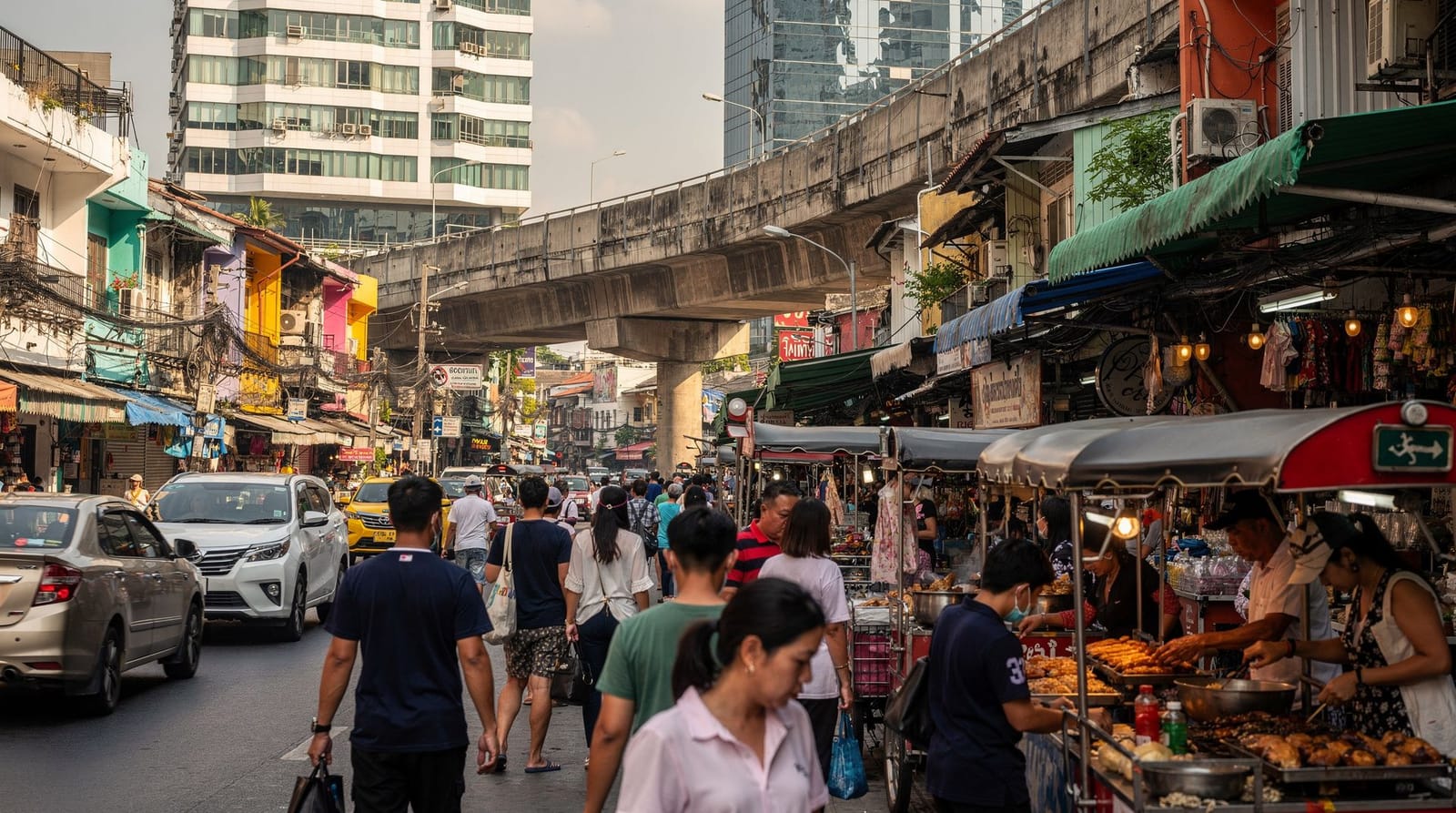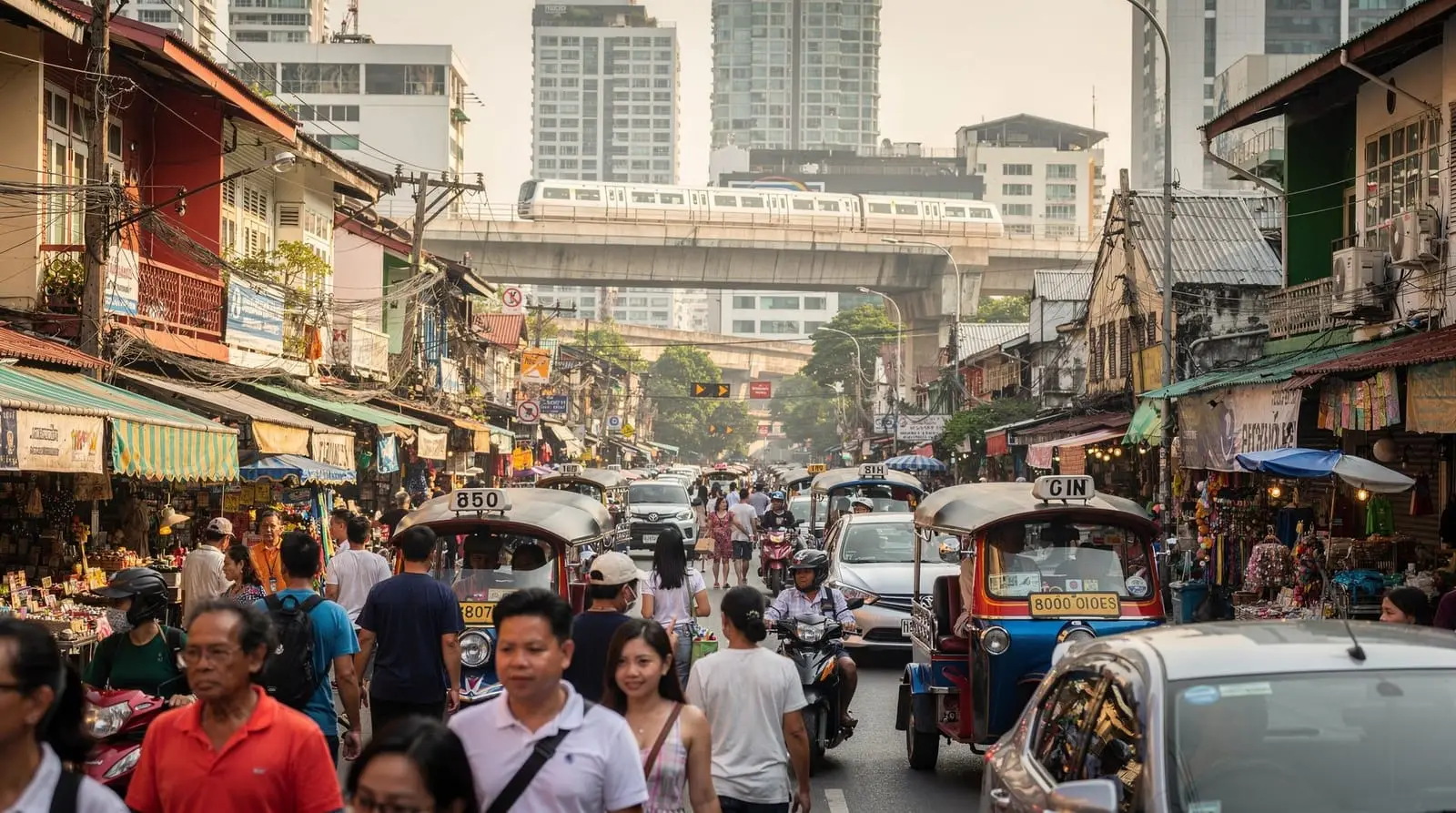
Bangkok tourist traps and how to avoid them
Bangkok: Grand Palace Skip-the-Line Entry Ticket
What are the biggest tourist traps in Bangkok?
The classic traps are the gem scam, the fake closed temple redirect, the cheap tuk-tuk shop tour, ping-pong shows, midday Damnoen Saduak and overpriced rooftop minimums. Almost all of them start with a friendly stranger or an unbelievable price, and almost all have a cheaper, better alternative.
Bangkok is one of the easiest cities in the world to enjoy and one of the easiest to get gently fleeced in. The scams here are rarely violent, they are persuasive: a friendly stranger, an unbelievable price, a story about a temple being closed. This guide names the specific traps, gives you real THB prices, tells you exactly where they happen, and for every single one points you at the cheaper, better thing to do instead. None of it should put you off the city; it should just stop you wasting a morning and a few thousand baht.
| Most common trap | Fake closed temple, tuk-tuk shop tour |
| Where it happens | Grand Palace, Wat Pho, Khao San, Patpong |
| Real cost if caught out | A few hundred to several thousand THB |
| Golden rule | Distrust the stranger who approached you first |
| Legit alternative | Official ticket windows, Grab, booked tours |
The pattern behind almost every Bangkok scam
Before the list, learn the shape. Nearly every Bangkok tourist trap opens with one of two hooks: a friendly person who approaches you first, or a price that is too good to be true. A stranger who walks up to tell you the Grand Palace is closed is not being kind, and a tuk-tuk offering an all-day tour for 20 THB is not a bargain, because he earns fuel coupons and commission by steering you into shops. Internalise that and you have already dodged 80 percent of the problem. For the deeper mechanics, our common Bangkok scams guide breaks down each con, and the getting around Bangkok guide covers how to move without relying on touts.
The fake closed temple scam
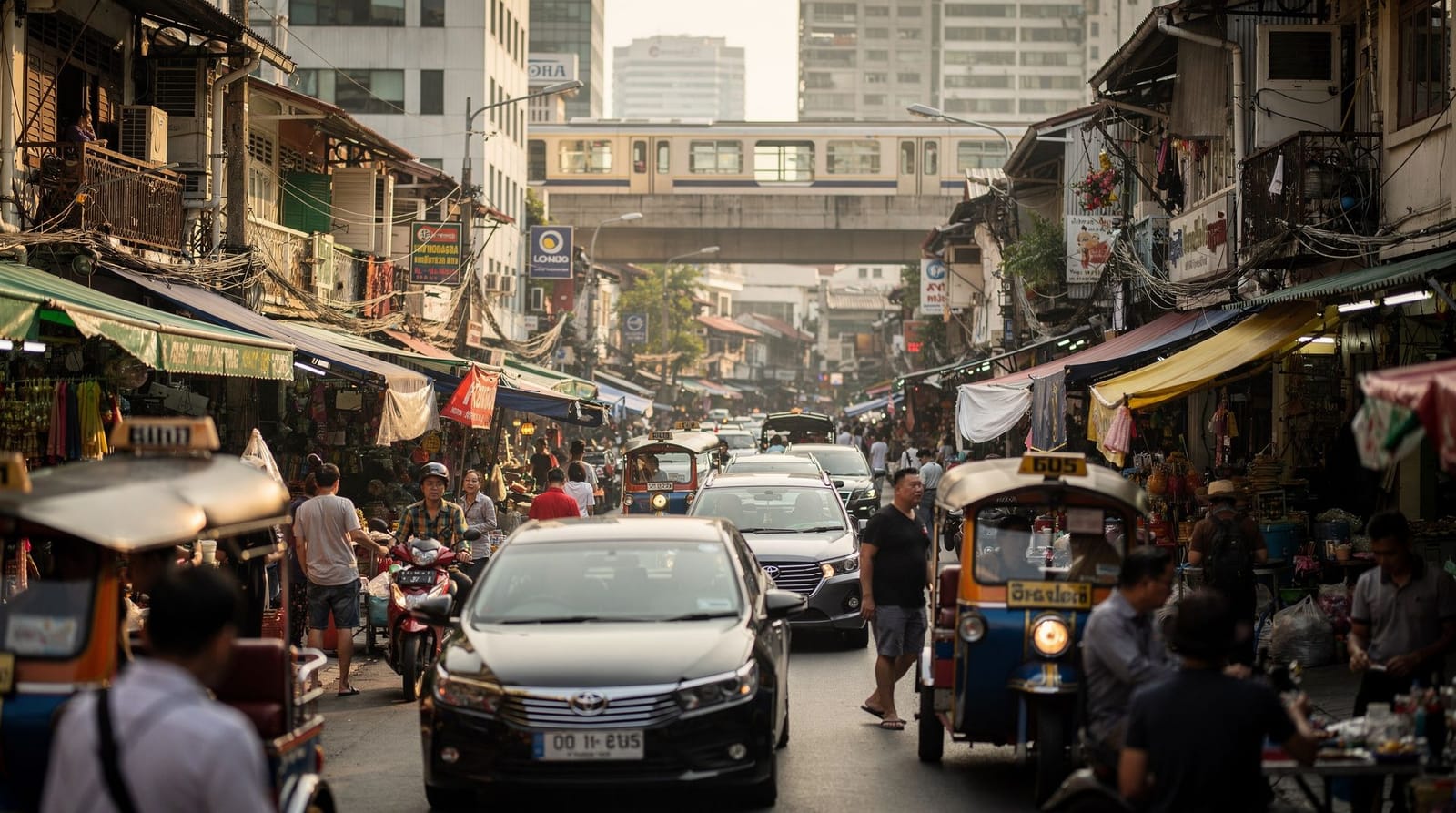
This is the single most common trap, and it runs all day around Rattanakosin old city. Outside the Grand Palace, Wat Pho, Wat Arun and the Golden Mount, a well-dressed, English-speaking stranger tells you the site is closed for a ceremony, a holiday or a private royal event, and just happens to know a tuk-tuk driver who can show you other temples instead. The tuk-tuk then detours to a gem shop and a tailor where the driver collects commission while you lose two hours.
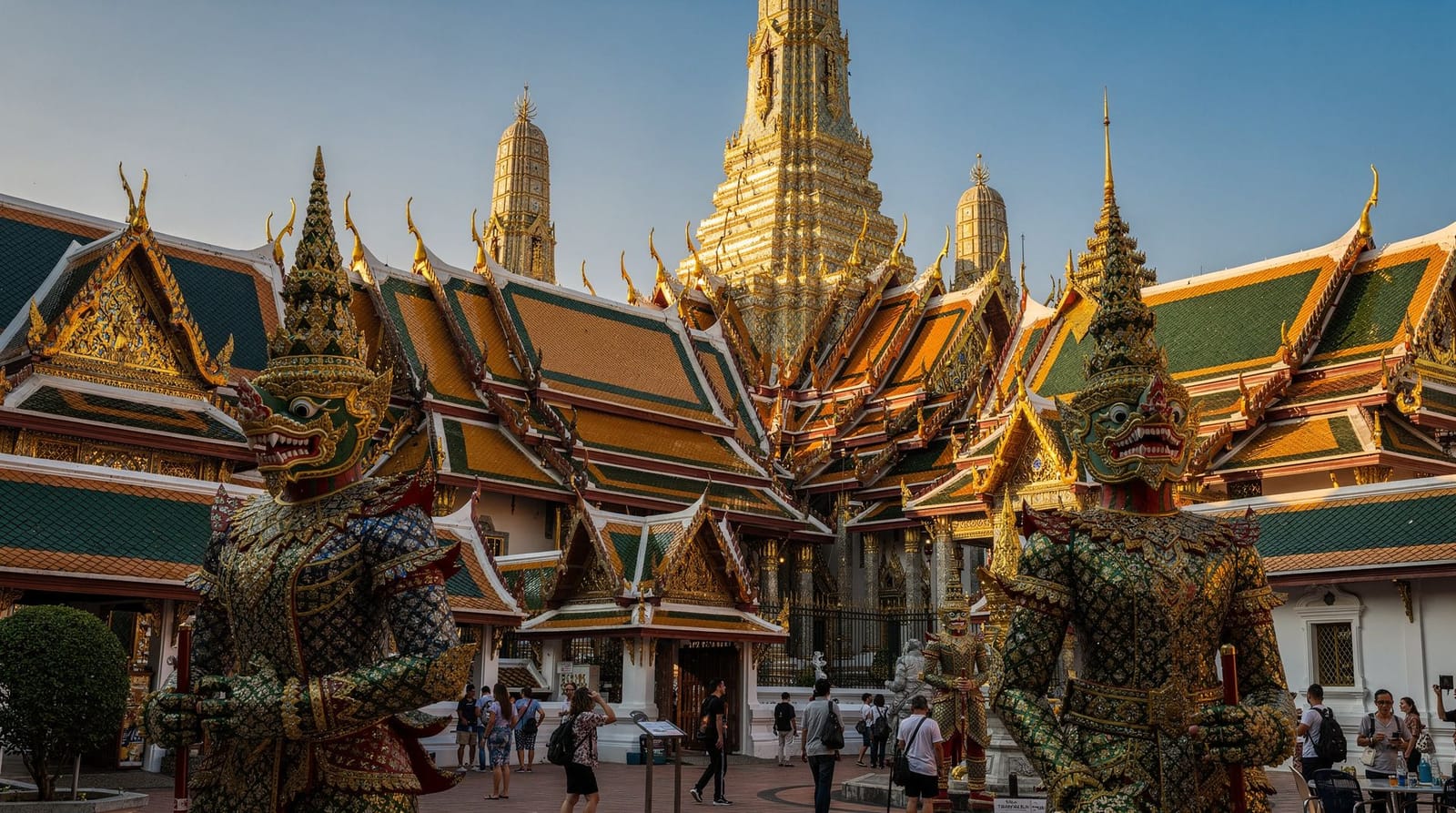
The truth is simple: the Grand Palace is open daily 08:30 to 15:30 and is almost never closed to tourists. Walk straight to the official ticket gate and ignore anyone who intercepts you. Our Grand Palace scam warning and Grand Palace guide explain the layout so you know exactly where the real entrance is. If you want a guaranteed-legit version with a guide who handles the queue and dress code, that is the honest do-instead:
Book a skip-the-line Grand Palace tour with a real guideThe gem scam
The gem scam is the trap the fake-closure tuk-tuk delivers you to. The pitch sounds official: a government gem sale, today only, tax-free, a once-a-year export promotion, and you can resell the stones at home for a tidy profit. The stones are worthless or wildly overpriced sapphires, the certificates are meaningless, and the resale market does not exist. People have lost thousands of dollars on this. The rule is absolute: never buy gems as an investment in Thailand, full stop. Our dedicated gem scam in Bangkok guide tells the cautionary stories. If you want jewellery, buy it for personal pleasure from a fixed-price reputable shop, never on a stranger’s promise of profit.
The cheap tuk-tuk shop tour
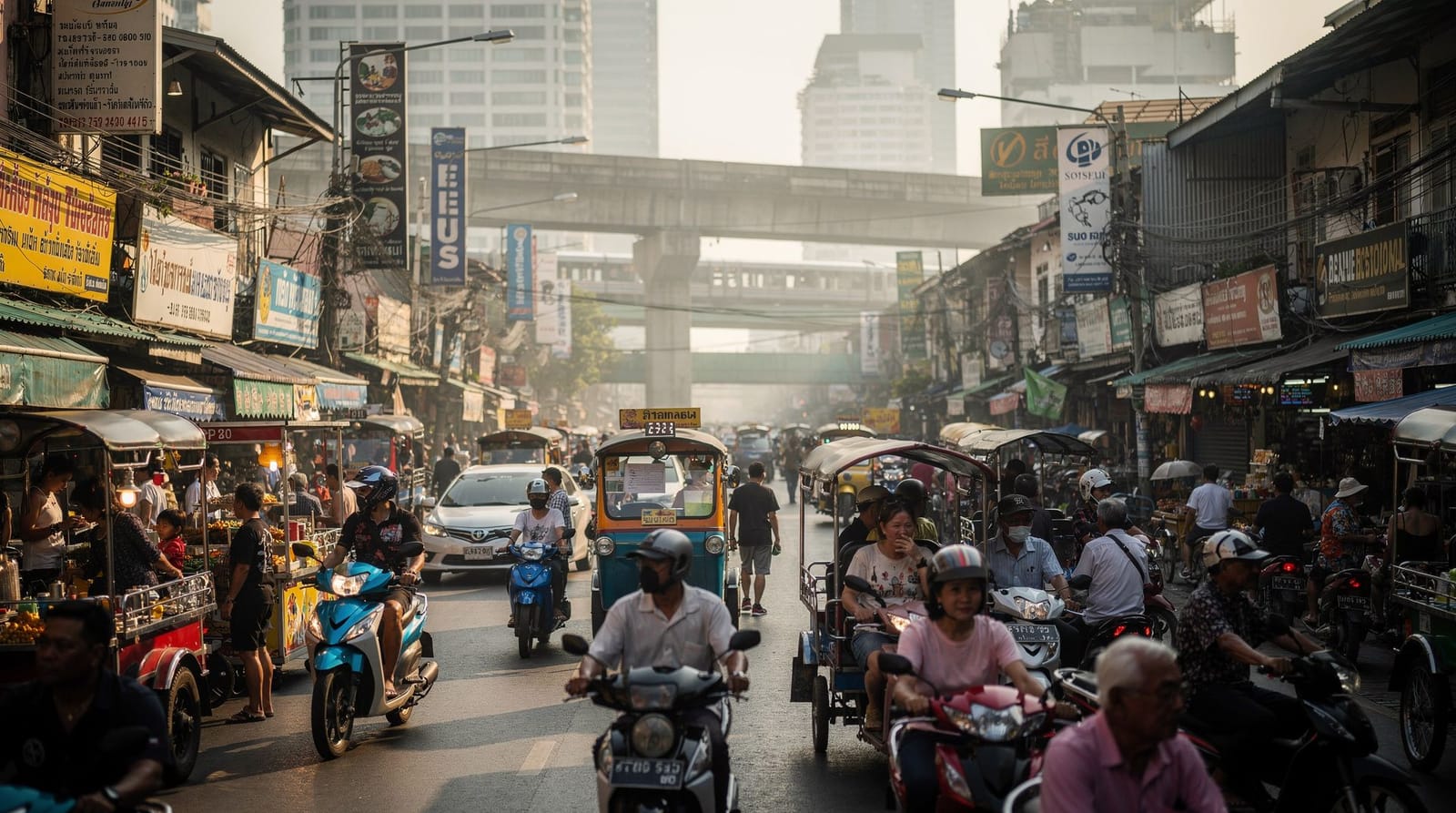
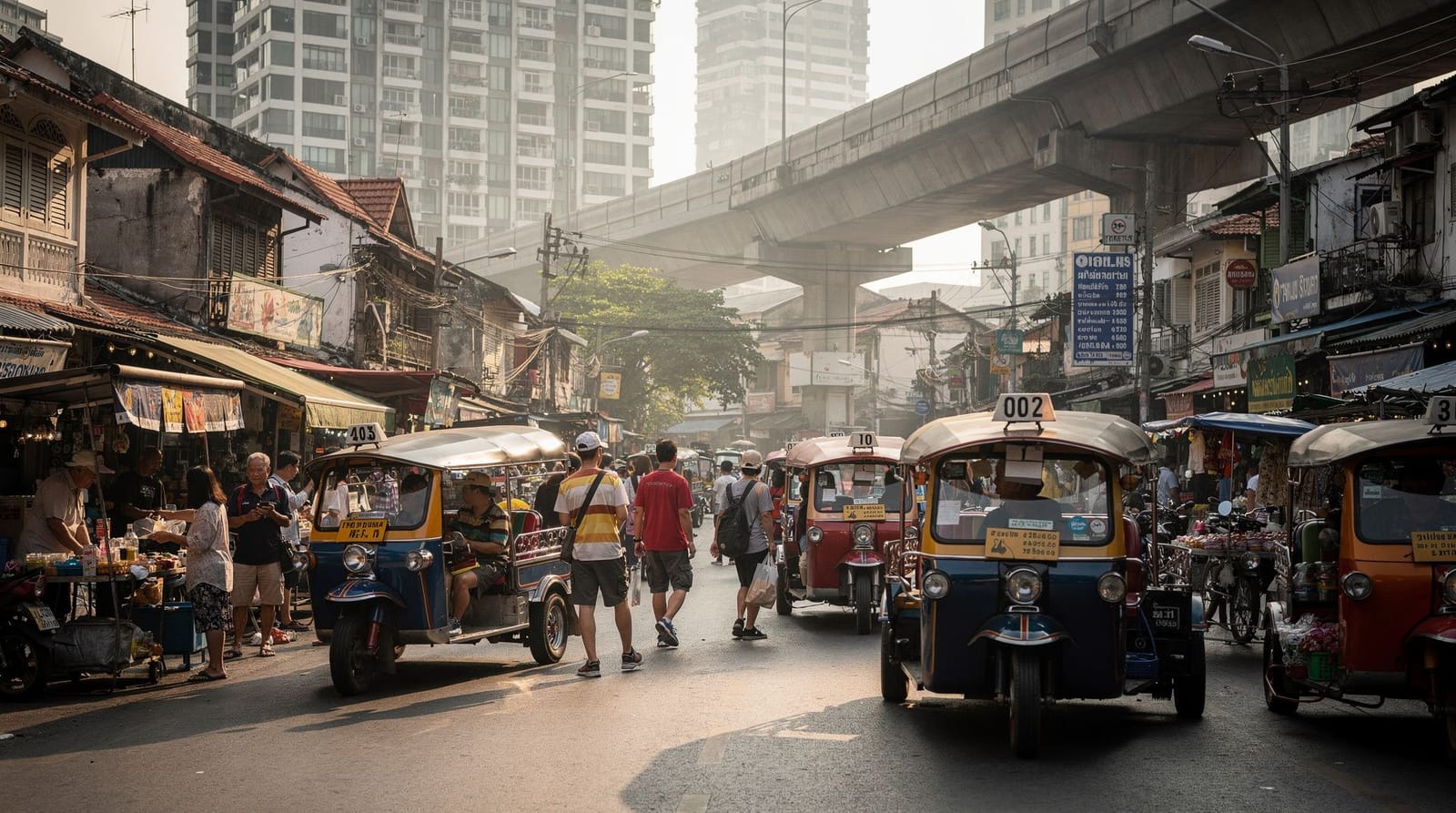
Closely tied to the two above is the tuk-tuk trap itself. A driver offers a city tour for 10, 20 or 40 THB, an absurd price that cannot cover his fuel. The catch is that he detours to gem shops, tailors and suit shops where each visit earns him a fuel coupon or cash commission, so your sightseeing dissolves into shop visits. Real tuk-tuk fares are negotiated and frequently cost more than a Grab car. Our tuk-tuk scams guide details the routine, and the Grab, taxi and tuk-tuk guide explains how to use the apps so the fare is fixed before you get in. A tuk-tuk ride is fun once for the experience, but as a tour it is a trap; do it as a proper night tour instead, covered in tuk-tuk tours in Bangkok.
Midday Damnoen Saduak
Damnoen Saduak, the most famous floating market about 100km southwest of the city, has become the postcard that lies. By 9am the canals are jammed with longtail boats full of tour groups, renting a boat runs 1500 to 3000 THB, and the vendors are more interested in selling fridge magnets than fruit. It is a trap by mid-morning. It is genuinely lovely at dawn, around 7 to 8am, before the tour buses, and there are better-value alternatives. Our Damnoen Saduak worth-it verdict and floating markets guide lay out the options, including the more local Amphawa floating market and the unique Maeklong railway market where a train runs through the stalls. If you want it done well without a 5am self-drive, a small-group early tour is the sensible do-instead:
Take an early small-group Damnoen Saduak tourPing-pong shows and Patpong night market
In Silom and Sathorn, the Patpong night market is a double trap. The market itself sells overpriced fake watches and bags at hard-bargain prices that still leave you overpaying, and the upstairs bars run the classic ping-pong show ambush: a low advertised entry, then a padded drinks bill, surprise minimum charges and intimidation if you refuse to pay. Bills of several thousand THB are common, and the shows themselves are ethically grim. Skip them. The Nana and Soi Cowboy explained guide gives an honest read of the nightlife zones, and the Bangkok nightlife guide points you at bars worth your money instead.
Overpriced rooftop bars and tourist boats
Not every trap is a con; some are just bad value. Several famous rooftop bars charge steep minimum spends and dress-code surcharges for a view you can get cheaper elsewhere. Tourist dinner-cruise boats and hop-on tourist ferries on the river cost many times the fare of the orange-flag Chao Phraya commuter boat, which runs the same stretch of the riverside for around 16 THB. Our overpriced attractions guide and Chao Phraya boats guide show you the cheap-and-better versions. When a river dinner is the actual goal, a single reputable cruise is fine value; just go in knowing it is a splurge, not a transport scam.
Khao San tourist restaurants and tat
Khao San and Banglamphu is fun for a wander, but the restaurants fronting the main strip charge tourist prices for mediocre westernised Thai food, and the stalls sell the same friendship bracelets and elephant pants you will see in every backpacker town. Eat one street back where the locals do, or head to a proper food zone. A guided street-food walk is the antidote to the trap and genuinely good value:
Join an evening street-food tasting walkDual pricing, taxis and the small stuff
A few smaller traps round out the list. Dual pricing, a higher foreigner price at the Grand Palace and some attractions, is legal and common in Thailand; it is not a scam, just a cost to budget for, and our Bangkok travel costs guide tells you where it applies. Taxi drivers who claim the meter is broken are angling for a fixed inflated fare, so say “meter, please” or open Grab. Bird-seed and temple-blessing hustles, where someone presses seed or incense into your hand then demands payment, are minor but annoying; a firm no works. For first-time visitors trying to hold all this in their head, Bangkok for first-timers and plan your trip to Bangkok put the defences in one place, and top attractions in Bangkok lists what is genuinely worth your time.
The airport, the first trap of the trip
The scamming starts before you reach the city. Inside both Suvarnabhumi and Don Mueang, touts and unofficial drivers approach arriving tourists offering rides at double or triple the real fare, sometimes with a story about traffic or a fixed flat rate. The defence is to walk past them to the official public taxi queue, where the meter plus a roughly 50 THB airport surcharge applies, or to take the Airport Rail Link from Suvarnabhumi to Phaya Thai and connect to the BTS. Our Suvarnabhumi airport to city and Don Mueang airport to city guides spell out both routes with prices. Getting this first decision right sets the tone: you arrive having already refused a tout, which is exactly the muscle you will use all week. From there, the BTS Skytrain and MRT subway guides keep you moving without ever needing a tout again.
The tailor and suit-shop pressure trap
Bangkok has a genuine bespoke tailoring tradition, but it sits alongside a forest of pressure-selling shops, many of them the very destinations the gem-scam tuk-tuks visit. The pattern is a charming greeter, a today-only price, a rushed measurement, and a deposit taken before you have thought it through, after which the finished suit arrives ill-fitting and the promised quality never materialises. The trap is the urgency. A legitimate tailor is happy for you to come back tomorrow, compare prices and see fabric in daylight. If anyone insists the deal expires today, walk out; that deadline is a sales tactic, not a fact. The same urgency drives the fake-DVD, fake-watch and counterfeit-bag stalls around Patpong and parts of Khao San and Banglamphu, where the opening price is set absurdly high so that even after hard bargaining you overpay.
Animal attractions to avoid
A whole category of Bangkok and day-trip attractions trades on animals and should be approached with real skepticism. Elephant rides and elephant shows are the headline: never ride, and never watch painting, football or circus tricks, because both rely on a cruel training process, covered in full in our ethical elephant tourism and ethical elephant sanctuary near Bangkok guides. The do-instead is a genuine no-riding sanctuary in Kanchanaburi or near Pattaya. The roadside snake and crocodile shows aimed at bus tours raise similar welfare flags; the Queen Saovabha snake farm, a real research institute, is the fairer option if reptiles interest you. Tiger photo attractions are best skipped entirely. The pattern across all of them is the same: if the animal is made to perform or pose for your photo, the welfare cost behind the scene is usually high.
The fake visa and TDAC “service fee” scam
A newer trap targets the paperwork stage, before you even reach a temple. Thailand’s arrival card (the TDAC) and most visa-on-arrival or e-visa processes are free or carry only a small official fee, filled in directly on the government’s own site. A cluster of third-party websites and airport “visa assistance” booths charge a hefty service fee — sometimes 1,000 THB or more — to fill in the same free form, banking on confused or jet-lagged travellers not realising it costs nothing to do themselves. It is not illegal, exactly, but it is a deliberately confusing markup on something free. Fill in the TDAC yourself a few days before you fly; our Thailand visa and TDAC guide walks through the real, free process step by step so you never need a paid middleman.
The Khao San “VIP bus” and travel-agency ticket scam
Along Khao San Road and in pockets of Sukhumvit, small travel agencies sell long-distance bus, train and boat tickets at a mark-up, sometimes for a “VIP” service that turns out to be an ordinary bus, or a departure time that shifts once you’ve paid. The same shopfronts occasionally push overpriced tourist SIM cards to travellers who haven’t checked what a package should actually cost — see the Bangkok SIM and eSIM guide for the real prices so you know instantly if a quote is inflated. It’s not that every agency is dishonest, but the ones clustered around backpacker strips rely on tourists not comparing prices. Booking directly through an official counter, a reputable online platform, or a known operator avoids the guesswork entirely.
Muay Thai ticket touts
Around Rajadamnern and Lumpinee stadiums, touts sell “ringside” Muay Thai tickets at inflated prices, sometimes for seats that don’t exist or are far worse than promised, banking on the fact that first-time visitors don’t know the real ticket tiers. The stadiums themselves sell tickets at official booths, and legitimate resellers publish fixed price tiers rather than negotiating on the pavement. Our Muay Thai ticket guide breaks down the real seating tiers and prices, and the wider Muay Thai in Bangkok guide covers which stadium and night suits a first-timer. If a street tout is quoting a price with no ticket in hand, walk to the official booth instead.
Reading the city like a local
The deepest defence is not memorising a list but learning to read the city. Locals do not get the fake-closure pitch because they walk with the unhurried confidence of someone who knows where the gate is. You can borrow that. Plan your route before you leave the hotel using the getting around Bangkok guide, know which pier or station you want, and move with purpose. Eat where there is a queue of Thai office workers rather than a menu in five languages. Pay with the meter, the app or the posted price, never the negotiated tourist quote. When something is genuinely free, like Lumphini Park, the temple grounds, or the green lung of Bang Krachao, enjoy that it costs nothing rather than letting someone sell you a paid version. The free things to do in Bangkok and Bangkok on a budget guides are, in a sense, anti-scam guides: the more you know what things should cost, the less anyone can overcharge you.
When to just book the legit version
There is no shame in booking a reputable tour to sidestep the touts entirely, and for some experiences it is the smartest money you spend. A guided Grand Palace visit removes the fake-closure risk and the dress-code friction; an early floating-market tour gets you to Damnoen Saduak before the buses; a street-food walk takes you to the right stalls without the Khao San markup. The key is that you choose and book the operator in advance, rather than accepting an offer from a stranger on the pavement. That single distinction, you sought them out versus they approached you, separates almost every good tour from almost every scam. The Bangkok for first-timers guide weighs up when a tour earns its price and when you are better off independent.
The honest bottom line
Bangkok is not a dangerous city for tourists; it is a persuasive one. Keep two reflexes and you are almost immune: distrust the friendly stranger who approached you, and distrust the price that is too low to make sense. Walk to official ticket windows, use Grab and the BTS or MRT, eat where the queue is local, and book reputable tours when you want a guaranteed-clean version of a famous day out. Do that and the city stops being a minefield and becomes what it actually is, one of the best-value great cities on earth. Pair this with what to skip in Bangkok and things to do in Bangkok to build a trip that spends your time and baht where they count.
Frequently asked questions about Bangkok tourist traps and how to avoid them
What is the most common Bangkok tourist scam?
Is Damnoen Saduak floating market a tourist trap?
Should I buy gems or jewellery in Bangkok?
Are ping-pong shows worth seeing in Bangkok?
How do I avoid tuk-tuk scams in Bangkok?
Is the Grand Palace overpriced?
What should I do instead of the tourist traps?
Top experiences
Bookable activities with verified prices and instant confirmation on GetYourGuide.