Floating markets near Bangkok: the complete honest guide
From Bangkok: Damnoen Saduak Floating Market Guided Tour
Which floating market near Bangkok is best to visit?
Amphawa is the best all-round floating market — it runs Friday to Sunday afternoons and evenings, draws mostly Thai visitors, and combines boat-noodle vendors with a firefly cruise. Damnoen Saduak is the most famous and most photographed but also the most touristy and overpriced. Khlong Lat Mayom is the easiest and cheapest option if you only have a half day, sitting on Bangkok's western edge. Each suits a different traveller, and this guide helps you choose.
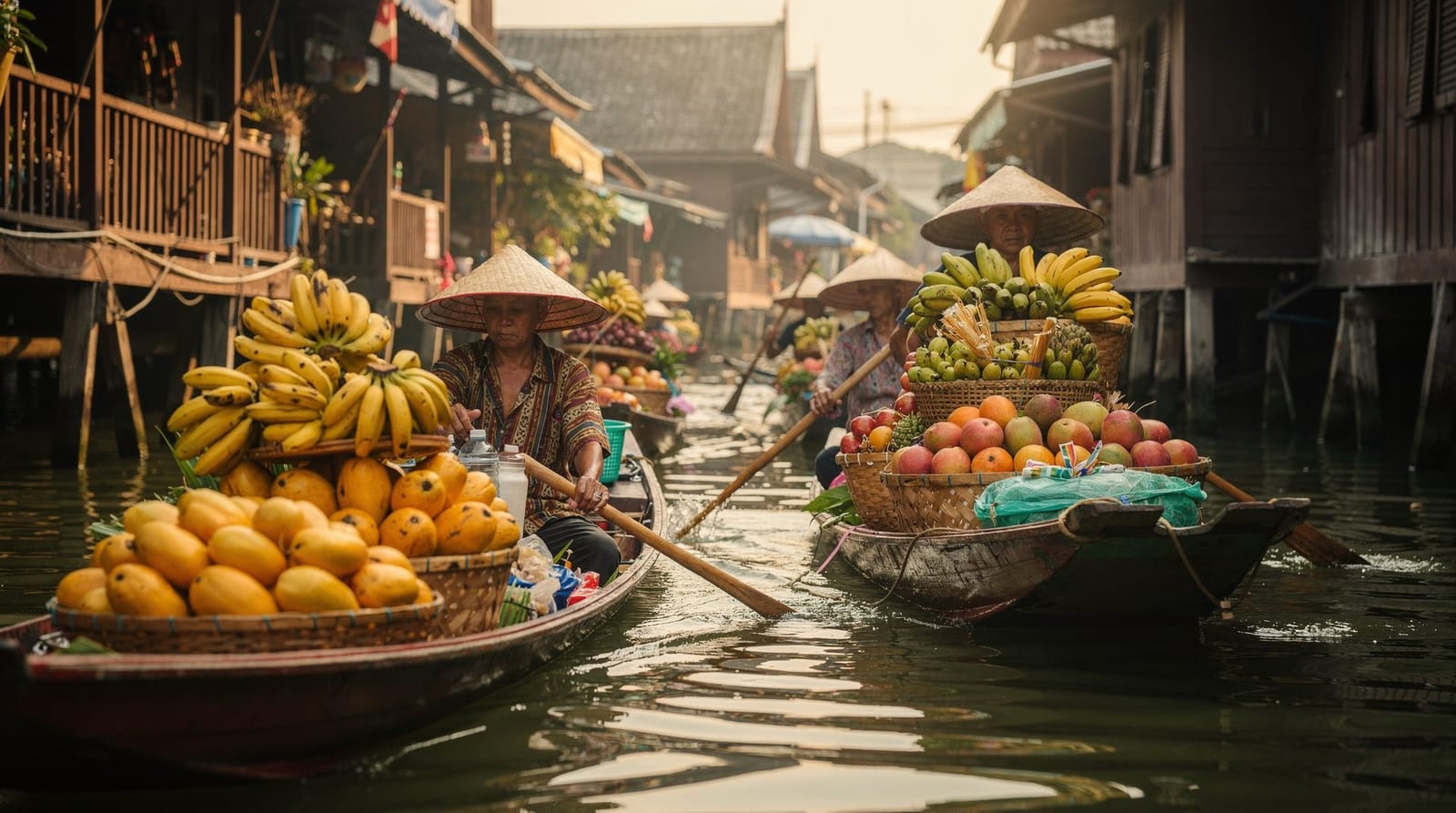
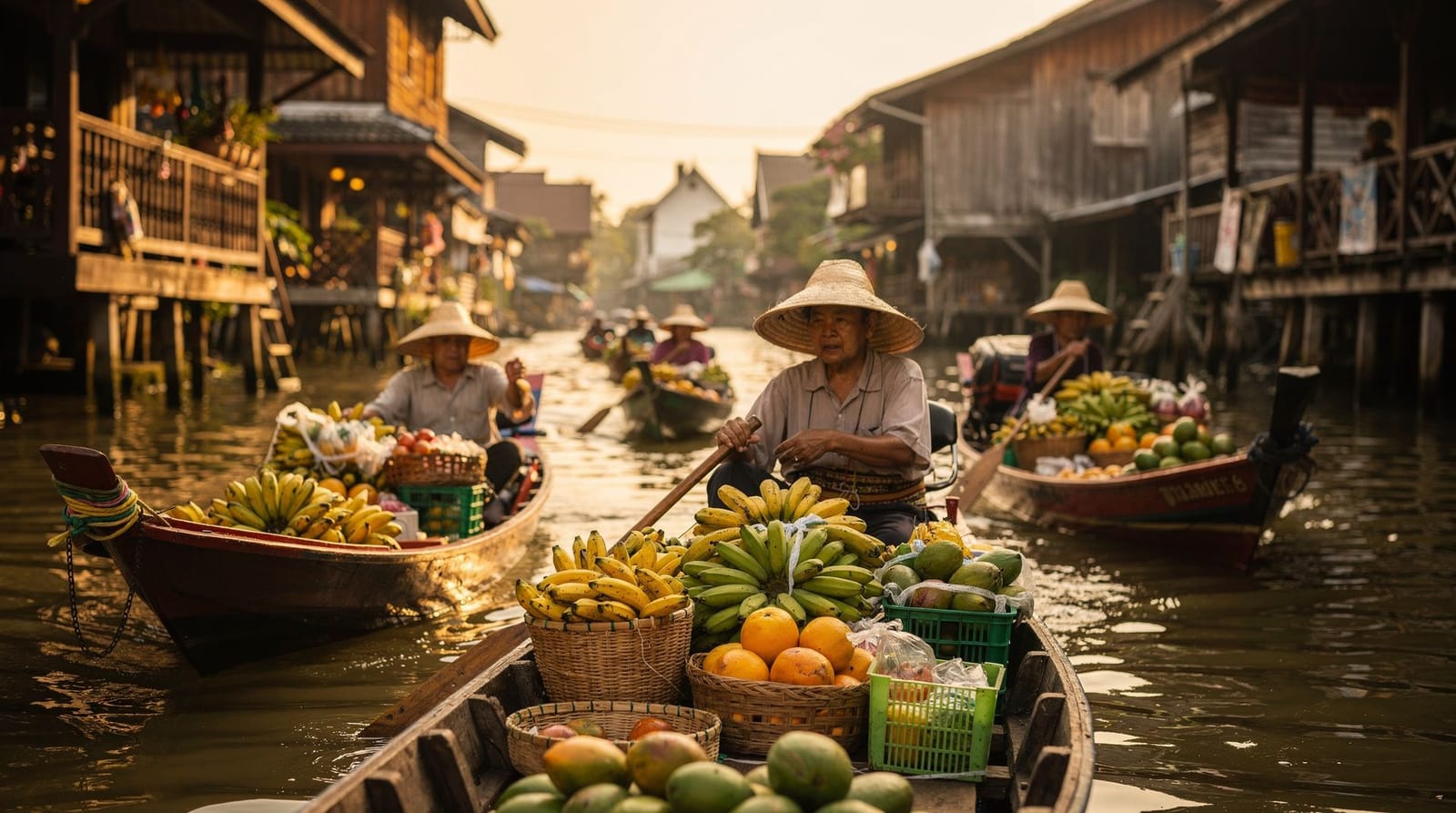
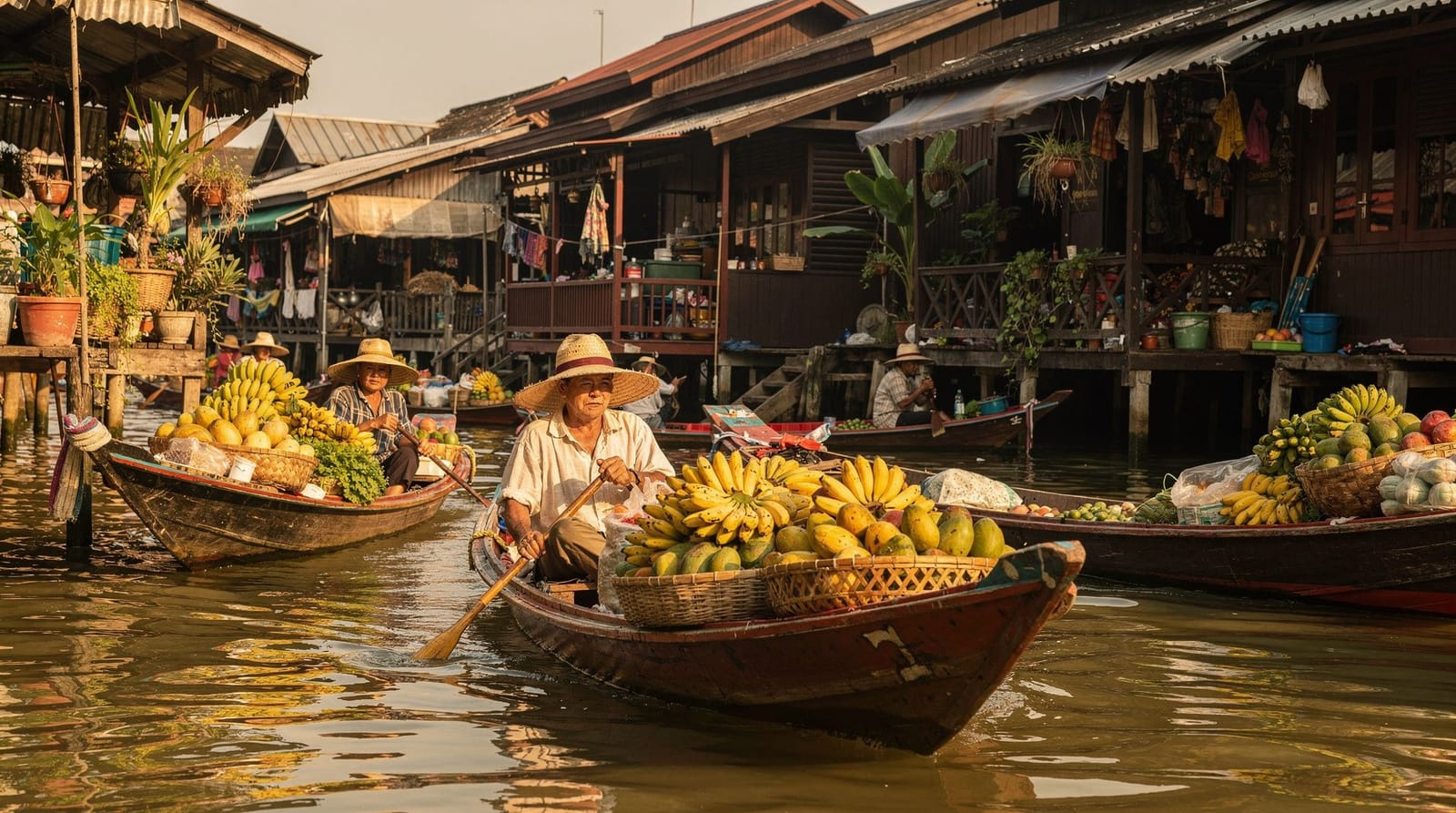
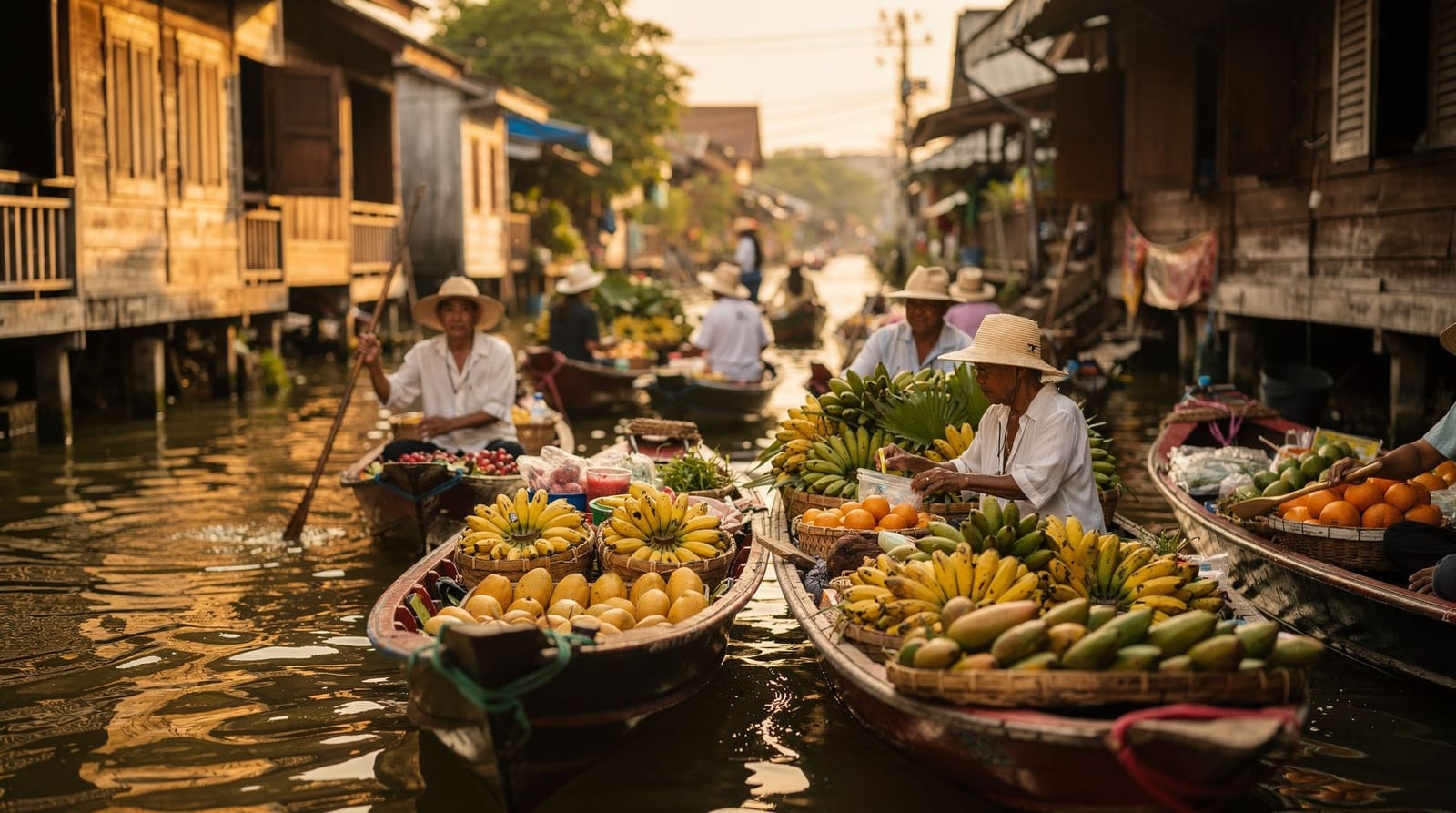
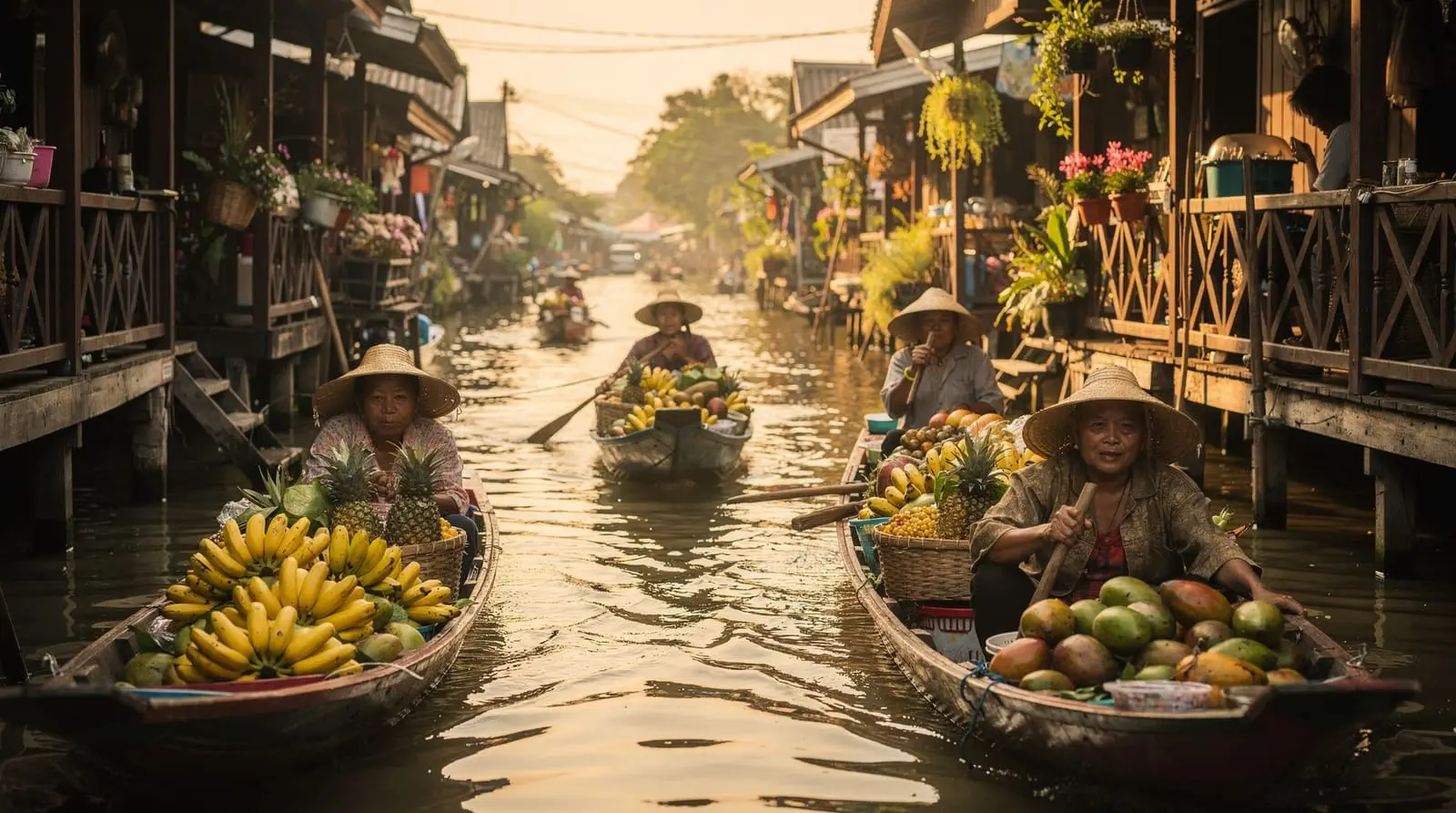
Floating markets are one of the defining images of Thailand — wooden boats heavy with mangoes and pomelos, a vendor in a wide straw hat ladling curry from a charcoal pot balanced on a hull. The reality on the ground is more nuanced than the postcard. Some floating markets near Bangkok are living traditions; others are essentially open-air souvenir stalls floated for photographs. This guide ranks the realistic options honestly, tells you when each one runs, what it costs, how to get there, and which ones are worth your limited time.
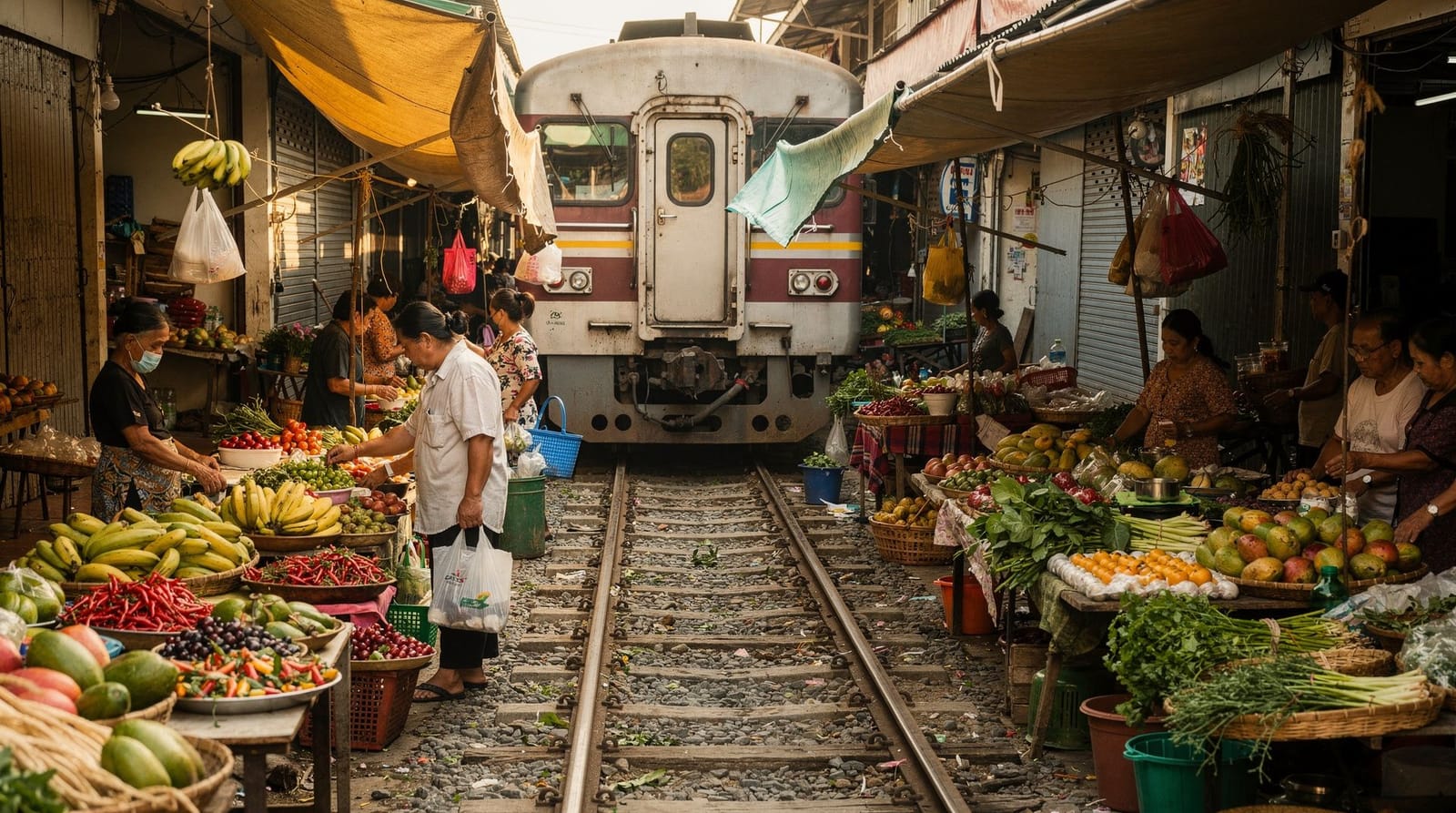
There are roughly half a dozen floating markets within reach of Bangkok, but only four matter for most visitors: Damnoen Saduak (the famous one), Amphawa (the best overall), Khlong Lat Mayom (the easy local one), and Taling Chan (a smaller weekend market beside it). The historic Maeklong Railway Market is technically a rail-side market rather than a floating one, but it sits in the same region and is almost always combined with the floating markets on day trips, so it is covered here too and in its own Maeklong Railway Market guide.
| Market | Distance | Open | Crowd |
|---|---|---|---|
| Amphawa | ~90km SW, 1.5–2h | Fri–Sun, midday–8pm | Mostly Thai weekenders |
| Damnoen Saduak | ~100km SW, 1.5–2h | Daily, busiest 7–11am | Heavy, international tour groups |
| Khlong Lat Mayom | Within Bangkok, 30–45min | Sat–Sun, 8am–5pm | Mostly local |
| Taling Chan | Within Bangkok, next to Lat Mayom | Sat–Sun, 8am–4pm | Local |
How floating markets fit the Chao Phraya delta
To understand why floating markets exist — and why so many feel artificial today — you need a sense of the geography. Bangkok and the surrounding provinces sit on the flat, water-laced delta of the Chao Phraya river. For centuries the canals, called khlong, were the roads. People lived, traded, and travelled by boat, and floating markets were simply where vendors gathered each morning to sell to the households along the water. The nickname “Venice of the East” was earned.
In the twentieth century, roads and the car replaced the canals, and most floating markets faded. The ones that survive do so for one of two reasons: either tourism resurrected them as attractions (Damnoen Saduak), or a genuine local market kept going and tourism arrived later (Amphawa, Khlong Lat Mayom). That difference is the single most useful thing to keep in mind when deciding where to go.
1. Amphawa — the best overall
Where: Samut Songkhram province, about 90 km southwest of Bangkok (1.5–2 hours by road) When: Friday, Saturday, Sunday only, roughly 12h00–20h00 Crowd: Busy, but overwhelmingly Thai weekenders
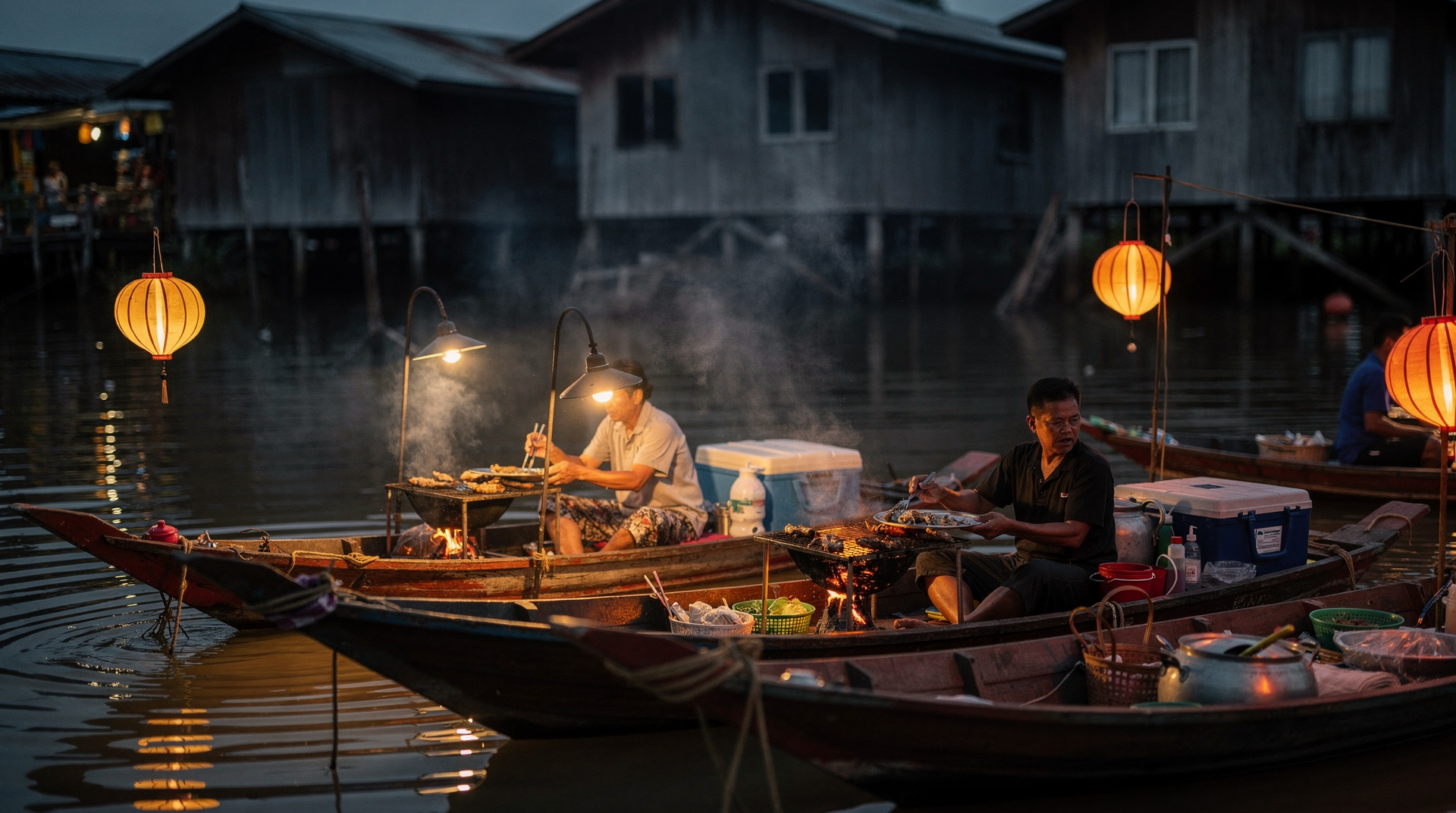
Amphawa is the floating market that most rewards the effort to reach it. Unlike Damnoen Saduak, it operates in the afternoon and into the evening, which gives it a completely different character — this is where Bangkok families come for a weekend evening out, not where tour buses dump groups at dawn. The canal is lined with old wooden shophouses, many converted into small cafés and guesthouses, and vendors cook seafood directly from their boats: grilled prawns, cockles, squid, and the famous boat noodles.
The signature Amphawa experience is the firefly boat tour after dark. For around 60–80 THB per person, a longtail boat takes you along the Mae Klong river to stretches of lamphu trees where fireflies cluster and flash in synchrony. It is genuinely lovely on a clear night, though disappointing during heavy rain or bright moonlight — manage expectations and go on a darker night if you can.
Amphawa is the centrepiece of the more atmospheric organised day trips, which usually combine it with the railway market. The Amphawa floating and railway market day tour with boat ride handles the transport and timing, which is the main friction with doing Amphawa independently. For the full breakdown of timing, food stalls, and where to stay overnight, see the dedicated Amphawa floating market guide and the Amphawa day trip guide.
Honest take: Amphawa is busy and the central canal can feel crowded at peak, but the crowd is local, the food is excellent, and the evening atmosphere is the closest thing to the genuine article. If you can only visit one floating market and you can manage a Friday-to-Sunday timing, make it Amphawa.
Damnoen Saduak and Amphawa are markets that exist largely for visitors now, while the Mahasawat canal is still lined with working smallholdings: a Mahasawat canal and organic fruit farm trip is the version where the boats belong to the people who farm there.
2. Damnoen Saduak — the famous one
Where: Ratchaburi province, about 100 km southwest of Bangkok (1.5–2 hours by road) When: Daily, busiest 07h00–11h00 Crowd: Heavily touristed, international tour groups
Damnoen Saduak is the floating market on every postcard and most “Thailand” stock photos. The narrow main canal, Khlong Ton Khem, is genuinely picturesque — densely packed paddle boats, vendors in straw hats, fruit piled high. The problem is that it is also the most commercialised and overpriced floating market near Bangkok, and the central stretch is dominated by souvenir boats selling the same magnets, fans, and carved soap you can buy anywhere.
The economics are aggressive. Paddle-boat operators quote 150–200 THB per person but routinely steer you onto longer “tours” costing 1,000 THB or more, and vendors price for tourists who will not haggle. Photographs of Damnoen Saduak look magical; the lived experience is often a slow shuffle through a crowd with a camera.
That said, it can still be worthwhile if you play it right: arrive as early as possible — ideally before 08h00, before the bulk of the tour buses — treat it primarily as a photo opportunity, agree every price in advance, and keep your expectations honest. The Damnoen Saduak half-day guided tour gets you there early with transport sorted. Read the unflinching assessment in is Damnoen Saduak worth it and the full visiting logistics in the Damnoen Saduak guide before committing.
Honest take: Iconic but touristy and expensive. Go early or skip it in favour of Amphawa. The head-to-head in Damnoen Saduak vs Amphawa is worth reading if you are torn.
3. Khlong Lat Mayom — the easy local choice
Where: Taling Chan district, western Bangkok (30–45 minutes by taxi from the centre) When: Saturday and Sunday only, roughly 08h00–17h00 Crowd: Mostly local Thai weekenders
If you do not want to spend three to four hours in a vehicle for a day trip, Khlong Lat Mayom is the answer. It sits inside Bangkok on the Thonburi side, reachable in well under an hour by Grab. It is small, unpretentious, and genuinely local — the food is the point, not the boats. Vendors cook from stalls along the canal and from a few moored boats, and the standard is high: grilled river prawns, boat noodles, hor mok (steamed curry custard), and excellent Thai sweets at low, locals’ prices.
You can take a short canal boat tour (around 100 THB) through the surrounding orchards and khlong network, which is a pleasant, unhurried hour. There is no firefly cruise and far fewer photogenic boats than Damnoen Saduak, but there is also no tourist mark-up and no hustle. The full picture is in the Khlong Lat Mayom market guide.
Honest take: The best value and the least hassle. Ideal if you have half a day and want real food over photo opportunities.
4. Taling Chan — the small weekend neighbour
Where: Taling Chan district, western Bangkok (next to Khlong Lat Mayom) When: Saturday and Sunday only, roughly 08h00–16h00 Crowd: Local
Taling Chan is a compact floating market a short hop from Khlong Lat Mayom, and the two are easily combined in a single morning. Its draw is the floating seafood restaurant — a deck built over the canal where you sit on mats and eat grilled fish and prawns cooked on boats below. It is modest in scale and entirely local in feel. There is no dedicated guide page for it here, but pairing it with Khlong Lat Mayom makes a relaxed, low-cost half day on the Thonburi side.
A note on the “Bangkok” floating market tour
Some operators advertise a convenient in-city floating-market-and-canal experience that combines a longtail boat ride through the Thonburi khlongs with a small floating market stop, avoiding the long drive to Ratchaburi. The Chatuchak and floating market combined tour is one such option that pairs a market visit with other Bangkok highlights. These are a sensible compromise for travellers short on time, though they trade authenticity for convenience. For a pure canal experience, see longtail canal boat tours.
How to choose: a quick decision guide
- You have a full day and want the best experience: Amphawa (Fri–Sun), ideally with the firefly cruise. Combine with Maeklong Railway Market.
- You want the iconic photographs and don’t mind crowds: Damnoen Saduak, arriving before 08h00.
- You have only a half day and want real food, low cost, no hassle: Khlong Lat Mayom (+ Taling Chan), weekends.
- You want to see the railway market too: Take a combined day trip — all three (Damnoen Saduak or Amphawa + Maeklong) are in the same region.
For broader market planning that includes Bangkok’s land markets, the Bangkok markets guide and the best food markets guide are useful companions.
Practical tips for any floating market
Timing is everything. Damnoen Saduak is a morning market; Amphawa is an afternoon-to-evening one; the Bangkok khlong markets are weekend daytime only. Mismatching the day or time is the single most common planning error.
Carry small cash. Vendors deal in cash, often without change for large notes. Bring plenty of 20s, 50s, and 100s. There are usually no ATMs canal-side.
Agree boat prices first. Especially at Damnoen Saduak, confirm the price and route before stepping into any boat. Verbal “tours” balloon in cost mid-ride.
Eat where the locals queue. The best food is at the busiest local stalls, not the most photographed boats. Boat noodles, grilled prawns, and coconut sweets are the things to seek out.
Dress for heat and sun. These markets are largely uncovered and the delta is hot and humid. Hat, sunscreen, water — and check the Bangkok weather month by month for the season.
Combine sensibly. Damnoen Saduak and Amphawa are far enough that they pair naturally with the Maeklong Railway Market rather than with central Bangkok sights. The Thonburi-side markets pair with each other or with Wat Arun.
The longtail boat ride alone — through orchards and quiet residential khlong — is often the highlight regardless of which market you choose. It is the closest you will get to how the delta lived for centuries. Pair any floating market trip with the best night markets guide if you want to round out a full day of Bangkok market-going.
Frequently asked questions about Floating markets near Bangkok: the complete honest
What is a floating market?
Which floating market is the least touristy?
How far are the floating markets from Bangkok?
What days are floating markets open?
Is Damnoen Saduak worth visiting?
How much does a floating market boat ride cost?
Can I visit a floating market independently or do I need a tour?
Top experiences
Bookable activities with verified prices and instant confirmation on GetYourGuide.