Plan a trip to Bangkok: the complete step-by-step guide
Bangkok: Grand Palace Skip-the-Line Entry Ticket
How do I plan a trip to Bangkok?
Start by choosing when to go (November to February is the best weather), then decide how long to stay (3–4 days for the city, 5–7 with day trips). Check your visa and complete the mandatory free TDAC online before arrival. Set a daily budget, pick a neighbourhood to stay in near the BTS or river, and plan to get around by Skytrain, MRT, river boats and Grab. Book key tickets and a few tours, and you're set.
Bangkok rewards a little planning more than almost any city — get the season, the length of stay, the visa formalities and the transport sorted in advance, and you arrive ready to dive into one of the world’s great travel cities rather than wrestling with logistics. This guide walks you through planning a Bangkok trip end to end, in the order you actually need to make the decisions, linking to the detailed guides for each step. Work through it once and your trip is essentially planned.
| Best time | November–February (cool, dry, busiest) |
| How long | 3–4 days for the city, 5–7 with day trips |
| Budget/day | Around 700–5,000+ THB depending on style |
| Visa | Free entry for most nationalities; TDAC always required |
| Getting around | BTS, MRT, river boats, Grab |
Step 1: Choose when to go
Bangkok is hot and humid year-round, but the experience varies sharply by season.
- November to February — cool and dry. The best weather (22–30°C, lower humidity, little rain) and the reason this is peak tourist season, with the highest crowds and prices. November is the sweet spot, fresh after the monsoon and home to the Loy Krathong festival of lights (25 November 2026).
- March to May — hot. Brutal, regularly 35–40°C with high humidity; April is the hottest, and home to the Songkran water festival (13–15 April 2026). Midday sightseeing is exhausting.
- June to October — rainy. Short, intense afternoon downpours rather than all-day rain, fewer crowds, and hotel rates 30–50% lower — the best value if you can work around the showers.
The full month-by-month breakdown, including what to expect and festival dates, is in the best time to visit Bangkok guide and the Bangkok weather month-by-month guide.
Step 2: Decide how long to stay
Most first-timers underestimate how much Bangkok offers. As a guide:
- 3 days covers the essential city: the Grand Palace, Wat Pho, Wat Arun, Chinatown, a market, a river cruise and the street-food scene.
- 5 days lets you add one or two day trips — Ayutthaya, Kanchanaburi or the floating markets — and a slower pace.
- A week allows the city, several day trips, and time for neighbourhoods, spas, cooking classes and nightlife without rushing.
The detailed trade-offs are in the how many days in Bangkok guide, and ready-made plans live in the 3-day and 5-day itineraries.
Step 3: Sort the visa and TDAC
Two separate things, both essential:
- Visa. Around 93 nationalities (US, UK, EU, Canada, Australia and more) enter visa-free, currently for 30 days as of mid-2026 — though this rule changed recently, so re-verify the current day-count before you travel. Your passport must be valid at least 6 months from entry.
- TDAC (Thailand Digital Arrival Card). Mandatory for every entry since May 2025, completed online and free up to 72 hours before arrival. Beware copycat sites that charge a fee for what is a free government form.
Get the full, current detail in the Thailand visa and TDAC guide — and because visa rules are a moving target, treat the official portal as the final word.
Step 4: Set a budget
Bangkok is one of Asia’s best-value major cities. Rough daily budgets per person (excluding flights and accommodation):
- Budget: ~700–1,200 THB — street food, public transport, hostels.
- Mid-range: ~2,500–5,000 THB — restaurants, the odd taxi, mid-range hotels, paid attractions.
- Luxury: 8,000 THB+ — fine dining, rooftop bars, spas, five-star hotels.
Cash is king for street food, markets and tuk-tuks; cards work at malls, hotels and upscale restaurants. ATMs charge around 220 THB per foreign-card withdrawal, so withdraw larger amounts less often, and consider a Wise or Revolut card. The full breakdown is in the Bangkok travel costs guide, and money-saving tactics in the Bangkok on a budget guide.
Step 5: Choose where to stay
Pick a neighbourhood near the BTS Skytrain, MRT or river so getting around is effortless:
- Sukhumvit — hotels, malls, rooftops and nightlife, all on the Skytrain; the easy default for first-timers.
- Silom/Sathorn — central, business by day, lively by night, near Lumphini Park.
- Riverside — scenic, luxurious, close to the temples by boat.
- Khao San / Banglamphu — the backpacker hub, cheap and lively, near the Old City.
- Rattanakosin Old City — among the historic sights, quieter at night.
The neighbourhood-by-neighbourhood comparison is in the where to stay in Bangkok guide.
Step 6: Plan how to get around
Bangkok has a reputation for traffic, but its rail and river network lets you skip most of it. The core tools:
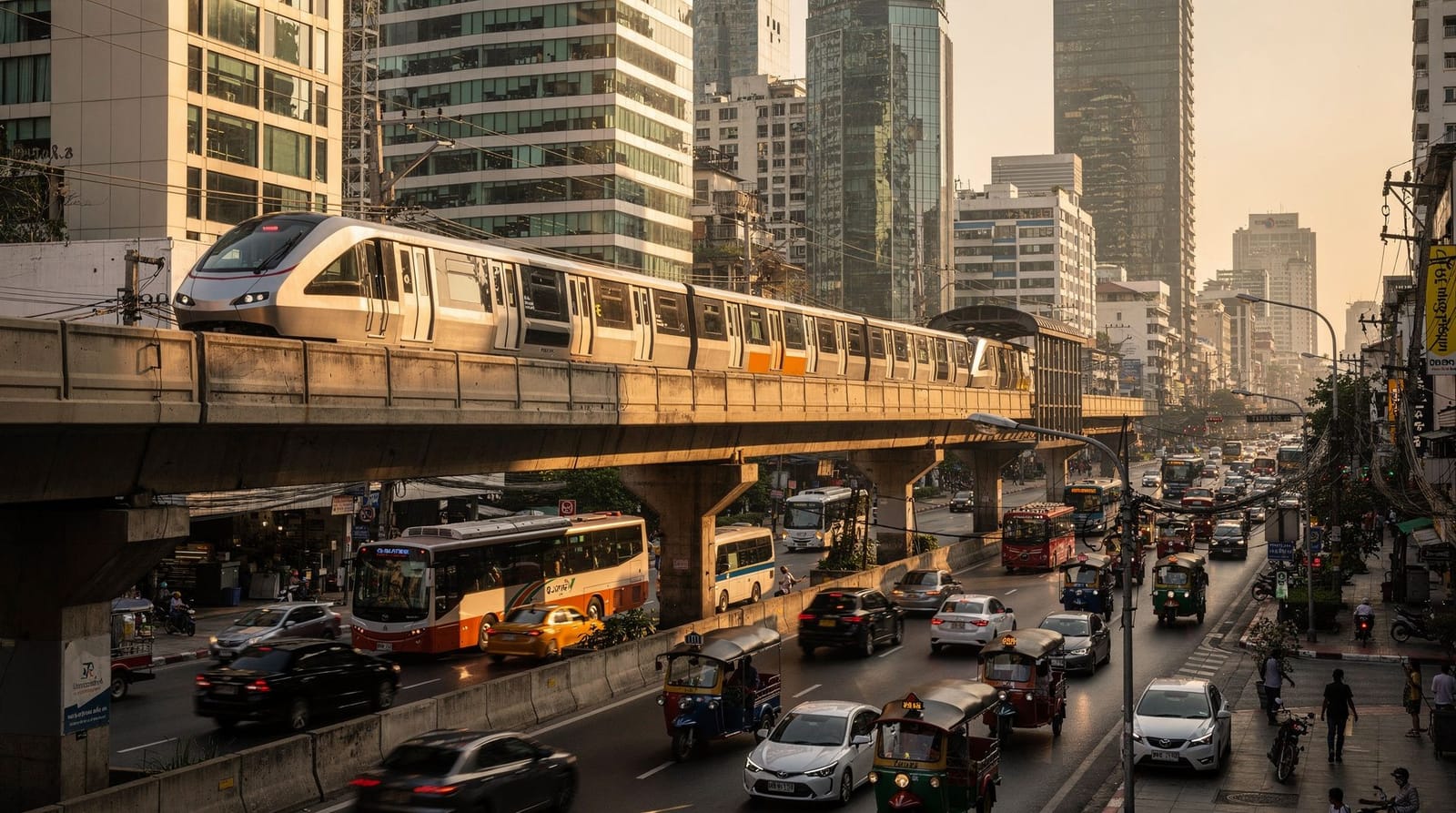
- BTS Skytrain and MRT subway — fast, cheap, air-conditioned, traffic-proof; your default for the modern city.
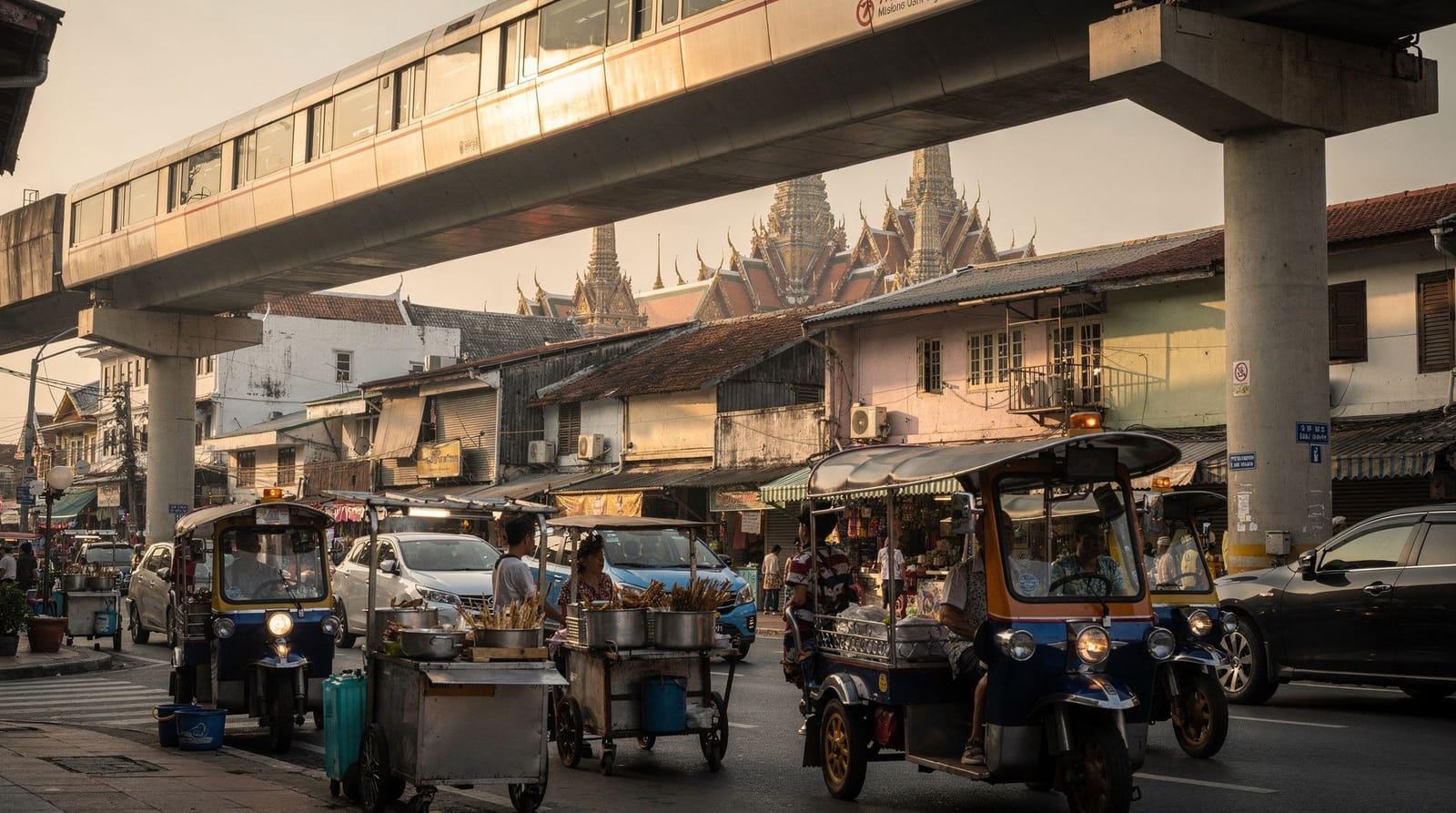
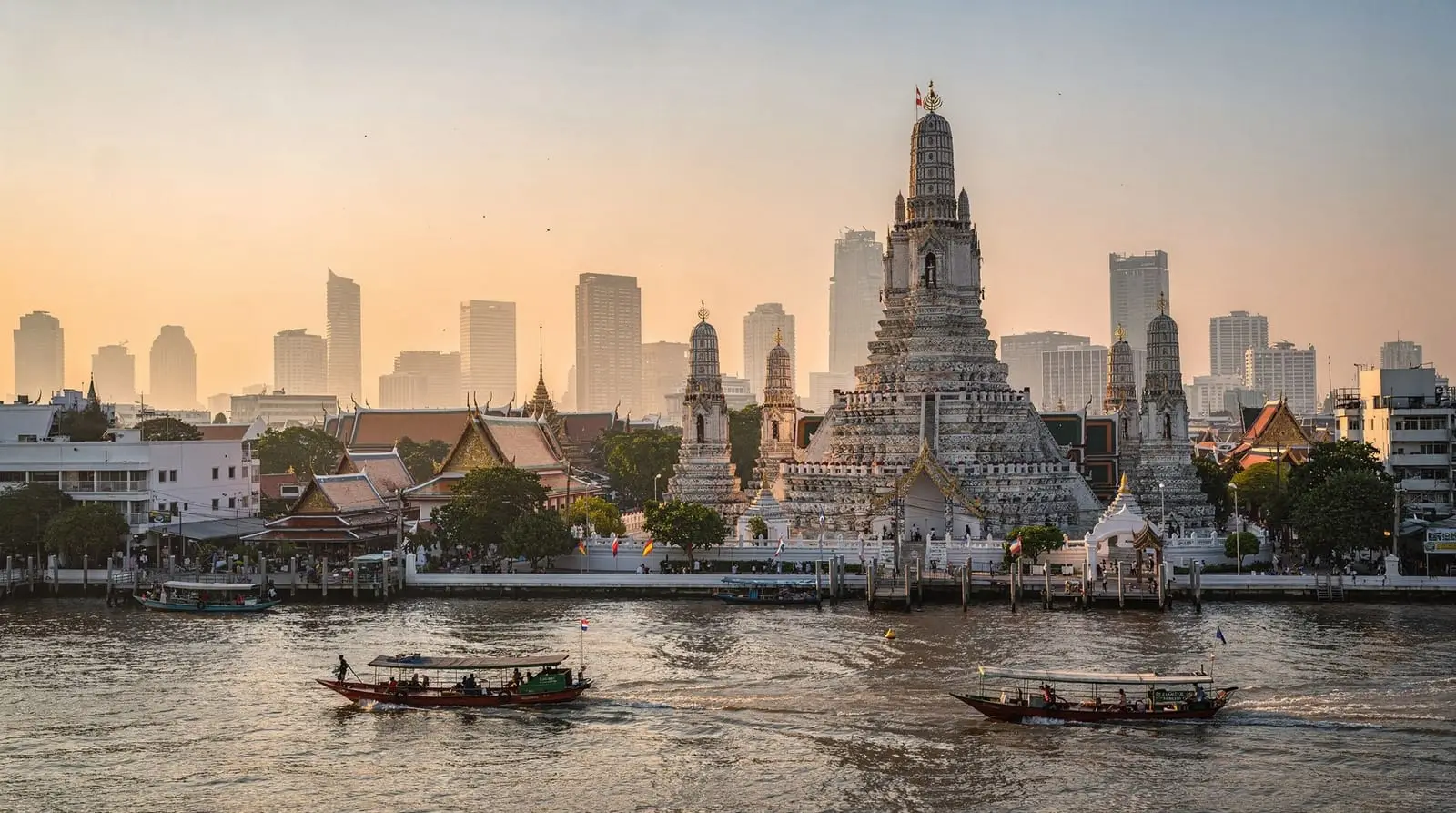
- Chao Phraya river boats — the scenic, traffic-free way to reach the Old City temples and Chinatown.
- Grab — ride-hailing with fixed upfront fares for everything off the rail lines.
The full mode-by-mode strategy is in the getting around Bangkok guide, with deep dives on the BTS, MRT and river boats. From the airport, see the Suvarnabhumi and Don Mueang guides.
Step 7: Book the few things worth pre-booking
Most of Bangkok can be arranged on the ground, but a handful of things benefit from booking ahead to save queueing or guarantee a spot:
- Grand Palace — the city’s busiest sight; skipping the ticket queue is worth it. Book a Grand Palace skip-the-line ticket to avoid the morning crush.
- A guided temple half-day — efficient context for first-timers. A half-day guided city and temples tour covers the highlights with a guide.
- A river dinner cruise — a memorable evening past the illuminated temples. A Chao Phraya dinner cruise with hotel transfer bundles the boat and the pickup.
Beyond these, don’t over-book. Leave room for street-food wandering, spontaneous market visits and slow afternoons — over-planning a city this rich in serendipity is a common first-timer mistake, as the Bangkok for first-timers guide notes.
Step 8: Prepare the practicalities
A few final things to square away before you fly:
- Connectivity — buy a tourist SIM at the airport/7-Eleven or set up an eSIM before arrival; you’ll need data for Grab and maps. See the Bangkok SIM and eSIM guide.
- Packing — lightweight, breathable clothes, but cover shoulders and knees for temples; the what to pack for Bangkok guide has the full list.
- Travel insurance — strongly recommended, ideally with high medical-evacuation cover.
- Etiquette and scams — read up on temple dress codes, the monarchy, and the classic Bangkok scams so you arrive aware.
- Don’t drink the tap water — stick to bottled or filtered.
A sample 4-day plan to anchor your trip
- Day 1: Old City temples — Grand Palace, Wat Pho, cross-river to Wat Arun; sunset rooftop bar.
- Day 2: Chinatown by day, markets, and an evening street-food crawl in Yaowarat.
- Day 3: A day trip to Ayutthaya, or a slower city day with a cooking class and a spa.
- Day 4: Shopping at the malls or Chatuchak, a river dinner cruise to finish.
Adapt it with the ready-made first-timer itinerary and the season’s festivals. With these eight steps worked through, your Bangkok trip is planned — the rest is the fun of being there.
Frequently asked questions about Plan a trip to Bangkok: the complete step-by-step
How many days do I need in Bangkok?
What's the best time of year to visit Bangkok?
Do I need a visa to visit Bangkok?
How much does a Bangkok trip cost?
Where should I stay in Bangkok?
What should I book before arriving in Bangkok?
Is Bangkok a good destination for first-time visitors to Asia?
Top experiences
Bookable activities with verified prices and instant confirmation on GetYourGuide.