Ethical elephant sanctuaries near Bangkok: an honest guide
From Bangkok: Pattaya Ethical Elephant Sanctuary Day Trip
Where can I visit an ethical elephant sanctuary near Bangkok?
Genuine ethical sanctuaries lie outside Bangkok — clustered around Kanchanaburi to the west and Pattaya to the southeast, reachable as day trips. An ethical sanctuary means no riding, no shows, no bullhooks and no chains: you observe, feed, walk alongside and sometimes bathe rescued elephants in spacious, natural settings. Avoid anything in central Bangkok offering rides or circus tricks. Choosing carefully matters because many operations marketing themselves as 'sanctuaries' are not.
Meeting elephants is on almost every Thailand wish list, and it should be — but how you do it matters enormously. Thailand’s elephant-tourism industry includes some of the most genuinely ethical sanctuaries in Asia and some of its most exploitative attractions, often sitting a short distance apart and using almost identical marketing language. This guide cuts through that: it explains what makes a sanctuary genuinely ethical, how to spot the fakes, where the real ones are near Bangkok, and what a responsible visit actually involves. The short version: choose a no-riding, no-show sanctuary outside the city, and be prepared to pay a fair price for it.
| Where | Kanchanaburi (2–3hrs west) or Pattaya (2hrs southeast) |
| Cost | 2,000–3,500 THB/person, incl. transport & lunch |
| Included | Feeding, walking with the herd, sometimes bathing |
| Never | Riding, shows, bullhooks, chains |
| Booking | Advance recommended, especially weekends |
What “ethical” actually means
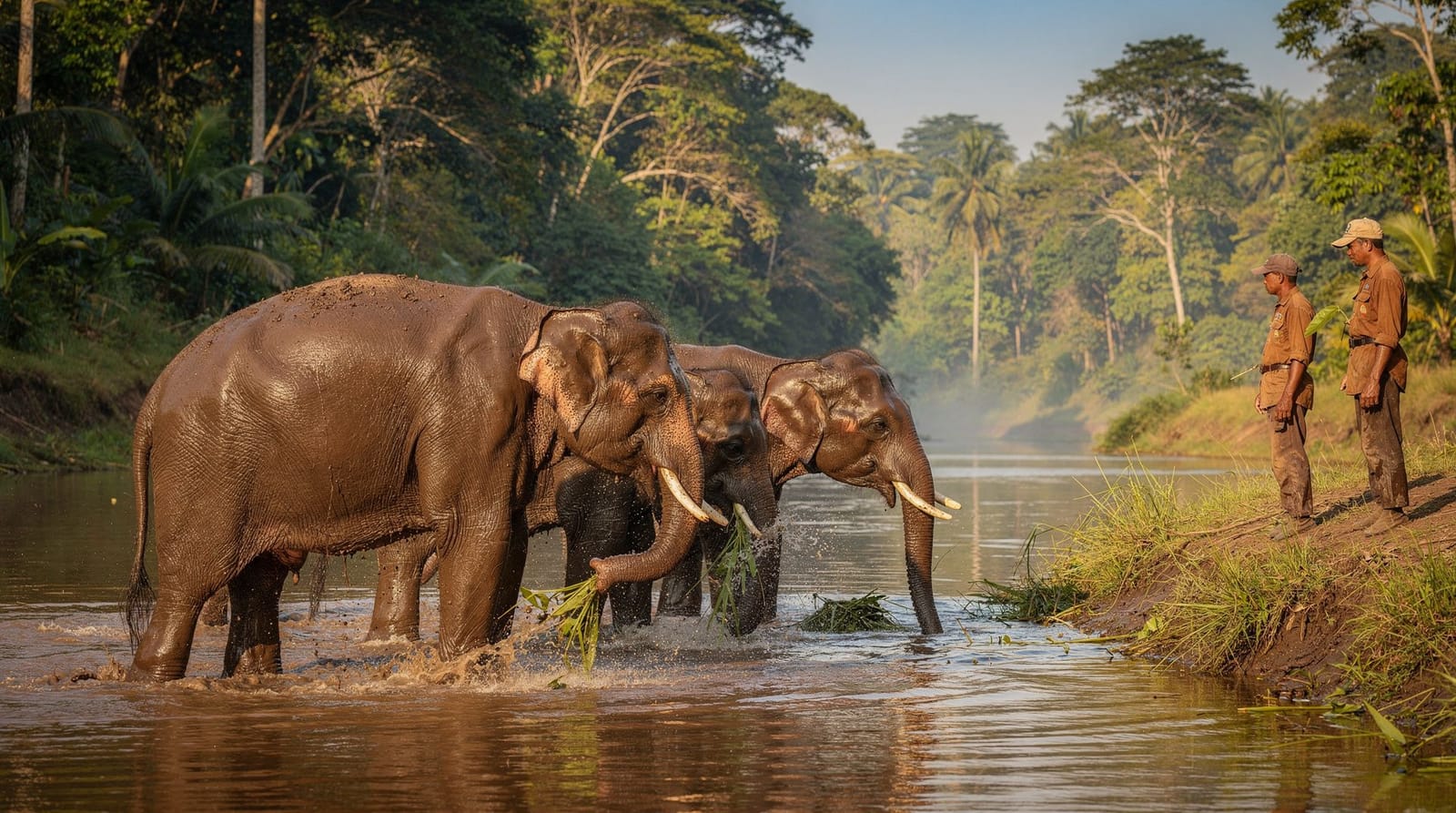
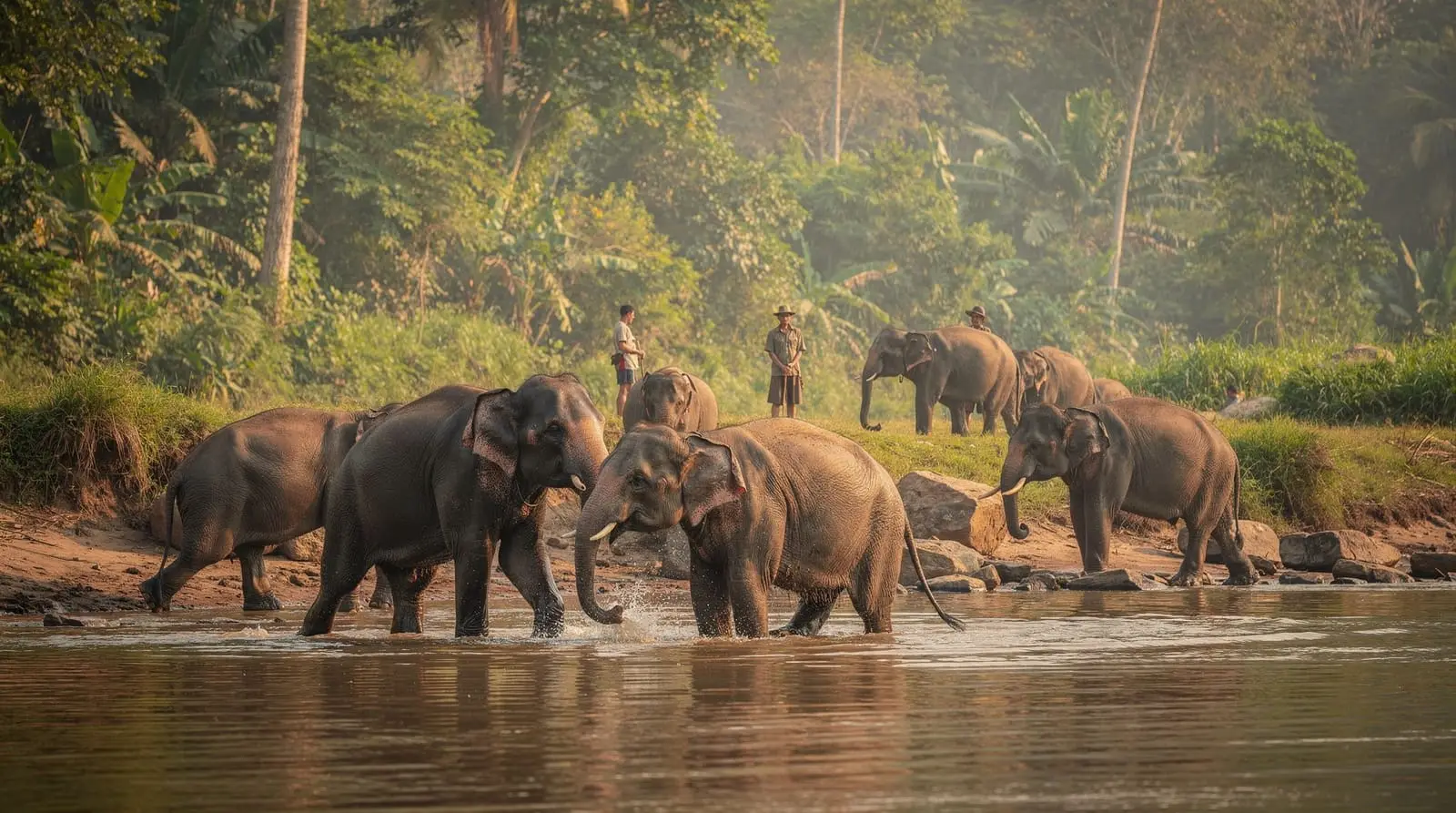
A genuinely ethical elephant sanctuary follows a few non-negotiable principles: no riding (the saddles and the training behind them cause real harm), no performances or tricks (no painting, football, or circus acts), no bullhooks or chains, and enough space for the elephants to roam in natural surroundings. Your interaction is limited to observing, feeding, walking alongside the herd, and sometimes gentle mud or water bathing — always on the elephant’s terms, never forced. Rescued elephants, transparency about their histories, smaller group sizes, and a calm, unhurried atmosphere are all good signs.
Our companion ethical elephant tourism guide goes deeper on the welfare issues; read it before you book.
How to spot a fake “sanctuary”
The word “sanctuary” is unregulated, so use behaviour as your filter, not branding. Walk away from any venue that offers elephant rides, shows, painting, or photo-prop chains. Be sceptical of places with rows of elephants on short chains, very large groups of tourists cycling through quickly, or marketing that emphasises selfies over the animals’ welfare. Also avoid the cruel street-begging elephants that occasionally appear in Bangkok itself — never feed or photograph them, as it funds the practice. If a place feels like a zoo or a circus, it is not a sanctuary.
Where the real sanctuaries are
No genuine sanctuary sits in central Bangkok — elephants need space the city cannot provide. The well-regarded ones cluster in two areas reachable as day trips:
Kanchanaburi, about 2–3 hours west, has several respected sanctuaries set in the River Kwai countryside, often combined with the Erawan Falls or the wartime Death Railway for a full day.
Pattaya, about 2 hours southeast, has ethical sanctuaries that make a good half- or full-day trip, sometimes paired with the beach.
Pattaya ethical elephant sanctuary day trip from BangkokThere are also nearer elephant parks offering feeding and bathing experiences, but scrutinise their welfare standards using the checklist above before booking.
Bangkok elephant park care experience day tripWhat a visit involves
A typical ethical visit starts with an introduction to the elephants and their stories, then feeding them bananas, sugarcane and other treats, walking with the herd through their grounds, and often a mud or water bath where you splash and scrub them gently. You will wear clothes you do not mind ruining (many sanctuaries provide a tunic), and follow the mahouts’ instructions closely. The pace is calm and the emphasis is on the elephants’ comfort, not on tourist entertainment. For comparison, seeing genuinely wild elephants is possible at Khao Yai National Park, though sightings there are never guaranteed.
Costs and what to bring
A guided day trip from Bangkok to a Kanchanaburi or Pattaya sanctuary typically costs 2,000–3,500 THB per person, including transport, the sanctuary fee, lunch and activities; half-day Pattaya options can be cheaper. The higher cost reflects genuine care standards and distance — treat suspiciously cheap “sanctuary” deals with caution. Bring a swimsuit, a change of clothes, a towel, closed shoes, sunscreen, insect repellent and water; leave loose jewellery behind.
Kanchanaburi elephant sanctuary and Erawan Waterfall tourCombining and families
Around Kanchanaburi, sanctuaries pair naturally with Erawan Falls and the Death Railway history; near Pattaya, with the beach. Just ensure the elephant portion is unhurried. Most sanctuaries welcome families, but check minimum-age policies, as some restrict bathing for very young children; supervise closely and frame the visit as caring for the elephants rather than playing with them. See the Bangkok with kids guide for how it fits a family trip, and the day trips from Bangkok overview for combining it with other escapes.
Quick questions to ask before you book
If a listing’s description doesn’t make the activities crystal clear, ask directly: Is riding offered at any point? Are there shows, painting or tricks? Do mahouts use bullhooks? How many guests are in each group? A genuine sanctuary answers plainly and often volunteers the information unprompted. The ethical elephant tourism guide has the fuller checklist and explains why the word “sanctuary” alone tells you nothing.
Photographing elephants responsibly
Photos are part of the appeal, but keep the animals’ comfort first: no posed close-ups that crowd or startle them, no flash, and follow the mahouts if they ask for distance. A genuine sanctuary will not stage “photo moments” that require an elephant to hold a pose. For a wild, unguaranteed sighting instead of an interactive visit, Khao Yai National Park has a small wild population.
Frequently asked questions about Ethical elephant sanctuaries near Bangkok: an honest
What makes an elephant sanctuary genuinely ethical?
Are there real elephant sanctuaries inside Bangkok city?
Should I avoid riding elephants?
How much does an ethical elephant sanctuary day trip cost?
What should I wear and bring to an elephant sanctuary?
Can I combine an elephant sanctuary with other day-trip sights?
Are elephant sanctuaries suitable for children?
Top experiences
Bookable activities with verified prices and instant confirmation on GetYourGuide.