Tuk-tuk tours in Bangkok: the honest guide
Bangkok: Tuk Tuk Adventure Chinatown Michelin Food & Temples
Are tuk-tuk tours in Bangkok worth it?
An organised, pre-booked tuk-tuk tour is one of the most fun things to do in Bangkok — especially the night food crawls through Chinatown that hop between street-food stalls, markets and lit temples. These are completely different from the street tuk-tuk touts who offer cheap 'all-day' tours that are really gem-shop commission scams. Book a proper tour for 1,500–2,800 THB and you get a vetted driver, a guide and no shop detours.
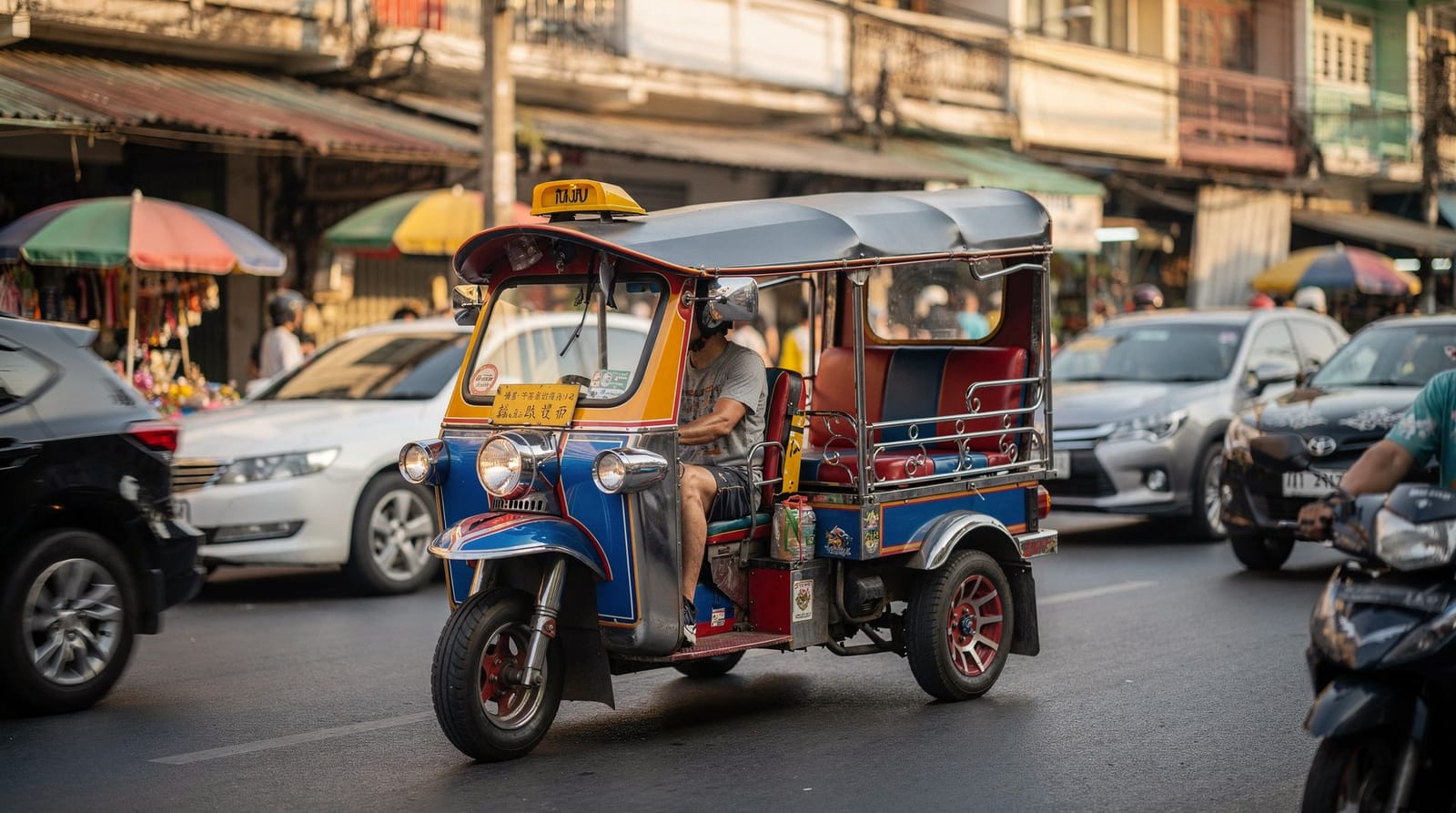
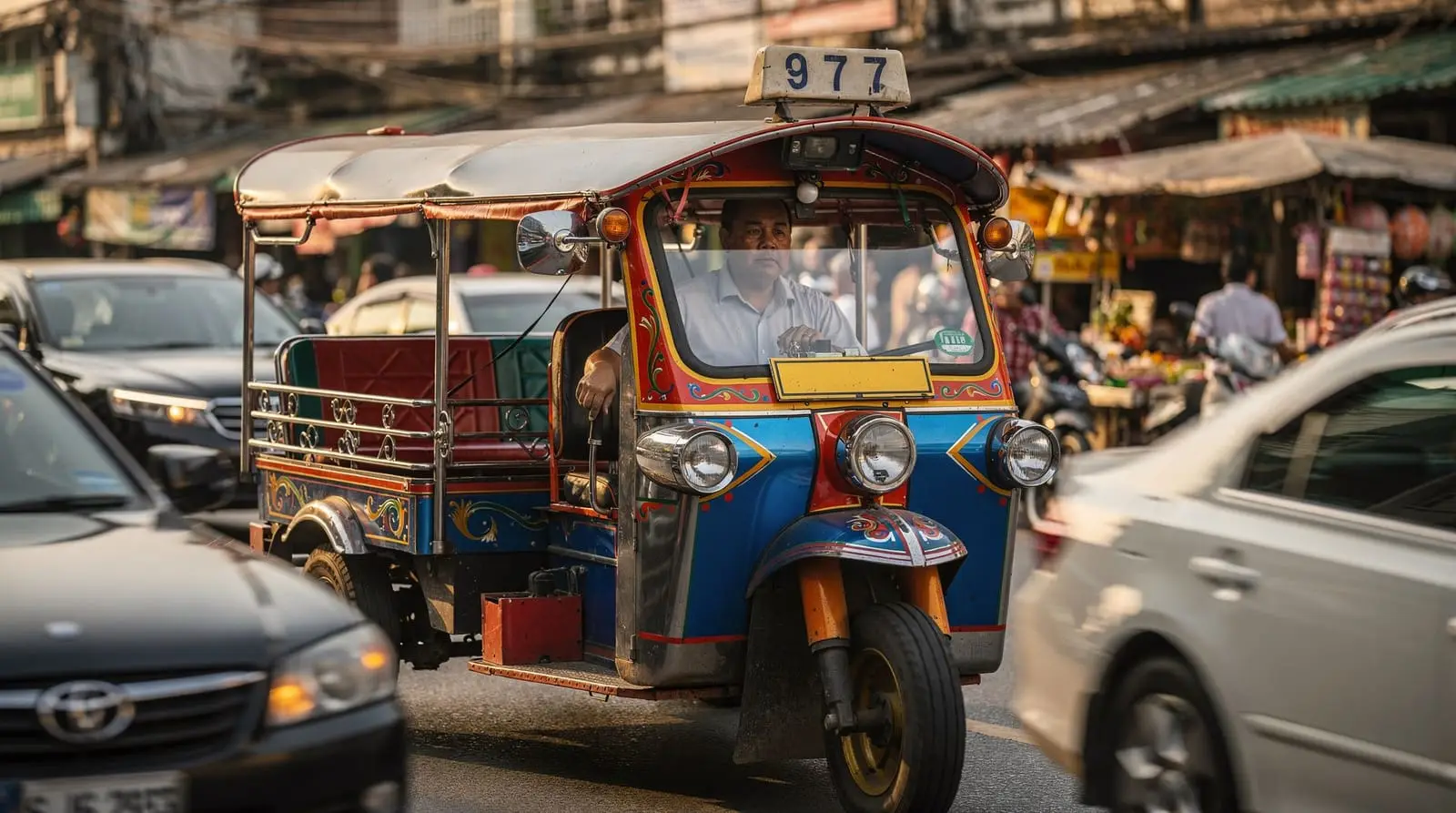
The tuk-tuk is the iconic image of Bangkok — three wheels, a roaring two-stroke engine, no doors and a driver weaving through gaps no car would attempt. As everyday transport it is overrated: slower than the train, hotter than a taxi and more expensive than Grab once you have haggled the fare. But as an organised tour, especially a night-time food crawl, the tuk-tuk becomes one of the genuinely best experiences in the city. The catch is that “tuk-tuk tour” means two completely different things in Bangkok, and confusing them is how visitors get scammed.
| Where | Chinatown/Yaowarat, old city, riverside |
| Cost | 1,500–2,800 THB/person, tastings usually included |
| Duration | 3–4 hours, best starting 18h00–19h00 |
| Book | In advance, never from a street tout |
| Avoid | Any “tour” priced under a few hundred baht |
This guide separates the two cleanly: the booked, vetted, curated tours that are worth every baht, and the street “tours” that are commission scams in disguise. It covers what the good tours include, what they cost in real money, and the exact tricks — the 20-baht all-day offer, the Grand Palace “closed today” line — that target tourists who do not know the difference.
Organised tuk-tuk tours versus street touts
An organised tuk-tuk tour is a pre-booked experience. You pay a set price in advance, a guide meets your group, the drivers are vetted, the route is fixed, and the whole thing exists to show you something — street food, lit temples, markets. There are no surprise stops and nothing to haggle.
A street tuk-tuk tout is the opposite. He approaches you near a temple or tourist sight, offers a cheap or even absurdly cheap “tour”, and the route is built around shops that pay him commission. The ride is real; the destination is a sales trap. Everything in this guide that is worth doing falls in the first category, and everything to avoid falls in the second. Keep that distinction in mind and Bangkok’s tuk-tuk scene becomes simple.
Prices below are approximate 2025–2026 figures, at roughly 33 THB to 1 USD.
1. Chinatown Michelin food tour by tuk-tuk — the best of the lot
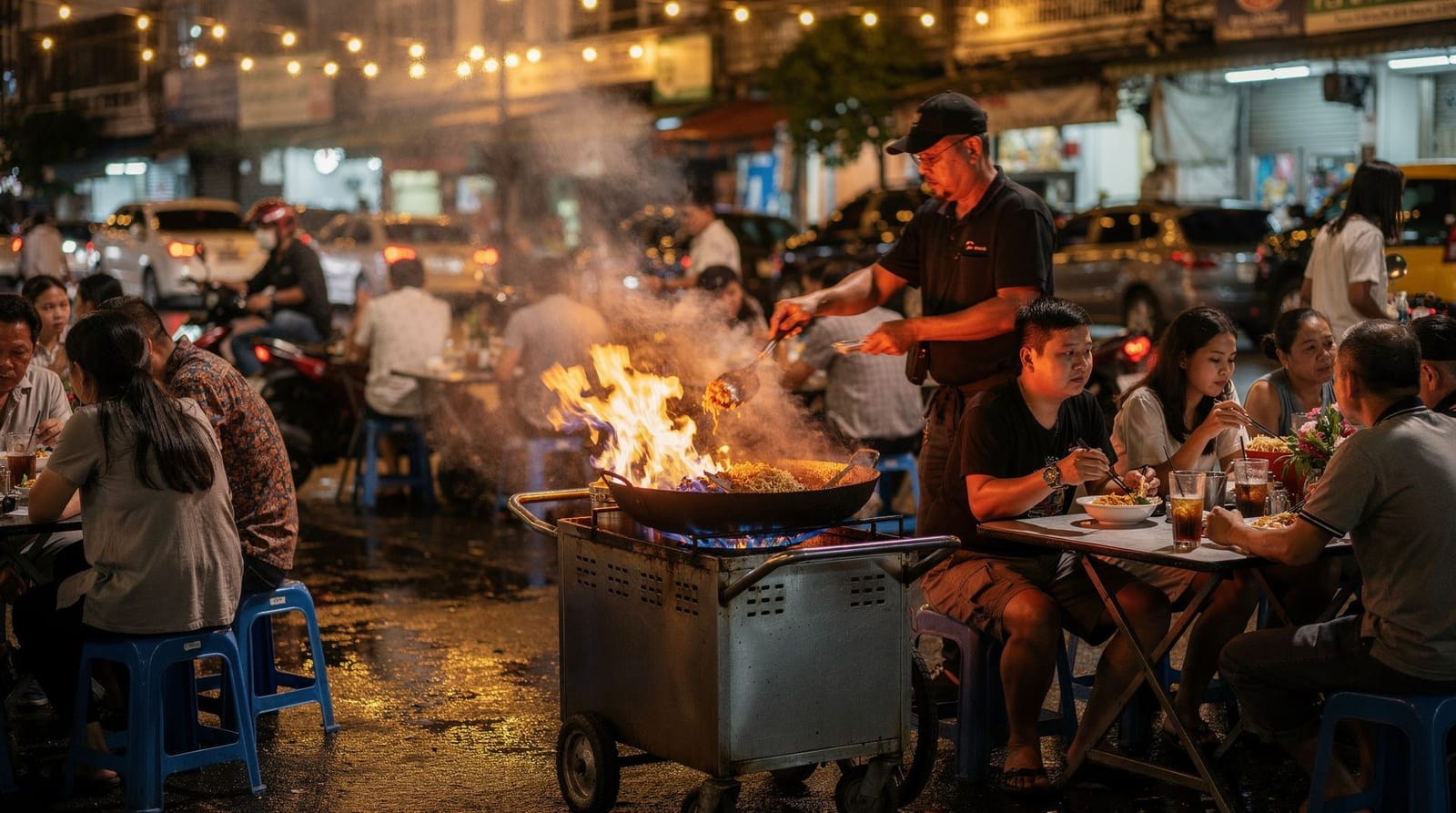
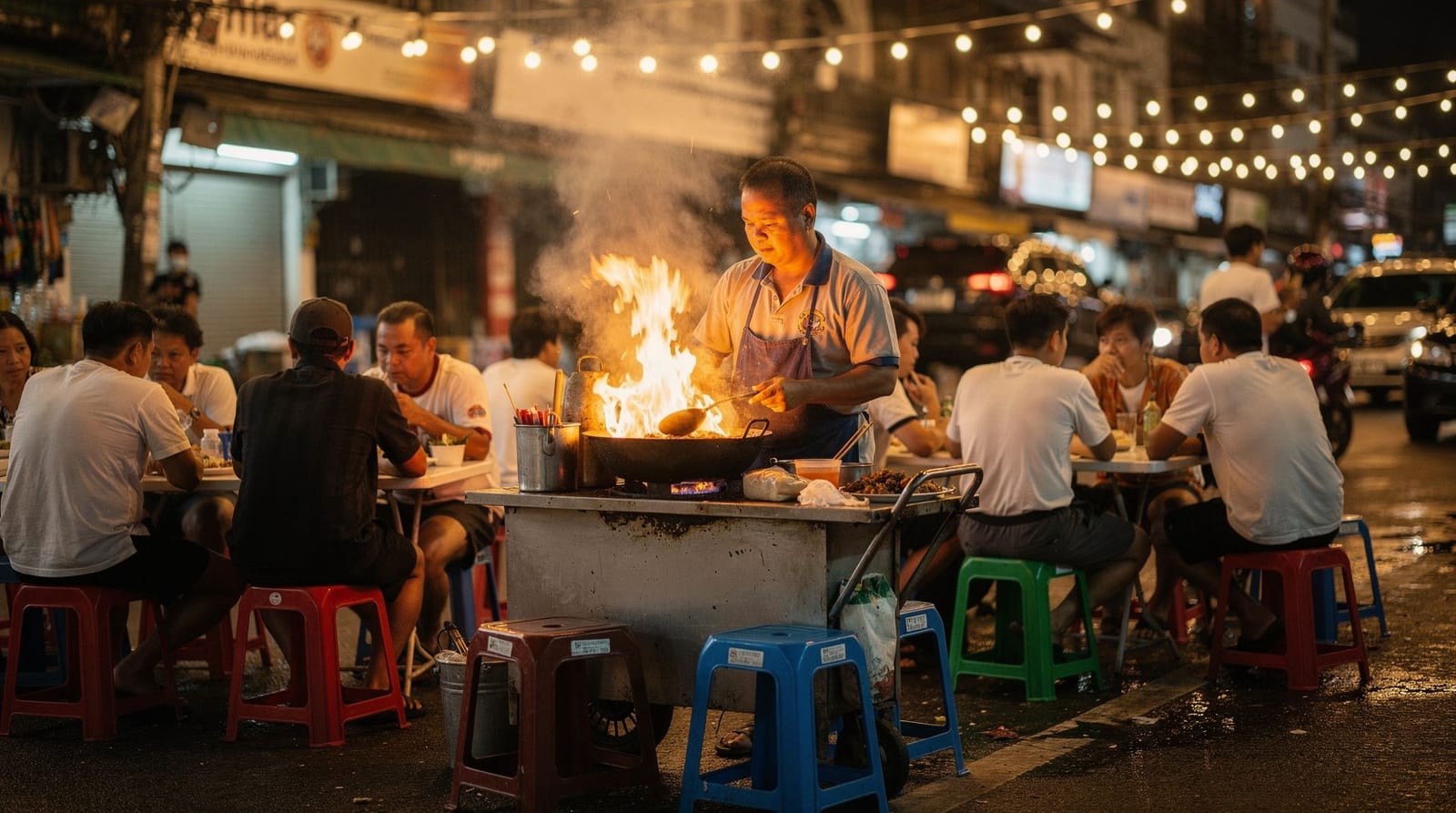
The standout tuk-tuk tour in Bangkok is the evening food crawl through Chinatown, the dense grid of Yaowarat road and its side alleys. This is where Bangkok’s street food peaks after dark, and a tuk-tuk tour hops you between the best stalls — several of them Michelin-recommended — while a guide does the ordering.
What you eat: Expect a Michelin Bib Gourmand stall or two, fresh seafood grilled on the street, dim sum, boat noodles, and a sweet finish of mango sticky rice. The guide picks dishes you would never identify from a Thai-only stall, and the tastings are included in the price.
What you see: Between stops you ride the open tuk-tuk through Chinatown’s neon-lit chaos, with stops at a lit temple and often the Pak Khlong flower market. Tours run roughly three to four hours, starting around 18h00–19h00 when the heat drops and the street kitchens fire up.
Real price: 1,800–2,800 THB (USD 55–85) per person, tastings included.
Book the Chinatown Michelin tuk-tuk food and temples tourHonest assessment: This is the rare tour that beats doing it yourself even for confident travellers, because the curation and the open-air ride together are more than the sum of wandering Yaowarat alone. If you only take one tour in Bangkok, this is a strong candidate. Budget travellers happy to graze independently can replicate much of the food on foot — see the Michelin street food and Bangkok street food guides — but you lose the tuk-tuk ride and the guide.
2. Markets, temples and food night tour by tuk-tuk
A broader evening tuk-tuk tour spreads beyond Chinatown to combine markets, lit temples and street food across the old city and riverside. It is less food-intensive than the Michelin crawl and more of a general night sightseeing experience, which suits visitors who want variety over a pure eating marathon.
What it covers: Typically a flower market, a night market, a floodlit temple such as Wat Arun or the Golden Mount, and several street-food tastings along the way. The route threads the old city and the riverside, giving you a sense of Bangkok after dark that day tours miss.
Real price: 1,500–2,500 THB (USD 45–75), usually including tastings.
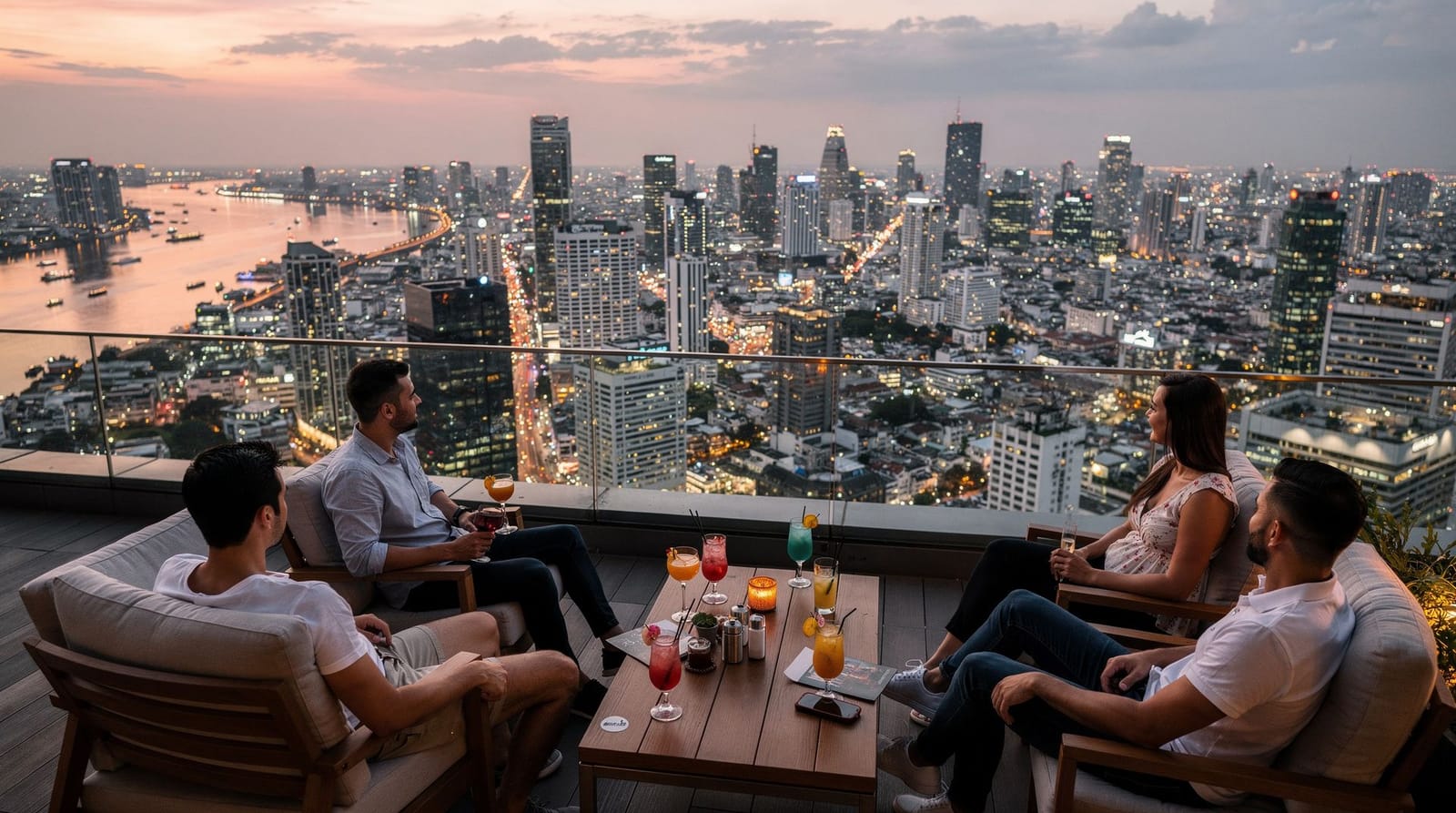
Book the markets, temples and food night tuk-tuk tourHonest assessment: A great first-night introduction to Bangkok that orients you while being genuinely fun. If you have already done the Chinatown Michelin crawl, this overlaps somewhat, so pick one rather than both. See the Bangkok at night guide for what else the evening holds, from rooftop bars to the night markets.
3. All-in-one highlights tuk-tuk tour
For visitors short on time, a broader highlights tour packs several of Bangkok’s must-see sights into one tuk-tuk-based day rather than focusing purely on food or a single district. It typically strings together a couple of major temples, a market stop and a scenic ride, giving first-timers a fast, guided orientation to the city on their only free day.
What it covers: A mix of headline sights — commonly a temple visit, a flower or riverside market, and photo stops — connected by tuk-tuk rides with a guide narrating along the way. It suits travellers on a layover or a very short stay who want maximum coverage rather than a deep dive into one neighbourhood.
Real price: Similar to the food and night tours above, generally 1,500–2,500 THB (USD 45–75) depending on the exact route and inclusions.
Book the in-a-day must-visit highlights tuk-tuk tourHonest assessment: The right choice if your Bangkok time is genuinely limited — a layover itinerary or a single free day — since it trades depth for breadth. Travellers with two or more days are usually better served picking the Chinatown food crawl or the markets-and-temples night tour instead, since both go deeper into their focus area for a similar price.
Comparing the three tours
| Tour | Focus | Duration | Best for |
|---|---|---|---|
| Chinatown Michelin food tour | Street food tastings | 3–4 hours, evening | Food-first travellers, one standout tour |
| Markets, temples & food night | General night sightseeing | 3–4 hours, evening | First-night orientation, variety over depth |
| All-in-one highlights | Headline sights in one day | Varies, day or evening | Layovers and very short stays |
When a tuk-tuk is just transport
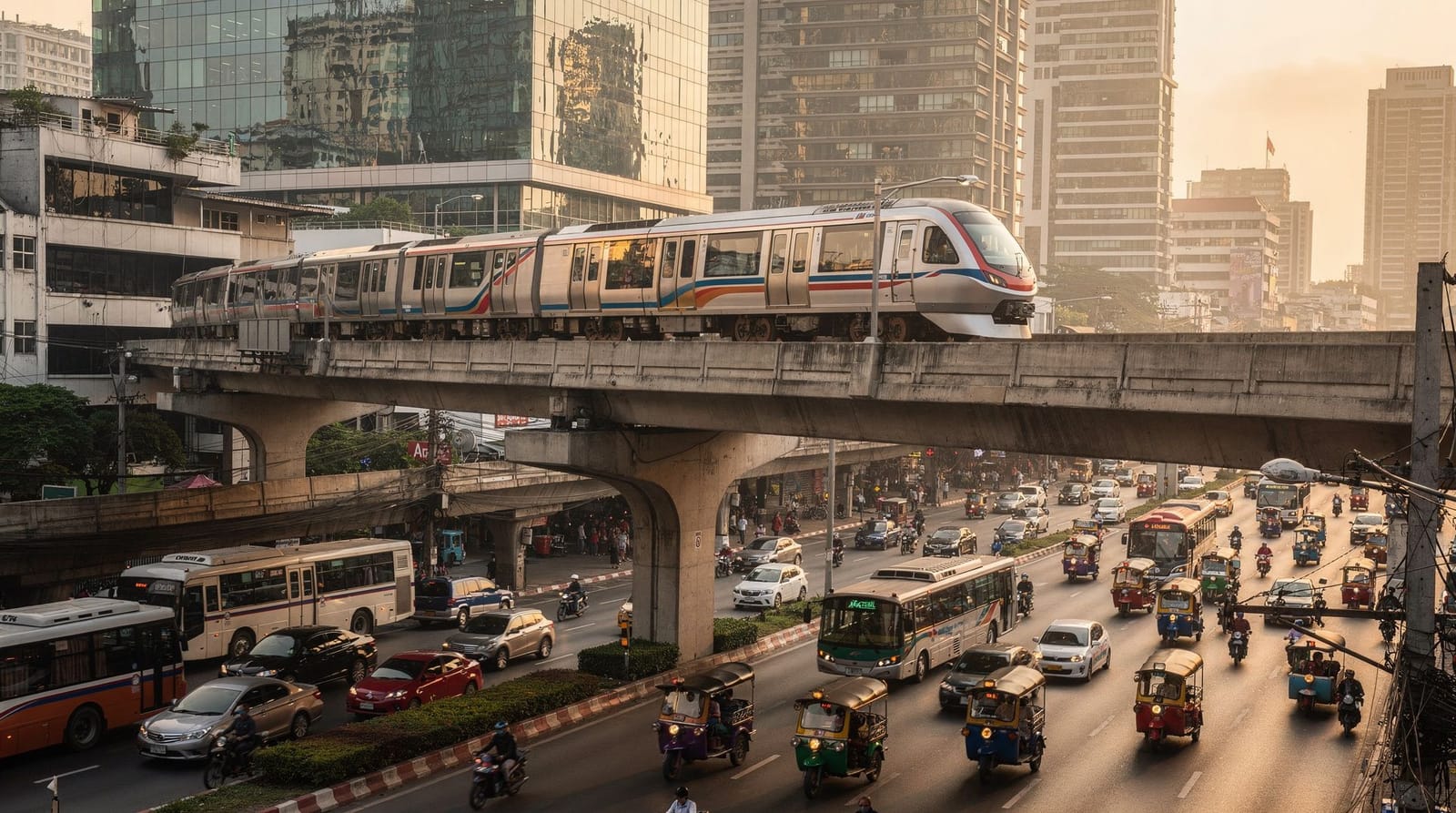
Outside of organised tours, a tuk-tuk is occasionally worth taking for the experience of one short ride — across the old city, or to feel the open-air rush once. But as routine transport it loses on every count: it is slower than the BTS and MRT in traffic, hotter, fume-filled and almost always pricier than a metered taxi or Grab once you have negotiated.
If you do take a street tuk-tuk, agree the fare before you board — there is no meter. Expect to pay a premium over a taxi for the same trip. For anything beyond a novelty hop, use Grab, which shows the price upfront and removes the haggling entirely. The Grab, taxi and tuk-tuk guide and the getting around Bangkok guide compare all the options honestly.
A short history of the Bangkok tuk-tuk
Part of the appeal of a tuk-tuk tour is the vehicle itself, which carries more history than its battered look suggests. The three-wheeler arrived in Thailand in the 1960s, evolving from the Japanese auto-rickshaw, and took its onomatopoeic name from the stuttering “tuk-tuk” of its old two-stroke engine. For decades it was genuine transport for ordinary Bangkokians; today, with the BTS, MRT and Grab covering the city, it survives mostly as a tourist novelty and a working vehicle in the older neighbourhoods.
That shift is exactly why the organised tour is the best way to experience one now. As everyday transport the tuk-tuk has been overtaken — it is slower and pricier than the alternatives. But as a curated ride through Chinatown at night, or across the old city lanes, it delivers the open-air, engine-roaring, lights-streaming experience that made it iconic in the first place. You are paying for the romance of the machine, not its efficiency — and on a good tour, that romance is worth it.
The drivers, too, are part of the story. A vetted tour driver who knows the back lanes and the best stalls is a different proposition from the touts working the temple gates. The good ones are skilled navigators of Bangkok’s chaos, threading gaps and shortcuts that turn the ride itself into entertainment.
What to expect on the ride
If you have never ridden a tuk-tuk, a few practical notes set expectations. The vehicle is open on the sides, so you feel the warm night air, the street smells and the noise — this is a feature, not a flaw, and a large part of why the night tours work. There are no seatbelts and no doors; you hold the rail on sharp turns. Most tuk-tuks seat two adults comfortably, three at a squeeze.
The pace alternates between stop-start crawls in traffic and sudden bursts of speed when the road clears, which is part of the fun. On a food tour you will be on and off the tuk-tuk repeatedly as you hop between stalls, so wear comfortable shoes and expect a fair amount of walking between rides. Keep bags zipped and on your lap rather than loose, simply as sensible practice in any open vehicle in a crowded city.
None of this should put you off — it is precisely the sensory immersion that makes the tuk-tuk tour memorable. But knowing what the ride feels like helps you choose it for the right reasons: the experience, not the transport.
The tuk-tuk scams to know cold
Every street tuk-tuk scam in Bangkok runs on shop commissions. Recognise the patterns and you are immune.
The 20-baht all-day tour. A driver offers a full day of sightseeing for 20 or 40 baht. The price is the bait; the substance is mandatory stops at gem shops, tailors and souvenir stores where you face hard-sell pressure and he pockets commission. No real tour does this. Walk away.
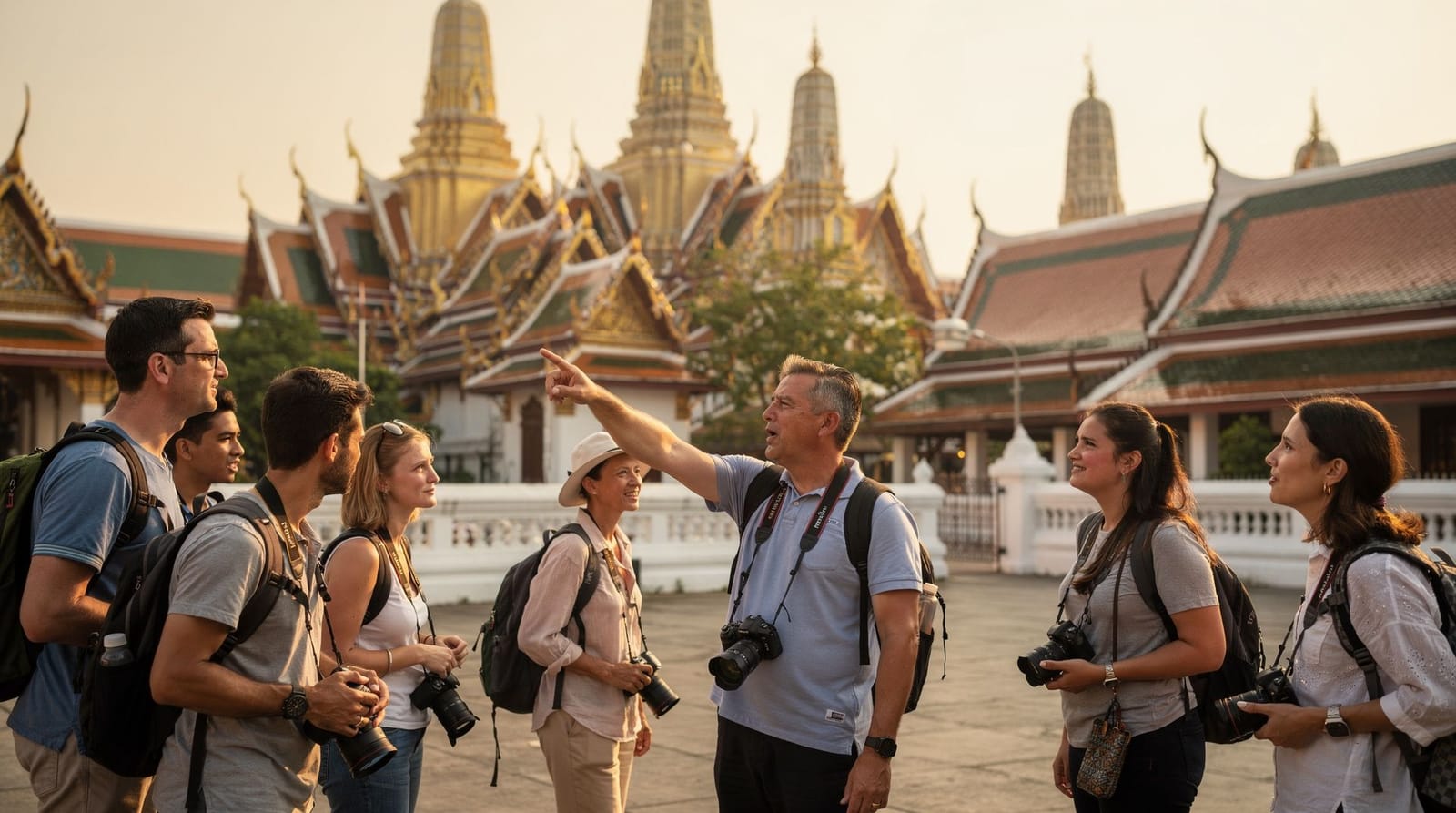
The Grand Palace “closed today” trick. Near the Grand Palace, a driver or a friendly “local” tells you the Palace is shut for a holiday, a ceremony or cleaning, and offers a cheap tuk-tuk tour of “other temples” instead — which, predictably, ends at gem shops. The Grand Palace is open almost every day, roughly 08h30–15h30. Ignore them and walk to the official ticket gate. The Grand Palace scam warning covers this in full.
The gem-shop close. Wherever the above tours end, you are told gems are tax-free, on a one-day government sale, or a guaranteed resale profit. They are near-worthless. No legitimate tour visits a gem shop, full stop — see the gem scam guide.
For the complete rundown, read the dedicated tuk-tuk scams guide and the broader common Bangkok scams guide. The single rule that protects you: a pre-booked, reputable tour never visits a shop for commission.
How to book a tuk-tuk tour the right way
Book in advance, not on the street. Pre-booking is both more reliable and your protection against touts. You compare real reviews, lock in the price, and know exactly what is included.
Check what is included. The best food tours include all tastings in the price — confirm this so you are not paying extra at each stop. Check the duration, the start time and the meeting point.
Prefer evening departures. Tuk-tuk tours are at their best after dark, when the heat drops and the city lights up. A 07h00–08h30 start works for cooler day tours, but the magic is at night.
Confirm child and group details. Tuk-tuks seat two to three comfortably and have no seatbelts. Confirm minimum ages, child pricing and how many people share each vehicle.
Pairing a tuk-tuk tour with the rest of your trip
A night tuk-tuk food tour slots perfectly into a first evening, orienting you for the days ahead. Pair it with a morning temple visit to the old city and you have covered Bangkok’s two signature experiences — temples by day, street food by night. The one-day and first-timer itineraries both build around this rhythm, and the best Bangkok tours overview ranks the tuk-tuk crawl against the other tour types.
Frequently asked questions about Tuk-tuk tours in Bangkok: the honest
What is the difference between a tuk-tuk tour and hailing a tuk-tuk on the street?
What is the 20-baht tuk-tuk tour scam?
How much does a real tuk-tuk tour in Bangkok cost?
Are tuk-tuk tours safe at night?
Should I negotiate the price before getting in a street tuk-tuk?
Is a tuk-tuk tour better than a taxi or Grab tour?
Can children join a tuk-tuk tour?
Should I tip the tuk-tuk driver or guide on a tour?
Top experiences
Bookable activities with verified prices and instant confirmation on GetYourGuide.