Grand Palace: what to see inside, building by building
Bangkok: Grand Palace & Emerald Buddha Entry with Audioguide
What are the must-see highlights inside the Grand Palace?
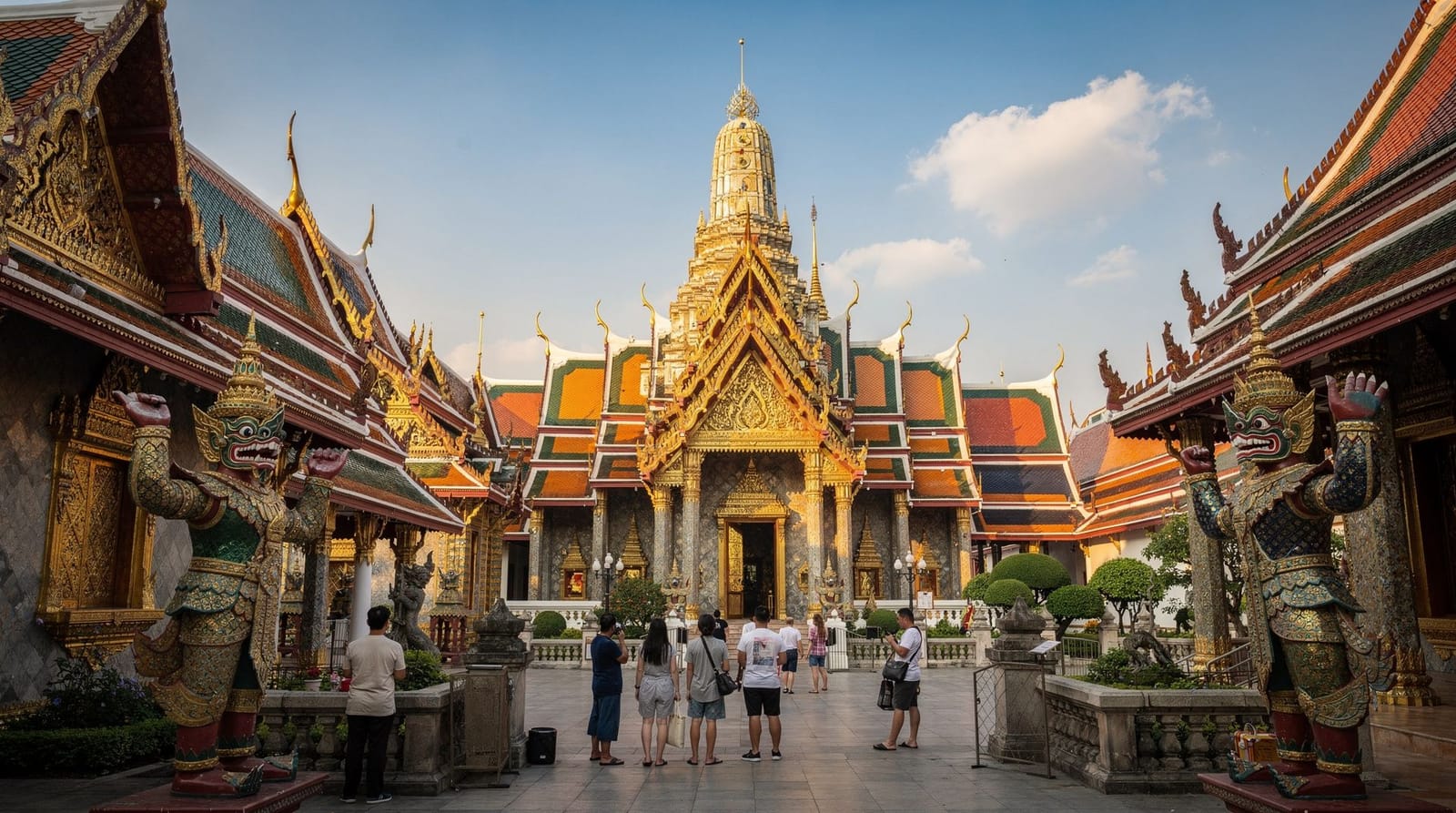
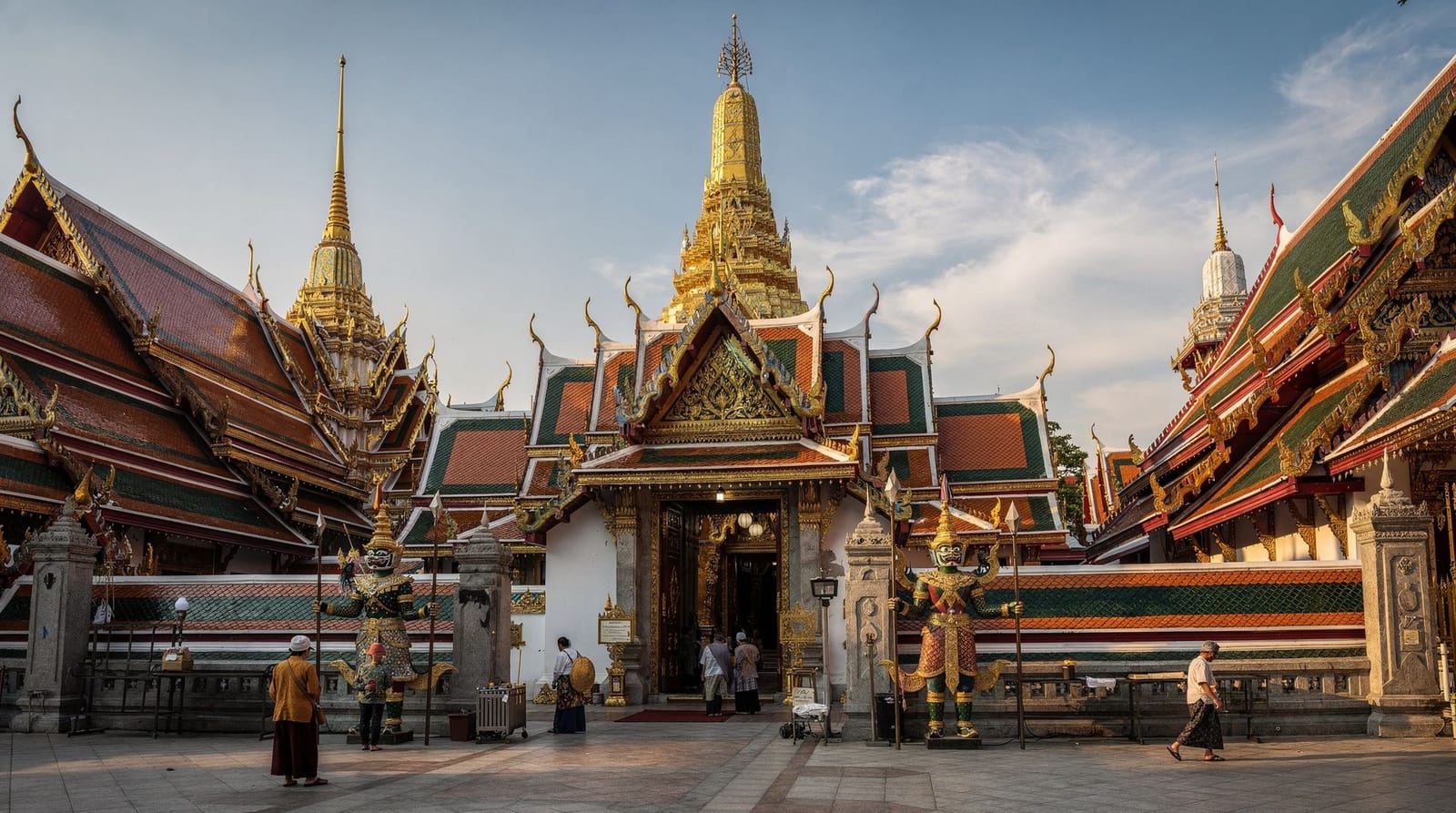
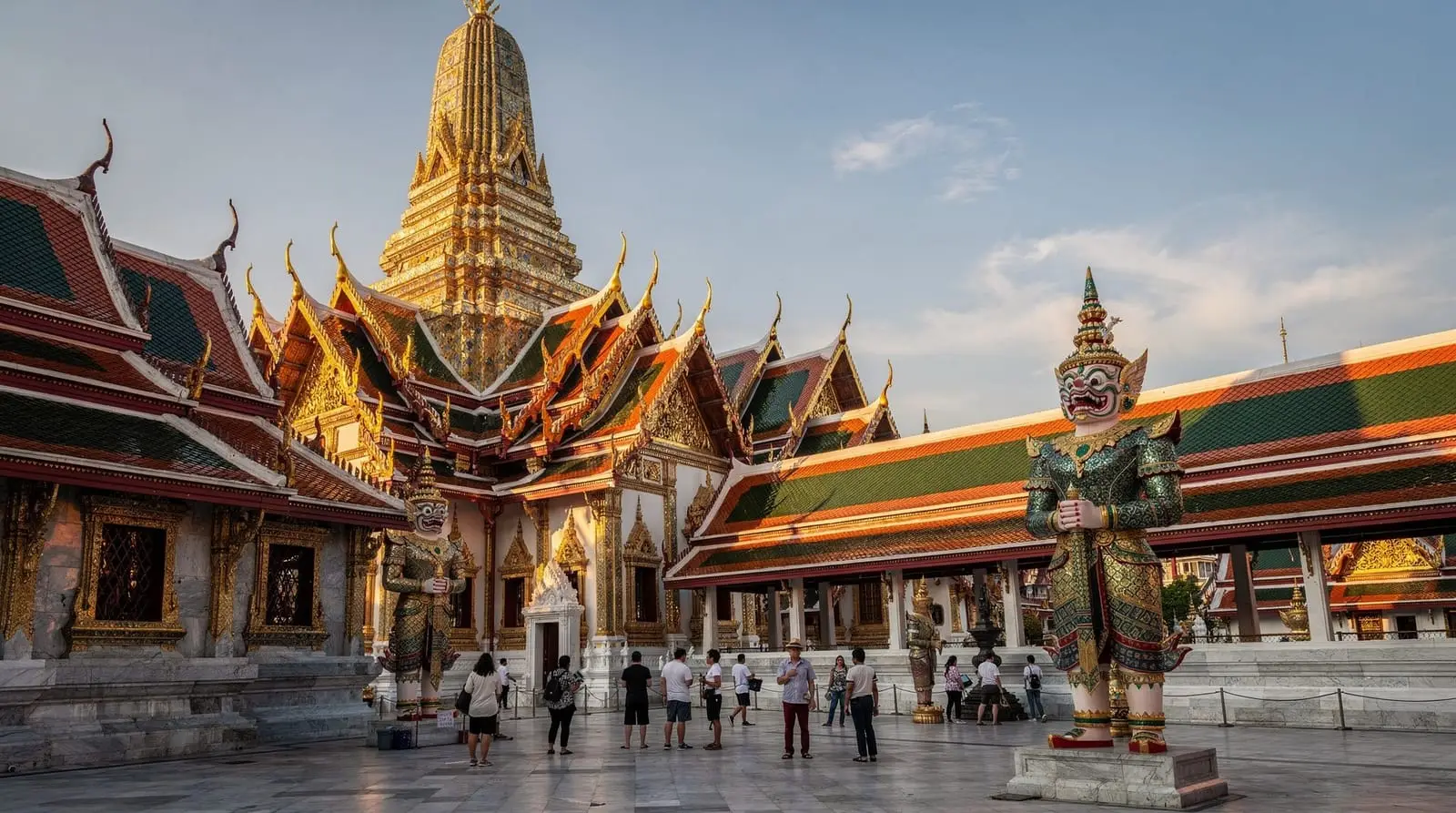
The unmissable highlight is the Emerald Buddha in its ornate ubosot, the holiest image in Thailand. Around it in Wat Phra Kaew you'll see the golden Phra Si Rattana chedi, the Phra Mondop library, a scale model of Angkor Wat, the 178-panel Ramakien murals and towering yaksha demon guardians. In the outer palace, the Chakri Maha Prasat and Dusit Maha Prasat throne halls are the key buildings. Budget two to three hours.
The Grand Palace is so dense with gilded detail that first-time visitors often wander without knowing what they are looking at. This guide walks you through the complex in the order you actually encounter it — from the dazzling Wat Phra Kaew temple zone, through the Emerald Buddha and the Ramakien murals, out to the royal throne halls — so you know what matters, what each building is, and where to spend your limited time. Budget two to three hours and start at the 08:30 opening.
| Where | Na Phra Lan Road gate, Rattanakosin old city |
| Cost | 500 THB, includes Wat Phra Kaew and the outer palace |
| Time needed | 2–3 hours for a full visit, 90 minutes for highlights only |
| Getting there | Chao Phraya boat to Tha Chang pier, or MRT Sanam Chai |
| Best time | 08:30 opening, before tour groups arrive from 09:00 |
How the complex is laid out
You enter from the Na Phra Lan Road gate and almost immediately step into Wat Phra Kaew, the Temple of the Emerald Buddha. This is the spiritual and visual heart of the whole site, and it is where most of the famous photos are taken. Only after exploring the temple zone do you move on to the outer palace — the throne halls and residences where Thai kings lived and ruled. Knowing this two-part structure helps you pace yourself: spend the majority of your time in Wat Phra Kaew, then give the outer palace 30 to 45 minutes.
For the full visit logistics — tickets, hours, dress code and the closed-today scam — read our main Grand Palace guide first. This page is purely about what you will actually see once you are through the gate, in Rattanakosin.
The Emerald Buddha: the holiest sight in Thailand
Start with the headline. The Emerald Buddha (Phra Kaew Morakot) sits inside the ornate ubosot at the centre of Wat Phra Kaew, and it is the most sacred Buddha image in the entire kingdom. Despite the name, it is carved from a single block of green jade, stands only about 66 cm tall, and is raised high on a towering gilded altar so worshippers look up to it. Three times a year — at the start of the hot, rainy and cool seasons — the King personally changes its gold seasonal robes in a ceremony that underlines its importance.
Inside the chapel the etiquette is firm: remove your shoes, sit on the floor with your feet folded away so they never point at the Buddha, keep quiet, and take no photographs. This is an active place of worship where Thai pilgrims come to pray, not a museum exhibit. Our dedicated Wat Phra Kaew and Emerald Buddha guide goes deeper on its history and the rituals around it, and our buddhism in Bangkok guide explains the devotion you will see.
The golden chedi, library and Angkor model
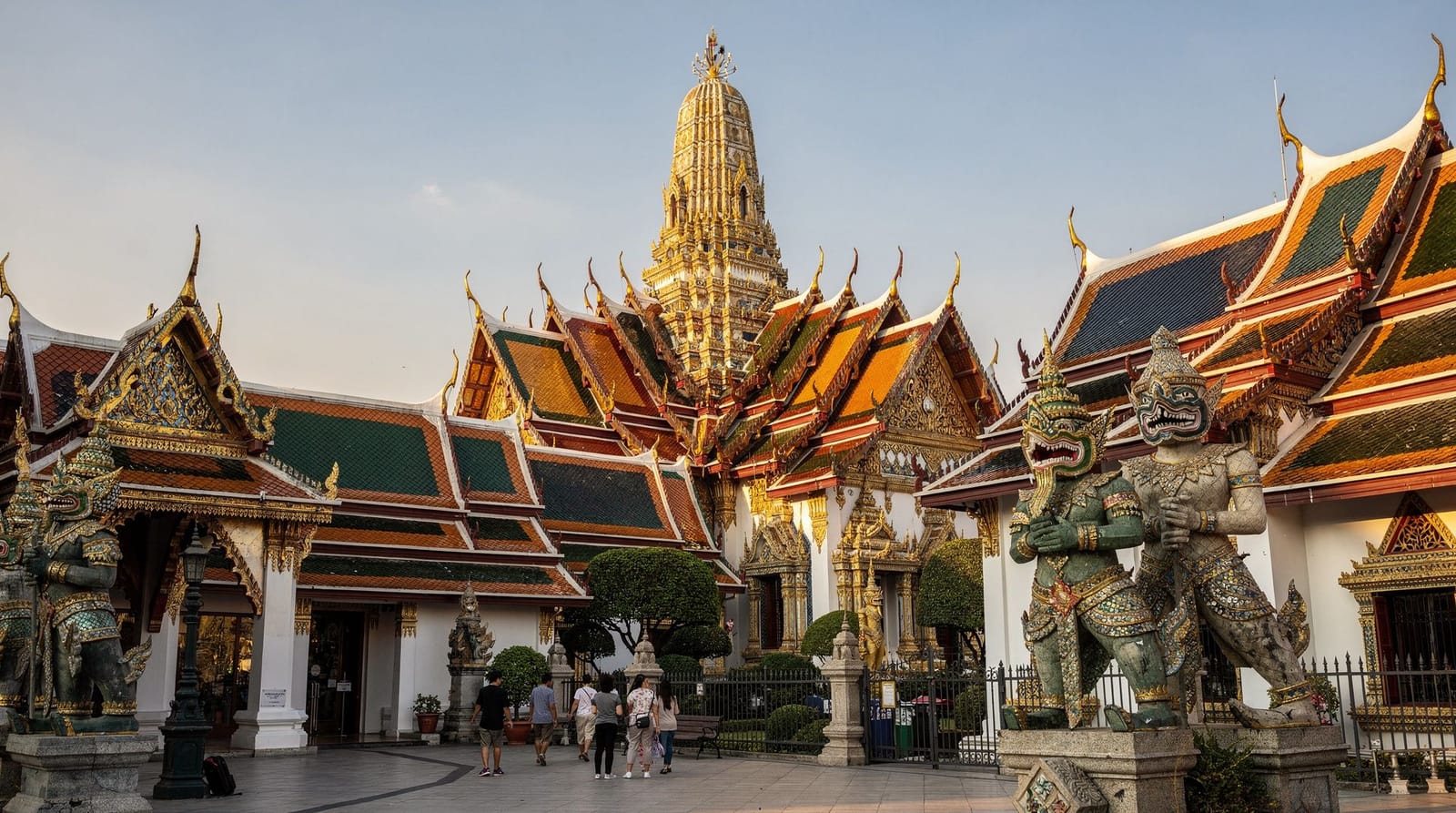
Step back out into the dazzling upper terrace of Wat Phra Kaew and three monuments stand out. The Phra Si Rattana chedi is the great golden bell-shaped stupa that gleams above the courtyard — covered in gold mosaic tiles, it is the most photographed shape in the complex and said to enshrine a relic of the Buddha. Beside it, the Phra Mondop is a square library building topped with a slender spire, holding the sacred Buddhist scriptures; its mother-of-pearl doors and guardian statues are exquisite.
Nearby sits an unexpected treasure: a detailed scale model of Angkor Wat, commissioned in the 19th century when Cambodia was under Siamese influence, so visitors could see the famous Khmer temple in miniature. These three monuments cluster together on the terrace, and a slow circuit of them rewards close looking. An audio device helps enormously here, which is why a Grand Palace Emerald Buddha audio-guide ticket is one of the better-value ways to visit if you are going independently.
The Ramakien murals and the yaksha guardians
Running the entire length of the cloister that surrounds Wat Phra Kaew are the Ramakien murals — 178 panels painting the Thai version of the Ramayana epic. They follow Phra Ram, the demon king Thotsakan and the monkey general Hanuman through battles, abductions and divine interventions, all in vivid colour and gold leaf, and they are regularly restored panel by panel. Walking the cloister to read the story in sequence is a quiet counterpoint to the glittering terrace, and it is shaded, which is welcome in the heat.
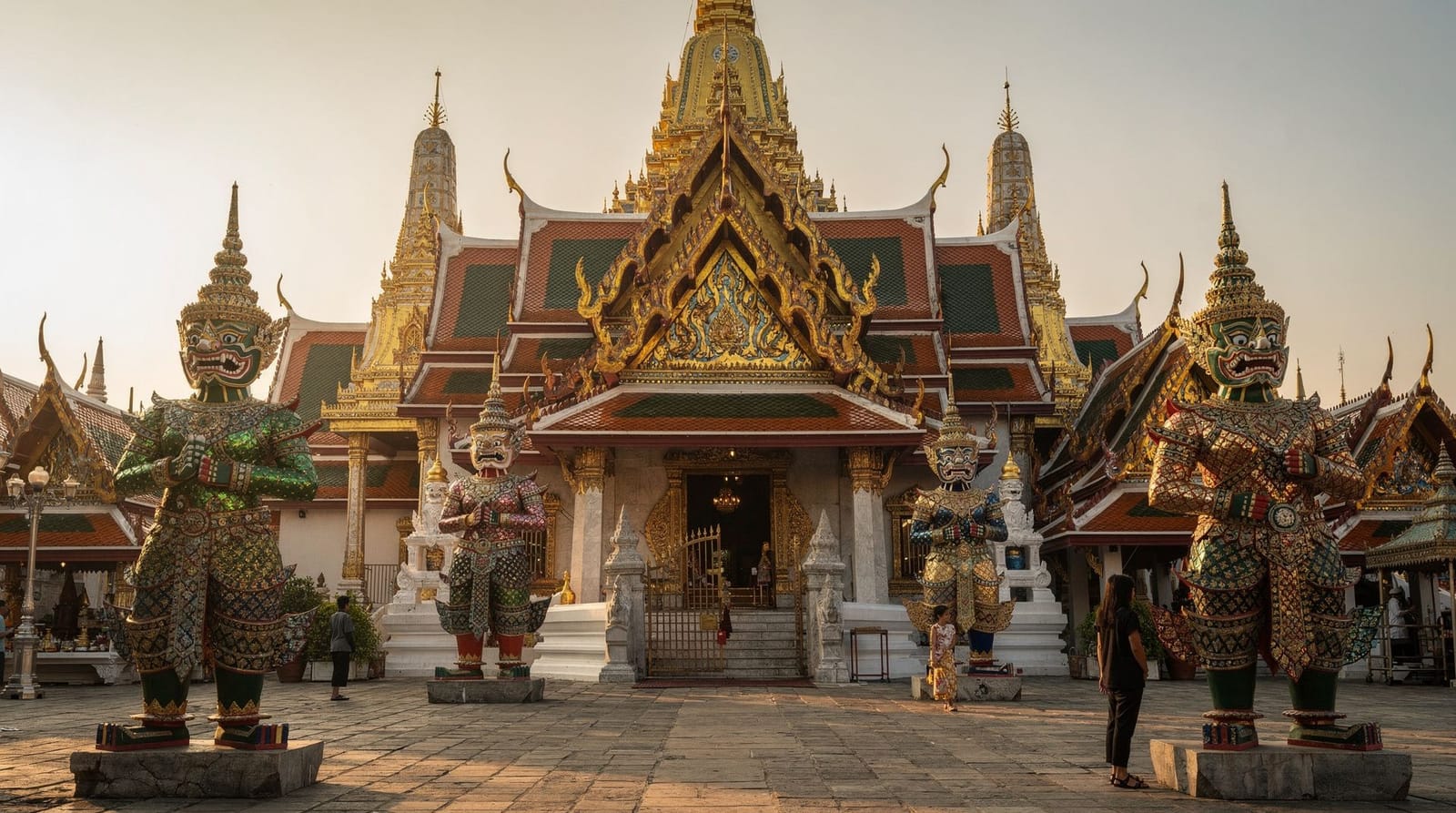
Guarding the gates between the cloister and the inner terrace are the yaksha — towering, fierce demon statues in mosaic armour, each a character from the Ramakien charged with protecting the temple from evil spirits. They are among the most memorable photo subjects in the whole complex. For more on getting good shots here, our temple photography tips and best photo spots Bangkok guides cover light, angles and timing.
The outer palace: throne halls and residences
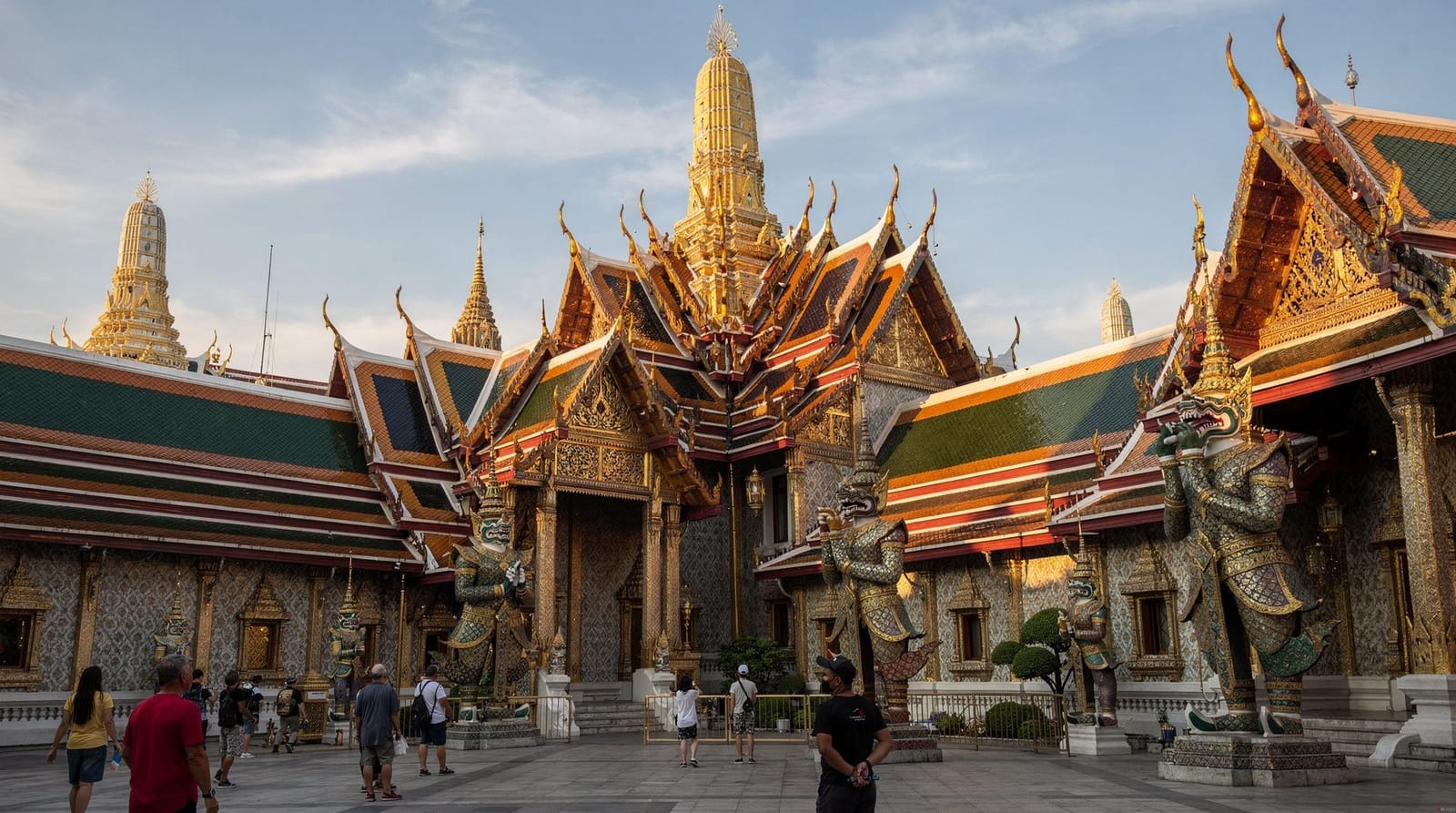
Once you leave Wat Phra Kaew you enter the palace proper, a more restrained but historically rich zone of throne halls and residences. The showpiece is the Chakri Maha Prasat, a remarkable hybrid building with a European, Italian-influenced body topped by three Thai spired roofs. Built under King Rama V in the 19th century, it was a deliberate statement: Western grandeur fused with unmistakably Thai identity, a symbol of Siam modernising on its own terms. You generally admire it from outside, but it is the most photographed palace building.
Next to it stands the Dusit Maha Prasat, an entirely Thai cruciform throne hall topped with a graceful multi-tiered spire — many consider it the purest example of classical Thai royal architecture on the site. The Amarin Winitchai throne hall is still used for royal ceremonies and audiences, while the Borom Phiman residence sits within its own walled garden. These buildings reward a calmer, slower walk after the sensory overload of Wat Phra Kaew. A guided Grand Palace and Emerald Buddha half-day tour brings their history alive far better than the sparse signage does.
The Queen Sirikit Museum of Textiles
Many visitors miss this entirely, but it is included in your 500 THB ticket and worth a stop if the heat is getting to you. The Queen Sirikit Museum of Textiles sits inside the Grand Palace grounds and displays Thai royal court dress, ceremonial textiles and the craftsmanship behind them, all in air-conditioned comfort. It is a calm, well-curated counterpoint to the crowded terrace, and because it is already paid for in your ticket, skipping it is leaving value on the table. Give it 20 to 30 minutes.
A little history behind what you’re seeing
Context makes the gold mean more. The Grand Palace was founded in 1782 by King Rama I, the first king of the Chakri dynasty, when he moved the Thai capital across the river from Thonburi to Bangkok and wanted a royal complex to match the prestige of the old Ayutthaya kingdom, destroyed by the Burmese sixteen years earlier. Wat Phra Kaew and the Emerald Buddha were built first, as the spiritual anchor; the outer palace buildings were added and rebuilt over the following century as each king left his mark. The Chakri Maha Prasat, the hybrid European-Thai throne hall, dates from the 1880s under King Rama V, who was consciously modernising Siam while keeping its royal identity intact — which is exactly why that one building looks so different from everything around it. The Emerald Buddha itself has a longer and stranger history still, discovered inside a stucco-covered stupa in Chiang Rai in 1434 and passing through Laos and Chiang Mai before arriving in Bangkok in 1784. None of this is signposted in depth inside the complex, which is why a little reading beforehand — or an audio device on the day — changes what you see from “impressive gold building” to a 240-year continuous royal and religious story. Our buddhism in Bangkok guide has more on the religious side of that story.
Two zones compared, so you can budget your time
| Wat Phra Kaew zone | Outer palace zone | |
|---|---|---|
| What’s there | Emerald Buddha, golden chedi, Ramakien murals, Angkor model | Chakri Maha Prasat, Dusit Maha Prasat, Queen Sirikit Museum |
| Time to allow | 60–90 minutes | 30–45 minutes |
| Photography | Allowed except inside the Emerald Buddha chapel | Allowed everywhere; interiors mostly closed |
| Shade | Little; open terrace, hottest part of the visit | More; museum is air-conditioned |
| Crowd level | Busiest part of the complex | Noticeably calmer |
Use this to triage on a hot or rushed day: if you only have 90 minutes, protect the Wat Phra Kaew zone and view the outer palace’s throne halls from outside on your way to the exit.
A suggested walking order
To make the most of your two to three hours, this order works well. Enter and go straight to the Wat Phra Kaew terrace while it is least crowded — the golden chedi, the Phra Mondop and the Angkor model. Then visit the Emerald Buddha chapel. Next, walk the Ramakien mural cloister in the shade, photographing the yaksha guardians as you go. Move out to the outer palace for the Chakri Maha Prasat and Dusit Maha Prasat throne halls. Finish, if you have energy, with the air-conditioned Queen Sirikit Museum of Textiles before exiting.
This sequence puts you in the showpiece areas before the tour groups peak and uses the shaded cloister and the museum as cool-down points. Photography is allowed everywhere except inside the Emerald Buddha chapel. For wider context on how the Palace ranks among the city’s sights, see our iconic landmarks Bangkok and top attractions Bangkok guides.
Details worth slowing down for
The Grand Palace rewards a closer look, and several details are easy to walk straight past in the crowds. On the upper terrace, look at the gilded kinnari and kinnaree — half-bird, half-human figures from Thai mythology — and the rows of garuda-and-naga motifs around the bases of the buildings, each one a small masterpiece of mosaic work. The exterior walls of the ubosot are lined with bronze figures and finely cast Buddha images that most visitors photograph without registering what they are.
Along the cloister, beyond the Ramakien panels themselves, look at the inscribed marble slabs that explain the scenes — a reminder that this was meant to be read, not just admired. At the bases of the chedis, the demon and monkey figures appear to hold the structures up on their shoulders, a recurring motif drawn straight from the Ramakien. None of this is signposted in much depth, which is the strongest argument for an audio device or a guide: the complex is telling a continuous mythological and dynastic story, and without narration most visitors see only the gold.
What you might reasonably skip
Honesty cuts both ways, and not every corner of the Grand Palace demands equal attention, especially if heat or crowds are wearing you down. The Weapons Museum and some of the smaller pavilions in the outer palace are genuinely minor and can be skipped without regret if you are short on time or energy. Some of the throne halls can only be viewed from outside anyway, so a quick exterior look is all most visitors get.
If you have to triage, protect your time for Wat Phra Kaew and the Emerald Buddha above everything — that is the irreplaceable part. The outer palace throne halls, particularly the Chakri Maha Prasat exterior, come next. The Queen Sirikit Museum of Textiles is a worthwhile cool-down but a fair thing to drop if you are flagging and want to move on to Wat Pho. Knowing what you can let go of is what lets you do the essential parts properly. Our what to skip in Bangkok guide takes the same honest approach across the city.
Making the most of a guide or audio device
Because the signage is sparse and the symbolism dense, how you tackle the information layer shapes the whole visit. Three approaches work. Self-guided with research means reading up beforehand and walking at your own pace for the bare 500 THB — fine for confident, prepared visitors. An audio device, rented on site or bundled into a ticket, gives you narration at each stop without committing to a group pace. A live guide, in a small group or private, brings the murals, the dynastic history and the rituals alive and answers questions, which suits anyone who wants depth.
For independent visitors who still want context, a Grand Palace skip-the-line ticket bundled with entry and timing is a practical middle path. Whichever route you choose, decide before you arrive — fumbling for information at the gate wastes the cool early hours that are best spent walking the terrace. Our Grand Palace tickets and skip-the-line guide compares the options and prices in full.
Symbolism worth knowing before you look up
A handful of recurring figures explain most of what you’ll see once you know to look for them. The yaksha guarding the gates are protective demons, meant to frighten off evil spirits rather than menace visitors. The kinnari and kinnaree, half-bird, half-human, represent beauty and grace and appear on the terrace as decorative guardians. The garuda-and-naga motif at the base of many buildings — a mythical bird gripping a serpent — is a royal symbol found throughout Thai religious architecture, representing the triumph of virtue. None of this needs memorising in detail; simply knowing these are recurring characters, not random decoration, turns a wall of gold into a readable story. Our monarchy respect and lèse-majesté guide explains why so much of this symbolism is bound up with the crown specifically, and the wider Thai customs and etiquette guide covers the behavioural side that goes with it.
What to do after the Grand Palace
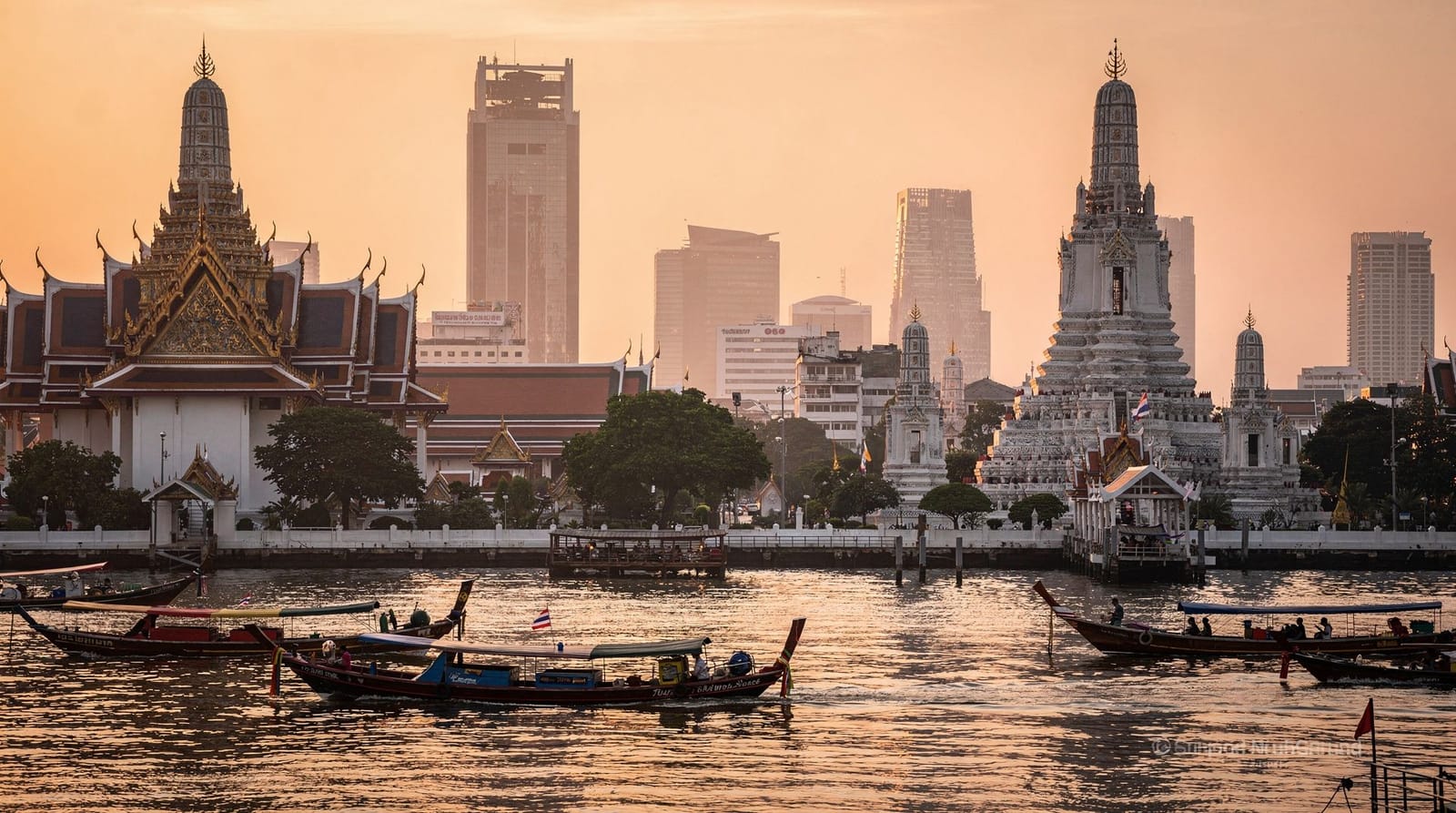
The Grand Palace is the anchor of a temple morning, not the whole of it. When you exit, Wat Pho and its 46-metre Reclining Buddha are a flat 10-minute walk south, and from there a short ferry reaches Wat Arun across the river. This three-temple loop is the classic Rattanakosin morning. Our Grand Palace versus Wat Pho comparison helps you decide how to split your time, the best temples in Bangkok ranking puts them all in order, and the temple-hopping route and Bangkok temples itinerary tie the whole morning together. For a one-day plan, see Bangkok in 1 day. Dress correctly before you leave the hotel — our Grand Palace dress code guide covers exactly what passes at the gate, and the same modesty broadly follows you to Wat Arun across the river.
Frequently asked questions about Grand Palace: what to see inside, building by building
What is the most important thing to see in the Grand Palace?
What is inside Wat Phra Kaew?
What are the Ramakien murals?
What is the Chakri Maha Prasat Hall?
How long does it take to see everything in the Grand Palace?
Can I take photos inside the Grand Palace?
Is the Queen Sirikit Museum of Textiles worth seeing?
Top experiences
Bookable activities with verified prices and instant confirmation on GetYourGuide.