Wat Phra Kaew & the Emerald Buddha: the complete guide
Bangkok: Grand Palace & Emerald Buddha Entry with Audioguide
What is Wat Phra Kaew and the Emerald Buddha?
Wat Phra Kaew, the Temple of the Emerald Buddha, is the most sacred Buddhist temple in Thailand, sitting inside the Grand Palace complex in Bangkok's old city. The Emerald Buddha is a 66cm jade figure whose golden seasonal robes are changed by the King three times a year. Entry is 500 THB (about USD 15) and includes the Grand Palace grounds; it opens 8:30-16:30. The dress code is strictly enforced and it is the busiest temple in the city.
| Tickets | 500 THB (incl. Grand Palace); Thais free |
| Hours | Daily, 8:30-15:30, last entry ~15:00 |
| Getting there | Sanam Chai MRT, or boat to Tha Chang pier |
| Time needed | 2-2.5 hours (combined ticket) |
| Watch for | The “temple closed today” tuk-tuk scam outside |
Wat Phra Kaew is the most sacred Buddhist temple in Thailand, and the Emerald Buddha it houses is the spiritual and national palladium of the entire kingdom. It sits inside the Grand Palace, shares its 500 THB ticket, and opens 8:30-16:30. It is also the most crowded, most strictly policed and most scam-targeted site in Bangkok. This guide explains what makes it so important, how to see it without the hassle, and how to dress so you actually get in.
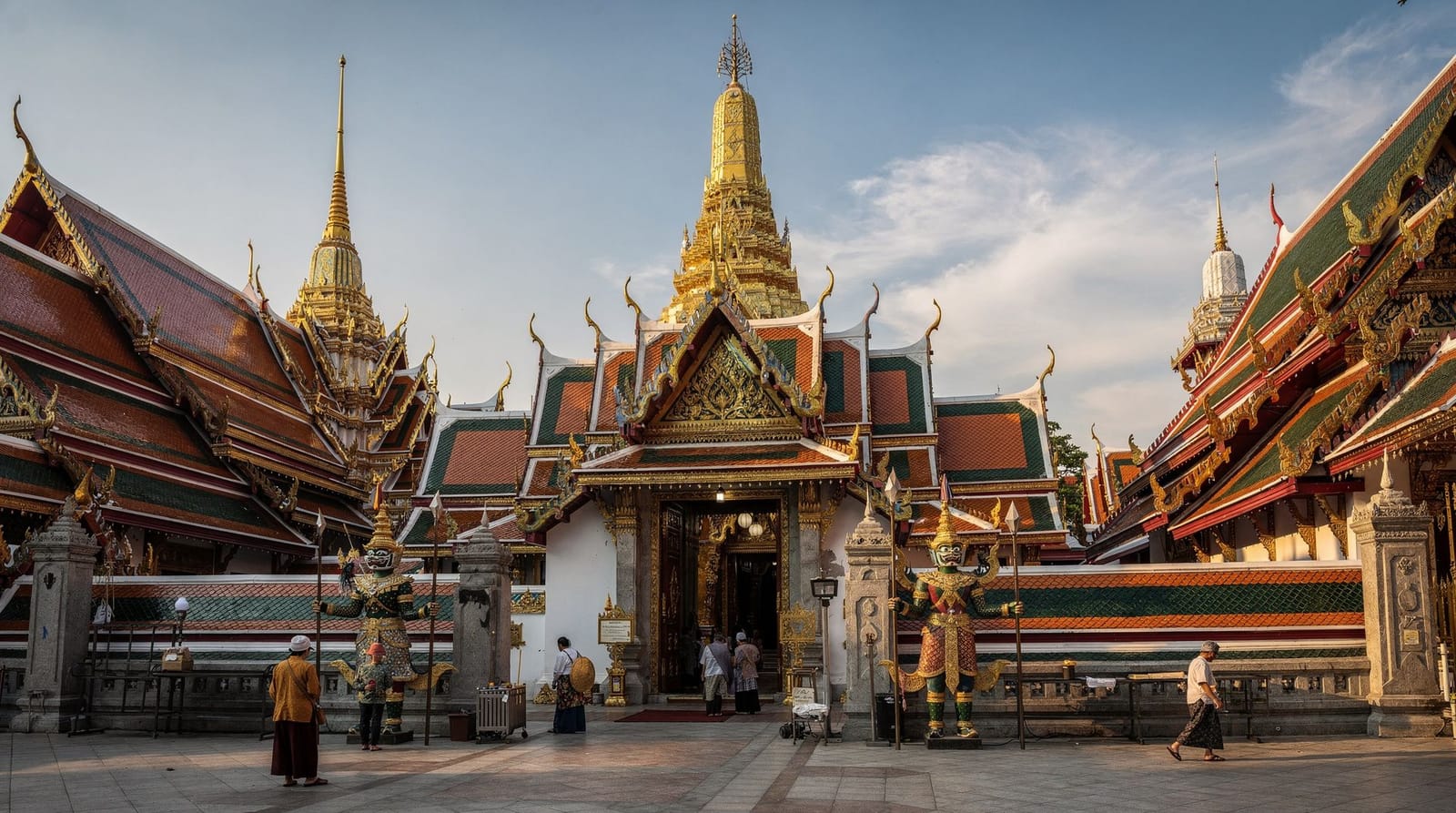
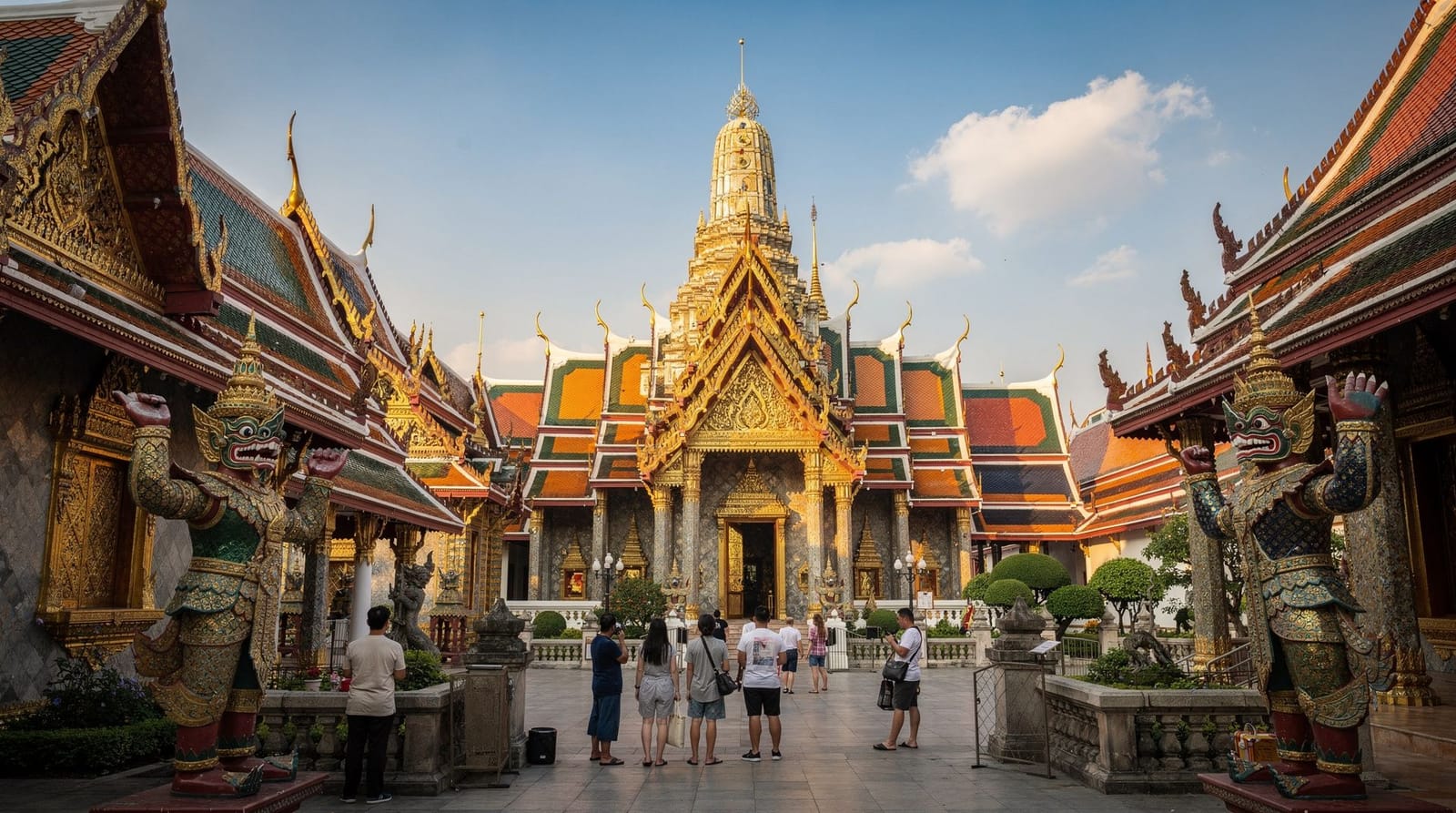
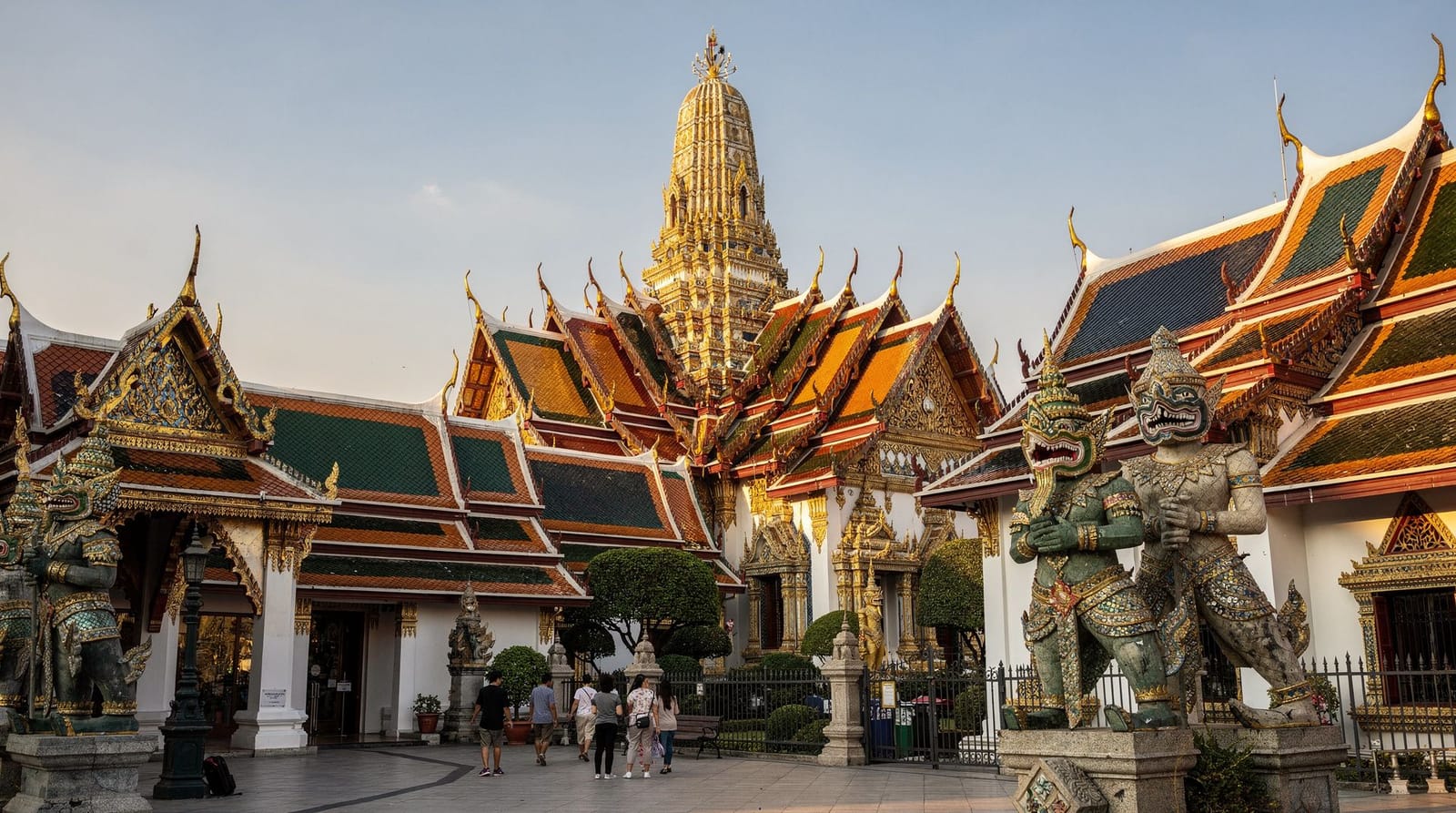
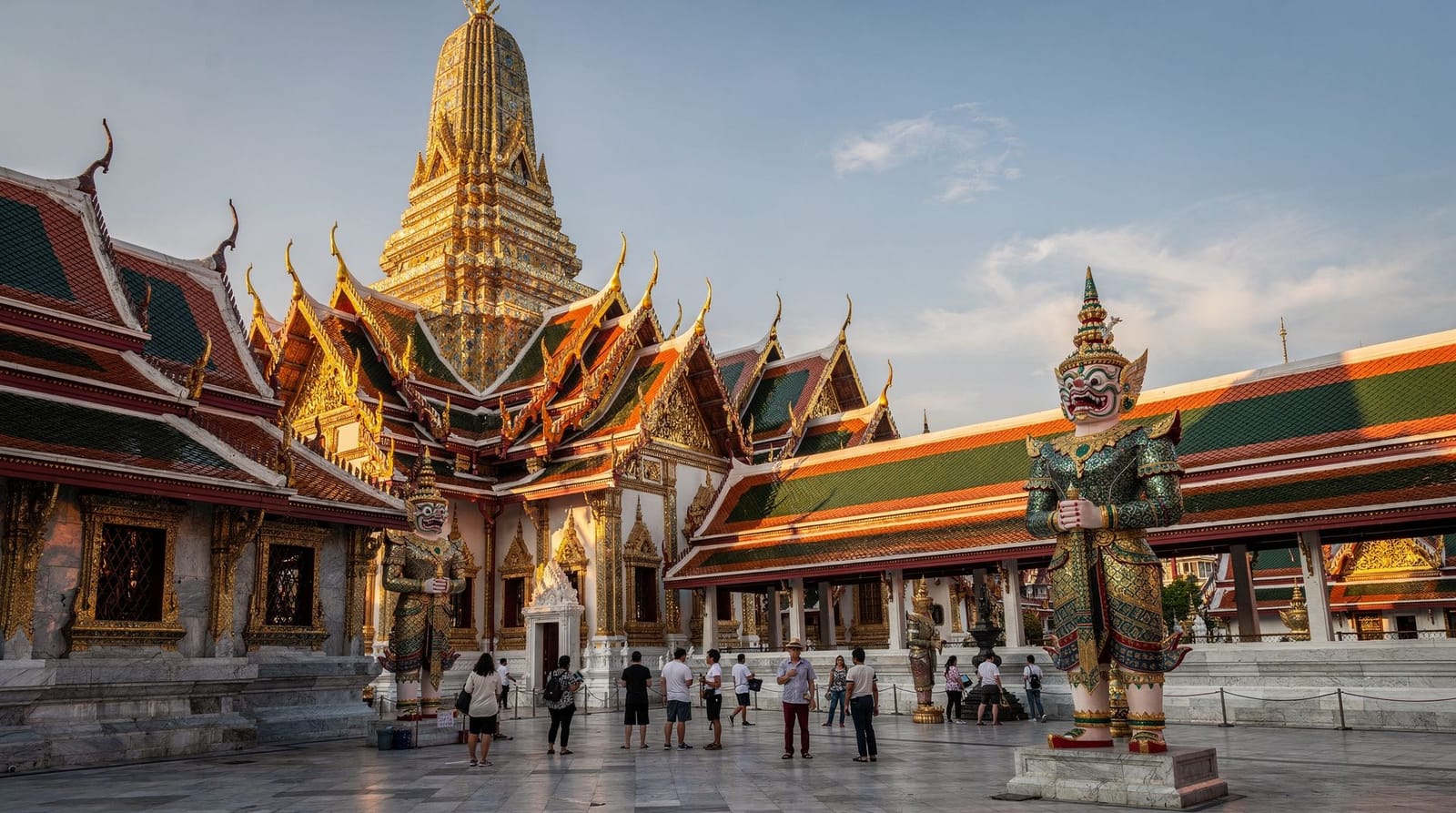
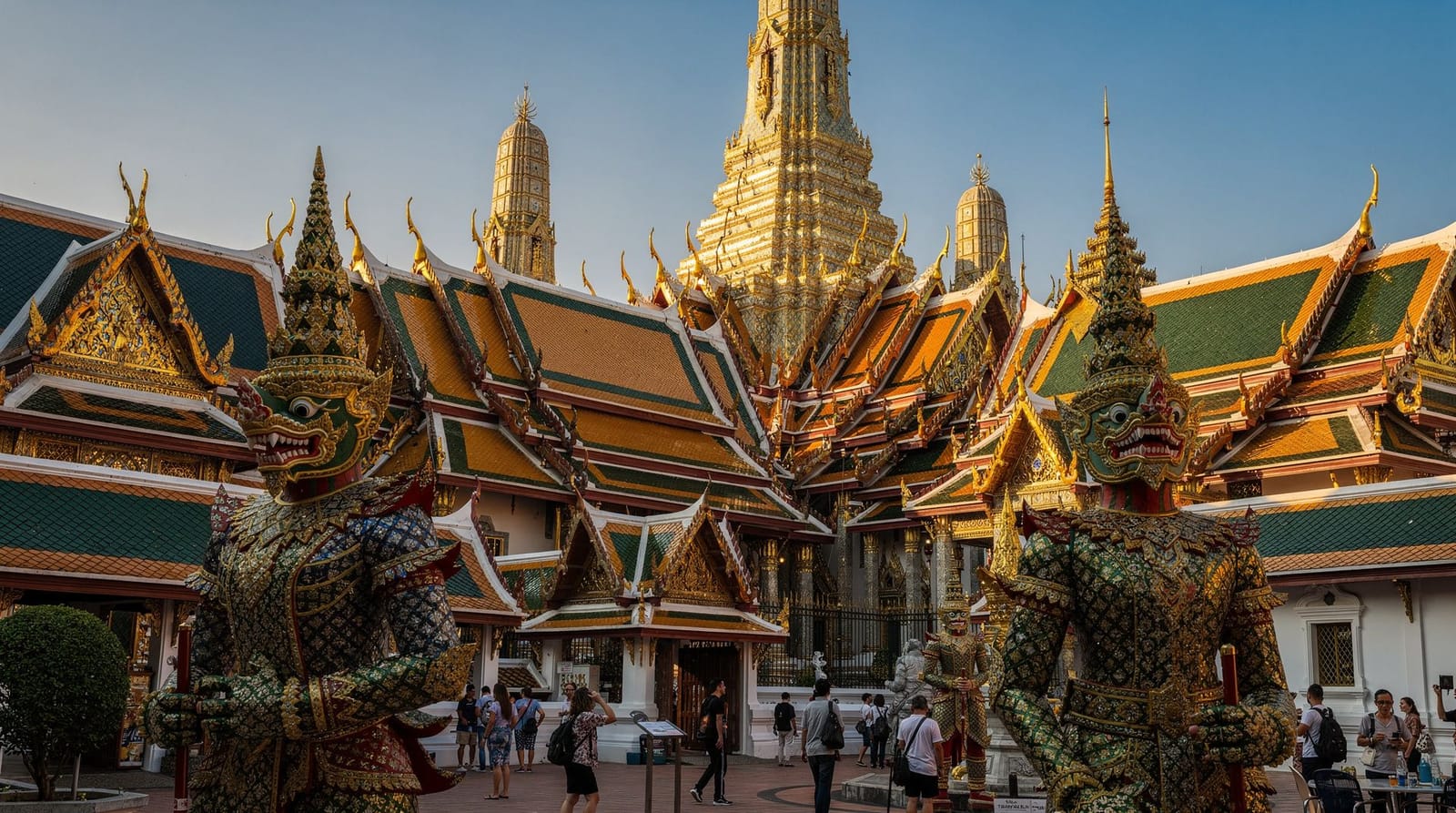
The temple was built in 1782 when King Rama I founded Bangkok, designed as the royal chapel within the new palace — it has no resident monks, functioning solely as a royal place of worship. Everything inside is at maximum intensity: gold-leafed chedis, mosaic-covered mythical guardians, and the kilometre-long Ramakien murals (the Thai version of the Ramayana) wrapping the cloister walls.
The Emerald Buddha itself
The Emerald Buddha is smaller than most visitors expect — just 66cm tall — and sits high on a gilded multi-tiered throne (the busabok) inside the ordination hall. It is carved from a single block of green jade, not actual emerald, and its precise origin is the stuff of legend; documented history traces it through northern Thailand and Laos before it arrived in Bangkok in 1784.
Its most distinctive feature is the seasonal costume. The image wears one of three golden robes — for the hot, rainy and cool seasons — and only the King (or his appointed representative) may perform the robe-changing ceremony, a rite that marks the turning of the Thai year.
Inside the hall: shoes off, no photography, sit with your feet tucked away from the image, keep quiet. The crowd files through; pause to look up at the towering throne rather than just glancing at the small figure.
What else to see in the compound
Wat Phra Kaew is dense. Beyond the ordination hall, look for:
- Phra Si Rattana Chedi: the gleaming gold bell-shaped stupa said to enshrine a relic of the Buddha.
- The Ramakien murals: 178 painted panels around the cloister telling the epic story — worth a slow walk, ideally with a guide or audio guide to follow the narrative.
- The model of Angkor Wat: a stone replica commissioned by Rama IV when Cambodia was under Siamese influence.
- The yaksha guardians: giant demon statues, six metres tall, guarding the gates.
After Wat Phra Kaew, the ticket lets you into the Grand Palace throne halls and grounds — see the Grand Palace what to see guide for the highlights there.
The Ramakien murals: Thailand’s epic in paint
The cloister walls wrapping the temple compound carry one of the most ambitious painting cycles in Southeast Asia: 178 panels telling the Ramakien, the Thai retelling of the Indian Ramayana epic, from the abduction of Sita to the final battle between Rama and the demon king Ravana. The murals were first painted under Rama I and have been restored repeatedly since, most recently as part of ongoing conservation to protect the pigments from Bangkok’s heat and humidity. Walking the full cloister at a slow pace and following the story takes 20-30 minutes on its own, and it rewards a guide or audio guide far more than most temple murals, since the narrative sequence is genuinely hard to follow cold. Look for recurring characters — Hanuman the white monkey general is the easiest to spot — to anchor yourself in the story as you walk.
How to walk the compound without getting overwhelmed
The temple is a compact, walled enclosure, and almost everything in it competes for your eye at once. A simple order helps. Enter, pause for a moment at the guardians near the gate, then drift along the cloister so the murals are on your side before the crowds thicken. Save the ordination hall for a quieter moment if you can: when a tour group has just filed out, there is often a short lull, and that is the best time to take your shoes off, sit down and actually look at the image rather than being pushed along.
Do not try to read every panel or identify every building. Pick three things that interest you, such as the Emerald Buddha, the gilded chedi and a stretch of the Ramakien, and give those your attention. The rest is best enjoyed as atmosphere: the glitter of mirrored tiles, the sound of bells, the smell of incense drifting from the hall. Visitors who treat the compound as a checklist leave tired; those who treat it as a place to wander leave with a clearer memory. If you want the wider context for the rest of the ticket, the Grand Palace guide and the Grand Palace what to see guide pick up where the temple ends.
Etiquette inside the ordination hall
The hall is a working place of worship for many Thai visitors, not a museum, and a few habits make the difference between blending in and causing offence. Take your shoes off at the threshold and leave them where others have left theirs. Sit on the floor with your legs folded to one side, so that your feet do not point toward the image: the feet are considered the lowest part of the body, and pointing them at a Buddha figure is disrespectful. Keep your voice low, switch your phone to silent, and do not turn your back on the image to take a selfie.
Thai worshippers often kneel and bow, and you are welcome to watch quietly from the side. You do not need to join in, but do not step in front of someone who is praying. For the wider picture on how to behave around monks, shrines and sacred objects, the temple etiquette and dress code guide and the Thai customs and etiquette guide are worth a read before you go. Respect for the monarchy also extends to the palace grounds, which is explained in the monarchy and respect guide.
Understanding what you are looking at
Part of the pleasure of Wat Phra Kaew is knowing why it looks the way it does. The temple blends royal ceremony with Buddhist symbolism, and many of its details are deliberate. The gold is not decoration for its own sake: it signals devotion and the legitimacy of the throne. The mythical guardians at the gates are there to keep evil spirits out, and the mosaic work on the walls and spires is meant to catch the light and make the whole compound shimmer. Once you start noticing these layers, the visit becomes less a blur of gold and more a story you can read.
If this is your first Thai temple, the Buddhism in Bangkok guide and the Bangkok culture guide give useful background on merit-making, offerings and the role of temples in daily life. They explain why Thai visitors often arrive with flowers and incense, and why the atmosphere around the main image can feel more devout than the tourist crowds suggest.
Photography: what works and what to skip
Outside the ordination hall, the compound is a photographer’s playground. The best light is in the first part of the morning, when the gold catches the sun at a low angle and the courtyards are not yet full. Look for details rather than only wide shots: the patterns of the tiles, the expressions on the guardian figures, the curve of the chedi against the sky. A little patience helps too, since waiting a minute for a gap in the crowd usually gives a cleaner frame than trying to shoot around people.
Inside the hall, photography is not allowed, so put the camera away and simply look. For more ideas on getting good images across the old city without disturbing worshippers, see the temple photography tips guide and the best photo spots in Bangkok guide.
Getting there and moving on
The temple sits in the heart of the old city, so the journey is part of the experience. The river approach by boat is the most atmospheric, and it drops you close to the gates; the Chao Phraya boats guide explains how the pier system works. If you prefer to stay on land, the MRT subway guide and the getting around Bangkok guide cover the options. Whichever you choose, aim to arrive on foot to the official entrance rather than accepting a ride from anyone who approaches you, a point that connects directly to the scam described further down.
After your visit, you have plenty of choices nearby. The Wat Pho guide is the natural next stop, and the grand palace vs Wat Pho comparison can help if you only have energy for one more site. If you would rather build a full day around the area, the Bangkok temples itinerary and the Bangkok first-timer itinerary show how the temple fits into a wider plan.
Wat Phra Kaew compared with Wat Pho and Wat Arun
| Temple | Entry | Highlight | Crowds |
|---|---|---|---|
| Wat Phra Kaew / Grand Palace | 500 THB | Emerald Buddha, royal halls | Heaviest of the three |
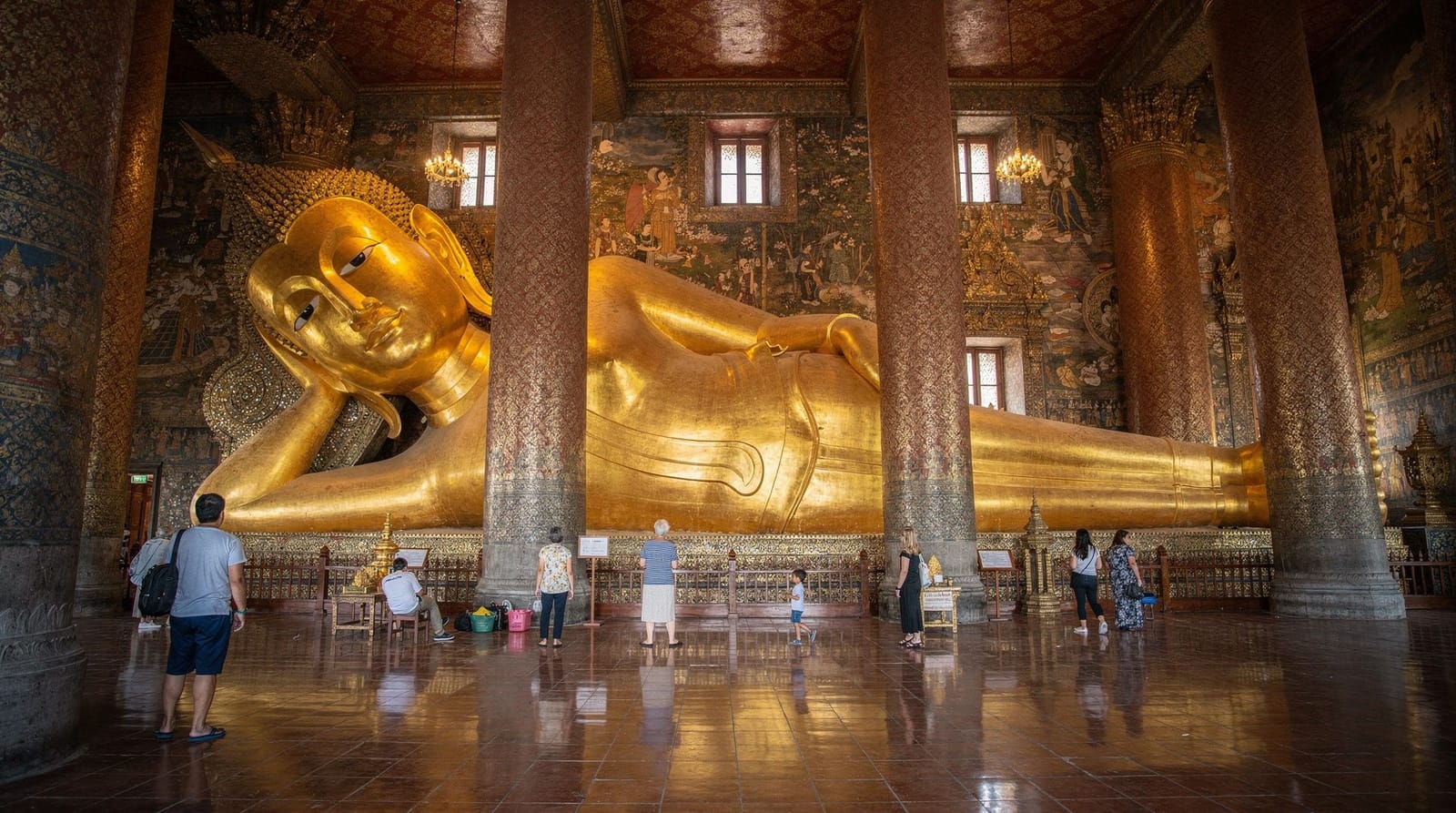
| Wat Pho | 300 THB | 46m Reclining Buddha, massage | Moderate, busiest 10:00-13:00 |
| Wat Arun | See Wat Arun’s official site | Porcelain prang, sunset views | Moderate, worse at sunset |
Wat Phra Kaew is deliberately the most intense of the three — it is a royal ceremonial site, not a place designed for quiet contemplation — while Wat Pho and Wat Arun offer a calmer counterpoint later the same day. Doing all three in sequence, in that order, is the classic Bangkok temple day.
Tickets, hours and skipping the queue
Entry: 500 THB (includes the Grand Palace) · Thais free Hours: 8:30-15:30 daily, last entry ~15:00 Nearest transit: Sanam Chai MRT (Blue Line) or Chao Phraya boat to Tha Chang pier
Buy at the official ticket office inside the gates with cash. There is no standard online ticket, but a guided or skip-the-line tour can save time and add context — a skip-the-line Grand Palace and Emerald Buddha tour bundles fast entry with a guide. If you prefer to go independently, a Grand Palace and Emerald Buddha audio-guide ticket gives you the history at your own pace. The full ticketing breakdown is in the Grand Palace tickets and skip-line guide.
The dress code — don’t get turned away
This is the most strictly enforced dress code of any site in Bangkok. You must cover shoulders and knees, and the guards reject ripped jeans, tight leggings, see-through fabric, and short skirts. Cover-ups can be rented near the entrance for a deposit, but the queue and faff are avoidable — just dress correctly. The complete rules, including footwear, are in the Grand Palace dress code guide and the general temple etiquette and dress code guide.
Avoiding the closed scam
Outside the gates, expect to be approached by friendly, well-dressed people or tuk-tuk drivers claiming the Palace is closed today — for a holiday, a ceremony, or “until noon for prayers.” It is a lie designed to divert you onto a tuk-tuk tour ending at commission-paying gem and tailor shops. The Palace is almost never closed during published hours. Walk straight to the official ticket office and ignore everyone telling you otherwise. The Grand Palace scam warning and the gem scam guide cover the full con.
Best time to visit and what to pair it with
Arrive at 8:30 opening. By 10:00 the courtyards fill with tour groups and stay packed until early afternoon; the heat in the unshaded compound is punishing by midday in the hot season. Allow 2 to 2.5 hours for the combined ticket.
Pair Wat Phra Kaew with calmer temples afterwards: Wat Pho is a 10-minute walk south, and Wat Arun a short ferry beyond. The temple-hopping route guide sequences all three, the best temples in Bangkok guide ranks the city’s temples, and the Rattanakosin old city destination guide covers the surrounding neighbourhood. A half-day Grand Palace and Emerald Buddha tour with a guide is the easiest way to do it without the planning. A half-day Grand Palace and Emerald Buddha tour handles entry, dress-code guidance and the Ramakien story in one go.
Visiting with family, older relatives or in the rain
The compound involves a lot of standing, walking on hard ground and little shade, so think about who is with you. Families with children will do better if the visit is kept short and built around a few highlights, such as the giant guardians, which children tend to love. The Bangkok with kids guide has more ideas for pacing a day. Older travellers should take their time, bring water and consider the Bangkok with elderly guide for general tips on comfort and mobility.
In the wet season, showers can arrive quickly and the stone surfaces become slippery. Carry a light rain layer that still respects the dress code, and use the covered cloister as shelter when a downpour hits. The Bangkok in the rain guide and the best time to visit Bangkok guide help you plan around the weather.
Frequently asked questions about Wat Phra Kaew & the Emerald Buddha: the complete
How much does Wat Phra Kaew cost?
What are the opening hours of Wat Phra Kaew?
What is the dress code at Wat Phra Kaew?
Why is the Emerald Buddha so important?
Can you photograph the Emerald Buddha?
What is the Grand Palace closed scam?
How long do you need at Wat Phra Kaew and the Grand Palace?
Is Wat Phra Kaew worth the 500 THB?
Why does Wat Phra Kaew have no resident monks?
Top experiences
Bookable activities with verified prices and instant confirmation on GetYourGuide.