Sukhothai
Sukhothai is Thailand's serene first capital: a UNESCO historical park of graceful ruins far north of Bangkok. How to get there and why it beats a day trip.
Sukhothai: Historical Park & Countryside Cycling Tour
Quick facts
- Distance from Bangkok
- ~430 km north (1 hr flight, or 6–7 hr by bus/train+bus)
- Getting there
- Flight to Sukhothai (best), bus, or train to Phitsanulok then bus
- Key sight
- Sukhothai Historical Park — Wat Mahathat, Wat Si Chum's giant Buddha
- Time needed
- Overnight minimum; too far for a day trip
- Best time
- Nov–Feb (cool); Loy Krathong here is spectacular (Nov)
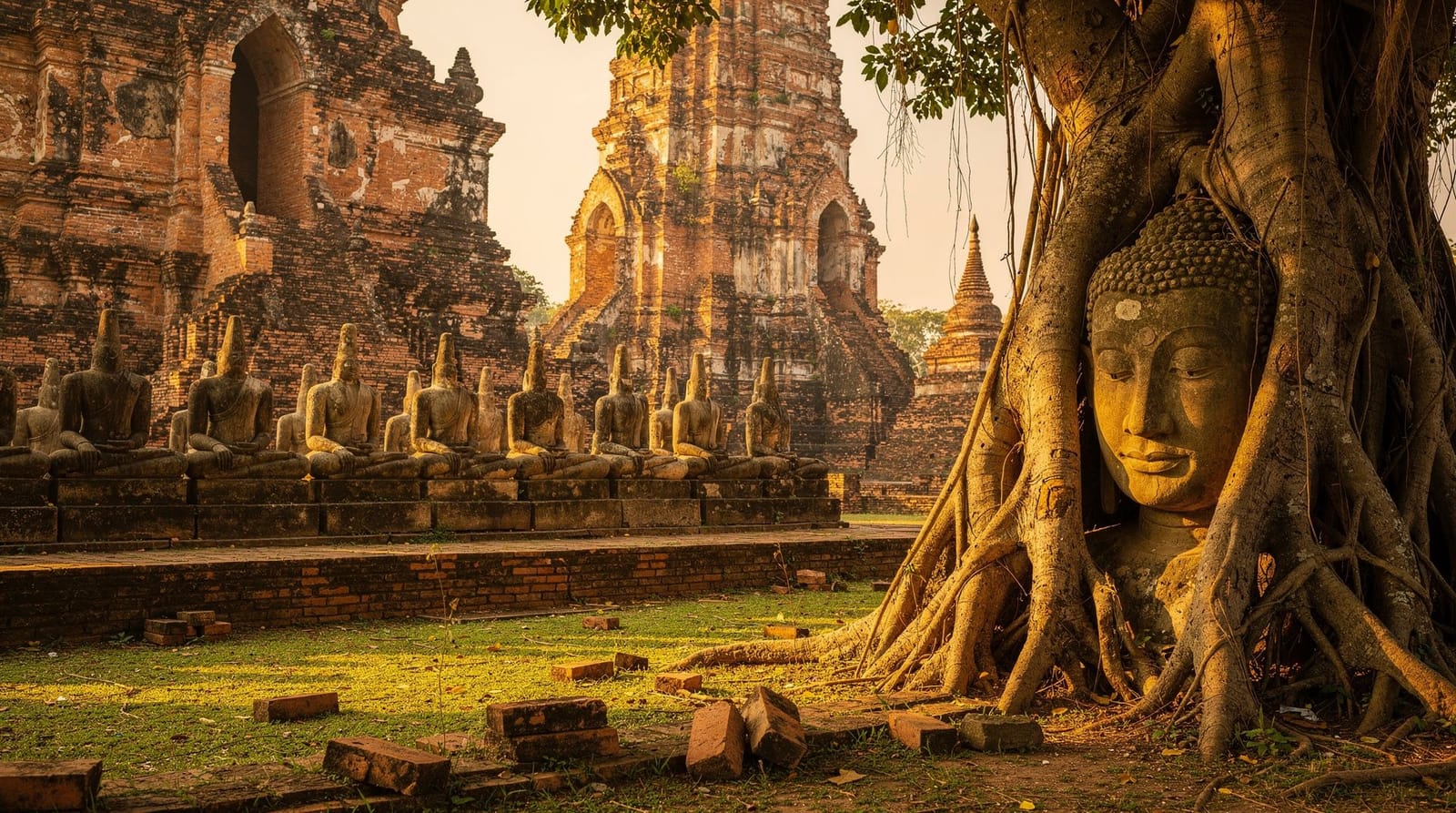
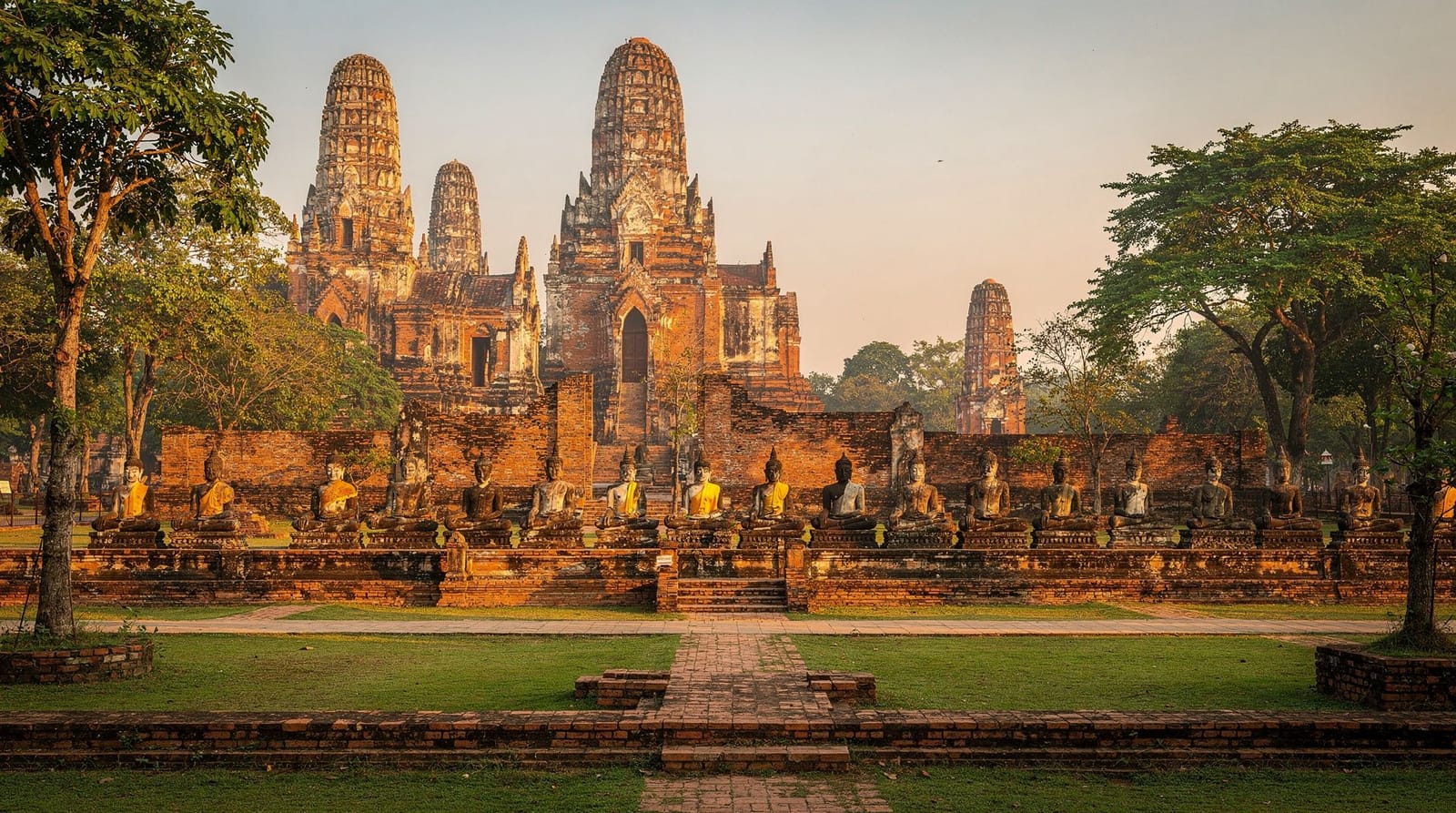
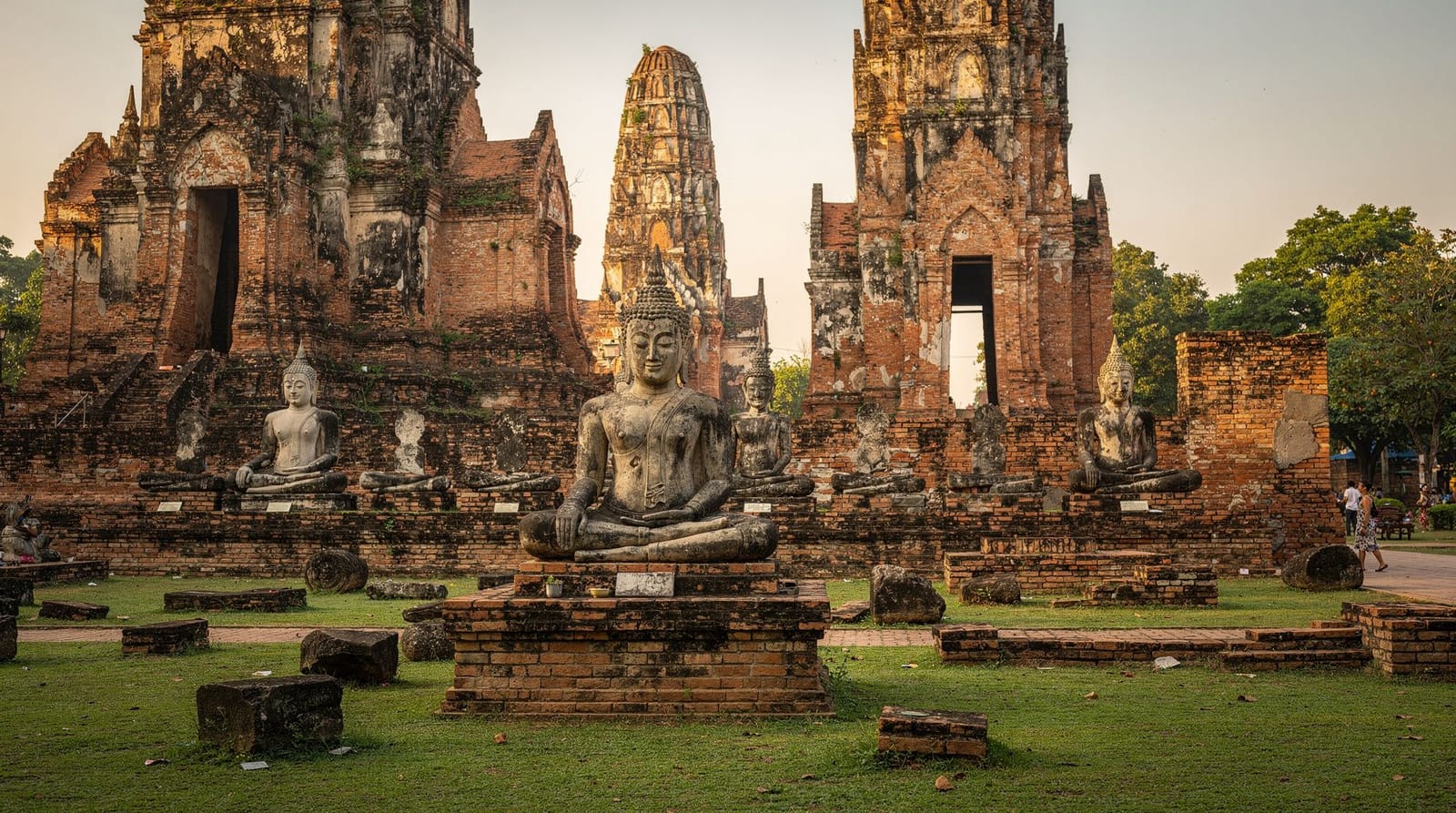
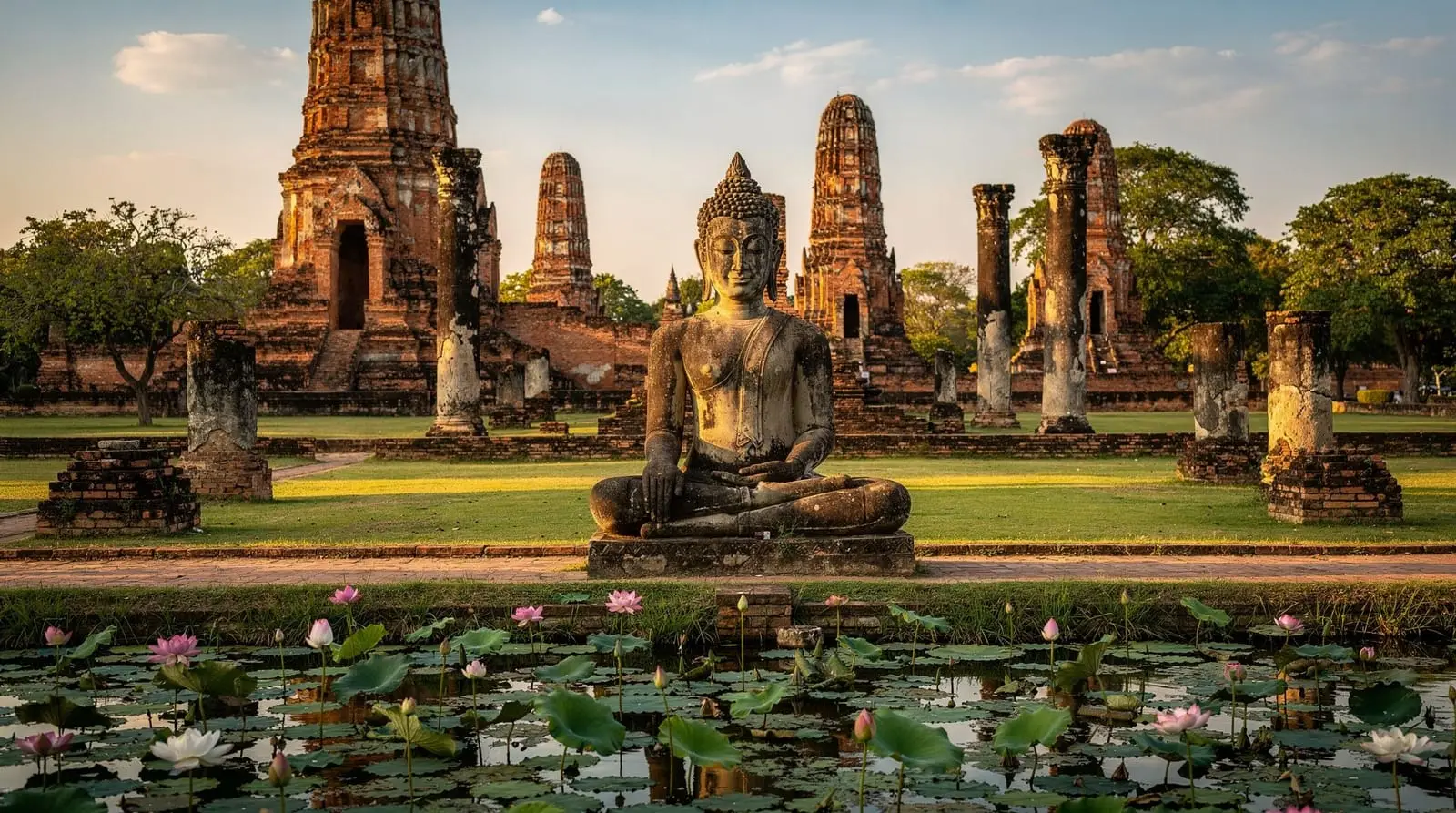
Sukhothai is where Thailand, in a sense, began. Founded in the 13th century, it was the first independent Thai kingdom’s capital and the cradle of a golden age — the era that gave the country its alphabet, a distinctive and graceful style of Buddhist art, and the serene “walking Buddha” image still admired today. About 430 km north of Bangkok, the Sukhothai Historical Park preserves the old royal city as a UNESCO World Heritage Site: a tranquil, beautifully maintained landscape of lotus ponds, brick chedis, and elegant Buddha figures sitting calmly among the ruins. Where Ayutthaya feels like a city sacked and broken, Sukhothai feels like a garden of contemplation.
The honest truth up front: Sukhothai is too far for a day trip from Bangkok. At more than 400 km it requires either a one-hour flight or a six-to-seven-hour journey by bus or train-plus-bus, so it only makes sense as an overnight or as part of a longer northern trip (often combined with Phitsanulok or Chiang Mai). If you have the days, it is one of the most rewarding historical destinations in the country and the natural next step for anyone who loved Ayutthaya. This page explains the park and how to reach it.
Sukhothai Historical Park
The historical park spreads across the remains of the old walled city and its surroundings, divided into zones. The central zone holds the masterpieces. Wat Mahathat, the spiritual heart of the kingdom, is a vast complex of chedis, columns, and seated Buddhas centred on a lotus-bud spire — the signature Sukhothai form. Wat Si Sawai, with its three Khmer-influenced prang towers, predates the Thai kingdom. Beyond the walls, Wat Si Chum shelters one of Thailand’s most photographed images: Phra Achana, a colossal seated Buddha some 15 metres tall, peering serenely through the slot of a roofless brick mondop. Wat Saphan Hin, on a hill to the west, rewards a short climb with a standing Buddha and a view over the plain.
The park is flat, green, and spacious, and the best way to experience it is by bicycle, pedalling the quiet lanes between monuments and ponds. The atmosphere — far calmer and less crowded than Ayutthaya — is the whole point. Modest entry fees apply per zone. For the comparison many travellers want, see Ayutthaya vs Sukhothai, and for the artistic context, best temples. The Sukhothai historical park and countryside cycling tour is the ideal way to see it with a guide, and the full-day historical park cycling tour with lunch extends it.
The “walking Buddha”: Sukhothai’s artistic legacy
Sukhothai’s single greatest contribution to Thai culture is an art style, not a building. Before Sukhothai, Buddha images across Southeast Asia were mostly static and formal. Sukhothai sculptors developed the walking Buddha (Phra Buddha Chinnarat-style figures came slightly later, at Phitsanulok) — a figure shown mid-stride, robes flowing, expression serene, meant to evoke motion and grace rather than stillness. This innovation, along with the distinctive lotus-bud chedi spire seen at Wat Mahathat, defined a golden age of Thai Buddhist art that later styles across the country still reference. Seeing the originals in situ, rather than in a museum, is a large part of why the historical park rewards a slow visit. For the broader religious context, see the Buddhism in Bangkok guide.
Sukhothai vs Ayutthaya vs Si Satchanalai
| Sukhothai | Ayutthaya | Si Satchanalai | |
|---|---|---|---|
| Distance from Bangkok | ~430 km (too far for a day trip) | ~80 km (easy day trip) | ~450 km, 60 km past Sukhothai |
| Atmosphere | Serene, garden-like | Dramatic, “sacked city” ruins | Quiet, forested, few visitors |
| Era | 13th–14th century (older) | 14th–18th century | Same kingdom as Sukhothai |
| Crowds | Light | Moderate to heavy | Very light |
| Best for | History lovers with time to spare | First-time day-trippers | Travellers who loved Sukhothai and want more |
If you only have one day-trip slot from Bangkok, Ayutthaya is the practical choice; Sukhothai (and its quieter satellite, Si Satchanalai) is the reward for travellers with a couple of extra days and a preference for calm over convenience.
Loy Krathong at Sukhothai
If your trip falls in November, Sukhothai is one of the most magical places in Thailand to experience Loy Krathong, the festival of lights. The festival is traditionally said to have originated here, and the park stages light-and-sound shows and floats thousands of candlelit krathong on its ponds among the illuminated ruins — a genuinely unforgettable setting. It is popular, so book accommodation well ahead. The Sukhothai Loy Krathong festival 2-day tour from Bangkok packages the trip around the festival. For the festival itself, see the Loy Krathong guide.
Getting there from Bangkok
Because of the distance, transport is the defining consideration.
Flight: the fastest and most comfortable. Direct flights from Bangkok reach Sukhothai Airport (a charming small airport with its own gardens) in about an hour; a short transfer brings you to the historical park or New Sukhothai town. Flights are limited, so book ahead. This is the recommended way to keep an overnight trip manageable.
Bus: direct coaches run from Bangkok’s Mo Chit (Northern Bus Terminal) to Sukhothai in roughly 6 to 7 hours, including overnight services. Cheap but long.
Train + bus: the railway does not reach Sukhothai. The usual rail option is to take a northern-line train to Phitsanulok (the nearest major station, roughly 5–7 hours depending on service), then a local bus or minivan for the final ~60 km to Sukhothai. A 2-day tour, the Bangkok Phitsanulok–Sukhothai 2-day tour with hotel and guide, handles all of this for you. See Bangkok to day trips transport.
Note that “New Sukhothai” town, where most buses arrive and many hotels sit, is about 12 km from the Old City and the historical park; songthaews and bicycles bridge the gap. Many travellers prefer to stay near the Old City to be on the park’s doorstep.
How long to stay
Plan a minimum of one night, ideally two. With an overnight you can cycle the central zone in the cool of the morning, rest through the midday heat, and return for the late-afternoon light when the Buddhas glow and the crowds thin. Two days lets you reach the outer zones and the nearby ruins of Si Satchanalai — a quieter, more atmospheric satellite city of the same kingdom, about 60 km north, which many visitors rate even more highly for its forest setting. Pairing Sukhothai with Phitsanulok, or continuing north to Chiang Mai, makes it the centrepiece of a worthwhile northern loop rather than a rushed there-and-back. For planning your overall time, see how many days in Bangkok.
Practical information
Get there by air if you can: the one-hour flight makes an overnight trip far more feasible than the long road journey.
Old City vs New Sukhothai: the historical park is in the Old City, ~12 km from the New town where many buses arrive; consider staying near the park.
Bicycles: the park is flat and best explored by bike; rentals are cheap at the gates.
Heat: the open ruins bake in the hot season — visit early morning and late afternoon; cool season (Nov–Feb) is ideal.
Entry: modest fees per zone; the central zone is the priority if time is short.
If Sukhothai is one stop on a longer Thailand trip, see the plan your trip to Bangkok guide, the general day trips from Bangkok guide for how it compares to closer options, and the day trips itinerary for slotting it alongside Ayutthaya or Kanchanaburi if you have a longer trip. For fully organised options, the best Bangkok tours guide rounds up operators who run the Sukhothai route.
Frequently asked questions about Sukhothai
Can I visit Sukhothai as a day trip from Bangkok?
No — it is too far. At more than 400 km, Sukhothai requires a one-hour flight or a six-to-seven-hour journey by road, so a same-day return is not realistic. Plan at least one overnight, ideally two, or include it in a longer northern trip. It is the natural next destination for travellers who loved Ayutthaya and have a couple of spare days.
How do I get to Sukhothai from Bangkok?
The fastest way is a direct one-hour flight to Sukhothai Airport. Otherwise, take a direct coach from Mo Chit (~6–7 hours) or a northern-line train to Phitsanulok followed by a local bus/minivan for the last ~60 km. A 2-day organised tour can handle the entire journey and accommodation for you.
How is Sukhothai different from Ayutthaya?
Sukhothai is older (13th–14th century, Thailand’s first capital) and feels serene and garden-like, with graceful Buddha images set among lotus ponds and well-tended lawns. Ayutthaya is later, closer to Bangkok, and feels like a sacked city of dramatic brick ruins. Sukhothai is calmer and less crowded but much further away. Our Ayutthaya vs Sukhothai guide compares them in detail.
What are the must-see temples in Sukhothai?
In the central zone, Wat Mahathat (the kingdom’s spiritual heart, with its lotus-bud spire) and Wat Si Sawai. Beyond the walls, Wat Si Chum with its colossal seated Buddha peering through a roofless brick chamber, and Wat Saphan Hin on its hill. If you have a second day, the outlying ruins of Si Satchanalai, about 60 km north, are quieter and very atmospheric.
Is Sukhothai worth the long journey?
For anyone who loves history and serene ruins, yes — it is one of Thailand’s most rewarding cultural destinations and the cradle of Thai art and identity. The flat, green historical park is a joy to cycle, far calmer than Ayutthaya. Given the distance, it works best as an overnight or as the centrepiece of a longer northern loop.
What makes Loy Krathong at Sukhothai special?
The festival of lights is traditionally said to have originated at Sukhothai, and each November the historical park stages light-and-sound shows and floats thousands of candlelit krathong on its ponds among the illuminated ruins. It is one of the most beautiful festival settings in the country. Book accommodation well ahead if you want to be there for it.
Top experiences
Bookable activities with verified prices and instant confirmation on GetYourGuide.