Temple hopping by boat: my favourite way to see old Bangkok
The first time I tried to temple-hop in Bangkok by land, I spent more time stuck in tuk-tuks and arguing about fares than I did looking at temples. The second time, I used the river — and discovered that old Bangkok was built to be approached from the water, and still makes the most sense seen that way. The grand temples of Rattanakosin line the Chao Phraya, the express boats string them together for pocket change, and the whole rhythm of a river temple-hop is calmer, cheaper and more beautiful than fighting the traffic. This is my favourite way to see the old city, and here is exactly how I do it.
| Where | Rattanakosin old city, along the Chao Phraya river |
| Cost | Around 16 baht/hop, plus a 5-baht cross-river ferry |
| Time needed | Half a day for the big three; a full day with the canals |
| Getting there | Sathorn (Central) pier, beside Saphan Taksin BTS |
| Best time | Opening time, around 8:30am, before heat and crowds |
Why the river beats the road
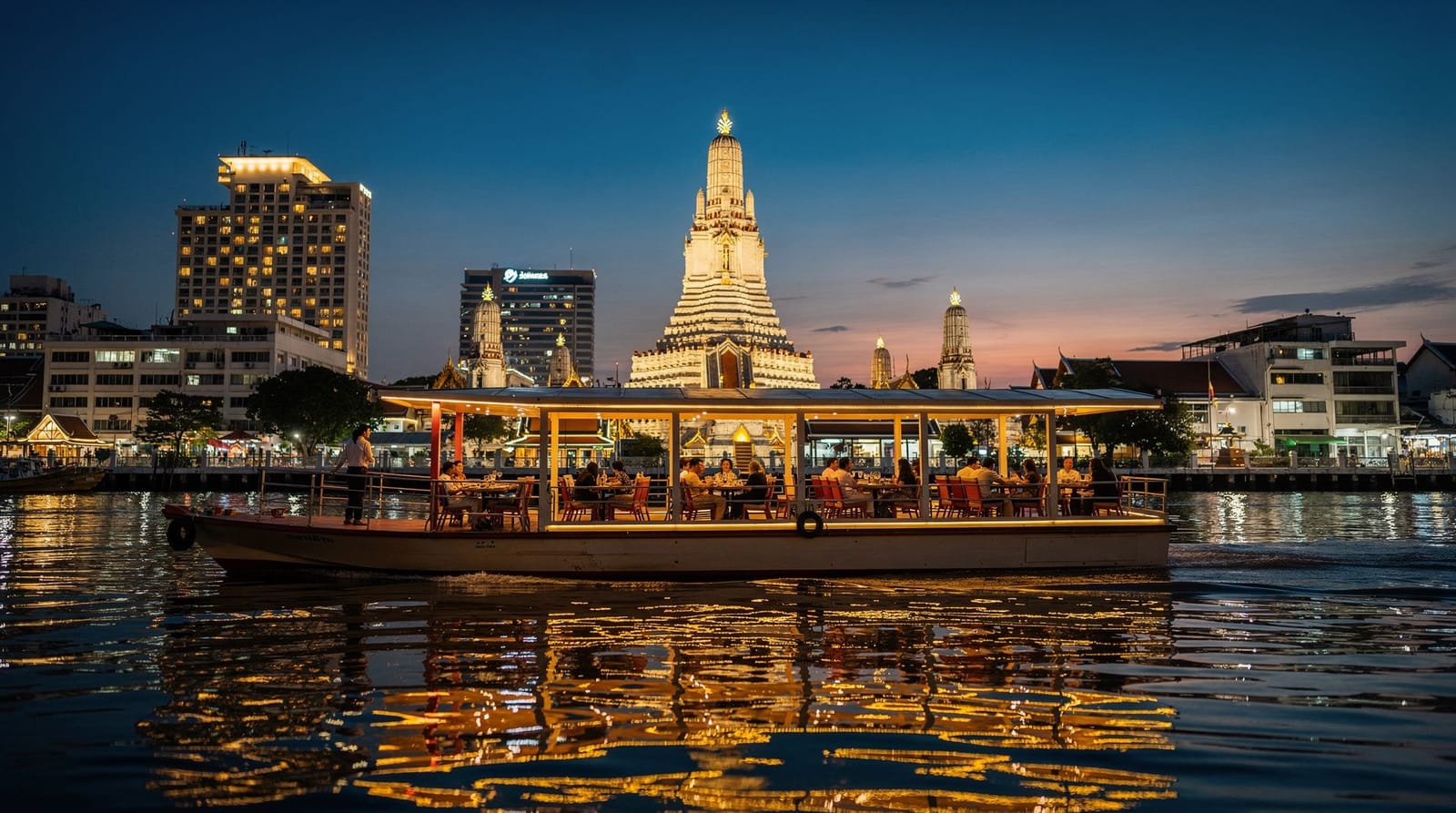
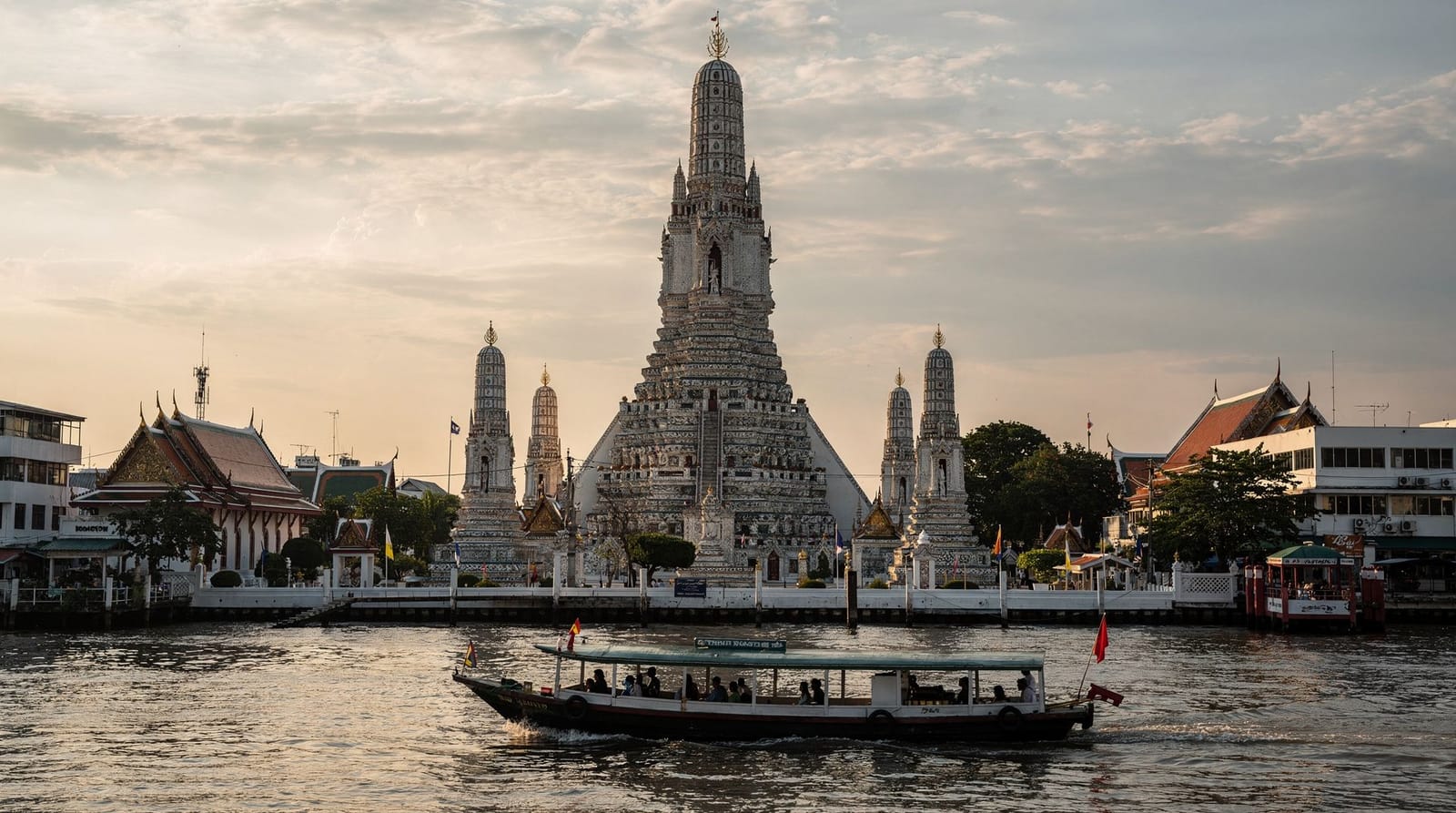
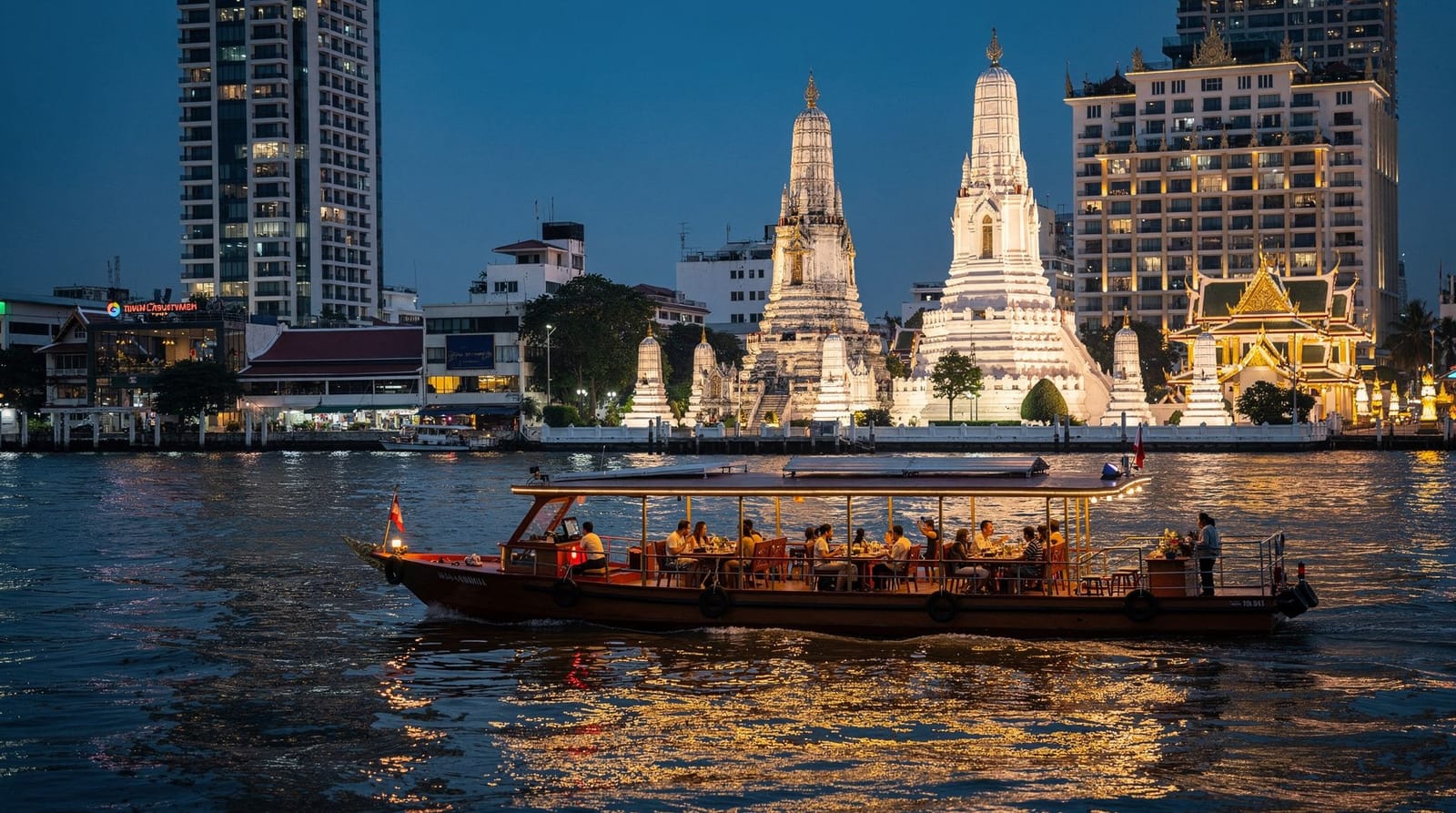
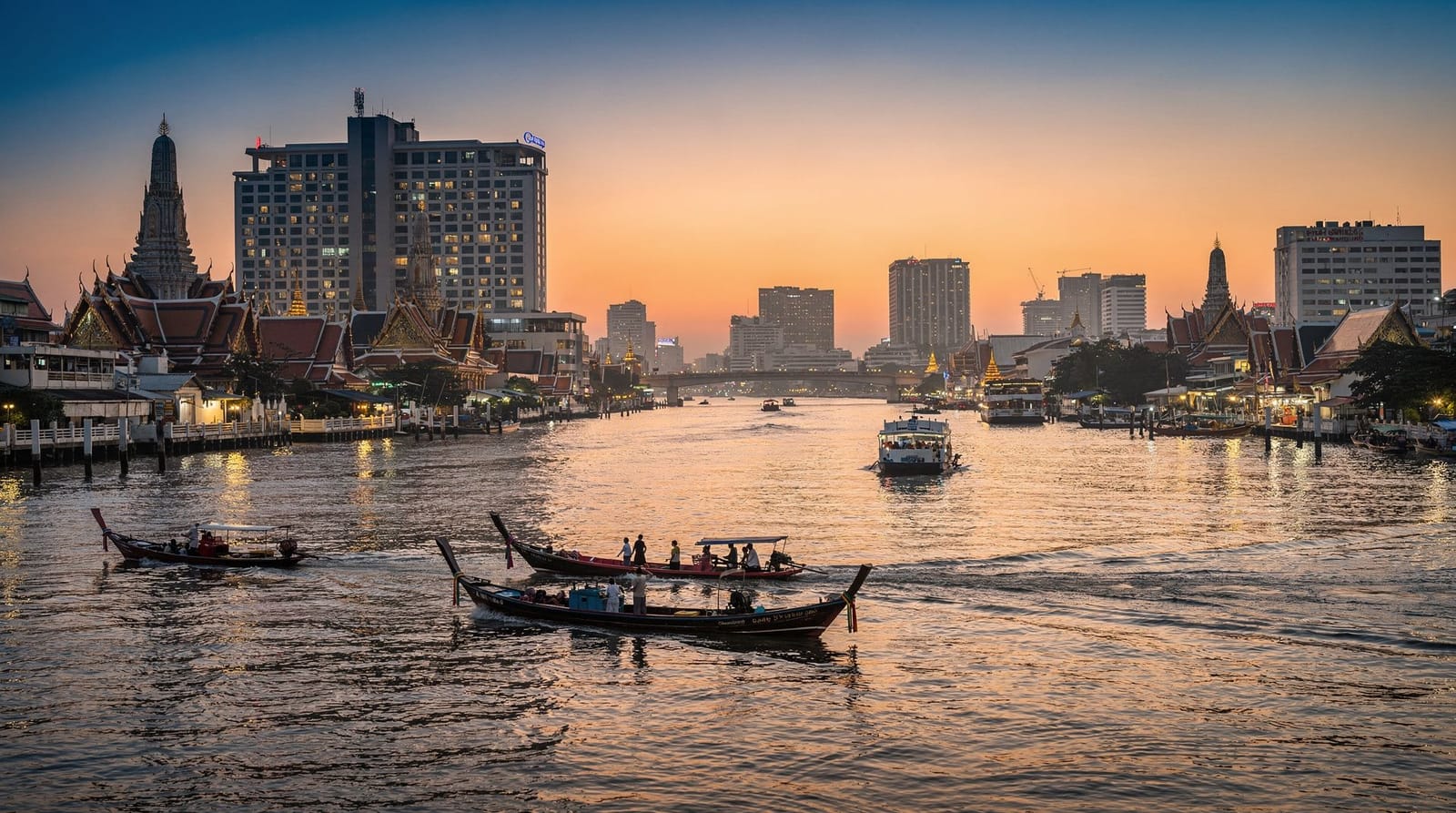
Old Bangkok grew up along the Chao Phraya and its canals — the city was once known as the Venice of the East, threaded with waterways that did the work roads do now. Most have been filled in, but the river remains the spine, and the major temples sit right on its banks. Approaching Wat Arun from the water, watching its porcelain-encrusted prang rise as your boat crosses, is how it was meant to be seen. Doing the same circuit by road means traffic, heat, and the hassle of tuk-tuk negotiations. The boat is faster, cooler, cheaper and infinitely more scenic. The temple-hopping route guide lays out the sequence, and the Chao Phraya boats guide decodes the boat system.
Decoding the express boats
The Chao Phraya Express boats are colour-coded by flag, and understanding the flags is the only mildly confusing part. The orange-flag boat is the workhorse — frequent, cheap at a flat 16 baht, and it stops at all the piers you need for temple-hopping. There is also a blue-flag tourist boat with commentary and a day pass for around 150 to 200 baht, which is fine if you want the narration and unlimited hops, but the orange-flag locals’ boat does the same job for a fraction of the price. Avoid the green and yellow express flags, which skip the central piers. Tap into the rhythm and you will be hopping on and off like a local within an hour.
My river temple circuit
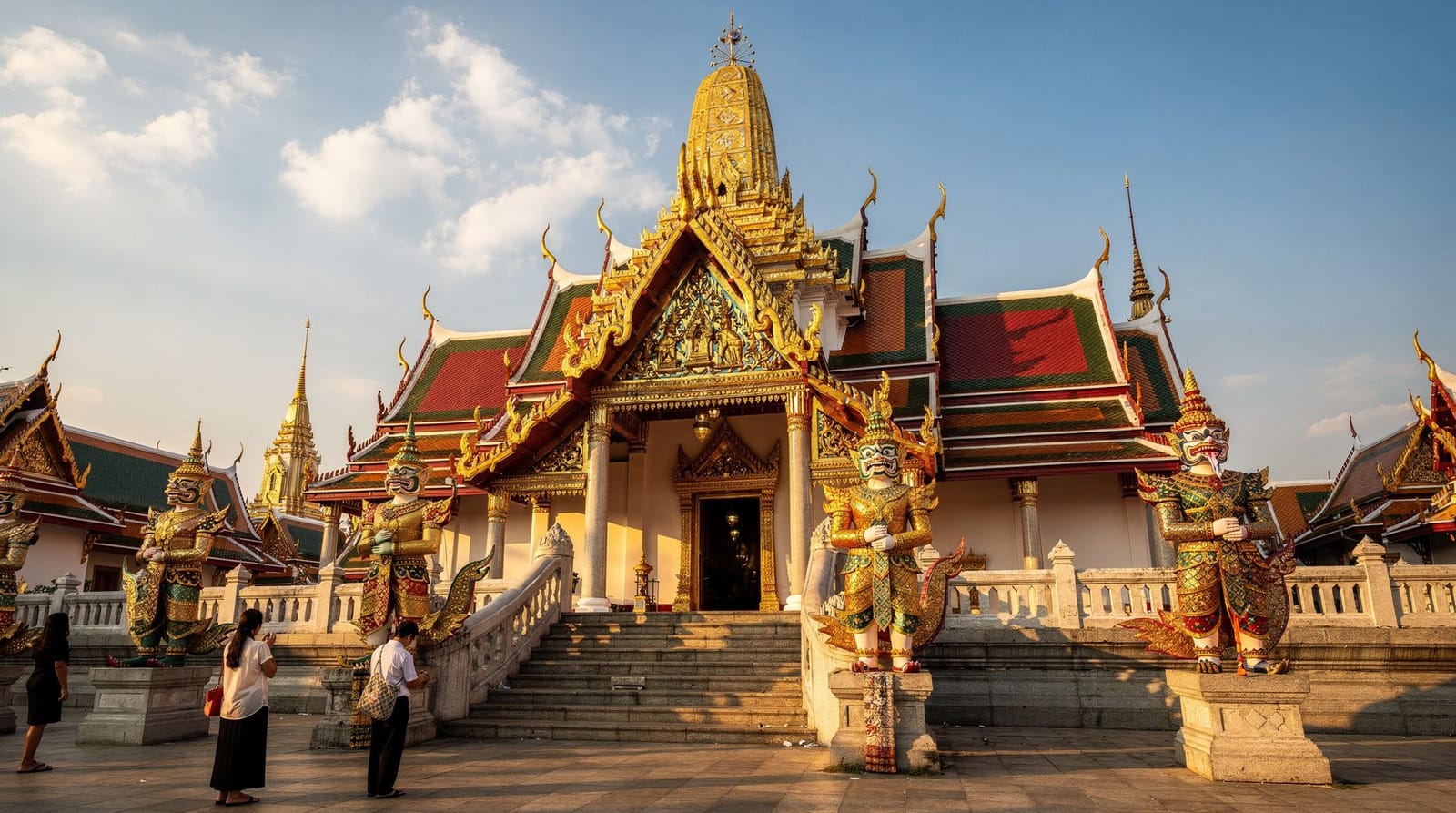
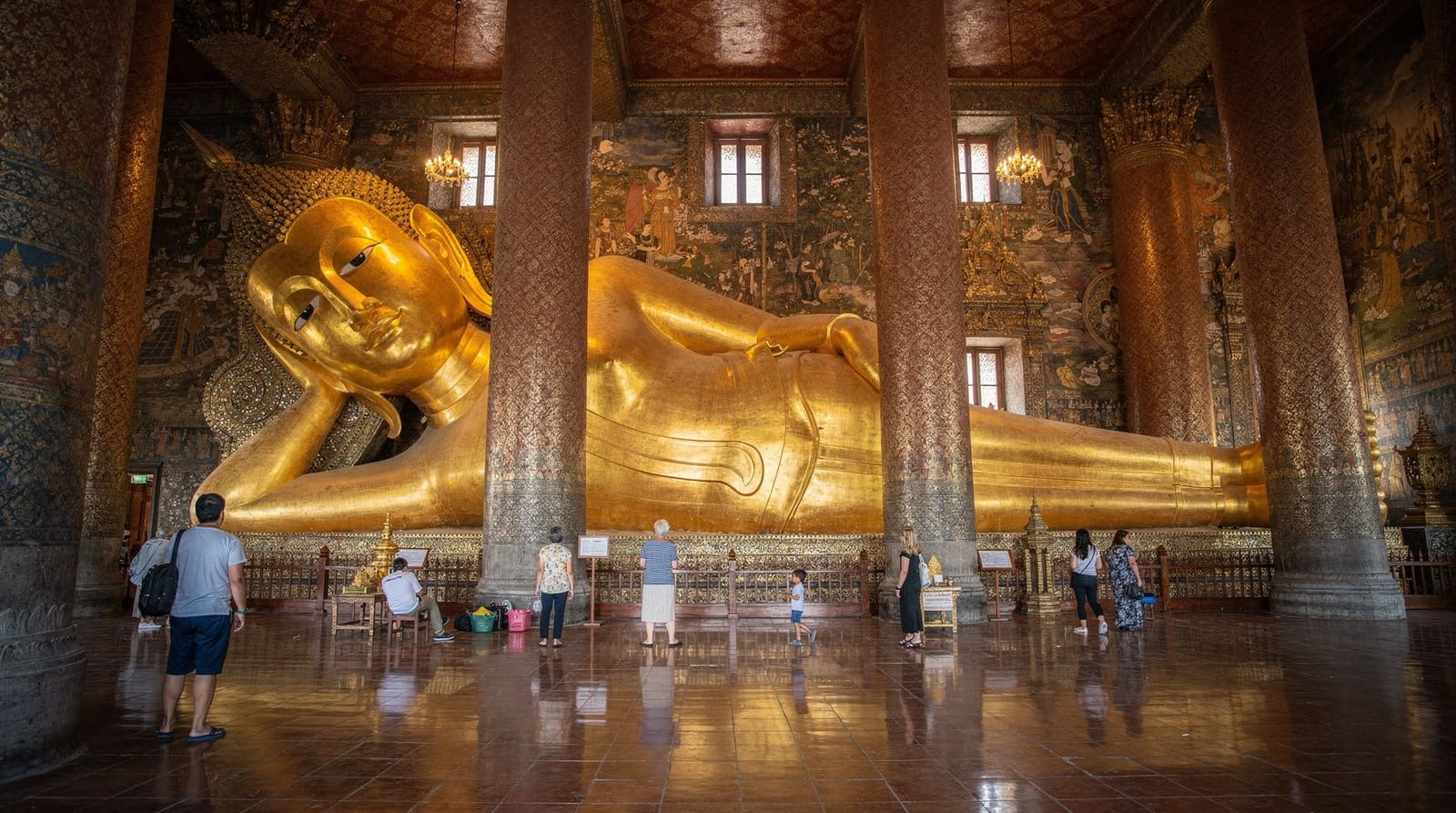
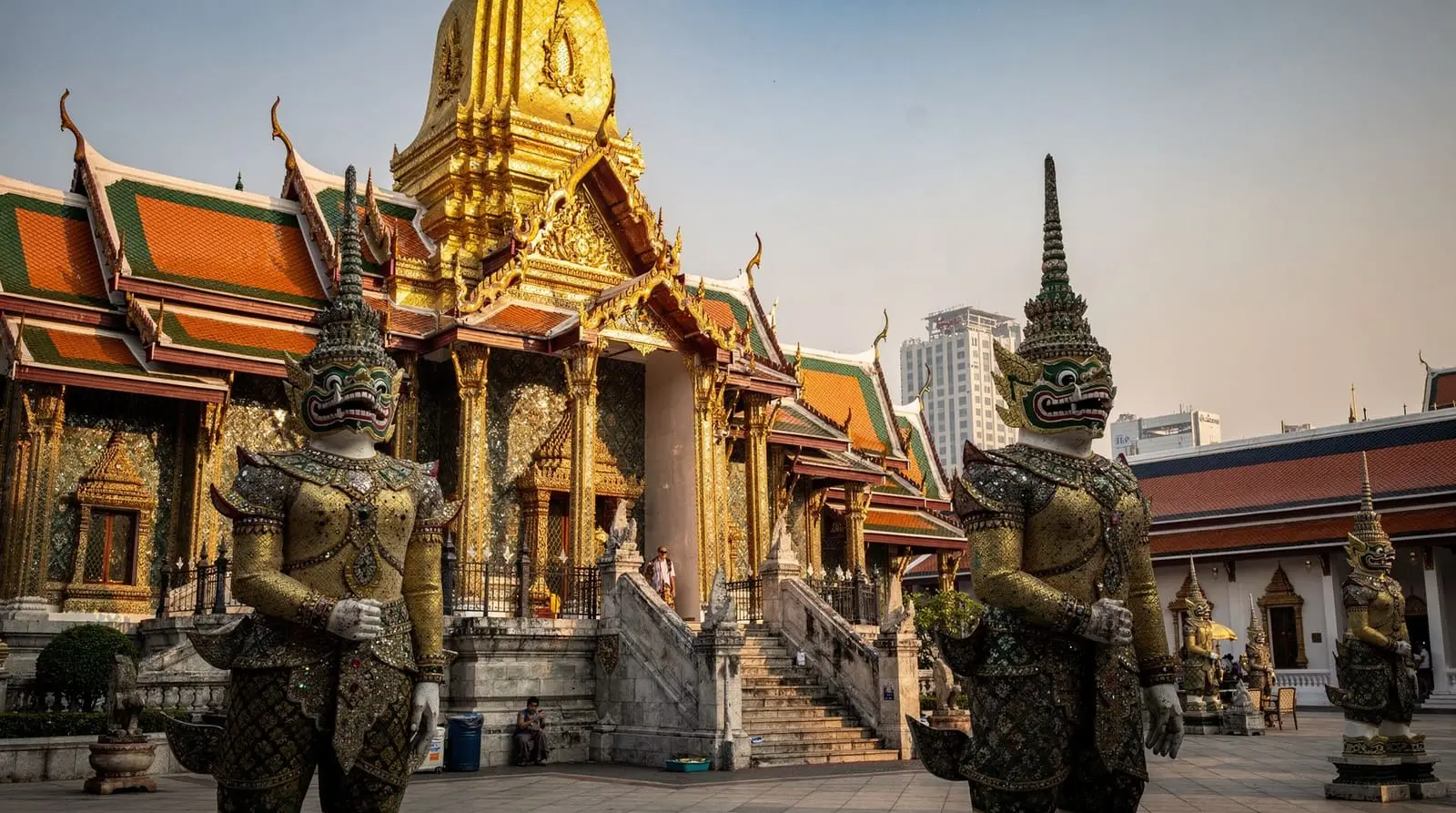
Here is the route I love. Start at Tha Chang pier (N9), which puts you a short walk from the Grand Palace and the Emerald Buddha — go early, around 8:30am opening, before the heat and crowds. From there walk to Wat Pho at Tha Tien pier to see the colossal reclining Buddha; entry is 300 baht and the quiet stupa courtyards behind it are a highlight. Then — and this is the magic moment — take the little cross-river ferry from Tha Tien over to Wat Arun for just 5 baht. Five baht for one of the best fifteen minutes in Bangkok. Climb the steep central prang for the view back across the river, entry around 200 baht.
That trio — Grand Palace, Wat Pho, Wat Arun — is the classic river temple circuit, and the boat ties it together effortlessly. If you have more time, hop back on the express boat and continue upriver or down to other piers and temples, treating the river as your hop-on hop-off line.
The easy way to do the same loop
The three-temple river circuit is straightforward to do independently, and I genuinely encourage it — the 5-baht ferry crossing is one of travel’s great small joys. But on a first visit, a guide who handles the piers, explains what you are seeing, and skips the ticket queues turns a good morning into a great one. A guided Grand Palace, Wat Pho and Wat Arun river loop does exactly this, and a hop-on hop-off Chao Phraya boat pass gives you the freedom to build your own circuit with unlimited stops. The river boats guide covers the wider range of river options.
Beyond the river: the canals of Thonburi
When the main-river temples are done, the real secret is to push into the canals — the khlongs — of Thonburi on the western bank. A longtail boat takes you off the wide Chao Phraya into narrow waterways lined with stilt houses, riverside temples, and a slower, older Bangkok that feels untouched by the city’s frenzy. You glide past families on their verandas, monks at canalside wats, monitor lizards basking on the banks. It is the closest you can get to the Venice-of-the-East city that Bangkok used to be. A longtail boat canal cruise through the Thonburi khlongs reaches temples and corners no express boat goes near, and the canal longtail tours guide explains the routes and prices.
The piers, decoded
The pier system confuses first-timers, so a quick orientation saves a lot of standing around. The Chao Phraya express boats use numbered piers prefixed with N (north of the central pier) — the ones you need for temple-hopping cluster in the middle of the line. Sathorn pier (Central Pier, beside Saphan Taksin BTS station) is the key interchange where the rail network meets the river, so most river days start here: tap out of the BTS at Saphan Taksin and the pier is at the bottom of the steps. From there the orange-flag boat heads upriver through Tha Tien (N8, for Wat Pho and the Wat Arun ferry), Tha Chang (N9, for the Grand Palace) and on past the riverside malls of Khlong San. Boats barely pause, the boarding is brisk and a little chaotic, and a deckhand shouts the pier names and blows a whistle to signal departure. Listen for your stop, have your 16 baht ready, and step on and off smartly. Within two or three hops it stops feeling intimidating and starts feeling like the best public transport in the city.
Stretching the day beyond the big three
The classic Grand Palace, Wat Pho and Wat Arun trio is a half-day, which leaves the afternoon open if you keep using the river. A few extensions I love. Stay on the orange-flag boat upriver and you reach the area near Wat Saket and the Golden Mount by a short walk from a northern pier — climb the 300-odd steps for one of the best free panoramas of the old city. Downriver, the boat drops you at the riverside markets and the grand malls of the Iconsiam and Khlong San area for an air-conditioned lunch and a different angle on Wat Arun across the water. And the riverside Chao Phraya neighbourhood around Bang Rak and Charoenkrung rewards a wander on foot, full of old shophouses, galleries and riverside cafes. The best temples guide helps you build a fuller circuit if a half-day is not enough.
Doing it across two or three days
If temples are your main reason for coming, do not try to cram every wat into a single river day — the old city alone deserves more. I like to give the Rattanakosin trio one unhurried morning, then dedicate a second river day to the canals of Thonburi and the temples further along the bank, and perhaps a third to a day trip upriver. Spreading it out means you arrive at each temple early and beat both the heat and the tour-bus crowds, and it leaves room for the long lunches and coffee breaks that a tropical climate demands. A temples-focused itinerary maps a sensible sequence and shows how the river days fit alongside the rest of the city. The river is not a checklist to be raced through; it is the most pleasant way to let the old city reveal itself slowly.
The boat-stop cheat sheet
Everything above in one scannable list, for the morning you actually do this.
| Stop | Pier | Fare from Sathorn | What you’re there for |
|---|---|---|---|
| Start | Sathorn (Central Pier) | — | Board the orange-flag express boat |
| Grand Palace | Tha Chang (N9) | ~16 baht | Emerald Buddha, arrive at 8:30am opening |
| Wat Pho | Tha Tien (N8) | ~16 baht | Reclining Buddha, ~300 baht entry |
| Wat Arun | Cross-river ferry from Tha Tien | 5 baht | Climb the prang, ~200 baht entry |
| Golden Mount | Northern pier + short walk | ~16 baht | 300-odd free steps to a panorama |
Extending the circuit into a full day
Once the Rattanakosin trio is done, the river keeps paying off if you have the time. Rather than heading straight back, I sometimes carry on to Bang Krachao, the green, near-carless river bend reached by a short cross-river hop and a bike rental — a total change of pace after a morning of temples and crowds. On a longer trip, the river is also the calmest way to start a day trip upriver: a slow boat toward Ayutthaya turns the transfer itself into part of the sightseeing rather than dead time on a highway. The day trips from Bangkok guide has the fuller list of what pairs well with a river morning if you want to build a full day around the water rather than just a half.
What I’d do differently now
If I were planning my first river temple-hop again, I would check the season before the itinerary. The circuit works year-round, but the light and the crowds change a lot: cooler months from November are the most comfortable for the open-air prang climb at Wat Arun, while a rainy-season morning trip often means near-empty piers and a dramatic sky, as long as you dodge the afternoon downpour. The best time to visit guide is worth five minutes before you book flights around this specifically. I would also budget more time at Wat Arun itself for photos — the light on the porcelain-encrusted prang changes fast in the early morning, and the Wat Arun photography guide has the angles I wish I had known about on my first visit instead of my third.
Practical river tips
Go early — the temples are coolest and quietest before 10am, and the river light is loveliest in the morning. Carry small notes for the boat fares and the cross-river ferry. Mind the dress code at the temples: shoulders and knees covered, no flip-flops at the Grand Palace especially. Watch your step boarding the express boats, which barely pause at the piers — you hop on and off briskly. And do not rush the 5-baht crossing to Wat Arun; it is the best-value boat ride in Bangkok and deserves a moment of appreciation.
One more practical note worth carrying with you: dress for the temples before you leave, not at the gate. The Grand Palace in particular enforces its dress code strictly, with shoulders and knees covered and no flip-flops, and while sarongs can sometimes be rented or bought outside, it is far less hassle to arrive already covered. I keep a light long-sleeve layer and long trousers on for the temple stretch, then peel down once I am back on the boat in the breeze. Carry a bottle of water too, because the river piers and temple courtyards have little shade and the morning heat builds fast even before the sun is high.
Seeing old Bangkok from the water reorganised the whole city for me. The temples stop being isolated tourist stops you battle traffic to reach and become what they always were — a string of glittering monuments along a working river, best approached, as they always have been, by boat.
Frequently asked questions about temple hopping by boat in Bangkok
How much do the Chao Phraya express boats cost?
The orange-flag local boat is a flat 16 baht and stops at all the main temple piers. A tourist boat day pass with commentary runs about 150 to 200 baht. The cross-river ferry to Wat Arun is just 5 baht.
What temples can you reach by boat in Bangkok?
The Grand Palace (Tha Chang pier), Wat Pho (Tha Tien pier) and Wat Arun (a short cross-river ferry from Tha Tien) form the classic river circuit. Longtail boats reach further temples in the Thonburi canals.
Is it better to temple-hop by boat or by road in Bangkok?
By boat. The major old-city temples line the river, so the express boats connect them cheaply and scenically while skipping the traffic and tuk-tuk haggling that make the land route slow and frustrating.
Where do I catch the Chao Phraya express boat?
Most river days start at Sathorn pier (Central Pier), right beside Saphan Taksin BTS station, where the rail network meets the river. From there the orange-flag boat runs upriver through the temple piers — Tha Tien for Wat Pho and Wat Arun, Tha Chang for the Grand Palace.
How early should I start a river temple-hop?
Aim to be at the Grand Palace for its 8:30am opening. Temples are coolest and least crowded before 10am, the morning light on the river is the loveliest of the day, and an early start lets you finish the big three before the worst of the heat.