Best Thai restaurants in Bangkok across every budget
Bangkok: Authentic Tasting Thai-Chinatown Walking Food Tour
Which are the best sit-down Thai restaurants in Bangkok?
For fine dining, Sorn, Le Du, Nahm, Paste and Potong lead the field with set menus around 2,000 to 8,000 THB. For mid-range Thai, Supanniga Eating Room, Err, Krua Apsorn and Soul Food Mahanakorn deliver real cooking for 400 to 900 THB. For classics, Thipsamai and Raan Jay Fai are the famous names. Book fine dining weeks ahead.
Bangkok’s street food rightly gets the headlines, but the city also runs one of Asia’s most exciting sit-down restaurant scenes, from three-Michelin-star southern Thai tasting menus to neighbourhood institutions serving recipes unchanged in decades. This guide covers the best Thai restaurants across three tiers — fine dining, mid-range institutions and classics — with honest prices, the booking reality, and the nearest BTS or MRT. All prices are per person for food unless noted, and 1 USD is roughly 33 THB.
| Where | Sukhumvit, Silom, Chinatown, Thong Lo |
| Cost | 150–400 THB (classics) to 2,000–8,000 THB (fine dining) |
| Time needed | 1–1.5 hrs mid-range; 2–3 hrs for a tasting menu |
| Getting there | nearest BTS/MRT listed per restaurant |
| Best time | book fine dining weeks ahead; classics need no booking |
Fine dining: tasting menus worth the splurge
This is the tier where Bangkok competes with anywhere in the world. Expect set menus, a 10 percent service charge plus 7 percent VAT on top, and the need to book well ahead.
Sorn — three-star southern Thai
Sorn is the headline act: the first three-Michelin-star Thai restaurant in the world, dedicated to the fierce, coconut-rich, seafood-heavy cooking of southern Thailand. The tasting menu runs to around 6,000 to 8,000 THB (roughly 180 to 240 USD) and uses rare regional ingredients sourced obsessively. Booking is the hard part — slots open on a set schedule and vanish within minutes, so plan a month or more ahead. It sits off Sukhumvit Soi 26; take BTS Phrom Phong then a short taxi.
Le Du — modern Thai, world-ranked
Le Du (Thai for “season”) serves chef Ton’s contemporary, produce-led Thai cooking and has repeatedly topped Asia’s-best lists. The tasting menu is around 3,400 to 4,500 THB and balances refined technique with unmistakably Thai flavour. It is a small room near BTS Chong Nonsi in Silom, walkable from the station. Book at least a week or two ahead. Its sister restaurant Nusara, near Wat Pho, is equally lauded and even harder to book.
Nahm and Paste — classical and creative
Nahm is the standard-bearer for old-recipe, intensely traditional Thai fine dining, with dishes reconstructed from historic cookbooks and flavours that do not pull punches. A set menu lands around 2,500 to 3,500 THB; it is near BTS Sala Daeng / MRT Si Lom. Paste, in the Gaysorn area near BTS Chit Lom, refines heritage Thai recipes with modern polish at a similar 2,500 to 3,500 THB. Both are excellent introductions to elevated Thai cooking without reaching Sorn’s price ceiling.
Potong and Baan Tepa — the new wave
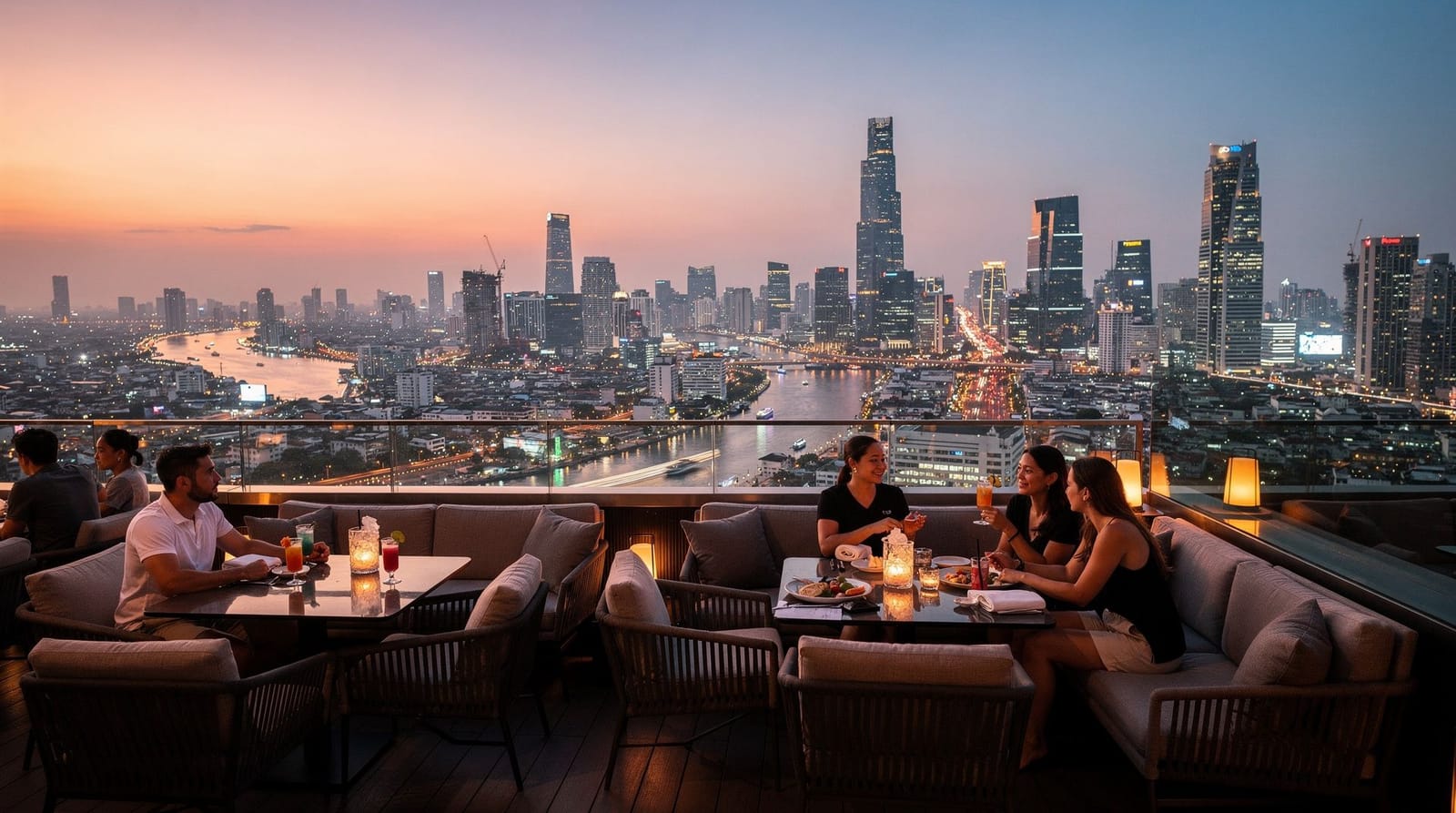
Potong occupies a restored family pharmacy shophouse in Chinatown and tells a personal Thai-Chinese story across a creative tasting menu of around 3,800 to 4,800 THB. It is one of the city’s most atmospheric rooms and sits near MRT Wat Mangkon — pair it with a walk through Chinatown and Yaowarat. Baan Tepa, a garden home east of the centre, plates sustainable, hyper-seasonal Thai menus around 3,500 THB and needs a taxi from BTS Ekkamai. For more sky-high splurges, see the rooftop restaurants guide.
Bo.lan — the legacy
Bo.lan pioneered the slow-food, zero-waste, deeply traditional Thai fine-dining movement and shaped a generation of cooks before it closed its long-running Sukhumvit room. Its influence runs through Nahm, Paste and beyond, so you will still taste its philosophy across the city’s best kitchens even as the original chapter has ended.
Mid-range institutions: real Thai cooking, fair prices
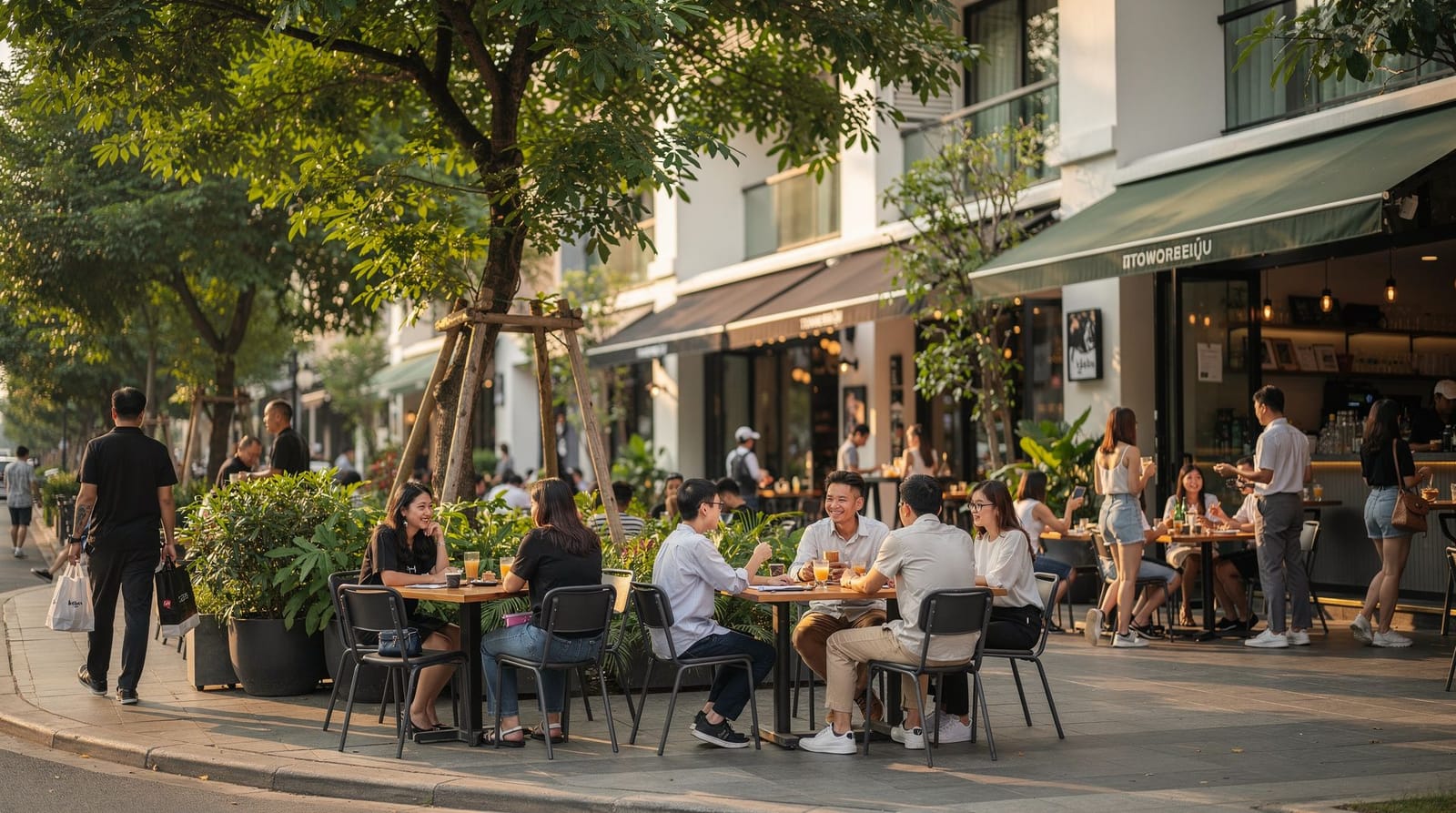
This is the sweet spot for most travellers: sit-down, air-conditioned, English-friendly restaurants serving genuinely excellent regional Thai food for 400 to 900 THB per person.
Supanniga Eating Room — Isaan and Trat heritage
Supanniga Eating Room serves the family recipes of north-eastern Isaan and eastern Trat province: moo cha muang (pork stewed with sour cha muang leaves), grilled pork neck, and superb nam phrik dips. Mains sit around 200 to 400 THB. There are several branches; the Tha Tien riverside location near Wat Pho has sunset Chao Phraya views, while the Thong Lo branch is near BTS Thong Lo. A reliable, repeatable favourite.
Err — urban rustic Thai
Err, tucked behind Wat Pho near the river, comes from the Bo.lan team and does playful, smoky, charcoal-driven Thai bar food: grilled meats, fermented sausages, crispy snacks and strong cocktails. Expect 500 to 800 THB with drinks. Nearest is MRT Sanam Chai or a Chao Phraya boat to Tha Tien. It bridges casual and serious cooking beautifully.
Krua Apsorn — the civil-servant canteen legend
Krua Apsorn is a beloved Thai-Thai institution famous for stir-fried crab with yellow chilli and a fluffy crab omelette, reputedly favoured by the late royal household’s kitchen lineage. Dishes run 150 to 400 THB, and the Dinso Road (near Democracy Monument) and Samsen branches are the originals. No BTS nearby; take a taxi or pair it with old-town sightseeing. This is where locals send you for honest, central Thai cooking.
Soul Food Mahanakorn and Baan Ice — Thong Lo staples
Soul Food Mahanakorn on Sukhumvit Soi 55 (Thong Lo) plates regional Thai street dishes done well, plus excellent cocktails, for around 400 to 700 THB; it is a two-minute walk from BTS Thong Lo. Baan Ice, also in Thong Lo, specialises in southern Thai curries and seafood at 200 to 450 THB a dish — order the gai tod (fried chicken) and a fiery southern curry. Both suit the Thong Lo and Ekkamai eating-and-drinking crawl.
Classics: the famous old names
These are the legends — not always the best value, occasionally over-touristed, but part of Bangkok’s food story.
Thipsamai — pad thai institution
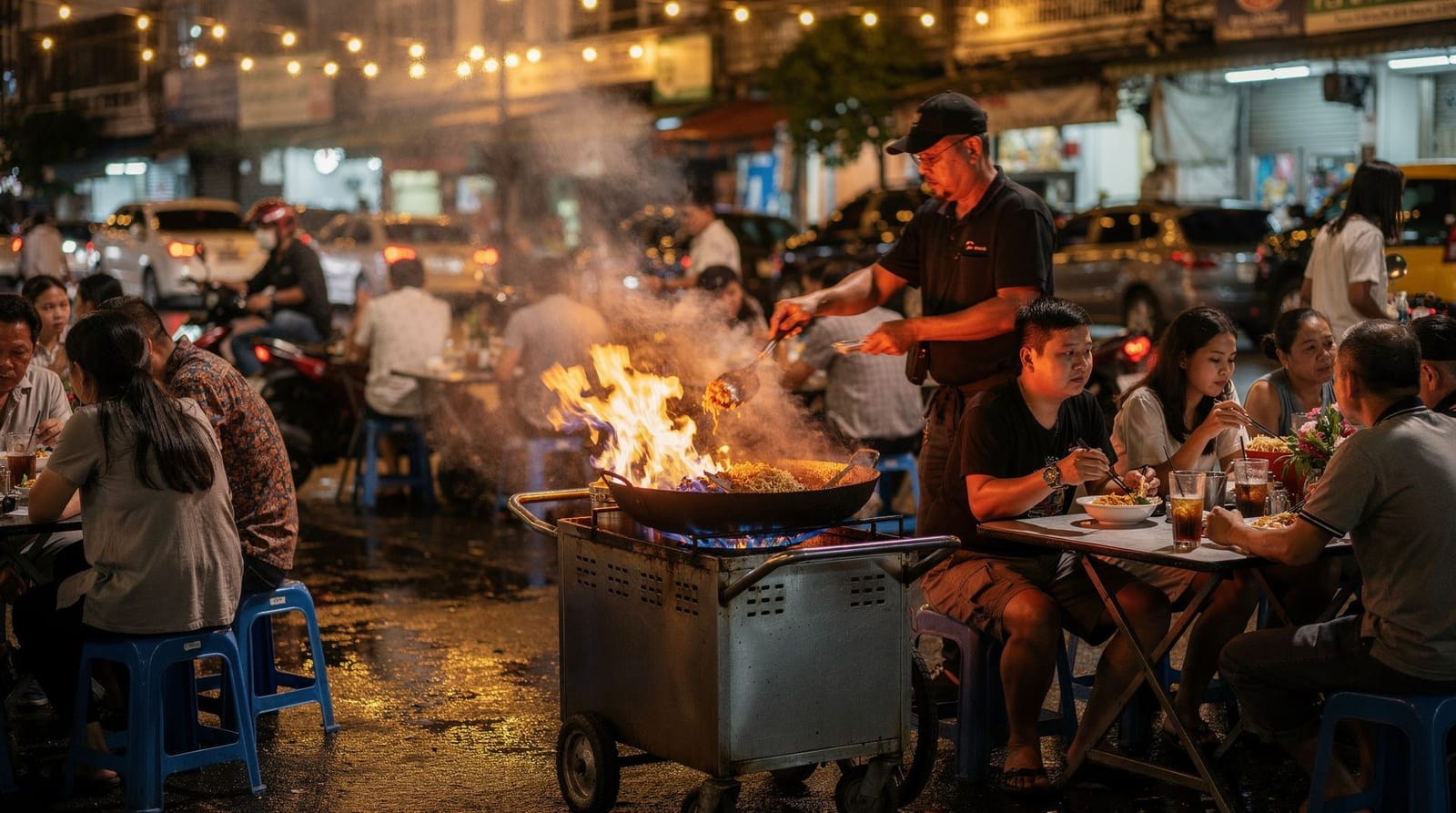
Thipsamai on Maha Chai Road has cooked its egg-wrapped pad thai since 1966 and remains the most famous plate of noodles in the city, at around 70 to 250 THB depending on toppings (the prawn-and-egg version costs most). Queues form nightly; arrive early or late. It is a short taxi from MRT Sam Yot. For the full noodle context, see the best pad thai in Bangkok guide.
Raan Jay Fai — the Michelin street star
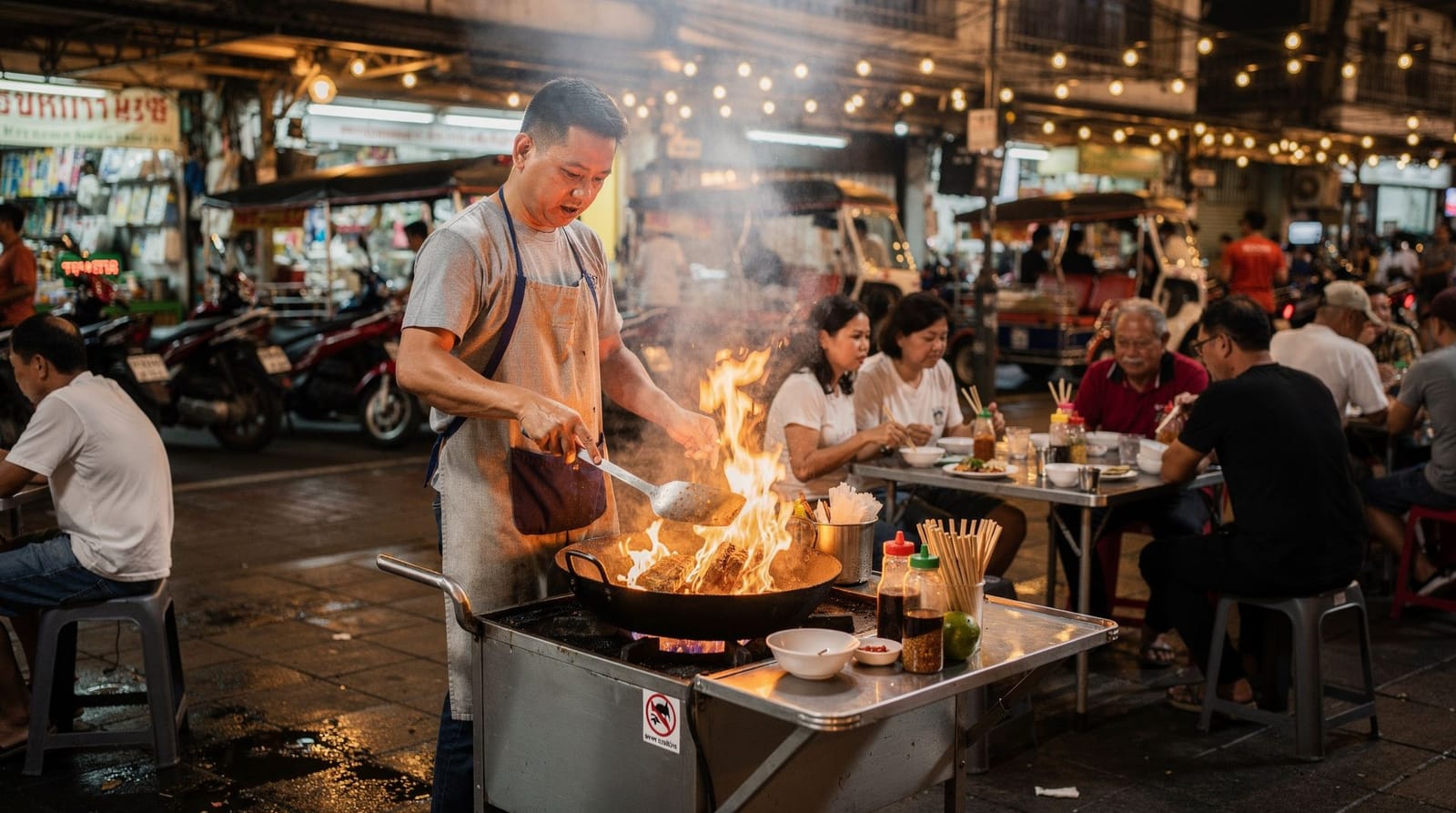
Raan Jay Fai is the one-Michelin-star wok stall where Jay Fai cooks over charcoal in ski goggles. Her crab omelette (around 1,000 to 1,200 THB) and drunken noodles are legendary, but you may queue for hours or pay a booking surcharge, and prices are high for street cooking. Go for the spectacle, not the value. It is near MRT Sam Yot on Maha Chai Road, a few doors from Thipsamai. The wider phenomenon is covered in the Michelin street food guide.
If you want to taste several of these traditions in one sitting without booking each restaurant, a guided tasting walk does the legwork for you. A ten-tasting walking tour through local restaurants and stalls is a good first-night orientation, and a fifteen-tasting backstreets food tour digs into neighbourhood institutions you would not find alone.
How to choose by occasion and budget
- Milestone dinner, money no object: Sorn or Le Du, booked a month ahead.
- Memorable but relaxed: Potong in Chinatown or Supanniga’s riverside Tha Tien branch.
- Best Thai food for the price: Supanniga, Err, Krua Apsorn — all under 900 THB.
- First-timer wanting the classics: Thipsamai for pad thai, with Raan Jay Fai only if you accept the queue.
- Group of mixed budgets: the Thong Lo cluster (Soul Food Mahanakorn, Baan Ice, Supanniga) lets everyone order across price points.
To build these into a wider eating plan, the Bangkok foodie itinerary and the what to eat in Bangkok overview map out which dishes and neighbourhoods to prioritise. For street-level eating between sit-down meals, the Bangkok street food guide and Bang Rak food crawl pair well with a fine-dining night.
Regional Thai cooking, decoded
Part of what makes Bangkok’s restaurant scene so rich is that it draws on four distinct regional cuisines, and the best restaurants wear their region on their sleeve. Knowing the difference helps you order and choose.
Southern Thai — the cooking Sorn and Baan Ice celebrate — is the fieriest and most coconut-driven, heavy on turmeric, dried shrimp, fermented fish and searing chillies. Dishes like gaeng tai pla (fermented-fish curry) and khua kling (dry minced-meat curry) are not for the faint-hearted. Isaan (north-eastern) food, the backbone of Supanniga and countless street stalls, is built on grilled meats, sticky rice, fermented sausages, laab (minced-meat salad) and som tam (papaya salad), and it travels everywhere in Bangkok because so many migrant cooks come from the region. Central Thai cooking, the style most foreigners know, leans sweeter and more balanced — the realm of Krua Apsorn’s crab dishes and the royal-influenced kitchens. Northern Thai food is milder and herb-forward, famous for khao soi (curry noodles) and nam phrik num (green-chilli dip), though it is harder to find at the fine-dining level here. The what to eat in Bangkok guide breaks these dishes down further, and the best cheap eats in Bangkok guide shows where to taste them on a budget.
Pairing sit-down meals with the rest of your trip
A great Bangkok food itinerary mixes a sit-down highlight with street grazing rather than booking three restaurants a day. A typical strong evening: an early-evening street crawl through Chinatown and Yaowarat, then a late, leisurely tasting menu — or the reverse, a refined lunch followed by a market wander among the best food markets. If you only have a few days, the Bangkok in three days itinerary slots one fine-dining night in without overloading the schedule, and the Bangkok for couples plan pairs a romantic restaurant with a rooftop drink. Travellers wondering whether a guided food experience is worth it should read the food tour worth it guide before booking.
Practical booking and payment notes
Fine-dining rooms take cards and online bookings; budget for the 10 percent service charge plus 7 percent VAT that sits on top of menu prices. Mid-range institutions usually take cards too, but smaller branches and the classics may be cash-preferred — carry some. Dress is smart-casual at the top end; nobody expects a jacket, but skip beachwear. Lunch sittings, where offered, are often cheaper and far easier to book than dinner. To plan your hops between districts, the BTS Skytrain guide and getting around Bangkok guide cover the fastest routes. And reserve early: in 2026 the best tables, especially Sorn and Le Du, remain the hardest seats in the city.
The three tiers compared
| Tier | Price per person | Booking | Best for |
|---|---|---|---|
| Fine dining | 2,000–8,000 THB | weeks ahead | a milestone meal |
| Mid-range institutions | 400–900 THB | same-day to a day ahead | reliable, real Thai cooking |
| Classics | 70–1,200 THB | none (queue instead) | bucket-list plates |
Dietary needs at Bangkok’s best restaurants
Thai fine dining leans heavily on fish sauce, shrimp paste and seafood, so vegetarians and vegans should confirm ahead — most tasting menus can adapt with notice, but walk-in substitutions are harder at the top tier. The vegetarian and vegan Bangkok guide lists which of the city’s better restaurants handle plant-based diners well. For halal diners, Thai restaurants generally are not certified halal because of the ubiquitous fish sauce and pork, so the halal food Bangkok guide is the better starting point for a sit-down meal that meets those requirements. It is always worth calling ahead to any restaurant on this list with specific dietary needs rather than discovering the limits at the table.
Finding these restaurants on the map
The fine-dining and mid-range picks cluster in a few districts, which makes an evening easy to plan around a base. Around Silom and Sathorn, Le Du and Err are a short walk apart. In Phrom Phong, Sorn is a short taxi from the BTS, and the neighbourhood’s malls make a natural pre-dinner stop. Save room for a classic dessert too — mango sticky rice is sold at stalls near almost every one of these restaurants and is the traditional way to finish a Thai meal, fine-dining tasting menus aside.
Frequently asked questions about Best Thai restaurants in Bangkok across every budget
Do I need to book Bangkok's fine-dining Thai restaurants?
How much does a fine-dining Thai tasting menu cost in Bangkok?
Where can I eat great Thai food for a mid-range budget?
Is Raan Jay Fai worth the queue and price?
What is the difference between Le Du and Nahm?
Which Thai restaurants are good for a special occasion?
Are these restaurants easy to reach by BTS or MRT?
Top experiences
Bookable activities with verified prices and instant confirmation on GetYourGuide.