Lumphini Park guide: Bangkok's green lung in the city
Bangkok: Let's Relax Spa Central World E-Voucher
What is Lumphini Park and is it worth visiting?
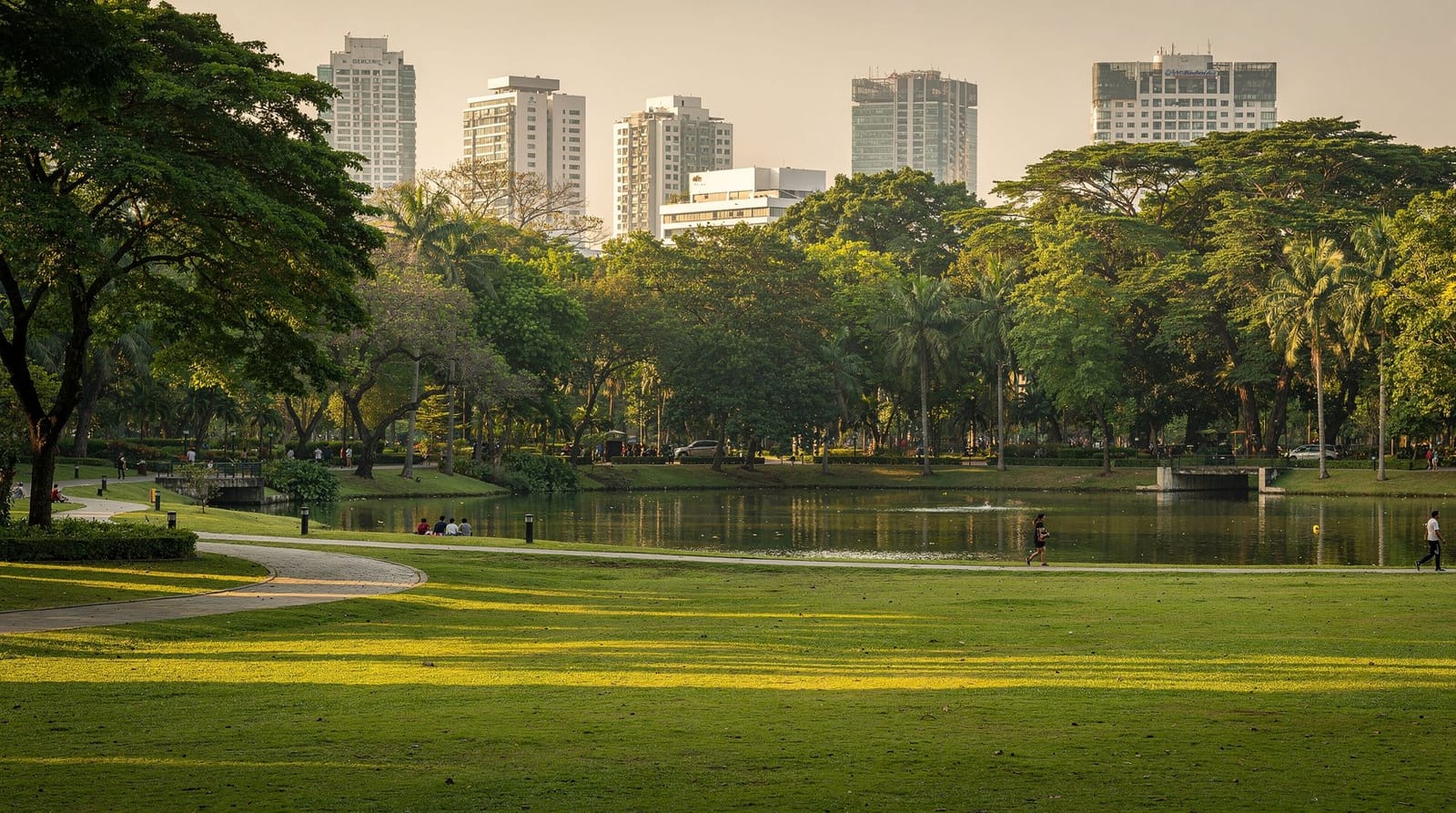
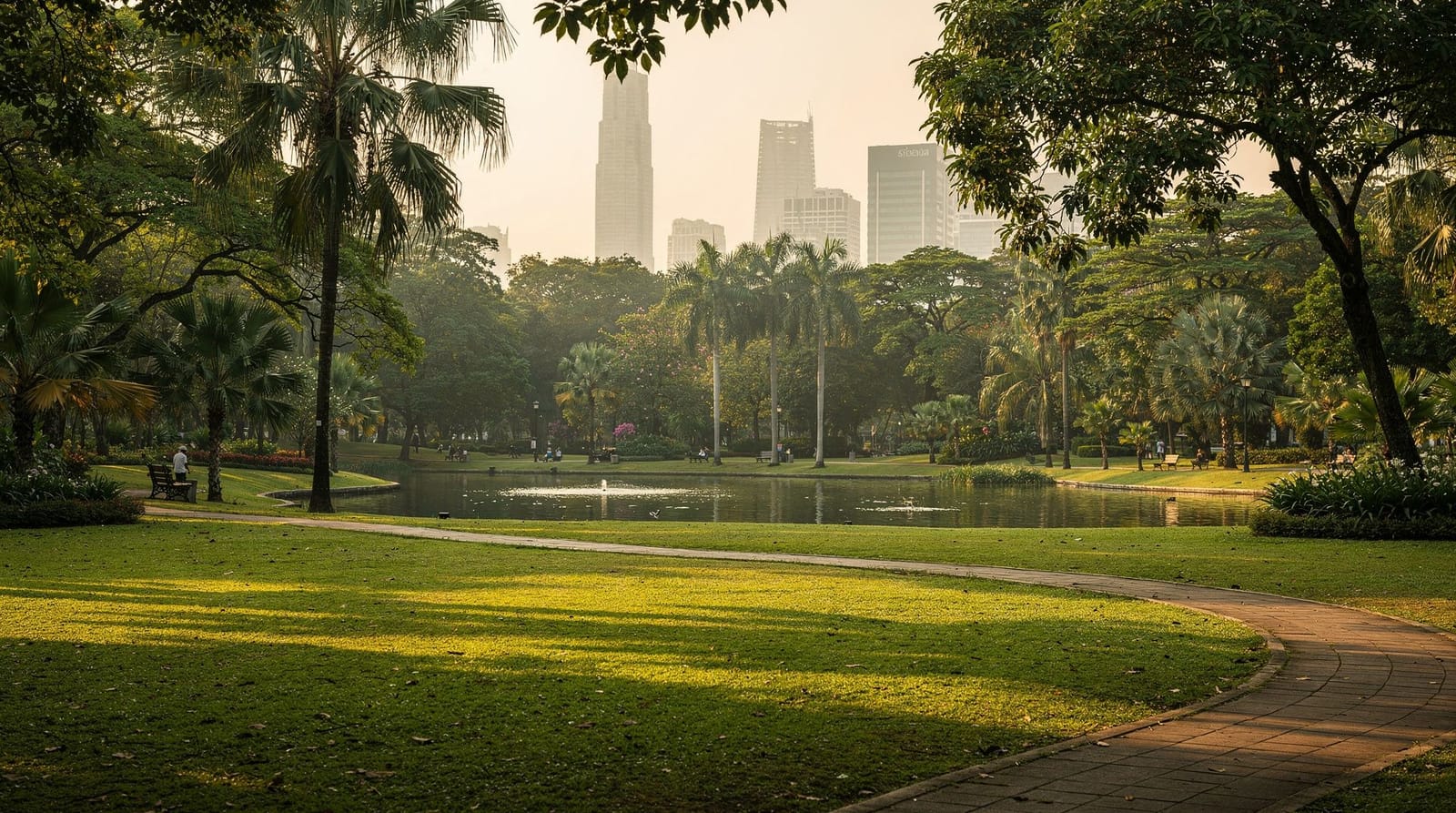
Lumphini Park is Bangkok's central green oasis — a free 57-hectare park between the Silom and Sukhumvit business districts, with lakes, paddle boats, shaded paths, and resident monitor lizards. Locals come at dawn and dusk for jogging, tai chi, aerobics and outdoor gyms to escape the heat. It opens 4:30-21:00, costs nothing, and is a refreshing, very local break from the city's traffic and concrete.
Lumphini Park is Bangkok’s green lung — a 57-hectare oasis of lakes, lawns and shaded paths dropped right between the Silom and Sukhumvit business districts, where the city goes to breathe. It is free, it opens before dawn, and at sunrise and dusk it fills with joggers, tai chi practitioners, outdoor aerobics classes and the famous resident monitor lizards basking by the water. This guide covers what to do, when to go, the lizards, and how to reach what is one of central Bangkok’s best free experiences.
The park was created in the 1920s on land donated by King Rama VI (whose statue stands at the main gate) and named after the Buddha’s birthplace, Lumbini, in Nepal. For a megacity famously short on green space, it is a precious and much-loved refuge — and a window into local life that no temple or mall can match.
Lumphini Park at a glance
| Entry | Free |
| Hours | Daily, 4:30-21:00 |
| Getting there | Lumphini MRT (Blue Line) at the southeast corner; Si Lom MRT and Sala Daeng BTS at the northwest corner |
| Time needed | 30 minutes for a stroll, 1-2 hours for a proper visit |
| Best for | Free morning exercise culture, monitor lizards, a break from the traffic |
What to do
- Walk or jog the loops: shaded paths circle the lakes; the perimeter route runs roughly 2.5km and is a popular running benchmark, busy at dawn and dusk.
- Hire a paddle or rowing boat on the central lake for a small fee — a relaxing way to see the park and the skyline reflected in the water.
- Watch (or join) the morning exercise culture: free tai chi, Chinese sword forms, group aerobics blasting music, and Thai folk-dance fitness — the dawn scene is genuinely fascinating.
- Use the outdoor gyms: free public exercise equipment dotted around the park.
- Picnic on the lawns, watch the wildlife, and escape the traffic.
- Visit the public library inside the grounds, or find the chess players who gather under shade trees on weekend afternoons — some of the park’s quietest, most local corners.
In the cool season there are sometimes outdoor concerts and events. It is, above all, a place to slow down and watch the city live — for the nature angle, see the Lumphini Park nature guide and the broader Bangkok parks guide.
The monitor lizards
Lumphini’s most memorable residents are its Asian water monitor lizards — large reptiles, some well over two metres long, that swim in the lakes and bask on the banks looking thoroughly prehistoric. They are a harmless local celebrity: not aggressive toward people if left alone, so keep a respectful distance, do not feed or provoke them, and enjoy the spectacle. Spotting a giant monitor gliding across the lake is one of the park’s signature surprises.
Free, central and very local
Entry is free, which puts Lumphini squarely in the free things to do in Bangkok guide. Unlike the temples and towers, this is a place locals use daily, which makes it one of the most authentic, unforced glimpses of Bangkok life available to a visitor — and a welcome contrast to the Silom-Sathorn business district that surrounds it.
Facilities
Public restrooms are dotted around the park near the main gates and lake edges, and drinking-water points supplement the bottled water sold from carts. Benches and shaded pavilions line the paths for anyone who wants to rest between the lake and the lawns, and the paved perimeter path is stroller and wheelchair friendly, unlike much of the uneven pavement in the surrounding streets — a practical plus for families and anyone with mobility needs.
Hours and getting there
Entry: free · Hours: 4:30-21:00 daily Nearest transit: Lumphini MRT (Blue Line) at the southeast corner; Si Lom MRT and Sala Daeng BTS at the northwest corner
The park is exceptionally well connected — both the MRT and BTS serve its corners directly, so it is one of the easiest places in the city to reach. See the Lumphini Park destination guide and the MRT subway guide.
Best time to visit
Come at early morning (5:30-8:00) or early evening (17:00-19:00), when the air is cooler and the park bursts with exercise. Sunrise is the special one, with the full sweep of Bangkok’s outdoor fitness culture on display. Avoid the midday heat in the hot season. The cool, dry season (November-February) is the most comfortable overall — see the best time to visit Bangkok guide.
What to bring: a hat and water even for a short visit, since shade thins out around the open lawns and lake; insect repellent in the wetter months; comfortable shoes for the perimeter path; and small cash for the paddle boats and food carts.
Lumphini or Benchakitti: which green space suits you
Both parks are free and linked by a skywalk, but they have distinct characters worth knowing before you pick one.
| Lumphini Park | Benchakitti Forest Park | |
|---|---|---|
| Character | Classic city park, lake and lawns | Wetland and forest, elevated walkways |
| Best for | Exercise culture, monitor lizards | A quieter, wilder walk |
| Crowds | Busiest at dawn and dusk | Generally quieter |
| Distance from centre | Between Silom and Sukhumvit | Adjacent, via the skywalk |
For a fuller nature immersion beyond either, the Bang Krachao green lung across the river adds cycling through jungle and mangrove — a bigger outing than either city park.
For families — and the link to Benchakitti
Families enjoy the paddle boats, open lawns, playgrounds and the novelty of the monitor lizards, making the park a good low-key stop on a Bangkok with kids day. And there is a bonus: a pedestrian skywalk now links Lumphini to the adjacent Benchakitti Forest Park, a newer, wilder wetland-and-forest park with elevated walkways. Together they form central Bangkok’s largest continuous green space — you can walk straight from Lumphini’s lawns into Benchakitti’s forest in a single outing.
After the park
A jog or a long walk around the lake is a good excuse for a proper Thai massage afterwards — plenty of shops line the streets bordering the park, and the Thai massage Bangkok guide explains what to expect and what to pay. If you would rather book ahead for something more polished, you can reserve a relaxing spa session at a central Bangkok mall and head there once your legs have had enough of the paths. In the evening, the park’s position between Silom-Sathorn and Sukhumvit puts you within easy reach of some of the city’s best rooftop bars for a sundowner with a view over the green space you just walked through. For more free or low-cost ways to fill the day around it, see the things to do in Bangkok guide.
How to shape your visit
The park rewards a loose plan. Pick one anchor, such as the dawn exercise scene, a slow lap of the lake or an hour on the water, and let everything else happen around it. Arriving without a checklist is the point: Lumphini is less an attraction to tick off than a place to watch how Bangkok spends its free time. If you are building a longer stay, the how many days in Bangkok guide helps you decide where a calm morning like this fits between the temples and the markets.
A simple rhythm works well. Walk the outer path first to get your bearings, then cut inward toward the lake, where the paths are shadier and the wildlife is easiest to spot. Pause on a bench or in one of the pavilions when the heat builds, and finish near whichever gate leads to your next stop. Because the gates sit close to the stations, there is no awkward walk back through traffic.
Reading the dawn scene
The early-morning crowd is not one crowd but several, each with its own corner and its own tempo. Quiet groups practise slow tai chi and sword forms on open paved areas, while others gather for music-driven aerobics that is as much social event as workout. Runners circle the paths, walkers go the other way, and a few people simply sit with a newspaper or a flask. As a visitor you are welcome to watch, but treat it as someone’s daily routine rather than a show: keep your distance from the classes, do not walk through the middle of a group, and ask politely before pointing a camera at anyone in particular. A smile and a nod go a long way, and some groups are happy for newcomers to follow along at the edge.
If you want to join in rather than watch, wear light, breathable clothes you can move in and comfortable shoes. You do not need any experience, and nobody expects a beginner to keep up. Arriving a little before the main crowd gives you room to find a spot and settle in, which is also when the light over the lake is at its softest. For photographs of the skyline against the water, see the best photo spots in Bangkok.
On the water
The paddle and rowing boats are the easiest way to see the lake from a different angle, with the city’s towers rising behind the trees. Go slowly, stay clear of the banks where the monitor lizards bask, and be ready for the heat to feel stronger once you are out in the open without shade. Keep small cash on you, since the hire kiosks may not take cards. It is a gentle activity that suits couples, friends and families alike, and a good way to fill the quieter, hotter part of the afternoon without pushing too hard.
Seeing the park from above
Lumphini looks different from a height: the lakes and lawns stand out as a green patch among the towers. If you want that view, an observation deck visit at one of Bangkok’s tallest towers shows the whole green space against the skyline, and it pairs well with a clear morning in the park beforehand.
Wildlife beyond the lizards
The lizards get the attention, but the lakes and trees host plenty of other life for anyone willing to slow down. Look for birds in the canopy and along the water’s edge, and for turtles and fish near the banks. Early morning is again the best time, before the paths fill and the noise rises. If wildlife is what brings you, the Lumphini Park nature guide goes further, and the wider Bangkok parks guide compares what other green spaces offer. For a bigger escape into greenery beyond the city centre, Bang Krachao is the natural next step, and the bike tour of Bang Krachao covers how to see it on two wheels. If you would rather stay on the water after the park’s paddle boats, a private long-tail boat trip through the city canals shows a greener, quieter side of Bangkok from a different angle.
Combining the park with the rest of your day
Because the park is central, it slots easily into almost any itinerary. A dawn visit leaves the whole day free, and a late-afternoon one makes a gentle prelude to dinner. Travellers working through the classics can pair it with a temple morning or an afternoon of shopping, using the Bangkok 1 day itinerary or the Bangkok 3 days itinerary as a frame and swapping in the park wherever you need a rest. Anyone planning their first visit to the city will find more context in the Bangkok for first-timers guide, and those who prefer to keep spending low can use the park as the free centrepiece of a day built from the Bangkok on a budget guide.
If rain threatens, the park is still worth a short visit between showers, though the paths can be slippery and the lawns soggy. The Bangkok in the rain guide has ideas for what to do when the sky closes in, and it is wise to keep a light layer or umbrella in your bag during the wetter months.
Getting around the area
Getting there is simple, and moving on is just as easy. The stations at the park’s corners put you on the rails within minutes, so you can leave from a different gate than the one you entered. If you are new to the system, the BTS Skytrain guide explains how the elevated line works alongside the underground one, and the Rabbit card guide covers the stored-value option for the Skytrain. For short hops across the neighbourhood, Grab, taxis and tuk-tuks are the alternatives, with a little caution about fares and offers from drivers waiting outside busy gates.
Small etiquette notes
Lumphini is a public park used every day by residents, so a few courtesies keep things pleasant for everyone. Keep to the paths when they are busy, follow the direction of travel on the running routes, and take your rubbish with you. Keep voices low near the quiet exercise groups, and give anyone mid-routine plenty of space. Dress comfortably but sensibly, and remember that the usual Thai norms of politeness apply here as anywhere; the Thai customs and etiquette guide is a useful primer if it is your first time in the country.