Bangkok parks guide: the city's best green escapes
Bangkok: Bike and Canal Boat Tour with Lunch
What are the best parks and green spaces in Bangkok?
Bangkok's best green escapes are Lumphini Park (the central classic, with monitor lizards and exercise culture), Benjakitti Park (modern wetlands and skywalks, linked to Lumphini), Bang Krachao (the jungle 'green lung' across the river, explored by bike), Chatuchak Park (next to the famous weekend market), and quieter spots like Rama IX Park and the Princess Mother Memorial Park. Most are free, easy to reach by BTS or MRT, and best visited in the cool early morning or late afternoon.
For a megacity of concrete and traffic, Bangkok hides a surprising number of green escapes — from the lizard-filled lawns of central Lumphini Park to the jungle “green lung” of Bang Krachao across the river. These parks are where the city goes to breathe: to jog and practise tai chi at dawn, to picnic in the shade, to watch monitor lizards and birds, and to cool off when the heat or the crowds become too much. Most are free, easy to reach by BTS or MRT, and best enjoyed in the soft light of early morning or late afternoon. This guide ranks Bangkok’s best parks honestly and tells you which one suits your mood, your schedule and your travelling companions.
At a glance
| Entry | Free for Lumphini, Benjakitti and Chatuchak Park; Bang Krachao is free to enter, but the boat crossing and bike hire cost small cash amounts |
| Hours | Most city parks open around 4:30-5:00 and close by 21:00 |
| Best for wildlife | Lumphini (monitor lizards) and Bang Krachao (birdlife, mangrove) |
| Best time to visit | 05:00-08:00 or late afternoon into early evening |
| Getting there | Lumphini: MRT Si Lom/Lumphini, BTS Sala Daeng · Bang Krachao: short boat crossing from a riverside pier |
1. Lumphini Park — the central classic
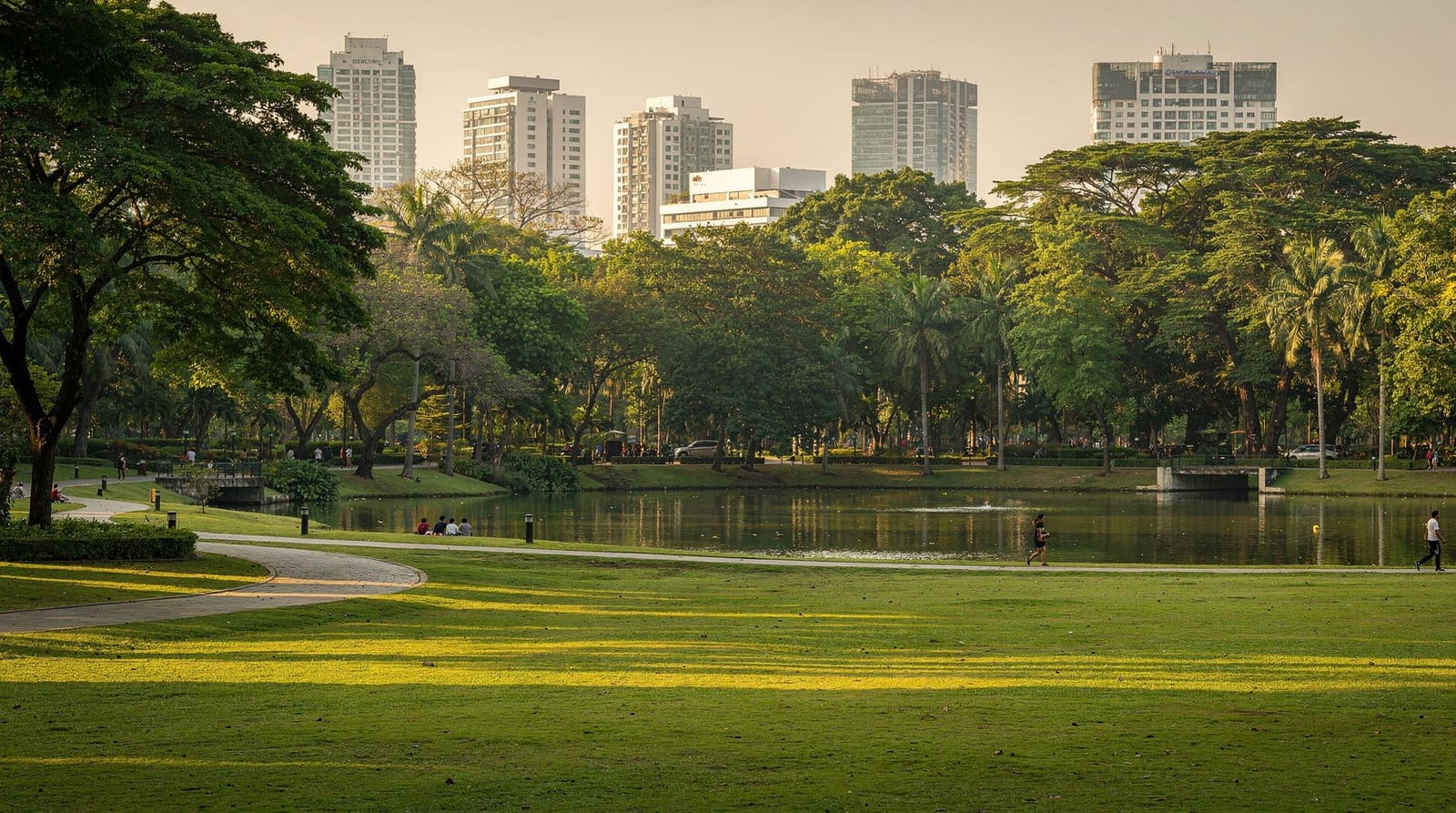
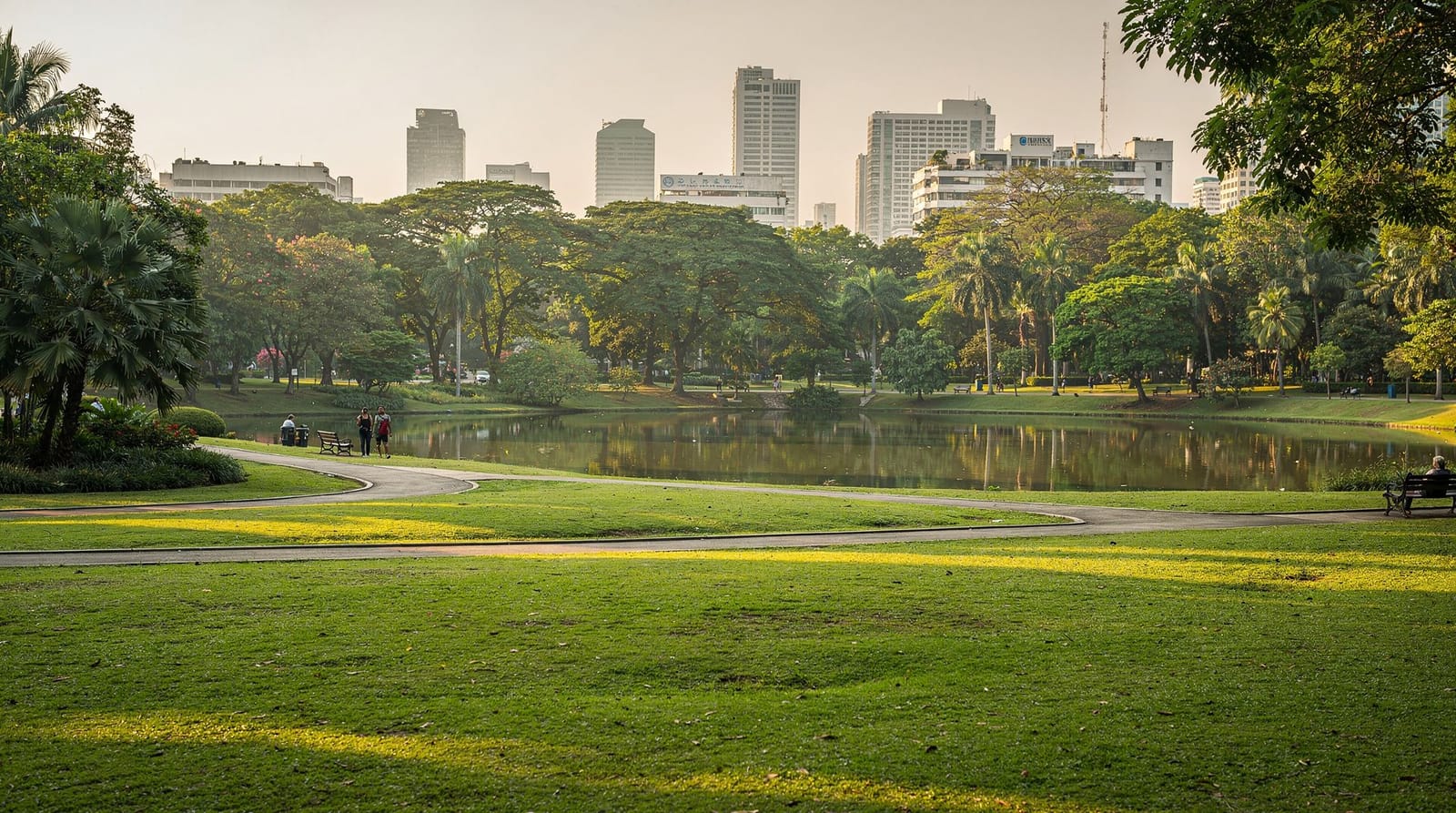
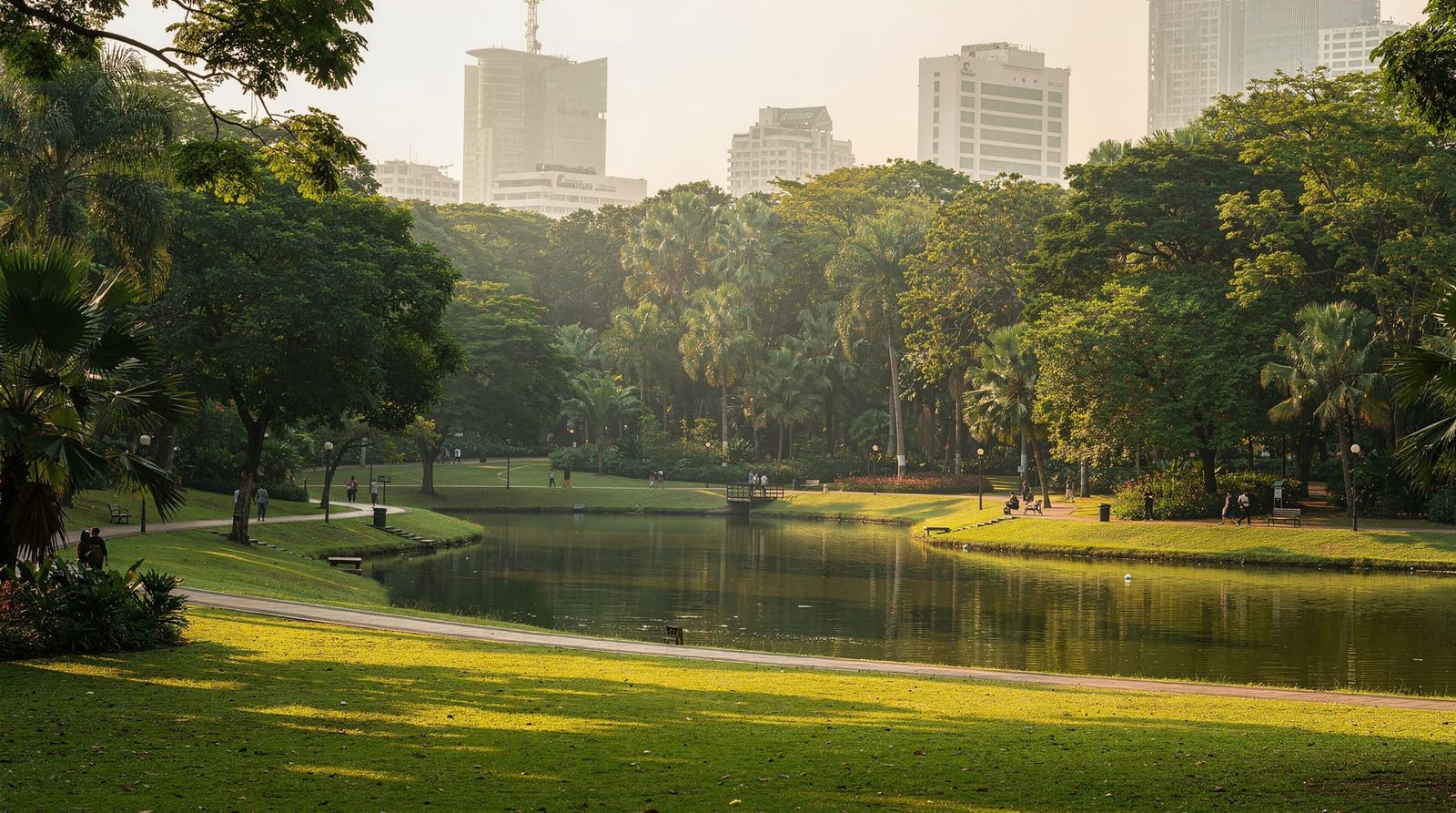
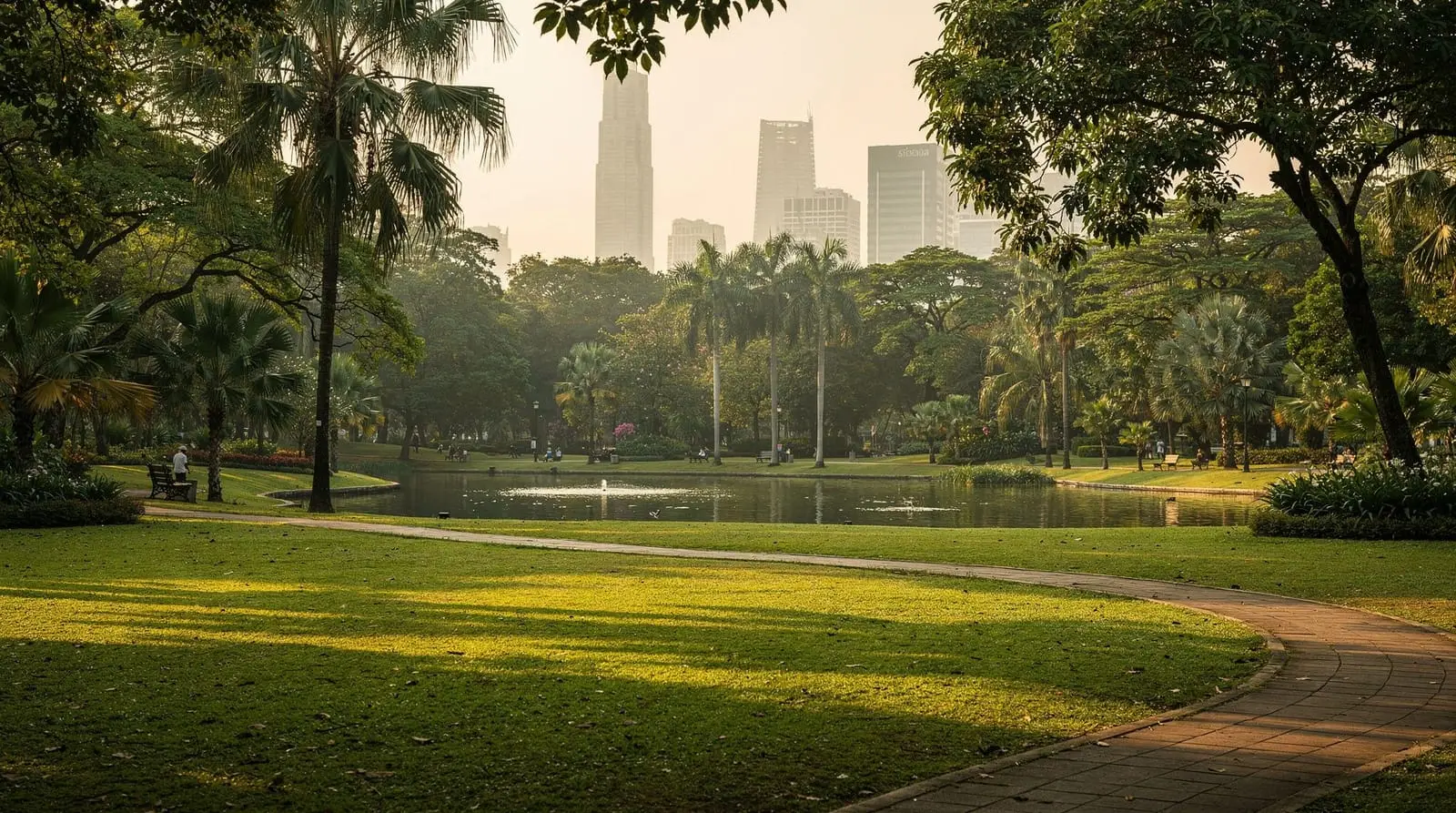
The city’s most famous and most central green space, Lumphini Park sits between the Silom and Sukhumvit districts and packs a lot of character into its 57 hectares: large, harmless water monitor lizards patrolling the lakes, free dawn and dusk exercise culture (jogging, tai chi, open-air aerobics), pedal boats, and casual birdwatching. It is free, exceptionally easy to reach via MRT Si Lom, MRT Lumphini or BTS Sala Daeng, and the obvious first green stop for any visitor. The practical Lumphini Park guide covers facilities in detail.
2. Benjakitti Park — the modern showpiece
Adjacent to Lumphini and linked to it by a green skywalk, Benjakitti Park is the city’s most modern green project — a former tobacco factory transformed into restored wetlands, lakes and an elevated forest walkway. It is photogenic, popular with runners and cyclists, and feels strikingly contemporary against the surrounding towers. Near MRT Queen Sirikit and Asok, it pairs perfectly with Lumphini for a one-two green tour of central Bangkok.
3. Bang Krachao — the jungle green lung
Across the Chao Phraya River, Bang Krachao is the wildest of Bangkok’s green spaces — a protected peninsula of mangrove, orchard and canal, explored by bicycle along narrow raised paths. It is the city’s best nature immersion, complete with a botanical garden, a bird-watching tower and a weekend floating market, reached by a short longtail-boat crossing. It is a half-day in itself and a refreshing contrast to the city’s hard edges; see the bike tour guide for the cycling routes.
Guided bike, canal and boat day with lunch — an easy way to cover Bang Krachao’s back lanes without getting lost4. Chatuchak Park — pair it with the market
In the north of the city, Chatuchak Park is a pleasant, leafy expanse beside the legendary Chatuchak Weekend Market — the ideal place to recover from the market’s chaos with a shaded sit-down. With its lake, gardens and jogging paths, and direct access via BTS Mo Chit and MRT Chatuchak/Kamphaeng Phet, it is a natural add-on to a weekend market visit. The adjacent Queen Sirikit and Wachirabenchathat (Rot Fai) parks extend the green further.
5. The quieter parks
Beyond the big names, Bangkok has gentler retreats: Rama IX Park, a large botanical park in the east with extensive gardens (sometimes a small entry fee); the Princess Mother Memorial Park in Thonburi, a small, atmospheric green space with a museum; and various neighbourhood pocket parks. These see few tourists and reward anyone wanting a quiet, local green moment away from the crowds — good additions to the free things to do in Bangkok.
Comparing the parks at a glance
| Park | Size/effort | Best for | Reach it via |
|---|---|---|---|
| Lumphini | Small, easy loop | First stop, monitor lizards | MRT Si Lom/Lumphini, BTS Sala Daeng |
| Benjakitti | Small-medium, flat | Photos, running, wetlands | MRT Queen Sirikit/Asok |
| Bang Krachao | Large, half-day by bike | Real nature immersion | Boat crossing from a riverside pier |
| Chatuchak Park | Small, easy | Pairing with the weekend market | BTS Mo Chit, MRT Chatuchak |
| Rama IX / quieter parks | Medium, low-key | Escaping crowds, local feel | Further out, best by taxi/Grab |
Wildlife in the parks
For casual urban wildlife, Lumphini is the star — its monitor lizards are a genuine highlight, and the lakes draw herons, egrets, kingfishers and storks. Bang Krachao offers richer nature, with mangrove birdlife and a dedicated bird tower, while Benjakitti’s restored wetlands attract waterbirds. For genuinely wild big mammals, though, you must leave the city — see the Khao Yai wildlife guide for the real safari experience a few hours away.
When and how to visit
Across all the parks, early morning (around 05h00–08h00) and late afternoon into early evening are best — cooler air, active wildlife, and the chance to watch or join the local exercise culture. Midday is hot and the parks empty out. Most city parks close overnight (commonly around 21h00) and reopen before dawn; the cool season (November–February) is the most comfortable. The parks are also a smart wet-weather backup — see Bangkok in the rain for more rainy-day ideas. With the BTS and MRT reaching most of them, dropping into a park between other sights could not be easier.
Joining the exercise culture
Bangkok’s parks are genuinely used, not just decorative, and the early-morning and dusk exercise scene is one of the city’s most authentic free experiences. Lumphini fills with tai chi groups, open-air aerobics classes and joggers from around 05h00, much of it free or donation-based and open to anyone who wants to join in — nobody minds a visitor falling in at the back of an aerobics class. Outdoor gym equipment is dotted around several of the larger parks, usually free to use, and Lumphini’s perimeter track (roughly 2.5km) is a favourite for measured morning runs. Benjakitti’s elevated skywalk loop draws a steady stream of runners and cyclists into the evening, when the lakes and towers light up and the air has cooled enough to make the exercise genuinely pleasant rather than a slog. This everyday wellness culture runs through much of the city beyond the parks too — see the wellness in Bangkok guide for spas, yoga and fitness options if the park scene inspires you to do more of it.
Picnics, food and facilities
Most of the main parks allow picnicking on the lawns, and Lumphini and Chatuchak Park both have snack vendors and drink stalls near the entrances if you’d rather buy than bring. Public toilets exist at the main entrances of Lumphini, Benjakitti and Chatuchak Park, though they can be basic — carry tissue and hand sanitiser as a habit. Shade is patchy in the newer parks like Benjakitti, so a hat and water matter more than you’d expect for what looks like a short stroll on a map. For a proper meal, it’s usually better to step just outside the park gates: Lumphini sits within easy reach of Silom’s food streets, and the Bangkok street food guide points to nearby options. Benjakitti’s elevated walkways and lake reflections also make it one of the better spots in the best photo spots in Bangkok guide, especially around golden hour, and dogs on leads are a common sight across most of the city parks if you’re missing a pet from home.
Visiting with children
Lumphini and Chatuchak Park are the easiest choices for families — flat, shaded paths, pedal boats, and enough open lawn for kids to run without much traffic risk nearby. Bang Krachao works well for families comfortable on bicycles, with quiet, flat paths away from cars, though the boat crossing and midday heat are worth timing around a child’s nap schedule. The Bangkok with kids guide covers park visits alongside the rest of a family itinerary, and the Lumphini Park destination page has more on the immediate neighbourhood if you’re basing a family day around it.