Best Bangkok tours: the complete honest guide
Bangkok in a Day: Must-Visit Highlights Tour with a Guide
What is the best tour to take in Bangkok?
For most first-time visitors, an organised Chinatown food tour by tuk-tuk at night is the single most rewarding tour in Bangkok — it solves the heat, the navigation and the language barrier in one go. A morning temple walking tour of Rattanakosin is the best value if you want history, and a private half-day with a guided van is worth it if you are short on time or travelling with family. Skip generic 'city highlights' coach tours, which spend more time in traffic than at sights.
Bangkok rewards visitors who know when to take a tour and when to go it alone. The city’s best sights — the Grand Palace, Wat Pho, Wat Arun, the river temples — are cheap and straightforward to reach independently with the BTS Skytrain, the MRT subway and the Chao Phraya river boats. But Bangkok also has a heat problem, a traffic problem and a language-and-navigation problem in its hawker alleys and night markets, and those are exactly the problems a good tour solves. The trick is paying for guidance where it genuinely earns its price, and skipping the tours that mostly sell you the convenience you could arrange yourself.
This guide ranks the main types of Bangkok tour honestly. It tells you what each costs in real baht, when a tour beats doing it yourself, when it does not, and the specific scams — the “20-baht” tuk-tuk racket, the Grand Palace “closed today” trick, the meter-refusing taxi — that target tour-minded visitors. Use the things to do in Bangkok guide for the wider picture, and the top attractions guide for the individual sights themselves.
| Best overall | Evening tuk-tuk food tour through Chinatown |
| Best value | Morning temple walking tour |
| Typical cost | 900–5,000+ THB depending on tour type |
| Booking | Advance booking recommended, especially weekends |
| Best time of day | Early morning or evening — avoid the midday heat |
How to decide whether a Bangkok tour is worth it
Before the rankings, a simple framework. A tour in Bangkok buys you some combination of four things: context (a guide who explains what you are seeing), access (skip-the-line tickets, transport, entry to places you could not find alone), logistics (someone handling the heat, the traffic and the route) and safety (a vetted operator instead of a street tout). The more of those four a given activity needs, the more a tour is worth paying for.
Temple visits in the old city score low on access and logistics — you can walk between the Grand Palace, Wat Pho and the Wat Arun ferry in a morning for the price of the entry tickets. So a temple tour mainly buys context, which is valuable but optional. By contrast, a night food crawl through Chinatown scores high on all four: you would struggle to find the best stalls, order confidently or stay oriented in the alleys after dark alone. That is why food and night tours consistently top the value rankings while generic sightseeing tours sit lower.
Prices below reflect 2025–2026 conditions and are approximate; the exchange rate used is roughly 33 THB to 1 USD.
Bangkok tour types compared
Before the detail, here is the short version side by side.
| Tour type | Typical cost (per person) | Duration | Best for |
|---|---|---|---|
| Tuk-tuk food and night tour | 1,500–2,800 THB | 3–4 hours | Chinatown food, navigation, after dark |
| Morning temple walking tour | 900–1,800 THB | Half-day | History, context, budget-conscious travellers |
| Private guided tour | 2,500–5,000+ THB | Half-day | Families, time-pressed travellers, flexibility |
| Bike tour | 1,000–1,800 THB | Half-day | Active travellers, Bang Krachao, off the beaten path |
| River and boat tour | Around 1,000 THB (combined pass) | Flexible | Scenic transport, linking riverside sights |
1. Tuk-tuk food and night tours — the best overall
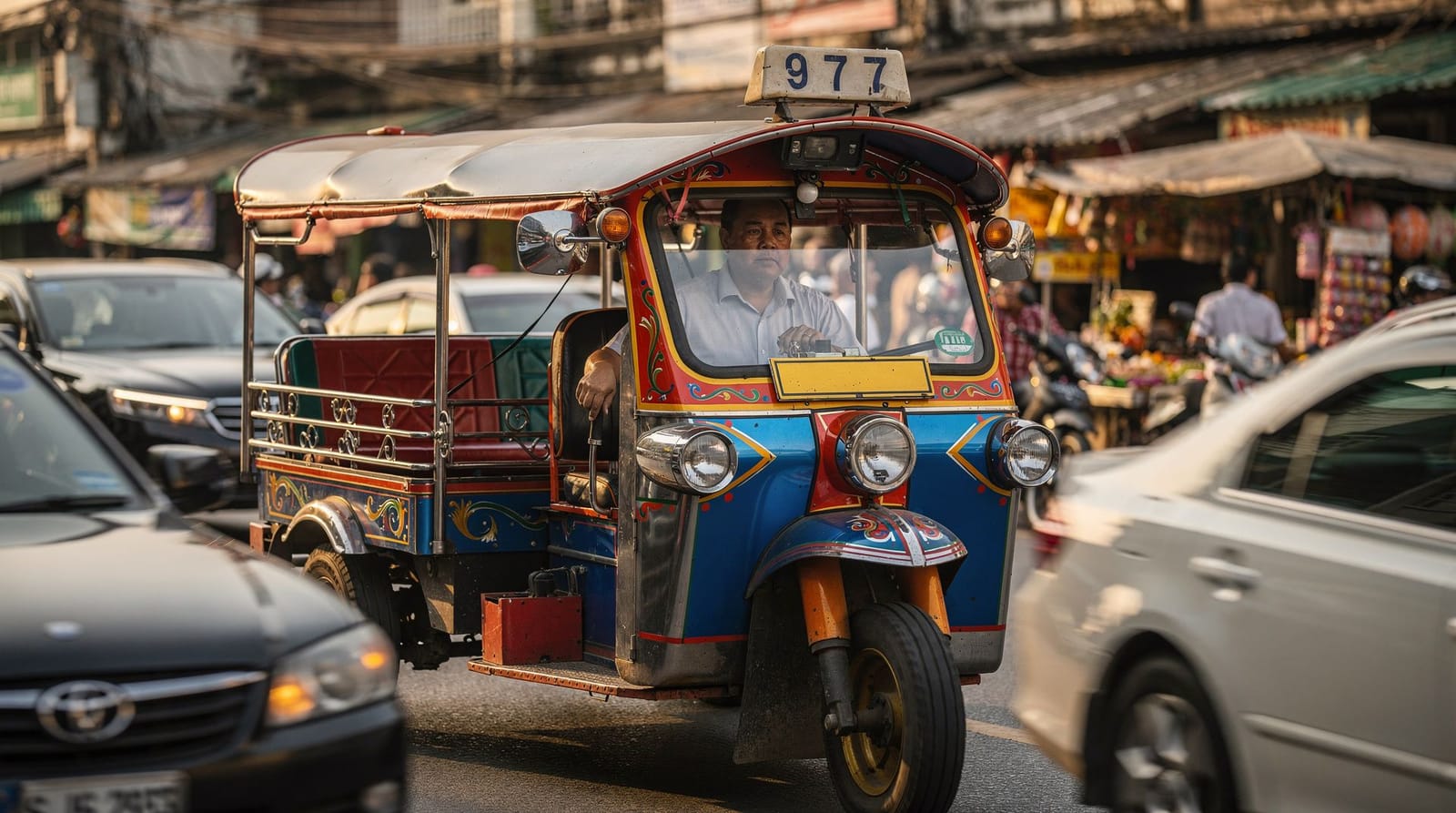
The single most rewarding category of tour in Bangkok is the organised evening tuk-tuk tour, and specifically the food-focused versions that run through Chinatown and the old city after dark. These are nothing like the street tuk-tuk touts who shout “where you go, my friend” outside temples. A booked tour uses a vetted driver, follows a fixed itinerary and exists to show you the best night-time street food, lit temples and markets — not to deliver you to a gem shop.
Why it works: Bangkok’s street-food culture peaks at night, when the heat drops and the Yaowarat road comes alive with grills, woks and crowds. Navigating that alone is possible but bewildering; a tuk-tuk tour hops you between the best stalls, with a guide ordering dishes you would never spot on a Thai-only menu. The open-sided tuk-tuk ride between stops is half the fun, weaving through traffic with the city lit up around you.
What you eat and see: Expect a Michelin-recommended Chinatown stall or two, a flower market visit at Pak Khlong Talat, a lit-up temple stop and several street-food tastings — boat noodles, grilled satay, mango sticky rice, fresh seafood. Tours typically run three to four hours and start around 18h00–19h00.
Real prices: 1,500–2,800 THB (USD 45–85) per person, usually including all tastings.
Book the Chinatown Michelin tuk-tuk food and temples tourHonest assessment: This is the rare Bangkok tour that is genuinely better than doing it yourself, even for confident independent travellers. The only people who should skip it are those on a tight budget who are happy to wander Yaowarat and point at whatever looks good — which is also a fine way to spend an evening. Read the full tuk-tuk tours guide for operator details and the scams to avoid, and the Bangkok at night guide for the wider after-dark scene.
2. Morning temple walking tours — best for history and value
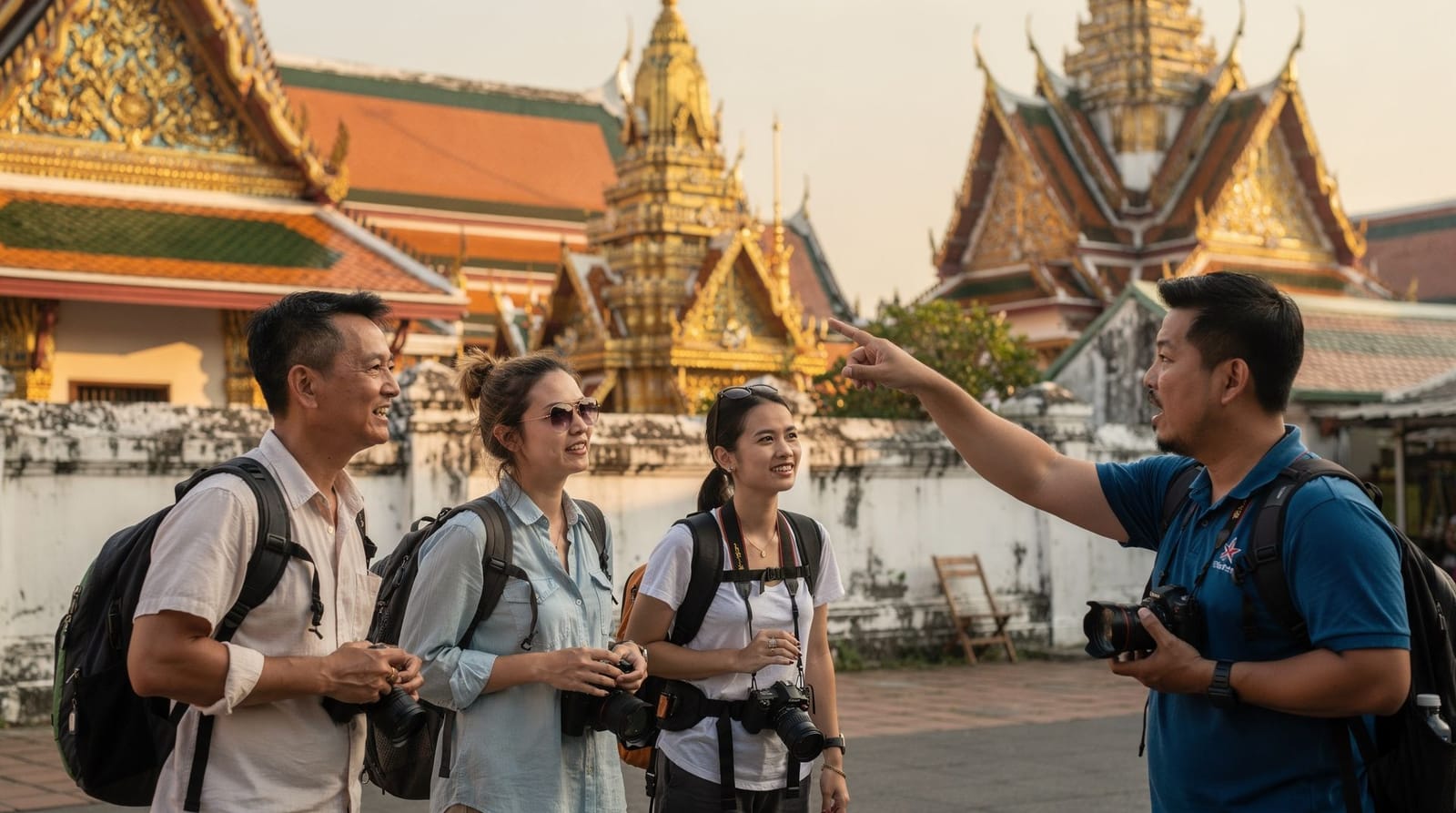
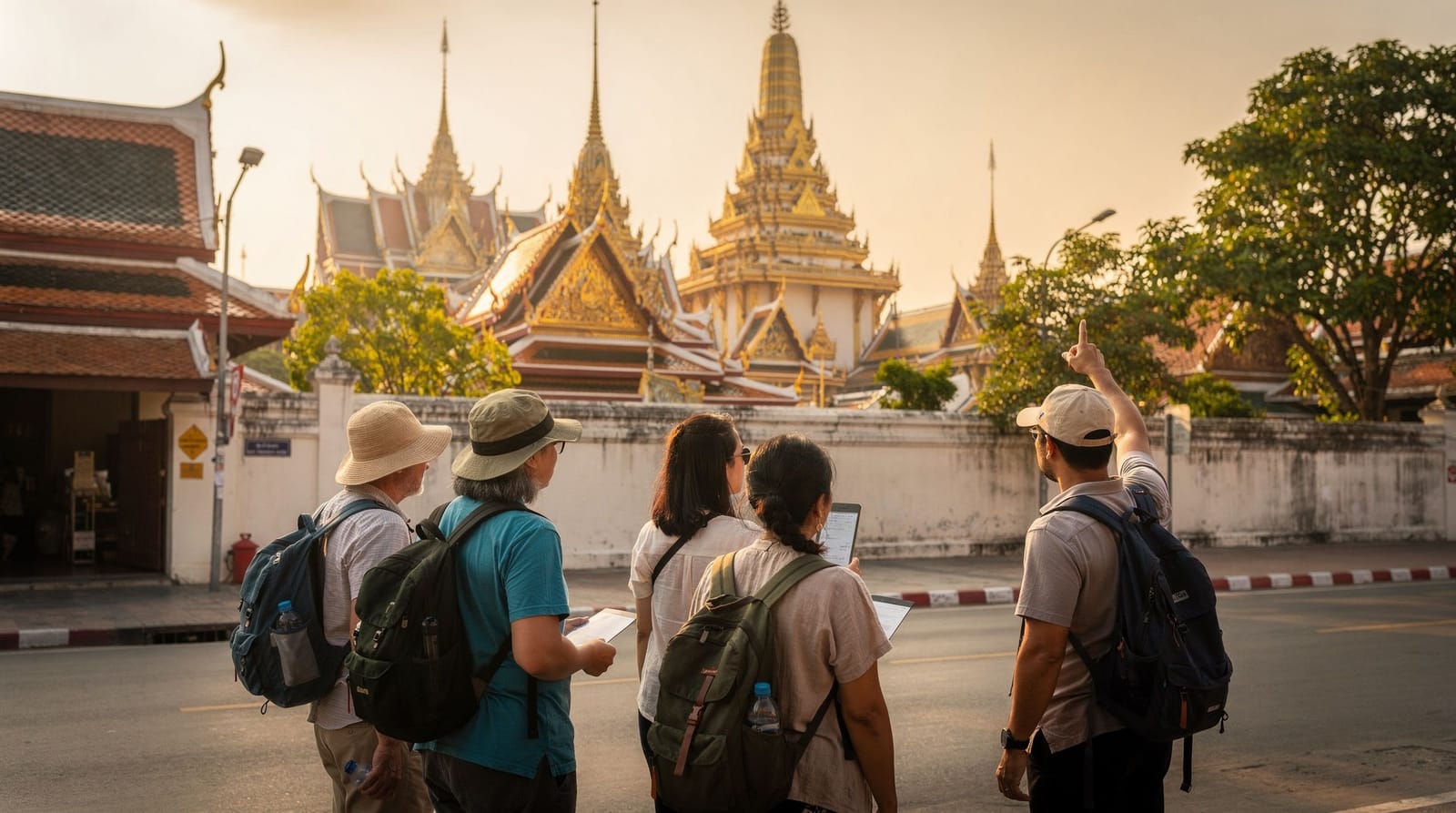
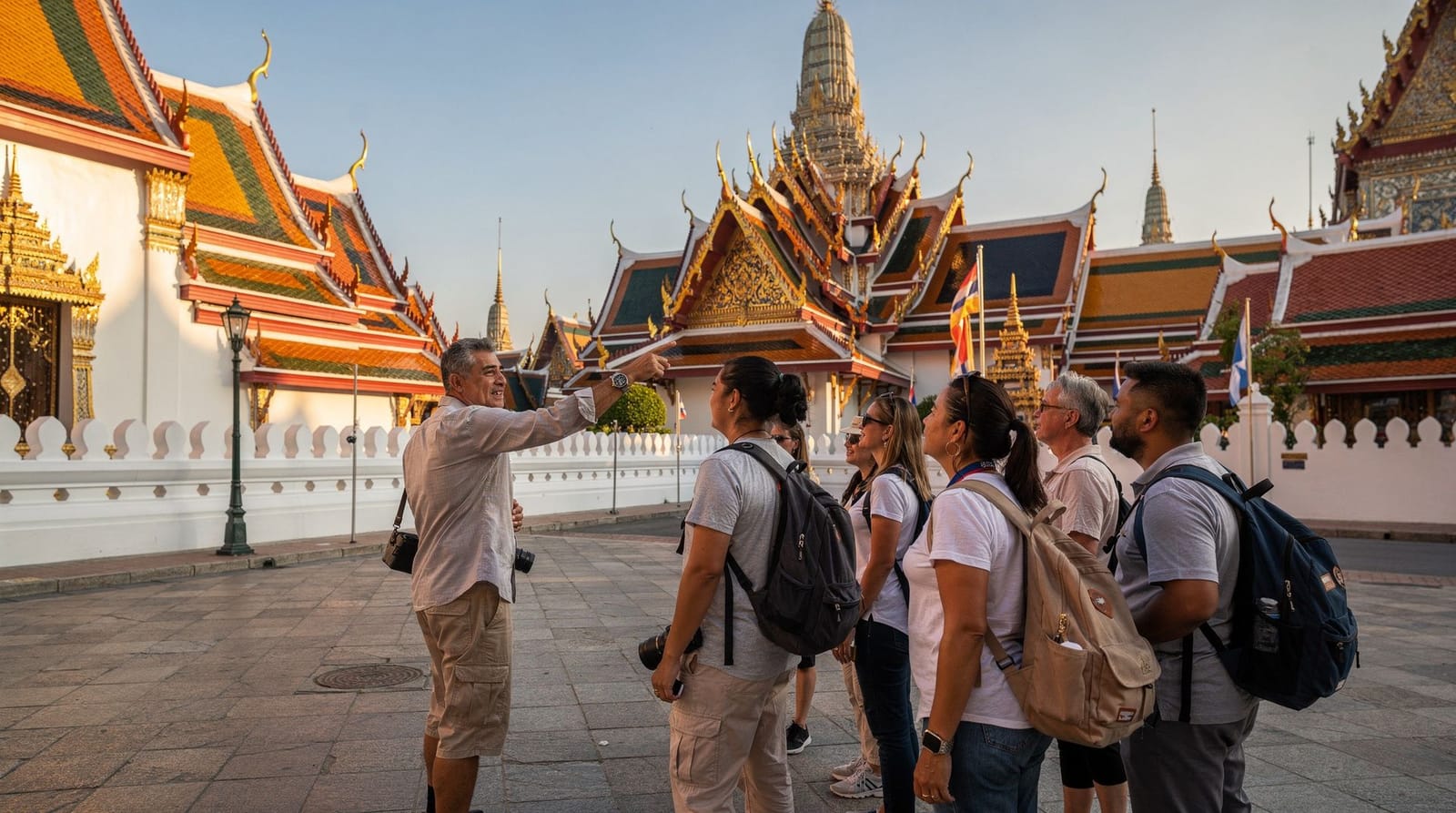
A guided walking tour of Rattanakosin, the old royal island, is the best-value tour in Bangkok if what you want is understanding rather than logistics. The Grand Palace, Wat Pho and the surrounding temples are dense with history that is largely invisible without a guide — the meaning of the murals, the story of the Emerald Buddha, the reclining Buddha’s mother-of-pearl feet.
Why morning: Heat and crowds. The Grand Palace opens at 08h30; arriving with the gates is the difference between a pleasant visit and a sweltering crush by 11h00. Walking tours that start at 07h30–08h00 get you ahead of both.
What it covers: Most combine the Grand Palace, Wat Pho and a market or riverside segment, sometimes crossing the river to Wat Arun by ferry. A half-day temple-and-market walk threads the old city’s lanes and a local market on foot.
Real prices: 900–1,800 THB (USD 27–55) for a half-day group walk, plus temple entry where not included (Grand Palace 500 THB, Wat Pho 300 THB, Wat Arun 200 THB).
Book the city highlights temple and market walking tourHonest assessment: Worth it for the context, but easily replaced by a self-guided visit if you are on a budget — buy your own tickets, walk the temple-hopping route and read up beforehand. The tour’s real value is the guide’s explanations and the skip-the-queue confidence at the Grand Palace. See the walking tours guide for the best routes and operators.
3. Private tours — best for time-pressed and families
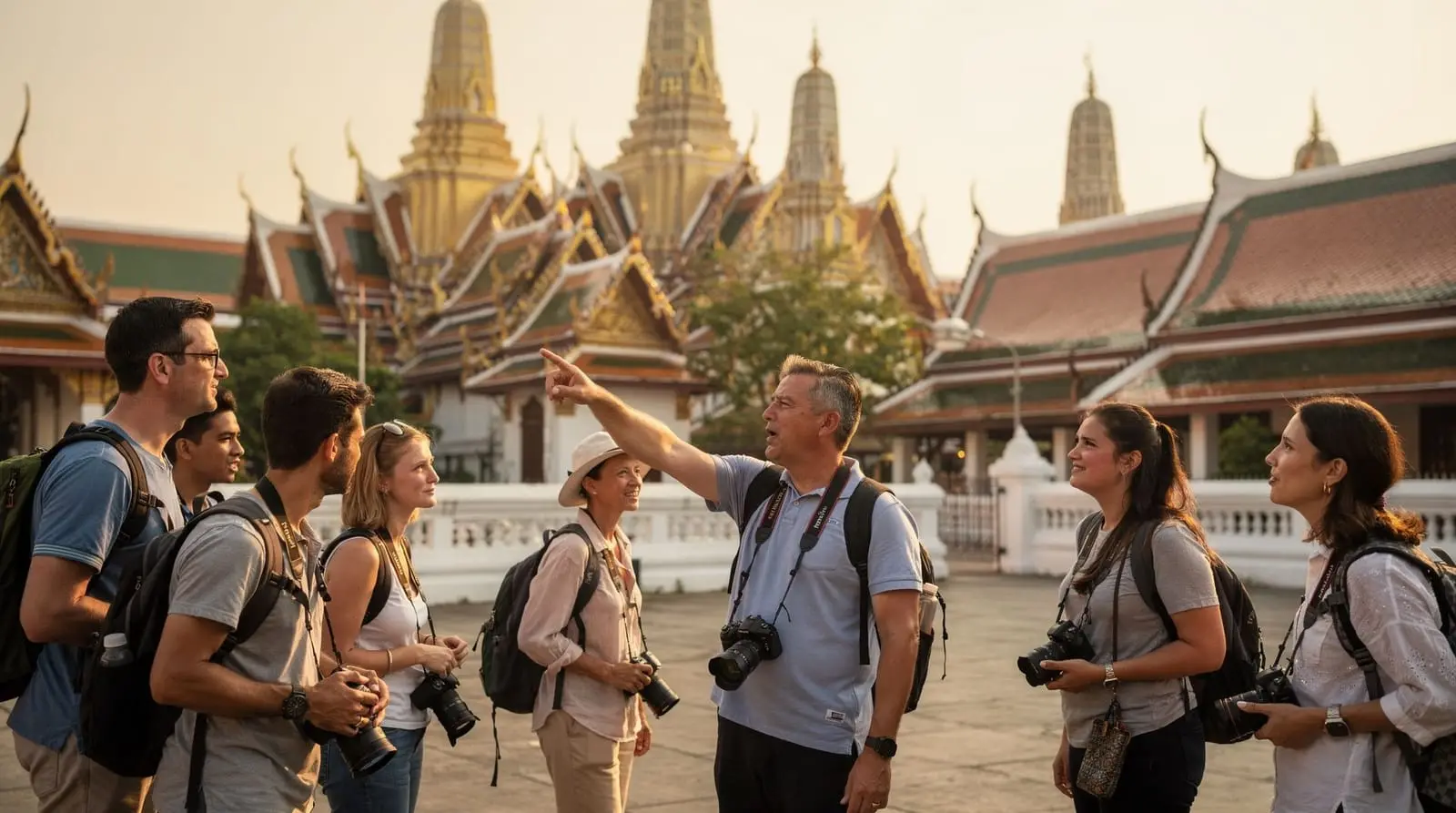
If you have limited time, are travelling with children or elderly relatives, or simply want the day arranged around you, a private tour is the most comfortable option. You get an air-conditioned van, an English-speaking guide and a flexible itinerary that you set — skip-the-line at the Grand Palace, a long lunch, a market detour, whatever suits.
Why it works: Bangkok’s heat and traffic punish rigid group schedules. A private tour lets you start at 07h30 to beat both, retreat to the van’s air-conditioning between sights, and change plans on the fly. For families this is transformative — no marshalling a group, no fixed pace.
Real prices: From around 2,500 THB and up to 5,000 THB or more (USD 75–150+) for a half-day, often priced per group of up to four, which makes it competitive per head for families.
Book a half-day guided private city and temples tourHonest assessment: The per-person cost is high for solo travellers and couples, who get most of the same sights more cheaply on a group walk or by DIY. But for groups of three or four, families, or anyone who values flexibility and air-conditioning over price, it is the most pleasant way to see Bangkok. The private tours guide breaks down what to ask before booking.
4. Bike tours — best for getting off the tourist trail
Bangkok’s bike tours are a genuine surprise. They thread back lanes, cross the river by ferry and reach places coaches and tuk-tuks never go — most famously Bang Krachao, the “green lung”, a jungle-covered river bend of elevated concrete paths, orchards and stilt houses fifteen minutes from the skyscrapers.
The two main types: City and temple rides wind through the old town’s quiet sois and across to Thonburi’s khlongs; the Bang Krachao ride ferries you over to the green lung for raised cycle paths through mangrove and fruit orchards. There are also night bike tours past floodlit temples and the Pak Khlong flower market.
Why it works: A bike covers more ground than a walk while still reaching the small lanes, and the early-morning timing beats the heat. Bang Krachao in particular is almost impossible to appreciate without a bike.
Real prices: 1,000–1,800 THB (USD 30–55) for a half-day group ride including bike, helmet and water.
Book the Colors of Bangkok small-group bike tourHonest assessment: Fantastic for active travellers and anyone bored of temples, but genuinely tiring in the heat — these are best in the cool early morning, March to May especially. Not for very young children or nervous cyclists in city traffic, though Bang Krachao itself is traffic-free and calm. The bike tours guide and the dedicated Bang Krachao ride page cover routes in detail.
5. River and boat tours — Bangkok’s natural hop-on-hop-off
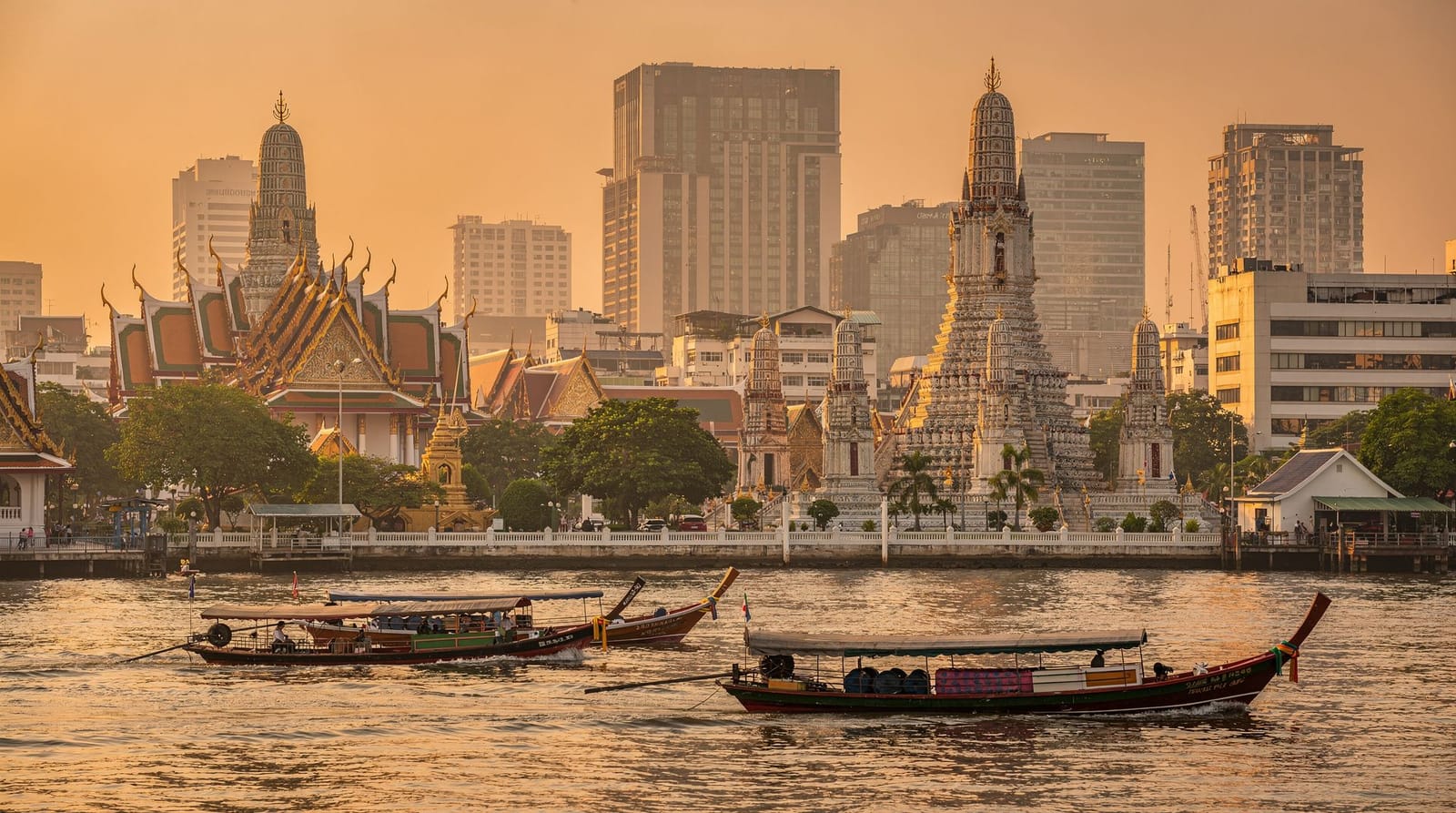
The Chao Phraya river is Bangkok’s original highway, and a boat is often the best way to move between the riverside sights while seeing the city from its most flattering angle. The honest truth about “hop-on-hop-off” in Bangkok is that the river boat is far better established than the tourist coach: a combined boat-and-bus day pass exists, but the river segment is where the value lies.
What to take: The Chao Phraya tourist boat (the blue-flag hop-on-hop-off line) links the riverside piers near the Grand Palace, Wat Arun, Chinatown and the markets. A combined pass adds a tourist bus loop. Evening dinner cruises are a separate, more touristy experience — pleasant for the views, average for the food.
Real prices: Around 1,000 THB (USD 30) for a combined boat-and-bus day pass; standard river-boat hop-on tickets are much cheaper. Dinner cruises run 1,200–2,500 THB.
Honest assessment: The boat is genuinely useful and scenic; the bus loop is the weaker half of the combined pass because Bangkok’s traffic undermines any road-based hop-on-hop-off. For pure transport, the regular orange-flag commuter boat is cheaper still. See the hop-on-hop-off bus guide and the Chao Phraya boats guide for the full breakdown, plus the dinner cruise guide if you want the evening version.
The Bangkok tour scams to know
Bangkok’s tour scams cluster around the major temples, and they all share one engine: shop commissions. Knowing them turns you from a target into someone who simply walks away.
The Grand Palace “closed today” scam. A friendly local or tuk-tuk driver near the Palace tells you it is shut for a holiday, a monk’s ceremony or cleaning, and offers a cheap tour of “other temples” instead — which ends at gem and tailor shops paying him commission. The Grand Palace is open almost every day, roughly 08h30–15h30. Ignore anyone who tells you otherwise and walk to the official ticket office.
The “20-baht tuk-tuk” tour. A driver offers an all-day tuk-tuk tour for an absurdly low 20 or 40 baht. The catch is mandatory stops at gem, tailor and souvenir shops where he collects commission and you face high-pressure sales. A real tuk-tuk tour, booked in advance, never does this. Read the tuk-tuk scams guide.
The gem-shop scam. Often the endpoint of the above, you are told gems are duty-free or a one-day-only government sale; the stones are near-worthless. No legitimate tour visits a gem shop. The gem scam guide has the details.
Meter refusal in taxis. Drivers near tourist spots refuse the meter and quote an inflated flat fare. Insist on “meter, please” before getting in, or use Grab. See Grab, taxi and tuk-tuk.
The common thread: pre-booked, reputable tours never involve shop detours. The full picture is in the common Bangkok scams guide and the Grand Palace scam warning.
Tours worth actively skipping
Beyond the scams above, a few legitimate-looking tours are simply poor value. Hotel-lobby-booked day trips are almost always marked up compared with the same tour booked online directly, since the hotel takes a commission — book ahead yourself instead. Any tour that includes elephant riding should be avoided outright; it is not just an ethical issue but a sign the operator has not kept up with how the industry has changed, and the ethical elephant tourism guide explains why. Generic “7 temples in a day” marathon tours sound efficient but leave you rushed and templed-out; two or three well-chosen sights with time to actually look beats a checklist. And any floating-market tour bundled with a “gem factory” or “jewellery centre” stop is a thinly disguised commission tour — a standalone Damnoen Saduak or Amphawa trip without the shop detour is a better use of the day.
Booking tips: timing, price and group size
A few practical rules make the difference between a good tour and a frustrating one. Book online in advance rather than walking up — prices are usually lower and popular evening food tours and sunset river cruises can sell out on weekends and around Thai public holidays. Check the group size before booking: a “small-group” tour capped at eight to ten people gives a genuinely different experience from a forty-person coach, and it is worth paying a little more for the smaller number. Read what is actually included — some tuk-tuk and walking tours bundle all tastings and entry fees, while others charge these separately, so compare like for like rather than judging purely on headline price. Confirm the meeting point the day before; Bangkok’s traffic and one-way systems mean a vague “meet near the BTS” instruction can cost you the first twenty minutes of a short tour. Finally, most operators offer free cancellation up to 24 hours ahead, which is worth using if the forecast turns — outdoor walking and bike tours are miserable in a downpour, while river cruises and tuk-tuk tours cope with rain better.
Matching a tour to your trip length
One day in Bangkok: Take a private or group half-day temple tour in the morning to hit the Grand Palace, Wat Pho and Wat Arun efficiently, then a tuk-tuk food tour in the evening. This pairs the two highest-value tour types and covers the essentials. See the one-day itinerary.
Two to three days: Add a bike tour to Bang Krachao or a walking tour of Chinatown’s alleys, and use the river boat to link sights on a temple day. The two-day and three-day itineraries build this out.
First-timers: Lean on guided tours for the food, the night and the Grand Palace, and DIY the rest. The first-timer itinerary and the Bangkok for first-timers guide are built around exactly this balance.
Frequently asked questions about Best Bangkok tours: the complete honest
Are organised tours in Bangkok worth it, or should I just do it myself?
How much does a typical Bangkok tour cost?
Is it safe to book a tuk-tuk tour in Bangkok?
What is the Grand Palace 'closed today' scam?
When is the best time of day to take a tour in Bangkok?
Do I need to tip a tour guide in Bangkok?
Can I combine several attractions into one tour?
Top experiences
Bookable activities with verified prices and instant confirmation on GetYourGuide.