Walking tours in Bangkok: the honest guide
Bangkok: City Highlights Temple and Market Walking Tour
Are walking tours in Bangkok worth it?
Walking tours are the best-value way to add context to Bangkok's sights, and the only good way to navigate Chinatown's alleys and the Talat Noi back lanes without getting lost. Rattanakosin temple walks and Chinatown food-and-heritage walks are the standouts, best taken early in the morning to beat the heat. Expect 900–1,800 THB for a half-day group walk; confident independent visitors can DIY the temple routes for the price of entry tickets alone.
| Where | Rattanakosin temples, Chinatown, Talat Noi |
| Cost | 900–1,800 THB/person, half-day group walk |
| Time needed | 2–4 hours |
| Best time | Early morning (07h30–08h00) or evening |
| Getting there | Meet points near Tha Chang or Ratchawong pier / MRT |
Walking is how you actually meet Bangkok. The city’s best textures — the incense and gilt of the old-city temples, the tangle of Chinatown’s alleys, the peeling shophouses and street art of Talat Noi — reveal themselves at footpace and nowhere else. A good walking tour adds the one thing independent wandering cannot: a guide who explains what you are seeing, navigates the warren of lanes, orders the right dishes at Thai-only stalls and quietly steers you past the scams that wait near the Grand Palace. The two enemies of a Bangkok walk are heat and getting lost, and a tour solves both.
This guide covers the walking tours worth taking — the temple routes of Rattanakosin, the food-and-heritage walks of Chinatown, the back-lane wanders of Talat Noi and Charoen Krung — with honest notes on timing, cost, and when you can simply do it yourself. Prices are approximate 2025–2026 figures at roughly 33 THB to 1 USD.
Why walk, and why with a guide
Bangkok rewards walking but punishes it too. The rewards are the small-scale details — a shrine tucked between shophouses, a noodle stall three generations deep, a mural down an alley — that no van or tuk-tuk reaches. The punishment is the heat, fierce from March to May, and the genuine difficulty of navigating Chinatown’s unsignposted lanes.
A guided walk tips the balance decisively toward the rewards. The guide handles the route so you never get lost, times the walk for the cool of the morning or evening, explains the temples’ history and customs, and bridges the language gap at street stalls. For the temples specifically, the value is mostly context — you could walk the temple-hopping route yourself. For Chinatown and Talat Noi, the value is navigation and access, which is much harder to replace.
1. Rattanakosin temple walking tours — the classic route
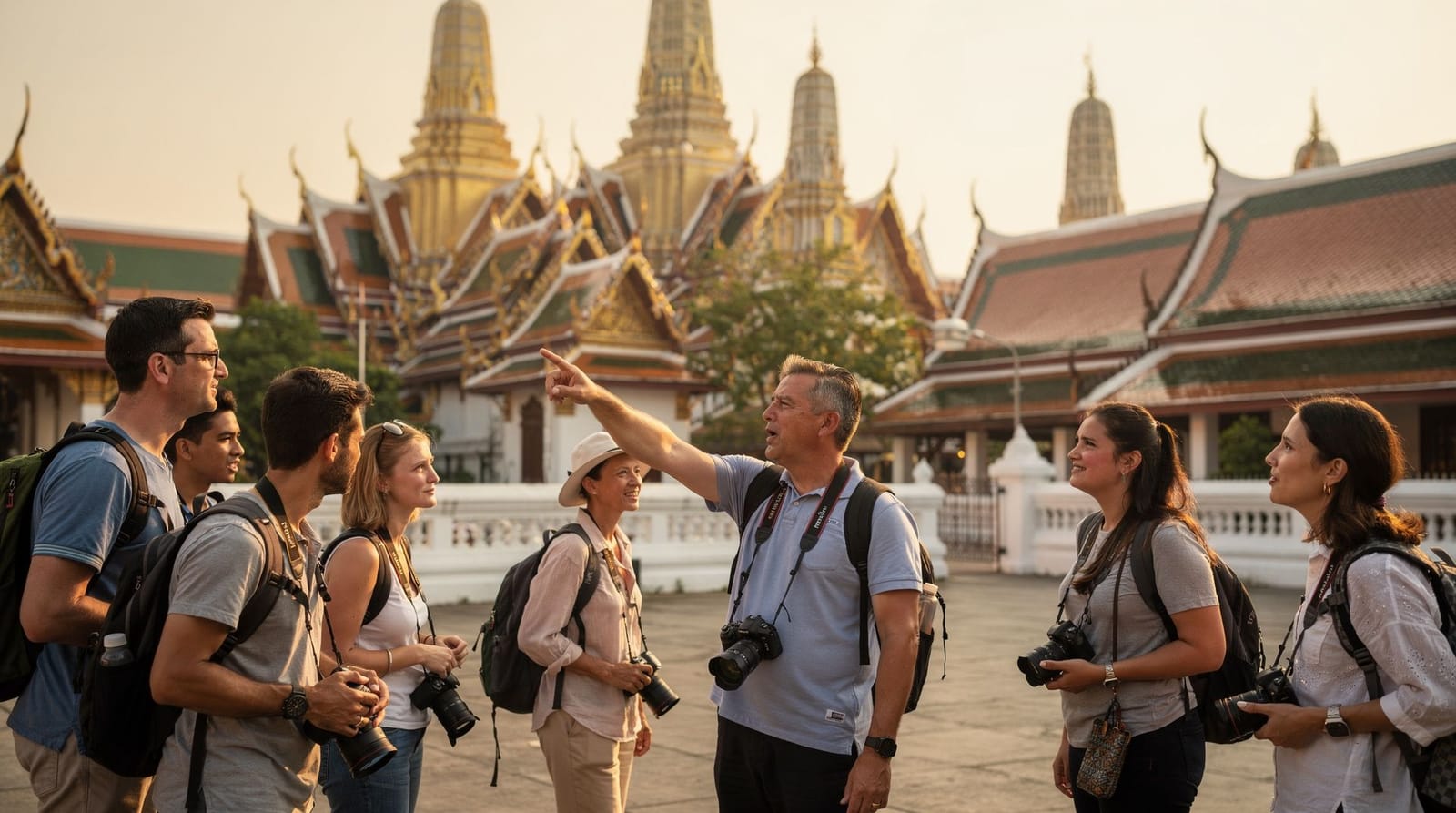
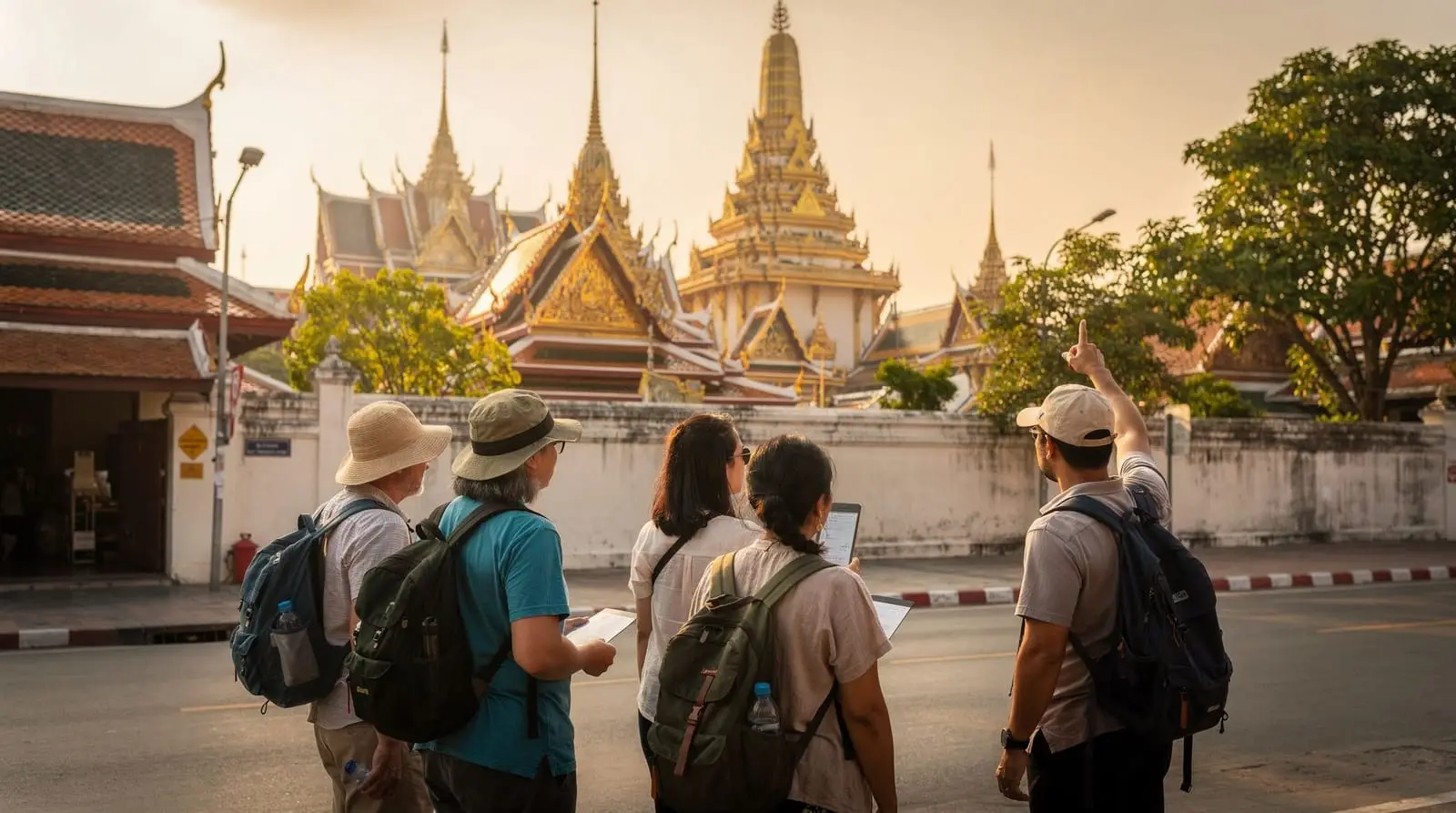
The signature Bangkok walking tour covers the old royal island of Rattanakosin on foot, linking the Grand Palace, Wat Pho and often a ferry hop to Wat Arun, with the surrounding lanes and a local market woven in. The sites sit close together, which makes a walk the natural way to see them — and a guide brings the murals, the Emerald Buddha and the reclining Buddha to life in a way a guidebook cannot.
Why early: The Grand Palace opens at 08h30 and fills fast; the heat builds by 11h00. A walk that starts at 07h30–08h00 beats both, and the morning light on the gilt is the best of the day.
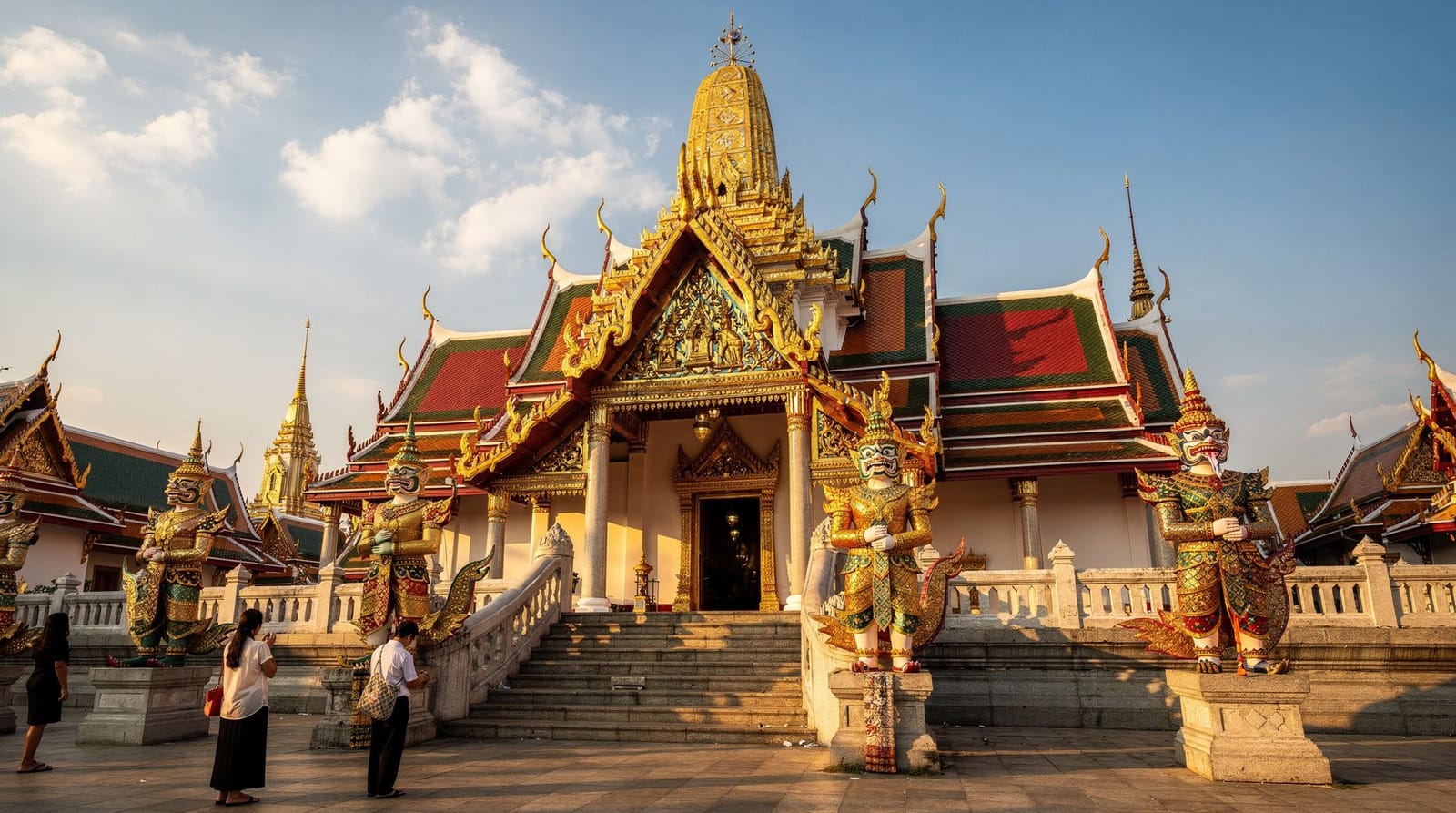
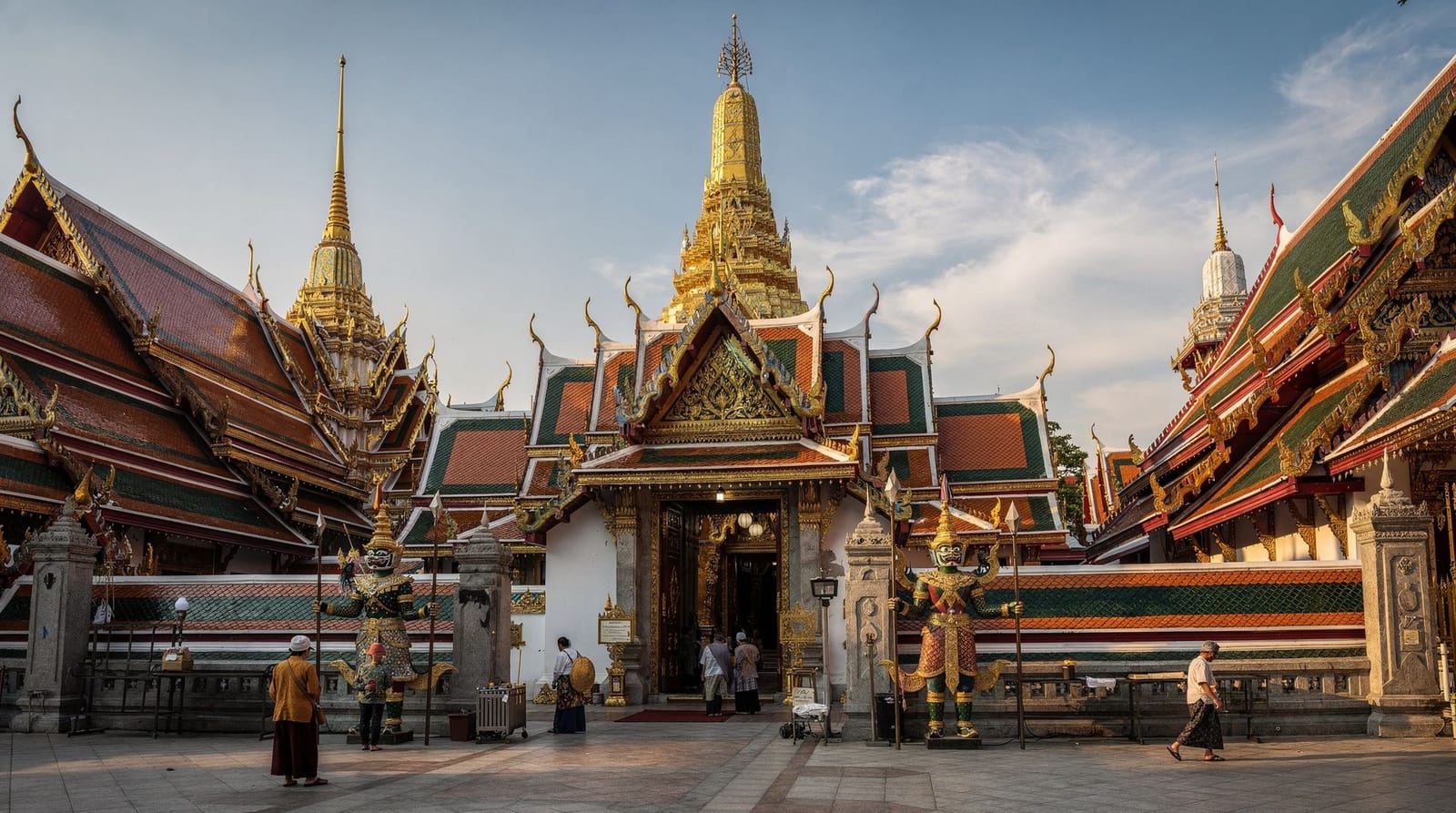
What it covers: The Grand Palace complex, Wat Pho’s reclining Buddha and massage school, the lanes between them, a market stop, and frequently the cross-river ferry to Wat Arun. A combined highlights walk threads the temples and a market in one route.
Real price: 900–1,800 THB (USD 27–55) for a half-day group walk, plus temple entry (Grand Palace 500 THB, Wat Pho 300 THB, Wat Arun 200 THB) unless included.
Book the city highlights temple and market walking tourHonest assessment: The best way to understand Bangkok’s temples if you want the history, but the most replaceable tour for independent travellers — the route is easy to follow alone for the price of the tickets. Pay for it if you value the guide’s knowledge and the skip-the-queue ease at the Palace; DIY it if you are confident and budget-minded. The best temples guide covers the sites in depth.
2. Chinatown food and heritage walks
Chinatown is where a walking tour earns its price most clearly. The grid of Yaowarat road and its side alleys is a maze of food stalls, gold shops, temples and market lanes that is genuinely hard to navigate alone — and the best street food hides on Thai-only menus a guide can read.
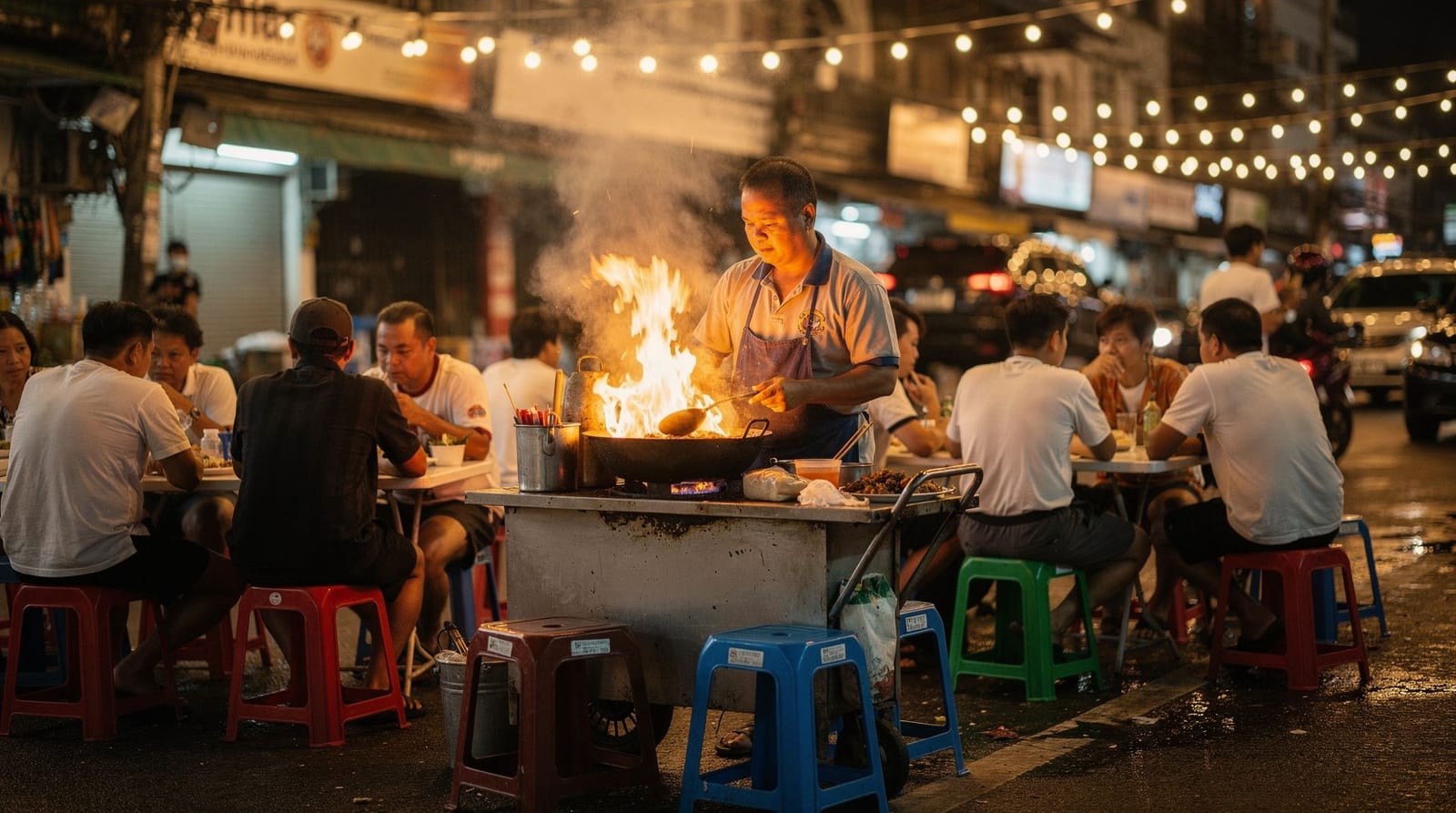
What it covers: The main Yaowarat strip, the tight market lanes of Sampeng and Soi Nana, a Chinese temple or two, and a string of street-food tastings — boat noodles, dim sum, grilled seafood, fresh fruit. Heritage-focused versions add the history of the Chinese community and the area’s old shophouses.
Why with a guide: Navigation and ordering. Wandering Chinatown alone is fun but disorienting, and the language barrier at the best stalls is real. A guide turns a confusing maze into a curated crawl.
Real price: 1,200–1,800 THB (USD 36–55), food walks usually including several tastings.
Book a guided Chinatown and old-city walking tourHonest assessment: Excellent value for the food and the navigation, and one of the most rewarding walks in the city. The main caveat is timing — daytime Chinatown is hot and the food scene peaks at night, so an evening walk often beats a daytime one. For the wider food picture, see the Bangkok street food guide; for the after-dark version, the tuk-tuk food tours cover the same ground on three wheels.
3. Talat Noi and Charoen Krung back-lane walks
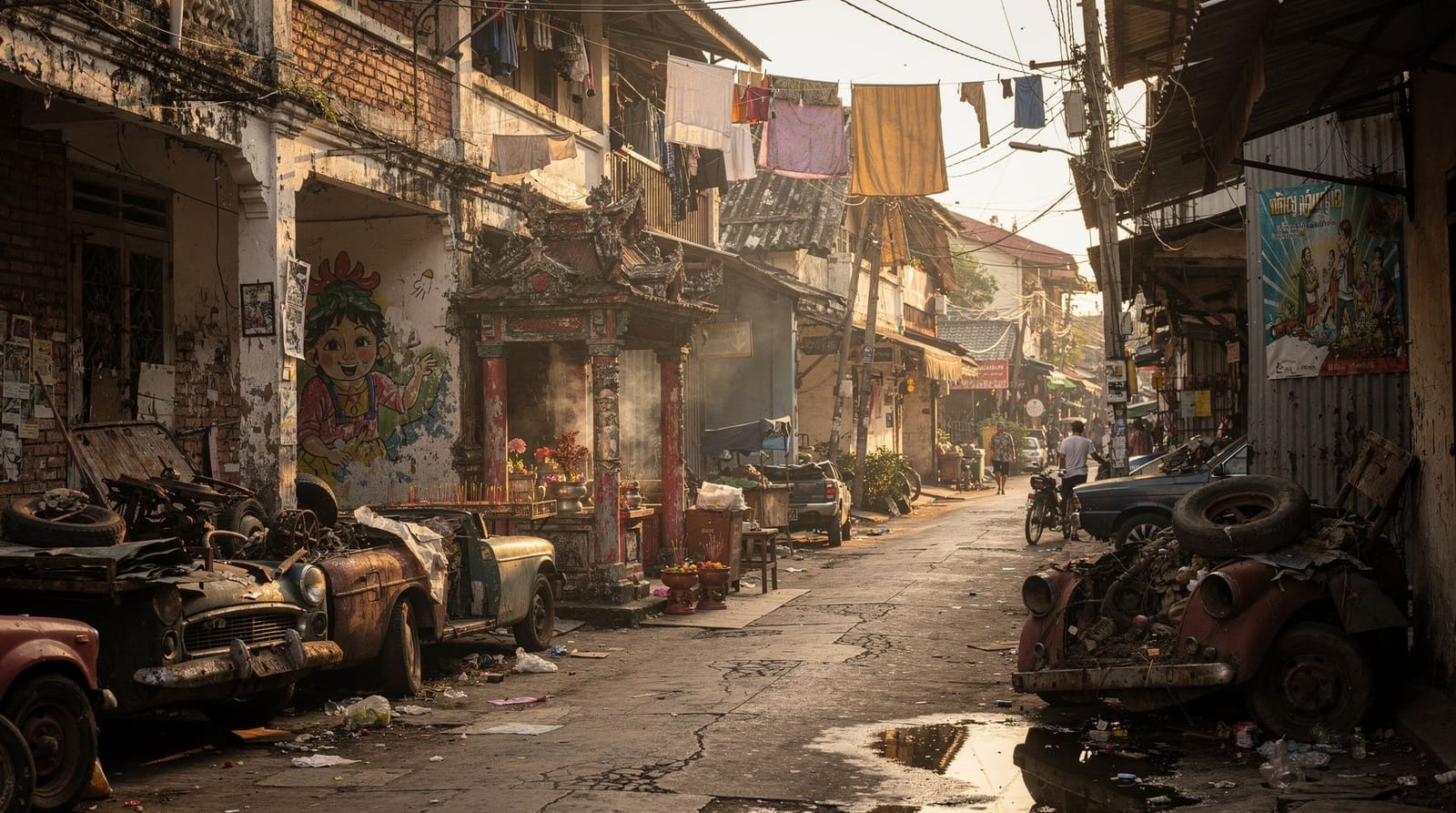
For a quieter, more atmospheric walk, the Talat Noi district and the old Charoen Krung shophouse streets reward those who go slowly. This is Bangkok’s photogenic underside — peeling colonial-era shophouses, a salvaged-engine-parts neighbourhood turned street-art quarter, riverside shrines and hole-in-the-wall cafés.
What it covers: The narrow lanes of Talat Noi with their murals and machine workshops, old Sino-Portuguese shophouses, riverside temples and shrines, and the heritage stretch of Charoen Krung, Bangkok’s first paved road. The pace is slow and the focus is texture and photography rather than headline sights.
Why with a guide: Context and discovery. These lanes have no signage and reveal nothing without someone to explain the salvaged-engine history, point out the murals and unlock the stories behind the shophouses.
Honest assessment: A favourite for repeat visitors and photographers who have done the big temples and want the real, lived-in Bangkok. Not the right first walk — newcomers should do the temples and Chinatown first. But for a second or third day, this is the walk that lingers. Best in the morning before the heat, with a cool café stop built in.
Self-guided walking routes if you skip the tour
If you would rather walk Bangkok independently, two routes work well and cost only your temple tickets. Knowing them lets you decide honestly whether a guided tour is worth the fee for you.
The Rattanakosin temple loop. Start at Tha Chang pier or the Grand Palace as it opens at 08h30. Walk the Grand Palace complex, then five minutes south to Wat Pho for the reclining Buddha. From Wat Pho’s Tha Tien pier, take the small cross-river ferry to Wat Arun. The whole loop is under three kilometres of walking plus one short ferry, and the temple-hopping route guide maps it stop by stop. What you lose without a guide is the historical context and the skip-the-queue ease at the Palace; what you save is the tour fee.
The Chinatown grazing walk. From Ratchawong pier or MRT Wat Mangkon, wander north into the Sampeng and Soi Nana lanes, then onto Yaowarat road for street food. This is harder to do well alone — the alleys are unsignposted and the best stalls have Thai-only menus — which is exactly why the guided Chinatown walk earns its price more than the temple walk does. Independent walkers should lean on the Bangkok street food guide to know what to order.
The honest takeaway: the temple loop is genuinely easy to self-guide and a good budget choice, while Chinatown and Talat Noi reward a guide far more. Match the tour to the area, not the other way round.
Walking tour versus other ways to see Bangkok
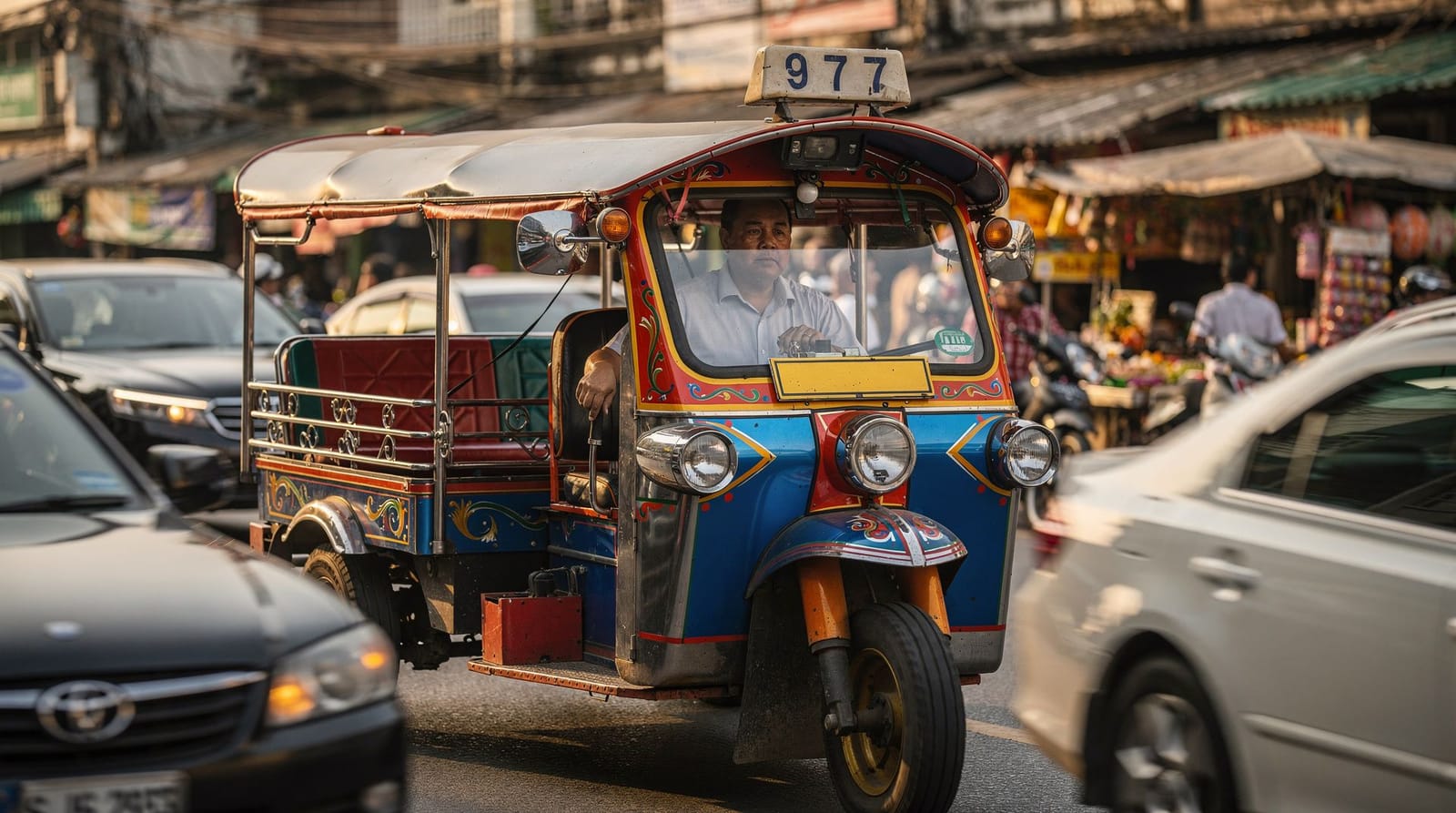
Set against the alternatives, a walking tour occupies a clear niche. It goes slower and deeper than a bike tour, which suits the temple-dense old city and the food alleys where you would otherwise spend more time locking up a bike than exploring. It is more intimate and detail-focused than a tuk-tuk tour, which covers more ground but keeps you in a moving seat. And it is far cheaper than a private tour, trading air-conditioned comfort for the immediacy of being on foot.
The cost, of course, is the heat and the legwork — which is why the morning and evening timing matters more for walking than for any other tour type. Choose a walk when you want to slow down and absorb a single district properly; choose the alternatives when you want to cover distance or escape the sun. The best Bangkok tours overview ranks them all together.
| Tour type | Pace | Cost | Best for |
|---|---|---|---|
| Walking tour | Slowest, most detail | 900–1,800 THB | Depth in one district |
| Bike tour | Moderate | Similar range | Covering more ground, less stopping |
| Tuk-tuk tour | Fast, in a seat | 1,500–2,800 THB | Distance plus atmosphere |
| Private tour | Flexible pace | Highest | Comfort and a custom route |
If your time is very limited, an all-in-one guided day that mixes a short walk with transport between headline sights covers more ground than a pure walking tour can. Book the in-a-day must-visit highlights tour for a single, guided day hitting the essentials rather than one deep district walk.
Timing, dress and what to bring
Go early or go evening. Morning departures (07h30–08h00) beat the heat and the crowds; evening walks suit Chinatown’s food scene. Avoid midday outdoor walks from March to May.
Dress for temples. Cover shoulders and knees — the Grand Palace strictly turns away anyone underdressed. Wear light but covering clothing, comfortable closed shoes, a hat and sunscreen, and carry a scarf or sarong as backup. Slip-on shoes help, since you remove footwear inside temple buildings.
Bring water and small cash. Carry water, a small amount of cash for snacks and tastings, and a phone for photos. A folding fan is not a bad idea in the hot season.
Avoiding the walking-tour-area scams
Walking tours pass straight through the heart of Bangkok’s scam territory near the Grand Palace, which is one more reason a guide helps. On a guided walk you are immune to the touts who tell solo visitors the Palace is “closed today” to divert them to gem shops — your guide simply walks you to the official gate. Independent walkers should know the Grand Palace scam warning cold: the Palace is open almost every day, roughly 08h30–15h30, and anyone who says otherwise is steering you toward the gem scam. The full list is in the common Bangkok scams guide.
Fitting a walking tour into your trip
A morning temple walk is the ideal first activity in Bangkok — it orients you and covers the essentials in the cool of the day. Pair it with an afternoon rest and an evening street-food outing, and you have a complete first day. On a longer stay, add a Chinatown food walk and a Talat Noi back-lane wander on later days. The first-timer itinerary builds around exactly this, and the best Bangkok tours overview ranks walking against the other tour types.
Costs beyond the tour price
The quoted tour fee rarely covers everything. Temple entry is usually separate unless the listing says otherwise — budget 500 THB for the Grand Palace, 300 THB for Wat Pho and 200 THB for Wat Arun if the route includes them. A tip of 100–200 THB per person for a good guide is customary at the end of a half-day group walk, more for a private one. Add small cash for water, snacks and any tastings not already included on a food-focused walk, and a few hundred baht of buffer for anything you want to buy along the way — a fridge magnet at a Chinatown stall, a fresh coconut, incense at a temple. None of this changes the headline price much, but it is worth carrying more small notes than you think you need, since change is not always available at temple ticket booths.
Frequently asked questions about Walking tours in Bangkok: the honest
Is it too hot to do a walking tour in Bangkok?
What areas are best for walking tours in Bangkok?
How long is a typical Bangkok walking tour?
Are walking tours good for first-time visitors?
How much does a walking tour in Bangkok cost?
What should I wear for a temple walking tour?
Can I do a Bangkok walking tour myself instead of paying for one?
Should I tip the guide on a walking tour?
Top experiences
Bookable activities with verified prices and instant confirmation on GetYourGuide.