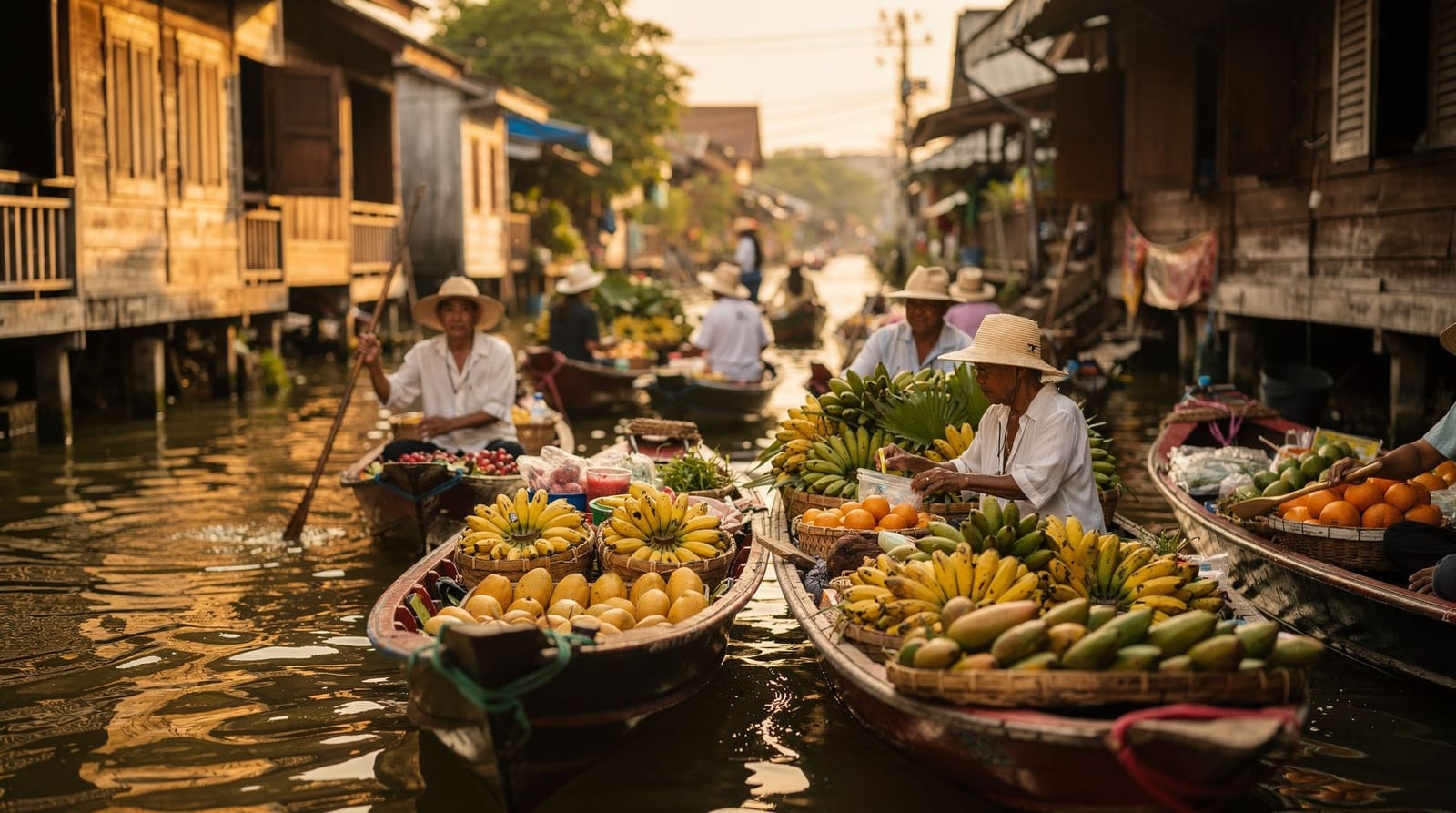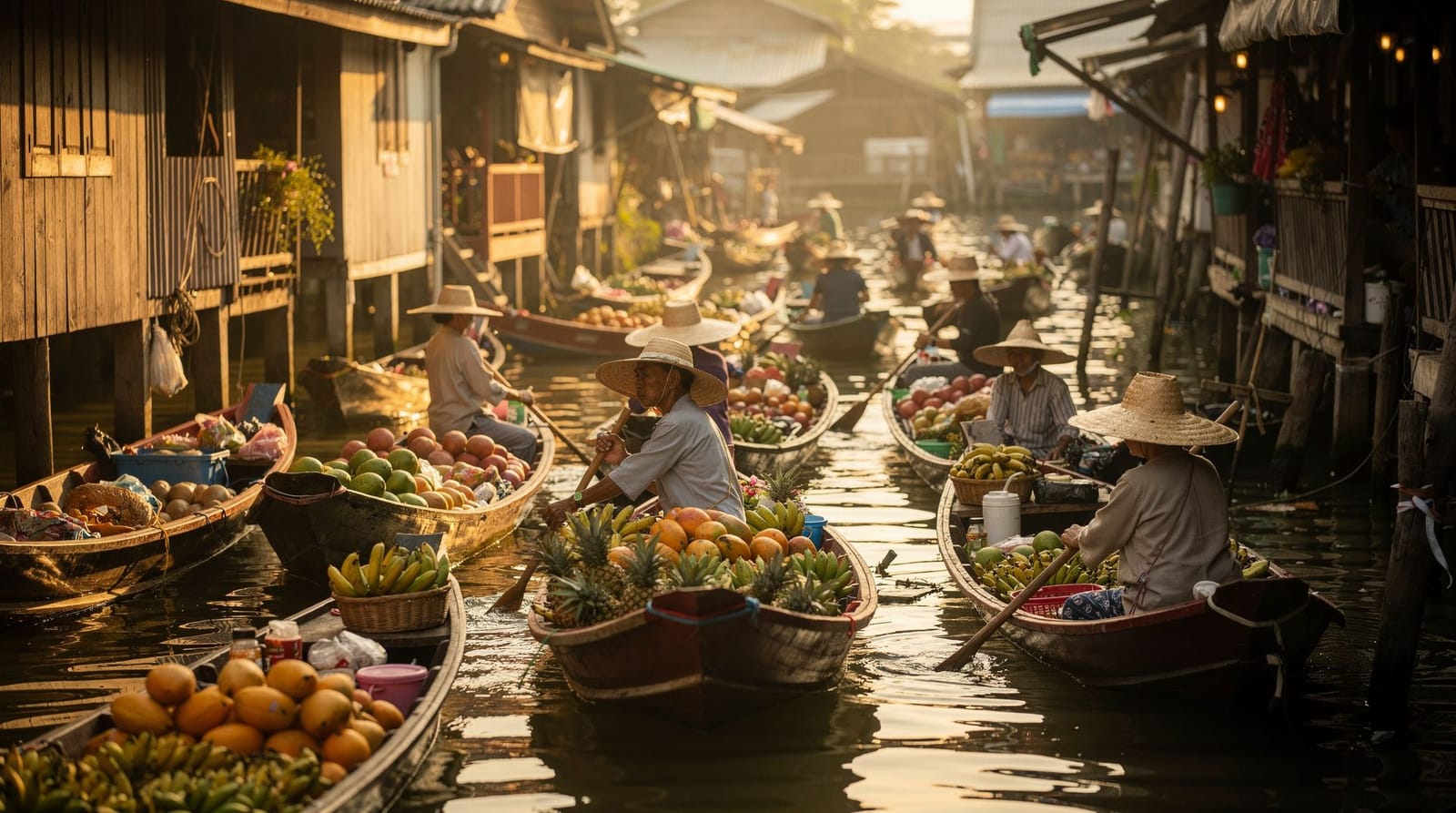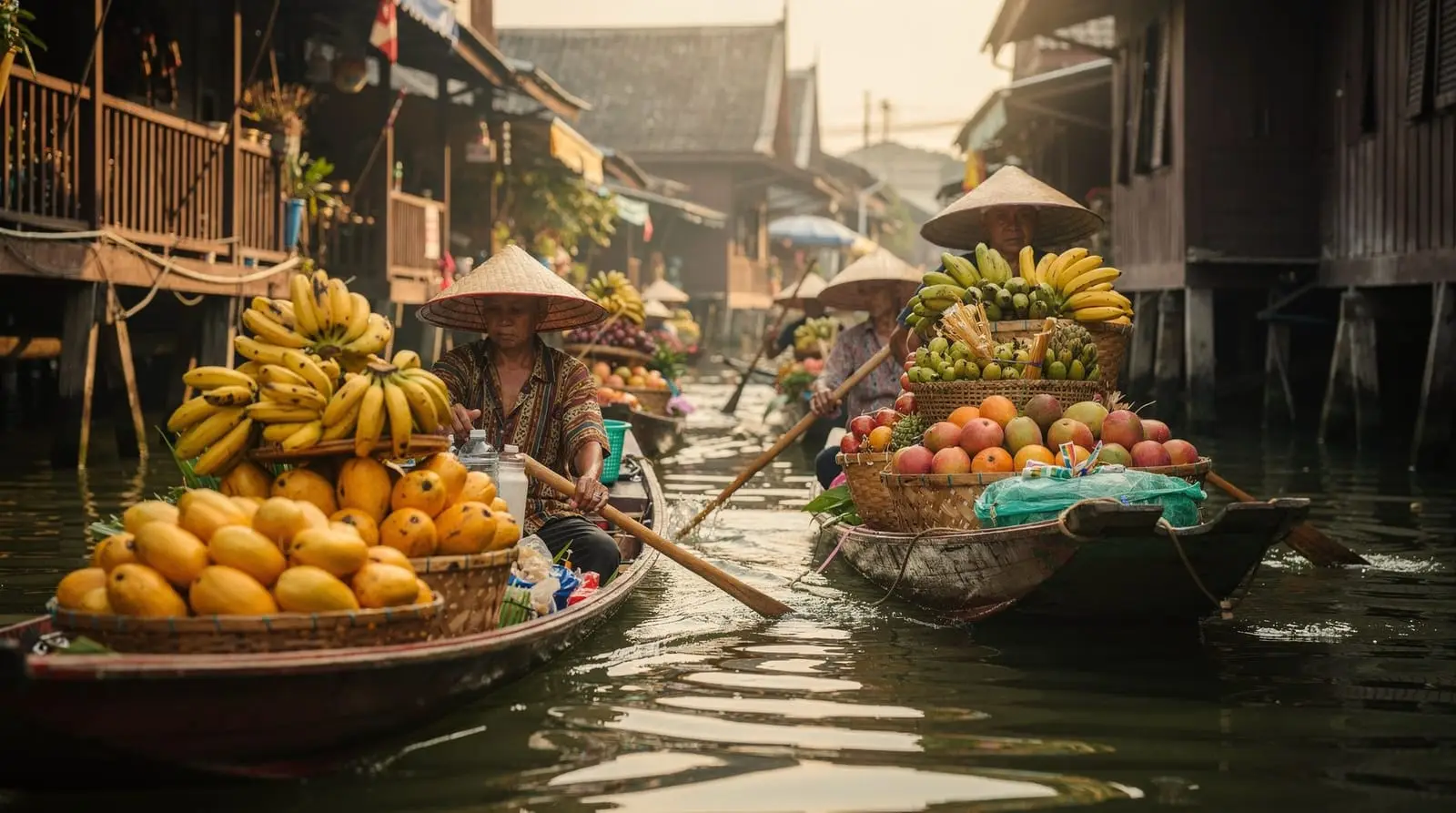
Damnoen Saduak floating market: the honest visitor's guide
From Bangkok: Damnoen Saduak Floating Market Guided Tour
How do you visit Damnoen Saduak floating market the right way?
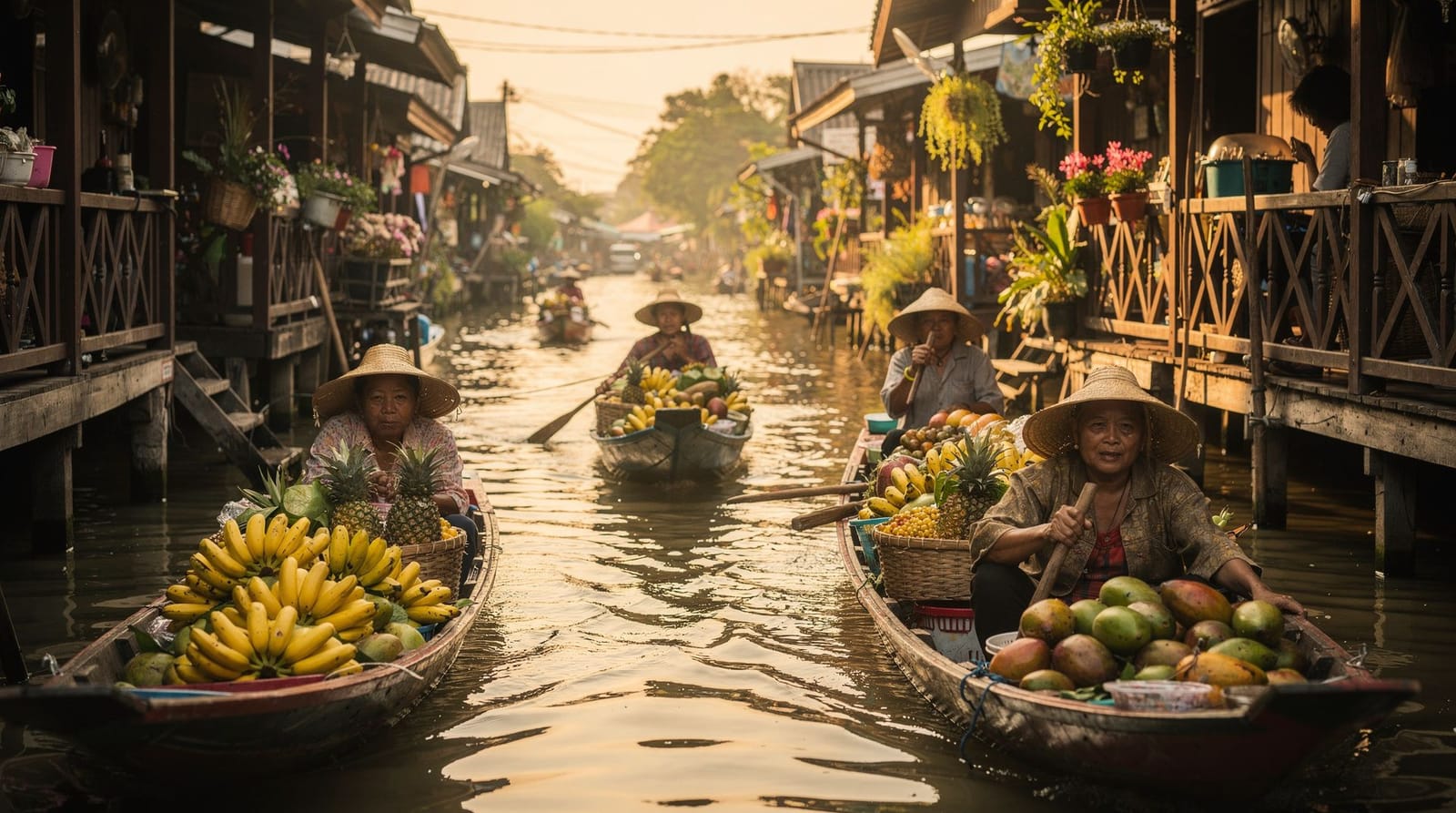
Arrive before 08h00, before the tour buses, to see the canal at its most photogenic and least crowded. Fix the price and route of any boat ride before you board — 150–200 THB per person is fair for a short paddle. Eat at the busy local stalls rather than the souvenir boats, and treat the visit primarily as a photo stop. Most visitors combine it with the nearby Maeklong Railway Market on a day trip from Bangkok.
Damnoen Saduak is the floating market you have already seen — on postcards, in travel brochures, in the opening montage of every Thailand documentary. Located about 100 km southwest of Bangkok in Ratchaburi province, it is the most famous floating market in the country and, simultaneously, the most criticised for being a tourist trap. Both things are true. This guide is about how to get the genuine value out of Damnoen Saduak while sidestepping the overpricing, the crowds, and the hustle — and how to decide whether it deserves a place on your itinerary at all.
The short version: go early, fix your prices, and treat it as a photographer’s market rather than a shopper’s one. Done properly, it is a vivid morning. Done badly, it is a slow, expensive shuffle. The choice is largely in your hands.
| Where | Ratchaburi province, ~100km southwest of Bangkok |
| Cost | Free entry; boats ~150–200 THB per person for a short paddle |
| Time needed | A half-day, often combined with Maeklong Railway Market |
| Getting there | Organised tour, private car/Grab, or minivan from Southern Bus Terminal |
| Best time | Before 08h00, leaving Bangkok by 05h30–06h00 |
The morning, hour by hour
| Window | What it’s like |
|---|---|
| Before 08h00 | Soft light, working vendors, space to photograph and bargain calmly |
| 09h00–11h00 | Tour buses arrive; boat-jam, aggressive souvenir selling, hard bargaining |
| After 11h00 | Winding down; many boats have packed up |
What Damnoen Saduak actually is
Damnoen Saduak canal was dug in the 1860s under King Rama IV to connect the Mae Klong and Tha Chin rivers, and the floating market grew organically along it as the surrounding orchards traded their produce by boat. By the late twentieth century the original commercial function had faded, and tourism revived the market into the spectacle it is today. The main tourist canal, Khlong Ton Khem, is the densely packed, intensely photogenic stretch that appears in every image — and it is also the most commercialised.
Understanding this history matters because it explains the experience. You are visiting a real historic canal that has been substantially re-engineered for tourism. The fruit and vegetable boats are real; many of the souvenir boats exist for the cameras. Knowing the difference helps you spend your time and money where it counts. For the wider context of how Damnoen Saduak compares to the region’s other markets, see the floating markets near Bangkok guide.
When to go: the early-arrival rule
The single most important decision is what time you arrive. The market runs daily from roughly 06h00 into the late morning, but the experience changes completely over those hours.
Before 08h00: The canal is at its best — soft morning light, working vendors, fewer crowds, and space to take photographs. This is when Damnoen Saduak resembles its postcards.
09h00–11h00: Tour buses arrive en masse. The narrow canal becomes a boat-jam, souvenir vendors are at their most aggressive, and the atmosphere shifts from market to crush. Photographs become difficult; haggling becomes harder.
After 11h00: Activity winds down, many boats pack up, and you have arrived for the dregs.
The practical implication is significant: to arrive before 08h00 you essentially must leave Bangkok by 05h30–06h00, which is why organised early tours and private transfers are so popular. The Damnoen Saduak half-day guided tour is built around an early departure, which solves the hardest part of doing this well. For the full transport breakdown, see the Damnoen Saduak day trip guide.
Getting there from Bangkok
Damnoen Saduak is about 100 km southwest of Bangkok, roughly 1.5–2 hours by road depending on traffic out of the city.
Organised tour: The most common and least stressful option. Tours handle the pre-dawn departure, the long drive, and usually combine the market with the Maeklong Railway Market. This is the recommended choice for most first-time visitors.
Private car or Grab: Flexible and lets you control timing, but expensive one-way (often 1,500–2,500 THB each way). Splits well among three or four people and lets you arrive at exactly 07h00.
Minivan: Minivans run from the Southern Bus Terminal (Sai Tai Mai) to Damnoen Saduak for a low fare, but departure times rarely line up with an early arrival, and you then face a local songthaew or motorbike to reach the canal. Doable for budget travellers, but you will likely arrive after the buses.
There is no train and no convenient public route that delivers you to the canal before the crowds — which is the crux of why independent visits often disappoint.
At the market: boats, prices, and what to do
Once you arrive, the canal experience splits into two parts: walking the banks and taking a boat.
Walking the banks is free and lets you photograph the canal, browse the land-side stalls, and pick where to eat. Much of the best food and the most honest pricing is found on foot rather than from a boat.
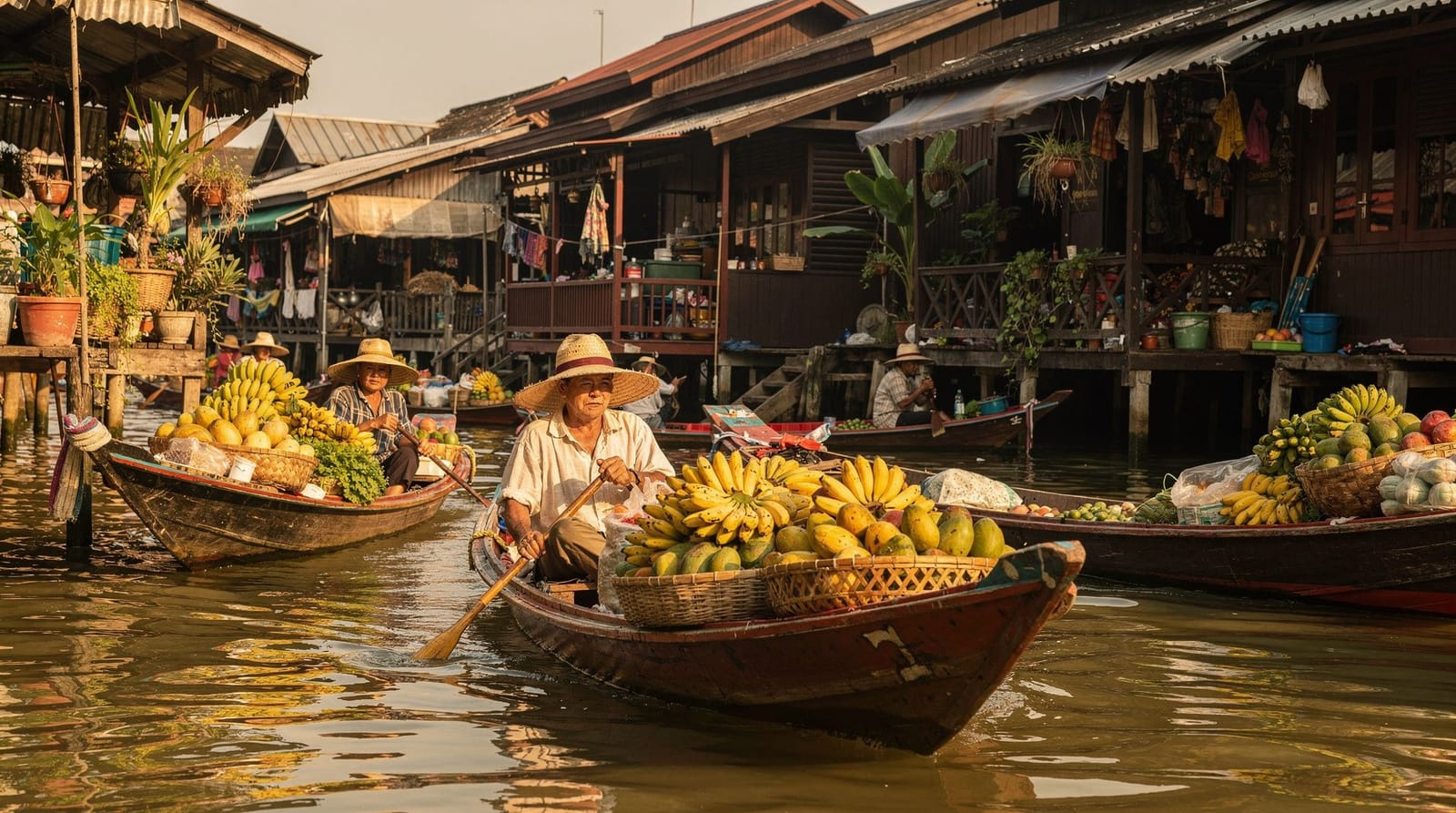
Taking a boat is the iconic experience but also where most overcharging happens. A short paddle-boat tour of the main canal should cost around 150–200 THB per person. The common scam is a low quoted price that, once you are aboard, becomes a long “extended” route priced at 1,000–1,500 THB. Agree the exact price, route, and duration before you step into the boat, and have the agreed cash ready. Motorised longtail boats are faster and pricier; the traditional paddle boats are quieter and more in keeping with the setting.
What to eat
The food is a genuine pleasure if you choose well. Look for:
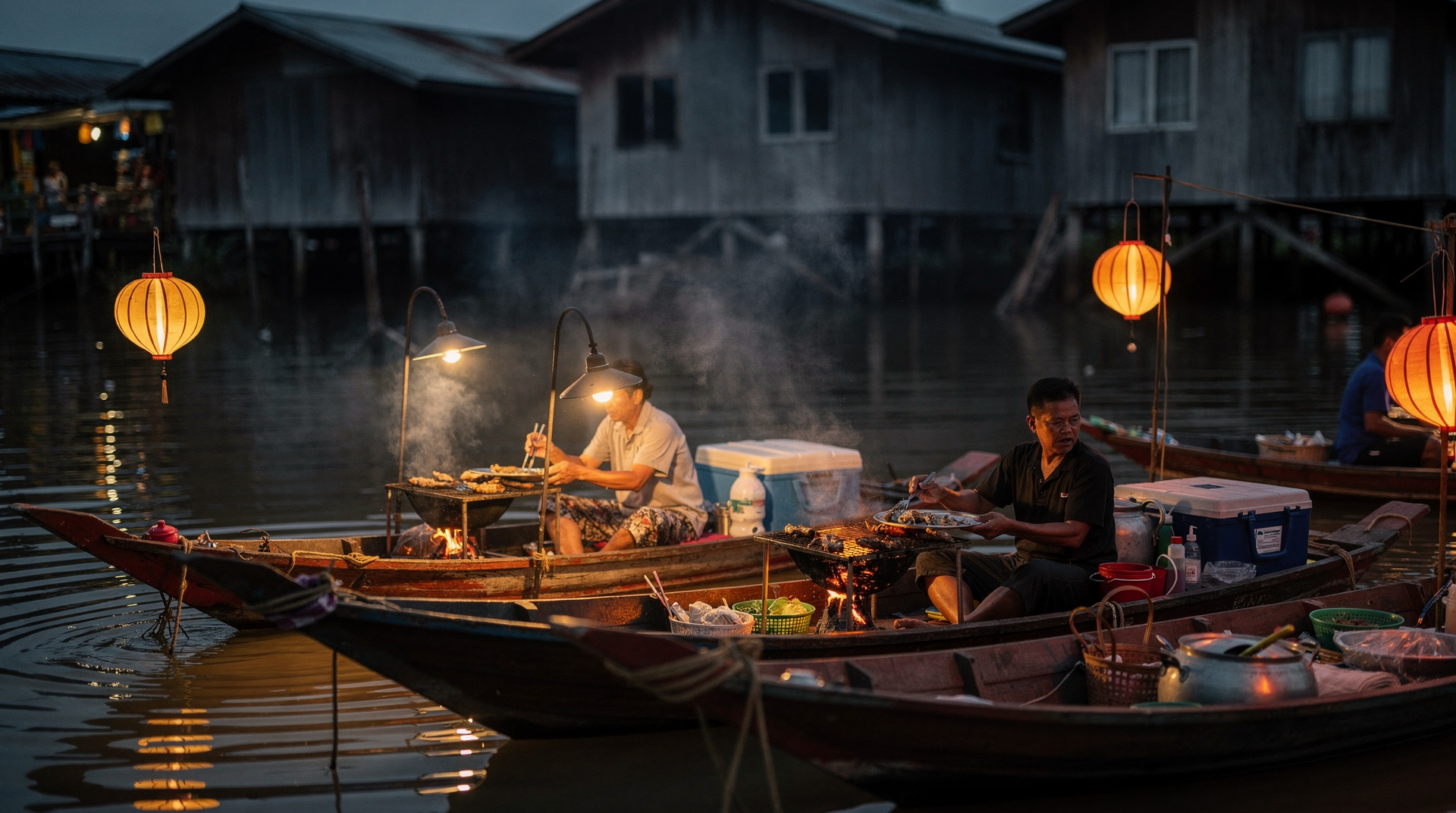
- Boat noodles (kuaytiaw ruea): small, intense bowls of pork or beef noodle soup, cooked and served from the boats.
- Grilled river prawns: large, smoky, brushed with chilli sauce.
- Coconut ice cream served in a coconut shell with peanuts and sticky rice.
- Tropical fruit: mango, pomelo, rambutan, mangosteen in season.
- Khanom (Thai sweets): coconut pancakes and grilled bananas cooked on the boats.
Eat where you see vendors and locals eating, not at the most photographed souvenir boats. Prices run higher than central Bangkok, so confirm before ordering, especially for prawns sold by weight.
Combining with Maeklong Railway Market
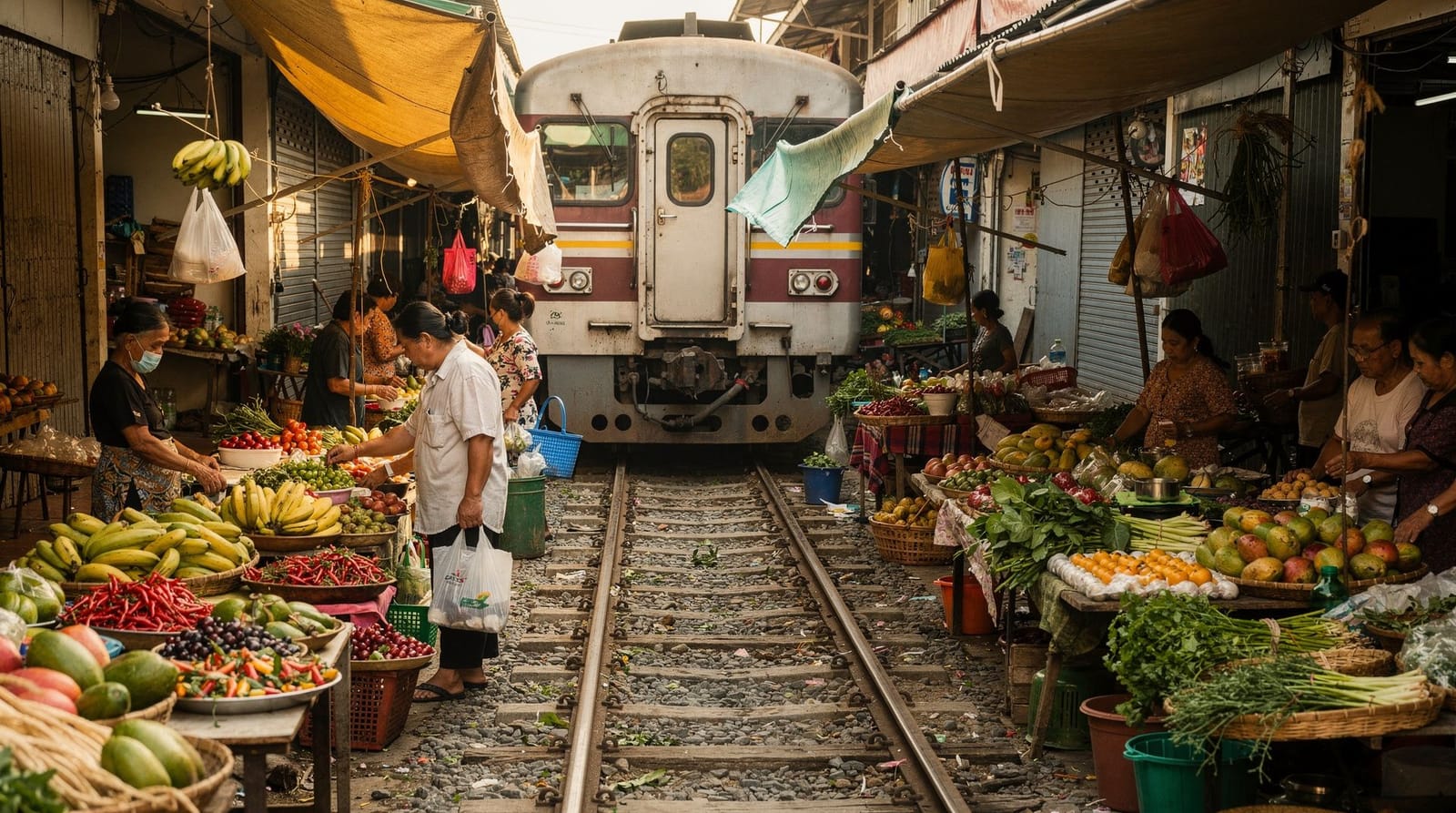
The long drive only really makes sense if you combine Damnoen Saduak with the nearby Maeklong Railway Market, about 30–40 minutes away. Maeklong is the extraordinary market where vendors trade directly on the railway tracks and sweep their awnings and produce aside each time a train passes — a genuinely unmissable spectacle. The combination is the standard day-trip structure: floating market at dawn, railway market timed to a train passage.
The Maeklong and Amphawa floating market tour and similar combined trips are designed around this pairing. For the full picture, see the Maeklong Railway Market guide and the Amphawa floating market guide if you would rather pair Maeklong with Amphawa instead.
Photography etiquette on the canal
The canal is one of the most photographed spots in Thailand, and it’s worth a little courtesy toward the people who actually work there. Ask before photographing a vendor’s face directly, and consider buying something small from anyone you photograph closely — many rely on tourism income and appreciate the gesture more than a stranger’s camera. Wide shots of the canal, the boats and the general scene need no permission. The soft, low morning light before 08h00 gives noticeably better results than the flat glare of a 10 a.m. visit, one more reason the early start pays off twice over.
Money and bargaining specifics
Bring cash in small denominations — 20s, 50s and 100 THB notes — since boat vendors and canal-side stalls rarely carry change for anything larger, and there are no reliable ATMs directly on the canal. Bargaining here follows the same rhythm as elsewhere in Thailand: ask the price, counter firmly but politely, and be willing to walk away, which is often what brings the real price out. Boat rides are the exception where you fix the entire deal — price, route and duration — before boarding rather than bargaining as you go, since a mid-ride renegotiation is where most disputes start.
Should you visit at all?
Is Damnoen Saduak worth it? It depends entirely on your expectations and your timing.
It is worth it if: you want the iconic floating market photographs, you can arrive before 08h00, you set every price in advance, you treat it as a morning photo experience rather than a shopping trip, and you combine it with Maeklong Railway Market to justify the drive.
It is not worth it if: you arrive mid-morning with the tour-bus wave, expect bargains, want an authentic lived-in local market, or are unwilling to negotiate. In those cases, Amphawa or Khlong Lat Mayom will serve you far better.
For an unsparing assessment, read is Damnoen Saduak worth it, and for the side-by-side comparison see Damnoen Saduak vs Amphawa. If you would rather skip the long drive entirely, the best night markets guide and Bangkok markets guide cover excellent in-city alternatives.
Practical checklist
- Leave Bangkok by 05h30–06h00 to beat the buses (or take an early organised tour).
- Carry small cash — plenty of 20s, 50s, and 100s. No reliable ATMs canal-side.
- Fix boat prices first — 150–200 THB per person for a short paddle; refuse “extensions” you didn’t agree.
- Combine with Maeklong Railway Market to justify the trip.
- Dress for heat — hat, sunscreen, water. The canal is uncovered.
- Manage expectations — it is a photogenic spectacle, not a hidden local secret.
Frequently asked questions about Damnoen Saduak floating market: the honest visitor's
What time should I arrive at Damnoen Saduak?
How much does a boat ride at Damnoen Saduak cost?
How do I get to Damnoen Saduak from Bangkok?
Is Damnoen Saduak a tourist trap?
What should I eat at Damnoen Saduak?
Can I combine Damnoen Saduak with the Maeklong Railway Market?
Should I visit Damnoen Saduak or Amphawa?
Top experiences
Bookable activities with verified prices and instant confirmation on GetYourGuide.