Hop-on-hop-off in Bangkok: the honest guide
Bangkok Unlimited Bus & River Boat Pass – ThaiGo Travel Card
Is the hop-on-hop-off bus worth it in Bangkok?
Honestly, the river boat is the real hop-on-hop-off in Bangkok, not the bus. A combined boat-and-bus day pass exists for around 1,000 THB, but the boat segment along the Chao Phraya is where the value lies — it links the temples, Chinatown and the markets while bypassing the traffic that cripples any road-based loop. The standard tourist bus is far less established here than in other cities, so treat the boat as your hop-on-hop-off and the bus as an occasional add-on.
In most big cities the hop-on-hop-off tourist bus is a reliable, if unglamorous, way to tick off the sights. In Bangkok, the honest answer is different: the river boat is the real hop-on-hop-off, and the tourist bus is the weaker, traffic-bound afterthought. A combined boat-and-bus day pass exists, but the value is almost entirely on the water — the Chao Phraya river links the temples, Chinatown and the markets while gliding past the gridlock that strangles any road-based loop. Treat the boat as your hop-on-hop-off, and you have one of the best-value sightseeing tools in the city.
| Where | Chao Phraya river piers, Sathorn to Phra Athit |
| Cost | ~1,000 THB combined boat+bus; boat-only cheaper; commuter boat 16 THB |
| Time needed | A full day for the river spine |
| Getting there | BTS Saphan Taksin to Sathorn Central Pier |
| Best time | Morning start, roughly 08h00 |
Three ways onto the river, compared
| Combined boat+bus pass | Boat-only tourist pass | Commuter boat | |
|---|---|---|---|
| Cost | ~1,000 THB | Cheaper, boat-only | 16 THB per ride |
| Covers | River + road loop | River piers only | River, more piers |
| Best for | Using both modes fully | Riverside sightseeing only | Budget, confident travellers |
| Traffic exposure | Bus segment sits in it | None | None |
This guide gives the straight story: how the combined pass works, what it really costs, why the boat beats the bus, which piers matter, and when you should skip the pass entirely in favour of the cheap commuter boat. Prices are approximate 2025–2026 figures at roughly 33 THB to 1 USD.
Why the boat beats the bus in Bangkok
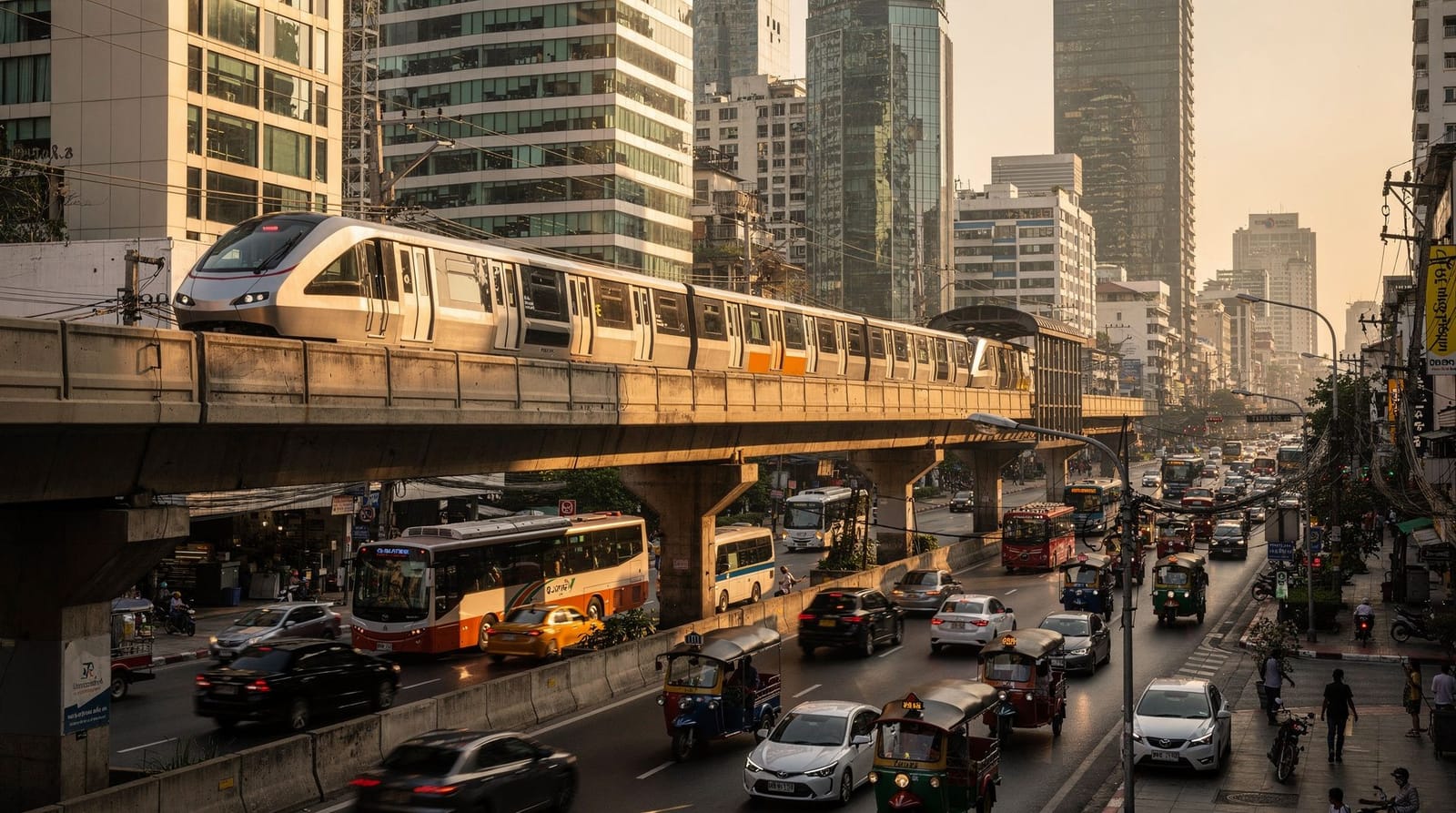
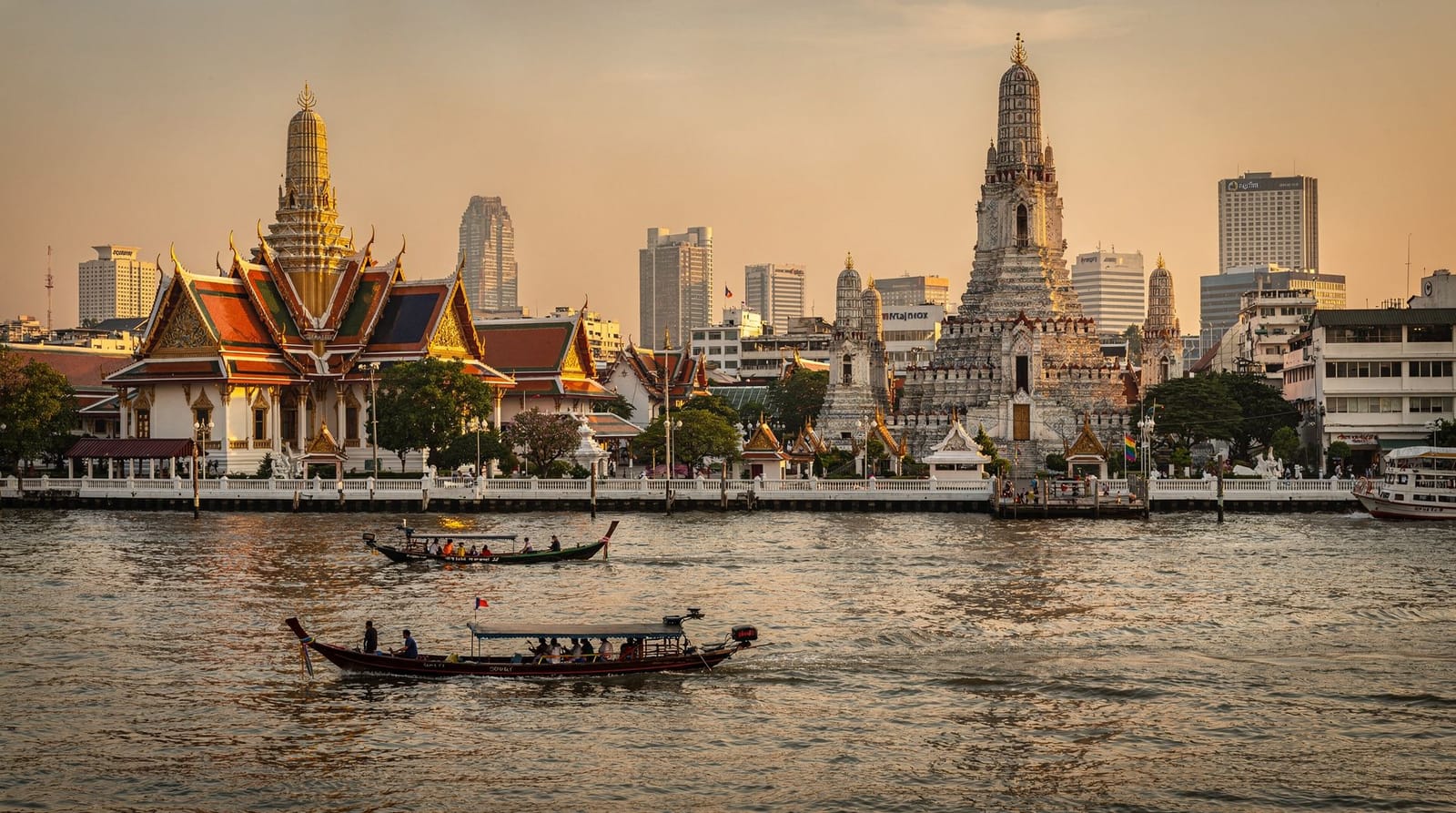
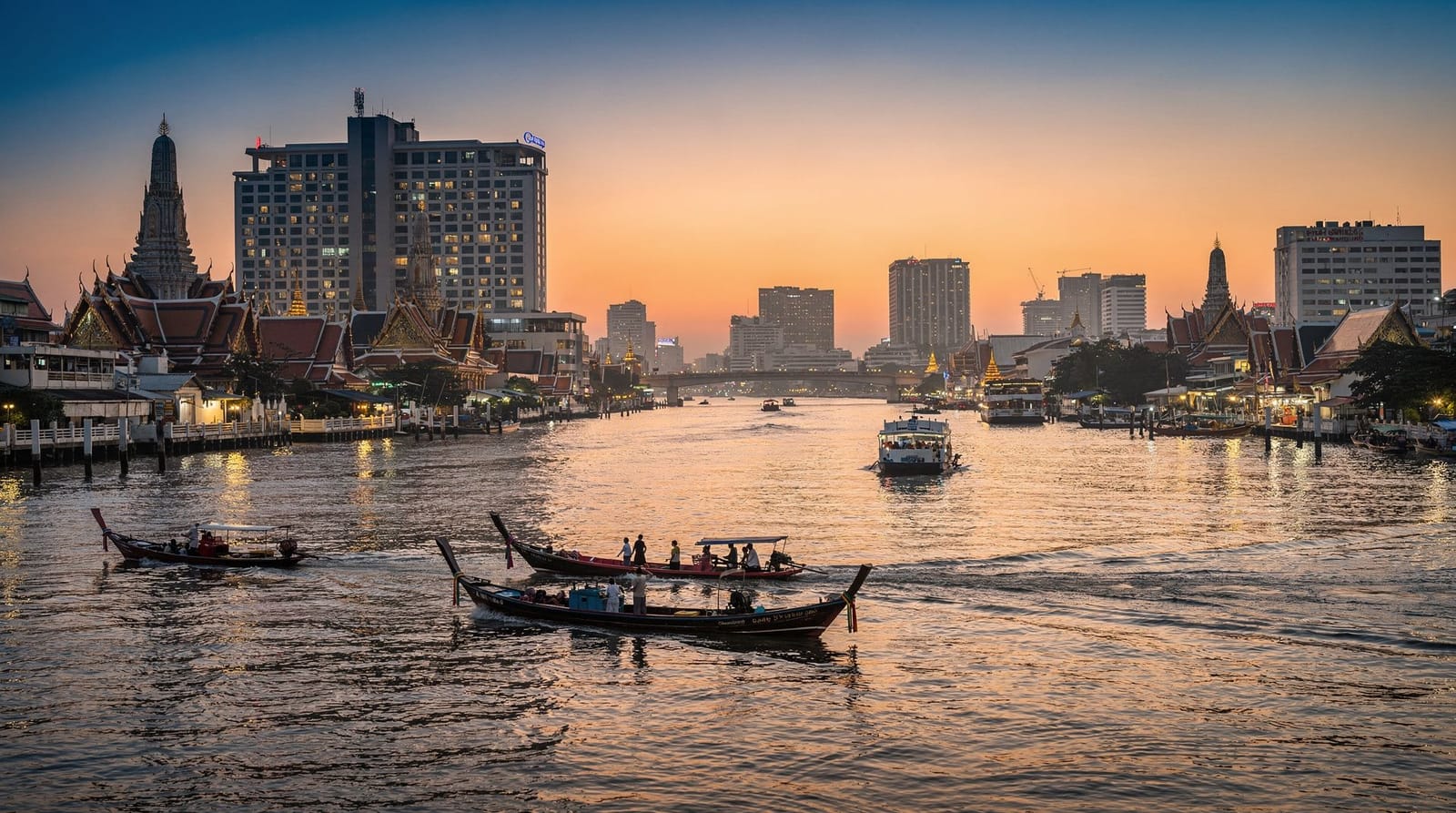
Bangkok’s defining transport problem is traffic, and a road-based hop-on-hop-off bus inherits all of it. A loop that looks efficient on the map crawls through congestion, turning a short hop into a long sit. The river has no such problem. The Chao Phraya was Bangkok’s original highway, and a boat moving along it bypasses the roads entirely while delivering the best views in the city — the temple spires from the water, the Grand Palace gold, Wat Arun’s prang rising over the far bank.
The boat also reaches the right places. The major riverside sights — the old city temples, Wat Arun, Chinatown, the markets — all sit on or near the river, so a boat connects them naturally. A bus has to fight traffic to reach the same spots. For temple-and-river sightseeing, the boat wins on speed, scenery and reliability, every time.
The combined boat-and-bus day pass
The main product sold as Bangkok’s hop-on-hop-off is a combined day pass covering both a river-boat line and a tourist-bus loop, sometimes branded as a ThaiGo or similar travel card. It gives you unlimited rides on both for a day.
What it covers: The boat segment runs the tourist line along the Chao Phraya, stopping at the key sightseeing piers; the bus segment runs a road loop through parts of the city. The boat is the strong half; the bus is the patchy half.
Real price: Around 1,000 THB (USD 30) for the combined day pass.
Book the hop-on-hop-off boat and bus day passHonest assessment: Worth it only if you will genuinely use both modes across a full day of riverside sightseeing. If you mainly want the river — which is most people — a boat-only ticket or the cheap commuter boat is better value. The bus loop rarely justifies the combined price on its own given Bangkok’s traffic. The hop-on-hop-off boat guide goes deeper on the water option.
The piers that matter
The Chao Phraya tourist boat (the blue-flag line) links the piers you actually need for sightseeing. Knowing them turns the boat into a precision sightseeing tool.
Sathorn (Central Pier): The main hub, connected to BTS Saphan Taksin — this is where most river journeys begin and where you connect to the Skytrain network. See the BTS guide for the rail links.
Tha Tien: For Wat Pho and the small cross-river ferry to Wat Arun. One of the most useful stops.
Tha Chang: The closest pier for the Grand Palace and the heart of Rattanakosin.
Ratchawong: For Chinatown and Yaowarat’s street food.
Phra Athit: For Khao San and Banglamphu, the backpacker quarter.
Pier lists vary by operator and change periodically, so check the current stops when you board. The boat-only commuter lines stop at more piers for less money.
The cheaper alternative: the commuter boat
Here is the honest tip that saves money: the regular orange-flag Chao Phraya commuter boat runs the same river and stops at most of the same piers for around 16 THB per ride — a fraction of the tourist pass. It is more crowded, moves fast at the piers and offers no commentary, but for confident travellers it is the best-value way to use the river.
The river uses a flag-colour system to mark express and local services, which takes a moment to learn but is straightforward once you do. The Chao Phraya boats guide explains the flags, the piers and which boat to take, and the getting around Bangkok guide puts the river in the context of the BTS, MRT and Grab. If you are sightseeing on a budget, skip the tourist pass and ride the commuter boat.
A practical river-sightseeing day, hour by hour
The boat works best when you build a loose plan around it rather than riding aimlessly. Here is how a strong riverside day flows.
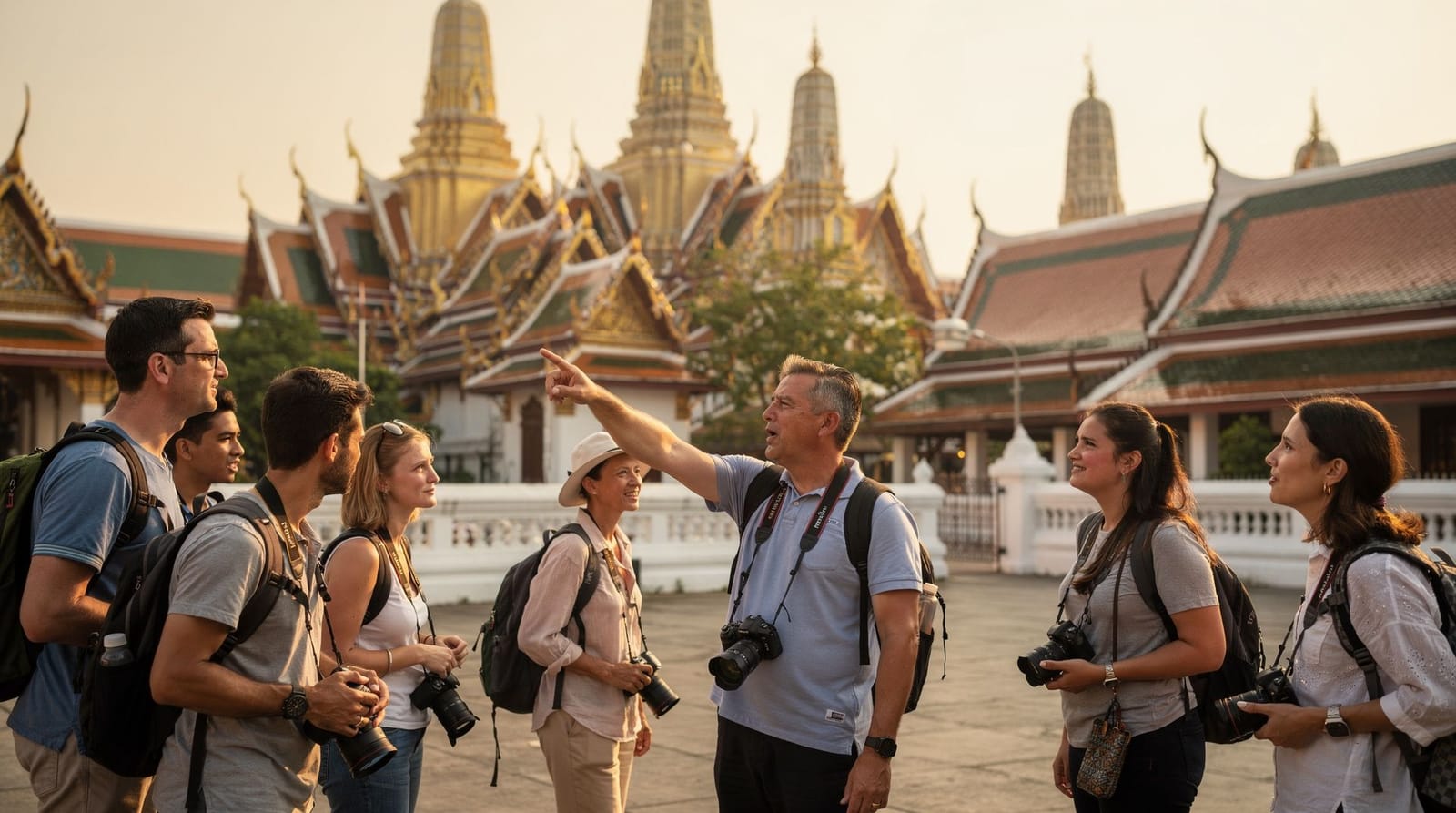
Morning, from 08h00. Start at Sathorn (Central Pier) off BTS Saphan Taksin and take an early boat upriver to Tha Chang for the Grand Palace, arriving with the 08h30 opening to beat the heat and the crowds. The morning light on the river and the temple gold is the best of the day, and the early boats are far less crowded than the midday ones.
Late morning. Hop off at Tha Tien for Wat Pho and the reclining Buddha, then take the small cross-river ferry — a separate few-baht ride, not the tourist boat — over to Wat Arun. This trio of temples is the core of any Bangkok visit and the river links them more cleanly than any road route. The temple-hopping route guide maps the walking connections between stops.
Afternoon. Re-board and continue to Ratchawong for Chinatown and a late lunch of street food, or stay on toward the markets. By mid-afternoon the heat peaks, so this is a good window to slow down over a long meal before the final stretch.
Evening. End at Phra Athit for Khao San and Banglamphu, or return downriver to Sathorn and connect to the BTS. The last tourist boats run in the early evening, so check the final departure when you board — the commuter boats run later but you need to know the flag system.
This single river spine covers more of Bangkok’s essential sights, more comfortably, than any bus loop could. It is the honest reason the boat, not the bus, is the city’s true hop-on-hop-off.
How the pass compares to other ways of seeing the river
The combined pass is one of several ways onto the Chao Phraya, and it is worth knowing where it sits.
Versus the commuter boat: The commuter boat is cheaper and reaches more piers, but it offers no commentary and demands you read the flag colours. For value, it wins; for ease, the tourist pass wins.
Versus a private long-tail boat: A chartered long-tail through the Thonburi khlongs is a different, more intimate experience — narrow canals, stilt houses, hidden temples — but it is a one-off charter, not a hop-on-hop-off, and prices must be firmly agreed in advance. It complements the tourist boat rather than replacing it.
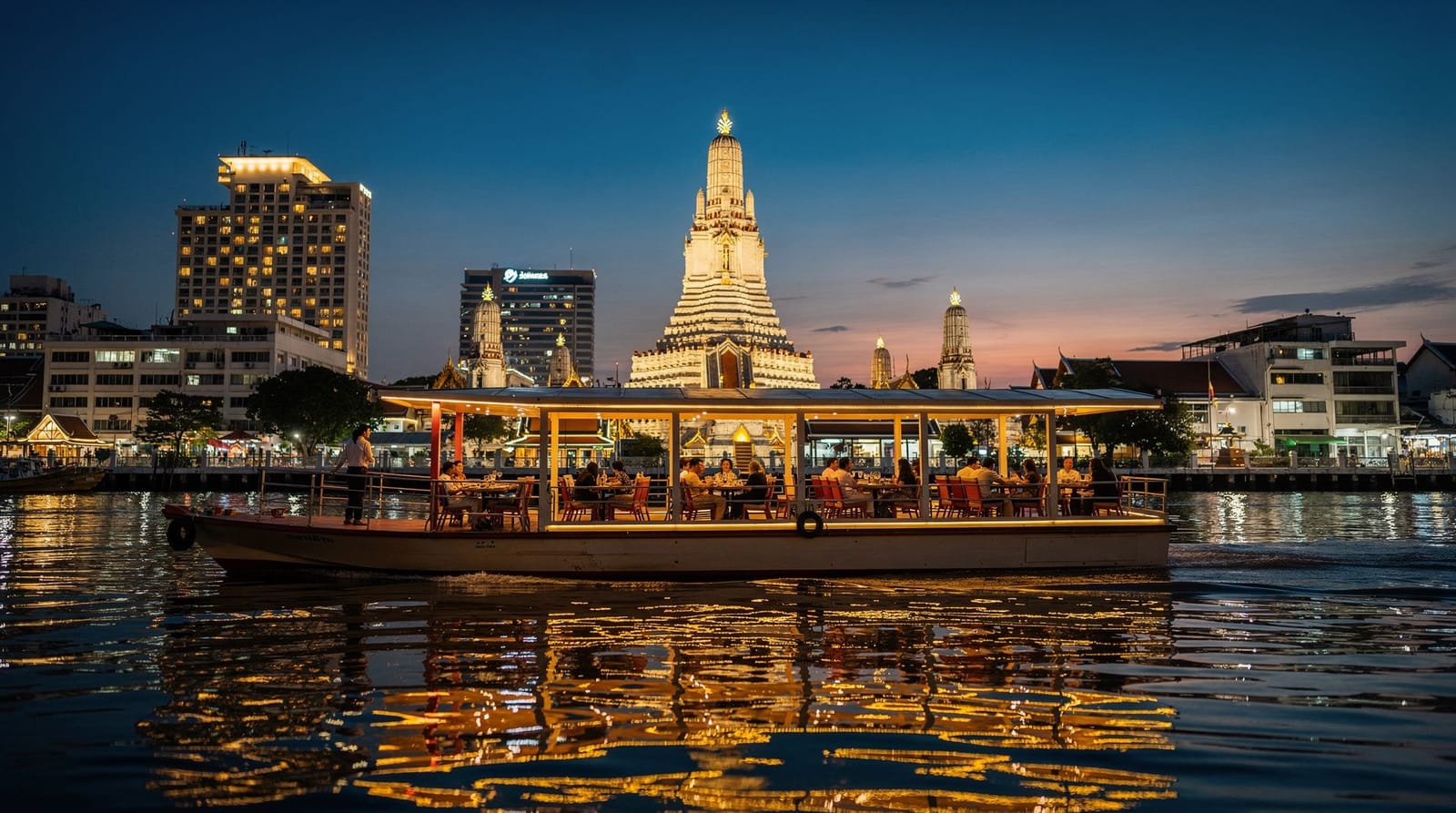
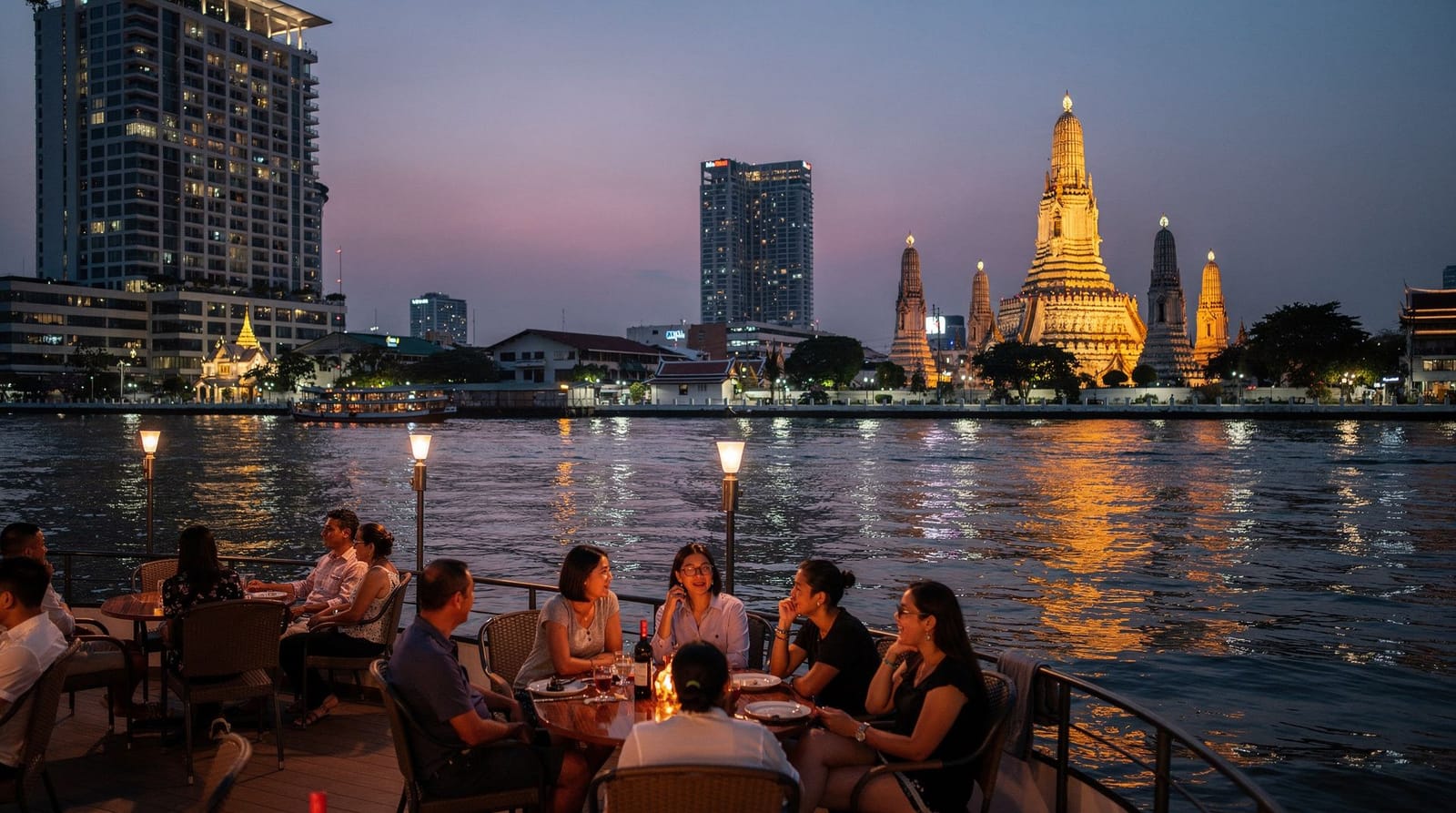
Versus a dinner cruise: An evening dinner cruise is about the lit-up city and the romance of the river at night, with average food as the trade-off. It is an evening experience, not a sightseeing-transport tool, so it answers a different need from the day pass.
For a full comparison against tuk-tuk, walking and private tours, the best Bangkok tours overview puts the river option in context.
Scams and hassles at the river piers
The busy piers near the Grand Palace attract the same scam ecosystem as the temple gates. Touts may tell you the public boat is not running, the Grand Palace is “closed today”, or that you must charter a private long-tail boat at an inflated price. None of it is true: the public boats run frequently, and the Grand Palace is open almost every day, roughly 08h30–15h30.
Buy your tickets at the official pier booths, ignore anyone steering you toward a private charter or claiming a sight is closed, and you sidestep the river-pier tricks. The full picture is in the common Bangkok scams and Grand Palace scam warning guides. Private long-tail boat trips through the Thonburi khlongs can be wonderful, but agree the price firmly in advance and book through a reputable source rather than a pier tout.
Who should buy the pass, and who should not
Buy the combined pass if: you want a relaxed, full day of riverside sightseeing without working out individual fares, you will use both the boat and the bus, and the convenience is worth more to you than the saving. First-time visitors who want simplicity often find the boat element genuinely useful.
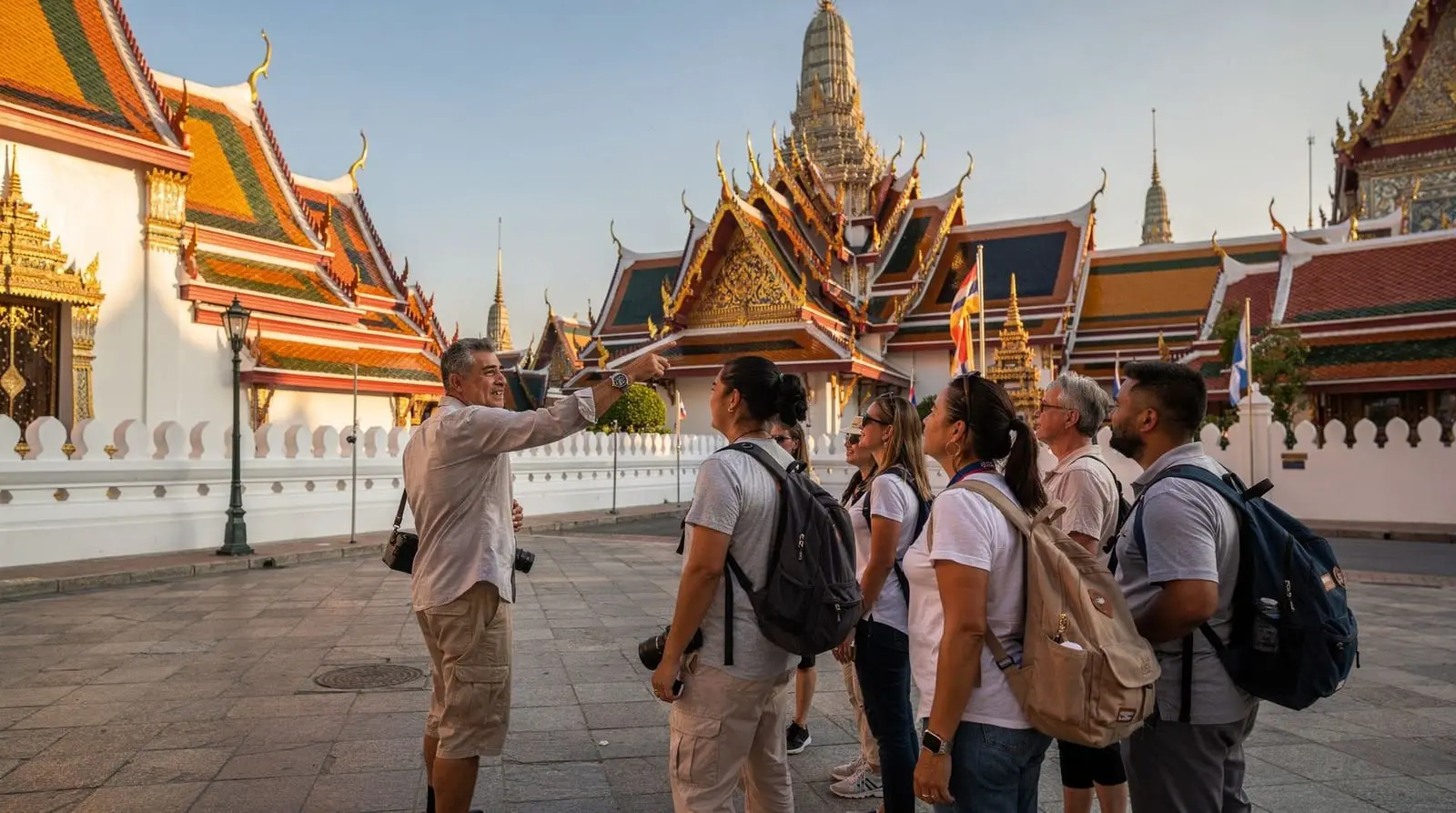
If you would rather have the temples explained as you go than navigate the river alone, a guided highlights tour that bundles the river with the major sights is often a better first-day choice than a self-directed pass.
Book a guided Bangkok-in-a-day highlights tour with river and templesSkip the pass if: you are budget-minded and comfortable reading the boat flags — ride the 16 THB commuter boat instead. Or if you are mainly using the BTS, MRT and Grab to cover the city, in which case you only need the boat for a single temple day and a few tickets, not a whole pass.
For the wider tour landscape — how the boat compares to a tuk-tuk food tour, a walking tour or a private tour — see the best Bangkok tours overview.
A sample two-day plan: river one day, streets the next
Rather than trying to cram both the boat and the bus into one exhausting day, a cleaner approach for visitors with two days is to split them. Day one: ride the river spine from Sathorn to Phra Athit as laid out above, covering the Grand Palace, Wat Pho, Wat Arun and Chinatown from the water. Day two: explore the same old-city area on foot or with a walking tour, at street level this time — the backstreets, temple courtyards and market stalls that a boat ride only glimpses from the river. This split gets more out of both formats than a single rushed day trying to use the combined pass end to end, and it avoids paying for a bus segment you may only use once or twice. It also spreads out the heat exposure, since a full day of standing at piers and walking old-city lanes back to back is genuinely tiring in Bangkok’s climate.
A walking alternative for the old-city stretch
If the river spine covers the temples but you would rather explore Chinatown and the old city on foot with context rather than from a boat rail, a guided walking option fills that gap well. A city highlights temple and market walking tour covers the same old-city ground at street level, pointing out the details a boat ride skips entirely, and pairs naturally as a second-day complement to a river-focused first day.
Frequently asked questions about Hop-on-hop-off in Bangkok: the honest
Does Bangkok have a hop-on-hop-off tourist bus like other cities?
What does the combined boat-and-bus pass cost in Bangkok?
Is the river boat better than the bus for sightseeing in Bangkok?
Which piers does the hop-on-hop-off boat stop at?
Can I just use the regular Chao Phraya commuter boat instead?
Is a hop-on-hop-off pass good for first-time visitors to Bangkok?
Are there scams to watch for at the river piers?
Top experiences
Bookable activities with verified prices and instant confirmation on GetYourGuide.