Iconic landmarks of Bangkok: the signature sights
Bangkok: Grand Palace Skip-the-Line Entry Ticket
What are the most iconic landmarks in Bangkok?
The signature landmarks are the Grand Palace and its Emerald Buddha temple (~500 THB, 08:30–15:30), Wat Pho with the giant Reclining Buddha (~300 THB), and Wat Arun on the river (~200 THB). Beyond the temple trio, the Jim Thompson House (~200 THB), Erawan Shrine, Democracy Monument and the Giant Swing round out the must-know sights. All sit in or near the old city and the river, easily linked in a day or two.
Some sights define a city, and in Bangkok they cluster in a single golden stretch beside the river. The Grand Palace blazes with gilded spires, the Reclining Buddha of Wat Pho stretches 46m through its hall, and Wat Arun’s porcelain tower catches the sunset across the water. Add the Jim Thompson House, the Erawan Shrine and the old city’s monuments, and you have the landmarks every first-time visitor should know. This guide walks through each one honestly — real entry prices in baht, opening hours, dress codes, the smartest order to see them, and the scams that cluster around the most famous gates. It is built to be decision-ready, so you arrive knowing exactly what to pay, what to wear and what to ignore.
| Where | Rattanakosin old city and the riverside |
| Cost | ~1,200 THB (~36 USD) for the four ticketed landmarks |
| Time needed | A full morning for the temple trio; half a day with Jim Thompson House |
| Getting there | Chao Phraya boat to Tha Chang or Tha Tien; BTS National Stadium for Jim Thompson |
| Best time | Arrive at 08:30 opening to beat heat and crowds |
The landmarks compared
| Landmark | Cost | Time needed | Best for |
|---|---|---|---|
| Grand Palace / Wat Phra Kaew | ~500 THB | 1.5–2 hours | The single unmissable sight |
| Wat Pho | ~300 THB | 45–60 min | The Reclining Buddha, temple massage |
| Wat Arun | ~200 THB | 30–45 min | River views, sunset photos |
| Jim Thompson House | ~200 THB | 1–1.5 hours | Culture and craft, away from crowds |
The honest headline: these are genuinely world-class sights, but they are also crowded, hot and surrounded by hustlers who prey on the disoriented. The fix is simple — go early, dress modestly, carry cash, and walk straight past anyone who approaches you outside the gates with a story. Do that and the icons of Bangkok deliver everything their reputation promises.
The Grand Palace and the Emerald Buddha
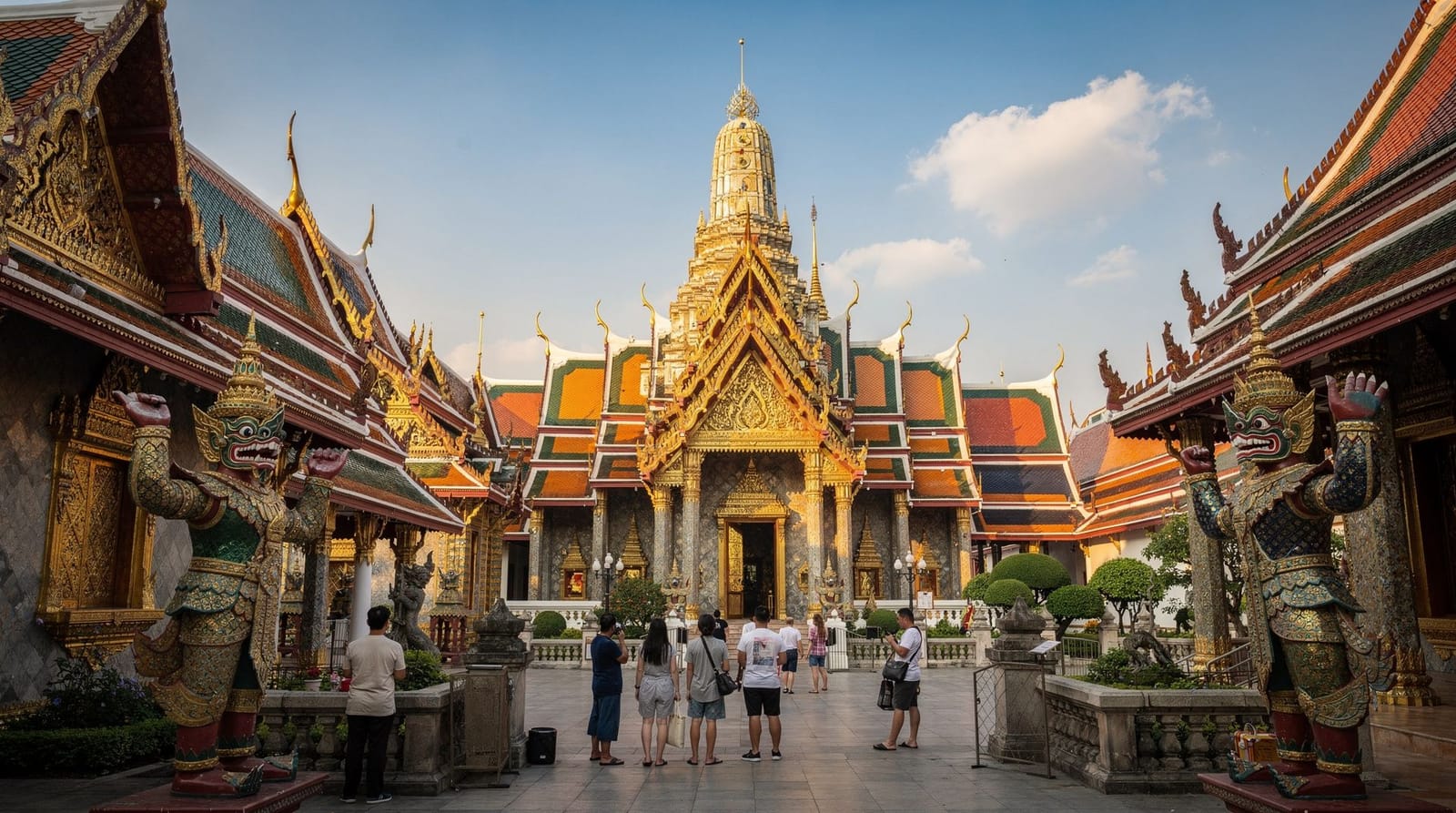
The Grand Palace is the city’s defining landmark — a walled complex of dazzling throne halls and gilded chedis begun in 1782, and home to Wat Phra Kaew, the temple of the Emerald Buddha, Thailand’s most sacred image. Entry is around 500 THB (~15 USD) and it opens 08:30–15:30 daily. It is also the most crowded site in Bangkok, so arrive at opening to walk the courtyards before the tour buses arrive. The nearest river pier is Tha Chang. Our Grand Palace guide and Wat Phra Kaew Emerald Buddha guides cover the layout, the highlights and the etiquette in detail.
The dress code is strict — shoulders and knees covered, no see-through fabric, vests or ripped jeans — and sarongs can be rented at the gate if you arrive underdressed. To skip the long ticket queue, you can book a skip-the-line Grand Palace ticket here, or take a guided sacred-sites tour that links the palace with the temple trio: this guided Grand Palace, Wat Pho and Wat Arun tour handles the order and the river crossing for you.
Wat Pho and the Reclining Buddha
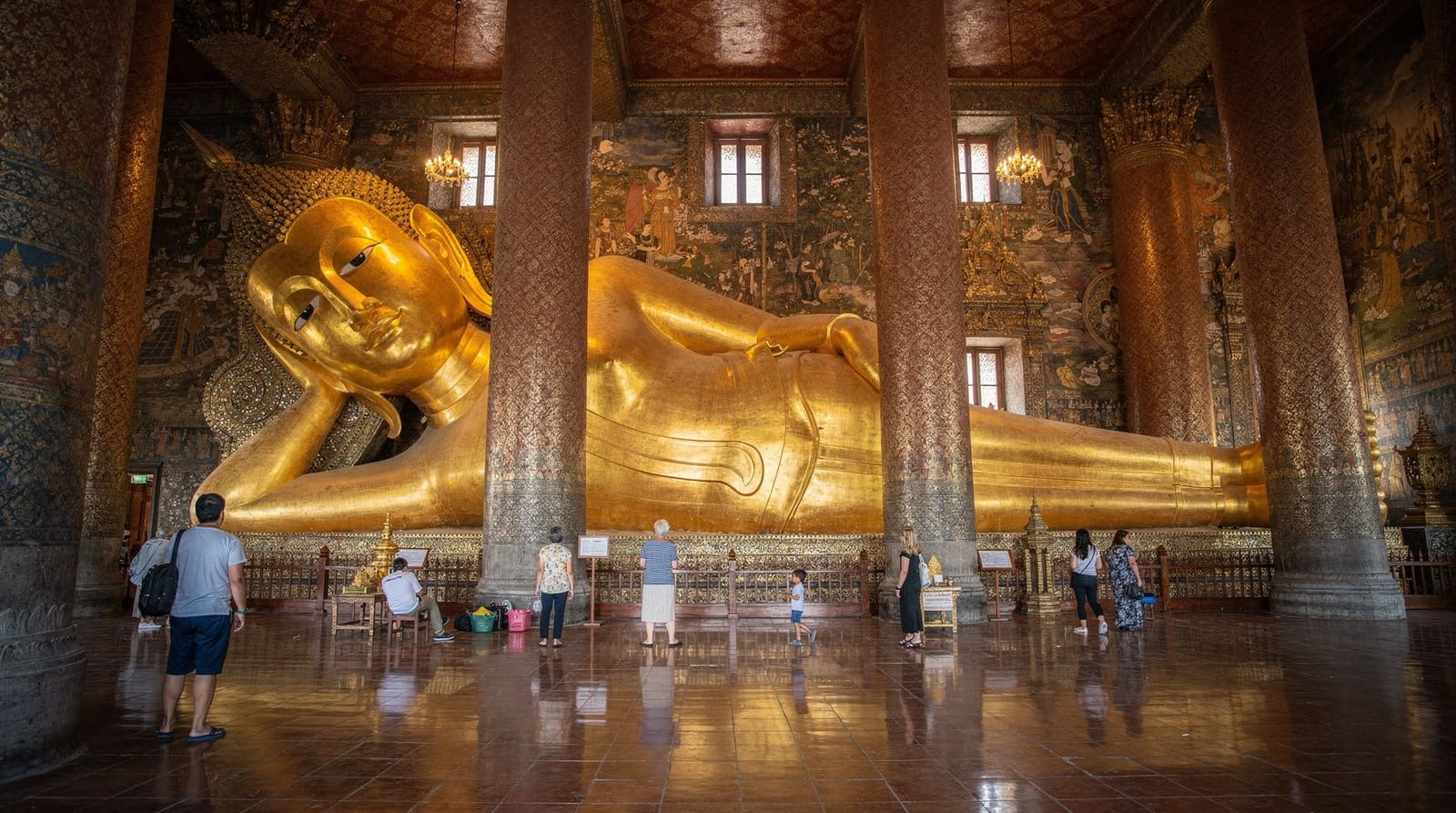
A few minutes’ walk south sits Wat Pho, home to the breathtaking 46m gold-leafed Reclining Buddha, its feet inlaid with mother-of-pearl. Beyond the famous statue, Wat Pho is the cradle of traditional Thai massage and a serene maze of chedis and cloisters that most visitors rush through too quickly. Entry is around 300 THB (~9 USD), which includes a small bottle of water. Our Wat Pho guide maps the highlights and the on-site massage pavilion, where a 30-minute session is one of the best-value treats in the old city. The temple sits in the heart of Rattanakosin old city, the historic royal island where most of Bangkok’s great landmarks cluster.
Wat Arun across the river
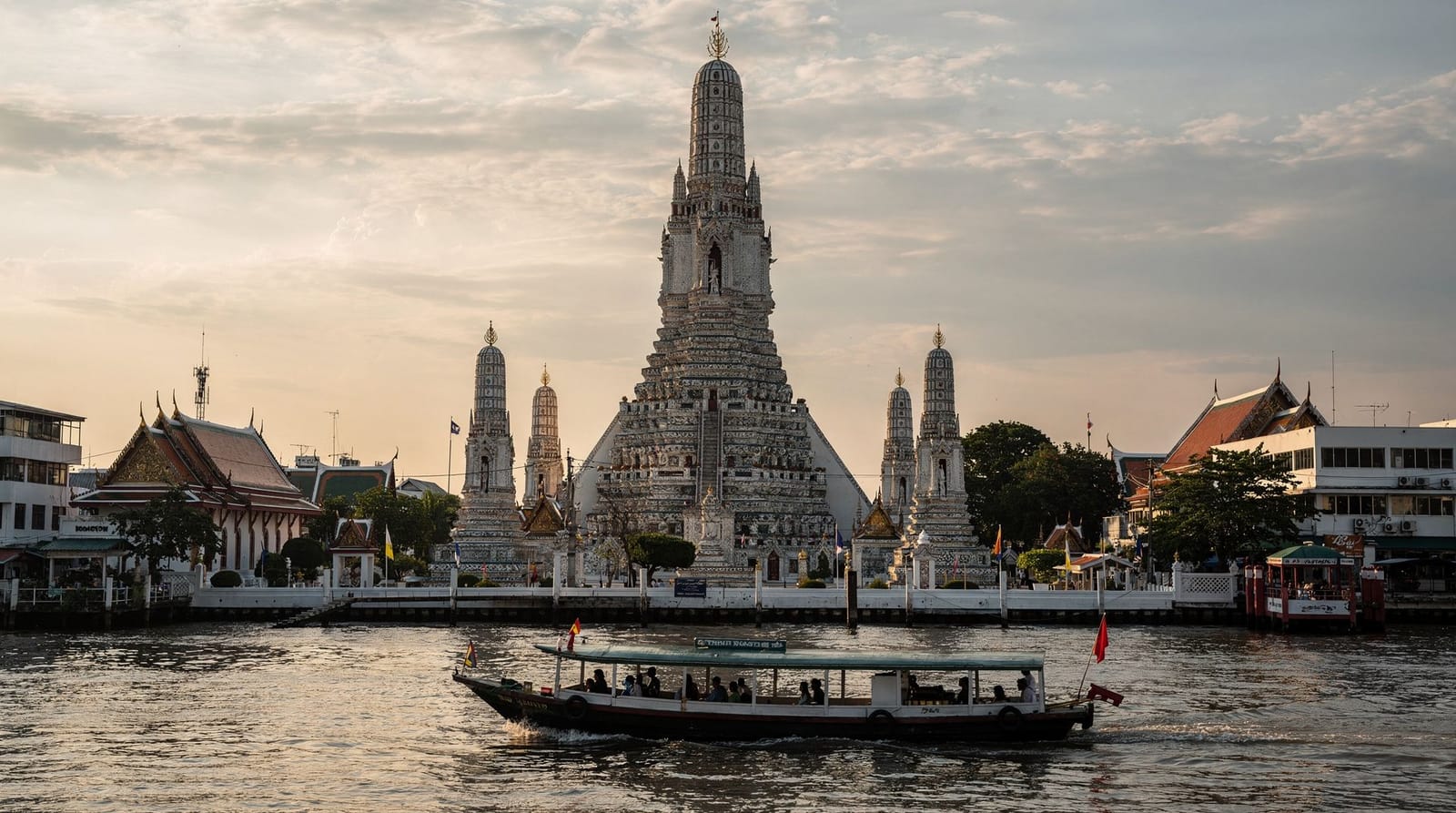
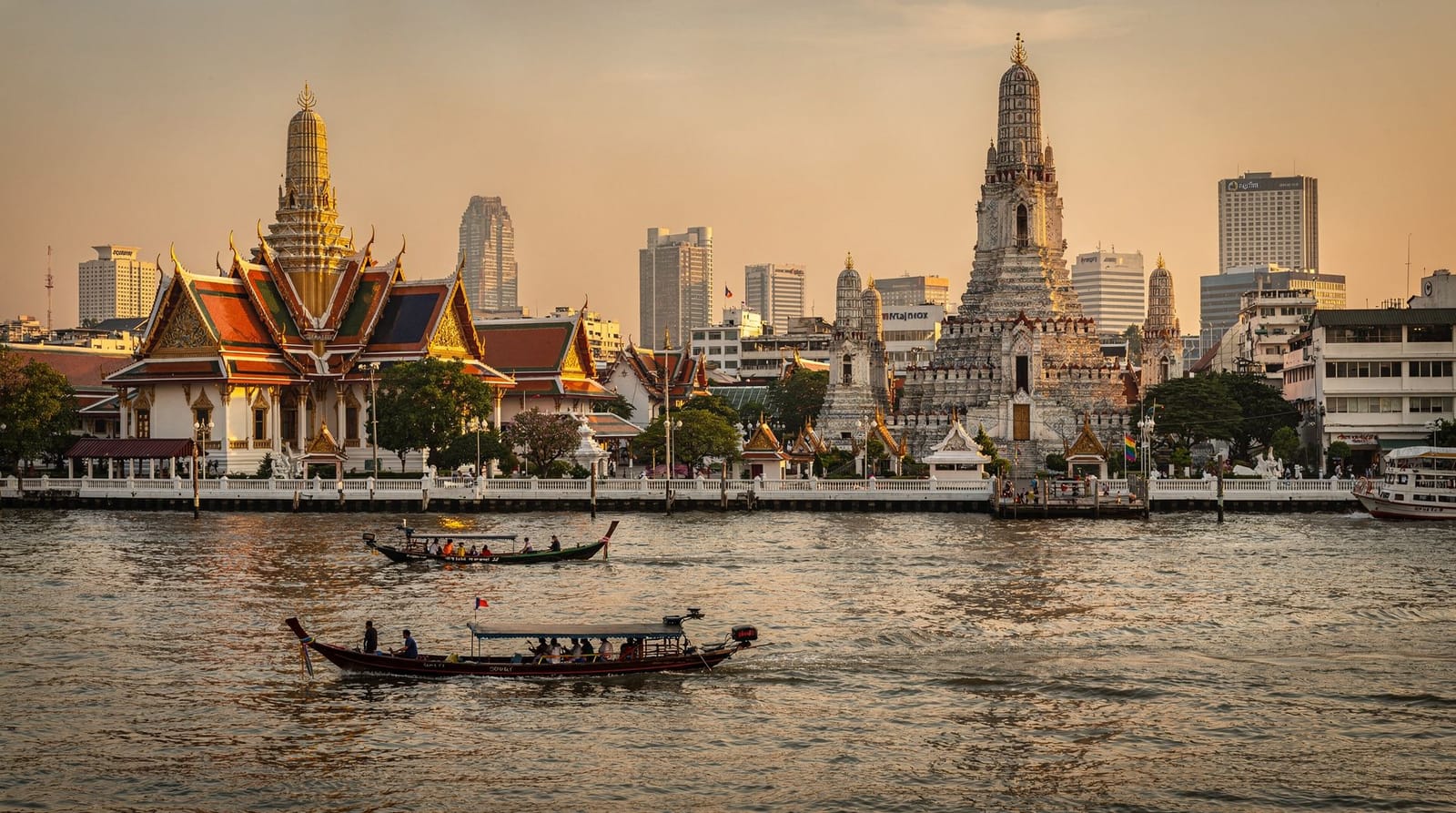
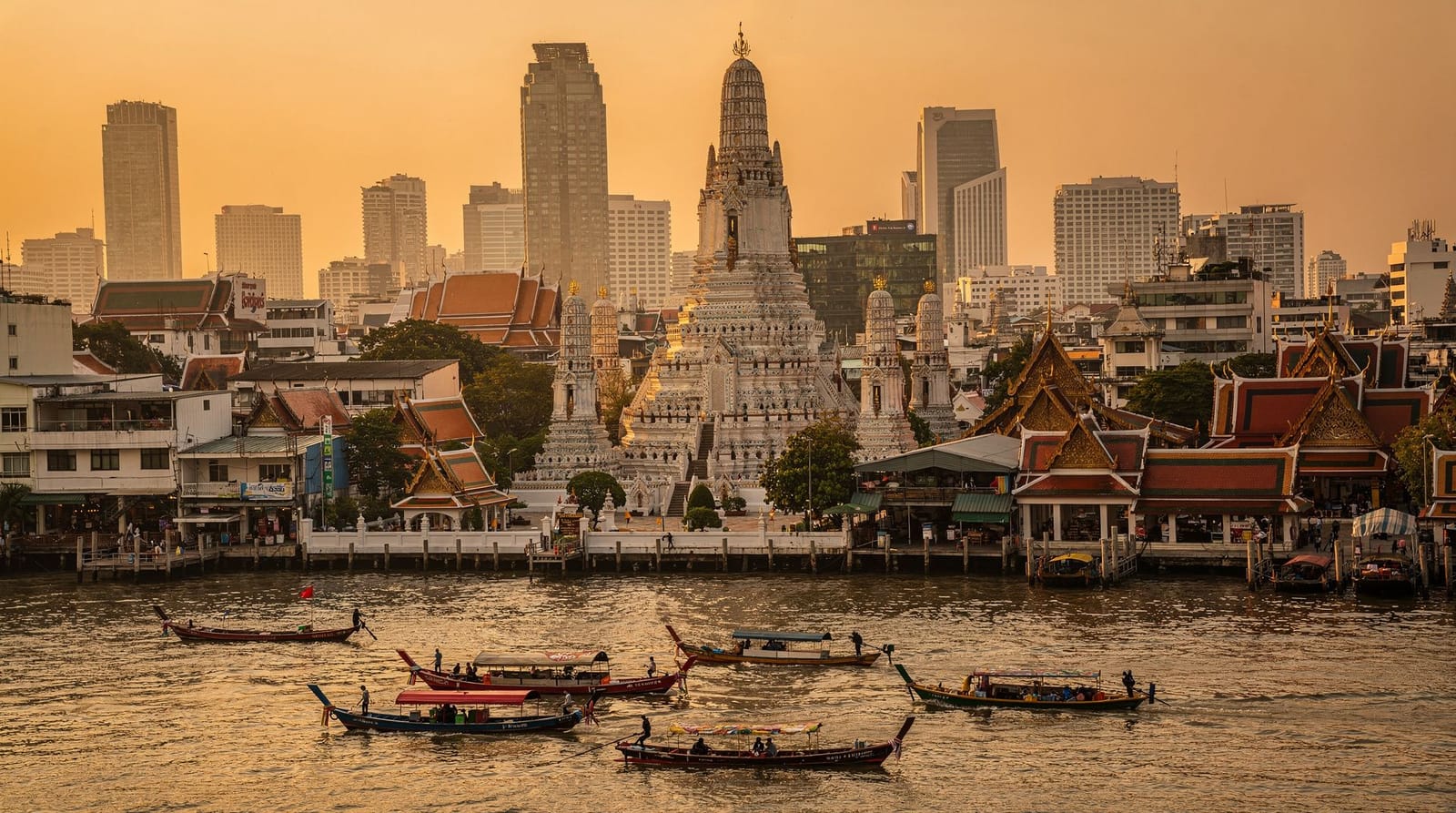
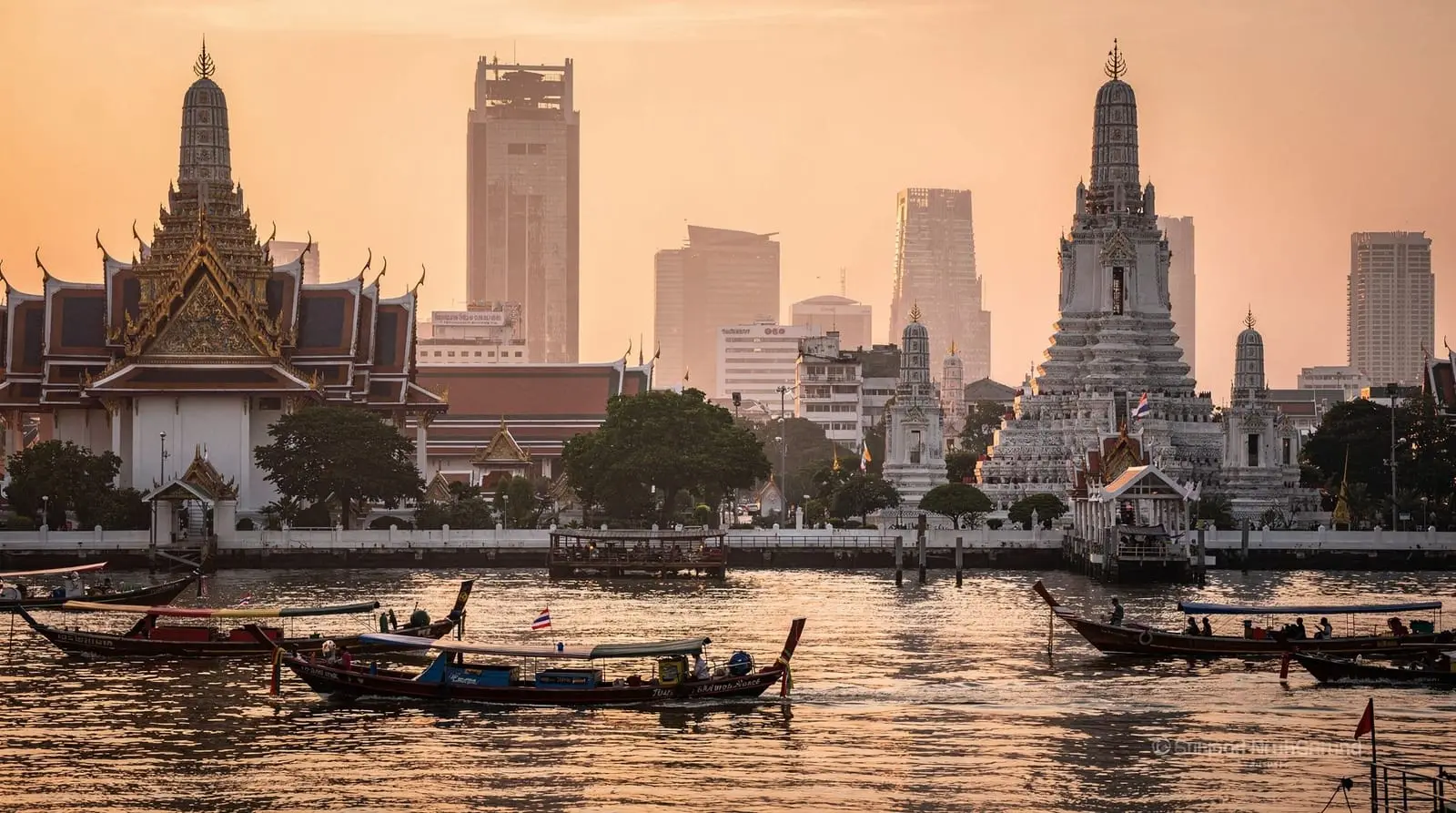
From the Tha Tien pier beside Wat Pho, a 5 THB cross-river ferry carries you to Wat Arun, the Temple of Dawn, whose 70m central prang is encrusted with millions of fragments of porcelain that shimmer in the light. Entry to climb the steep lower terraces is around 200 THB (~6 USD). The honest tip: while the temple is beautiful up close, its most famous view is from the opposite (Tha Tien) bank at sunset, when the spire glows against the sky — so consider visiting in the afternoon and lingering for the golden hour from across the water. Our Wat Arun guide and the Wat Arun area destination page cover the visit and the best photo angles across the river.
Beyond the temple trio
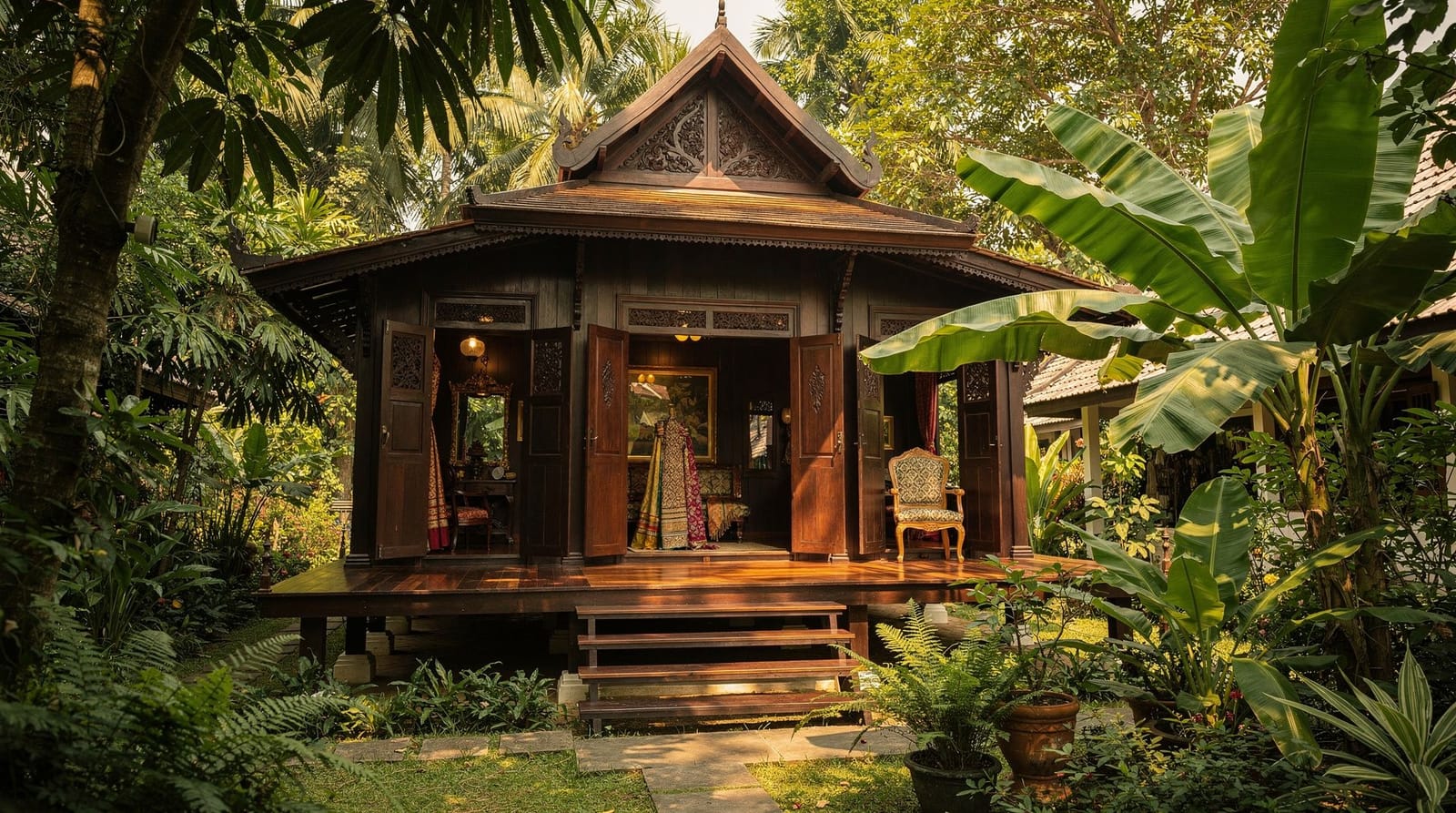
Bangkok’s landmarks are not only sacred. The Jim Thompson House near BTS National Stadium is a serene teak compound built by the American silk entrepreneur who revived Thai silk and then vanished without trace in 1967 — entry around 200 THB (~6 USD) including a guided tour. It pairs naturally with the Siam shopping district a short walk away; see our Jim Thompson House guide.
In the commercial heart, the Erawan Shrine at the Ratchaprasong crossroads draws a constant stream of devotees to its gilded four-faced Brahma, with resident dancers performing against a backdrop of luxury malls — a vivid, free snapshot of living faith, covered in our Erawan Shrine guide. And in the old city, the Democracy Monument and the towering red Giant Swing beside Wat Suthat mark the civic and ceremonial heart of Phra Nakhon — both free to view and best seen on foot while temple-hopping.
How to see them in the right order
The honest logistics: the temple trio sits in one tight cluster along the river, so do them in a single morning. Start at the Grand Palace at 08:30 opening, walk five minutes to Wat Pho, then take the Tha Tien cross-river ferry to Wat Arun. This order beats both the heat and the worst of the crowds. Allow a full morning into the early afternoon, carry water, and dress for the temples from the start so you are not caught out at the gate. A guided option removes the route-planning entirely — you can join a half-day guided city-temples tour that strings the landmarks together with context you would otherwise miss.
For getting around, the Chao Phraya express boat (orange flag, ~16 THB) links the riverside landmarks and is faster and prettier than a taxi stuck in old-city traffic — our Chao Phraya boats guide explains the flag system. To weave the landmarks into a wider plan, see our top attractions in Bangkok and must-see for first-timers guides, or follow the ready-made Bangkok 1-day itinerary.
The scams to walk past
The famous gates attract famous scams, and forewarned is forearmed. The classic is the Grand Palace “closed” scam: a friendly, plausible stranger tells you the palace is shut today for a ceremony or holiday and offers a cheap tuk-tuk tour to “other temples.” It is always a lie — the palace keeps its standard 08:30–15:30 hours — and the tour ends at a gem shop where you are pressured to buy worthless stones at fake “export discount” prices, with the driver pocketing a 20-baht-plus commission per stop. Walk past, go straight to the official ticket window inside the walls, and read our Grand Palace scam warning and gem scam Bangkok guides before you go. With taxis, insist on the meter and refuse fixed “special price” fares. None of this should put you off — the landmarks are extraordinary — but a little scepticism at the gate is the price of admission to the real Bangkok.
What to skip if you’re short on time
Not every landmark deserves equal priority on a tight schedule. If you only have half a day, the Grand Palace and Wat Pho together cover the essential history and grandeur; Wat Arun and the Jim Thompson House are the first things to cut, not because they’re not worthwhile, but because they reward a second day more than a rushed first one. Our what to skip in Bangkok guide and must-see for first-timers guide help prioritise further if your trip is genuinely short.
Frequently asked questions about Iconic landmarks of Bangkok: the signature sights
What is the most famous landmark in Bangkok?
How much does it cost to see Bangkok's main landmarks?
What is the dress code for the Grand Palace?
Can I visit the Grand Palace, Wat Pho and Wat Arun in one day?
How do I avoid the Grand Palace scam?
Is the Jim Thompson House worth visiting?
Top experiences
Bookable activities with verified prices and instant confirmation on GetYourGuide.