Bangkok street food tour: is it worth it? Honest 2026 review
Bangkok: Street Food Tasting Tour at Night
Worth it? The honest verdict upfront
For most visitors, yes — a Bangkok street food tour is one of the best-value experiences in the city, even though the food itself is cheap to eat solo. What you pay for is curation, volume and confidence: a guide who takes you to 10 to 15 of the best stalls, orders dishes you would never have chosen, explains what you are eating, and navigates the gloriously chaotic alleys of Yaowarat (Chinatown) after dark. For first-timers, nervous eaters, or anyone short on time, it pays for itself.
The honest counterpoint: Bangkok is one of the easiest cities in the world to eat in independently and cheaply. If you are a confident food traveller happy to point at busy stalls and dive in, you can replicate much of the experience for a fraction of the price using our street food guide. The tour’s value is in the depth and the hand-holding, not in access to secret food.
For a classic evening tasting crawl, the Bangkok street food tasting night tour covers the essentials on foot. If you want to combine the food with the thrill of zipping between neighbourhoods, the Michelin street food by tuk-tuk tour adds Bib Gourmand stalls and night-city transport.
What’s included
A guided street food tour typically includes:
- A local food guide for 3–4 hours
- All food tastings — usually 8 to 15 dishes
- A curated route through Chinatown or another food district
- Tuk-tuk transport between stops (on tuk-tuk tours)
- Context and ordering — the guide handles language, spice levels and recommendations
Not included on many tours: alcoholic drinks (often available to buy along the way), tips, and hotel transfer (most start at a central meeting point). Confirm whether water and soft drinks are covered.
What to expect
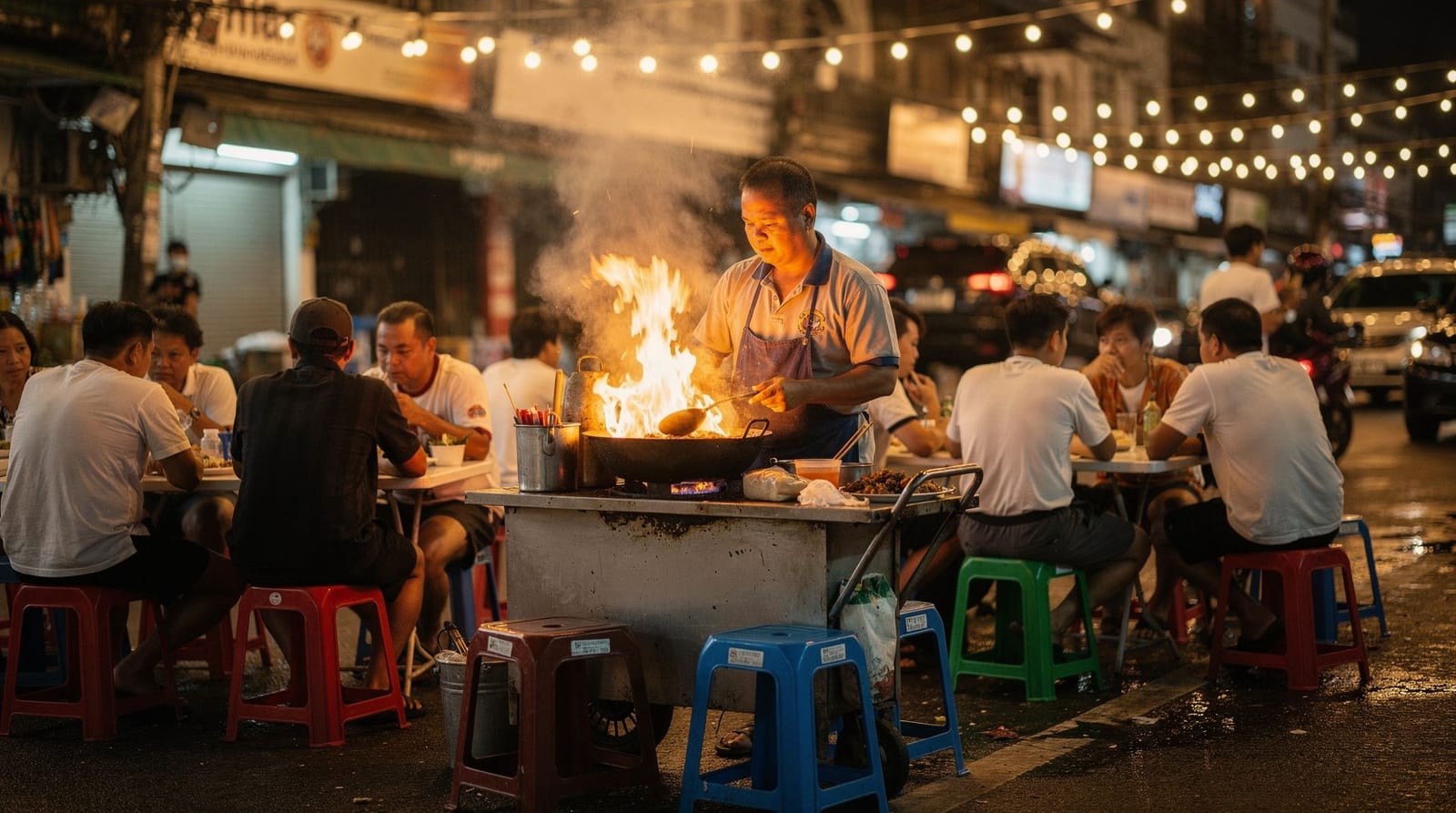
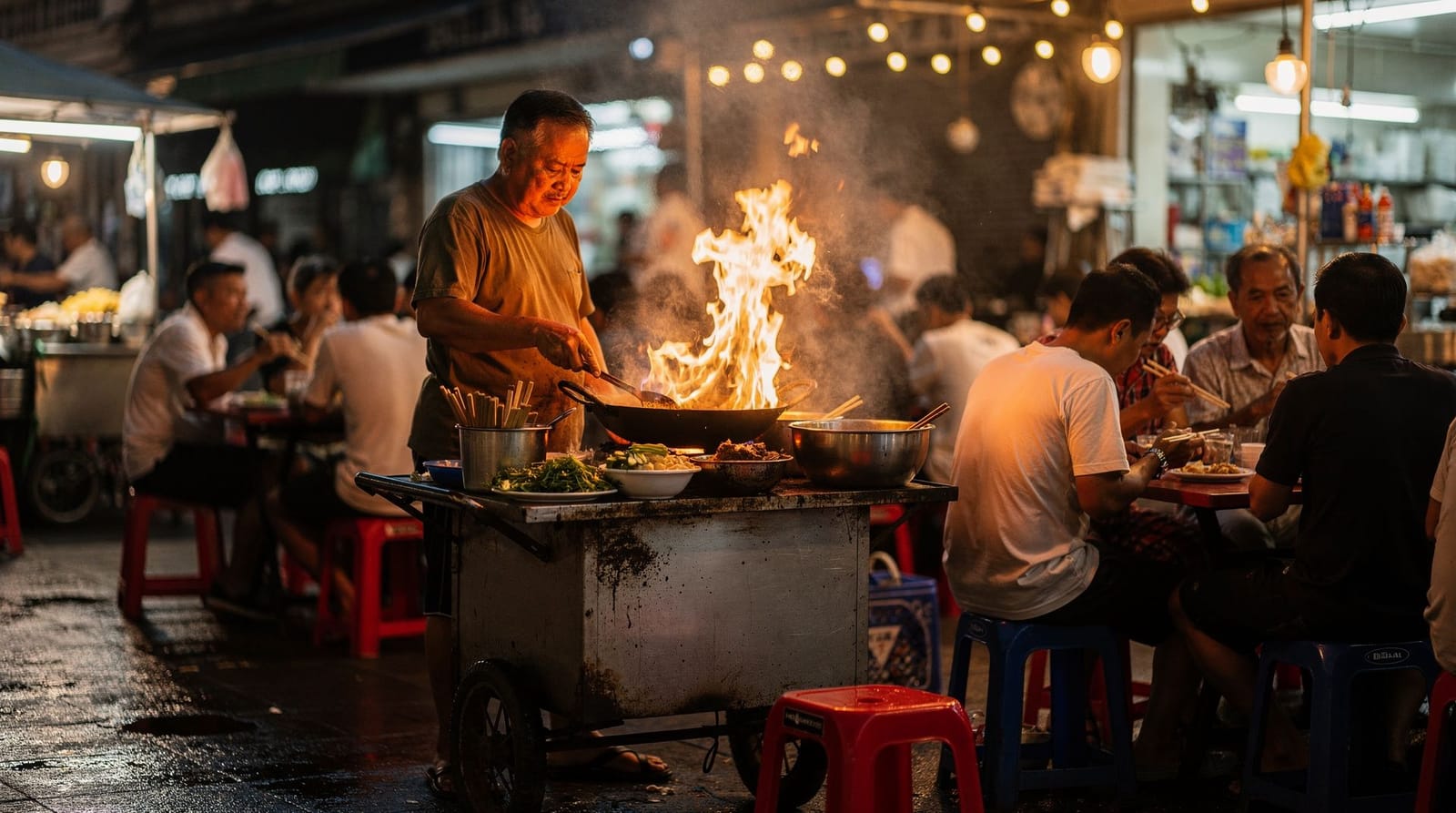
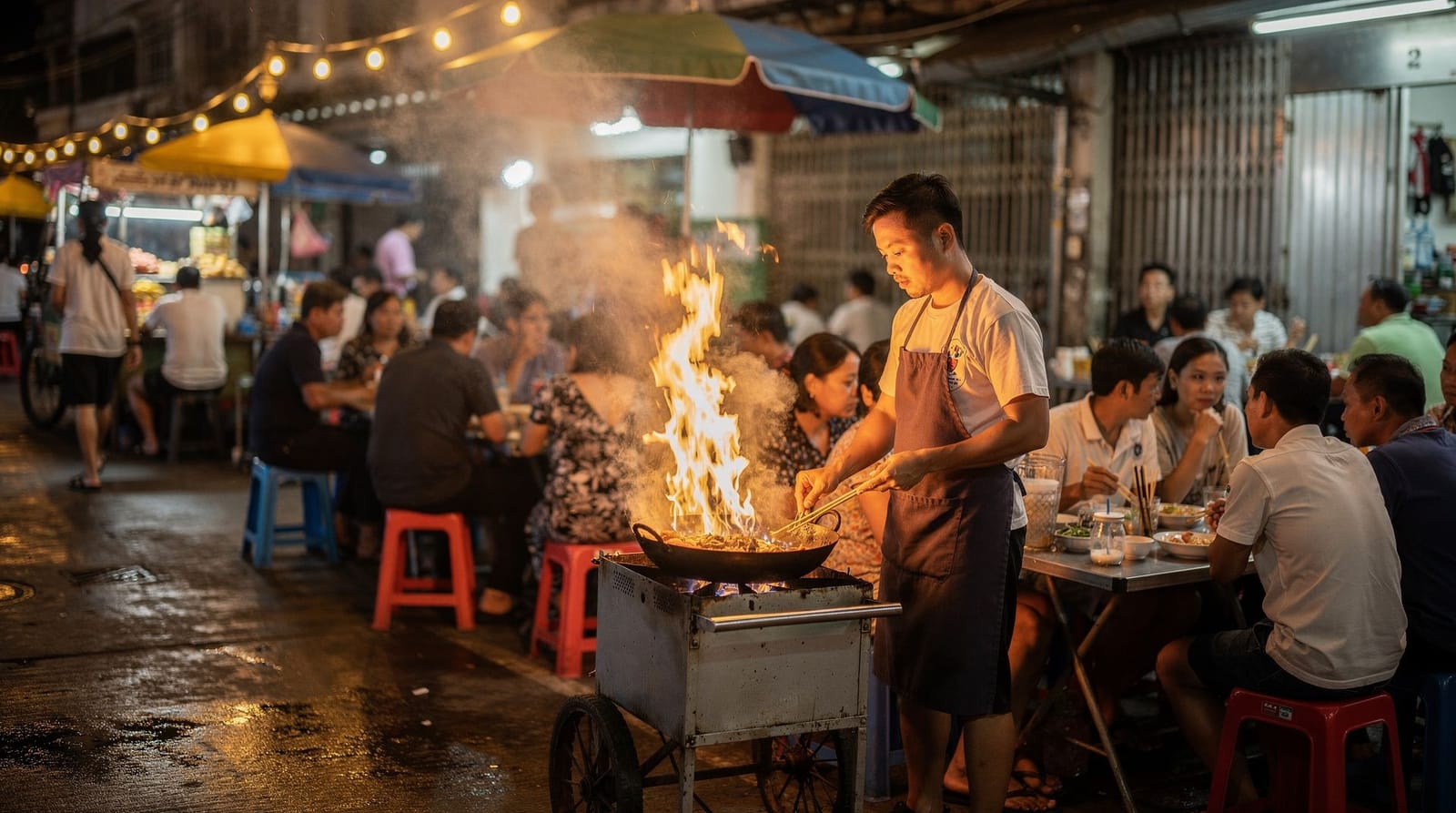
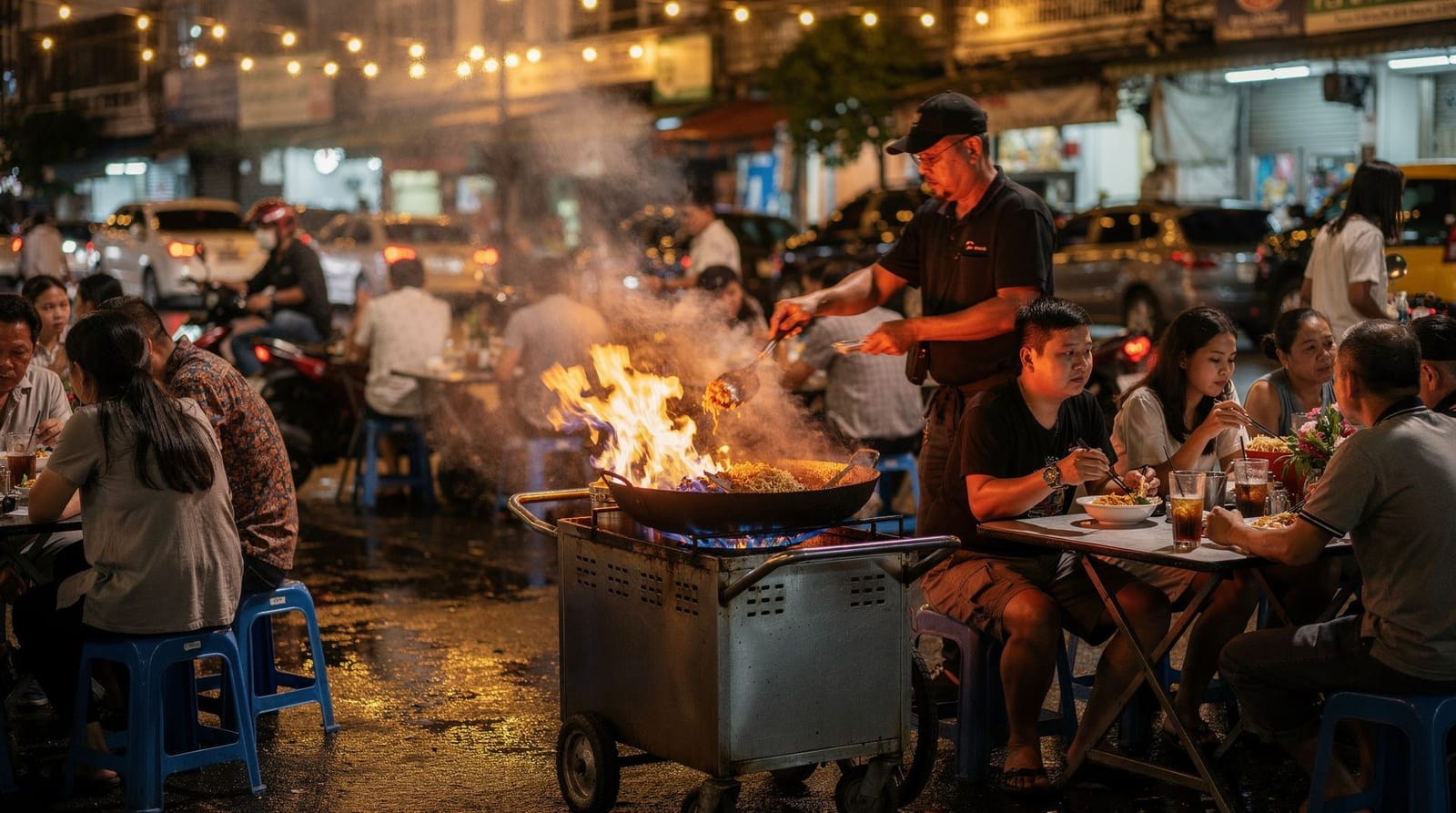
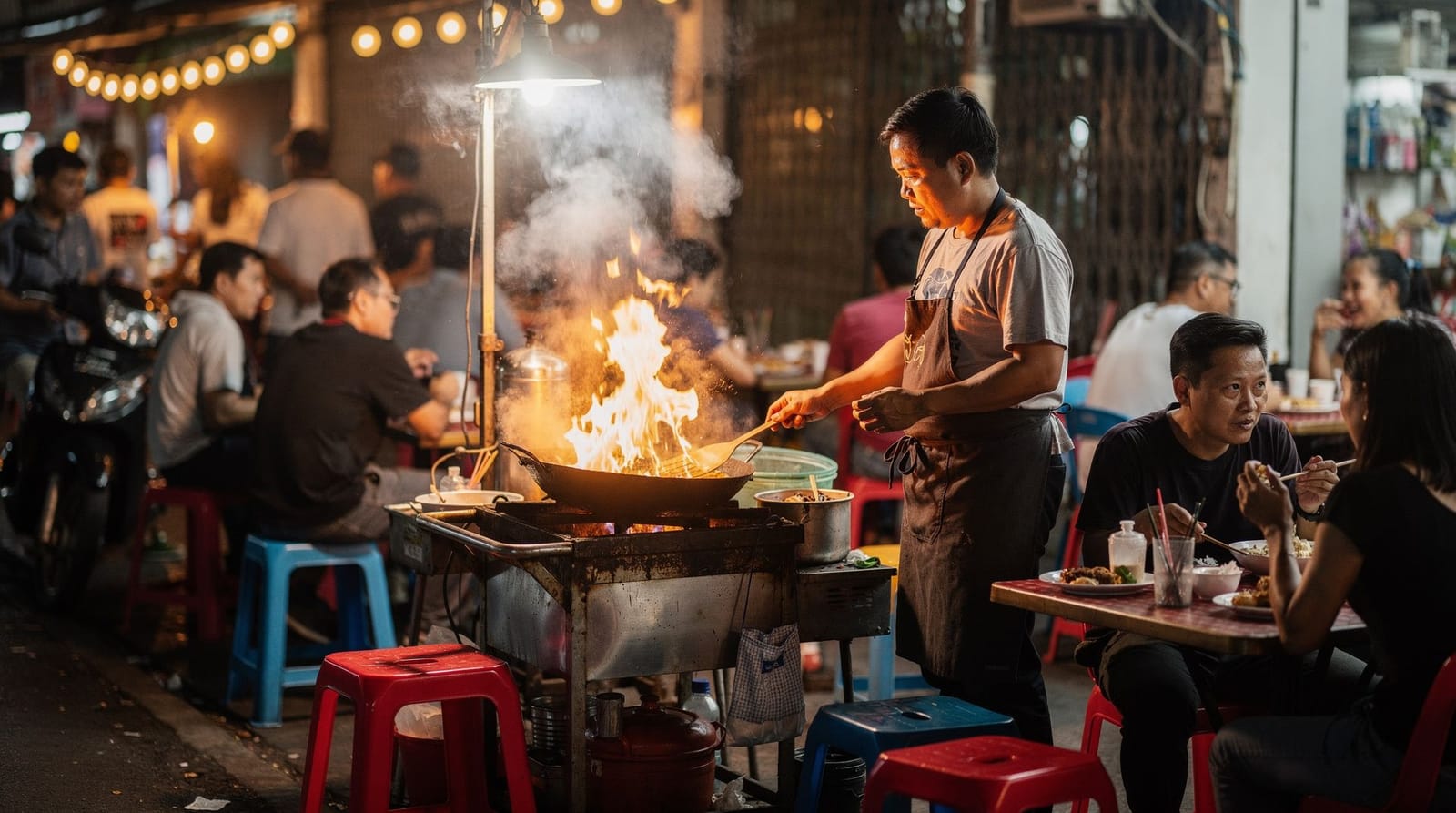
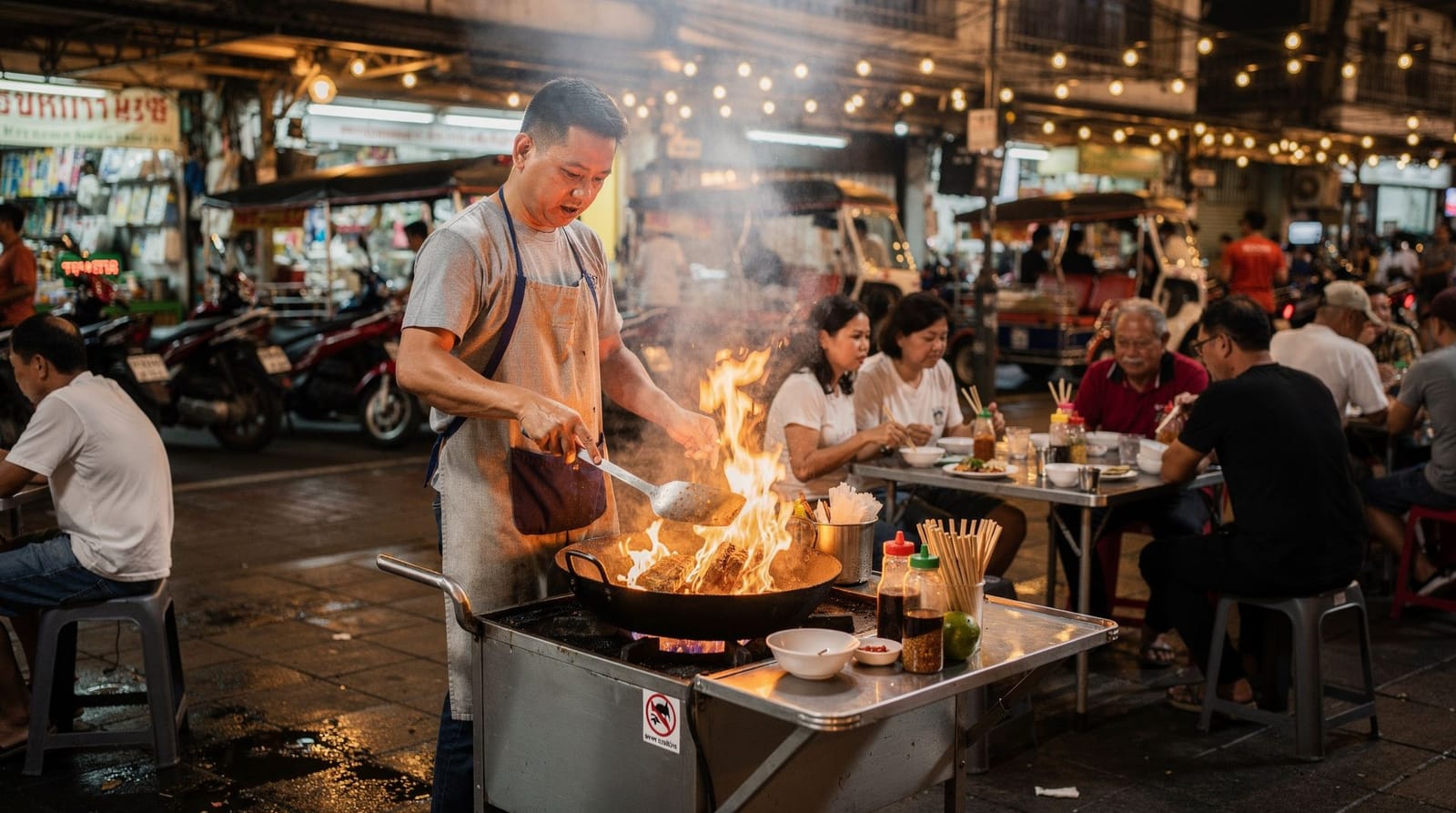
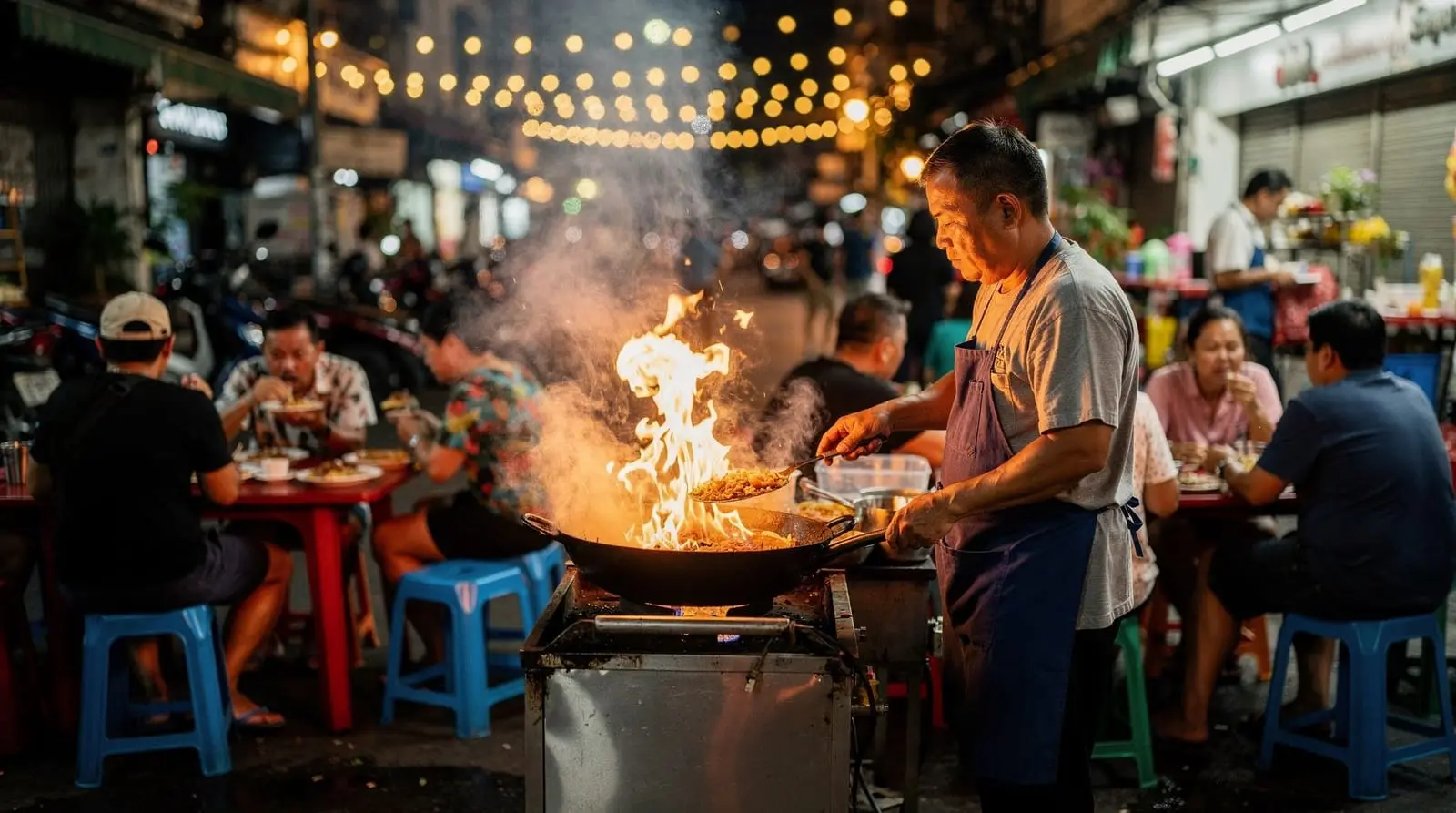
The start. Tours gather in the early evening, around 17:30–18:30, as the stalls fire up and the heat eases. Chinatown’s Yaowarat Road and its side sois come alive with woks, charcoal grills and neon.
The food parade. A good tour moves at a steady graze — a few bites here, a bowl there — building across the evening. Expect classics like pad thai, boat noodles and grilled satay alongside Chinatown specialities: fresh seafood, oyster omelettes, kuay jab rolled-noodle soup, dim sum, and stalls listed in the Michelin Bib Gourmand. Dessert carts close things out with mango sticky rice and coconut treats. See yaowarat chinatown food for the headline dishes.
The atmosphere. This is half the value. Yaowarat after dark — the crowds, the steam, the neon, the sizzle — is one of Bangkok’s great sensory experiences, and a guide lets you enjoy it without worrying about where to eat. See bangkok at night for the broader evening scene.
The guide. A good guide adjusts spice, flags allergens, explains regional origins and steers you to high-turnover stalls where the food is freshest. That context turns eating into understanding.
Real prices and what they buy you
- Standard evening tasting tour: about 1,200–2,000 THB (USD 33–56), food included.
- Premium small-group / Michelin-focused tour: about 2,000–2,500 THB.
- Tuk-tuk multi-neighbourhood tour: similar to premium, with transport.
- Eating solo: a full street-food dinner can cost 150–400 THB if you go it alone — see best cheap eats.
The premium over solo eating buys curation, 10-plus dishes, context and zero decision fatigue.
Who it’s for
First-timers and nervous eaters: the most value here — confidence, curation and safety.
Foodies who want depth: a guide unlocks dishes and stalls you would miss — see best food markets.
Time-pressed visitors: a single evening that covers the city’s food highlights efficiently.
Confident budget travellers: you may prefer eating solo with our street food guide and pocketing the difference.
Scam and overpricing warnings
Food tours are low-risk, but a few sensible notes:
- Inflated walk-up “tours” touted on the street: book a reputable operator in advance rather than following someone offering a tour in Yaowarat.
- Drink costs: confirm whether drinks are included; some “all-in” prices add a bar bill.
- Tuk-tuk scams on solo evenings: if exploring Chinatown independently, beware the 20 THB “tour” commission trap — see tuk-tuk scams.
- Overpaying at tourist-facing stalls: when eating solo, busy local stalls are both cheaper and better — our street food safety guide explains how to spot them.
Alternatives and how it compares
Eating independently with our bangkok street food guide is the cheap, flexible alternative and genuinely rewarding in a city this food-friendly. For a more refined angle, the Chinatown food and Michelin stalls tour focuses on the celebrated hawkers, while the old Siam food tour with 15 tastings explores the historic old-town food scene. To weigh up whether a tour suits you, read food tour worth it, and for self-guided routing see the bangkok foodie itinerary.
How to book and get there
Getting there: most tours meet in Chinatown, reachable by Wat Mangkon MRT station (Blue Line), a short walk to Yaowarat Road. Grab is an easy alternative — see grab, taxi and tuk-tuk.
Booking: reserve online in advance, especially for small-group and weekend tours, which fill up. Note any dietary needs and spice preferences when booking. Come hungry and pace yourself. For wider planning, see the bangkok foodie itinerary and what to eat in Bangkok.
Practical tips for a better food crawl
Get the most from a street food tour with a few simple habits:
- Come genuinely hungry. A good tour delivers 10 to 15 tastings across the evening — easily a full dinner. Skip your afternoon snack and pace yourself across the early dishes to leave room for the later ones.
- Flag your spice level and any allergies when booking. Guides adjust ordering accordingly; Thai cuisine uses fish sauce and shrimp paste widely, so vegetarians should be specific. This is much easier to handle in advance than at the stall.
- Choose your format. Walking tours go deep on one district like Chinatown; tuk-tuk tours cover more neighbourhoods with the fun of riding between them. Pick depth or variety.
- Go in the evening. Tours starting 17:30–18:30 catch Yaowarat at its most electric and the air at its coolest — see bangkok at night.
- Book a reputable operator in advance. Don’t follow street touts offering a “tour”; a booked tour also sidesteps the tuk-tuk commission scams.
- Let the guide order. The value is in dishes you wouldn’t choose yourself and stalls you wouldn’t find — trust the curation.
If you’d rather eat independently, our bangkok street food guide and best cheap eats guide map the same scene for a fraction of the cost, and the bangkok foodie itinerary builds a multi-day eating plan. A tour and a self-guided crawl complement each other well across a longer trip — one for confidence and context, the other for flexibility and savings.