Amphawa floating market: the weekend evening market guide
Bangkok: Amphawa Floating & Railway Markets Guided Day Tour
What makes Amphawa floating market worth visiting?
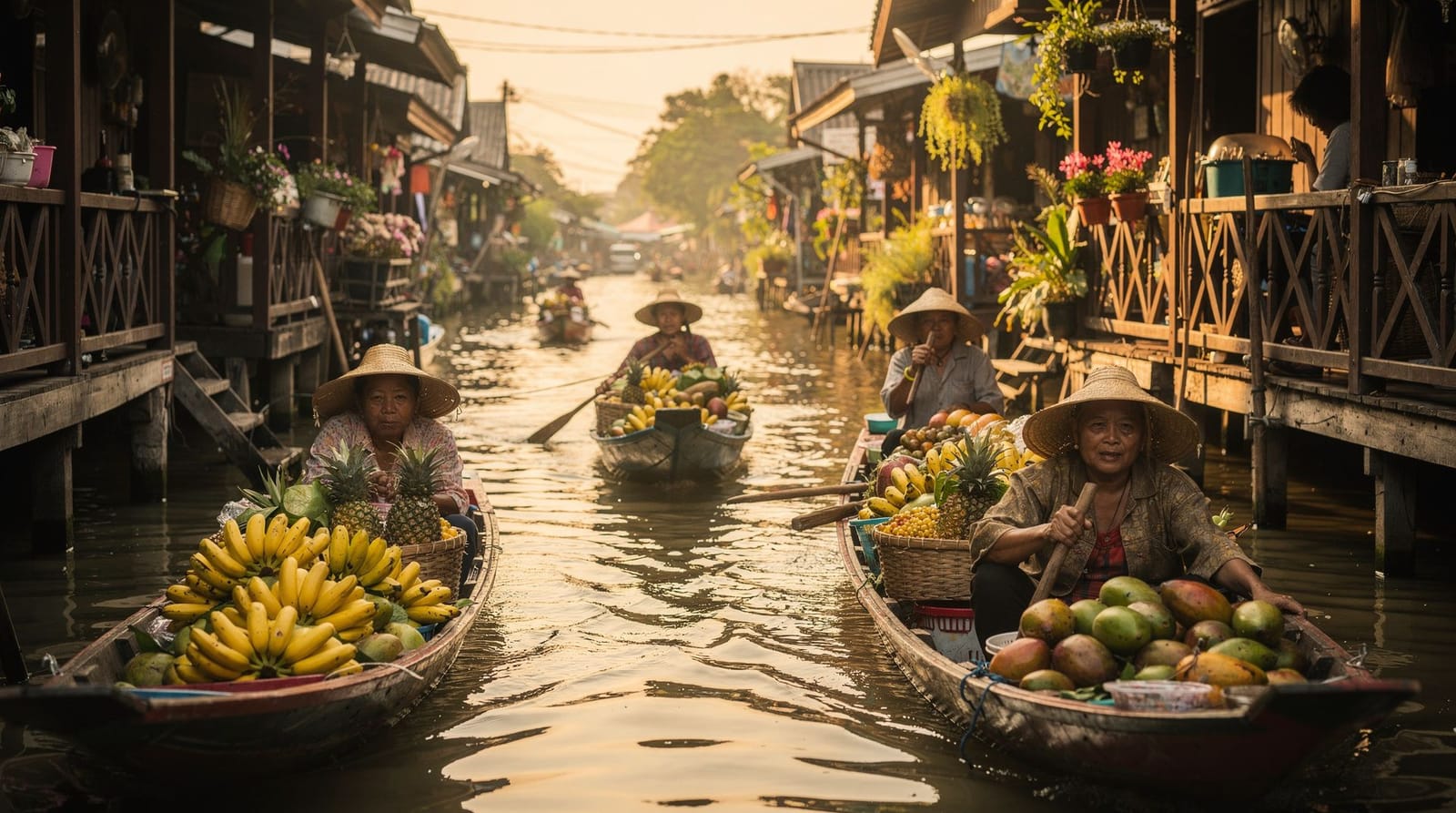
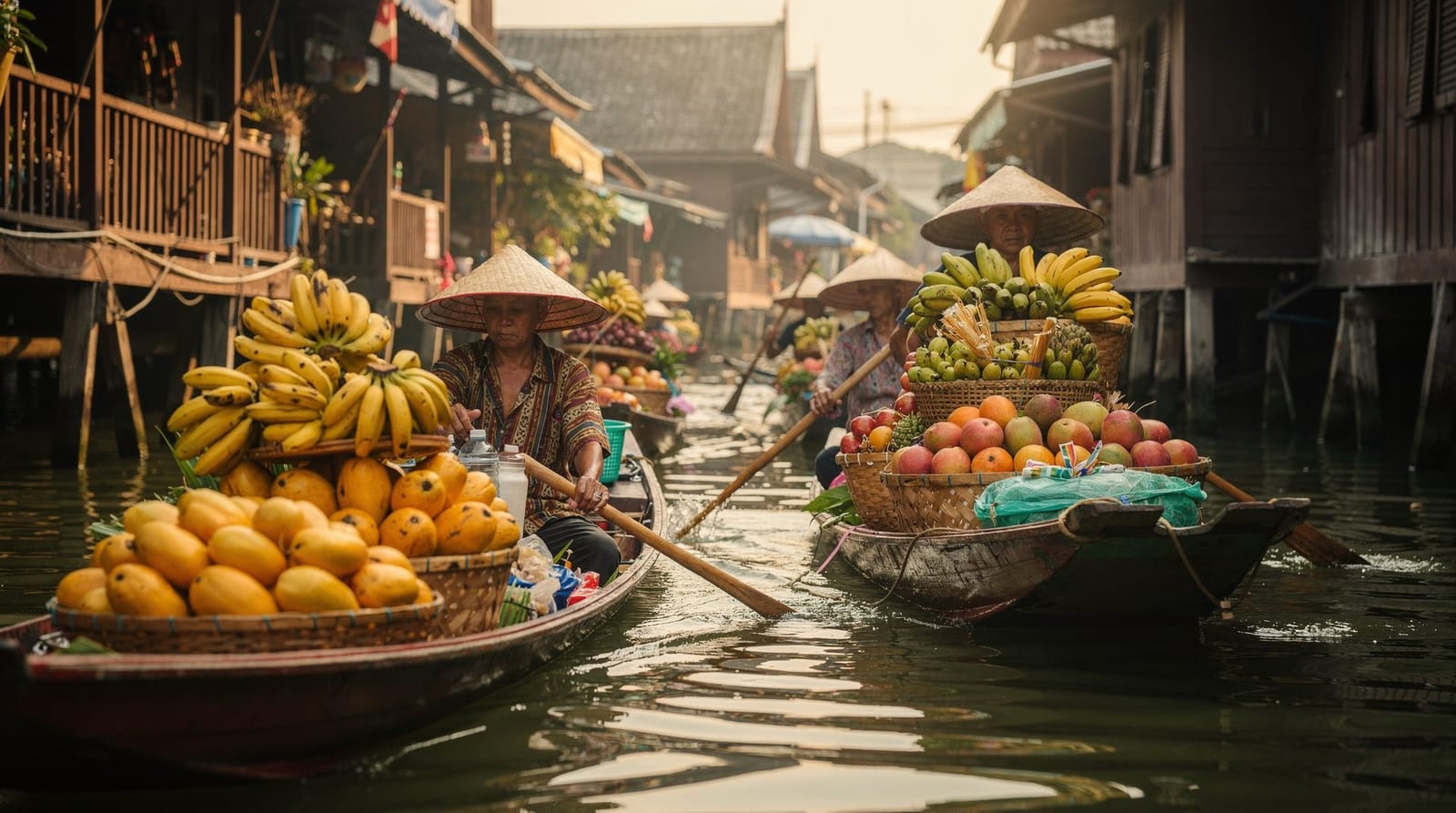
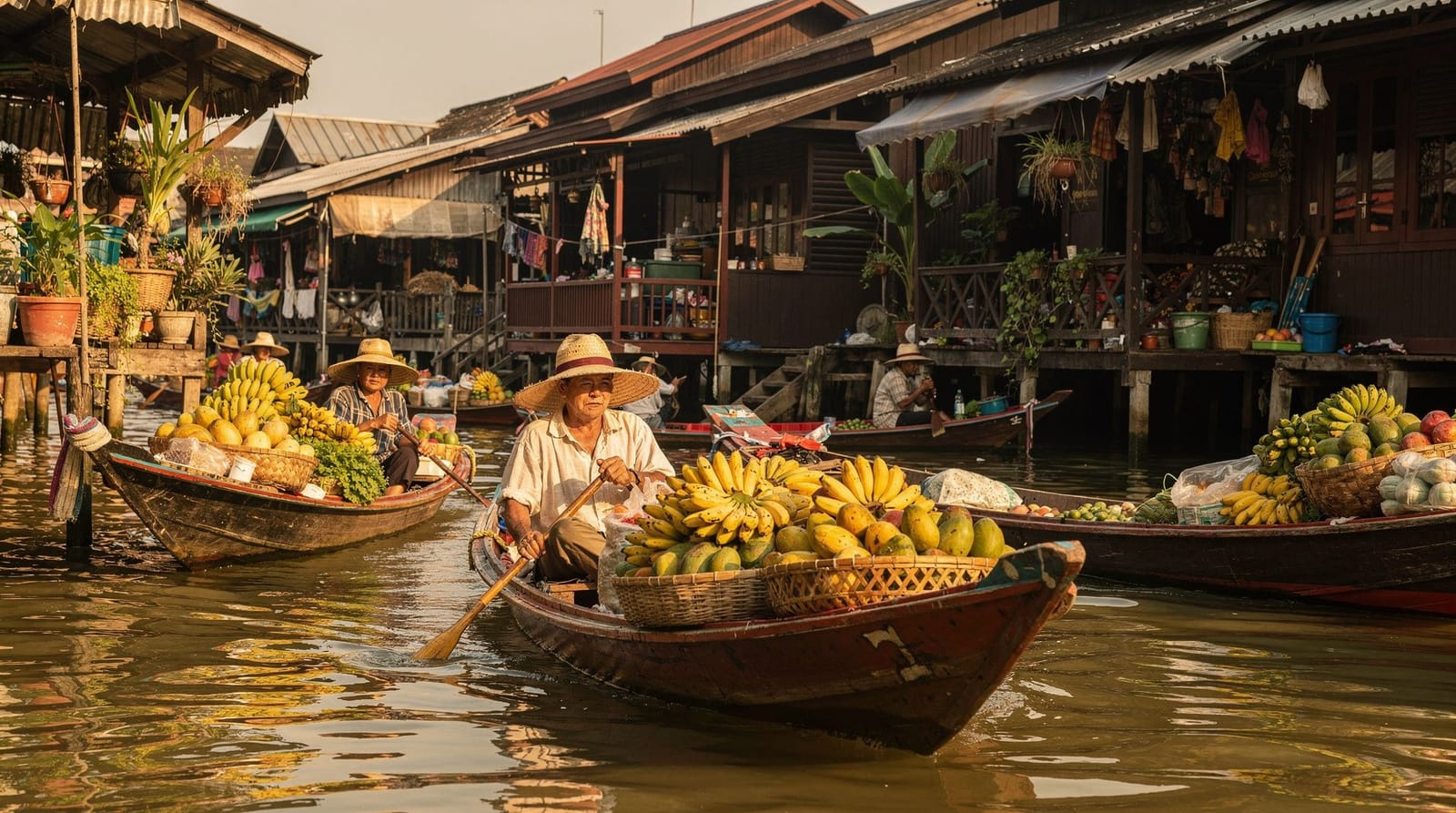
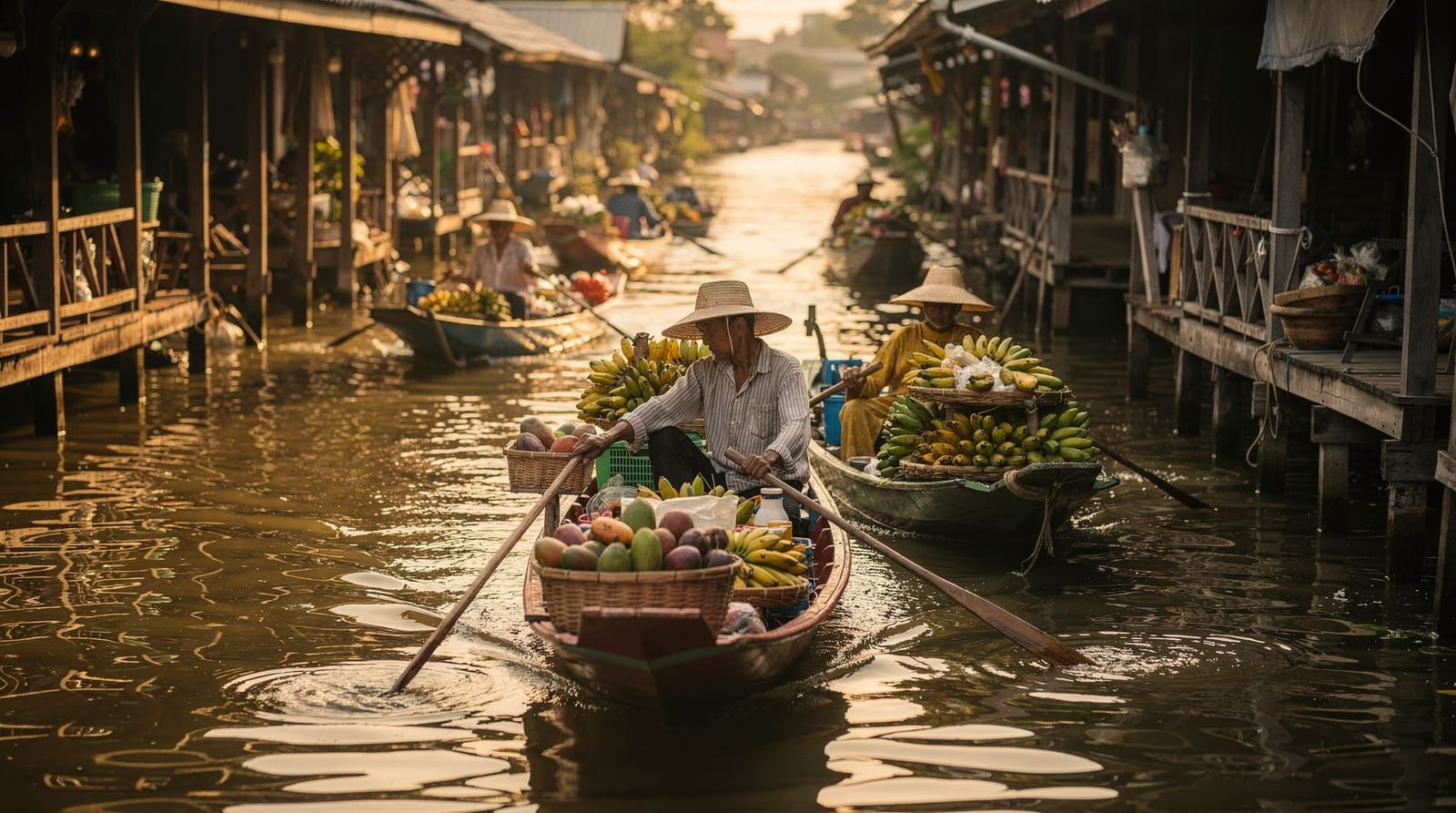
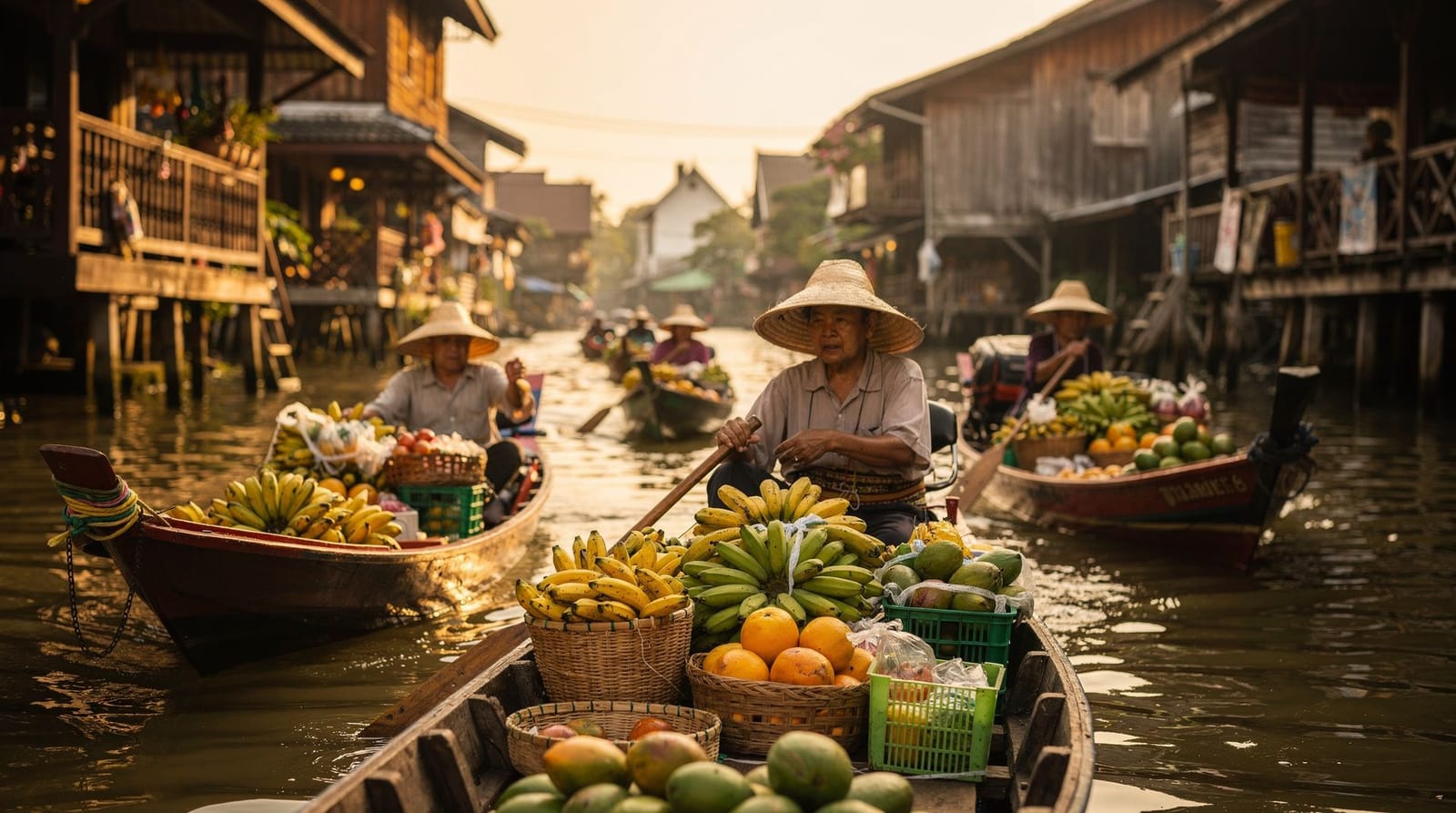
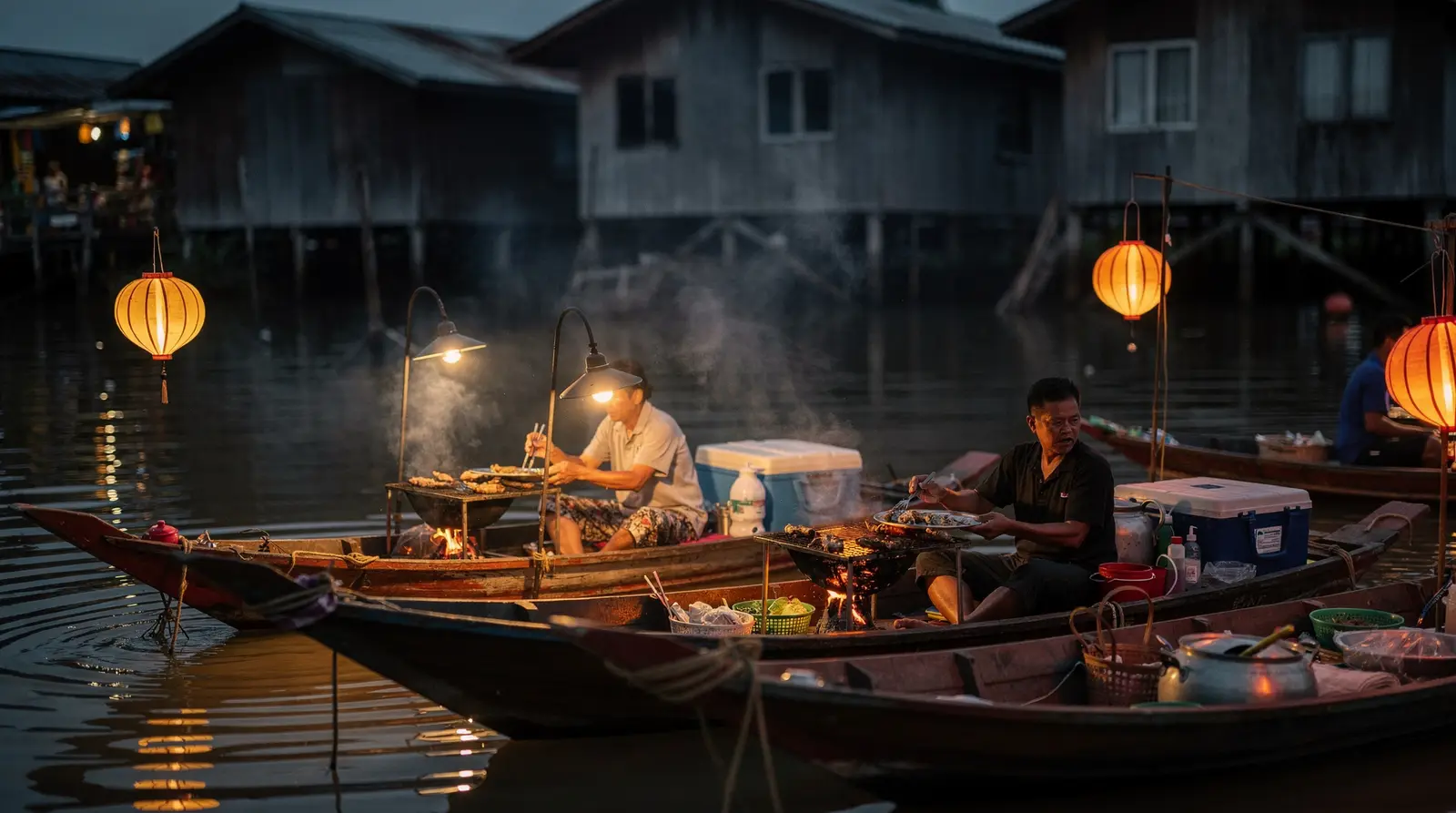
Amphawa is the most atmospheric floating market near Bangkok and the favourite of Thai weekenders. It runs Friday to Sunday afternoons and evenings, so it has a relaxed dusk-to-night character rather than the dawn rush of Damnoen Saduak. Vendors grill seafood directly from their boats, the canal is lined with old wooden shophouses, and after dark you can take a longtail boat to see synchronous fireflies along the river. It feels lived-in, not staged.
If you ask Bangkok residents which floating market to visit, most will say Amphawa. While Damnoen Saduak gets the postcards and the tour buses, Amphawa gets the Thai families on a weekend evening out. Located about 90 km southwest of Bangkok in Samut Songkhram province, Amphawa is a weekend-only market that comes alive in the afternoon and runs into the night — a completely different rhythm from the dawn rush of the more famous market, and a far more atmospheric one. This guide covers how and when to visit, the food, the firefly cruise, and how to combine it with the region’s other attractions.
The defining facts to plan around: Amphawa runs Friday, Saturday, and Sunday only, from roughly midday to 20h00, and its signature experience is the after-dark firefly boat tour. Get those two things right and Amphawa rewards you handsomely.
| Where | Samut Songkhram, ~90km SW of Bangkok |
| Open | Fri–Sun only, roughly midday–20h00 |
| Getting there | 1.5–2hrs by minivan or organised tour |
| Firefly boat | ~60–80 THB, from around 19h00 |
| Best time | Mid-to-late afternoon through to the fireflies |
Why locals prefer Amphawa
Amphawa survived as a genuine community market rather than being revived purely for tourism, and that difference shows. The canal is lined with century-old wooden shophouses, many still lived in, some converted into small cafés, dessert shops, and homestays. The crowd is overwhelmingly Thai — couples, families, groups of friends from Bangkok escaping the city for an evening. The atmosphere is closer to a riverside street-food festival than a staged spectacle.
The market’s signature is seafood grilled directly from the boats. Vendors moor along the canal with charcoal grills mounted on their hulls, cooking enormous river prawns, cockles, squid, and crab to order. You buy from the bank, the food comes up on a long-handled tray, and you eat at canal-side tables or on the steps. For the wider regional picture and how Amphawa stacks up against the alternatives, see the floating markets near Bangkok guide and the direct Damnoen Saduak vs Amphawa comparison.
When to visit: the weekend-evening rule
Amphawa’s schedule is the most important thing to get right, because it is the inverse of most floating markets.
Days: Friday, Saturday, and Sunday only. There is no Amphawa market on weekdays — turning up Tuesday means finding a quiet canal and shuttered shops.
Hours: Roughly midday until 20h00. The market builds through the afternoon and peaks in the early evening.
The sweet spot: Arrive mid-to-late afternoon (around 15h00–16h00), explore the market and eat as the light softens, then take the firefly cruise after dark. This sequence captures Amphawa at its best.
This evening rhythm is precisely why Amphawa feels different. You are not fighting a dawn tour-bus crush; you are joining an unhurried Thai weekend evening. The trade-off is the late return to Bangkok, which is why many visitors either stay overnight or accept getting back to the city around 22h00–23h00.
The firefly cruise
The after-dark firefly boat tour is Amphawa’s most distinctive draw. Longtail boats depart from points along the canal and head up the Mae Klong river to stretches of lamphu trees, where thousands of fireflies gather and flash in synchrony — a genuinely magical natural display when conditions are right.
Cost: Around 60–80 THB per person for a shared longtail; private boats cost more. Timing: From around 19h00 onwards. Conditions matter: The display is dramatically better on dark, clear nights. Heavy rain or a bright full moon washes it out. If you can, choose a night away from the full moon and check the forecast.
Set your expectations honestly — on a perfect night it is unforgettable; on a wet or moonlit night it is muted. Either way the boat ride along the dark river is pleasant. For more on canal boat experiences generally, see longtail canal boat tours.
Firefly display by season:
| Period | What to expect |
|---|---|
| June–October (wet season) | Strongest displays, warm humid nights |
| November–February (cool season) | Thinner but still visible on dark nights |
| March–May (hot season) | Weakest — drier riverbank trees |
| New moon, overcast nights | Best contrast for spotting the flashes |
| Full moon, any month | Washed out regardless of season |
Boats run every weekend night year-round, since the river ride is pleasant even on a quiet firefly night — but if the display itself is the priority, aim for a wet-season weekend near a new moon. The Bangkok weather by month guide helps plan around the rains.
Money, weather and what to pack
Amphawa runs on cash — bring small notes, since boat vendors and market stalls rarely break large bills or accept cards. Insect repellent is worth packing given the canal-side, tree-lined setting, especially in the firefly-friendly wet season. Wear light clothing and shoes that can handle uneven wooden walkways, and carry a compact rain layer if visiting June to October, when short evening downpours are common; the monsoon travel tips blog post has more on planning around the rains. None of this is unique to Amphawa, but the evening timing and riverside setting make it worth double-checking before you leave Bangkok.
What and where to eat
Food is at least half the reason to come. Beyond the grilled seafood, seek out:
- Boat noodles (kuaytiaw ruea): small, intense bowls cooked from the boats.
- Grilled river prawns (kung pao): Amphawa’s most famous dish — large, sweet, charcoal-grilled.
- Hoy tod: crispy oyster or mussel omelette.
- Pla thu (mackerel): the region’s signature steamed mackerel, sold across nearby markets.
- Thai sweets: coconut pancakes, mango with sticky rice, and a wide range of khanom from the dessert shops.
Standards are high because locals are the main customers. Eat at the busiest boats and stalls, and carry plenty of small cash — vendors deal in cash and rarely have change for large notes.
A combined day trip is the easiest way to fold the food, the market, and the firefly cruise into one outing without managing transport yourself. The Amphawa floating and railway market day tour with boat ride is built around this, pairing Amphawa with the railway market. If you would rather centre the trip on the floating markets, the Maeklong and Amphawa floating market tour is another well-structured option.
Getting to Amphawa from Bangkok
Amphawa is about 90 km southwest of Bangkok, 1.5–2 hours by road.
Organised tour: The simplest option, especially given the evening timing and late return. Tours handle the drive and usually combine Amphawa with the Maeklong Railway Market and sometimes a temple. Recommended for most first-time visitors, including solo travellers who would rather not manage the late return alone.
Minivan: Minivans run from the Southern Bus Terminal (Sai Tai Mai) to Amphawa or to Samut Songkhram town, from which a short songthaew or motorbike completes the journey. The cheapest option, but you manage timing and the late-night return yourself.
Private car or Grab: Flexible and comfortable, lets you control timing, but expensive each way. Splits well among a group.
For the full transport and logistics breakdown, see the Amphawa day trip guide.
Combining with Maeklong and nearby sights
Amphawa sits in a cluster of worthwhile stops, which is why combined day trips work so well:
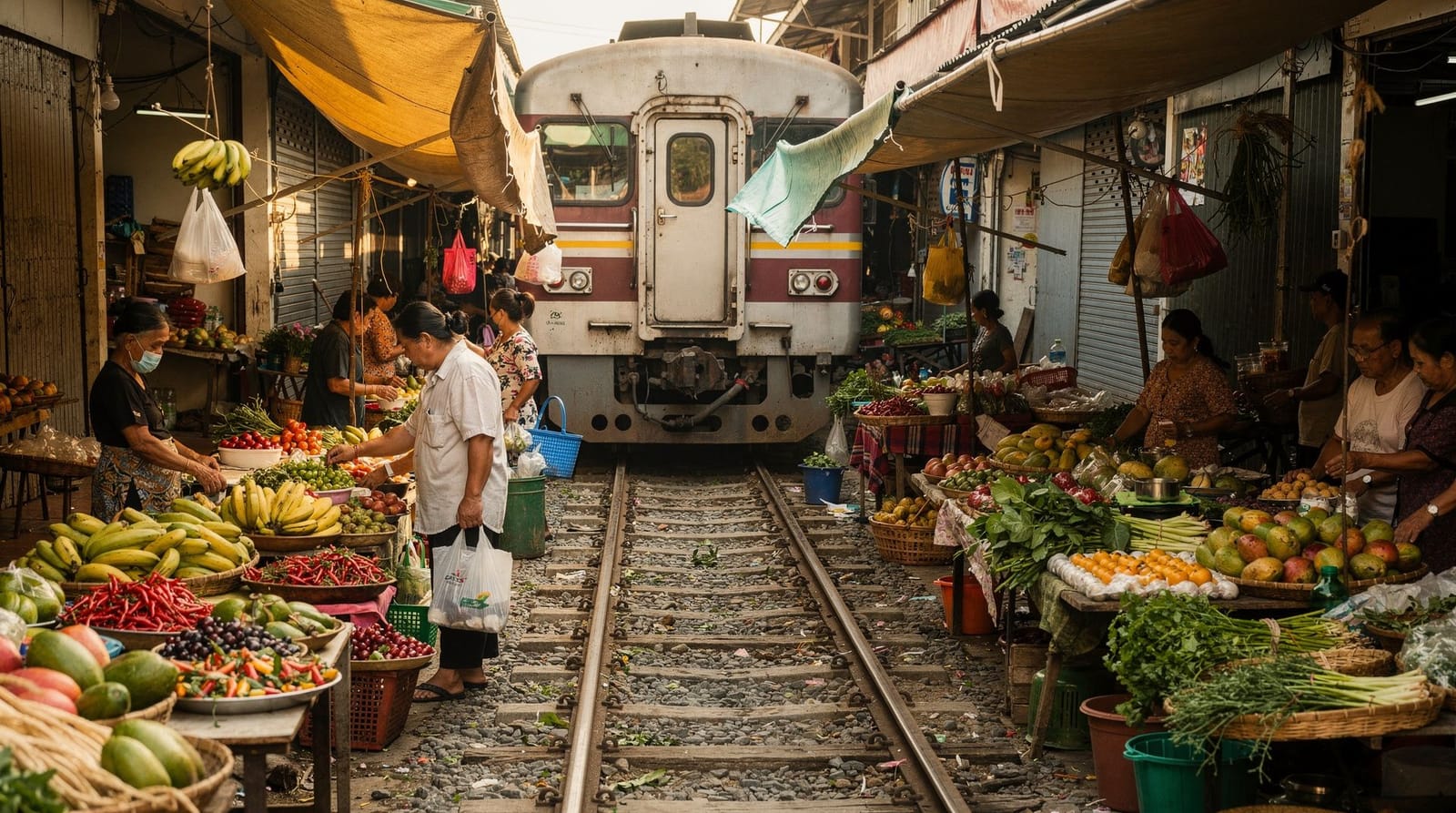
- Maeklong Railway Market (15–20 minutes away): the famous market on the train tracks, where vendors fold away their awnings and produce each time a train passes. Time your visit to a train passage — see the Maeklong Railway Market guide.
- Wat Bang Kung: a small temple encased in the roots of a giant banyan tree, a short distance from Amphawa.
- Amphawa Chaipattananurak: a conservation park preserving the traditional canal-side way of life.
Pairing Amphawa with Maeklong makes the long drive from Bangkok thoroughly worthwhile and gives you two of the region’s most distinctive markets in a single outing.
Stay overnight or day-trip?
Overnight is the local way: book one of the canal-side homestays or guesthouses, enjoy the evening market and fireflies without watching the clock, and wake to a quiet morning canal. It is a relaxed, authentic experience and the homestays are affordable.
Day trip works fine if you accept a late return. Arrive mid-afternoon, eat, take the firefly cruise, and head back to Bangkok arriving around 22h00–23h00. Most organised tours run this structure, and it slots easily into the Bangkok with day trips itinerary alongside other excursions. Budget travellers doing it DIY should also check the Bangkok on a budget guide for keeping the minivan-and-market day cheap.
The honest verdict
Amphawa is, for most travellers, the best floating market near Bangkok — more authentic, more atmospheric, better for food, and home to the firefly cruise. Its one real constraint is the Friday-to-Sunday schedule. If your Bangkok days include a weekend, prioritise Amphawa. If they don’t, your realistic floating-market options are the daily Damnoen Saduak (arrive early) or, for an easy in-city alternative, the weekend-only Khlong Lat Mayom market. For broader market planning, the Bangkok markets guide and best night markets guide round out the picture. For a shorter, more transport-focused take on the same market, see the companion Amphawa day trip guide.
Frequently asked questions about Amphawa floating market: the weekend evening market
What days and times is Amphawa floating market open?
How do I see the fireflies at Amphawa?
How do I get to Amphawa from Bangkok?
What should I eat at Amphawa?
Should I stay overnight in Amphawa?
Is Amphawa better than Damnoen Saduak?
Can I combine Amphawa with other attractions?
Top experiences
Bookable activities with verified prices and instant confirmation on GetYourGuide.