A Yaowarat street food crawl, stall by stall
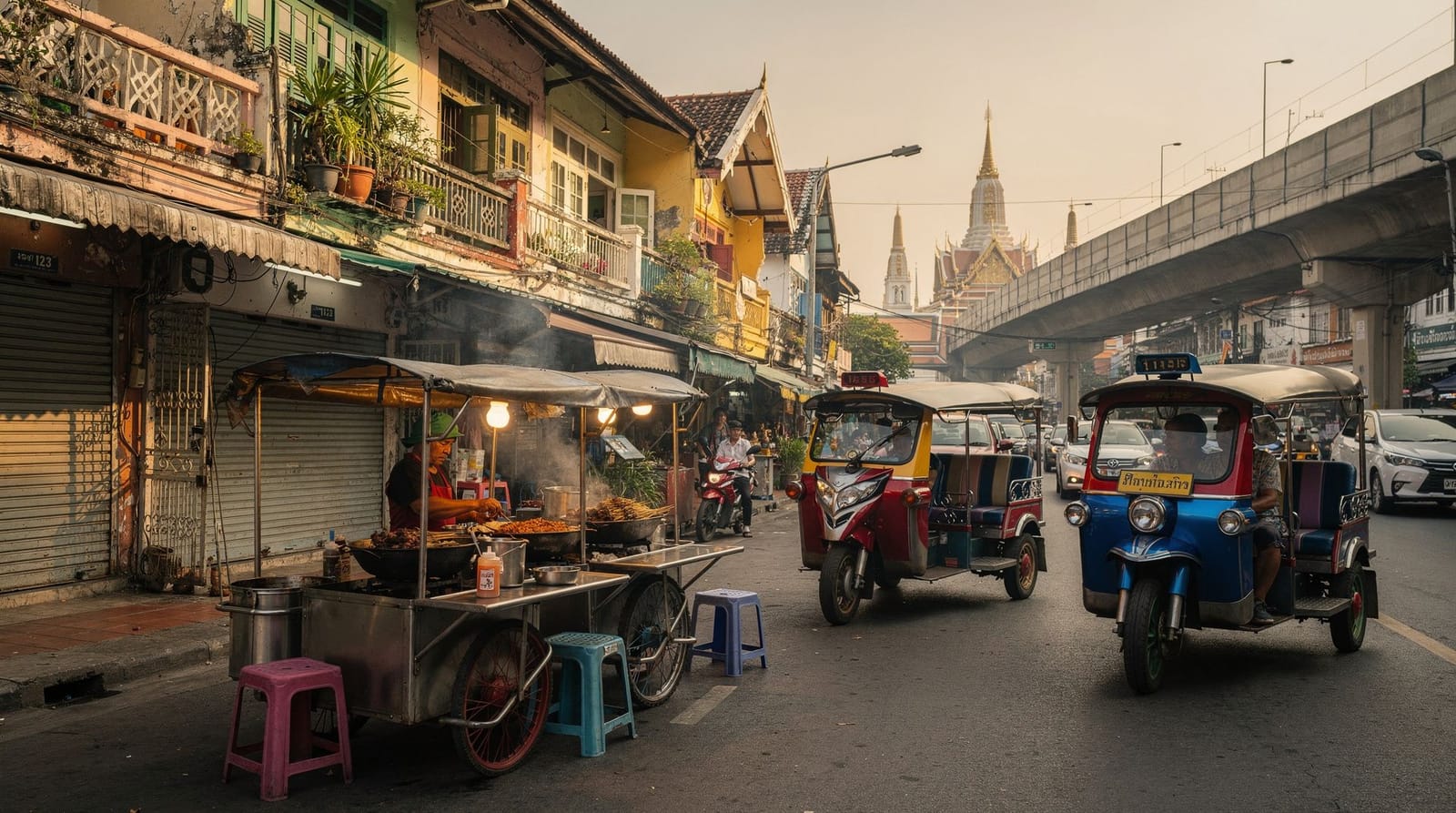
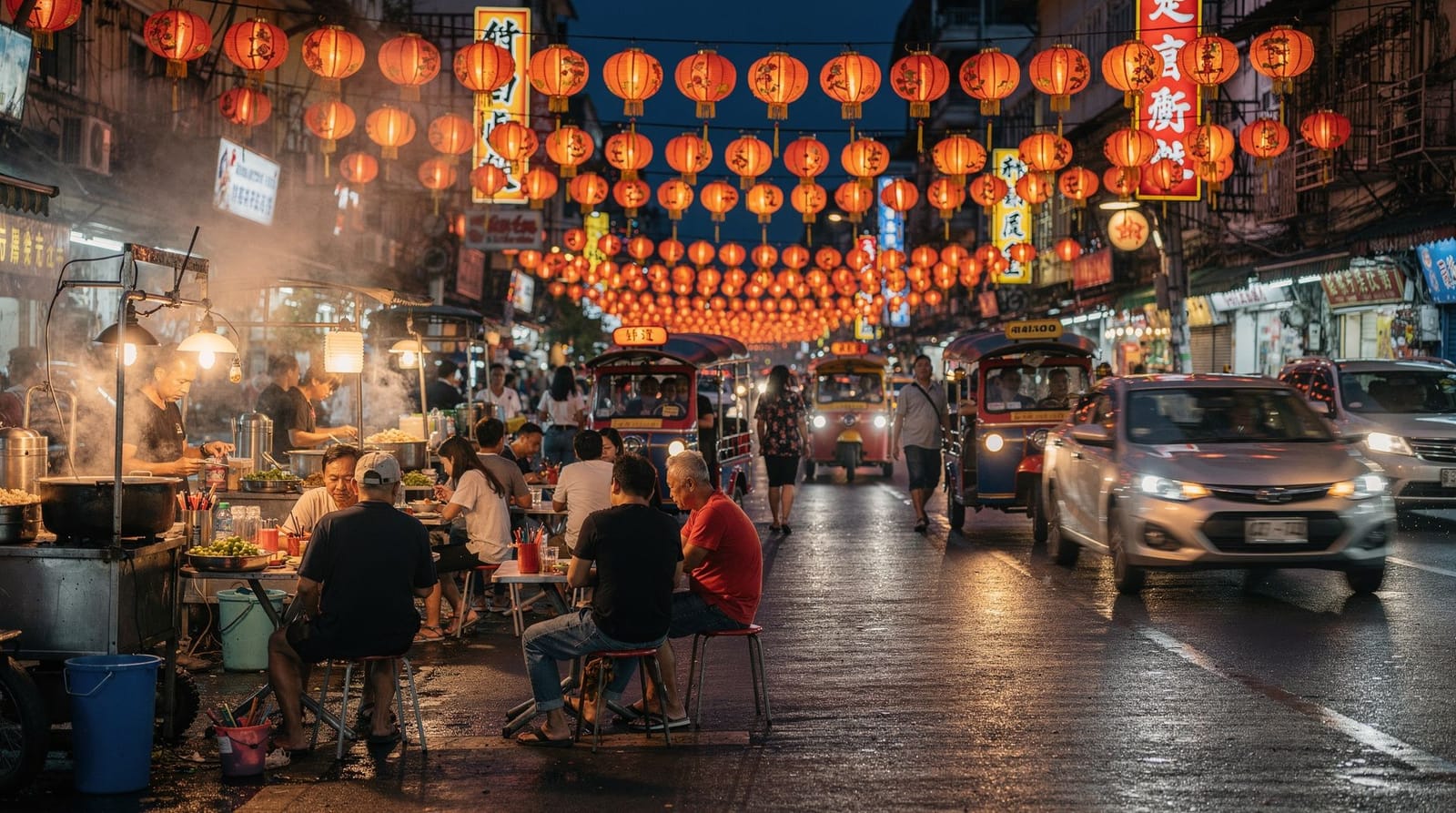
There is a moment, somewhere around 7pm on Yaowarat Road, when the whole street seems to exhale charcoal smoke at once. The seafood stalls fire up their burners, the neon Chinese signage flickers to life overhead, and a crowd that is two-thirds Thai and one-third bewildered tourist begins to thicken on the pavements. I have done this crawl maybe a dozen times now, and I still arrive too full from the last stall and too curious about the next one. Here is how a proper Yaowarat evening actually unfolds, in the order I have learned to do it.
| Where | Yaowarat Road, Chinatown |
| Cost | Around 600–900 baht for six dishes |
| Getting there | MRT to Wat Mangkon, 2-min walk |
| Best time | Tuesday–Sunday from 6pm; avoid Mondays |
| Avoid | Arriving by taxi after dark — gridlock |
Start hungry, start early-ish
The rookie error is arriving at 9pm already full from dinner. The right move is to eat a light lunch, skip an early dinner, and arrive on Yaowarat Road around 6:30pm as the stalls are setting up but before the worst of the crush. Take the MRT to Wat Mangkon station, which opened a few years ago and changed Chinatown access completely — you surface a two-minute walk from the action instead of fighting a taxi through the gridlock that Yaowarat becomes after dark.
The full Chinatown guide lays out the geography, but you really only need to know one thing: Yaowarat Road is the spine, and the good stalls cluster at its eastern end and spill into the side sois. If you are coming from the river instead, the Marine Department or Ratchawong piers on the Chao Phraya put you a five-minute walk south of Yaowarat, which makes for a lovely arrival — a 16-baht orange-flag boat ride at dusk, then up through Soi Wanit (Sampeng Lane) into the smoke. The single most useful piece of timing advice I can give: avoid Mondays, when a chunk of the street stalls take their day off and the strip feels half-asleep. Tuesday to Sunday from about 6pm is when Yaowarat is itself.
Stall one: grilled prawns to set the tone
I always start at one of the big seafood operations near the Texas Suki corner, where men in aprons fan charcoal under racks of enormous river prawns. A plate of grilled prawns — goong pao — runs 200 to 400 baht depending on size, which is the priciest thing I will eat all night and worth it as a celebratory opener. The flesh is sweet, the head is full of the rich orange stuff that divides people, and the seafood dipping sauce is sharp with lime and chilli. This is the splurge. Everything after this is cheap.
Stall two: kuay jab, the peppery noodle soup
A few doors down, look for the stall with a queue of Thai office workers hunched over bowls of rolled rice noodles in a dark, peppery broth crowded with crispy pork belly and offal. Kuay jab Yaowarat is a Chinatown signature and one bowl is around 60 to 80 baht. The pepper hits the back of your throat in a way that feels medicinal in the heat. If offal is not your thing, ask for it without the innards — the crispy pork alone justifies the bowl. The Yaowarat Chinatown food guide names the specific vendors if you want certainty, but the queue is a reliable enough compass.
Stall three: the Michelin pad thai detour
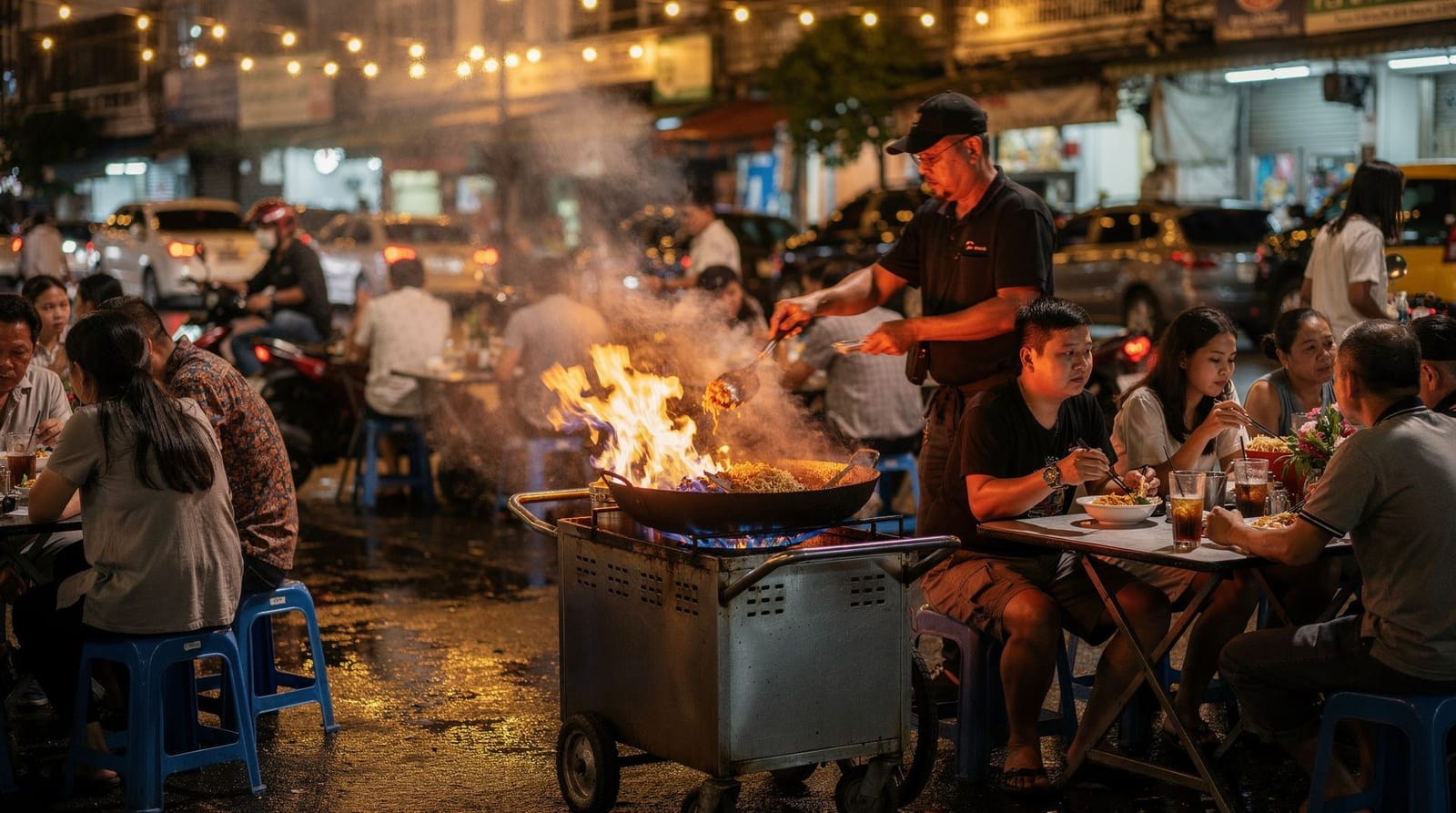
Yes, there is a Michelin Bib Gourmand pad thai operation here, and yes, the queue can run 45 minutes. Thip Samai is technically a short walk away near the old city, but several Chinatown stalls now serve a version good enough that I rarely make the pilgrimage anymore. A plate of proper street pad thai, wrapped in a thin egg crepe, is 60 to 120 baht. The best pad thai breakdown is worth reading if you want to argue about which version is definitive; I have given up and simply eat whichever queue I am nearest to. The broader Michelin street food roundup explains how a humble stall ends up in a red guide.
Stall four: toasted bread and condensed milk, a sweet pause
Halfway through any crawl you need a sweet circuit-breaker, and Yaowarat’s answer is the charcoal-toasted bread stalls. Thick slabs of white bread, grilled over coals until the edges char, then split and stuffed with sangkaya custard, or simply slathered with butter and condensed milk and a sprinkle of sugar. Twenty-five to forty baht. It is absurd and perfect and I have never regretted one.
Stall five: the seafood wok theatre
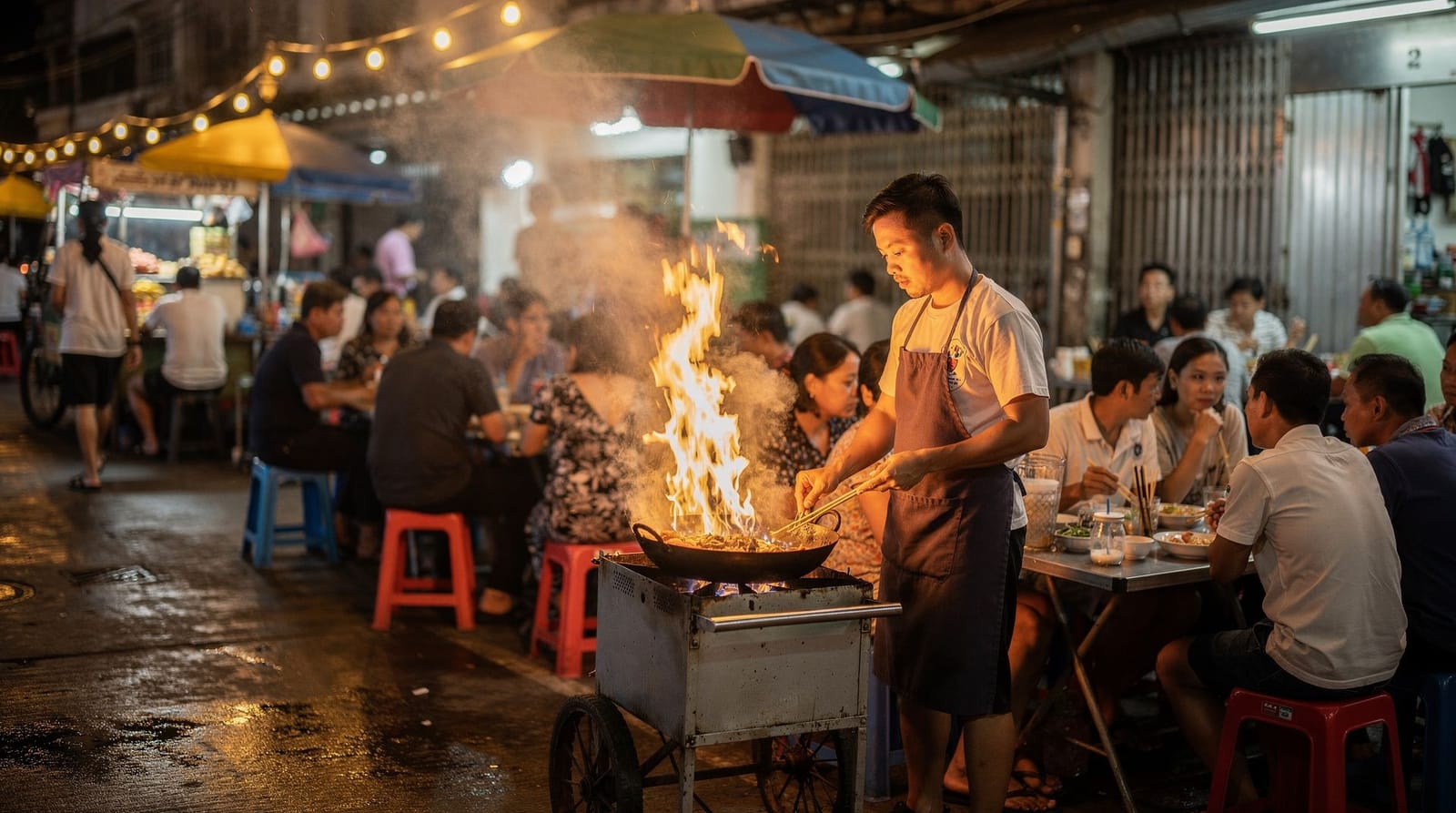
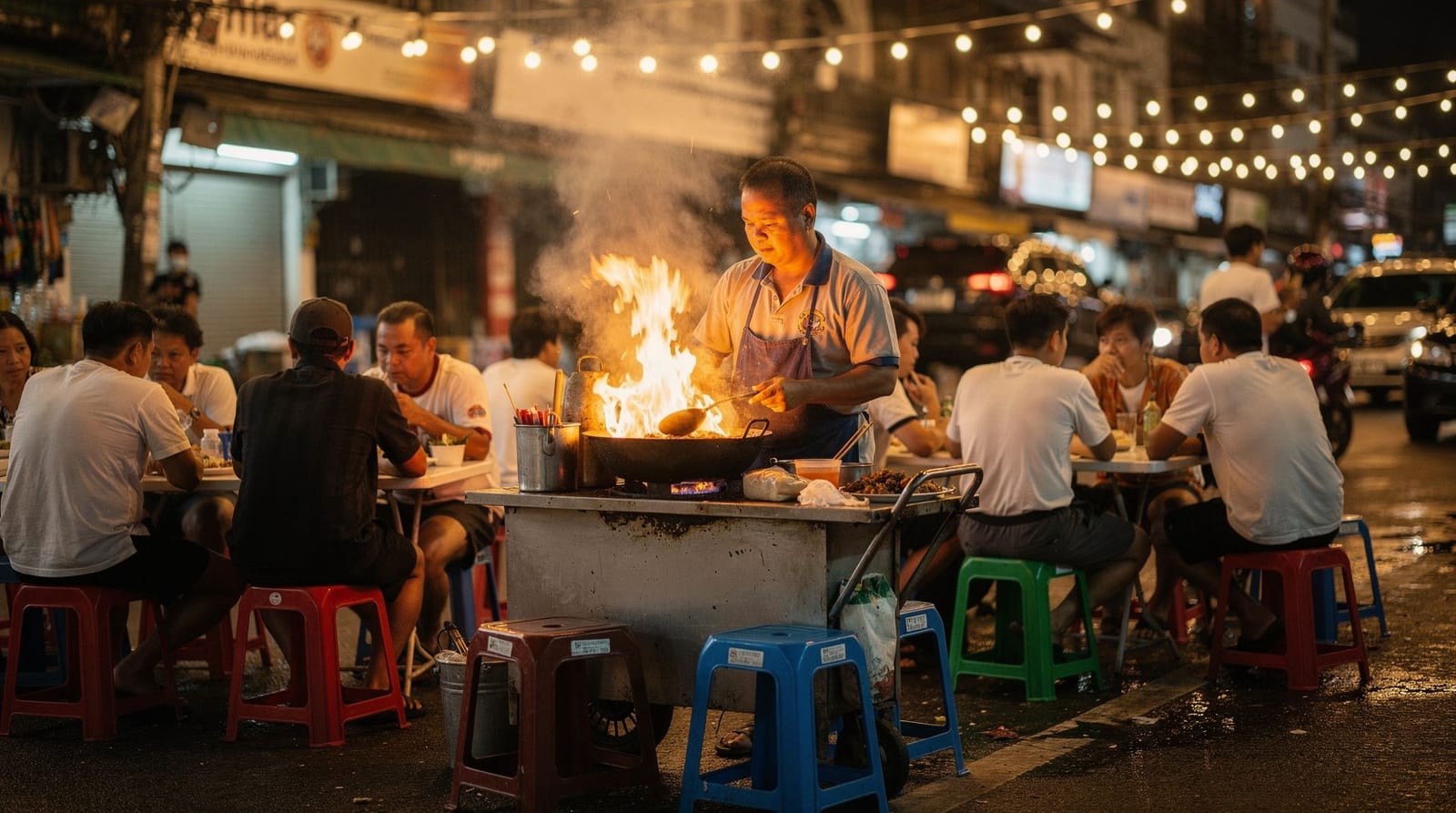
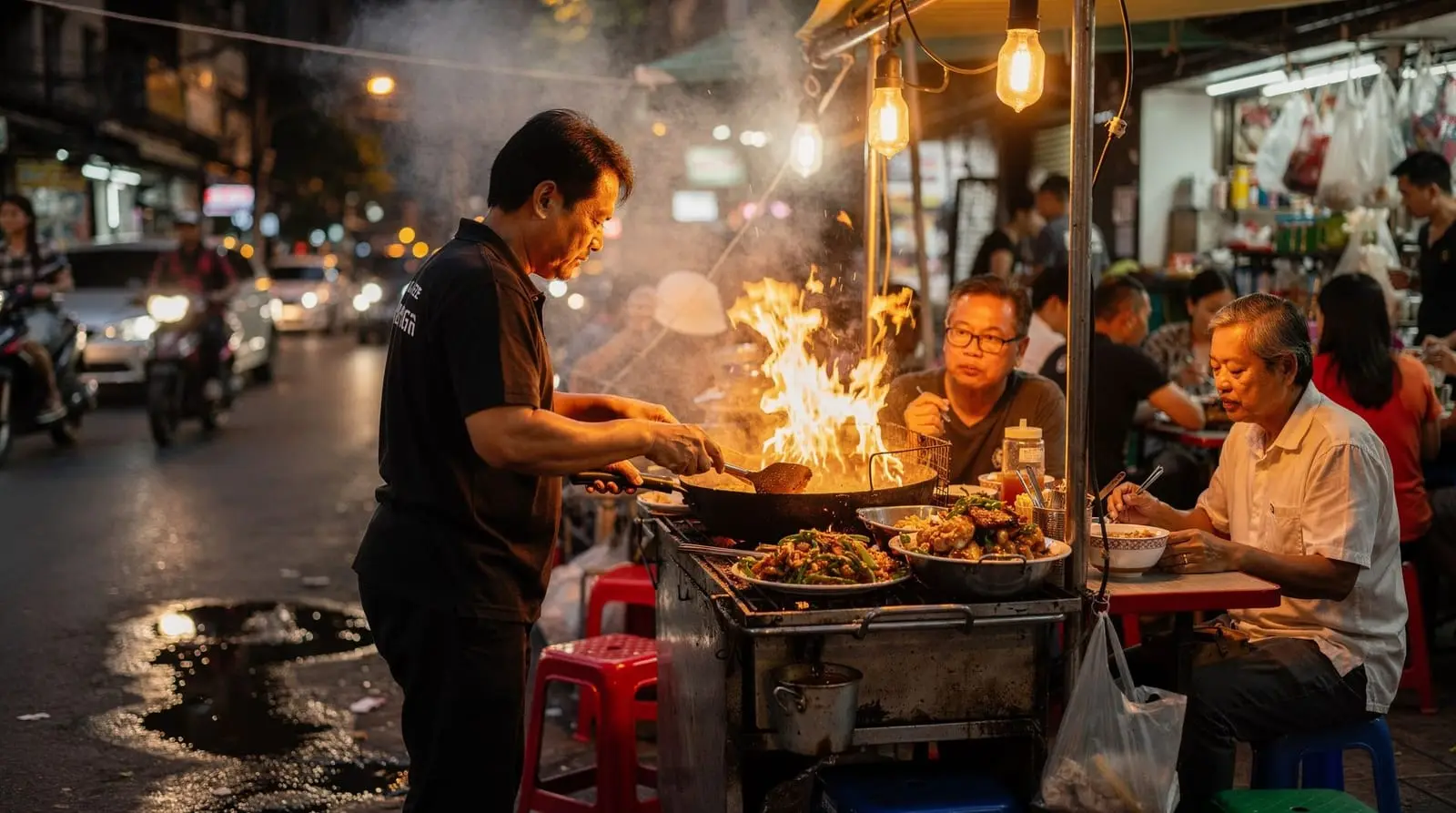
The single most photographed scene on Yaowarat is the woman in goggles flame-cooking at one of the corner seafood stalls, flames leaping a metre off the wok. The goggles are for the smoke, the flames are real, and the food — pad pong karee crab in curry powder, or stir-fried clams with basil and chilli — is genuinely good if a little inflated by the spectacle. A dish here is 150 to 300 baht. Worth doing once for the theatre.
Stall six: end on something sweet and cold
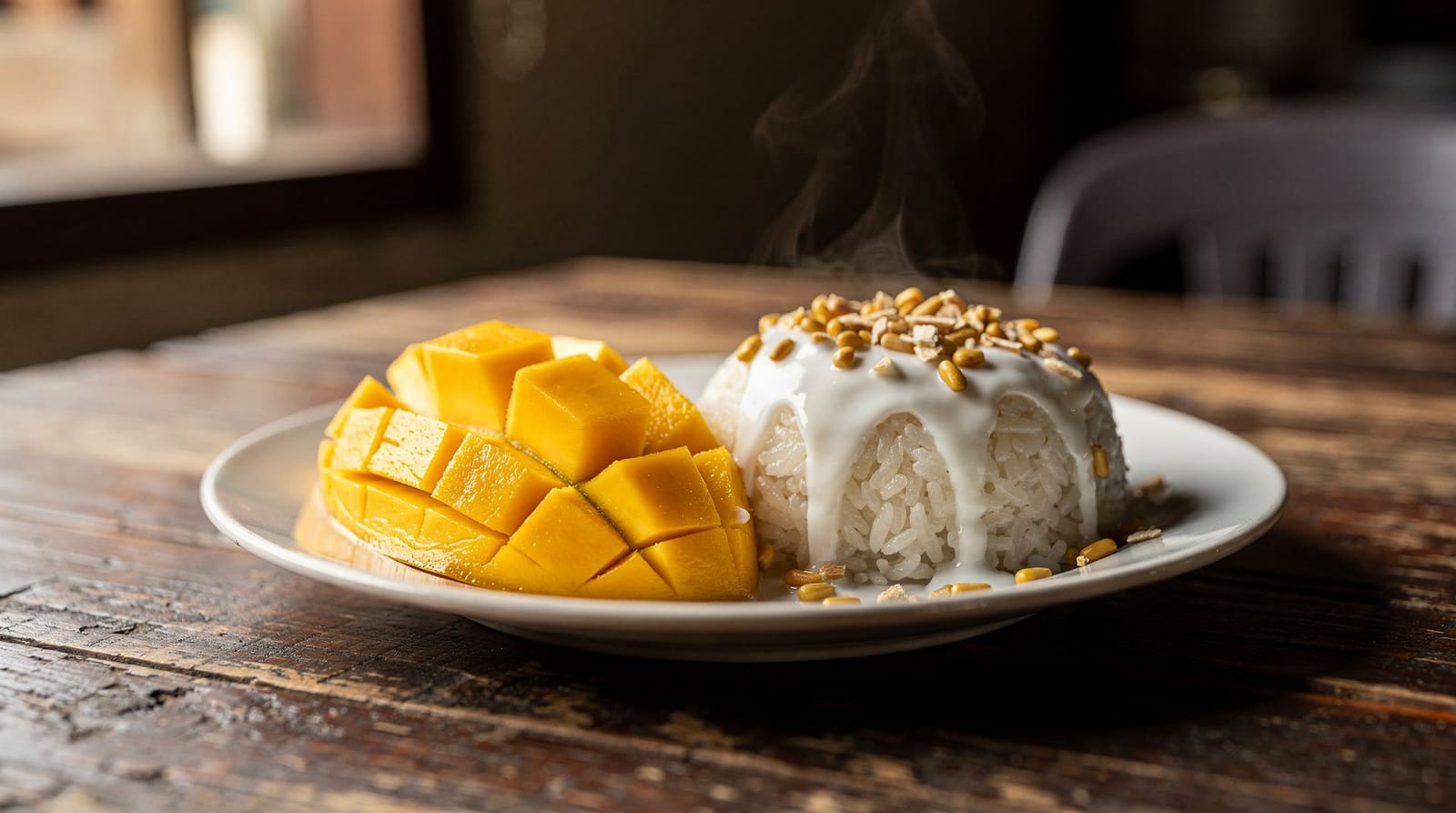
By now I am physically defeated, but there is always room for mango sticky rice. The Chinatown versions are seasonal — best from March to June when the mangoes are at their peak — and a portion is around 60 to 100 baht. Glutinous rice soaked in coconut milk, fresh mango, a drizzle of salted coconut cream on top. If mango is out of season, the bird’s-nest and herbal dessert stalls offer stranger pleasures.
The stall order, at a glance
Six stops, roughly in the sequence I use, for anyone who wants the crawl as a cheat sheet rather than a story.
| Order | Stall | Dish | Price |
|---|---|---|---|
| 1 | Seafood grill | Grilled prawns (goong pao) | 200–400 baht |
| 2 | Noodle stall | Kuay jab peppery soup | 60–80 baht |
| 3 | Pad thai stall | Egg-wrapped pad thai | 60–120 baht |
| 4 | Toasted bread cart | Bread with condensed milk/custard | 25–40 baht |
| 5 | Wok stall | Flame-cooked seafood | 150–300 baht |
| 6 | Dessert stall | Mango sticky rice (seasonal) | 60–100 baht |
Doing the crawl as a vegetarian, or in the rain
The FAQ below touches on vegetarian options, but it deserves more than a one-line answer, because it changes the whole route. During the annual vegetarian festival in autumn, a real chunk of Yaowarat turns meat-free for the duration — look for the yellow je flags outside stalls and shophouses, a tradition with roots in Chinese Buddhist observance that Chinatown takes seriously. Outside festival season, swap the seafood and kuay jab stops for a bowl of vegetable-topped khao man gai-style rice or a stir-fry from any wok stall that will happily leave out the meat if you ask — Thai kitchens are used to the request even if the menu board does not say so. As for rain: Yaowarat’s dense shophouse awnings and covered soi sections mean a crawl survives a shower better than most outdoor Bangkok activities, but a heavier rainy-season downpour will still empty the standing-room stalls fast. If the sky looks heavy, aim for the covered tables at the noodle stalls rather than the open-air seafood grills, and you can wait out most storms without losing your evening. On dry nights, the newer covered strip near Banthat Thong or the broader night market scene make good back-ups if Yaowarat itself is simply too packed to move through.
What’s changed since my first crawl
A dozen visits in, a few things are genuinely different from when I started doing this. The Wat Mangkon MRT station, mentioned above, is the single biggest change — it turned a fraught taxi-and-traffic arrival into a two-minute walk and noticeably thickened the evening crowds as a result, so arrive earlier than you used to need to. Prices have crept up across the board, maybe 20 to 30 percent over a few years, though the crawl remains cheap by any international standard. The hidden speakeasy scene above the noodle shops, covered in the Chinatown speakeasies guide, barely existed on my early visits and is now a genuine part of a full Yaowarat evening. And delivery apps have quietly changed stall behaviour too — some of the most Instagram-famous stalls now juggle a wall of delivery-driver orders alongside the walk-up queue, which can slow things down at exactly the stalls the guides send you to. None of this changes the fundamentals, but it is worth knowing before you go in expecting the Yaowarat of ten years ago.
The drinks question, and where to sit
Two things people always ask me about a Yaowarat crawl: what to drink, and whether you ever actually sit down. On drinks, the street itself is mostly a walk-and-eat affair, but I always work in a stop for fresh sugarcane juice (nam oi, around 20 to 30 baht) or a longan-and-ice cup, both of which cut through the charcoal and chilli beautifully. Chrysanthemum tea and grass jelly drinks are everywhere too, and cheap. For something stronger, Yaowarat has quietly grown a serious speakeasy scene tucked above and behind the shophouses — hidden bars reached through unmarked doors and noodle shops, where a cocktail runs 300 to 450 baht. They are a wonderful way to end a crawl once you can no longer face another skewer; the Chinatown speakeasies guide names the good ones, and the broader Bangkok nightlife page sets the context.
As for sitting: you can eat the entire crawl standing or perched on a plastic stool, but the kuay jab and noodle stalls all have a few tables, and grabbing one for ten minutes to slow down and people-watch is part of the pleasure. Do not feel you must keep moving. The best Yaowarat nights are the ones where you stop, sit on a stool the height of a child’s chair, and just watch the woks throw flames for a while.
My five honest mistakes on Yaowarat
Because I keep learning the hard way, here is what I have got wrong so you do not have to. One: I have arrived at 9pm already full from a hotel dinner more than once, and wasted the whole crawl on two bites of each thing. Eat light beforehand. Two: I have run out of small notes and been stuck unable to pay a 40-baht stall that could not break a 1,000-baht bill — carry a fistful of 20s, 50s and 100s. Three: I have queued 40 minutes for the famous pad thai when an identical plate was two stalls over with no line. Four: I have eaten the grilled prawns first, blown half my appetite and most of my budget, and had no room for the cheaper, frankly better noodle dishes — now I treat the prawns as a deliberate splurge, not a default opener. Five: I have forgotten tissues, and Yaowarat is a place where you will need them. None of these ruined a night, but all of them are avoidable. For the bigger picture of what the street does best, the Bangkok street food guide and the what to eat in Bangkok rundown are both worth a read before you go.
A note on doing it the easy way
The first time I walked Yaowarat I missed half the best stalls because I did not know what I was looking at. On a later visit I joined a small-group Chinatown food walk that hits the Michelin-listed stalls, and it completely reframed the street for me — the guide knew which vendor’s broth was 40 years old and which dessert stall the locals queued for. If you want the spectacle handled for you, a tuk-tuk night tour with a Chinatown street food meal bundles the chaos into a tidy evening. The food tour worth it page weighs up whether you actually need one, and the honest answer is: not strictly, but it shortcuts a lot of trial and error on a first visit.
The practical stuff
Bring cash in small notes; almost nothing on the street takes cards. Pace yourself across six small portions rather than three large ones. Carry tissues, because napkins are rationed. And read street food safety once so you can relax — the turnover on Yaowarat is so high that the food is about as fresh as street food gets anywhere on earth.
I have eaten in a lot of cities. Yaowarat after dark, charcoal smoke in my hair and a plastic stool under me, remains the single best argument I know for coming to Bangkok hungry.
Frequently asked questions about Yaowarat street food
What time does Yaowarat street food start?
Most stalls fire up around 6pm and run until past midnight. Arrive by 6:30pm to beat the heaviest crowds; the street is busiest between 8pm and 10pm.
How much should I budget for a Yaowarat food crawl?
Six small dishes across an evening cost me around 600 to 900 baht, roughly 18 to 26 dollars, including a splurge on grilled prawns. You can eat very well for half that if you skip the seafood.
Is Yaowarat street food safe to eat?
Yes. The turnover is enormous, food is cooked to order in front of you, and busy stalls are your best guarantee of freshness. Choose stalls with queues and you will be fine. The street food safety guide covers the few sensible precautions in detail.
How do I get to Yaowarat?
Take the MRT to Wat Mangkon station, which surfaces a two-minute walk from the heart of the action. Alternatively, a Chao Phraya Express boat to Ratchawong pier leaves you a five-minute walk south. Avoid arriving by taxi after dark, as Yaowarat traffic gridlocks badly.
Is the famous Yaowarat pad thai worth the queue?
Sometimes. The Michelin-listed stalls are genuinely excellent, but the wait can run 40 minutes and several nearby stalls serve a near-identical plate with no line. If you are short on time or appetite, eat at whichever good queue you are nearest; the best pad thai guide settles the debate.
Can I do Yaowarat as a vegetarian?
It is harder than the meat-and-seafood reputation suggests but very doable, especially during the annual vegetarian festival in autumn when Chinatown turns largely meat-free. Look for yellow-flagged je stalls, and the vegetarian and vegan Bangkok guide maps the reliable options.