Is Bangkok expensive? An honest look at what I actually spent
The honest answer to whether Bangkok is expensive is: it is exactly as expensive as you decide it should be. I have done Bangkok on 30 dollars a day and I have somehow spent 30 dollars on a single cocktail sixty floors up, and both were the same city on the same trip. What makes Bangkok so disorienting on the wallet is that the cheap and the expensive sit side by side — a 50-baht noodle stall directly beneath a rooftop bar charging 450 baht for a gin and tonic. Here is what I actually spent, with real numbers, so you can decide which Bangkok you want.
| Budget day | Around 600–800 baht, excluding accommodation |
| Mid-range day | Around 1,200–1,800 baht, excluding accommodation |
| Luxury day | 3,000 baht and up, easily |
| Biggest lever | Accommodation choice, then alcohol |
| Cheapest reliable win | Street food + BTS/MRT over restaurants + taxis |
Food: the cheapest brilliant food on earth
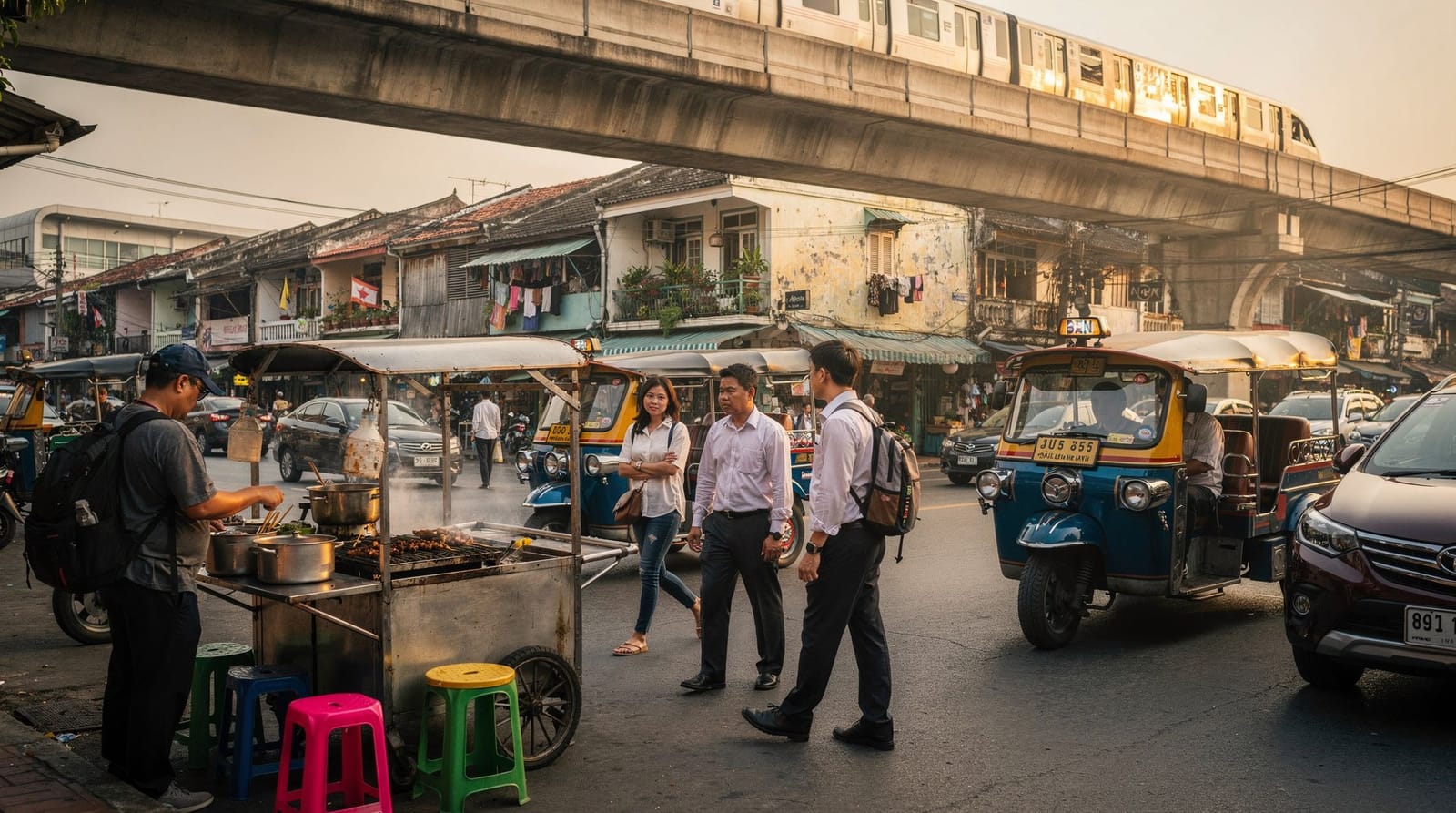
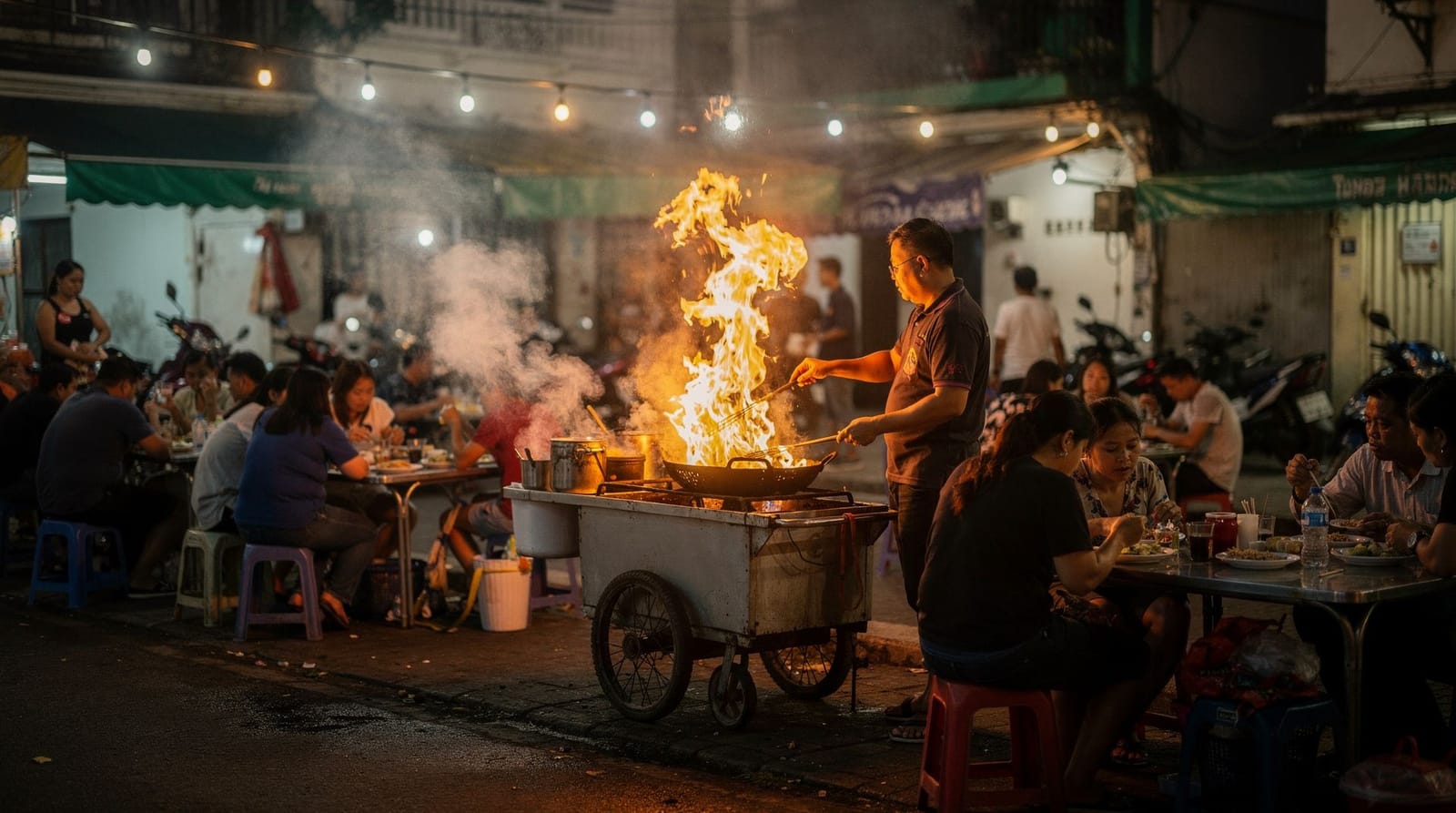
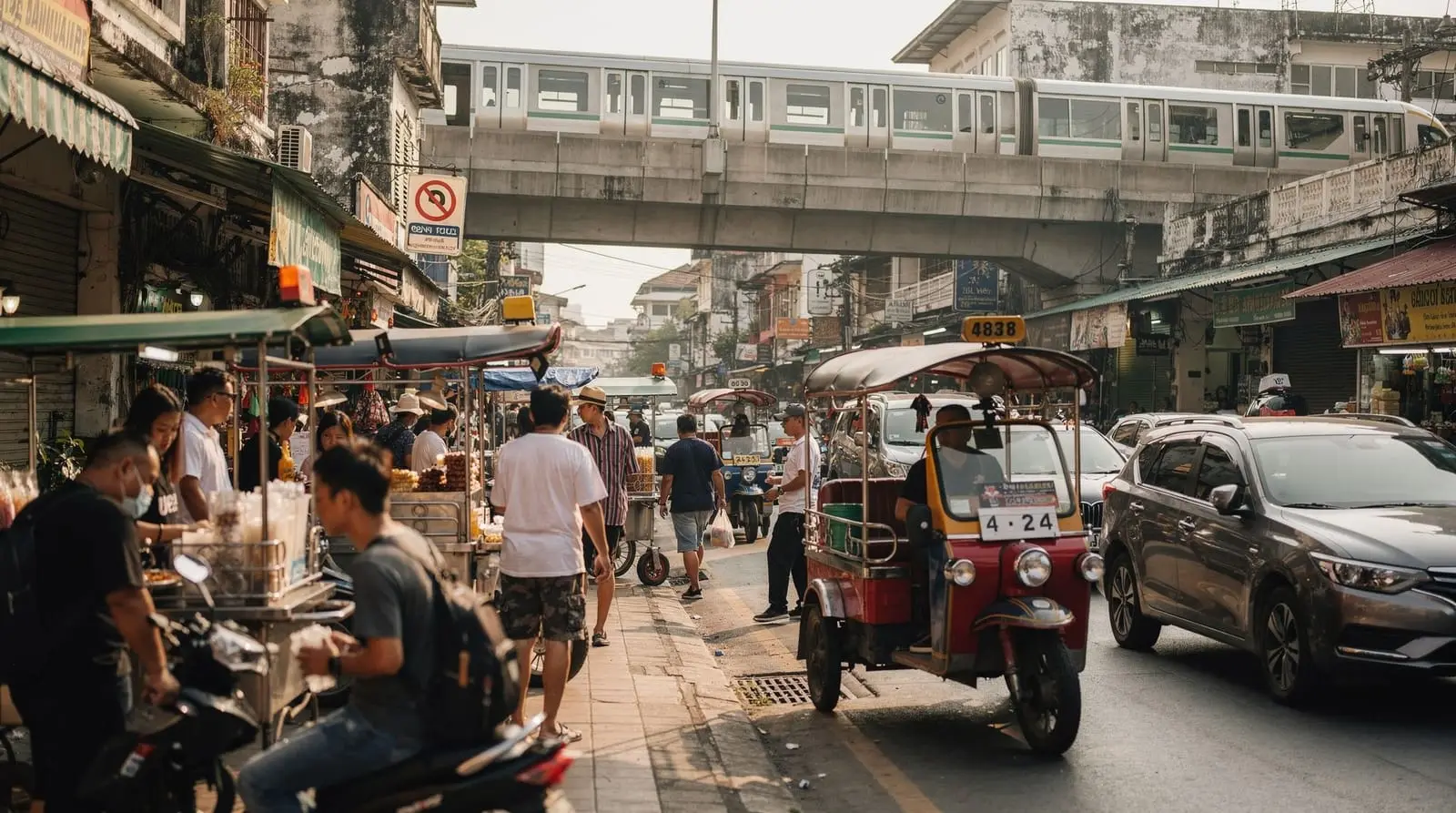
This is where Bangkok defies the question entirely. A plate of pad krapao with a fried egg from a street stall is 50 to 70 baht — under two dollars — and it is genuinely delicious. A bowl of boat noodles near Victory Monument is so small and so cheap, around 15 to 20 baht a bowl, that the done thing is to order five or six and stack the empties like a trophy.
I averaged maybe 250 to 350 baht a day on food when I ate like a local — street breakfast, a market lunch, a stall dinner. That is 7 to 10 dollars for three good meals. The moment I stepped into a mall food court the price doubled, and the moment I sat in an air-conditioned restaurant in Thonglor it quadrupled. The best cheap eats guide is essentially a map of how to keep your food budget under control, and the travel costs breakdown puts real numbers to every category.
To make the spread concrete: a fresh fruit smoothie from a market cart is 25 to 40 baht; a bowl of khao man gai, the city’s beloved poached-chicken rice, is 40 to 50 baht; a generous plate of khao kha moo, stewed pork leg over rice, is around 50 baht; a coffee from a streetside cart is 25 to 35 baht. Step into one of the excellent food courts in the Siam malls and the same dishes become 80 to 150 baht — still cheap, still good, with air-conditioning thrown in, which is a fair trade on a brutal afternoon. Sit down in a tablecloth Thai restaurant and a single main is 250 to 500 baht. The genius of Bangkok is that you can move between all three tiers on the same day depending on how hot, tired or flush you feel, and nobody judges you for eating a two-dollar lunch and a thirty-dollar dinner. The what to eat guide is a good primer on the dishes worth seeking out at every price point.
Transport: almost suspiciously cheap
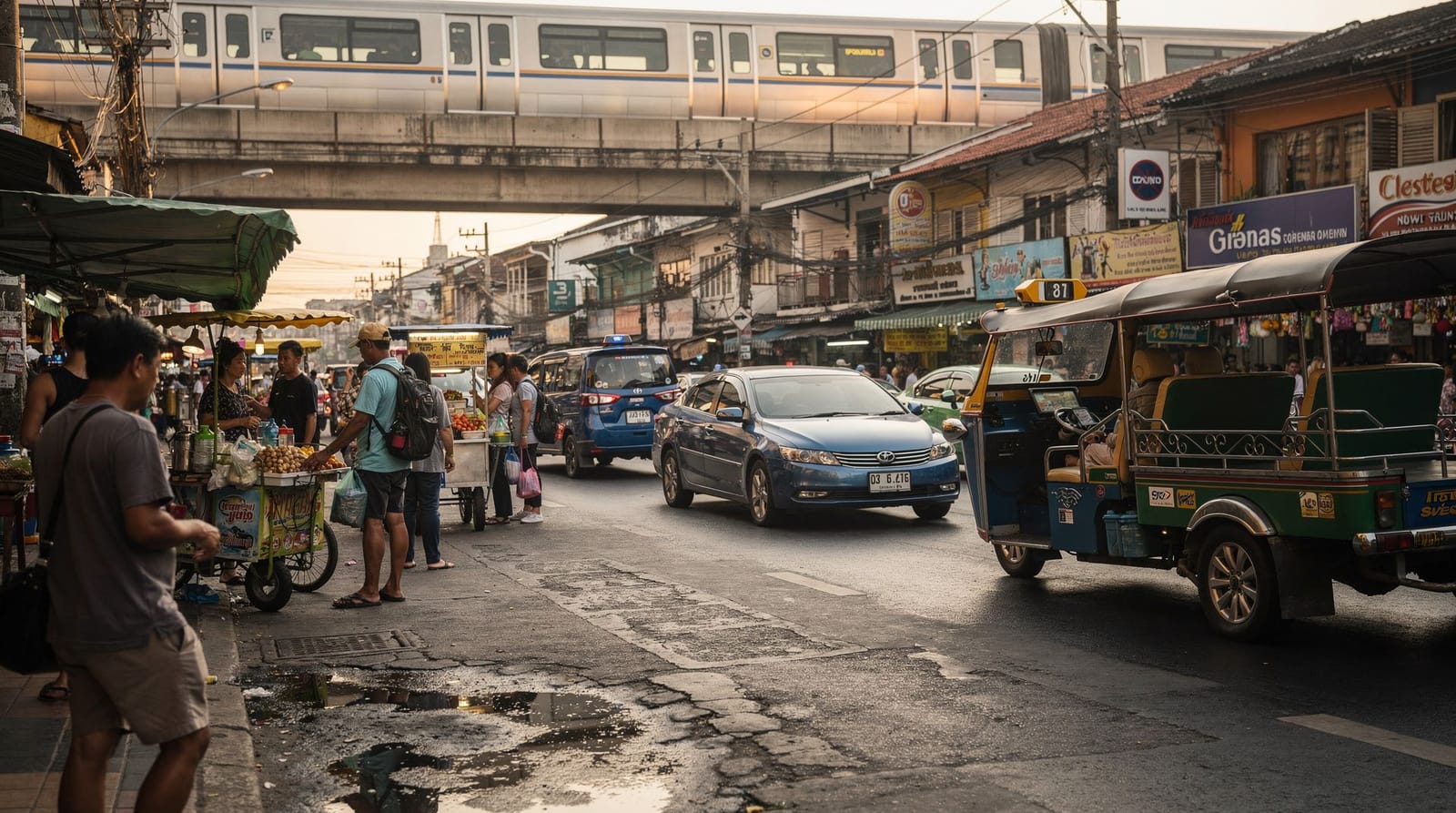
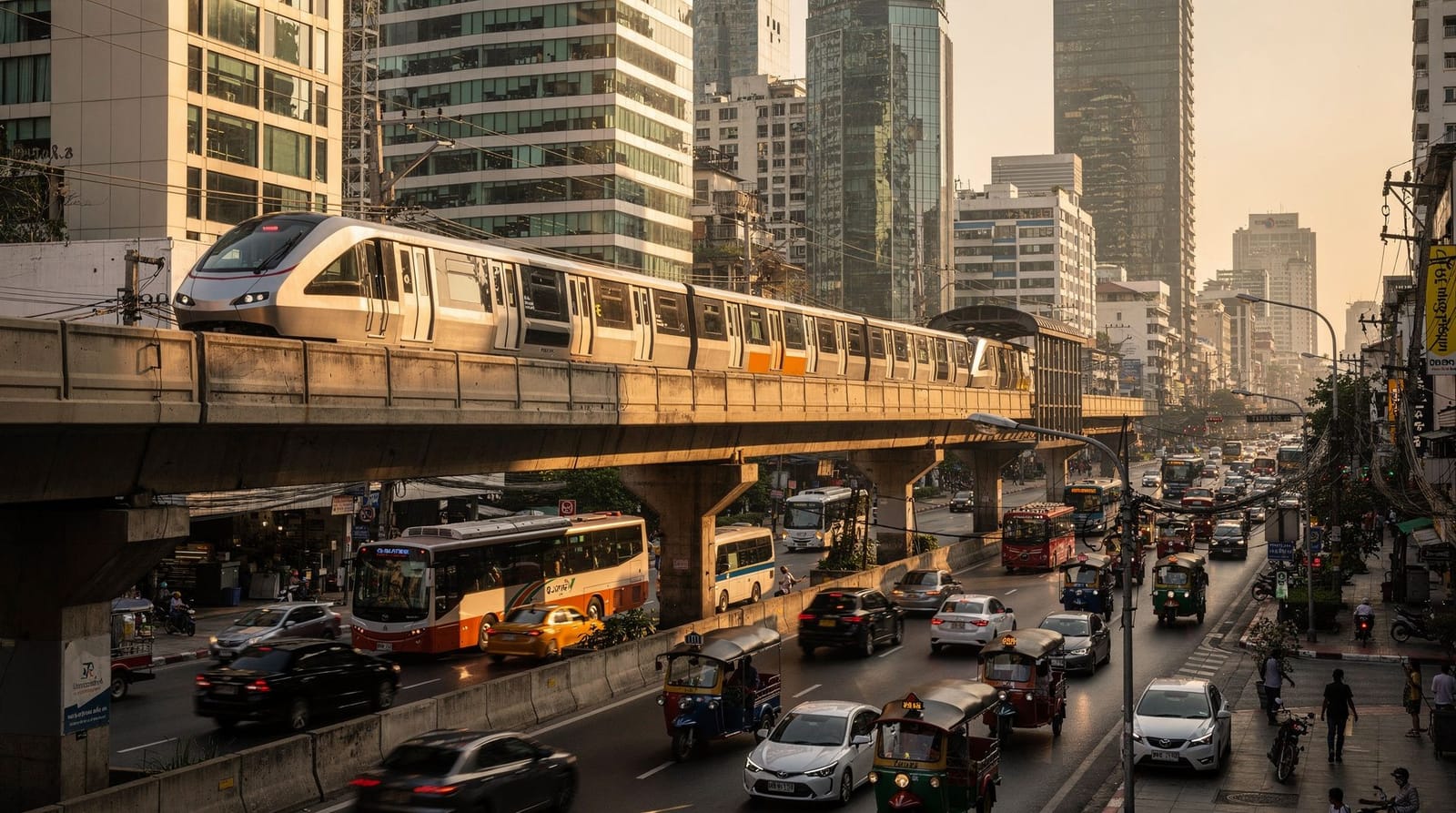
The BTS and MRT are a bargain. A single BTS ride is 17 to 62 baht depending on distance, and most of my journeys cost around 30 to 45 baht. The MRT is similar. The Chao Phraya Express boat — the orange-flag locals’ service — is a flat 16 baht and the most scenic commute in the city.
Where transport quietly costs more is convenience. Grab cars (the local Uber equivalent) are still cheap by Western standards — a 6-kilometre ride across town might be 90 to 150 baht — but they are five times the cost of the equivalent BTS hop, and Bangkok traffic means they are often slower too. Tuk-tuks are a tourist tax: charming, photogenic, and almost always more expensive than a metered taxi once you factor in the haggling. The getting around guide and the Grab, taxi and tuk-tuk breakdown explain when each one actually makes sense. I budgeted about 100 to 150 baht a day on transport and rarely exceeded it.
Temples and attractions: the one genuinely pricey line item
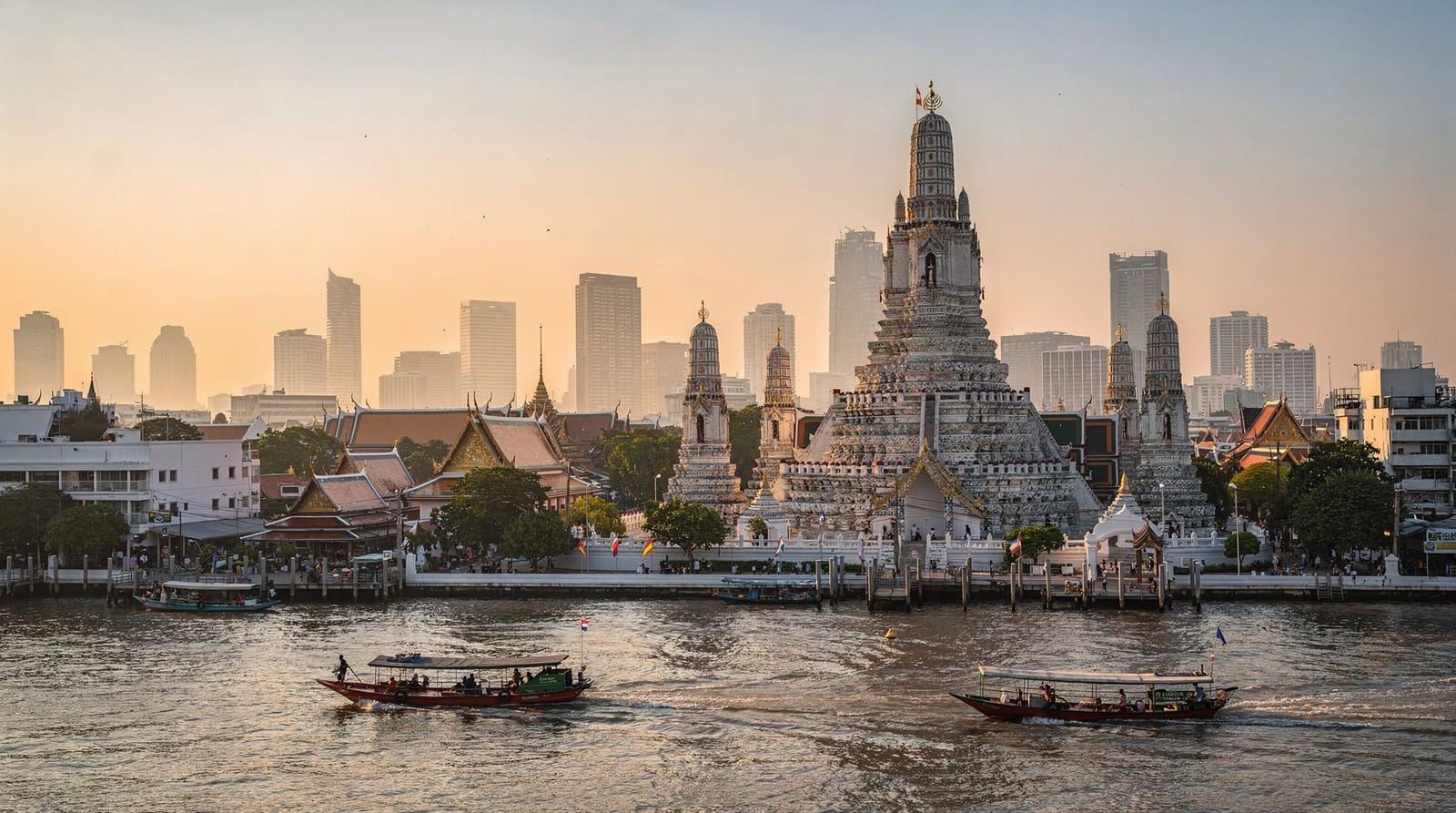
Here is where the budget gets real. The Grand Palace is 500 baht, Wat Pho is 300 baht, Wat Arun is 200 baht. String the big three together in a morning and you have spent 1,000 baht — about 28 dollars — before lunch. For Western travellers that still feels reasonable; for backpackers counting baht it is a meaningful chunk.
The good news is that Bangkok is full of free and cheap experiences. Many temples charge nothing. Lumphini Park is free. Chatuchak weekend market is free to wander. Wat Saket’s Golden Mount is just 50 baht. The free things to do guide is genuinely useful here, and the budget guide shows how to see the headline sights without doing all of them at full price.
Accommodation: the biggest single decision
Food and transport are cheap enough that where you sleep becomes the line item that actually defines your daily budget, and the range is enormous. A clean hostel dorm bed runs 250 to 500 baht a night. A perfectly good private room in a guesthouse or a no-frills hotel is 600 to 1,200 baht. A smart mid-range hotel with a pool in Silom or Sukhumvit sits around 1,500 to 3,000 baht, and the five-star riverside towers and Sukhumvit luxury hotels climb from 4,000 baht to genuinely silly numbers. What surprised me is how much value sits in the 1,500-to-2,500-baht band — rooftop pools, BTS on the doorstep, breakfast included — compared with what the same money buys in a Western city. The where to stay guide breaks the neighbourhoods down by price and vibe, and travelling in the green rainy season can knock a third off all of these rates.
Drinks and nightlife: where the maths breaks
If food is where Bangkok defies the “is it expensive” question, alcohol is where it quietly answers yes. Thailand taxes imported drink heavily, and it shows. A large bottle of local Chang or Singha beer from a 7-Eleven is 60 to 70 baht and a delight; the same beer in a Sukhumvit bar is 150 to 220 baht, and a cocktail in a decent bar is 300 to 450 baht. The rooftop sky bars — wonderful, unforgettable — charge 450 to 700 baht for a single drink and often enforce a dress code and a minimum spend. I am not telling you to skip them; one sunset cocktail sixty floors up is worth it. I am telling you that three of them is a day’s accommodation. The trick I settled on is one deliberate rooftop drink per trip and otherwise drinking street-side beers at a fraction of the price. The best rooftop bars guide is honest about which views justify the markup, and the nightlife guide covers the cheaper end.
Where Bangkok quietly drains money
Three traps caught me repeatedly. First, malls. The Siam shopping district and the luxury malls along Sukhumvit are designed to extract money, and air-conditioning plus jet lag makes you vulnerable. Second, rooftop bars — wonderful, but a single round can cost more than a day of street food. Third, day trips. A Damnoen Saduak floating market trip can spiral once you are on a longtail boat and every vendor is pushing souvenirs at marked-up prices.
There are quieter drains too, the kind you only notice when you tot up the day. Convenience-store snacking adds up faster than you think — a coffee here, a pastry there, a 50-baht impulse at every 7-Eleven, and suddenly you have spent 300 baht on nothing memorable. Tourist-trap tuk-tuk rides that “only cost 100 baht” when a metered taxi or a 16-baht boat would have done the same. Massage upselling, where the advertised 250-baht hour quietly becomes a 600-baht package with oils and extensions. And the gentle pressure at markets to buy the third elephant-print thing you do not need. None of these is a rip-off exactly; they are just the slow leak that turns a 30-dollar day into a 60-dollar one. Reading the tourist traps and what to skip guides before you go saves more money than any single haggle.
Day trips are where booking ahead actually saves money rather than costing it. A guided Ayutthaya day trip with lunch and transport bundles the train or van, entries and a guide into one fixed price, which removed the death-by-a-thousand-add-ons feeling I got doing it piecemeal. The Ayutthaya day trip page compares the DIY and organised costs honestly.
Taxes, service charges and the bits that sneak up on you
One thing that catches first-timers out: street food and market prices are exactly what is quoted, but sit-down restaurants and hotel bars often add a 7% VAT and a 10% service charge on top of the menu price, which can quietly inflate a bill by close to 20%. Look for ”++” after a price on a menu — that symbol means VAT and service are coming. Tipping is not obligatory in the way it is in the US; rounding up or leaving small change is appreciated at restaurants, and a 20-to-50-baht note is a generous tip for a massage, but nobody expects 15-to-20%. The travel costs breakdown flags the ”++” convention, and it is worth watching for on any bill at a hotel restaurant or a smarter riverside spot.
How the three budgets actually compare
| Budget | Mid-range | Luxury | |
|---|---|---|---|
| Food | Street stalls, 250–350 baht/day | Mix of stalls and restaurants | Tablecloth dining, 500+ baht/meal |
| Sleep | Hostel dorm, 250–500 baht | Guesthouse/hotel, 1,500–3,000 baht | 4,000 baht and up |
| Move | BTS/MRT, 100–150 baht | Same, plus occasional Grab | Grab or private car |
| Drink | 7-Eleven beer, 60–70 baht | One rooftop drink per trip | Sky bars regularly |
If Bangkok’s spread of prices still feels abstract, the Bangkok on 50 dollars a day diary and the Bangkok versus other Asian cities comparison both put real numbers against real days, and the best food markets guide is the fastest way to eat well without inflating the food line.
A worked example: my actual daily spend
On a typical mid-range day I spent roughly: 300 baht on food, 130 baht on transport, 500 baht on one temple or attraction, 200 baht on coffee and snacks, and maybe 400 baht on an evening drink. That is around 1,530 baht, or about 44 dollars a day, excluding accommodation. Strip out the rooftop drink and the temple, eat only street food, and the same day drops under 700 baht — 20 dollars. Add a luxury dinner and a sky bar and it balloons past 100 dollars without trying.
So, is it expensive?
No — unless you want it to be. Bangkok is one of the few major world cities where you can eat superbly, travel comfortably and see extraordinary things for under 30 dollars a day, while also offering enough luxury to relieve you of 300 in an evening if you let it. The skill is simply knowing which Bangkok you are in at any given moment. Plan with the trip planning guide, keep your food on the street and your transport on the rails, and the city will feel like one of the best-value places you have ever been.
Frequently asked questions about Bangkok costs
How much money do I need per day in Bangkok?
A comfortable mid-range day costs around 1,200 to 1,800 baht (35 to 50 dollars) excluding accommodation. Budget travellers can manage on 600 to 800 baht; luxury days run well past 3,000.
Is street food really that cheap?
Yes. Most street dishes are 40 to 80 baht, and a full day of three street meals can cost under 300 baht. It is also some of the best food in the city, so eating cheap is no hardship.
What is the most expensive part of visiting Bangkok?
Major temple entries and rooftop bars. The Grand Palace, Wat Pho and Wat Arun together cost about 1,000 baht, and a single sky-bar cocktail can exceed 400 baht. Accommodation aside, alcohol and imported goods are where Western prices sneak back in.
How much does accommodation cost in Bangkok?
A hostel dorm bed is 250 to 500 baht, a private guesthouse room 600 to 1,200 baht, a comfortable mid-range hotel 1,500 to 3,000 baht, and luxury from 4,000 baht up. The 1,500-to-2,500-baht band offers exceptional value by Western standards; the where to stay guide compares neighbourhoods.
Is Bangkok cheaper than other Asian cities?
For food and transport, Bangkok is among the cheapest major capitals in the region, comfortably undercutting Singapore and roughly level with other Southeast Asian hubs. The Bangkok versus Singapore comparison puts real numbers to the difference.
How can I keep my Bangkok budget low?
Eat street food, ride the BTS and Chao Phraya boats, drink convenience-store beer rather than bar cocktails, and choose free attractions like parks and many temples. The budget guide and free things to do pages are built around exactly this.