Bangkok on 50 dollars a day: my real breakdown
Fifty dollars a day in Bangkok is, frankly, a comfortable budget — not backpacker-tight, not luxury-loose, but a sweet spot where you can eat superbly, get around easily, see real sights and still have room for a small splurge. I spent a week tracking every baht to find out exactly what 50 dollars buys you here, and the answer surprised even me. Here is the honest, line-by-line breakdown of a real Bangkok day on 50 dollars, which at recent rates is roughly 1,750 baht.
| Where | Any Bangkok neighbourhood near a BTS/MRT line |
| Cost | ~1,750 baht/day (~50 USD), excluding accommodation |
| Time needed | A full day, breakfast to evening treat |
| Getting there | N/A — this is a daily spending guide, not a trip |
| Best time | Works year-round; hot season adds coffee/AC breaks |
The ground rules
To make this useful I set a few honest parameters. The 50 dollars excludes accommodation, because lodging varies so wildly — from a 400-baht hostel bed to a 3,000-baht hotel room — that lumping it in would make the number meaningless. So this is a daily spending budget for food, transport, sights, drinks and incidentals, assuming you have already sorted a bed. With that established, 1,750 baht a day turns out to be genuinely generous if you spend it the way locals do, and the budget guide and travel costs breakdown back this up.
Breakfast: 80 baht
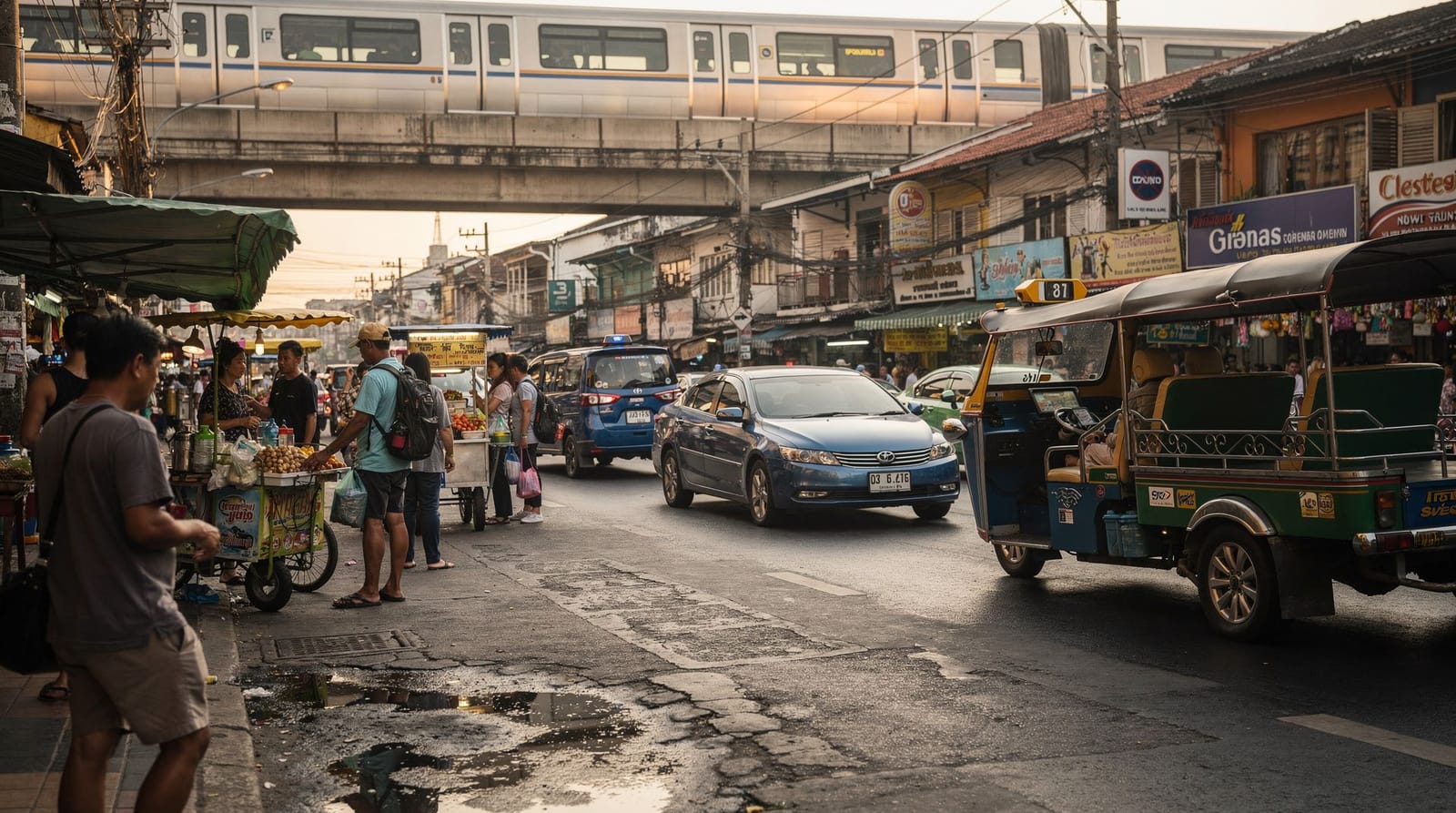
I start cheap and local. A bowl of jok (rice porridge) with pork and a soft egg from a street cart, or a bag of pa thong ko (Thai fried dough) with a hot soy milk, runs 40 to 60 baht. Add an iced coffee from a cart — not a fancy cafe — for 40 baht, and breakfast is done for around 80 baht. You can spend triple this in a mall cafe, but the street breakfast is both cheaper and better.
Running total: 80 baht.
Transport: 150 baht
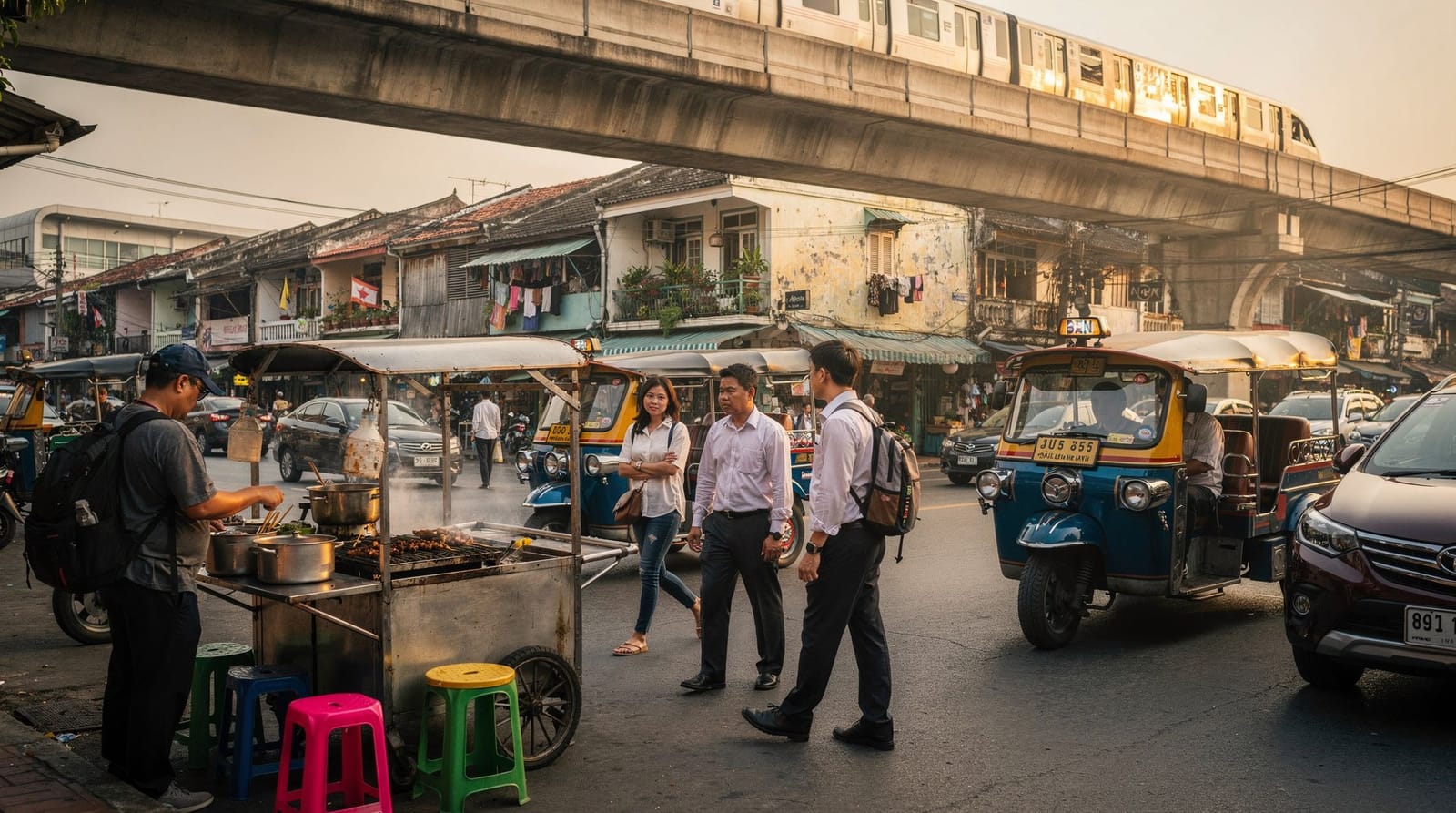
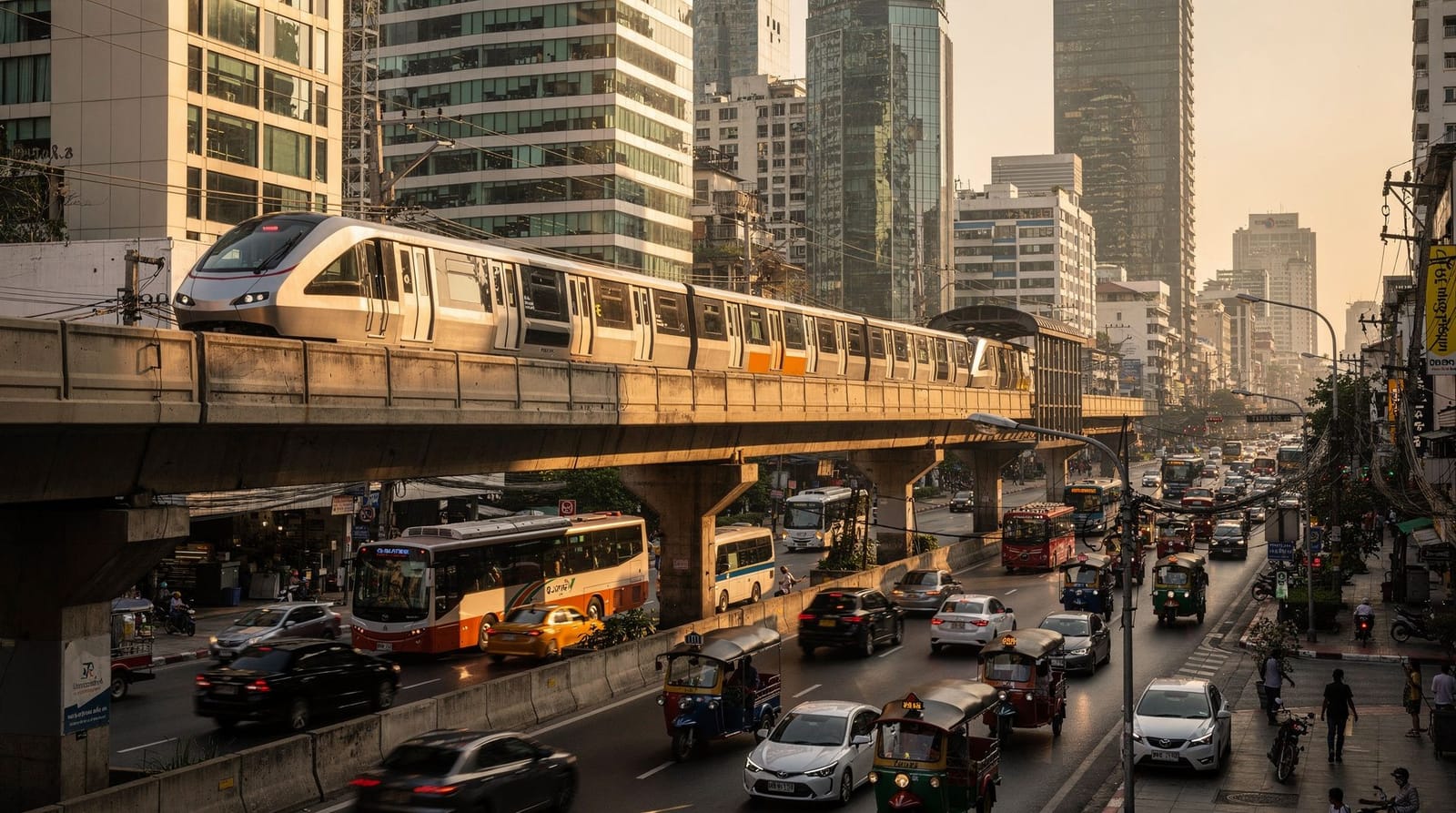
A typical day involves three or four BTS or MRT hops at 30 to 45 baht each, plus maybe one Chao Phraya express boat ride at 16 baht. Budget around 130 to 150 baht for a full day of getting around on the rails and the river, which covers a lot of ground. If I take one Grab car instead of fighting through traffic, that alone might add 100 baht, so I save those for when I am genuinely stuck. The getting around guide explains how to keep transport cheap, and a Rabbit card makes the BTS painless.
Running total: 230 baht.
Lunch: 120 baht
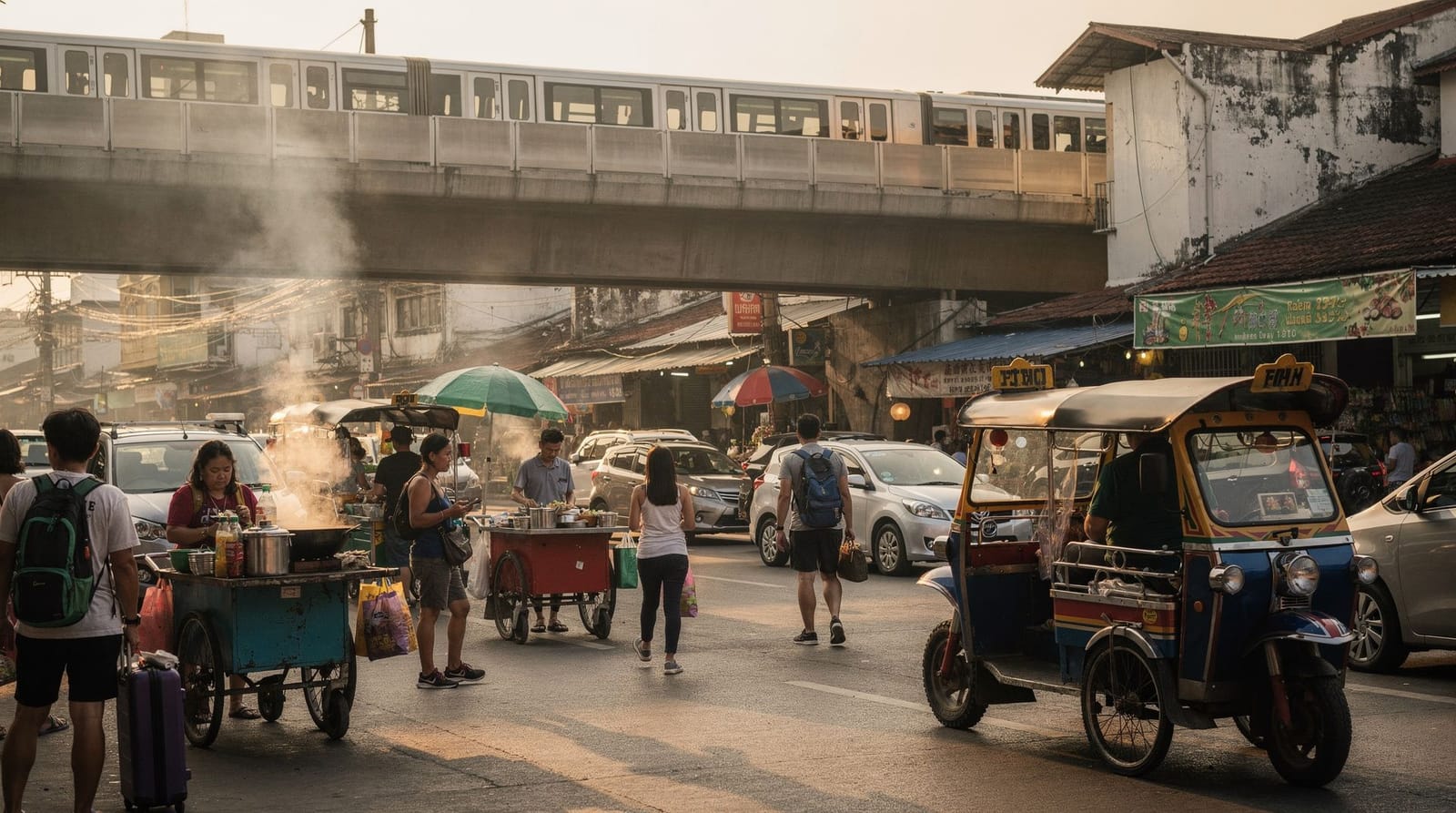
Lunch is where Bangkok shows off. A plate of pad krapao with a fried egg, or a bowl of boat noodles, or khao man gai (chicken rice) from a busy stall costs 50 to 80 baht. Add a fresh fruit cup for 20 and a cold drink for 25 and you have lunched superbly for around 120 baht. The best cheap eats guide is essentially a treasure map for this part of the budget.
Running total: 350 baht.
The day’s main sight: 500 baht
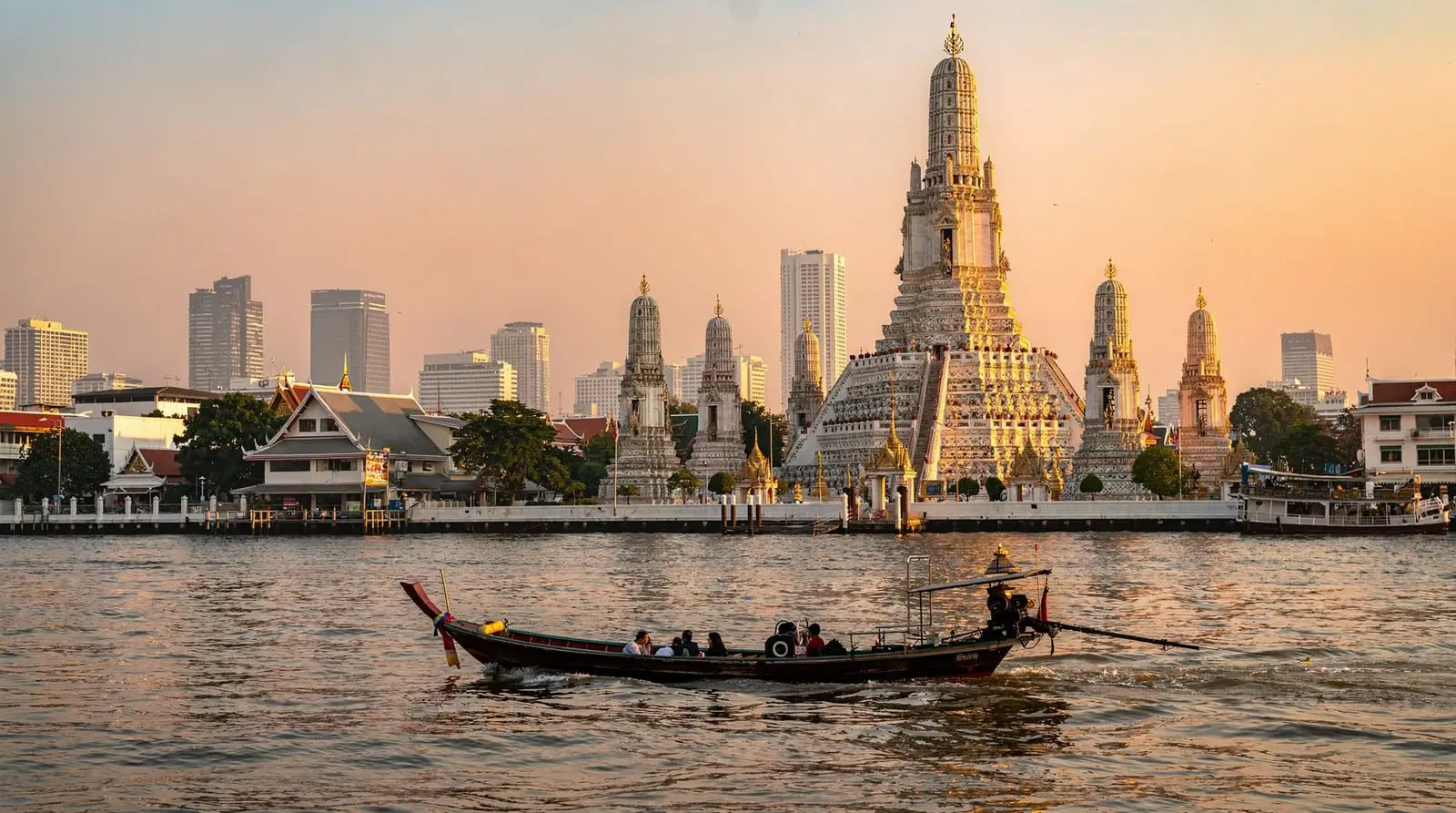
Here is the big line item. One major paid attraction — say the Grand Palace at 500 baht, or Wat Pho at 300, or the Mahanakhon SkyWalk — eats a real chunk of the budget. The smart play is to do one paid sight per day and fill the rest with free or cheap experiences. On days I want to save, I lean on the free things to do guide: Lumphini Park, Chatuchak market, wandering Chinatown, the riverside, many free temples. Alternating a 500-baht sight day with a near-free day keeps the average comfortably under budget.
Running total: 850 baht.
Afternoon coffee and snacks: 120 baht
I allow myself one proper specialty coffee in an air-conditioned cafe to escape the afternoon heat — 100 to 150 baht for a flat white in a nice shophouse — plus a street snack or two. This is a small daily indulgence that makes the heat bearable, and at 120 baht it is easily affordable within the budget.
Running total: 970 baht.
Dinner: 250 baht
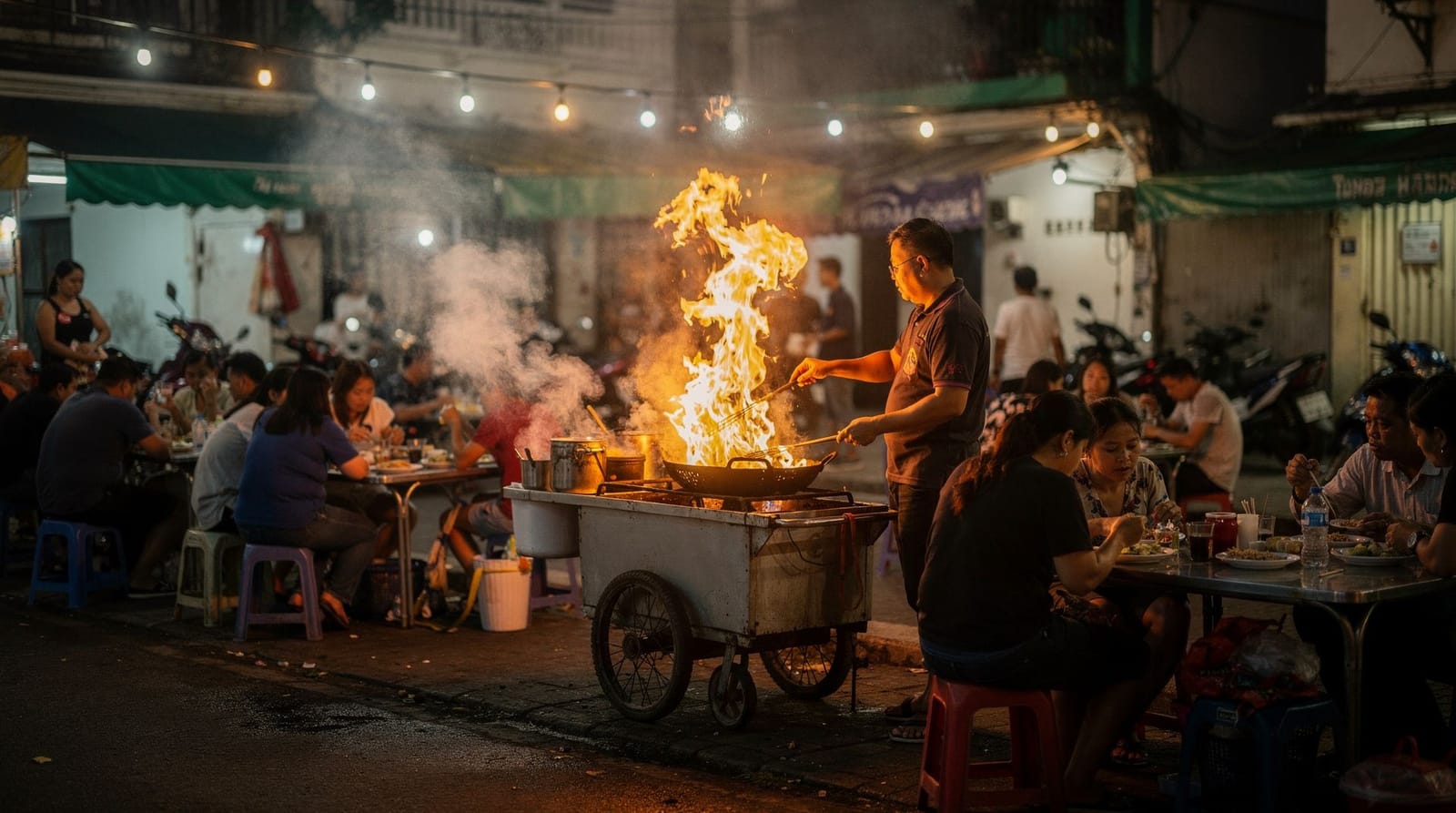
Dinner is street food or a casual shophouse, and I eat well for it. A Chinatown grazing session — grilled prawns, a noodle soup, a dessert — or a proper sit-down plate of something at a local restaurant runs 200 to 300 baht including a drink. This is more than lunch because I linger and order more, but it is still a fraction of a Western restaurant. The street food guide points the way.
Running total: 1,220 baht.
The evening splurge: 400 baht (optional)
This is where the 50-dollar budget shows its real advantage: there is room left for one nice thing. A craft beer or two, a single rooftop cocktail to watch the sunset, a Thai massage, or a cinema ticket — roughly 300 to 450 baht for an evening treat. On a Muay Thai or cruise night this gets blown entirely, which is why I balance it across the week.
Running total: roughly 1,620 baht — about 46 dollars, comfortably under the 50-dollar ceiling with a little buffer for incidentals.
Where the splurges go
Across a week, I pool the daily buffers and use them for one or two bigger experiences that do not fit a single day’s 50 dollars. A guided day trip is the classic example. A guided Ayutthaya day trip with lunch and transport might run a couple of thousand baht all-in, which you cover by eating cheaply the days either side. That is the real trick to a 50-dollar Bangkok: most days you spend well under it, banking the difference for the occasional experience worth more.
Where accommodation fits in
I deliberately left lodging out of the 50-dollar figure, but it deserves its own honest paragraph because it is the one number that can blow a budget. The good news is that Bangkok’s range is enormous. A hostel dorm bed runs 350 to 600 baht a night, a clean private room in a budget guesthouse 700 to 1,200 baht, and a smart mid-range hotel with a pool 1,500 to 3,000 baht. Where you stay also shapes your transport spend: a room near a BTS or MRT station, in Silom and Sathorn or Sukhumvit around Nana and Asok, saves you taxi money every single day, while a cheaper-looking place far from the rail line quietly costs you 100 to 200 baht in Grab fares daily. The where to stay guide breaks the neighbourhoods down. My rule: pay a little more to be a five-minute walk from the BTS, and the daily 50 stretches further than the room rate suggests.
How to actually keep transport cheap
Transport is the budget line travellers waste the most on, almost always by defaulting to taxis. The fix is simple. Get a Rabbit card for the BTS and an MRT stored-value card, or tap a contactless bank card where accepted, so each hop is a flat 17 to 47 baht depending on distance with no fumbling for change. Use the Chao Phraya express boats — 16 baht flat on the orange flag — wherever the river goes your way, which is most of the old-city sights. Walk the short hops rather than reflexively hailing a tuk-tuk, whose drivers quote tourist prices and may steer you to gem-shop commissions. When you do need a car, use the Grab app so the fare is fixed and metered rather than negotiated. The BTS guide and the Rabbit card guide cover the mechanics. Master this and 130 to 150 baht a day genuinely covers a lot of city.
Going lower: a 30-dollar day
If 50 is comfortable, 25 to 30 dollars is the lean version, and it is entirely livable without misery. The cuts are obvious once you see the breakdown: skip the specialty coffee and the evening splurge, eat all three meals at street stalls for 50 to 80 baht each, and lean hard on free sights — Lumphini Park, Chatuchak browsing, Chinatown wandering, the many free temples, the riverside promenades. That alone drops you to roughly 1,000 baht. The on-a-budget itinerary is built for exactly this. The only real sacrifice is the paid headline sight, so the trick is to do the Grand Palace once and fill the other days with the free city, which is most of what makes Bangkok wonderful anyway.
Cash, cards and ATM fees
A practical line item people forget to budget for: getting your money out. Thai ATMs charge a foreign-card withdrawal fee, typically 220 baht per transaction on top of whatever your home bank charges, which adds up fast if you are pulling small amounts often. The fix is simple — withdraw a larger sum less often (say, three or four days’ budget at once) rather than a daily top-up, and use a fee-free travel debit card if you have one, since several now refund the local ATM fee entirely. Contactless bank cards are increasingly accepted on the BTS and MRT too, which cuts down on how much cash you need to carry. Street stalls and markets remain cash-only almost everywhere, so keep a stock of small notes regardless of how you handle the bigger withdrawals; the travel costs guide has more on typical daily spending patterns, and a local SIM or eSIM makes checking bank apps and Grab fares painless throughout the day.
Scaling up: a realistic 100-dollar day
If 50 dollars is the comfortable floor, 100 dollars a day is where Bangkok starts to feel genuinely indulgent rather than merely comfortable. Double the food budget buys sit-down restaurant meals instead of street stalls for at least one of the day’s three, a proper spa massage instead of the 300-baht streetside version, and room for a real splurge — a Thai cooking class, a night at Muay Thai ringside, or a rooftop bar sunset followed by a river dinner cruise. A Chao Phraya dinner cruise alone can run 1,500 to 2,500 baht, which the 50-dollar budget simply cannot absorb without banking several days of savings first, but at 100 dollars a day it fits comfortably alongside everything else. The honest takeaway from tracking both budgets is that the jump from 50 to 100 buys comfort and spontaneity more than it buys fundamentally different experiences — Bangkok’s best things are still remarkably cheap either way.
The verdict
Fifty dollars a day in Bangkok is not surviving — it is living comfortably. You can eat three excellent meals, ride the BTS and boats freely, see a major sight, drink good coffee, and still have an evening treat, all without counting baht anxiously. The city’s genius is that the floor for “eating and travelling well” is so low that 50 dollars feels almost luxurious. Go lower if you must — 25 to 30 dollars is entirely doable on street food and free sights — but at 50, Bangkok is one of the great-value cities on earth. The is Bangkok expensive piece backs up the numbers if you want to sanity-check them before you go.
The day at a glance
| Line item | Cost (baht) | Running total |
|---|---|---|
| Breakfast | 80 | 80 |
| Transport | 150 | 230 |
| Lunch | 120 | 350 |
| Main sight | 500 | 850 |
| Afternoon coffee/snacks | 120 | 970 |
| Dinner | 250 | 1,220 |
| Evening splurge (optional) | 400 | 1,620 |
Frequently asked questions about a Bangkok daily budget
Can you do Bangkok on 50 dollars a day?
Comfortably, excluding accommodation. Fifty dollars (about 1,750 baht) covers three good meals, transport, one major sight, coffee and an evening treat, usually with a little left over.
What is the cheapest way to eat in Bangkok?
Street food and busy local shophouses. Most dishes are 50 to 80 baht, so three street meals a day can cost under 300 baht while being some of the best food in the city.
How do I save money on Bangkok attractions?
Do one paid sight per day and fill the rest with free experiences: Lumphini Park, Chatuchak market, Chinatown, the riverside and the many free temples. Alternating paid and free days keeps your average low.
Does the 50-dollar budget include accommodation?
No. Lodging is excluded because it varies so widely, from a 350-baht dorm bed to a 3,000-baht hotel room. The 50 dollars (about 1,750 baht) covers food, transport, sights, drinks and incidentals once you have a bed sorted.
How can I do Bangkok even cheaper than 50 dollars a day?
Drop to 25 to 30 dollars by eating all three meals at street stalls, skipping specialty coffee and the evening splurge, and leaning on free sights like parks, markets, Chinatown and free temples. Do one paid headline sight and keep the rest free.
Do I need cash or can I use cards in Bangkok?
You need both. Street stalls and markets are cash-only, so keep small notes handy, while contactless cards increasingly work on the BTS/MRT and in malls. Withdraw larger sums less often to avoid stacking up per-transaction ATM fees, and check whether your bank card refunds foreign ATM charges.
What does 100 dollars a day buy in Bangkok compared to 50?
Roughly double the comfort rather than a different trip: sit-down restaurant meals, a proper spa massage, and room for one real splurge like a cooking class, Muay Thai tickets or a dinner cruise. Bangkok’s best experiences remain cheap at either budget.