Damnoen Saduak Floating Market
Damnoen Saduak is Thailand's most famous floating market — and its most touristy. Is it worth the day trip from Bangkok? How to go, and the honest reality.
Bangkok: Damnoen Saduak Market and Maeklong Railway Market
Quick facts
- Distance from Bangkok
- ~100 km southwest (1.5–2 hr by minivan, car or tour)
- Getting there
- Minivan from Southern Bus Terminal, private car, or organised tour
- Key sight
- Canals of paddle boats selling fruit, food and souvenirs
- Time needed
- 1.5–2 hours at the market; a half-day round trip
- Best time
- Arrive by 7–8 am — before the tour buses and the heat
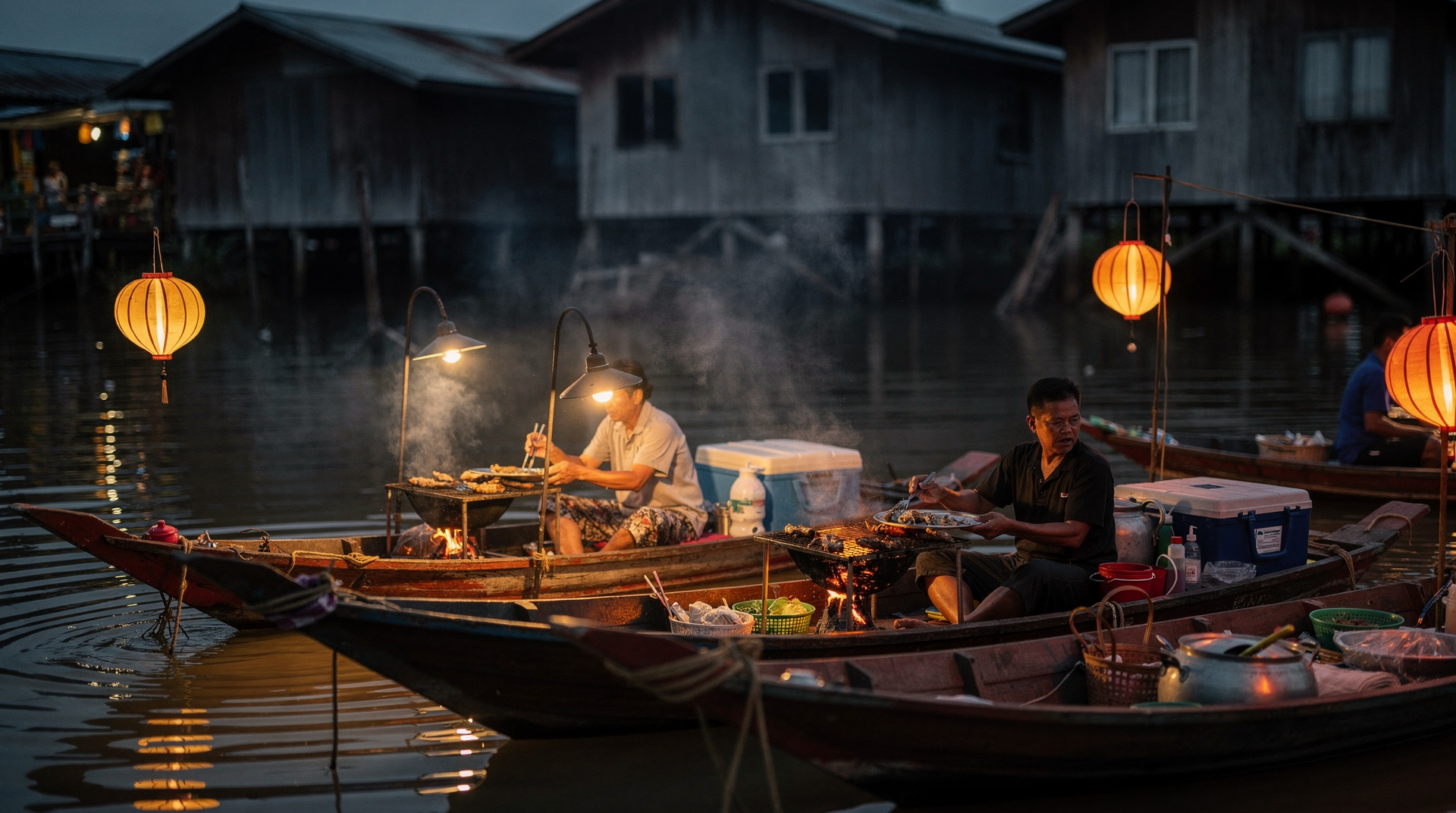
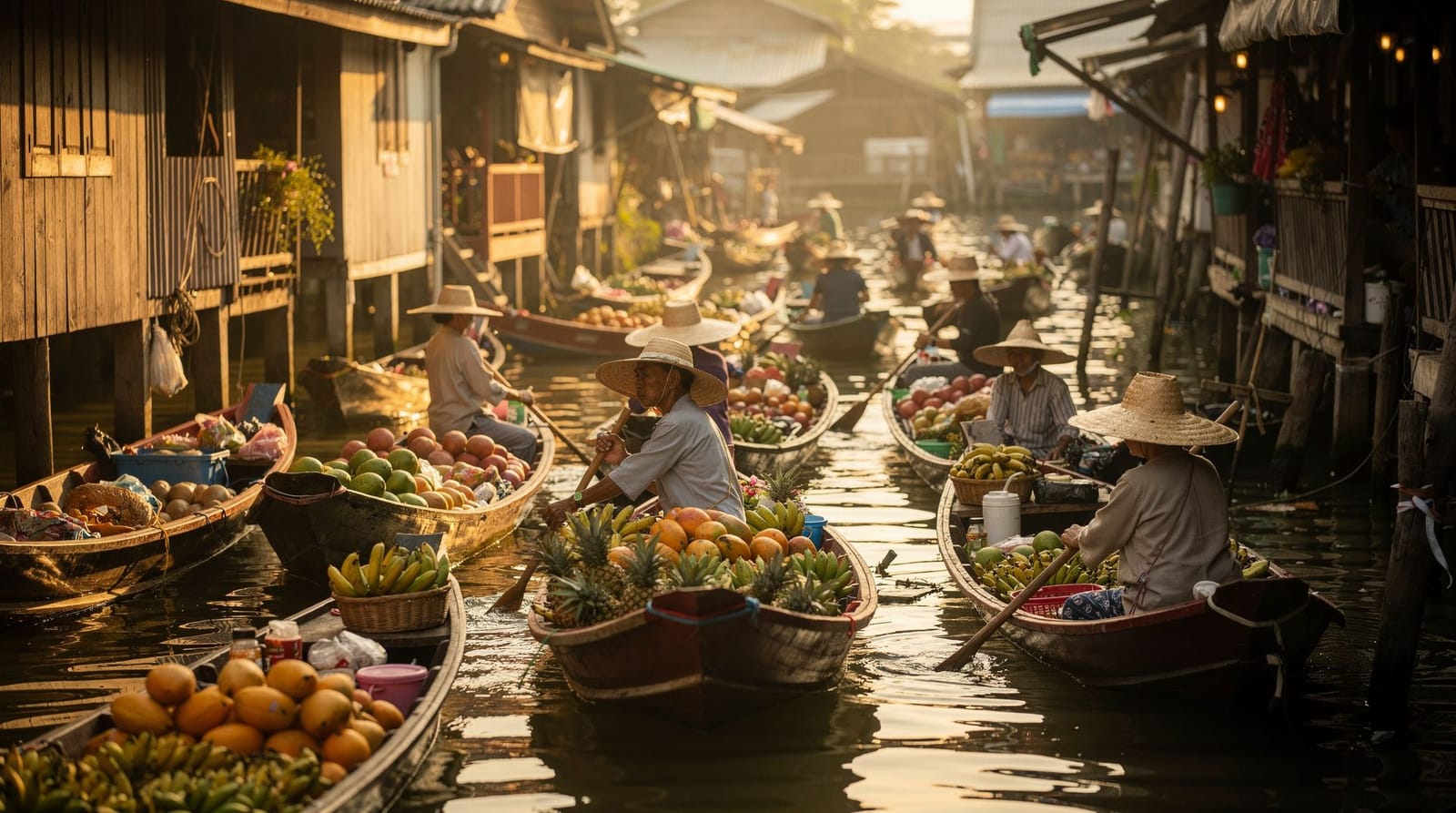
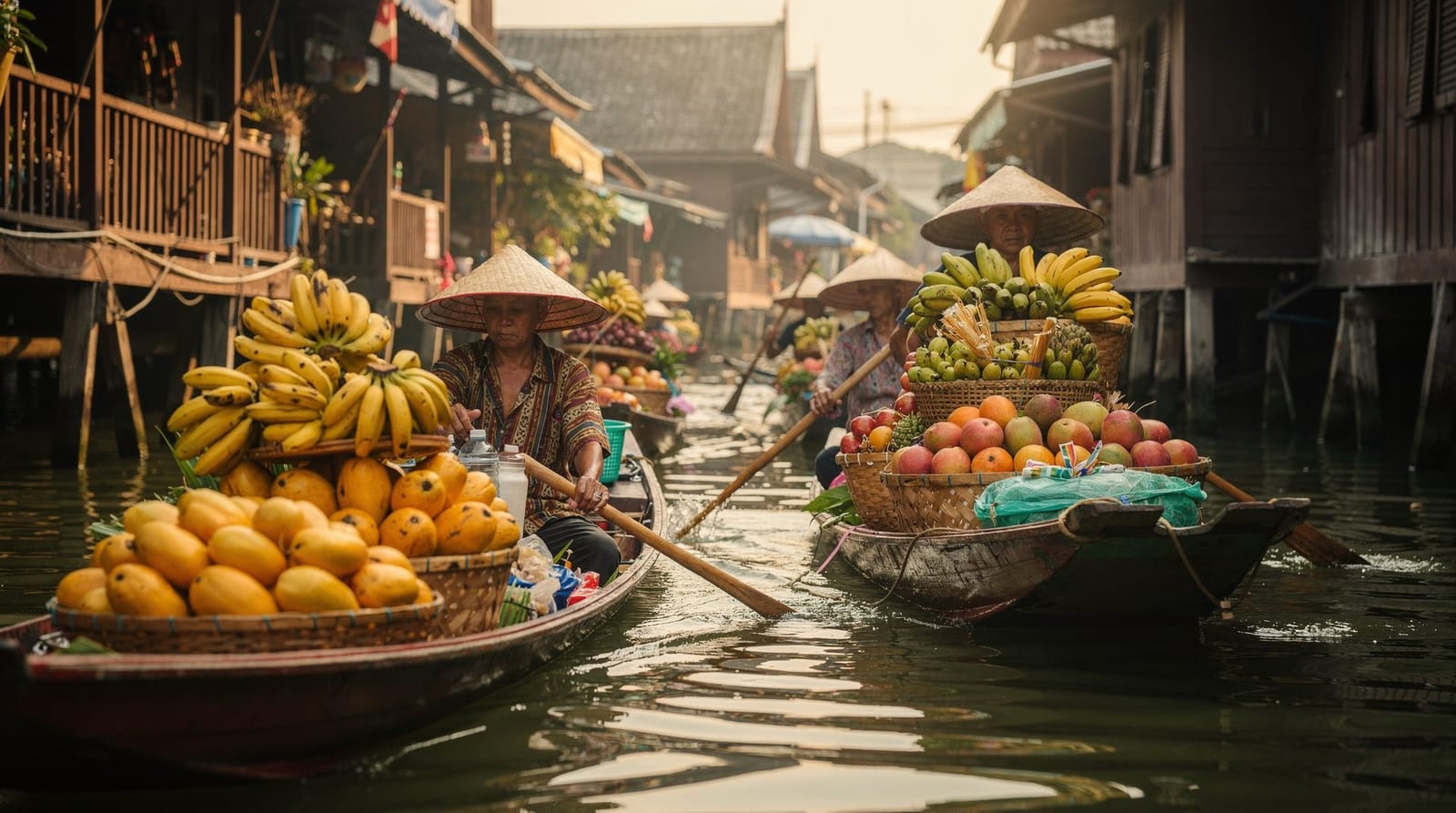
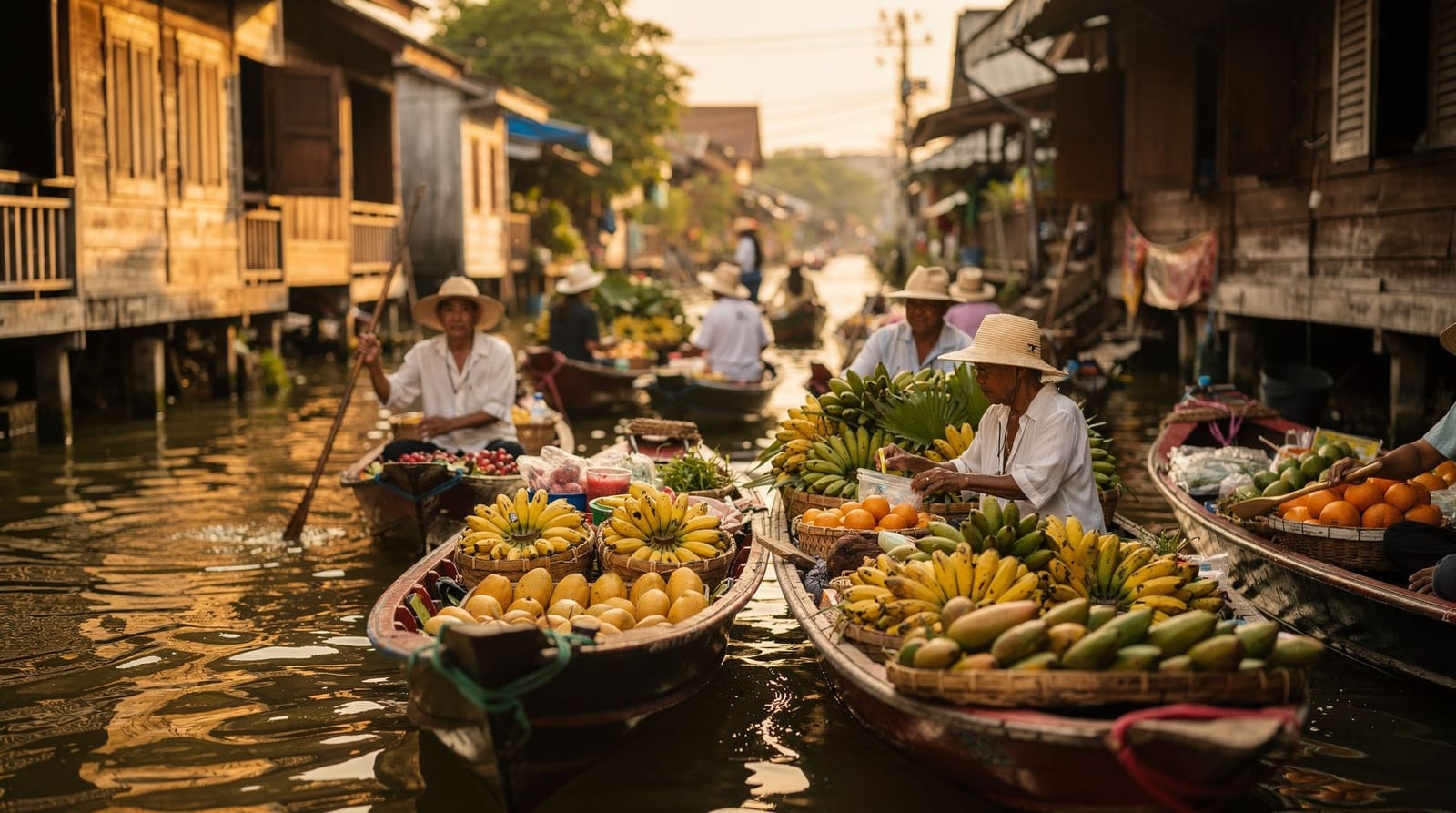
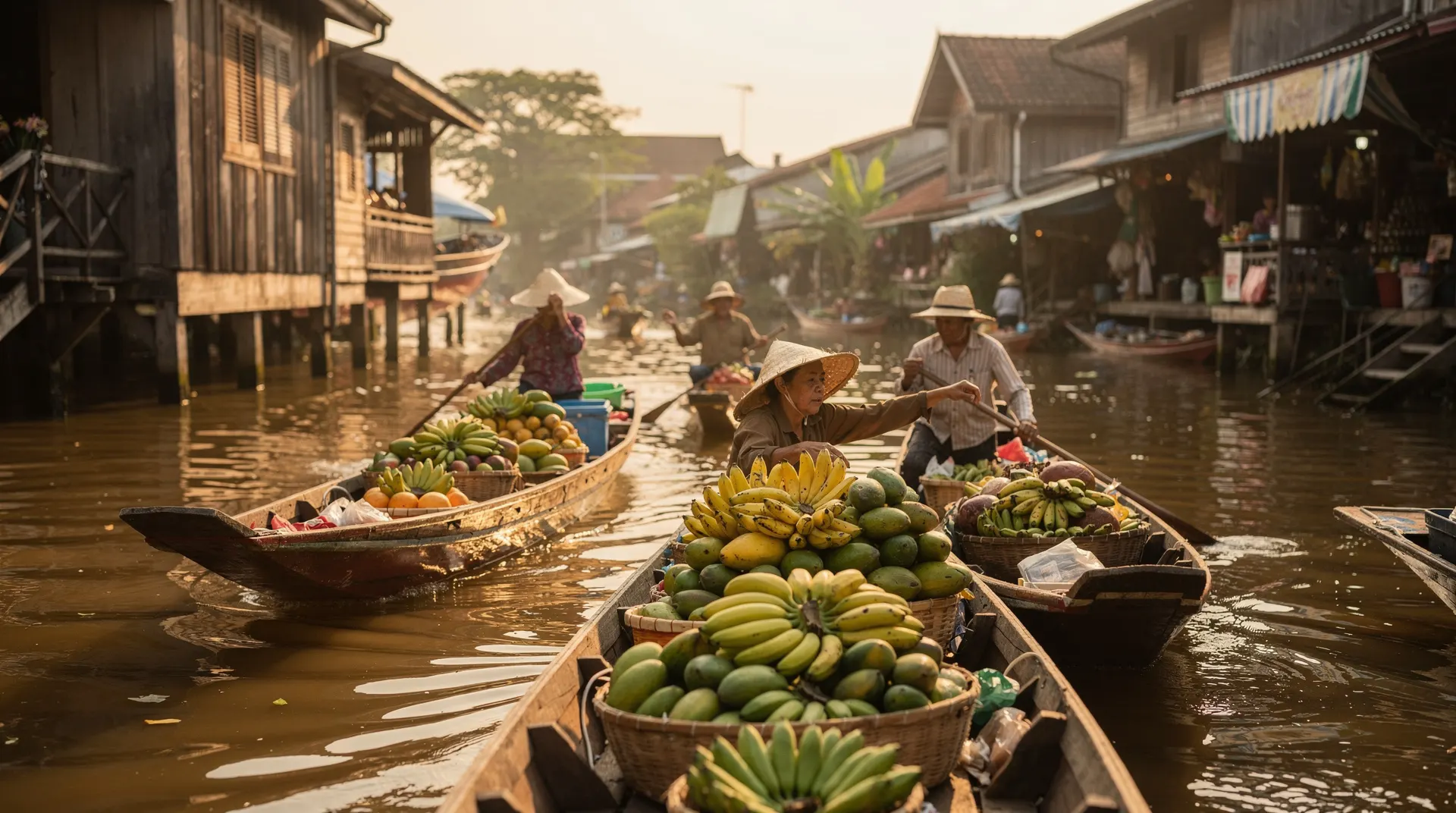
Damnoen Saduak is the floating market you have seen in every Thailand brochure: wooden boats heaped with rambutan and pineapple, vendors in straw hats paddling along narrow canals, pad thai cooked on a charcoal stove balanced in a sampan. It is about 100 km southwest of Bangkok in Ratchaburi province, and it is the most famous floating market in the country. It is also the most touristy, the most staged, and — if you arrive at the wrong time — the most disappointing. This page is deliberately honest about that, because whether Damnoen Saduak is “worth it” depends almost entirely on how and when you go.
| Where | ~100 km southwest, Ratchaburi province |
| Boat fee | ~150–200 THB shared; 300 THB+ private |
| Time needed | 1.5–2 hours at the market |
| Getting there | Minivan, private car, or tour |
| Best time | Arrive by 7–8 am, before the coach tours |
Short version: go early, treat it as a photo and atmosphere stop rather than a place to genuinely shop, keep expectations realistic, and you will probably enjoy it. Arrive at 11 am with a coach tour and you will find a souvenir gauntlet on water. If you want a more authentic, local floating market, Amphawa is the honest alternative — more on that below.
Where the canal came from
The market takes its name from the canal it sits on, dug between 1866 and 1868 on the orders of King Rama IV to shorten the trade route between the Mae Klong and Tha Chin rivers through Ratchaburi’s orchard country. For a century it was a genuinely functional waterway, with farming communities paddling their produce to sell directly from boat to boat along its banks — that working canal-market culture, common across the region before roads took over, is the origin of the “floating market” image the whole country now trades on. Damnoen Saduak simply became the version tourism discovered first, and its fame is exactly why it changed the most.
The honest reality check
Damnoen Saduak began as a genuine working market in the 1960s and has long since transformed into a tourist attraction. Today many of the boats sell souvenirs, sunglasses, and carved soap rather than produce, prices are inflated and aimed at foreigners, and by mid-morning the main canal can be gridlocked with paddle boats full of camera-toting visitors. Some operators also tack on stops you did not ask for — a “long-neck village” or a snake farm — which we would steer you away from on welfare grounds.
None of this means you should skip it. It means you should go in with clear eyes. The early-morning light on the canals, the colour of the fruit boats, and the sheer photogenic theatre of the place are real. The trick is timing and pace. For the full reckoning, see is Damnoen Saduak worth it and the first-hand Damnoen Saduak reality check.
How to make it good: go early
This is the single most important piece of advice on the page. The market technically operates from around 7 am to late morning, and the difference between 7 am and 10 am is night and day. Arrive at opening and you get soft light, room on the water, vendors who still have fresh produce, and a fraction of the crowds. The big coach tours from Bangkok hotels tend to roll in around 9–11 am; beat them.
To arrive early you essentially need to either stay nearby the night before, hire a private car, or take a very early tour. A shared paddle-boat ride through the canals costs around 150–200 THB per person if you negotiate; a private long-tail boat is more (300–500 THB and up). Agree the price and route before you board, and be ready to politely decline the upsells.
| Arrival time | What you’ll find |
|---|---|
| 7–8 am | Soft light, calm water, fresh produce, few tour groups |
| 9–11 am | Coach tours arrive; canals get crowded, pace slows |
| After 11 am | Peak congestion, mostly souvenir boats, hottest part of the day |
Getting there from Bangkok
Minivan / bus: the budget route. Minivans and buses to Damnoen Saduak leave from Bangkok’s Southern Bus Terminal (Sai Tai Mai) and take roughly 1.5 to 2 hours, costing around 80–100 THB. From the drop-off you take a local songthaew or walk to the market piers. Doable, but it is hard to arrive truly early this way.
Private car / Grab: the best way to arrive at opening. A private car or arranged driver gets you there door-to-door before the crowds. Splitting the cost between a few people makes it reasonable. The private car hire to Damnoen Saduak is the most flexible option for an early, unhurried visit on your own schedule.
Tour: the most popular choice, and sensible given the awkward logistics. Most tours bundle Damnoen Saduak with the Maeklong railway market nearby, which is a genuinely excellent pairing. See Bangkok to day trips transport for the full breakdown.
Combine it with the Maeklong railway market
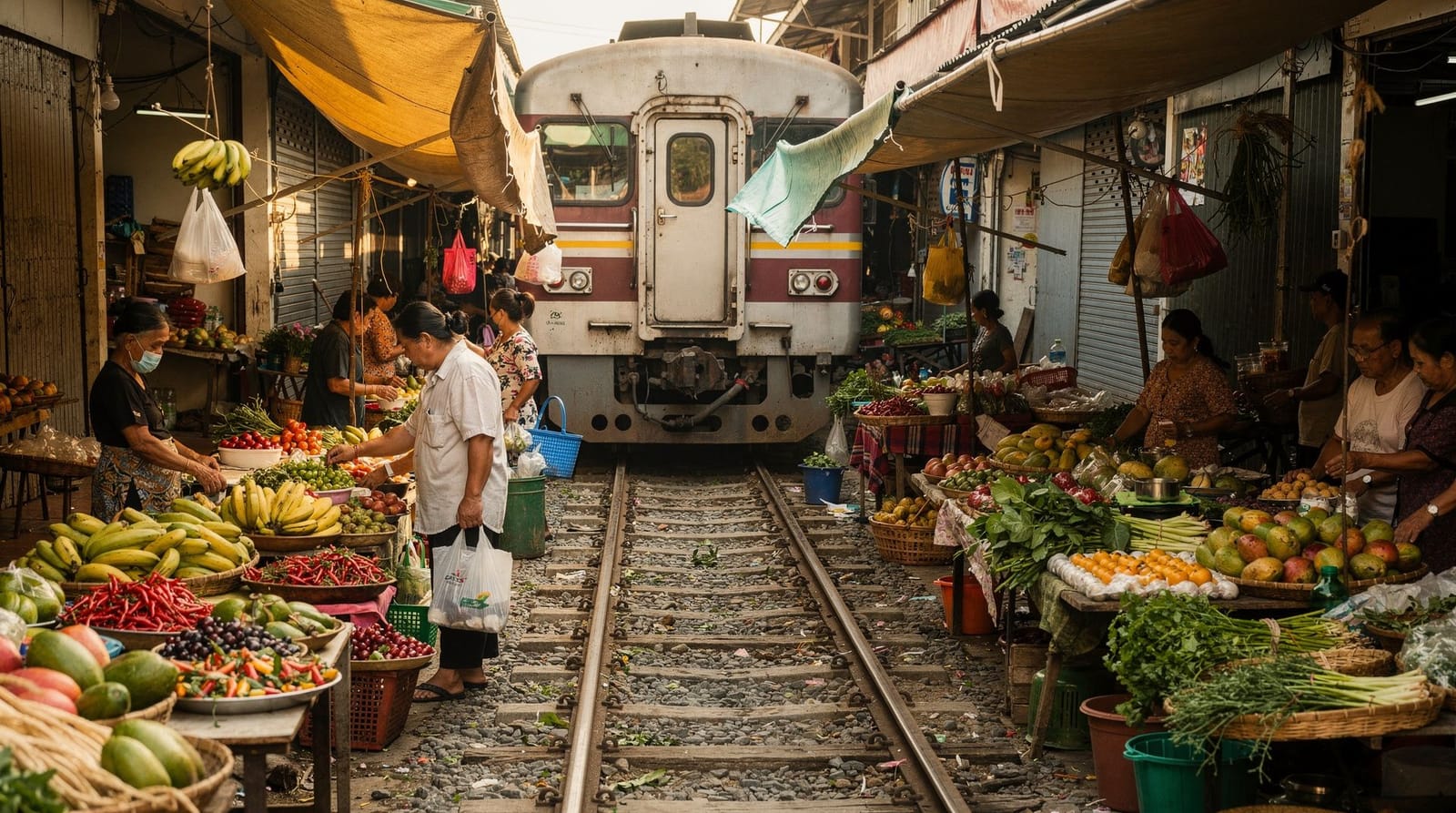
The smartest way to spend the day is to pair Damnoen Saduak with the Maeklong railway market, about 25 km away — the famous market where stalls are set up directly on live train tracks and pack themselves away in seconds when a train rumbles through, eight times a day. It is a brilliant, slightly surreal spectacle and far more “real” than Damnoen Saduak. The classic combined tour is the Damnoen Saduak and Maeklong railway market tour, which times your arrival at each. For a more in-depth small-group version, the Old Siam: Damnoen Saduak and Maeklong is well regarded.
If you only want the floating market, the straightforward Damnoen Saduak floating market guided tour is a shorter half-day option, and the railway market and Damnoen Saduak combined tour is another well-timed route between the two.
Damnoen Saduak vs Amphawa
The question almost everyone asks: which floating market should I do? The honest answer is that they are different experiences. Damnoen Saduak is the classic, the most photogenic, the most touristy, and it runs every morning. Amphawa is a weekend-only afternoon-and-evening market that is more local in feel, more about food than souvenirs, with an optional firefly boat ride after dark — but it only operates Friday to Sunday. If you want the iconic brochure image and can go early, choose Damnoen Saduak. If you want something more relaxed and authentic and your trip lands on a weekend, choose Amphawa. The full comparison is in Damnoen Saduak vs Amphawa and the broader floating markets of Bangkok guide.
What to eat
Once you accept that Damnoen Saduak is a tourist market, the food is one of its better parts. Boats and canal-side stalls grill river prawns and squid, fry pad thai and noodles to order, ladle out boat noodles, and sell fresh tropical fruit. Coconut ice cream served in a coconut shell is a reliable treat. Prices are higher than in Bangkok and aimed at tourists — a noodle dish might be 60–100 THB versus 40–50 in the city — but the quality is generally fine and eating from a boat is part of the fun.
Practical information
Timing: arrive by 7–8 am. This is the whole game. Later, expect crowds, heat, and gridlocked canals.
Boat fees: shared paddle boat ~150–200 THB; private long-tail 300 THB and up. Negotiate first and confirm the route.
Bargaining: prices on souvenirs are inflated; haggle hard or simply don’t buy. Don’t treat it as serious shopping.
Upsell stops: politely decline add-on stops at snake farms or “long-neck villages” — both raise welfare and ethics concerns.
Cash: bring small notes; few vendors take cards, and breaking large bills on the water is a hassle.
Frequently asked questions about Damnoen Saduak
Is Damnoen Saduak floating market worth visiting?
It depends on timing and expectations. If you arrive early (by 7–8 am), treat it as a photogenic atmosphere-and-photo experience rather than authentic shopping, and keep expectations realistic, most people enjoy it. If you arrive mid-morning with a coach tour, you will find crowds and a souvenir gauntlet. For a more local, less staged market, Amphawa is the alternative — see our worth-it guide.
What time should I arrive at Damnoen Saduak?
As close to opening (around 7 am) as you can manage. The early-morning hours have the best light, the freshest produce, the calmest water, and a fraction of the crowds. The big tour groups arrive between 9 and 11 am, after which the canals get congested.
How do I get to Damnoen Saduak from Bangkok?
By minivan or bus from the Southern Bus Terminal (~1.5–2 hours, 80–100 THB), by private car or Grab for door-to-door flexibility, or on an organised tour. Tours and private cars are the practical ways to arrive early. Most tours combine it with the nearby Maeklong railway market.
Should I do Damnoen Saduak or Amphawa?
Choose Damnoen Saduak if you want the iconic floating-market image, can go early, and are visiting on a weekday — it runs every morning. Choose Amphawa if you want a more local, food-focused, less touristy market and your trip falls on a weekend (Amphawa runs Friday to Sunday, afternoon into evening). See our full Damnoen Saduak vs Amphawa comparison.
How much does the boat ride cost?
A shared paddle boat through the canals typically costs 150–200 THB per person if you negotiate; a private long-tail boat runs 300–500 THB and up. Always agree the price and the route before getting in, and decline any unrequested add-on stops.
Why is it called a “floating market” — was this once a real trading canal?
Yes. The canal was dug in the 1860s under King Rama IV to shorten the trade route between the Mae Klong and Tha Chin rivers, and for a century farmers genuinely paddled their produce to sell boat-to-boat along it. That working canal-market tradition, once common across the region, is the origin of the floating-market image — Damnoen Saduak simply became the version tourism found first.
Can I combine Damnoen Saduak with the Maeklong railway market?
Yes, and it is the recommended way to spend the day. The two are about 25 km apart and most tours pair them, timing your arrival at the railway market to coincide with a train passing through the stalls. The combination gives you both the famous floating market and a genuinely remarkable local one.
Top experiences
Bookable activities with verified prices and instant confirmation on GetYourGuide.