Bangkok's best-kept secrets, from someone who keeps coming back
Everyone’s first Bangkok is the same Bangkok: the Grand Palace, Khao San Road, a rooftop bar, a floating market. There is nothing wrong with that Bangkok — it earned its fame. But after enough visits you start to notice the city has a quieter second self, the one residents actually inhabit, and it is in those corners that I have fallen hardest for the place. These are the spots I now send every returning friend to, the ones that rarely make a first-timer’s list.
| Where | Scattered across the old city, riverside and Thonburi |
| Cost | Mostly free; the priciest stop is a 50-baht temple climb |
| Time needed | Pick two or three per day; most reward an hour or two each |
| Getting there | MRT/BTS plus short walks or a Grab for the further ones |
| Best time | Weekday mornings, when even the “secrets” are truly quiet |
Talat Noi: rust, art and old Bangkok
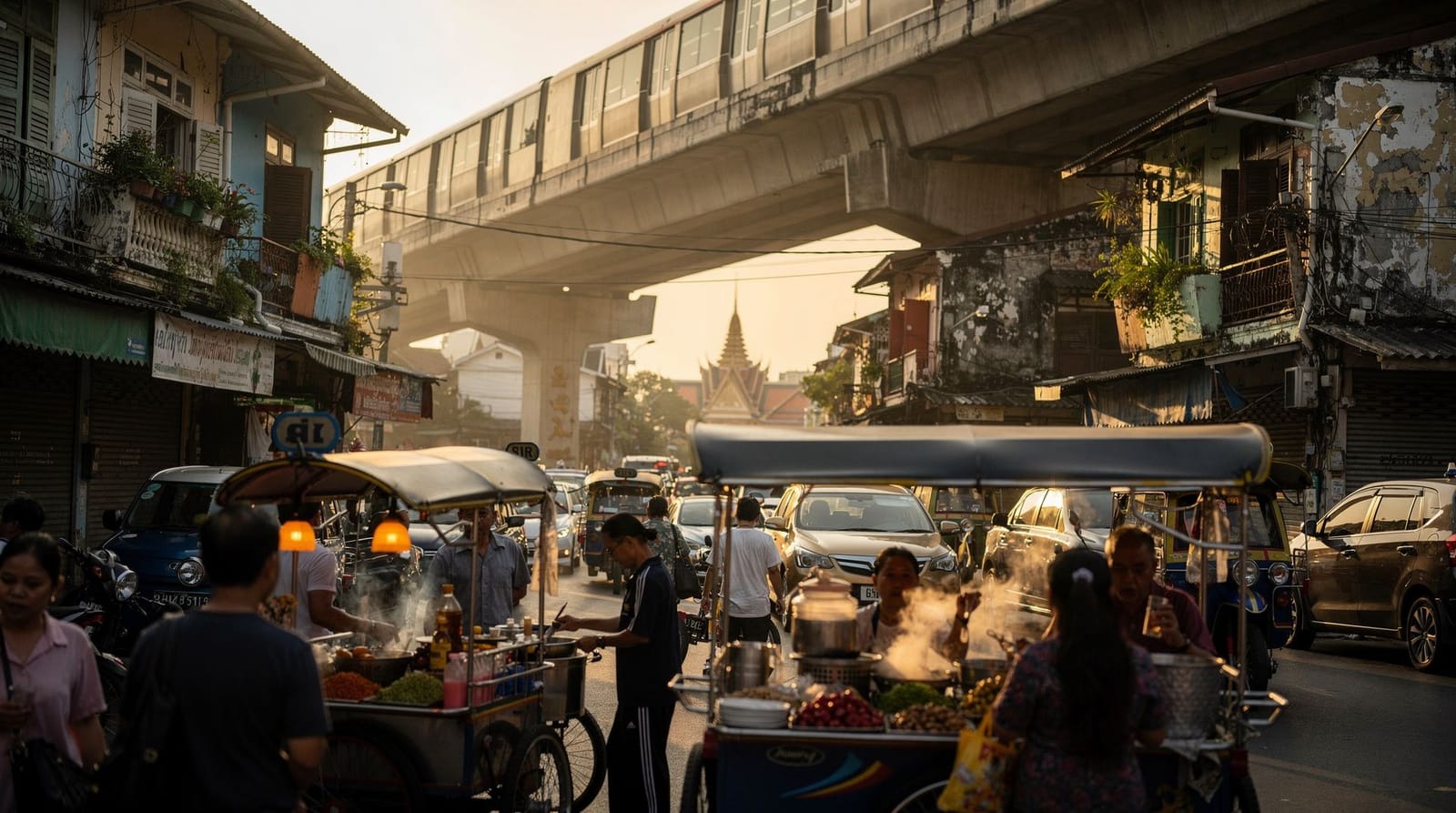
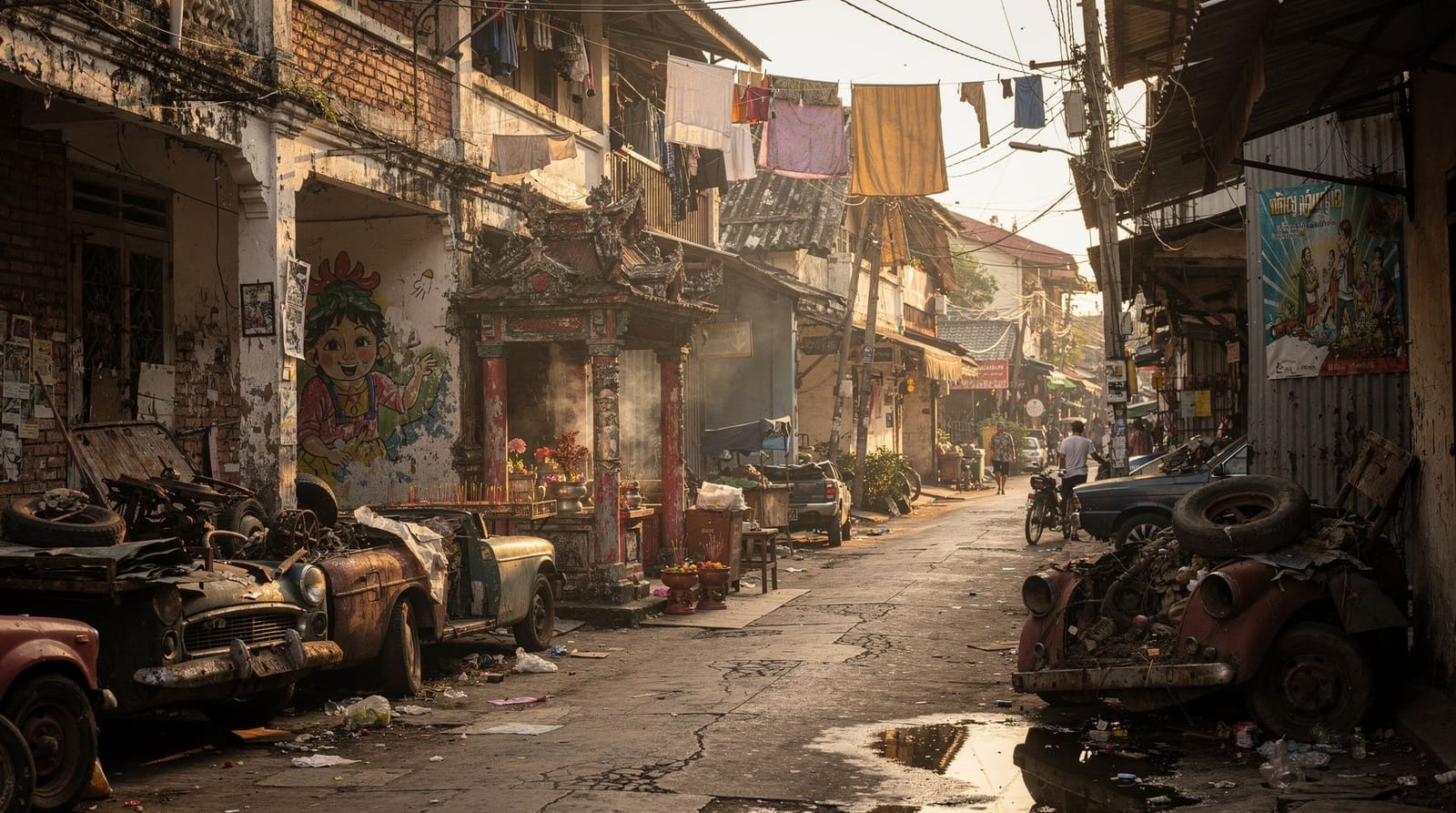
Tucked between Chinatown and the river, Talat Noi is a knot of narrow lanes where vintage car-engine shops sit next to shrine houses, street art murals, and old Sino-Portuguese shophouses slowly being reclaimed by photographers and cafe owners. It is the antithesis of the polished mall Bangkok. You wander, you get lost, you turn a corner and find a 200-year-old Chinese shrine wedged between a noodle stall and a stack of rusting carburettors.
I go for the texture of the place — the peeling paint, the cats, the smell of incense and engine oil. There is no entry fee, no ticket, no queue. Just an old neighbourhood quietly doing its thing. The Talat Noi guide maps the best lanes and murals, and you can fold it into a Chinatown afternoon since they sit side by side. The broader hidden gems roundup has a dozen more in this vein.
A practical note on reaching it, because Talat Noi is one of those places the BTS does not serve directly: I usually take the MRT to Hua Lamphong station and walk ten minutes south toward the river, or arrive by Chao Phraya Express boat to Marine Department pier and wander up into the lanes. Go on a weekday morning if you want it to yourself; weekends bring the Bangkok photographers out in force, posing against the murals, and the quiet I love evaporates a little. The So Heng Tai mansion, a 200-year-old Chinese courtyard house with an improbable diving pool in its centre, is the one paid stop worth making here, and a handful of tiny cafes serve genuinely good coffee for around 80 to 120 baht in among the engine shops.
Bang Krachao: the green lung across the river
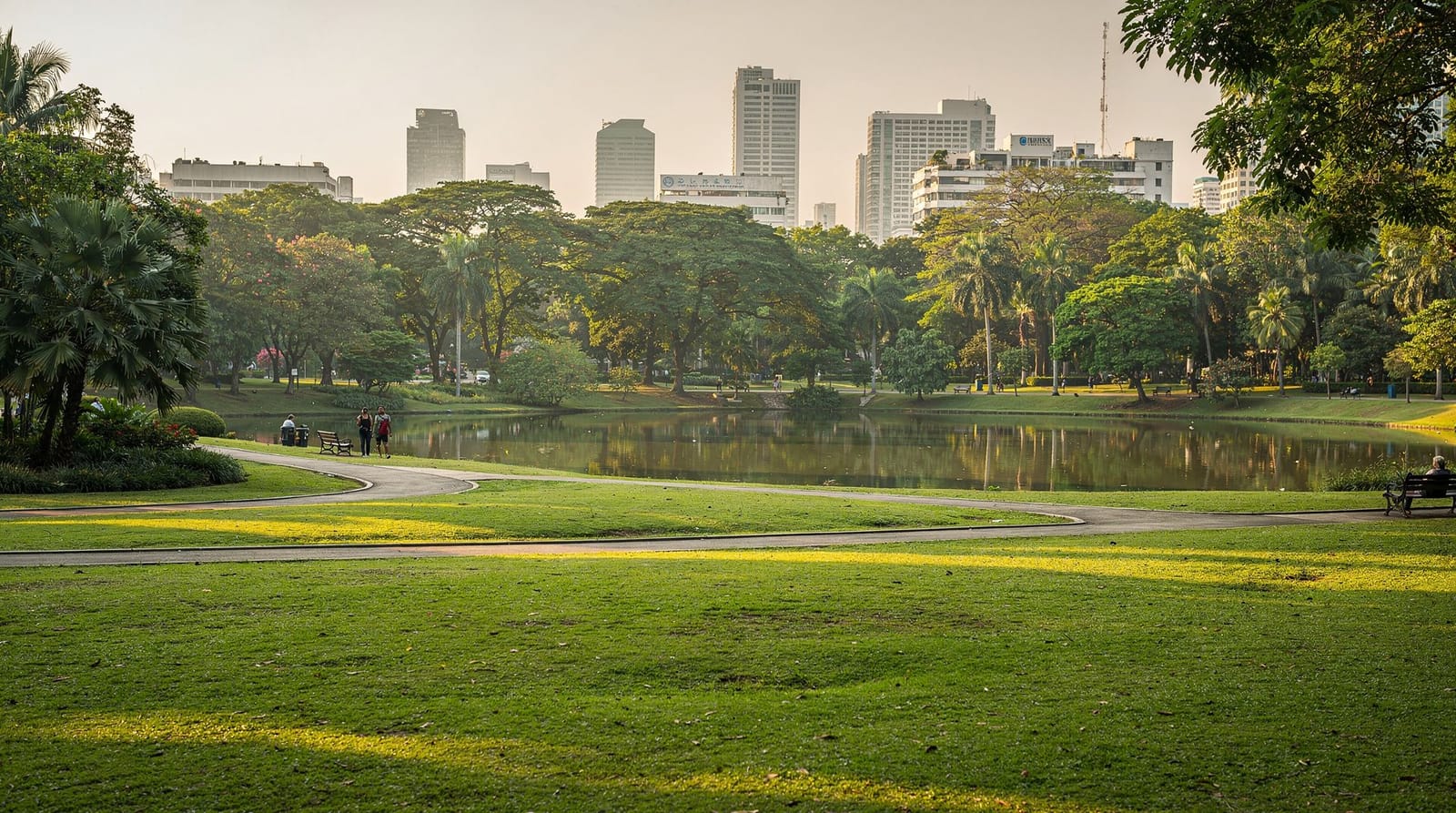
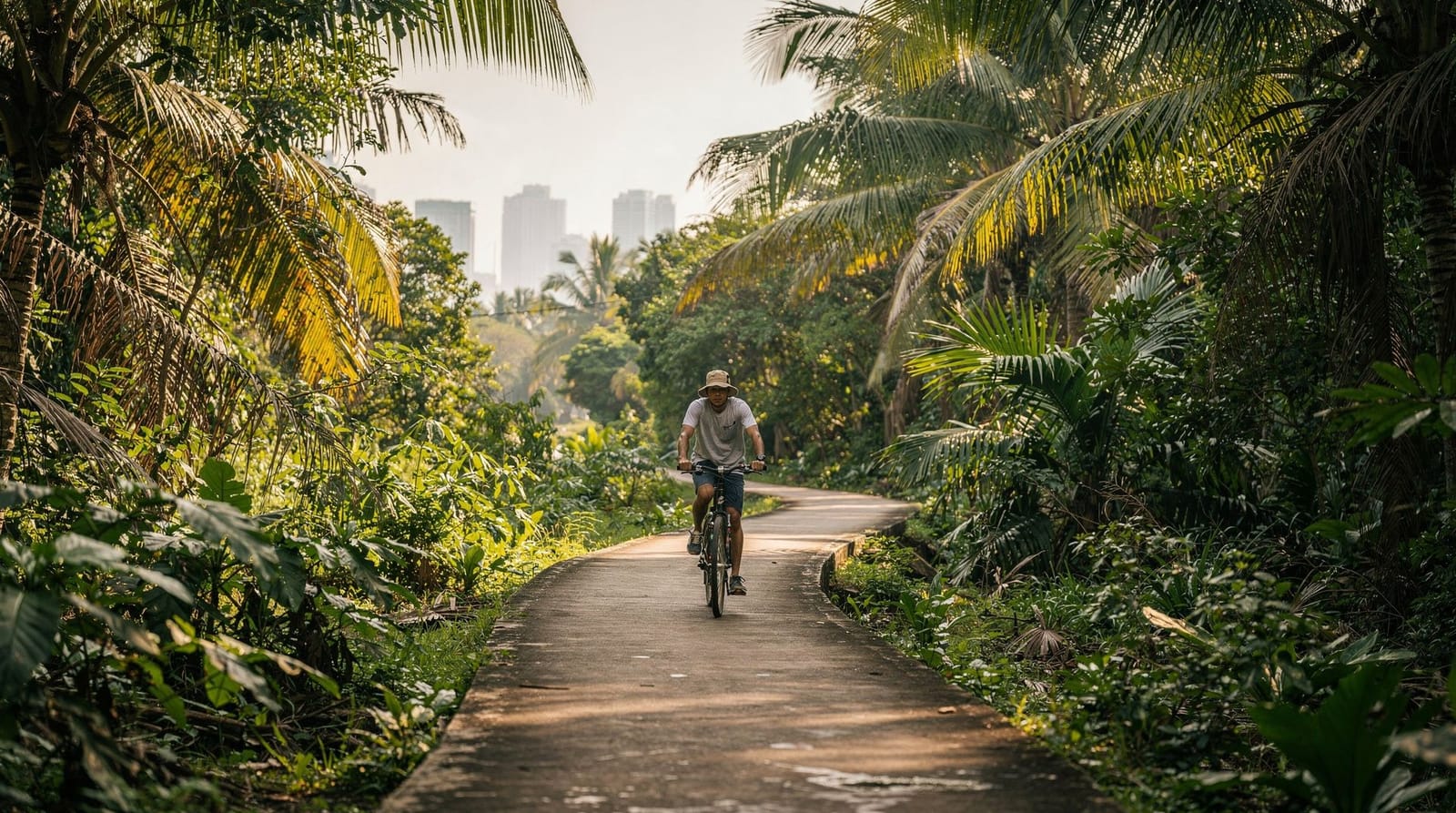
If Talat Noi is hidden in plain sight, Bang Krachao is hidden behind a river bend. This artificial-island peninsula, formed by a loop of the Chao Phraya, is a tangle of jungle, raised concrete cycle paths, stilt houses and a weekend floating market, all a short longtail crossing from the city. From the deck of Wongwian Yai or Bang Na you take a 4-baht boat across and step into something that feels three hours and a hundred years from the traffic.
Renting a bike for 80 to 100 baht and wheeling through the mangroves is the single most restorative thing I do in Bangkok. The Bang Krachao green lung guide explains the crossings and bike rentals, and if you would rather have it organised, a guided night bike tour through temples and the flower market shows you the city’s cycling side without the navigation headache. I keep a bike tour of Bang Krachao on my list for every long visit.
Wat Saket and the Golden Mount at dawn
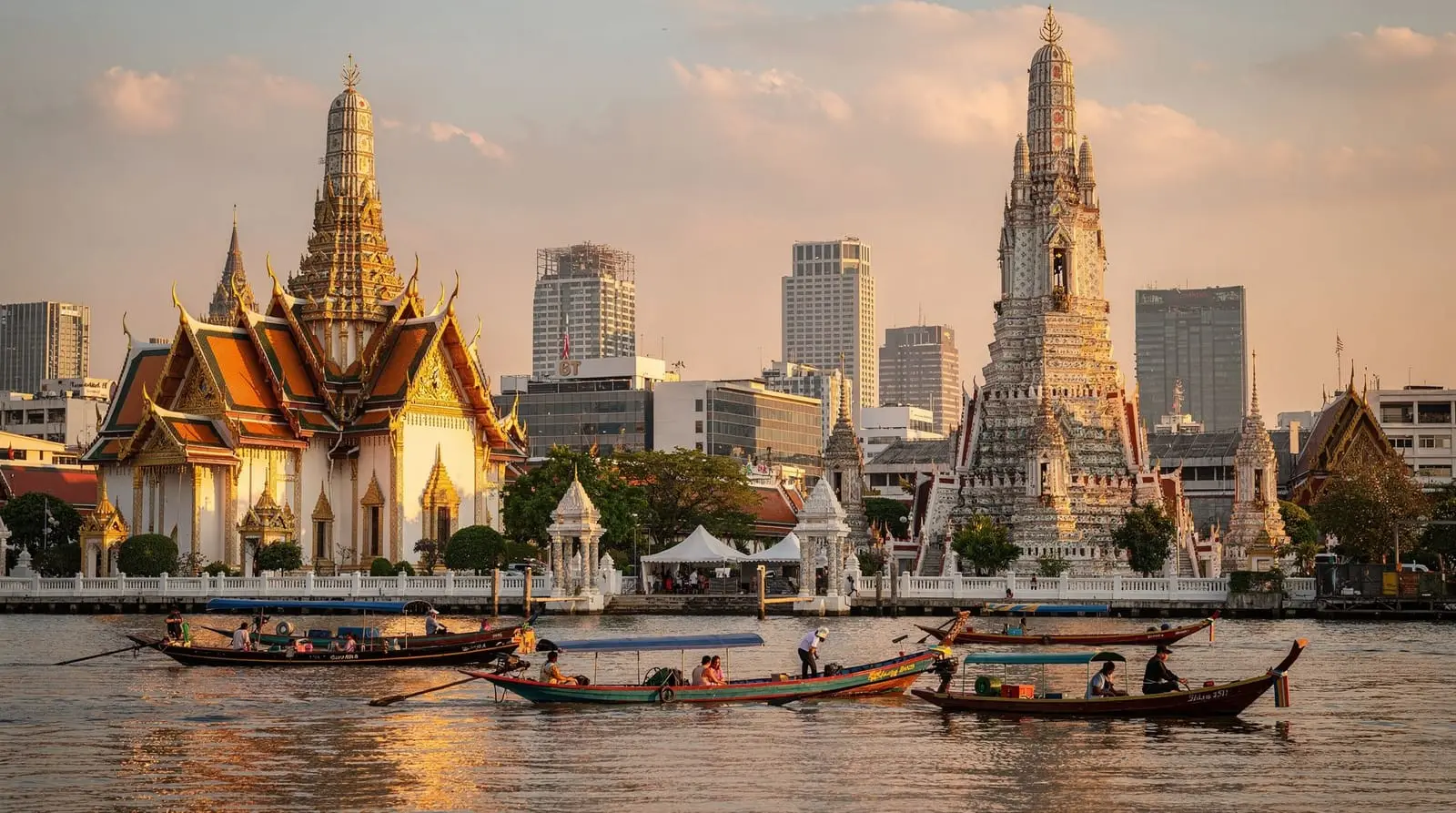
Everyone photographs Wat Arun. Almost no one climbs the Golden Mount, and they are missing one of the best free views in the city. Wat Saket sits atop an artificial hill near the old city, and the 318-step spiral climb past whispering wind chimes ends at a golden chedi with a 360-degree panorama of Rattanakosin. Entry to the summit is 50 baht. I go just before the 8am opening crush, when the air is almost cool and the city below is waking up. The climb is gentle and shaded, wound around the hill with prayer bells you ring on the way up and rows of green plants softening the brick, so it never feels like a slog even in the heat. From the top you can pick out the spires of the Grand Palace, the gold of Wat Arun across the river, and the low sprawl of the old city in every direction — and because so few visitors make the effort, you often share it with only a handful of locals lighting incense. If you time a visit for early November you may catch the temple’s annual fair, when the whole mount is wrapped in a red cloth and lantern-lit at night, which is one of the loveliest sights in the old city.
The coffee scene nobody warned me about
Bangkok has quietly become one of Asia’s best coffee cities, and the specialty cafes hide in the unlikeliest places — a converted shophouse in Ari, a minimalist box in Bang Rak, a riverside roastery in Talat Noi. Northern Thai single-origin beans, perfectionist baristas, and air-conditioning that makes the 200-baht flat white feel like a bargain on a 35-degree afternoon. Ari in particular has become my favourite neighbourhood to drift through with no plan, cafe to cafe; the Ari neighbourhood guide names the best of them.
Wat Paknam’s surreal green dome
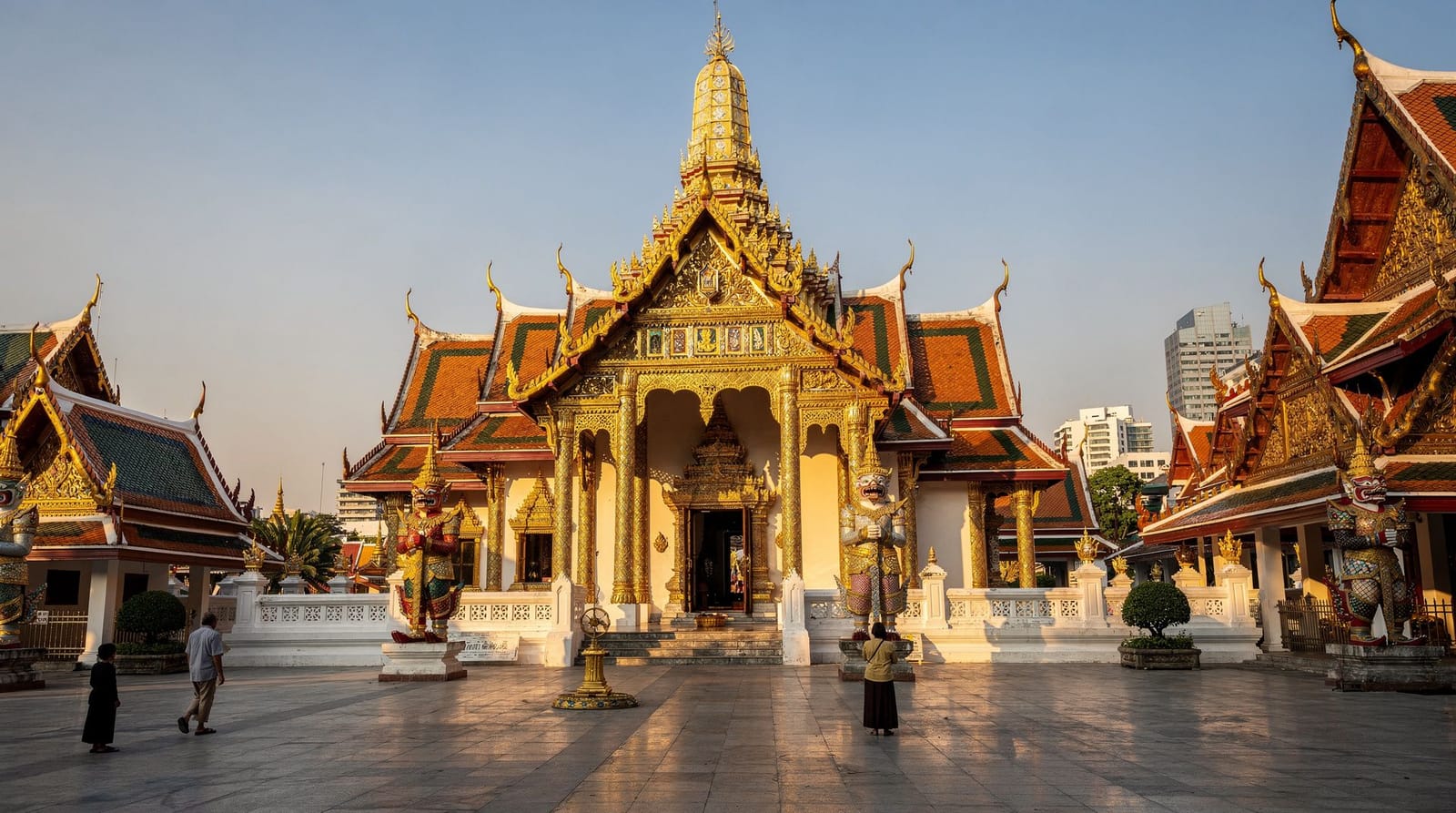
Out in Thonburi, away from the tourist temples, Wat Paknam hides a five-storey pagoda topped with an enormous emerald-glass stupa beneath a ceiling painted to look like the cosmos. It went mildly viral a few years ago, which means it is no longer truly secret, but it remains far enough off the standard circuit that you can have a near-spiritual experience there on a weekday morning. A giant Buddha statue now towers over the complex. Entry is free; getting there takes a Grab or an MRT-plus-walk, which is exactly why most visitors skip it.
Pak Khlong flower market at 2am
For the genuinely committed, the Pak Khlong flower market near the old city is at its most magical in the small hours, when the wholesale trucks arrive and the pavements drown in marigolds, roses and jasmine. The scent is overwhelming. The porters move tonnes of flowers through narrow lanes by handcart. It is free, it is open 24 hours, and almost no tourist sees it because almost no tourist is awake. I once ended a long night out here instead of in a bar, and it remains one of my favourite Bangkok memories.
Banthat Thong, the student food street
Everyone is sent to Yaowarat for street food, and rightly so, but the spot I now take returning friends to is Banthat Thong, a long road near Siam and Chulalongkorn University that has quietly become one of the best eating streets in the city. Because it feeds students rather than tourists, the prices are honest and the food is unpretentious and excellent — boat noodles, grilled pork, mango sticky rice from a stall that draws weekend queues down the block, hotpot, Thai-Chinese desserts. It comes alive in the evening, especially Thursday to Sunday. A full meal here rarely tops 150 baht, and you will be the only foreigner on the block. The Banthat Thong food street guide maps the best stalls, and it pairs naturally with a wander through Pratunam or the Siam malls if the afternoon turns hot.
Talat Noi at night, and the riverside walk nobody takes
I mentioned Talat Noi for its daytime texture, but the lanes change character entirely after dark, when the cafes turn into low-lit bars and the murals glow under fairy lights. From there, one of my favourite quiet walks in the whole city runs north along Charoenkrung — Bangkok’s oldest paved road — past converted warehouses, the Portuguese church, hidden art spaces and riverside cafes most visitors never find. It threads through Talat Noi and up toward the creative-district end of Charoenkrung, and on a cool evening after rain it is as atmospheric as Bangkok gets. The Bang Rak food guide is full of stops along the way, from century-old roast-pork shops to the city’s best mango sticky rice contenders.
Koh Kret, the pottery island upriver
For a genuine half-day escape that almost no first-timer attempts, Koh Kret is a car-free island in the river north of the city, home to a Mon community famous for terracotta pottery. You reach it by a short ferry hop, then wander a ring path past kilns, temples, riverside food stalls and old wooden houses on a island where the loudest sound is a passing bicycle. It is busiest and best on weekends when the market is in full swing. Getting there takes effort — a Grab or bus to Pak Kret pier, then the boat — which is exactly why it stays so peaceful. I treat it as the antidote to a week of city noise.
The three-headed elephant nobody expects
Out toward Samut Prakan, on the edge of greater Bangkok, sits one of the strangest sights I have found anywhere in the country: the Erawan Museum, a colossal three-headed bronze elephant statue that houses a temple inside its body, reachable by a spiral staircase through the elephant’s legs to a shrine-filled belly and a gallery of religious art in its head. It is bizarre, beautiful, and almost nobody outside a small circle of art and architecture fans knows it exists. Entry runs a little over 400 baht, which sounds steep until you see the scale of the thing up close. It pairs naturally with Ancient City nearby, a vast open-air park of scaled replicas of Thailand’s most significant monuments, essentially a miniature version of the whole country you can cycle around in an afternoon. A combined Erawan Museum and Ancient City half-day tour is the easiest way to see both without arranging your own transport out to Samut Prakan.
Wat Prayurawongsawas and the Thonburi riverside nobody crosses for
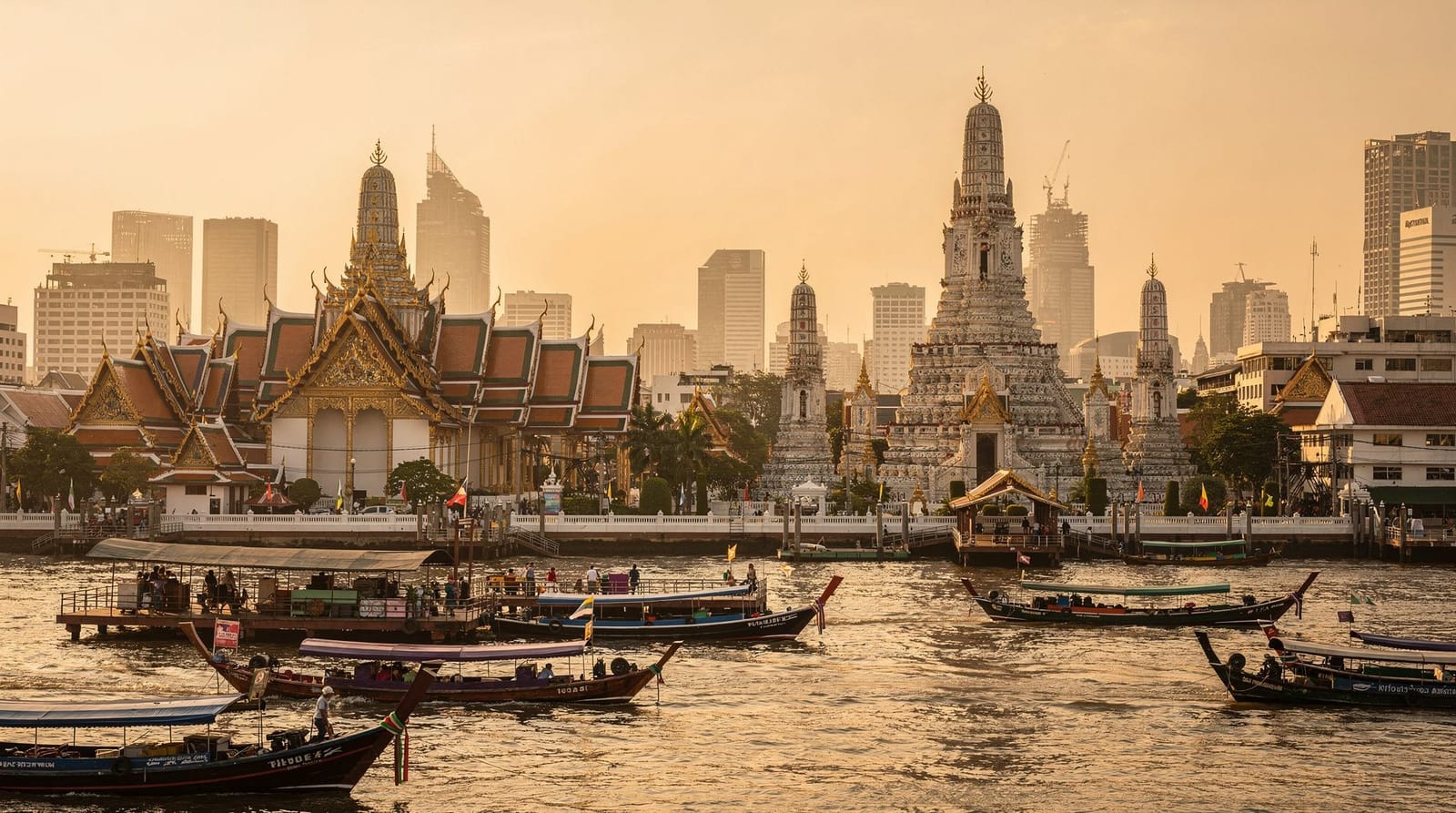
Most visitors experience the river only from the Bangkok side, but crossing to Thonburi opens up a genuinely quieter version of the same waterfront. Beyond the well-known Wat Arun, the Thonburi bank is threaded with old canals, teak stilt houses and small local temples that see a fraction of the crowds their east-bank counterparts do. The Thonburi khlongs guide is the best starting point if you want to explore this side properly, and a short cross-river ferry from Tha Tien or Wang Lang pier is all it takes to leave the tourist trail behind for an afternoon. I treat a Thonburi wander as the antidote to a morning at the Grand Palace — same river, completely different pace.
Why I keep these close
The thing about Bangkok’s secrets is that they are not really secret — they are just quiet, and the city’s loud headline sights drown them out. The reward for returning, again and again, is that the map slowly fills in with these softer places: the rusting lane, the green island, the dawn climb, the cup of coffee in a shophouse. The hidden gems and instagram spots guides will give you more, but honestly the best method is the one I stumbled into by accident — pick a neighbourhood, leave the schedule at the hotel, and walk until something stops you.
The secret spots compared
| Spot | Cost | Best time | Why go |
|---|---|---|---|
| Talat Noi | Free (mansion extra) | Weekday morning | Rust, art, old shophouses |
| Bang Krachao | ~100 baht (ferry + bike) | Early morning | Jungle cycling across the river |
| Wat Saket / Golden Mount | 50 baht | Just before 8am opening | Best free 360° view in the city |
| Wat Paknam | Free | Weekday morning | Surreal emerald-glass pagoda dome |
| Pak Khlong flower market | Free | Small hours (2–4am) | Wholesale flower trade in full swing |
| Banthat Thong | Meal for ~150 baht | Thursday–Sunday evening | Honest student food street |
| Koh Kret | Free (ferry small fee) | Weekend | Car-free pottery island |
| Erawan Museum | ~400 baht | Any time, less crowded on weekdays | Three-headed elephant temple |
Frequently asked questions about Bangkok’s hidden spots
What is the most underrated place in Bangkok?
Bang Krachao, the green-lung peninsula across the river, is the one most visitors never reach and almost everyone loves once they do. Talat Noi runs a close second for atmosphere.
Are Bangkok’s hidden gems free?
Mostly, yes. Talat Noi, Bang Krachao, the flower market and Wat Paknam cost nothing or next to nothing; only Wat Saket’s summit charges a small 50-baht fee.
How do I find Bangkok’s quiet corners?
Pick a residential neighbourhood like Ari, Talat Noi or Bang Rak, skip the schedule, and walk. The best discoveries come from wandering rather than ticking off a list. The Ari neighbourhood guide is a good place to start.
Where do locals actually eat in Bangkok?
Beyond the tourist food streets, locals fill places like Banthat Thong near the university, the markets of Bang Rak, and neighbourhood sois in Ari. Follow Thai office workers at lunch and university students in the evening and you will eat better and cheaper.
Is Bang Krachao worth the trip?
Yes. The green-lung peninsula is the most restorative half-day in Bangkok — jungle cycle paths, a weekend floating market, and a sense of escape ten minutes from the traffic. Rent a bike for 80 to 100 baht, or read the Bang Krachao green lung guide and go early.
What is the strangest hidden sight in Bangkok?
The Erawan Museum, a giant three-headed elephant statue you climb through to reach a shrine-filled interior, is the strangest thing I have found near the city. It pairs well with the miniature-monument park at Ancient City nearby.
Is Thonburi worth crossing the river for?
Yes. Beyond Wat Arun, the Thonburi bank has quieter canals, old stilt houses and local temples that see a fraction of the east bank’s crowds. A short ferry from Tha Tien or Wang Lang pier is all it takes, and the getting around Bangkok guide covers the river crossings.