Wongwian Yai
Wongwian Yai is old Thonburi's authentic heart — a historic roundabout, charming local markets, the Maeklong railway line and untouristed Bangkok.
Bangkok: Morning Bike Tour with Ferry Boat Ride
Quick facts
- Nearest transit
- BTS Wongwian Yai (Silom Line) — the west-bank terminus, then explore on foot/Grab
- Character
- Old, local Thonburi; historic roundabout, fresh markets, riverside lanes, no tourists
- Key food
- Lhong 1919 riverside dining, old-Thonburi markets, local noodle and curry shops
- Key sight
- King Taksin Monument roundabout, Wongwian Yai market, the Maeklong rail terminus
- Heritage
- Lhong 1919 heritage riverside complex; old Thonburi shophouse lanes
- Best time
- Morning for the fresh markets and cooler lanes; year-round local-life appeal
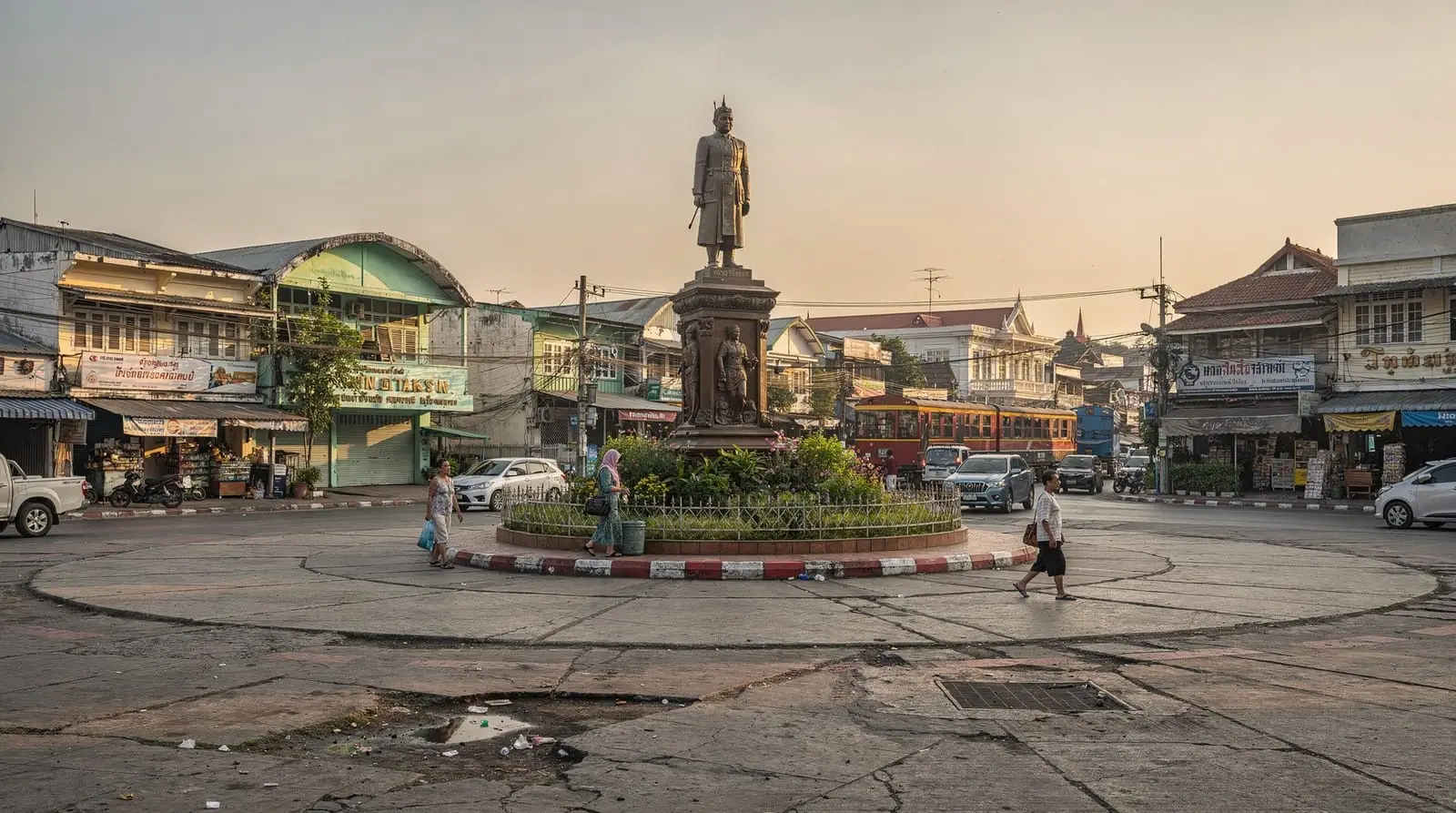
Wongwian Yai is the kind of Bangkok neighbourhood that tour buses never reach and guidebooks barely mention — which is exactly why it’s worth your time. Centred on a grand old traffic roundabout (the name literally means “big circle”) topped by the monument to King Taksin the Great, this is the lived-in heart of old Thonburi: a district of fresh markets, weathered shophouses, riverside heritage, local noodle shops and genuine, unhurried neighbourhood life on the west bank of the Chao Phraya. There are few “sights” here in the tourist sense, but Wongwian Yai offers something increasingly rare in central Bangkok — the chance to wander an ordinary, authentic Thai neighbourhood where life carries on entirely uninterested in visitors.
| Where | West bank of the Chao Phraya, Thonburi, west-bank terminus of the BTS Silom Line |
| Character | Authentic, untouristed old Thonburi — markets, shophouses, riverside heritage |
| Time needed | A few hours, best in the morning |
| Getting there | BTS Wongwian Yai (Silom Line), then walk or Grab |
| Cost | Essentially free to wander; budget only for food and drinks |
The roundabout and King Taksin
The district takes its identity from the Wongwian Yai roundabout, in the centre of which stands the King Taksin Monument — an equestrian statue of the king who, after the fall of Ayutthaya in 1767, founded Thonburi as the new capital and reunited the kingdom. Thonburi was the capital for only 15 years before Rama I moved it across the river, but Taksin remains a revered national hero, and the monument is a focus of local pride and ceremony. The roundabout anchors the neighbourhood and is a useful orientation point as you explore the surrounding lanes. See the Bangkok culture context and the hidden gems guide.
The markets and local life
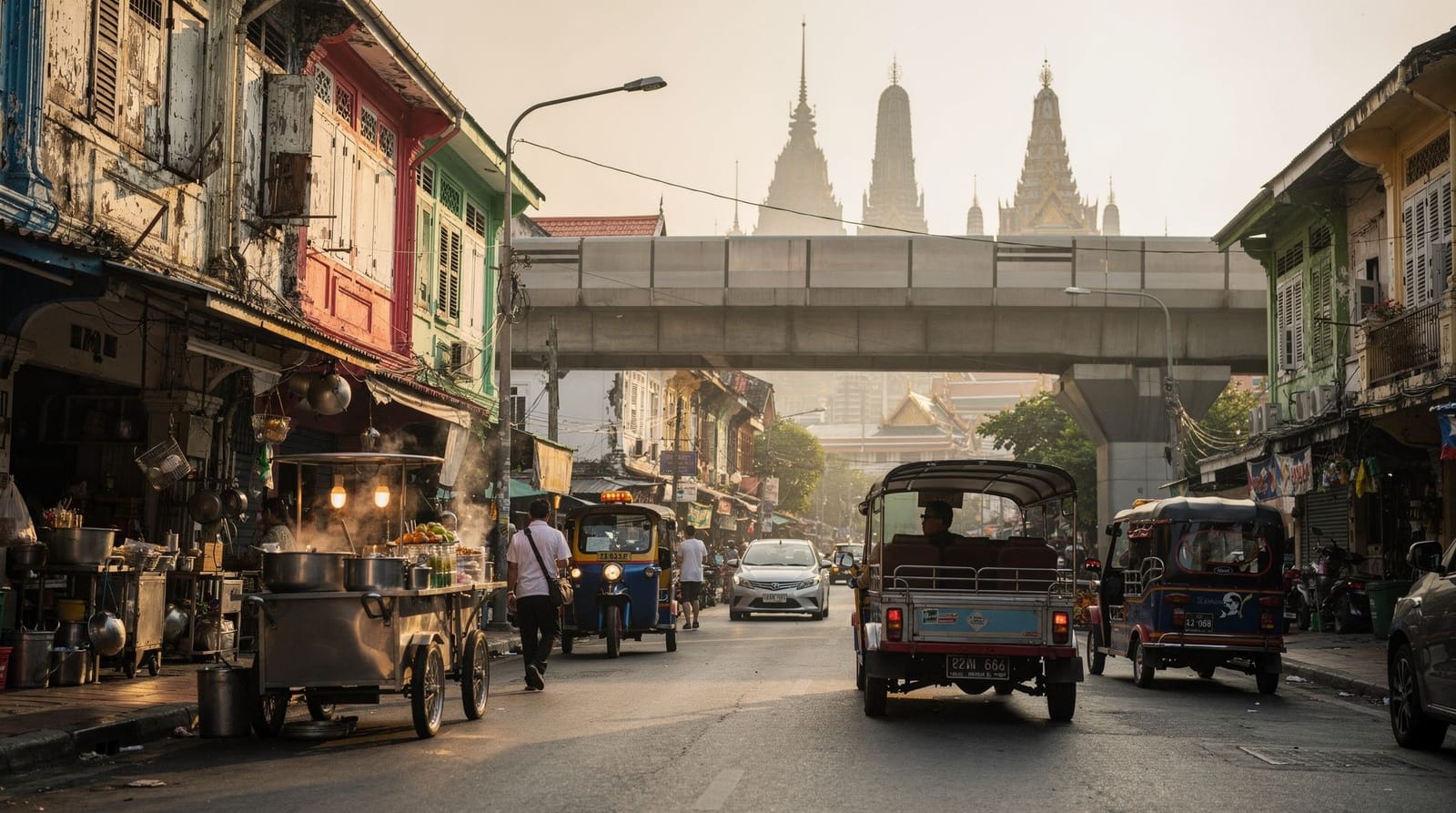
The real pleasure of Wongwian Yai is its markets and street life. The neighbourhood’s fresh markets — busiest in the morning — sell produce, fish, meat, prepared food and household goods to a local clientele, with none of the tourist mark-up or polish of the famous markets across the river. Wandering the shophouse lanes, you pass old hardware stores, traditional pharmacies, family-run noodle shops and temples, all going about their day. It’s a sensory, authentic slice of working Bangkok. For the wider market context see the markets guide and, for the food, the street food guide. A Bangkok walking tour can fold in this kind of local-neighbourhood texture.
Lhong 1919 and riverside heritage
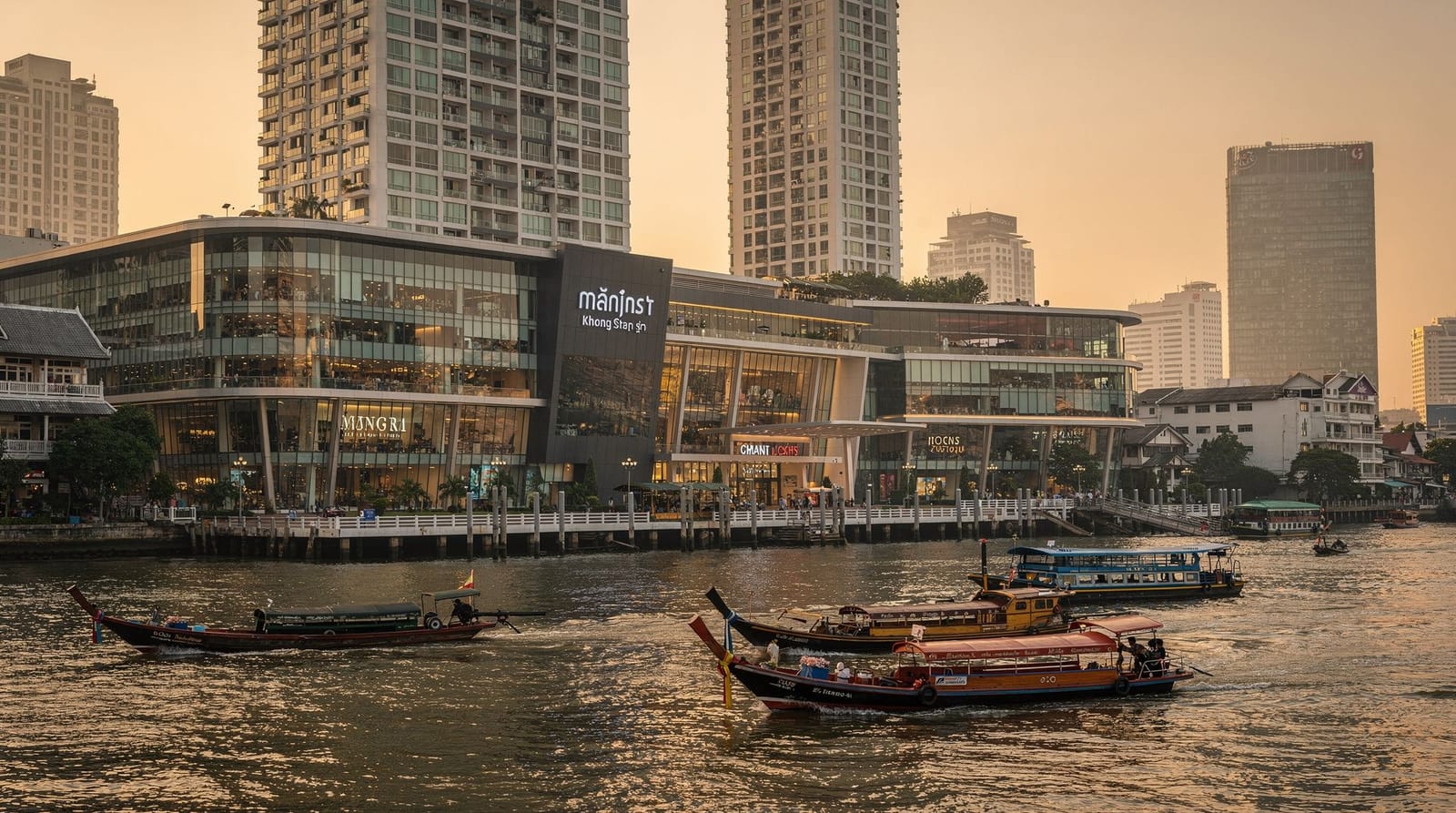
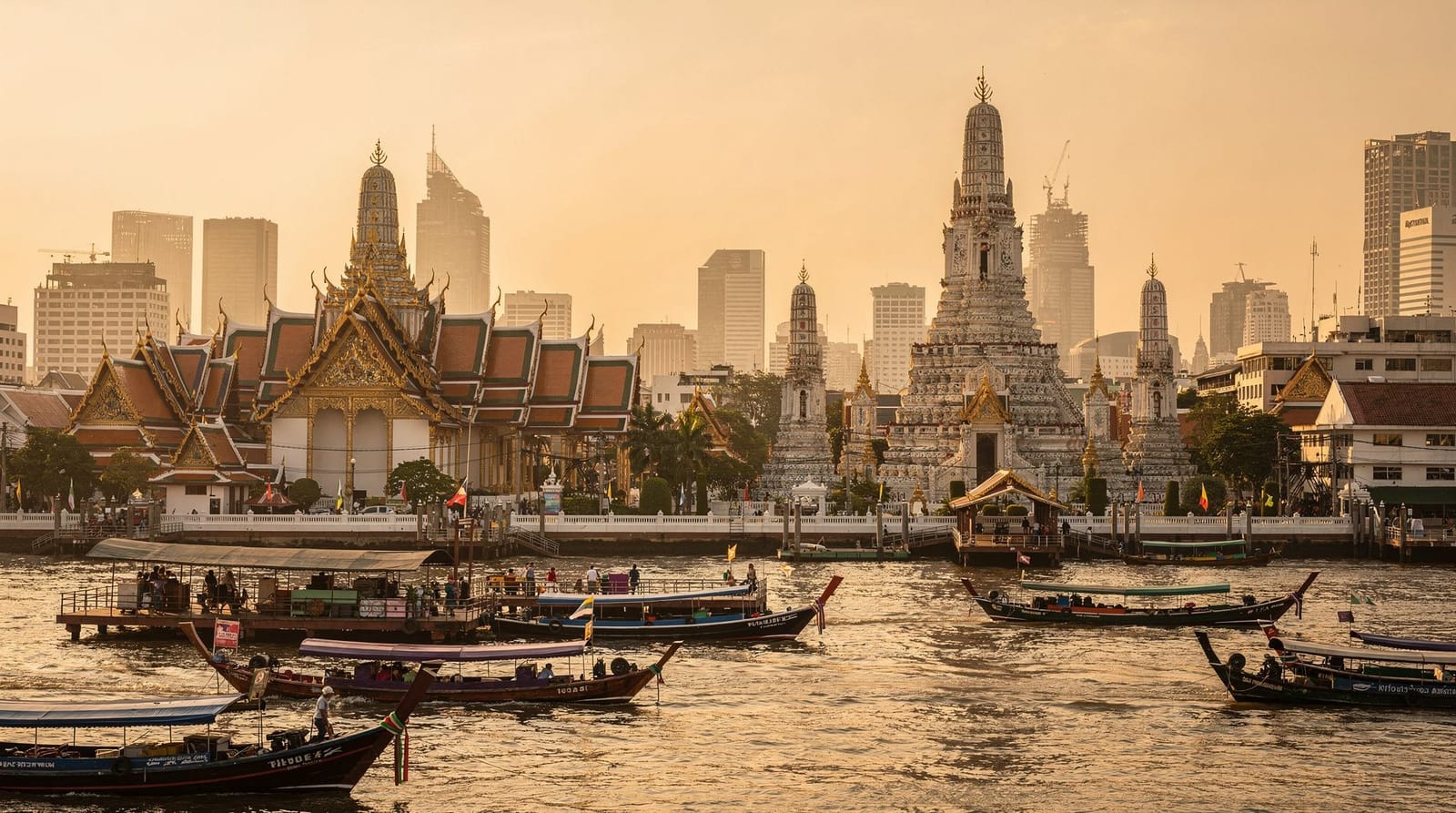
Down on the river, Lhong 1919 is Wongwian Yai’s standout heritage attraction — a beautifully restored 19th-century Chinese riverside warehouse complex (a former trading port and home to the revered Mazu shrine), now a leafy cultural space with the original shrine, faded mural fragments, design shops, cafes and riverside dining. It’s a calm, photogenic spot that tells the story of the Chinese trading community that shaped this stretch of the river, and a lovely place for a coffee or meal with views across the Chao Phraya. It connects this district to the riverside world of ICONSIAM and Khlong San just upriver. See the hidden gems guide.
The Maeklong railway gateway
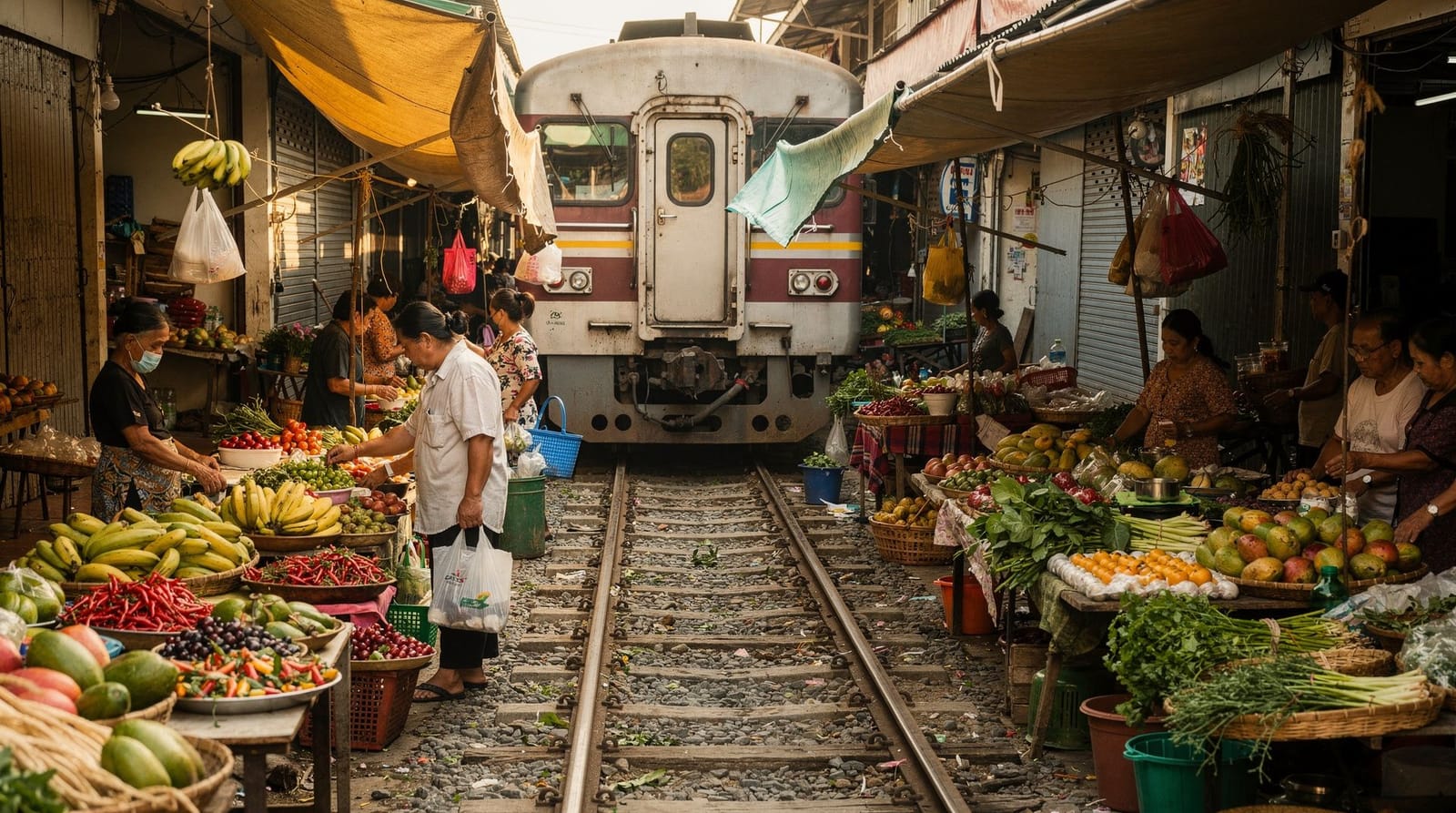
Wongwian Yai has a practical claim to fame for travellers: it’s the Bangkok-side terminus of the Maeklong (Mahachai) railway line, the historic local train that rattles southwest toward the famous Maeklong “umbrella pulldown” railway market, where stalls are built right onto the tracks and pack up each time a train passes. Taking the slow local train from Wongwian Yai (with a ferry change at Mahachai) is an adventurous, very local way to reach the railway market — see the Maeklong railway market page context in the Maeklong railway market guide. Most visitors reach the railway market by tour, but the DIY train route starts right here.
Exploring by bike and boat
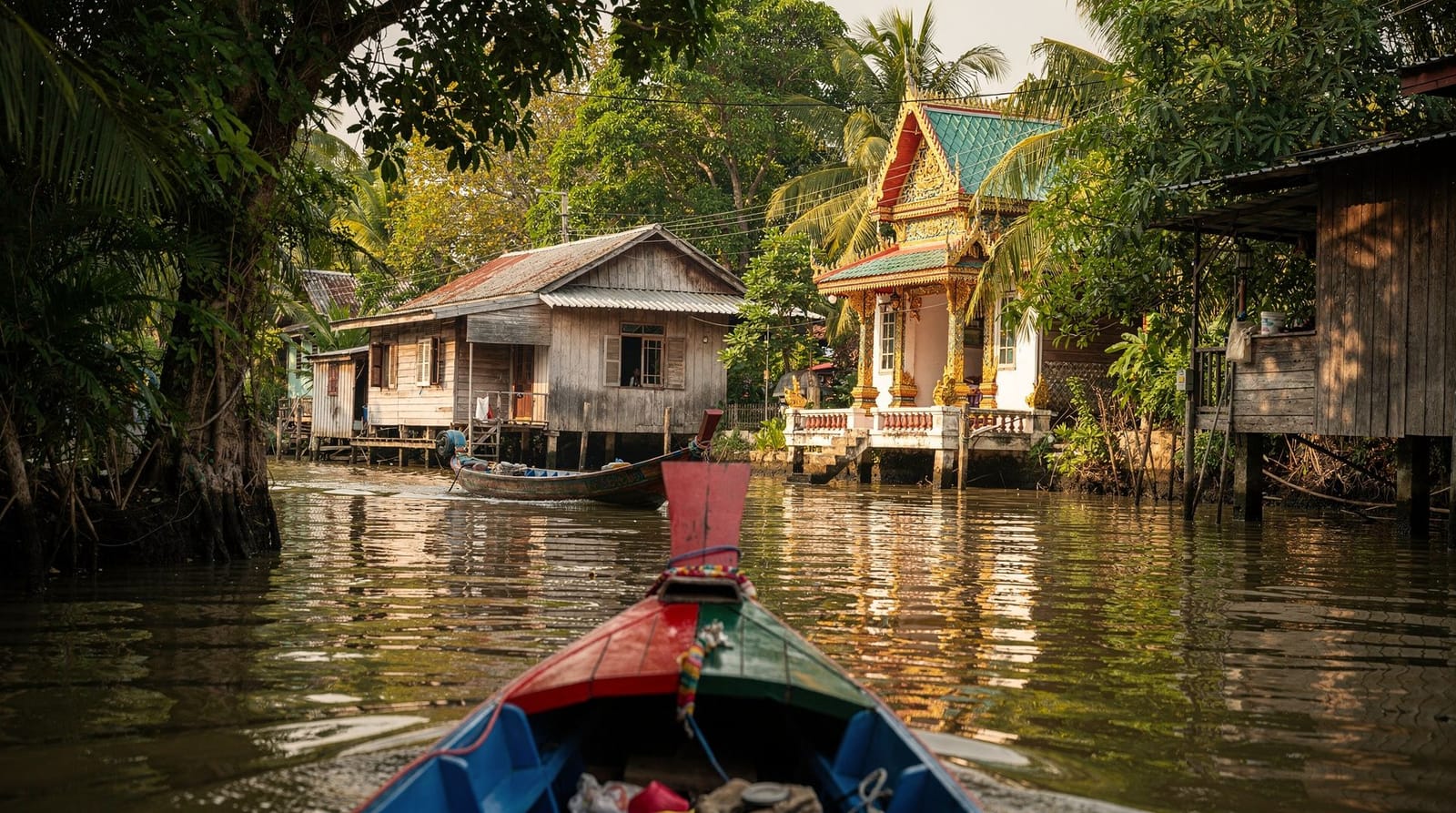
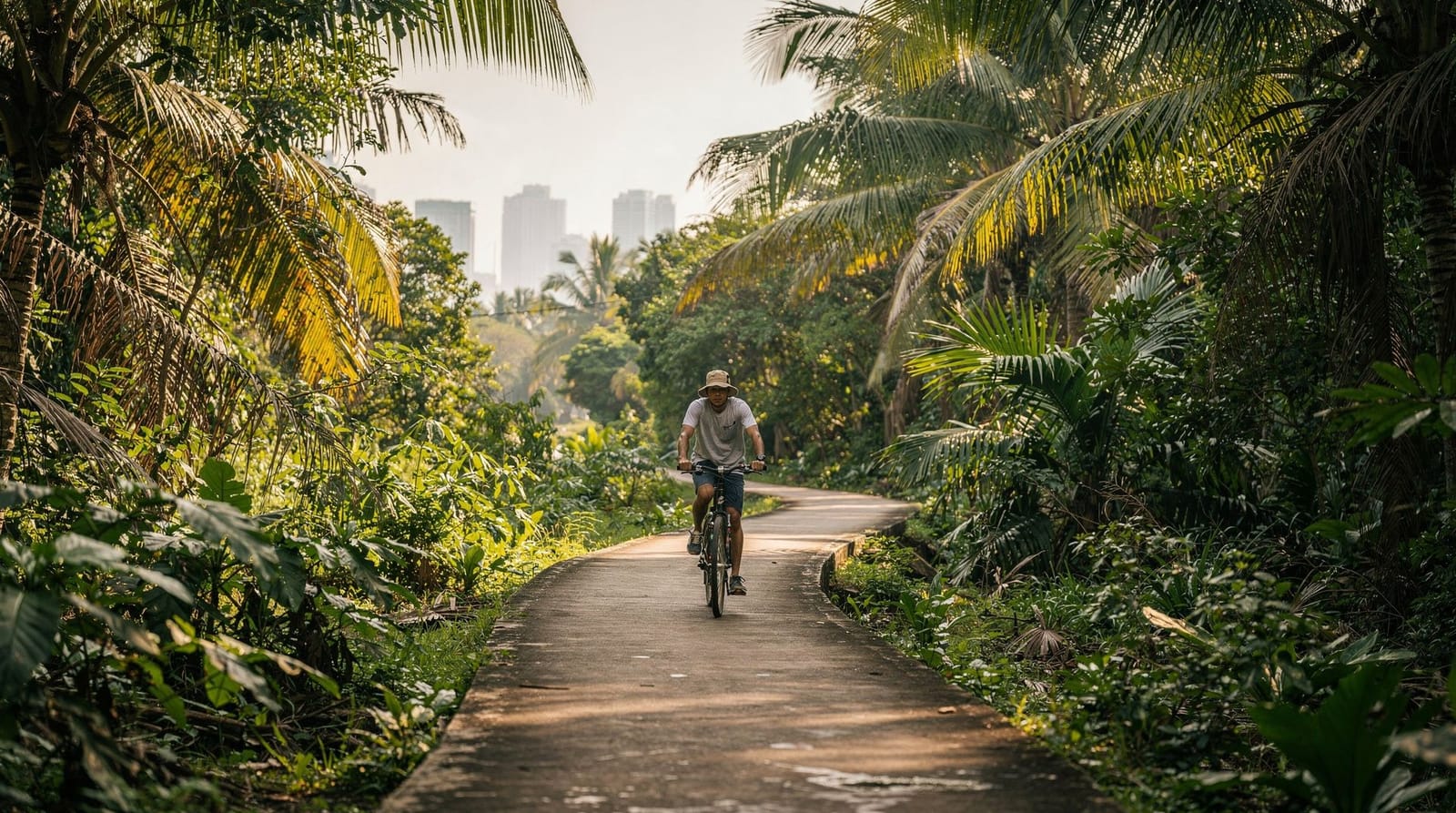
Like the rest of Thonburi, Wongwian Yai rewards slow, local-style exploration by bike and boat. The quiet lanes and riverside paths suit cycling, and the area connects to the canal network. The morning bike tour with ferry crossing and the classical bicycle tour both capture this west-bank texture, while a canal longtail sightseeing cruise or the bike and canal-boat tour with lunch link Wongwian Yai’s riverside to the wider Thonburi khlongs and the green oasis of Bang Krachao downriver. See the Bangkok bike tours guide.
Eating in Wongwian Yai
This is honest, cheap, local eating. The fresh markets and shophouse lanes are full of family-run noodle shops, curry-over-rice stalls, grilled meats and Thai sweets at genuinely local prices, with no tourist premium. For something with a view, Lhong 1919’s riverside cafes and restaurants offer a more atmospheric (if pricier) option. Grazing the morning market is the most rewarding way to eat here. For the wider picture see what to eat in Bangkok and the free things to do guide, since simply wandering and market-grazing here costs almost nothing.
Practical tips and honest notes
Set expectations correctly: Wongwian Yai is about atmosphere and authenticity, not headline sights — it’s for travellers who enjoy wandering real neighbourhoods rather than ticking off monuments. Come in the morning for the markets at their best and the cooler air. Cash is essential for the markets and stalls; English is limited, so a few Thai phrases and a translation app help. It’s safe and ordinary; just be respectful, as you’re moving through people’s everyday lives, not a tourist attraction. Pair it with a Thonburi canal tour or a Bang Krachao cycling morning for a full west-bank day.
Wongwian Yai vs other “authentic local” pockets
Wongwian Yai is one of several Bangkok districts that trade headline sights for genuine local texture. Here’s how it compares to two similar pockets:
| Wongwian Yai | Talat Noi | Bang Rak & Charoenkrung | |
|---|---|---|---|
| Character | Working-class Thonburi markets and shophouses | Riverside artist alleys, murals, machine shops | Old food street meeting a design district |
| Tourists | Almost none | A steady trickle of photographers | Growing, especially in the evening |
| Main draw | Fresh markets, Lhong 1919, King Taksin history | Street art, atmospheric decay, riverside cafes | Street food and hidden bars |
| Best time | Morning | Any time, golden hour for photos | Evening |
They pair naturally into a west-bank or riverside day: Wongwian Yai’s markets in the morning, a ferry across to Talat Noi or Bang Rak in the afternoon or evening.
A morning market crawl on foot
The most rewarding way to experience Wongwian Yai is a slow, unplanned wander through its market lanes, ideally starting before 9am while the stalls are freshest and the heat hasn’t built. Start near the roundabout and let the smell of grilled meat and fresh produce guide you into the side lanes — you’ll pass fishmongers, fruit sellers, prepared-curry stalls sold by the scoop, and household-goods vendors that see almost no foreign visitors. There’s no fixed circuit to follow; the pleasure is in getting mildly lost among shophouses, small temples and hardware stores that haven’t changed their signage in decades. Budget an hour or two before continuing on to Lhong 1919 or the Thonburi khlongs for the rest of the morning. For similar unscripted wandering elsewhere in the city, see the hidden gems guide.
Getting there and around
By BTS: Wongwian Yai station is the western terminus of the Silom Line — the easiest way across the river. Exit and explore the surrounding lanes on foot or by Grab.
By river boat: Chao Phraya piers near the district (and at Lhong 1919) connect to the river network and ICONSIAM; see the Chao Phraya boats guide.
By local train: The Maeklong-line terminus here runs the slow, very local route toward the Maeklong railway market.
On foot and by bike: The neighbourhood and its markets are best explored slowly on foot or by bike.
By Grab or taxi: Easy and cheap for hopping between the BTS, the markets and Lhong 1919. See the Grab and taxi guide.
Frequently asked questions about Wongwian Yai
What is Wongwian Yai known for?
It’s the authentic, untouristed heart of old Thonburi — centred on a historic roundabout topped by the King Taksin Monument, with lively local fresh markets, weathered shophouse lanes, the riverside heritage complex Lhong 1919, and a slow, genuine neighbourhood life. It’s also the Bangkok-side terminus of the Maeklong railway line.
Is Wongwian Yai worth visiting for tourists?
Yes, if you enjoy wandering real, lived-in neighbourhoods rather than ticking off famous sights. It offers an authentic slice of working Bangkok — local markets, street food and riverside heritage — with almost no tourists. If you only want headline attractions, you can skip it; if you like getting under a city’s skin, it’s a rewarding few hours.
What is Lhong 1919?
Lhong 1919 is a beautifully restored 19th-century Chinese riverside warehouse complex in Wongwian Yai — a former trading port with an original Mazu shrine, faded murals, design shops, cafes and riverside dining. It’s a calm, photogenic spot telling the story of the Chinese trading community that shaped this stretch of the Chao Phraya, and a lovely place for a riverside coffee.
How do I get to Wongwian Yai?
Take the BTS Silom Line to its western terminus, Wongwian Yai station, then explore the surrounding lanes on foot or by Grab. You can also arrive by Chao Phraya river boat to nearby piers (including at Lhong 1919). It’s an easy west-bank crossing from central Bangkok.
Can I reach the Maeklong railway market from Wongwian Yai?
Yes — Wongwian Yai is the Bangkok terminus of the historic Maeklong (Mahachai) local railway line. You can take the slow local train (with a ferry change at Mahachai) toward the famous Maeklong “umbrella pulldown” railway market, where stalls sit on the tracks. It’s an adventurous, very local DIY route; most visitors reach the market by organised tour instead.
How much time should I spend in Wongwian Yai?
A couple of hours is enough to wander the roundabout, crawl the morning markets and visit Lhong 1919 at a relaxed pace. Add another hour if you’re combining it with a bike or canal-boat tour, and treat it as a half-day if you’re pairing it with nearby Talat Noi or a Thonburi khlong trip rather than as a standalone stop.
When is the best time to visit Wongwian Yai?
Mornings are best — the fresh markets are at their liveliest and the lanes are cooler before the heat builds. The appeal is everyday local life rather than any seasonal sight, so it’s rewarding year-round, though the cool season (November to February) makes wandering the shophouse streets more comfortable.
Top experiences
Bookable activities with verified prices and instant confirmation on GetYourGuide.