Why I keep returning to Bangkok
I have lost count of how many times I have flown into Bangkok. Somewhere past the fifth visit I stopped pretending I was going for a specific reason — a temple I had missed, a neighbourhood I wanted to explore — and admitted the truth, which is that I keep returning because the city has its hooks in me and shows no sign of letting go. People who have only passed through once, for the obligatory two days of temples and a rooftop bar, often ask why anyone would come back to a place this hot, this loud, this overwhelming. This is my honest answer.
| Getting around | BTS/MRT 17–62 baht, river boats 16 baht a ride |
| Daily budget range | ~150 baht (frugal) to unlimited (luxury) |
| Day trips | Ayutthaya, Kanchanaburi, Khao Yai, the beaches south |
| Best for | Repeat visitors who want neighbourhoods, not just sights |
| Best time to return | Any season — each one offers something different |
Because the food never stops surprising me
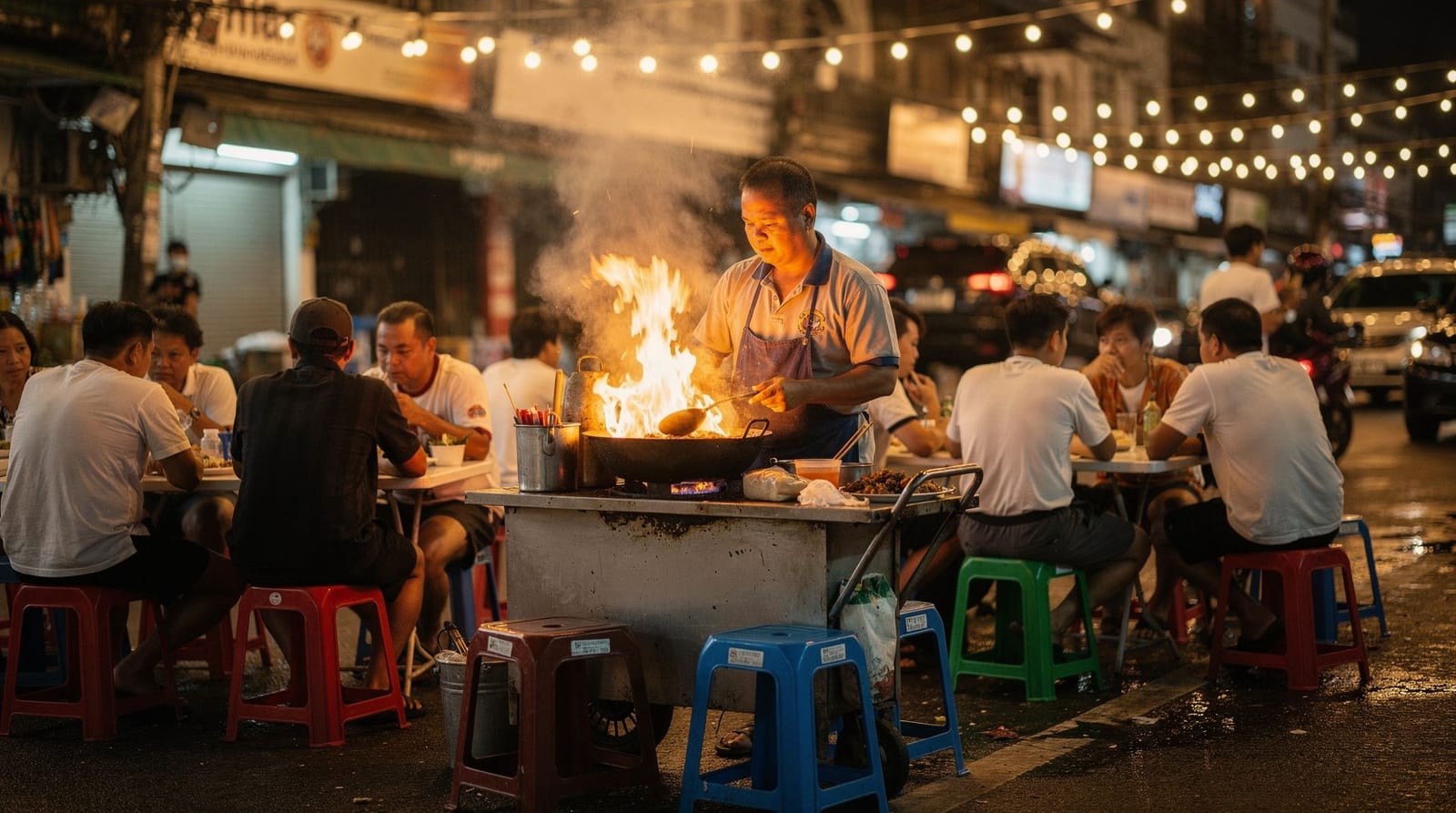
I will start with the obvious one, because it is the truest. I have eaten extraordinary food all over the world, and Bangkok remains the only city where I have never had a bad meal and have frequently had a transcendent one for under two dollars. The depth is what astonishes me — not just pad thai and green curry, but the regional specialities, the Chinese-Thai dishes of Chinatown, the boat noodles, the Isaan grills, the southern curries that will take the top of your head off. Every visit I discover something I had never heard of. The Bangkok street food guide and the what to eat guide barely scratch the surface of what is out there on the stalls. A city where you could eat for a year and not repeat yourself is a city that will keep calling you back.
Because it refuses to be finished
This is the deeper reason. Bangkok is not a city you “do” — there is no version of it you can complete and cross off. Each time I come back, the map fills in a little more: a new neighbourhood, a quiet temple, a coffee scene that did not exist last time, a green corner I never knew was there. I have spent whole trips just exploring the neighbourhoods — the antiques lanes of Talat Noi, the cafe culture of Ari, the riverside calm of Bang Rak — and still feel I have barely begun. The hidden gems guide is essentially a list of reasons to keep coming, and every return visit adds new ones.
Because the chaos somehow soothes me
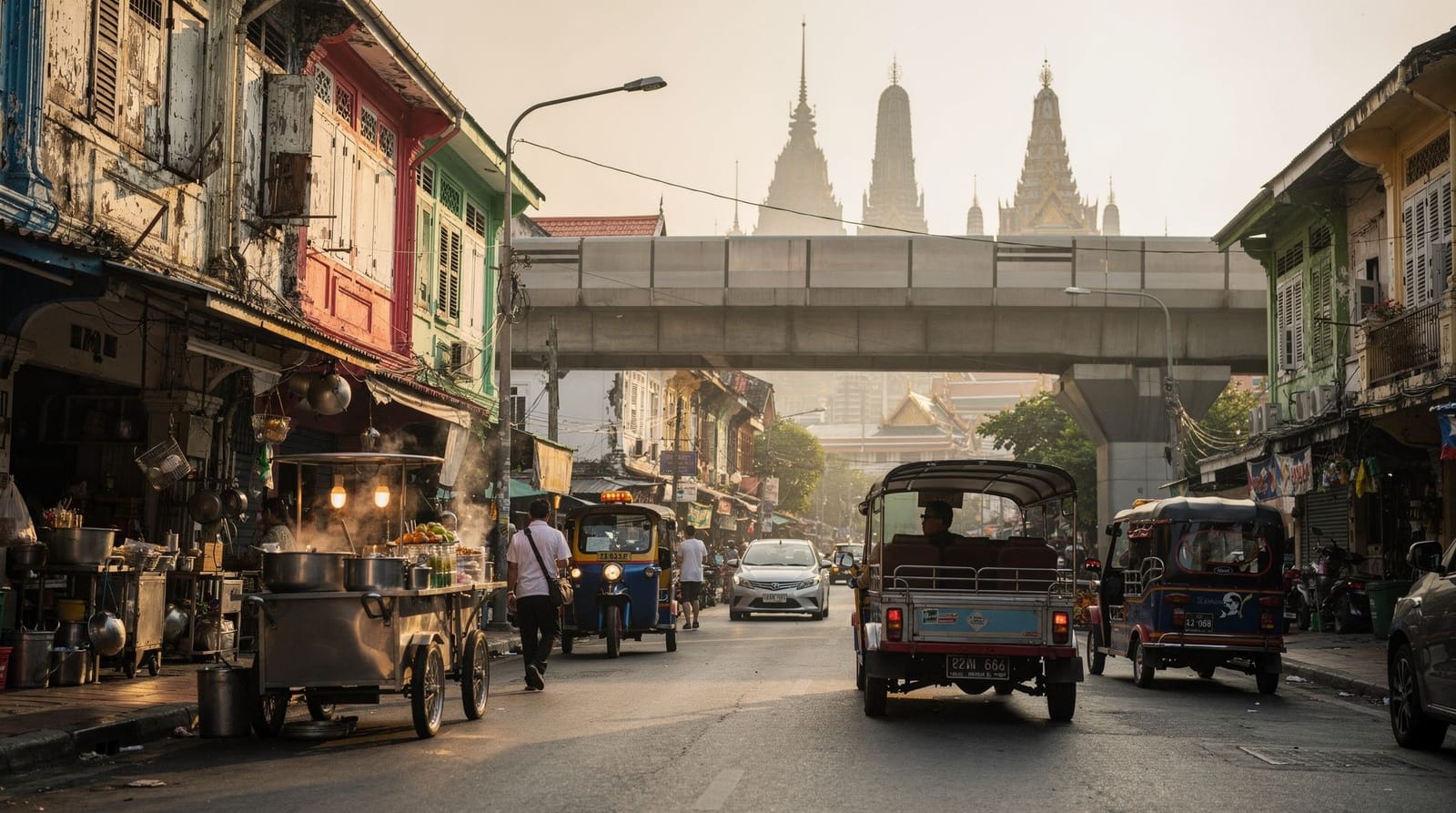
This one surprises people. Bangkok is sensory overload — the traffic, the heat, the noise, the smells, the sheer relentless human density of it. By rights it should be exhausting, and on a first visit it often is. But somewhere along the way the chaos stopped stressing me and started doing the opposite. There is something liberating about a city this alive, this indifferent to whether you keep up, this comfortable with contradiction. A glittering mall next to a crumbling shophouse, a Michelin stall under a motorway flyover, monks in saffron robes scrolling phones at a 7-Eleven. Bangkok holds all of it without apology, and after enough visits I find that deeply relaxing rather than overwhelming.
Because of the kindness
I do not want to romanticise, but I will say plainly that Thais have shown me more spontaneous, unprompted kindness than people in almost any country I have travelled. The vendor who waved away my fumbling baht and gave me the right change with a laugh. The stranger who walked me three blocks to a BTS station rather than just pointing. The grandmother at Songkran. The “land of smiles” is a tourism slogan, and like all slogans it flattens something more complicated, but underneath it there is a genuine warmth that I keep coming back to feel. It costs nothing and it is everywhere.
Because there is always somewhere new just outside the city
Even when I think I have exhausted Bangkok itself, the day trips reset the clock. The ruins of Ayutthaya, the sombre weight of Kanchanaburi, the floating markets, the green hills of Khao Yai, the beaches a few hours south. Bangkok is the gateway to a whole country, and using it as a base means there is always one more excursion waiting. An Ayutthaya day trip returning by river cruise remains one of my favourite single days anywhere, and I have done it more than once without it ever feeling repetitive.
Because it is absurdly easy to get around once you know how
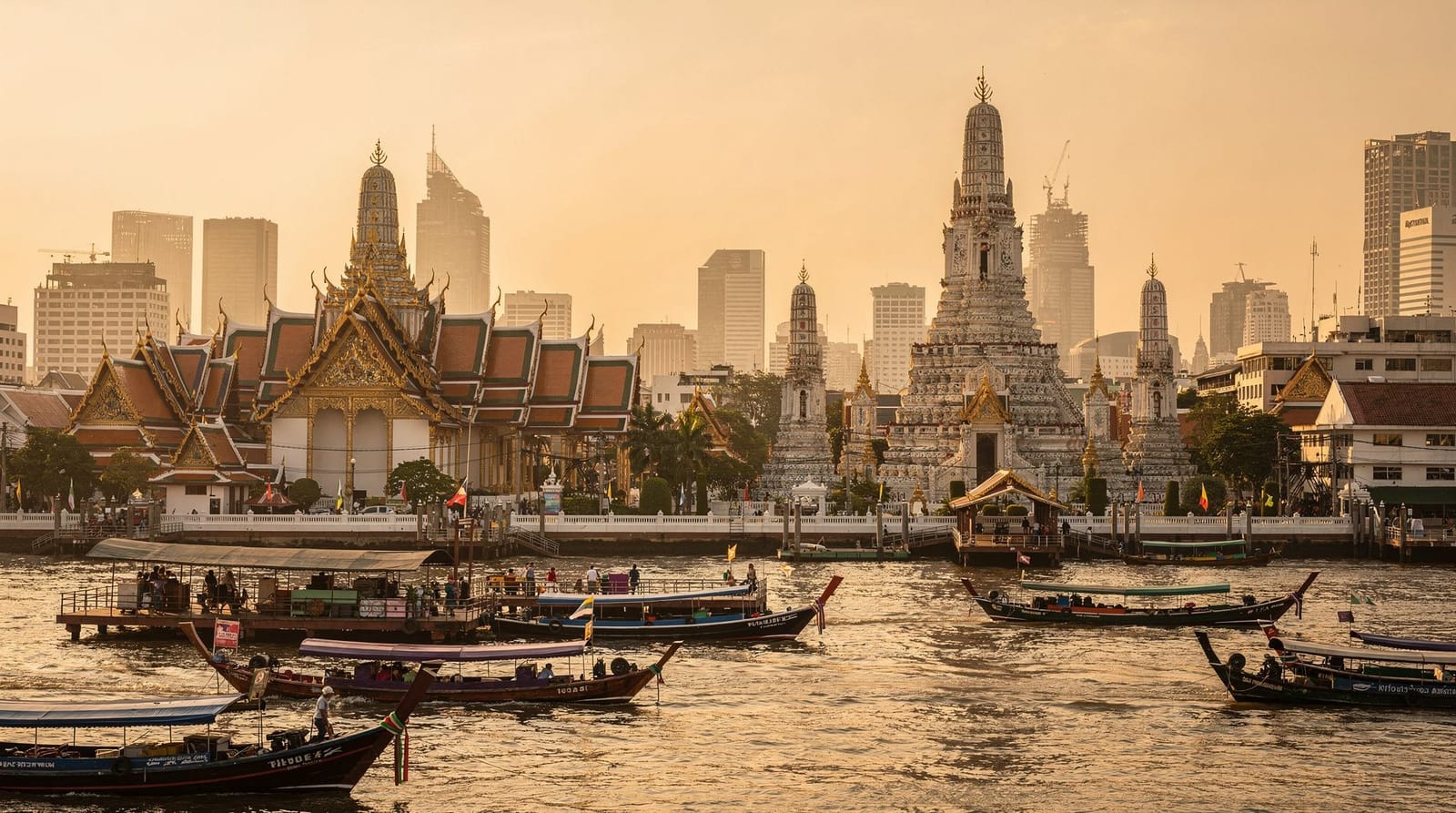
This is the unglamorous reason, but it matters enormously to how often I return. Bangkok has a reputation for impossible traffic, and at street level it earns it, but above and below the gridlock the city runs two excellent rail lines that have quietly transformed it. The BTS Skytrain and the MRT subway are clean, air-conditioned, cheap and reliable, with fares of roughly 17 to 62 baht a ride, and between them they reach most of the places a visitor actually wants to go. I top up a Rabbit card on arrival and barely think about transport again. When the trains do not reach, the orange-flag express boats churn up and down the Chao Phraya for 16 baht and double as the best-value sightseeing in the city.
The deeper point is that this ease lowers the activation energy of a trip. I can land at Suvarnabhumi in the evening, take the Airport Rail Link into town for 45 baht, and be eating street noodles in Sukhumvit within ninety minutes of clearing immigration. A city that is this frictionless to drop into is a city you return to casually, the way you might revisit a favourite restaurant, rather than treating each trip as a major expedition.
Because it rewards every budget and every mood
Part of what keeps me coming back is that Bangkok flexes to whatever version of myself shows up. On a frugal trip I can eat like a king on the stalls for 150 baht a day, sleep in a clean guesthouse for 600, and explore on 50 baht of trains and boats. On a trip where I want to be spoiled, the same city offers some of the best-value luxury anywhere on earth: riverside hotels, Michelin tasting menus, world-class spas, all at a fraction of what the equivalent would cost in Tokyo or Singapore. Few cities span that range so gracefully without ever making either end feel like a compromise.
It flexes by mood, too. When I want intensity, there is the heat and chaos of Chinatown and the night markets. When I want calm, there is the green stillness of Bang Krachao, the river’s quiet lung, or a slow afternoon in a riverside café in Bang Rak. The same trip can hold a thumping night out and a silent dawn at a temple, and the city never asks you to choose. The things to do guide barely contains the range of it.
A frugal day vs a splurge day, side by side
I said Bangkok flexes to any budget, but seeing it laid out makes the point better than I can in prose.
| Frugal day | Splurge day | |
|---|---|---|
| Food | Street stalls, ~150 baht total | Fine dining or a tasting menu |
| Sleep | Clean guesthouse, ~600 baht | Riverside hotel |
| Getting around | BTS/MRT/boats, under 100 baht | Private driver |
| Extras | Free temples, a park, a market | Spa, tailored shopping |
| Total feel | Genuinely comfortable, not a grind | Better value than almost anywhere comparable |
Both days are entirely real, and I have had both in the same week without either feeling like a compromise, which is rare for a city this size.
The neighbourhoods that keep pulling me back
Beyond the headline areas already mentioned, two quieter ones have earned a permanent place in my rotation. On Nut and Phra Khanong, out past the tourist core of Sukhumvit, has become one of my favourite bases precisely because it does not perform “Bangkok” for visitors — it is where a lot of the city’s own young creatives live, eat and open small bars, and a BTS ride puts you back in the centre in fifteen minutes whenever you want it. Thonglor and Ekkamai is the glossier cousin, full of the coffee shops, design stores and late bars that show a completely different Bangkok to the temple-and-market version most first-timers see. Neither is essential on a first trip — the neighbourhoods guide rightly points newcomers elsewhere first — but they are exactly the kind of places a repeat visitor discovers once the obligatory sights are behind them.
What I’d tell a first-time visitor now
If you are reading this before your own first Bangkok trip, do not feel obligated to fall for it the way I did — but do give the city a fair chance beyond a rushed 48 hours. A first-timer itinerary gets the essentials right without over-scheduling you, and the how many days guide is honest that fewer than three genuinely shortchanges the place. If you would rather have the headline sights handled efficiently on day one so you can spend the rest of the trip wandering the way I now do, a guided highlights tour is a sensible way to bank the essentials early.
Because the temples still stop me in my tracks
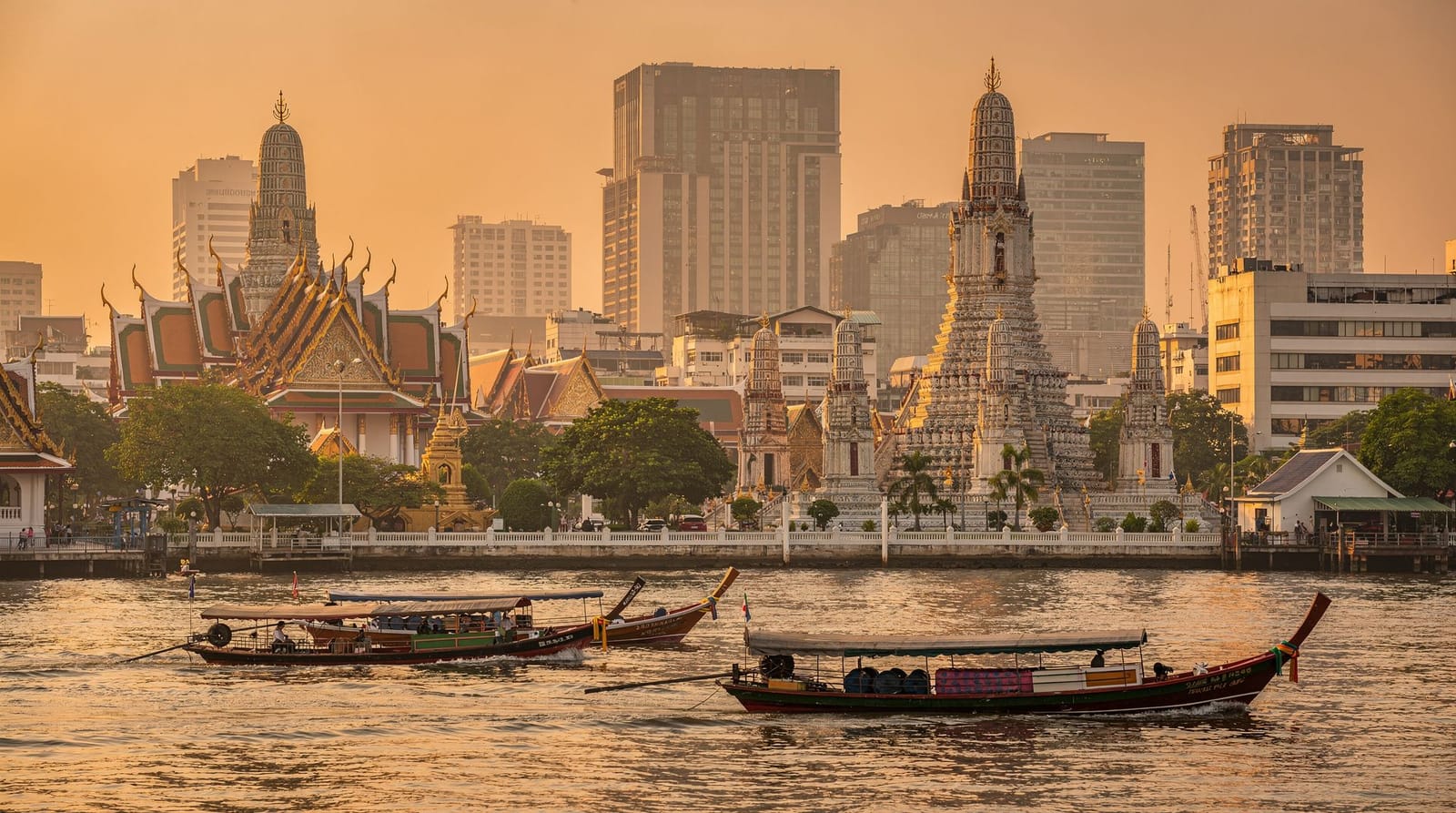
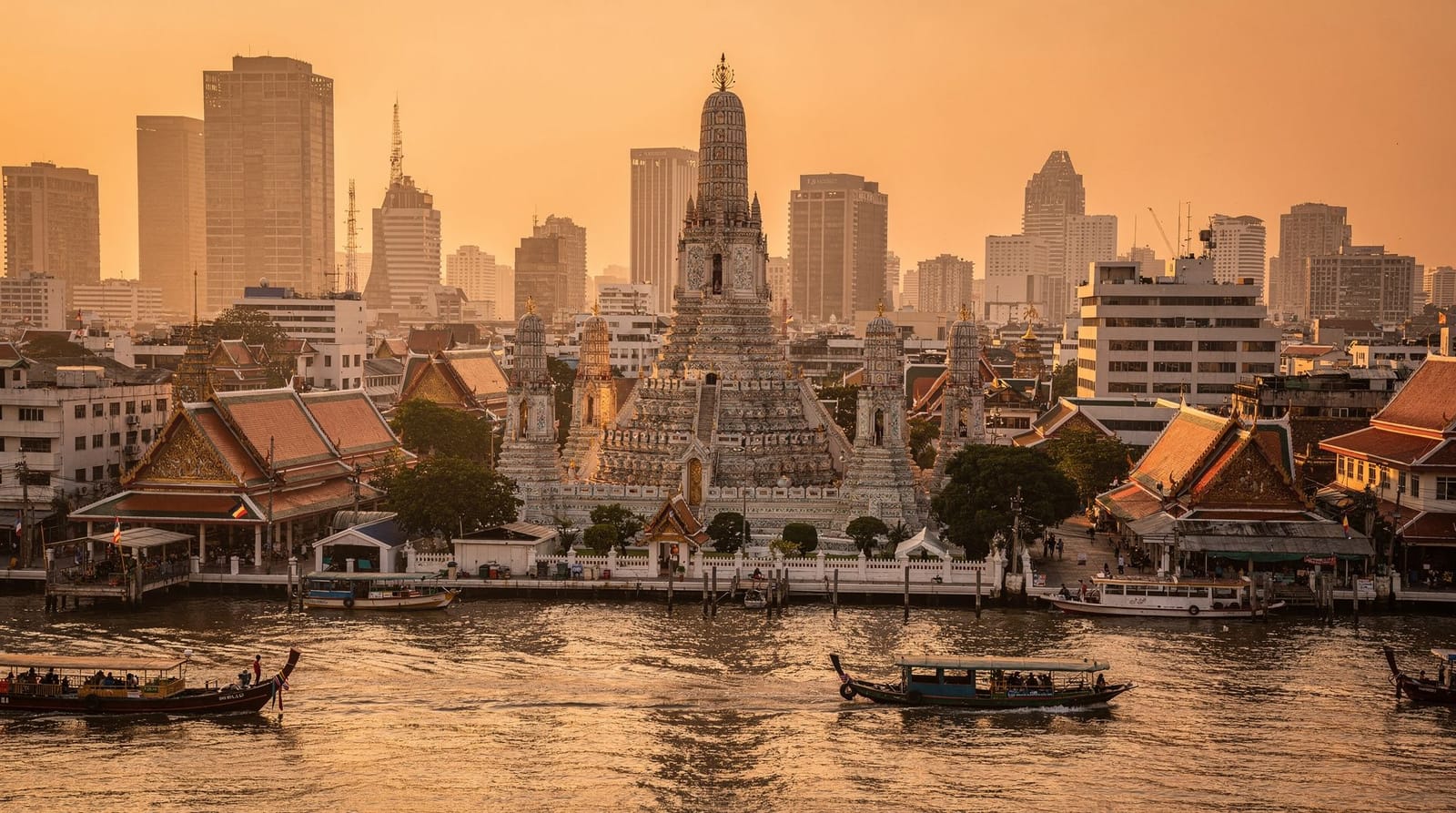
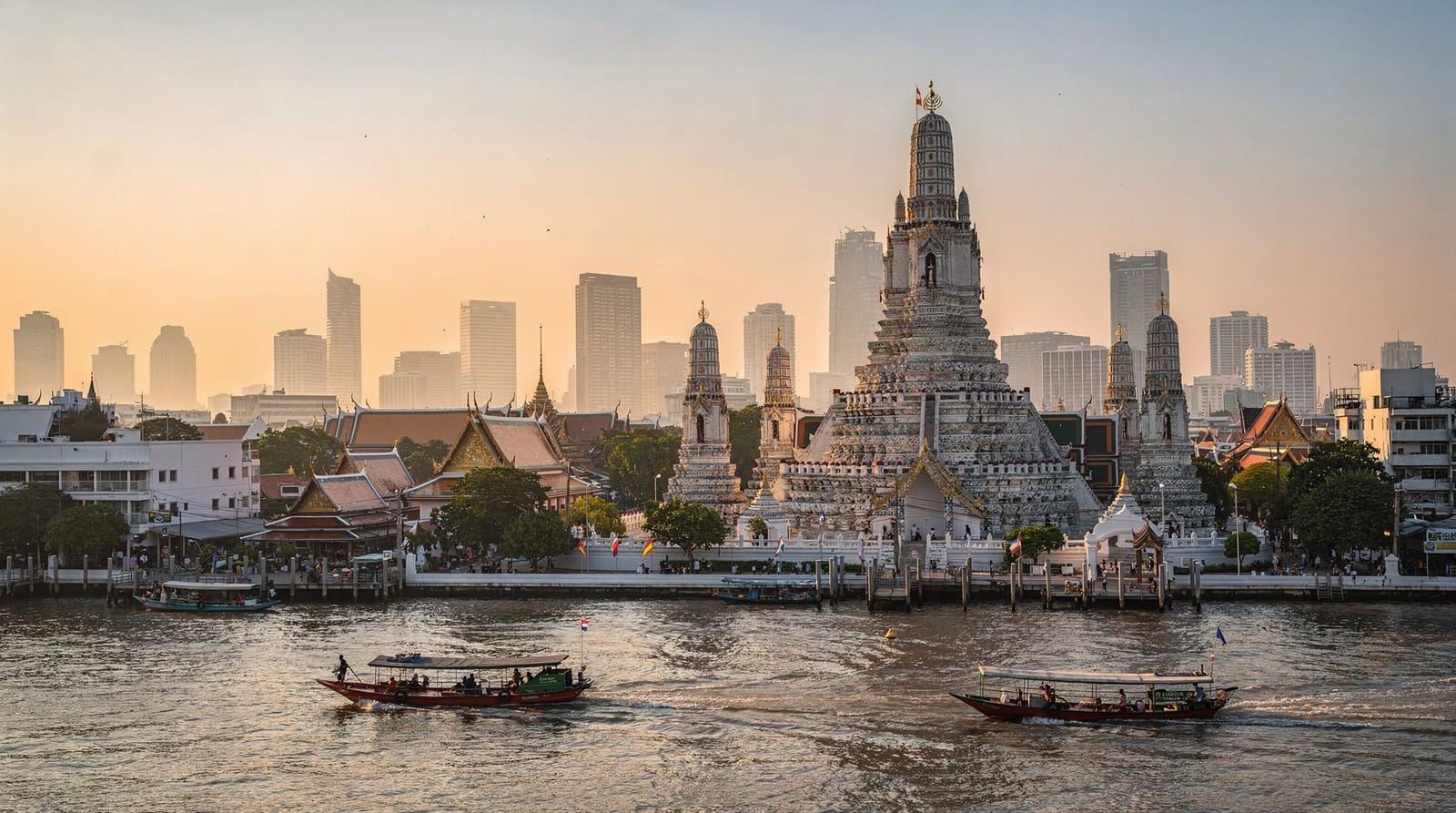
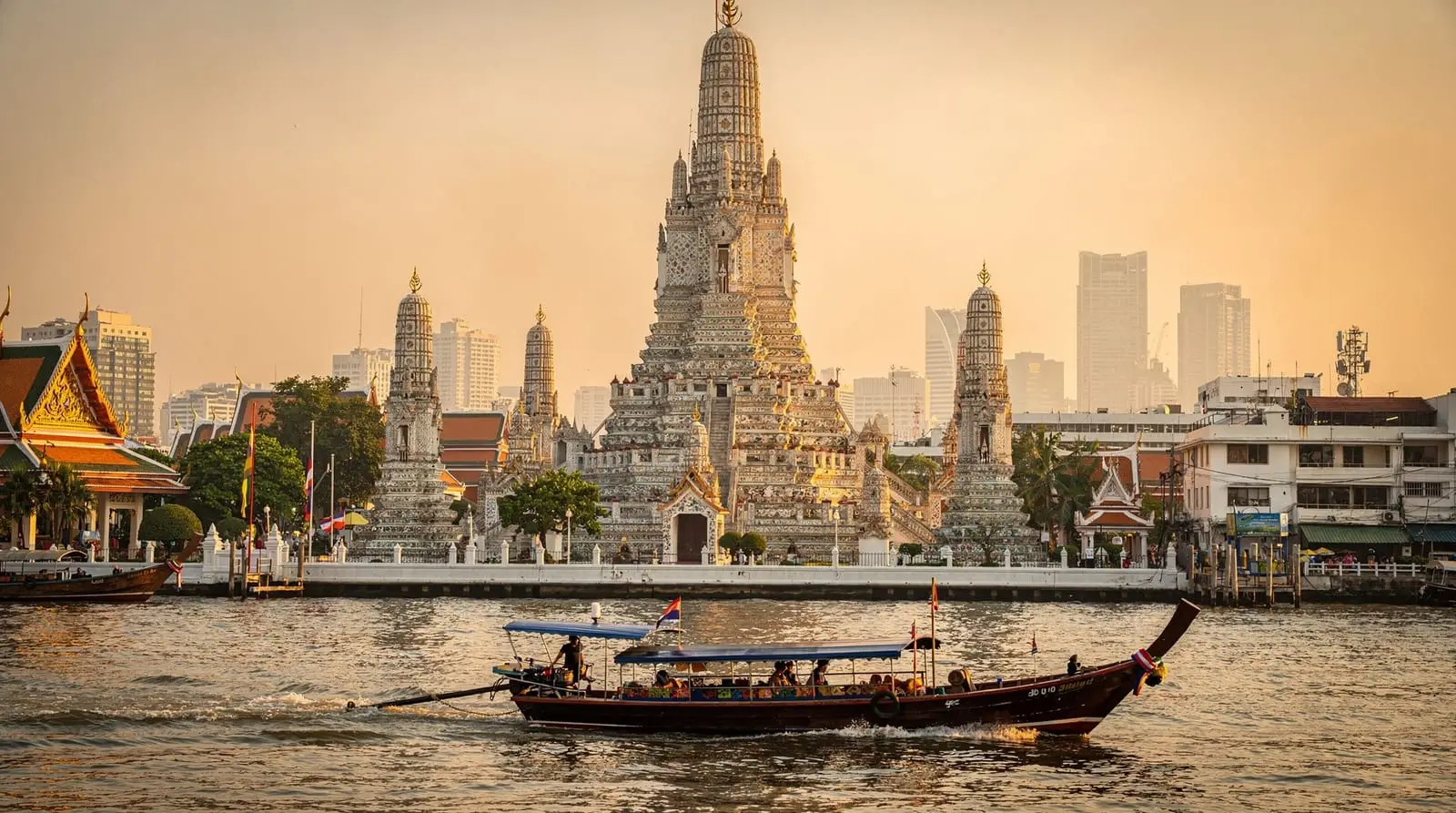
I should be honest that even after all these visits, the headline sights have not worn thin. I can walk into the courtyard of Wat Pho and stand in front of the reclining Buddha, all forty-six gilded metres of it, and feel the same quiet awe I felt the first time, for an entry fee of around 300 baht that still feels like theft. The dawn light catching the porcelain of Wat Arun across the river, the gold and glass of the Grand Palace, the small neighbourhood temples where monks chant at sunrise with no tourist in sight — these never become wallpaper. A city where the spiritual life is this visible and this woven into the everyday is a city that keeps offering you stillness in the middle of the noise. The best temples guide maps the great ones, but it is often the unnamed shrine on a back lane, in some forgotten soi, that catches me off guard.
Because every visit, I am a slightly different traveller
Maybe this is the real reason. The Bangkok of my first nervous 48 hours, fumbling with BTS tickets and ordering safe pad thai, is not the Bangkok I return to now, confident on the boats, brave at the stalls, drawn to the quiet corners over the headline sights. The city has not changed nearly as much as I have changed inside it, and each return is a way of measuring that — a chance to do the things I was too timid for last time, to go deeper, to notice more. The first-timers guide is where I started; I am somewhere else now, and the city has room for both of us.
The honest truth
I keep returning to Bangkok because it is generous and inexhaustible and warm and chaotic and humbling, because it feeds me better than anywhere on earth for less money than seems reasonable, and because every time I leave I have the distinct feeling that I have only seen a sliver of it. That feeling — of a place too large and too alive to ever finish — is the rarest thing a city can offer a traveller, and it is why, the moment I land somewhere else, I am already half-planning the next trip back. If you are reading this before your first visit, fair warning: you may not come home only once. Start with the trip planning guide, and see if the hooks find you too.
Frequently asked questions about returning to Bangkok
Is Bangkok worth visiting more than once?
Absolutely. The city is vast and layered, with endless neighbourhoods, food, and day trips that no single visit can exhaust. Repeat visitors typically go deeper into local areas and skip the headline sights.
What keeps people coming back to Bangkok?
The food, above all, plus the affordability, the warmth of the people, the chaotic energy, the constantly evolving neighbourhoods, and the wealth of day trips from a single convenient base.
How many times should I visit Bangkok?
There is no limit. Many travellers find that a first two-day visit only scratches the surface, and that subsequent trips exploring neighbourhoods, food and day trips are when the city truly opens up.
Is Bangkok easy to get around?
Yes, once you ignore the street traffic and use the trains. The BTS Skytrain and MRT subway are clean, cheap and reliable at roughly 17 to 62 baht a ride, and the Chao Phraya express boats cover the river for 16 baht.
Is Bangkok suitable for both budget and luxury travellers?
Unusually so. You can eat brilliantly for 150 baht a day and sleep for 600, or enjoy some of the best-value luxury hotels, fine dining and spas in the world at a fraction of Tokyo or Singapore prices, all in the same city.
What should a repeat visitor do differently?
Skip the headline sights and go deeper: explore neighbourhoods like Talat Noi, Ari and Bang Rak, eat regional Thai food beyond the tourist staples, and use the city as a base for day trips to Ayutthaya, Kanchanaburi and the markets.