Khao Yai wildlife guide: what you can really see
From Bangkok: Khao Yai National Park Jungle Trek with Lunch
What wildlife can you see in Khao Yai National Park?
Khao Yai, about 200km northeast of Bangkok, is Thailand's best-known wildlife park. Realistic sightings include white-handed gibbons, pig-tailed macaques, sambar and barking deer, great hornbills, and a wealth of birds and butterflies. The headline animal — wild Asian elephants (around 200-plus live here) — is possible but never guaranteed, most likely at dawn or dusk. Leopards, gaur and the rare clouded leopard exist but are very rarely seen. A good guide and the right timing greatly improve your odds.
Khao Yai National Park is the closest thing to a true wildlife safari within reach of Bangkok — a UNESCO-listed expanse of around 2,000 square kilometres of forest, grassland and waterfall about 200km northeast of the city. It is home to genuinely wild Asian elephants, several species of gibbon and macaque, deer, hornbills, and a long list of rarer creatures. But seeing wildlife in a real forest is different from a zoo or a sanctuary: it takes patience, the right timing, and ideally a good guide. This guide sets honest expectations about what you can realistically see, where to look, and how to maximise your chances — whether you come on a day trip or stay overnight.
| Where | Khao Yai National Park, ~200km northeast of Bangkok |
| Best sightings | Gibbons, macaques, deer and hornbills — reliable on most visits |
| Elephant odds | Possible, never guaranteed, best at dawn/dusk |
| Time needed | Half a day minimum; a full day or overnight for the best odds |
| Best season | November-February for comfortable, active-wildlife conditions |
See the Khao Yai destination page for the wider area beyond the wildlife, including the vineyards.
The headliner: wild elephants
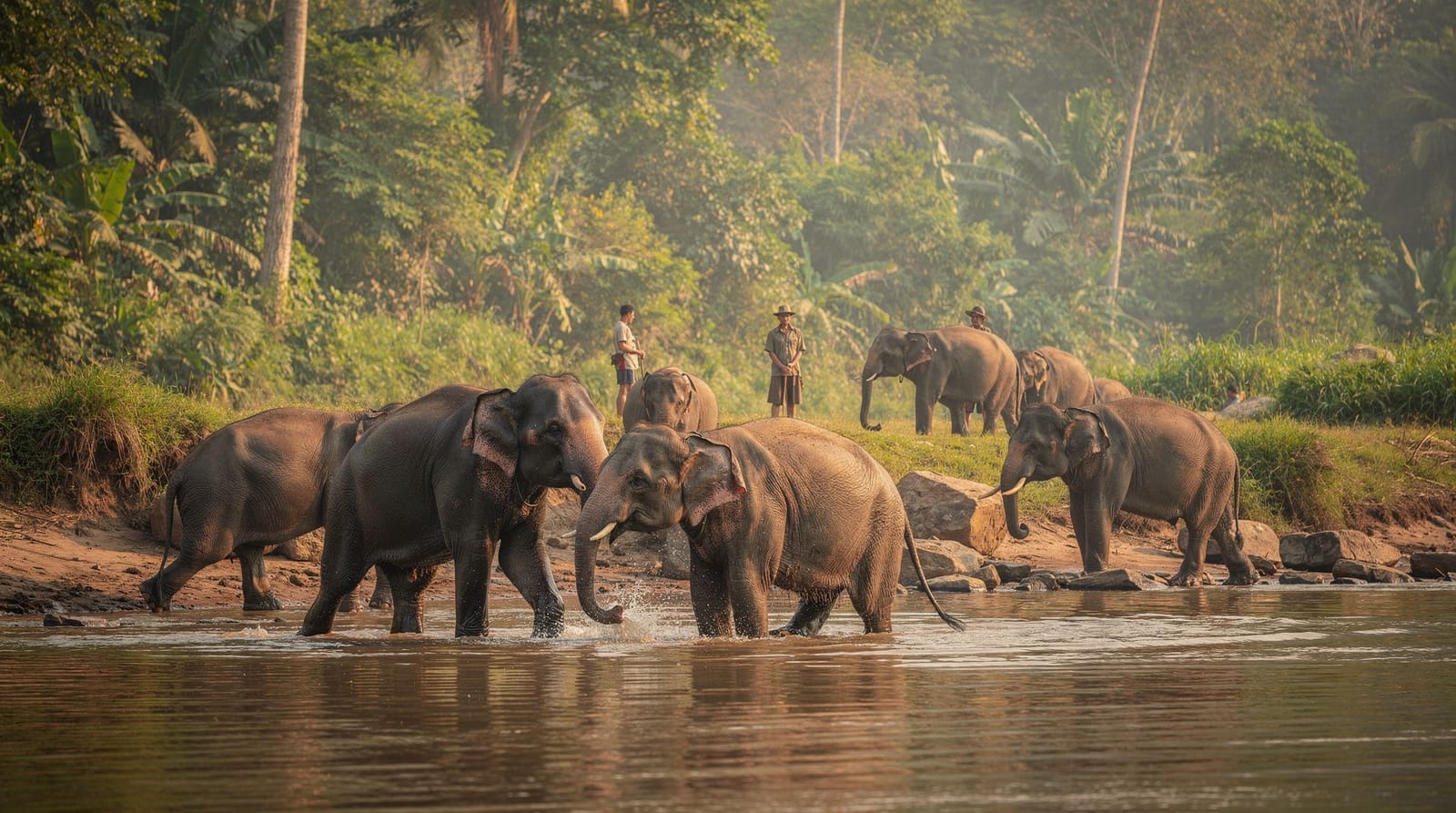
Khao Yai’s flagship species is the wild Asian elephant, with an estimated 200-plus living in the park. They are the animal everyone hopes to see — and the one that is never guaranteed. These are genuinely wild, free-ranging animals across a vast forest, most often encountered at dawn or dusk near salt licks, grasslands and quiet roadsides. A guide who knows where the herds have been moving meaningfully improves your odds, but treat any sighting as a thrilling bonus rather than a certainty. If you want guaranteed, ethical elephant contact instead, an ethical elephant sanctuary near Bangkok or Kanchanaburi is the better choice — Khao Yai is for elephants in the truly wild.
The reliable sightings: gibbons, macaques, deer
Far more dependable are the white-handed (lar) and pileated gibbons, whose whooping calls echo through the forest at dawn — among Khao Yai’s defining sounds even when the gibbons stay hidden high in the canopy. Bring binoculars and scan the treetops. Pig-tailed and long-tailed macaques are common (do not feed them — they can turn aggressive around food), and sambar and barking deer are frequently seen in the grasslands, especially in the cool hours. These sightings are likely on almost any well-guided visit.
Khao Yai National Park jungle trek with lunch from BangkokThe park covers more than two thousand square kilometres and has no public transport inside it, so what you see depends entirely on how far and how early your vehicle can go: a private customizable Khao Yai National Park tour sets its own start time, which is the only variable that matters for wildlife.
Birds and hornbills
Khao Yai is one of Thailand’s premier birdwatching destinations, and its hornbills are the stars — the magnificent great hornbill and the wreathed hornbill fly across the canopy in unmistakable silhouette, alongside trogons, barbets, broadbills, kingfishers and a host of migrants. Even casual visitors usually spot hornbills with a good guide; serious birders stay multiple days. The forest is also alive with butterflies, particularly near streams and the waterfalls.
Khao Yai nature trails and Heaw Suwat waterfall tourTiming is everything
The single biggest factor in what you see is time of day. Most mammals are active in the cool early morning and late afternoon; midday is hot and quiet. This is the central argument for staying overnight near Pak Chong rather than doing a Bangkok day trip, which typically reaches the park during the sleepy middle of the day. Night safaris — spotlighting drives after dark — offer another chance at deer, civets and occasionally larger animals. The cool, dry season (November–February) is the most comfortable time to visit; the best time to visit Bangkok guide and the Bangkok weather month-by-month guide explain how the seasons play out.
Wildlife by season
| Season | Months | What to expect |
|---|---|---|
| Cool, dry | November-February | Most comfortable trails, best overall visibility, peak season |
| Hot, dry | March-May | Animals cluster near water sources; hot midday hours |
| Wet | June-October | Lush and green, leeches on trails, waterfalls at their fullest |
Whatever the season, plan around dawn and dusk rather than the season alone — timing of day matters more than time of year for most sightings.
Why a guide matters
A knowledgeable wildlife guide transforms a Khao Yai visit: they know where animals have been seen recently, identify calls and movements you would miss, carry a spotting scope, and greatly improve both the number and quality of your sightings. On a day trip from Bangkok, a guided tour is the practical and most rewarding way to experience the park — see the Khao Yai day-trip guide for the logistics and the day-trip transport guide for getting there.
Khao Yai hiking day tour from BangkokStaying safe and responsible
In the wet season (roughly May–October), leeches appear on the trails — harmless but unpleasant, so wear long socks, closed shoes and consider leech socks, and check yourself after walks; the what to pack for Bangkok guide has the rest of the checklist. Avoid genuinely dangerous encounters (surprised elephants, snakes) by staying on trails, keeping your distance and following your guide. Never approach or feed wildlife, especially macaques. Responsible behaviour keeps both you and the animals safe and helps preserve the park.
Day trip or overnight?
A day trip from Bangkok will likely show you gibbons, hornbills, macaques, deer and waterfalls, but it reaches the park in the warmer, less active hours, making elephants less likely. For the best wildlife experience — dawn activity and night drives — an overnight near Pak Chong is far better. A day trip is still rewarding; just calibrate your hopes accordingly. If a small group wants full control over the schedule for the dawn window, the private tours Bangkok guide explains when a private driver-guide is worth the extra cost. For other nature experiences closer to the city, see the Bangkok parks guide and Bang Krachao green lung, and return to the day trips from Bangkok overview for the bigger picture.
Frequently asked questions about Khao Yai wildlife guide: what you can really see
Are there really wild elephants in Khao Yai?
What is the best time of day for Khao Yai wildlife?
Can I see gibbons in Khao Yai?
What birds can I see in Khao Yai?
Is a guide worth it for Khao Yai wildlife?
Do I need to worry about leeches or dangerous animals?
Can I see Khao Yai wildlife on a day trip from Bangkok?
Top experiences
Bookable activities with verified prices and instant confirmation on GetYourGuide.