Phahurat (Little India)
Phahurat is Bangkok's Little India — fabric and sari shops, fragrant Indian food and the golden Sikh Gurudwara, beside Chinatown and the flower market.
Bangkok: 4-Hour Flower Market and Little India Tour
Quick facts
- Nearest transit
- MRT Sam Yot (Blue Line) ~10 min walk; or river boat to Pak Khlong Talat / Saphan Phut
- Character
- Bangkok's Indian and Sikh quarter; textiles, spices, Indian food beside Chinatown
- Key food
- North and South Indian curries, dosa, samosa, lassi, Punjabi sweets, masala chai
- Key sight
- Sri Guru Singh Sabha (golden Sikh Gurudwara); the fabric and sari bazaars
- Best time
- Daytime for the markets and food; Diwali brings lights and festivity
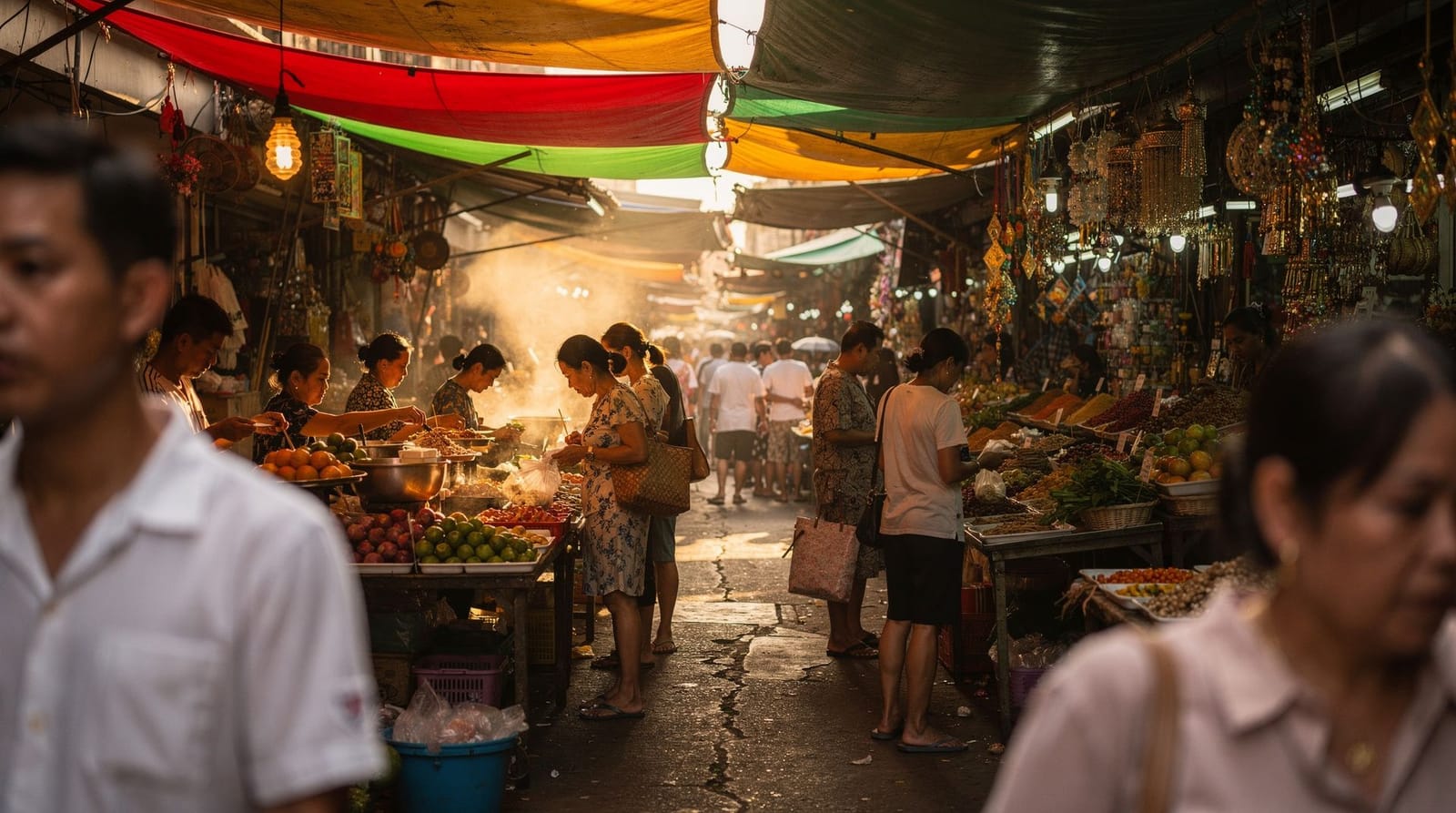
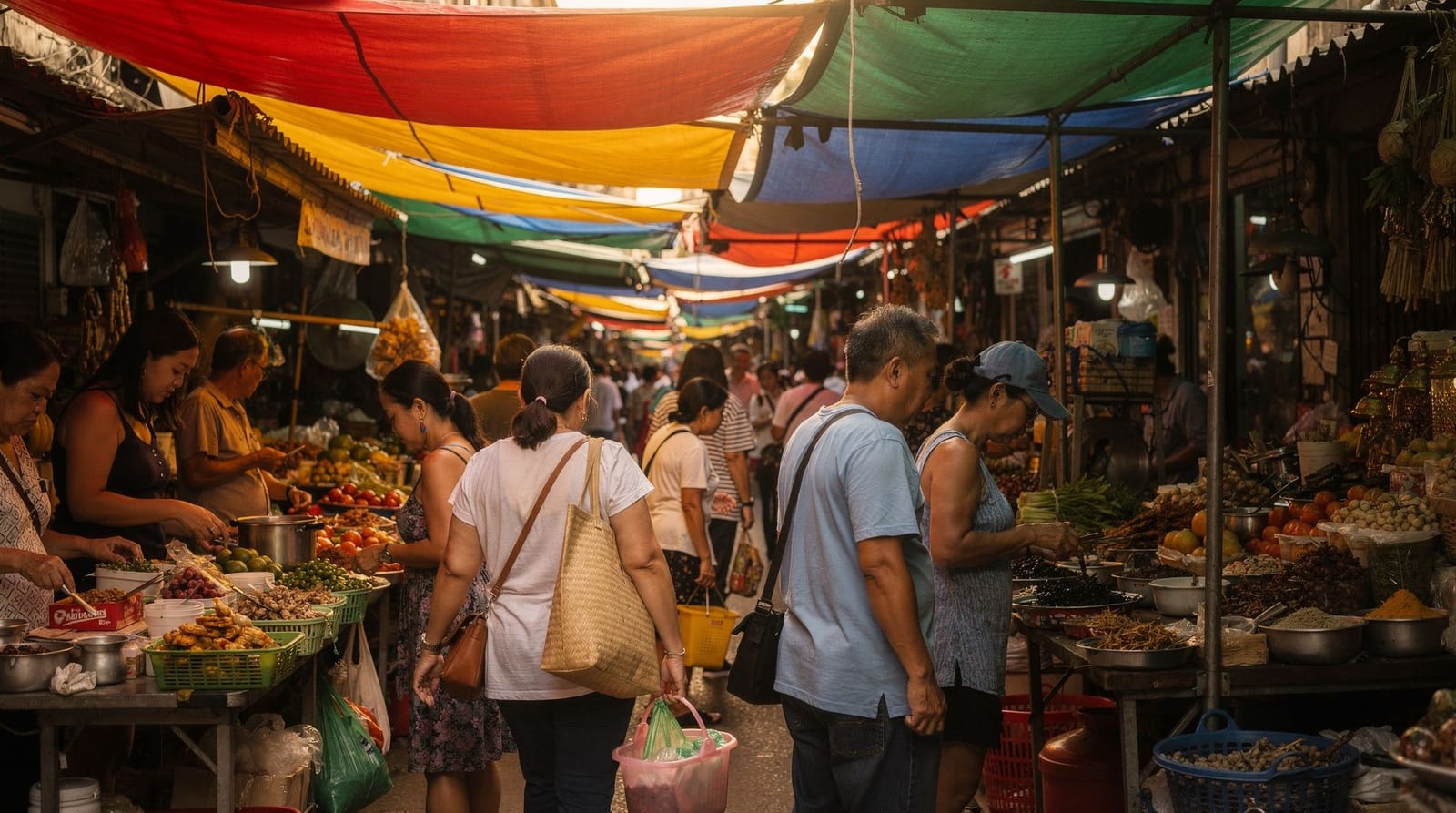
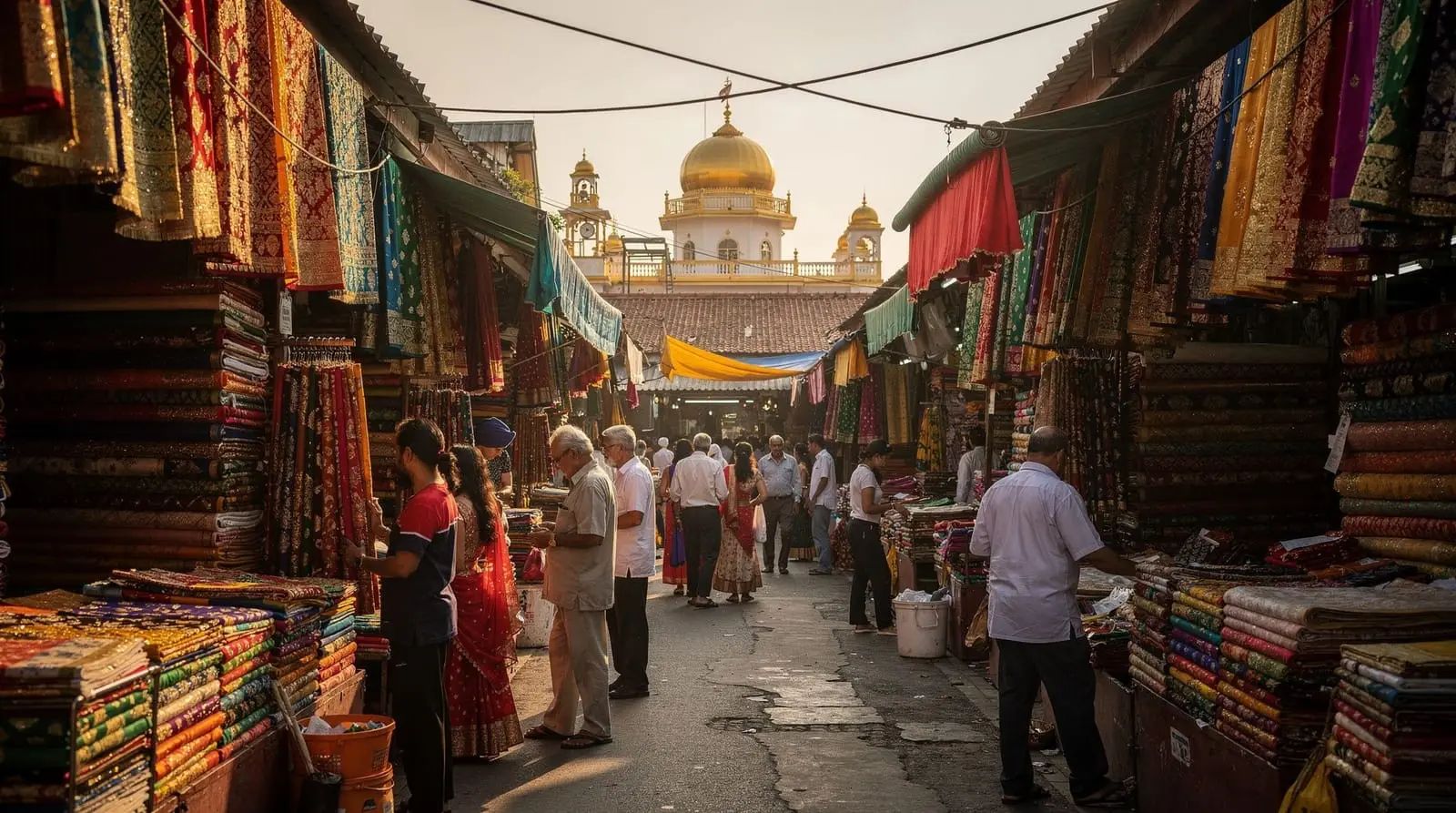
Right where Chinatown meets the old city, the soundscape changes: Hindi film music drifts from shop speakers, the smell shifts from soy and chilli to cardamom and frying ghee, and the shophouse windows fill with saris, bolts of silk and glittering trims. This is Phahurat, Bangkok’s Little India — a compact, intense quarter built by Indian (largely Punjabi and Sikh) and Pakistani traders who settled here from the late 19th century. It is the city’s textile heartland, its best place for authentic Indian food, and home to a serene golden Sikh temple. Most visitors discover it by accident while exploring Chinatown next door — but it rewards a deliberate visit.
A brief history: how Little India took root
Indian traders — mostly Punjabi and Sikh, with a smaller Pakistani and Gujarati presence — began settling around Phahurat and the riverside in the late 19th century, drawn by the same trading opportunities that built Chinatown next door and the busy river trade along the Chao Phraya. Textiles became the community’s specialty almost by accident: early merchants imported cloth and notions for the Thai tailoring trade, and the business simply never stopped growing. Today’s fabric bazaar is the direct descendant of those 19th-century stalls, and many current shopkeepers are third- or fourth-generation traders. For the wider story of how Bangkok’s immigrant communities shaped its neighbourhoods, see the culture guide.
The fabric and textile bazaar
Phahurat’s commercial soul is textiles. The lanes around Phahurat Road and the warren-like Old Siam Plaza and surrounding shophouses form Bangkok’s largest fabric market — wholesale and retail stalls stacked floor to ceiling with sari silks, cottons, lace, sequins, beads, ribbons, buttons and trimmings of every conceivable kind. Local designers, costume makers and dressmakers source here, and prices are low if you are buying in any quantity. Even if you are not shopping, the visual density — walls of colour and sparkle — is something to see. For the wider shopping picture see the shopping guide and markets guide.
Shopping smart: bargaining and what to buy
Prices at the fabric stalls are already low, but haggling is normal, especially for larger cuts of cloth or multiple items — expect a modest discount rather than a dramatic one. Good buys include sari silk and cotton by the metre, sequinned trims and lace (popular with costume makers and, around Loy Krathong and Songkran, people making their own outfits), buttons, ribbons and haberdashery you won’t find as cheaply elsewhere in the city. Bring cash, and if you want something tailored, several stalls can arrange a same-week stitch-up. For souvenir ideas beyond fabric — spices, sweets, small Sikh and Indian devotional items — see the best souvenirs guide.
Sri Guru Singh Sabha — the golden Gurudwara
The spiritual heart of Phahurat is the Sri Guru Singh Sabha, a large Sikh Gurudwara (temple) topped with a golden dome — the second-largest Sikh temple outside India. Visitors of all faiths are welcome. You will need to cover your head (scarves are usually provided), remove your shoes, and dress modestly. Inside, the atmosphere is calm and devotional, with the Guru Granth Sahib at the centre and the rhythm of prayer and music.
A beautiful Sikh tradition operates here: the langar, a free communal vegetarian meal served to all comers regardless of religion, embodying the principle of equality and service. If you visit at meal times you may be invited to eat — accept respectfully and follow the lead of those around you. It is one of the most genuinely moving experiences in this part of Bangkok. The etiquette mirrors what you’d observe at a Thai-Buddhist wat — modest dress, quiet respect, shoes off — so if you’ve already read the temple etiquette and dress code guide for the Grand Palace or Wat Pho, most of it transfers directly. See the neighbourhoods guide and hidden gems guide for context.
The food — Bangkok’s best Indian
For Indian food, Phahurat is the place. Tucked among the fabric shops and along the lanes are restaurants and stalls serving genuine North and South Indian cooking: rich Punjabi curries, butter chicken, dal, freshly griddled rotis and naan, crisp dosa and idli, samosas and pakoras, lassi in tall steel cups, Punjabi sweets (jalebi, barfi, gulab jamun) and milky masala chai. There are also halal Muslim-Indian spots and vegetarian thali restaurants. Prices are modest and portions generous. For where Indian food fits the city’s wider scene, see what to eat in Bangkok, the halal food guide and the vegetarian and vegan guide. A guided secret food tour of Chinatown often dips into Phahurat’s Indian flavours alongside the Chinese stalls.
The flower market connection
Phahurat sits right beside Pak Khlong Talat, Bangkok’s wholesale flower market — a 24-hour riot of marigolds, jasmine, orchids and roses banked along the riverside near Memorial Bridge. The two make a natural pairing, and a popular guided combination links them: the flower market and Little India four-hour tour walks you through the blooms, the fabric lanes, the Sikh temple and the food in one efficient loop. For the flower market on its own, see the Pak Khlong flower market guide.
How Phahurat fits the cluster
This is one of the richest cultural clusters in Bangkok. In a single afternoon you can move from Indian Phahurat to Chinese Yaowarat, the photogenic riverside lanes of Talat Noi, the flower market, and on to the temples of the Rattanakosin old city — Hindu, Sikh, Chinese-Buddhist and Thai-Buddhist worlds within walking distance of each other. A guided back-alleys of Chinatown tour or a general Bangkok walking tour can stitch these neighbourhoods together. The whole zone features in the 2-day itinerary.
Practical tips
Most of Phahurat’s shops and the fabric market operate daytime hours, typically closing by early evening — so come in the morning or afternoon, unlike Chinatown’s night-focused food scene. Cash is best for the small textile stalls and food spots. The lanes are crowded and narrow; mind your bags and pace yourself in the heat. At the Sikh temple, dress modestly, cover your head and remove your shoes. Diwali (the festival of lights, around late October or November) is a lovely time to visit, when the quarter is decorated and festive.
Phahurat vs its neighbours, at a glance
| Phahurat | Chinatown (Yaowarat) | Pak Khlong flower market | |
|---|---|---|---|
| Character | Indian/Sikh textiles and food | Chinese street food and shrines | 24-hour wholesale blooms |
| Best time | Daytime | Evening/night | Any time, especially pre-dawn |
| Time needed | 1–2 hours | Half day (evening) | 30–45 min |
| Signature stop | Sri Guru Singh Sabha | Yaowarat Road stalls | Riverside flower stalls |
They sit close enough that most visitors combine two or all three in one loop, as described above.
Getting there and around
By MRT: Sam Yot station (Blue Line) is about a 10-minute walk to Phahurat — the most convenient rail option. Wat Mangkon station serves the Chinatown side.
By river boat: Chao Phraya stops at Saphan Phut (Memorial Bridge) and the Pak Khlong Talat pier put you beside the flower market and a short walk from Phahurat; see the Chao Phraya boats guide.
On foot: Phahurat is small and best explored on foot, flowing naturally into Chinatown and the flower market.
By Grab or taxi: Easy to the edges, but the lanes are too narrow and congested for vehicles to penetrate — and old-city traffic is heavy. See the Grab and taxi guide.
Frequently asked questions about Phahurat (Little India)
What is Phahurat known for?
It is Bangkok’s Little India — the city’s Indian and Sikh quarter, famous for its huge fabric and sari market, authentic North and South Indian food, and the golden-domed Sri Guru Singh Sabha Sikh temple. It sits right beside Chinatown and the wholesale flower market.
Can I visit the Sikh temple, and what should I know?
Yes — visitors of all faiths are welcome at the Sri Guru Singh Sabha Gurudwara. Cover your head (scarves are usually provided), remove your shoes and dress modestly. The temple runs a langar, a free communal vegetarian meal open to everyone; if offered, accept respectfully and follow the lead of others.
Where can I find the best Indian food in Bangkok?
Phahurat is the place — the lanes around the fabric market hide restaurants and stalls serving genuine Punjabi and South Indian food: curries, fresh roti and naan, dosa, samosas, lassi and Indian sweets, plus halal Muslim-Indian and vegetarian thali spots. Prices are modest and the cooking is authentic.
When should I visit Phahurat?
During the day — most shops and the fabric market close by early evening, unlike Chinatown’s nighttime food scene. Come in the morning or afternoon for the markets and food. The cool season makes the crowded lanes more comfortable, and Diwali (around late October/November) brings lights and festivity.
How do I get to Phahurat?
The MRT Blue Line’s Sam Yot station is about a 10-minute walk — the easiest option. You can also arrive by Chao Phraya river boat to Saphan Phut or the Pak Khlong Talat flower-market pier. The quarter is small and best explored on foot, flowing into Chinatown and the flower market.
Can I combine Phahurat with Chinatown and the flower market?
Yes — they are all within walking distance and make an excellent cultural cluster: Indian Phahurat, the 24-hour Pak Khlong flower market beside it, and Chinese Yaowarat next door. A popular guided tour links the flower market, Little India and the Sikh temple in one four-hour loop.
Top experiences
Bookable activities with verified prices and instant confirmation on GetYourGuide.