Kid-friendly Bangkok food: what children will actually eat
Bangkok: Professional Thai Fruit and Vegetable Carving Class
What food can kids eat in Bangkok?
Plenty — Thai cuisine has many mild, child-friendly dishes. Safe bets include chicken rice (khao man gai), grilled chicken (gai yang), fried rice (khao pad), plain noodle soups, spring rolls, satay skewers, mango sticky rice, coconut ice cream and abundant fresh tropical fruit. Order dishes 'mai phet' (not spicy) and 'mai sai phrik' (no chilli). Familiar Western food is widely available in malls and hotels for fussy eaters, so children rarely go hungry in Bangkok.
One of the quiet pleasures of bringing children to Bangkok is discovering how easy it is to feed them. Thai food’s fiery reputation can make parents nervous, but the cuisine is full of mild, naturally kid-friendly dishes — chicken rice, grilled chicken, fried rice, noodle soups, satay and a parade of tropical fruit and sweet treats. Add the simple magic phrases for “not spicy”, the abundant Western backups in every mall, and Thailand’s genuine love of children, and mealtimes become one of the least stressful parts of a family trip. This guide covers exactly what kids will eat, how to order it safely, and where to find it.
Kid-friendly eating at a glance
| Key phrase | ”mai phet” (not spicy) or “mai sai phrik” (no chilli) |
| Safest picks | Khao man gai, gai yang, khao pad, spring rolls, satay with sauce on the side |
| Where to eat | Mall food courts for ease; casual sit-down Thai restaurants for reliability |
| Backup plan | Pizza, pasta, burgers and bakery items in every mall and hotel |
| Best for | Families nervous about spice or hygiene wanting a stress-free plan |
The mild dishes kids love
Start with the naturally mild Thai staples. Khao man gai (Hainanese chicken rice) — poached chicken over fragrant rice with a clear broth — is gentle, comforting and a near-universal hit. Gai yang (grilled chicken) and moo ping (grilled pork skewers) are smoky and sweet. Khao pad (fried rice) comes in chicken, pork or shrimp versions and can be made plain. Noodle soups without chilli, po pia (spring rolls), khai jiao (Thai omelette over rice), and satay with the peanut sauce served on the side all suit children well. For more on Thai dishes generally, see what to eat in Bangkok.
How to order “not spicy”
The two phrases to learn are “mai phet” (not spicy) and “mai sai phrik” (no chilli). Even with these, some dishes have chilli built into their base, so for very sensitive children stick to the naturally mild options above and taste a dish yourself before handing it over — Thai “not spicy” can still carry a surprising kick. Most vendors and restaurants are happy to adjust, and pointing at pictures or other diners’ plates works fine when language is a barrier.
Street food safety with kids
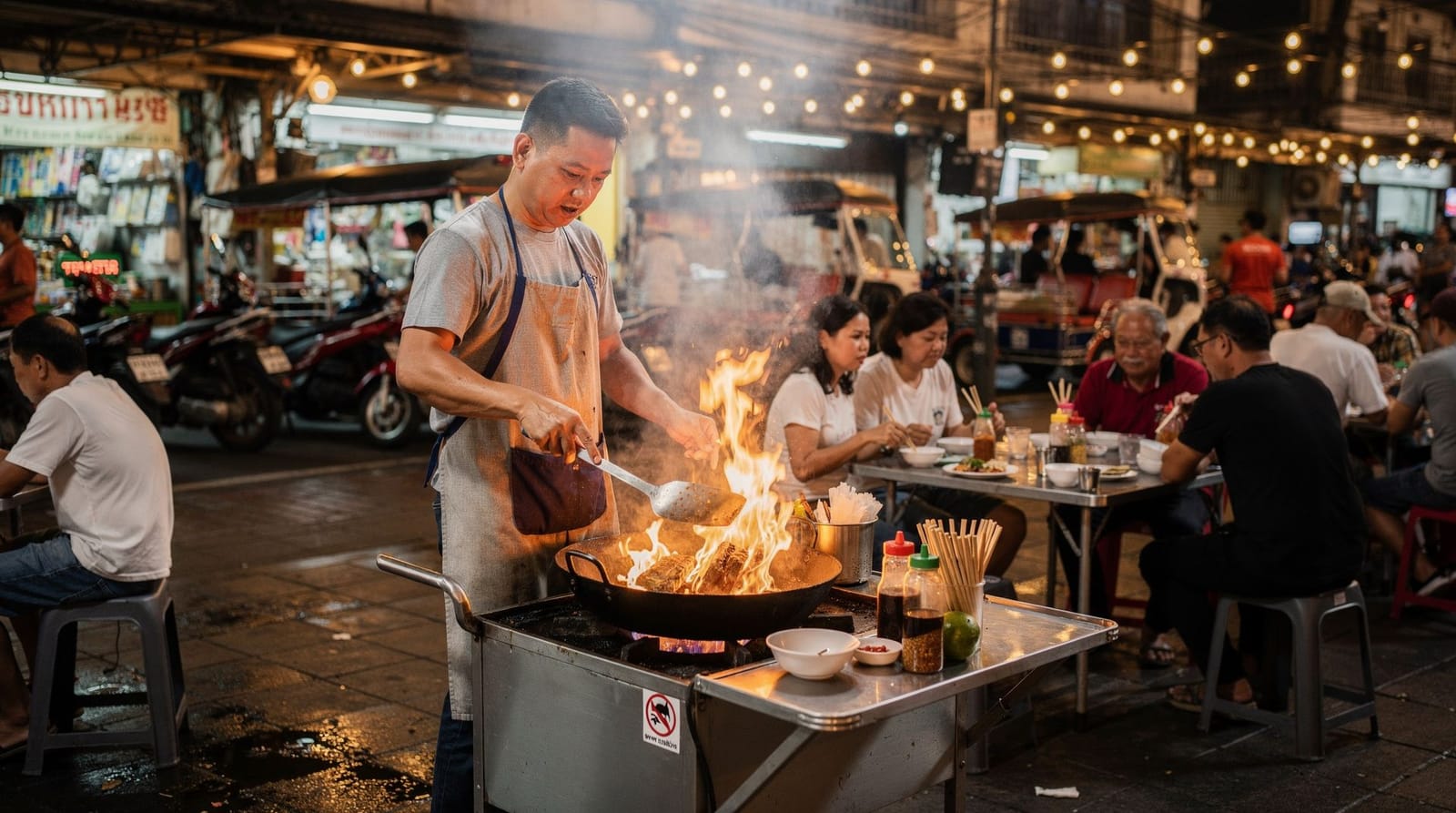
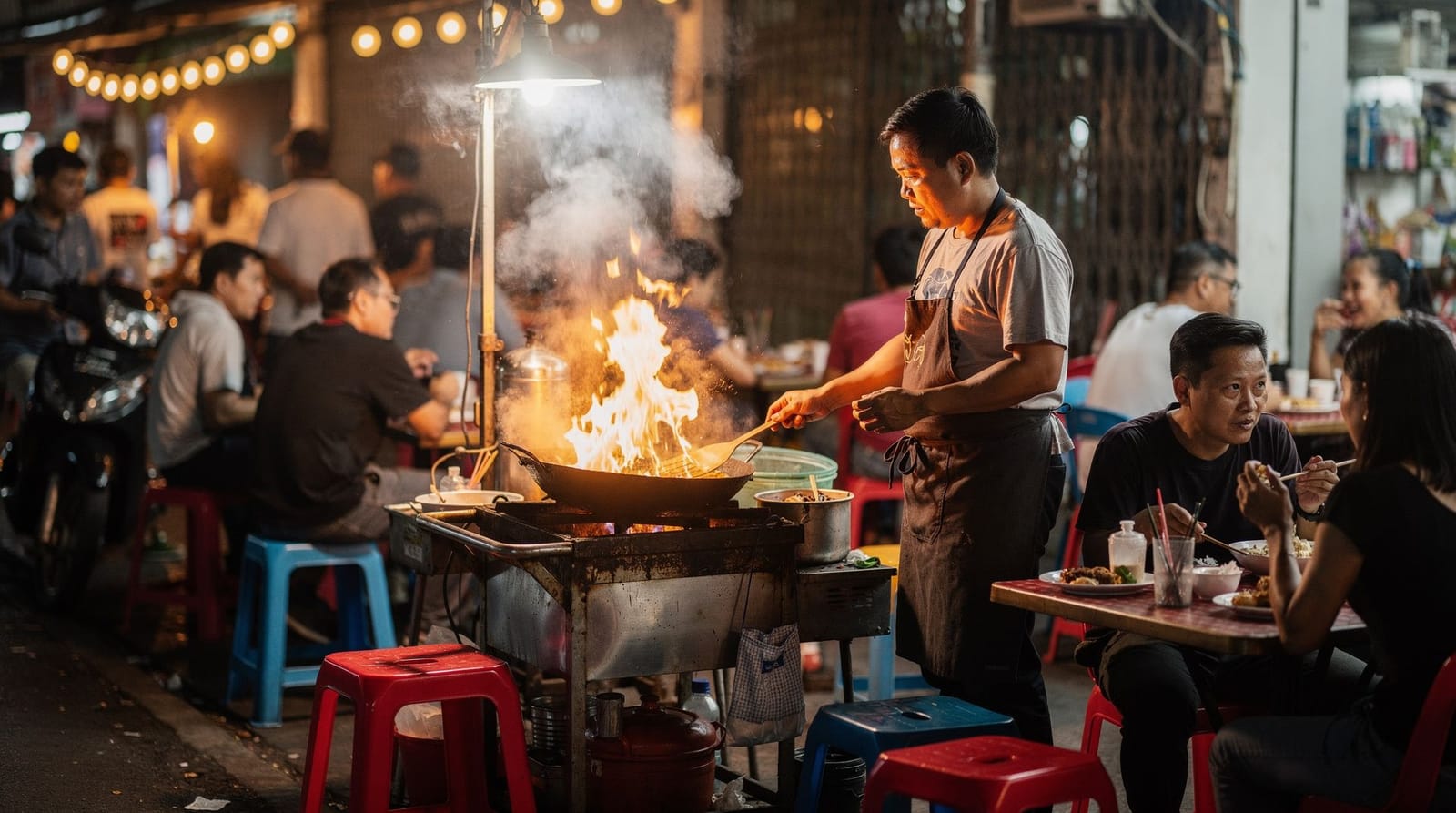
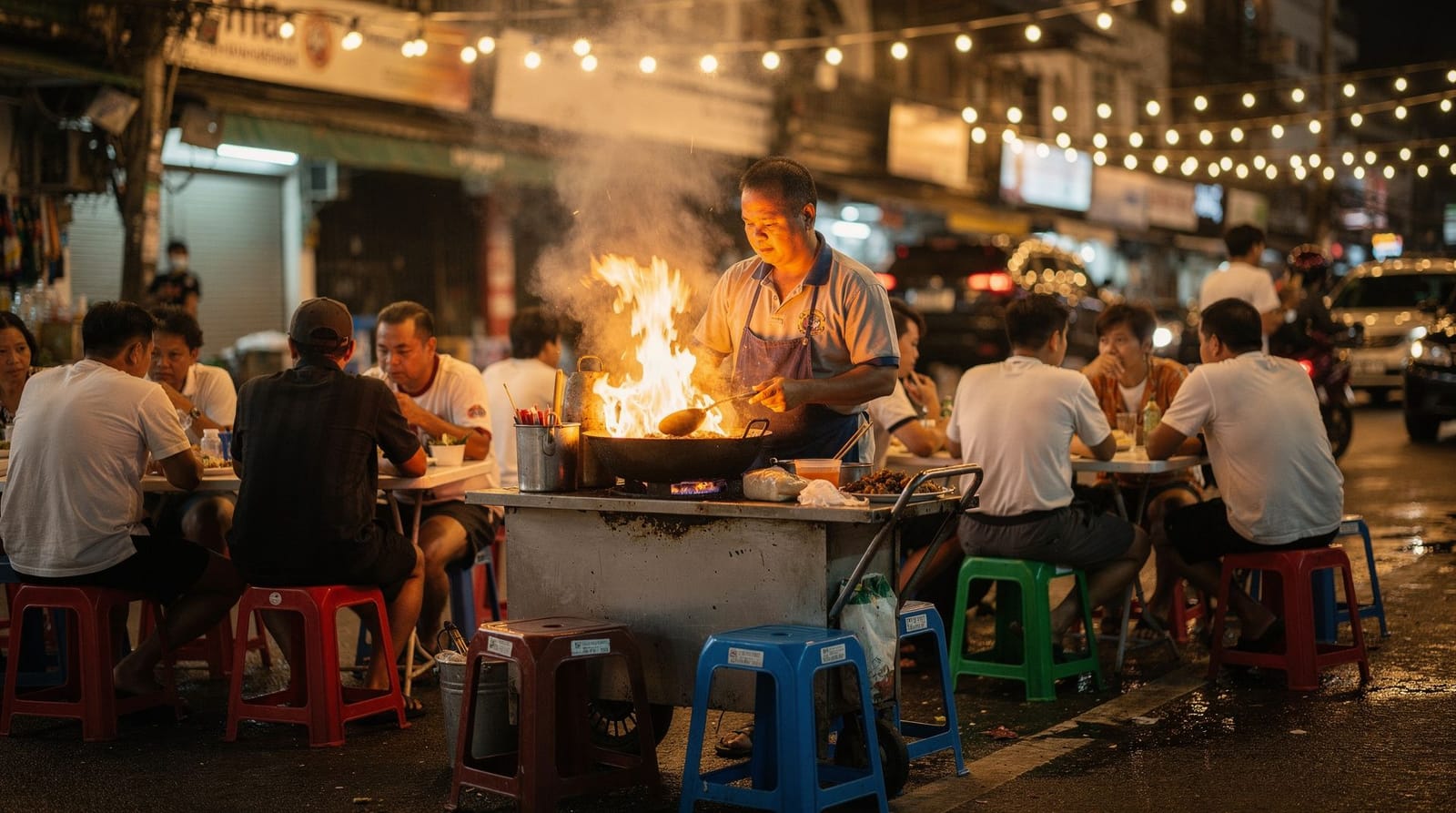
Street food is one of Bangkok’s joys, and children can share in it with sensible precautions. Choose busy stalls with high turnover, where food is cooked fresh and hot in front of you; avoid anything lukewarm or left sitting out; and favour grilled, fried or boiled dishes over raw items. Stick to bottled or filtered water, and be cautious with ice from uncertain sources if your stomachs are sensitive. Start with cooked staples and build confidence. Our dedicated street food safety guide and the broader Bangkok street food guide go deeper.
Fruit, smoothies and sweet treats
Bangkok’s tropical fruit is a healthy, refreshing highlight for kids: mango, pineapple, watermelon, banana, rambutan, longan and dragon fruit are everywhere, sold freshly cut by vendors (wash or peel where you can). Fresh fruit smoothies and shakes are cheap and easy to order without added sugar. For treats, mango sticky rice (khao niao mamuang), coconut ice cream, grilled bananas and Thai-style roti crepes are big winners. These keep energy and morale up between attractions in the heat.
Western backups for fussy eaters
When Thai food is a hard sell, Bangkok has you covered. The malls and hotels offer pizza, pasta, burgers, sandwiches, international chains and bakery items, and supermarkets stock familiar snacks. Having reliable Western fallbacks removes mealtime stress — handy in the air-conditioned malls you will likely visit on hot or rainy days, as covered in the rainy-day-with-kids guide.
Where to eat with children
For ease, mall food courts and restaurants are ideal — huge variety, air-conditioning, high chairs, and both Thai and Western options under one roof. Casual sit-down Thai restaurants and hotel restaurants are reliable for mild dishes. Street food and markets are great for older or more adventurous children when you pick busy, fresh stalls. Mixing comfortable mall meals with a few cautious street-food adventures works for most families. Bring wet wipes and hand sanitiser, and you will find eating out with kids in Bangkok refreshingly welcoming — Thai culture adores children, and vendors will happily make their food work for yours. For a full family plan, see the family itinerary for Bangkok and the Bangkok with kids guide.
Where to eat: a quick comparison
| Mall food court | Sit-down restaurant | Street stall / market | |
|---|---|---|---|
| Speed | Fast, self-serve | Slower, table service | Fast, cooked to order |
| Comfort | Air-conditioned, high chairs | Air-conditioned, most reliable | Open-air, no seating guarantee |
| Variety | Thai and Western side by side | Focused menu | Best for one or two specialities |
| Best for | Fussy eaters, rainy days | A relaxed sit-down meal | Adventurous kids, quick bites |
Allergies and dietary needs
Peanuts turn up widely, especially in satay sauce and some noodle dishes, so ask for the sauce on the side if your child has a nut allergy, and check before assuming a dish is safe. Fish sauce, a base seasoning in much Thai cooking, means shellfish-sensitive families should ask specifically. Vegetarian and vegan families will find Bangkok easier than expected — the vegetarian and vegan Bangkok guide covers how to order meat-free versions of the same kid-friendly dishes, and the halal food Bangkok guide does the same for halal-observant families. Malls and hotel restaurants are the most reliable for clear ingredient information; carry a written allergy note in Thai for street stalls where English is limited.
A gentle first-day eating plan
Jet-lagged children are rarely adventurous on day one, so ease in. Make the first meal something plain and familiar: a bowl of rice with grilled chicken, a simple fried rice or a mild noodle soup, ideally somewhere air-conditioned where everyone can sit down and reset. Let the kids watch the cooking if the place has an open kitchen; seeing a plate come together makes them far more willing to try it. Save the more unusual dishes for later in the trip, once appetites and curiosity have caught up with the new time zone.
A useful rhythm is one “safe” meal and one “curious” meal each day. Breakfast at the hotel or a bakery, then a market snack or a shared plate at lunch where children can pick one new thing, then an easy dinner that you know they will finish. If you are building the days around sightseeing, the Bangkok with kids itinerary and the best family attractions guide show how meals slot between the main stops, and the Siam and Ratchaprasong area guide is a handy base when you want mall dining within easy reach.
Teaching kids to taste, not just eat
Children who are encouraged rather than pushed usually end up trying more. Share a few bites from your own plate and let them choose a side dish from the display at a market stall. Give each child a small “tasting job”: find the crunchiest thing, the sweetest thing, the most colourful thing. Turning a meal into a game takes the pressure off, and Thai sharing-style eating suits this perfectly, because several dishes arrive together and nobody is committed to a single big plate.
Praise curiosity, not clean plates. A child who licks a piece of fruit and decides against it has still learned something, and you can always have a backup ready. Keep in mind that tastes shift with heat and tiredness, so a dish refused at noon may be a favourite at dinner. For a more structured approach, a hands-on session such as the cooking class experience lets children handle ingredients themselves; a playful option is a Thai fruit and vegetable carving class, where the edible results are a reward in themselves. The Thai cooking class guide explains what to look for when choosing one that welcomes younger participants.
Eating well in the heat and the rain
Bangkok’s weather shapes how families eat. On hot days children lose appetite quickly, so favour light dishes, fruit, soups that are not too heavy and plenty of water, and plan the main meal for a cooler, shaded or air-conditioned spot. Do not push a long outdoor market walk at the hottest hour; a quick snack and a retreat indoors keeps everyone cheerful. The month-by-month weather guide helps you judge which stretches of the year are most comfortable for eating outdoors.
When the rain arrives, it often turns plans upside down. Covered food courts, sit-down restaurants and mall dining become the natural choice, and a rainy afternoon is a good moment for a long, leisurely lunch. Our Bangkok in the rain guide has ideas for keeping spirits up, and a few light layers and a small towel in the bag make a damp walk to a restaurant far less miserable. The what to pack guide covers the family essentials worth bringing along.
Markets and food streets for curious kids
Once children are comfortable, a market is a wonderful way to see how Thai food is made and sold. Let them look at the stalls, point at what interests them and watch vendors grill, fry and chop. Choose busy stalls, keep little hands close and agree on a sharing plan before you start so nobody is overwhelmed by the choice. The Bangkok markets guide gives an overview, while the Chatuchak weekend market guide is useful if you want a big, varied place with plenty of snacks and room to wander.
For evening outings, the best night markets guide lists lively options where families can graze on small portions. If your children are happy in a crowd, the street stalls described in the Bang Rak food guide and the Yaowarat food guide offer a more local taste of the city, and the Michelin street food guide shows how celebrated cooking can also be informal and family-friendly. Go early if you can, and do not be afraid to leave when the crowds or the heat start to wear on small legs.
If you would rather not navigate the stalls alone, a guide can do the choosing for you. a walking food tour of the Thai-Chinese quarter lets a local pick cooked, busy-stall dishes and explain each one. For a gentler pace with tired legs, an evening food tour by tuk-tuk turns the ride itself into part of the fun. Check the tour description for the minimum age and ask the guide to keep dishes mild before you set off.
Practical habits that make meals easier
A few small habits save a lot of stress:
- Carry wipes and sanitiser. Not every stall or restaurant has full facilities, and sticky hands are a given.
- Share dishes. Ordering several plates for the table lets children graze and reduces waste if something is refused.
- Order the sauce on the side. It gives you control over both spice and allergens.
- Keep a snack in the bag. A piece of fruit or a plain biscuit can rescue a difficult moment while you wait for food.
- Eat on the child’s schedule. Hungry, tired children are the hardest to feed, so do not wait until everyone is melting down.
- Use simple transport. Short rides between meals keep energy up; the getting around Bangkok guide explains the easy options for families.
Good manners help, too. Thai restaurants are relaxed about children, but a little politeness goes a long way, and the Thai customs and etiquette guide covers the basics worth teaching older kids, such as how to share food and be respectful when eating out.
Travelling with very young children
Babies and toddlers have their own needs. Rice, soft noodles, plain omelette, ripe banana and well-cooked chicken are easy to adapt, and most restaurants will happily serve plain rice or a simple soup on request. Bring whatever familiar items your little one depends on, and let a restaurant warm water or milk if you ask politely. Seating can be tight at small local eateries, so a mall restaurant with high chairs is often the calmer choice for the youngest travellers. One parent’s story of managing meals with a small child is told in Bangkok with a toddler, and the Bangkok with kids guide covers wider logistics.
Two dishes worth knowing by name
Two dishes are worth learning to ask for directly, because they are everywhere and almost universally loved by children. Khao man gai, Hainanese chicken rice, has its own dedicated khao man gai guide if you want to find the best versions. And Thailand’s national dish, pad thai, made mild and without peanuts on request, is covered in the best pad thai in Bangkok guide — useful for tracking down a reliably good plate rather than a tourist-trap version. Markets are also a good hunting ground for both; the best food markets guide rounds up the most family-friendly ones.