Getting lost in Chinatown, on purpose
The best way to experience Bangkok’s Chinatown is to throw away the plan and get thoroughly, happily lost. I learned this by accident. The first time I tried to navigate it methodically, ticking off the temple and the gold street and the famous food stalls, I had a perfectly fine but somehow flat afternoon. The second time I wandered in off Yaowarat Road, took the first interesting alley I saw, and surrendered, I had one of my favourite days in the city. Chinatown is a place that punishes the schedule and rewards the wanderer, and here is what you find when you let it.
| Where | Yaowarat Road and the sois around Wat Mangkon MRT |
| Time needed | A full afternoon into the evening, longer if you can spare it |
| Cost | Free to wander; Wat Traimit entry around 100 baht |
| Getting there | MRT Blue Line to Wat Mangkon, or boat to Ratchawong pier |
| Best time | Late afternoon for wandering, after 6pm for street food |
The geography you do not need to master
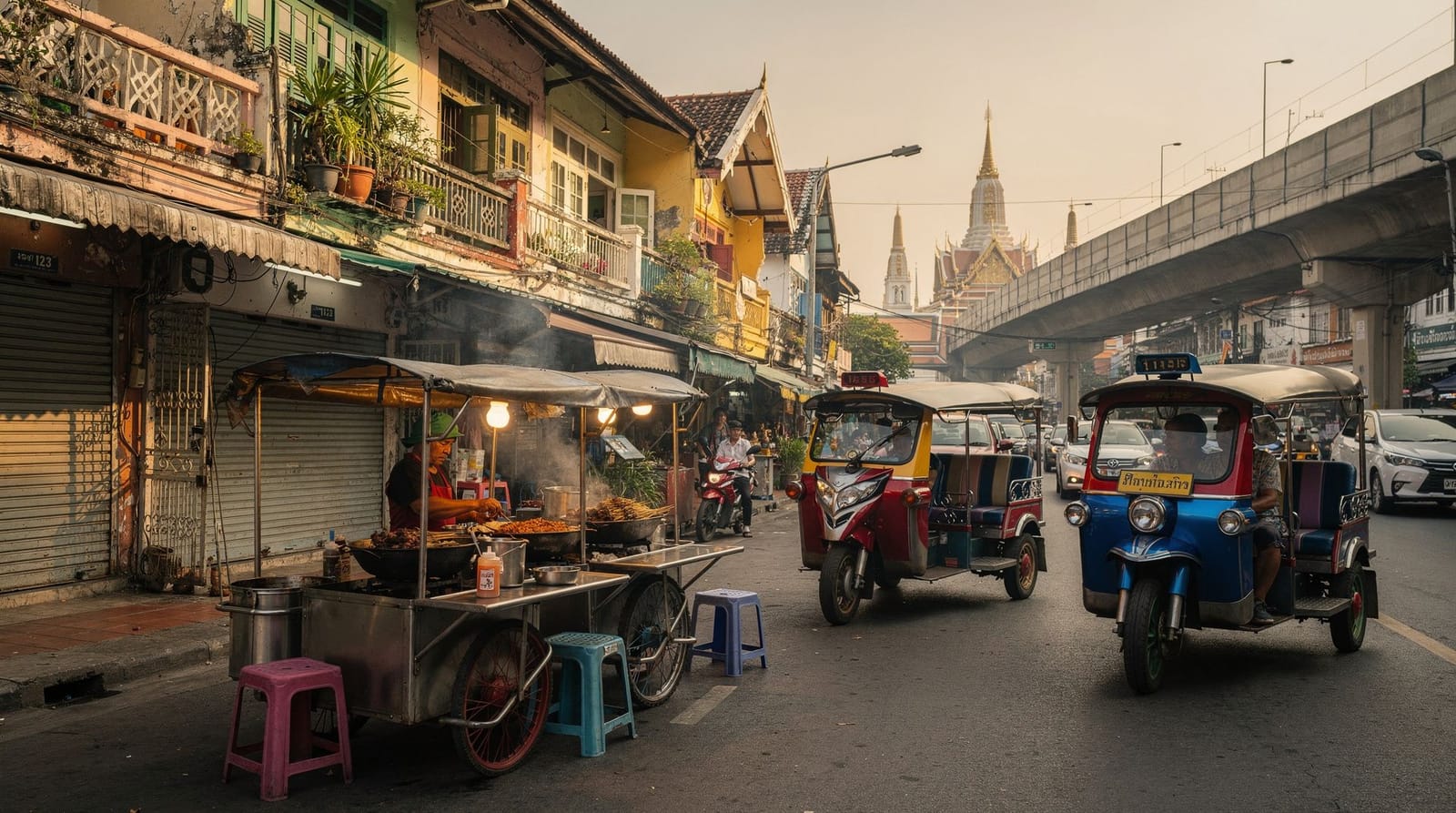
Chinatown is built around Yaowarat Road, the curving spine that gives the district its other name, and the dense web of sois — lanes — that branch off it. The MRT now stops at Wat Mangkon station, right in the heart of it, which makes arriving easy. The Chinatown guide lays out the proper geography if you want it. But here is my contrarian advice: do not bother memorising it. The pleasure of Chinatown is precisely in not knowing where you are, in turning down a lane because it looks interesting and discovering it leads somewhere you never intended to go.
The gold-shop canyon
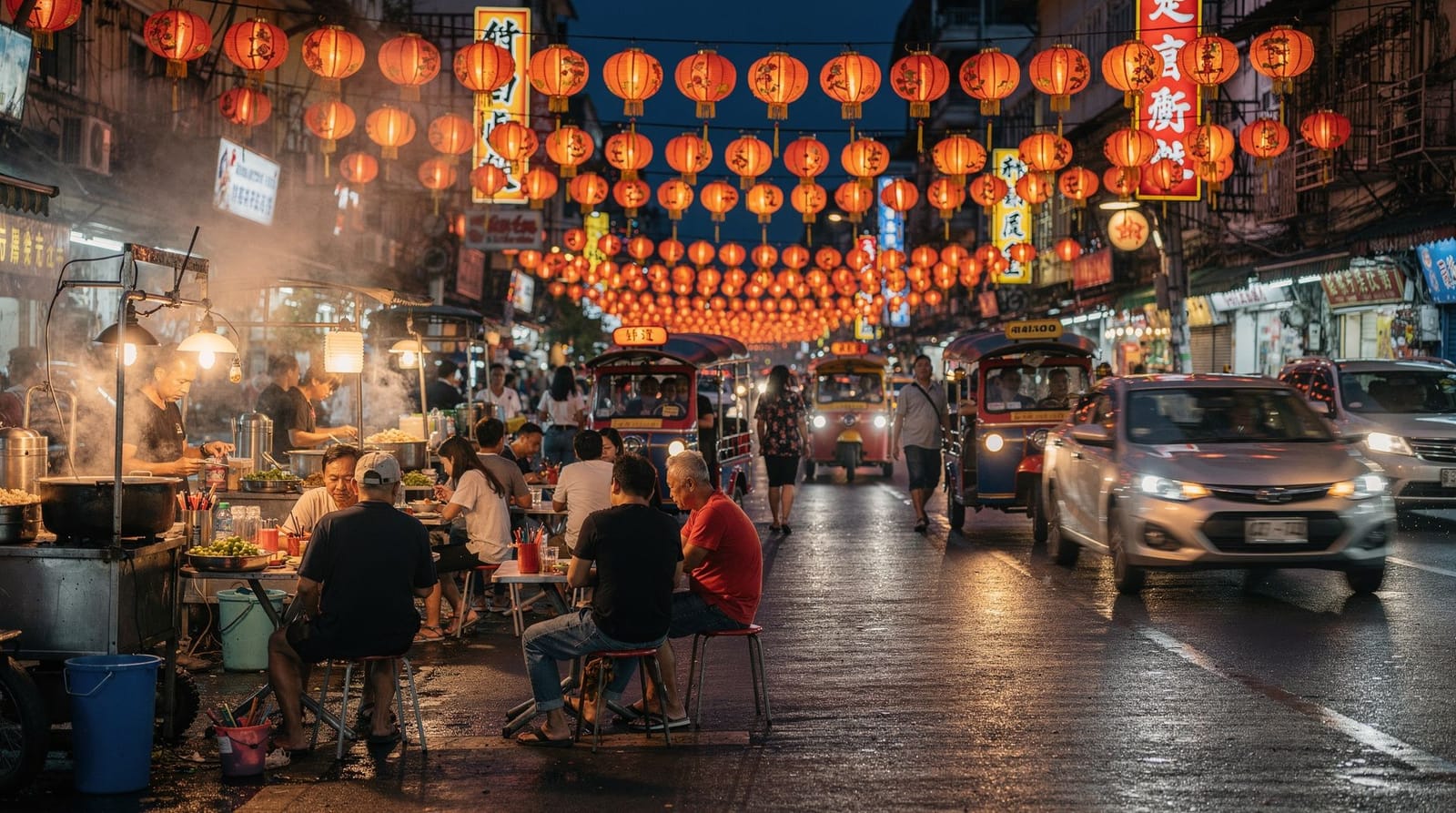
Walk along Yaowarat Road itself and you pass shop after shop with windows blazing gold — Chinatown is the centre of Bangkok’s gold trade, and the red-and-gold signage, the glittering window displays, the families haggling over chains, all give the main road a particular intensity. It is loud and bright and commercial and completely absorbing. I never buy anything; I just walk it and let the colour and noise wash over me. At night, when the neon comes on, this stretch is one of the most photogenic places in the whole city.
Sampeng Lane and the chaos of commerce
Slip off the main road into Sampeng Lane and the scale shrinks dramatically. This narrow market alley is barely wide enough for two people and a handcart, crammed with wholesale stalls selling beads, ribbons, toys, fabric, snacks, fake flowers, and a thousand other things, while porters somehow shove trolleys through the crush and motorbikes nose impatiently behind. It is claustrophobic and overwhelming and wonderful — a real working market that has functioned this way for over a century. You do not shop here so much as let the current carry you.
The hidden shrines
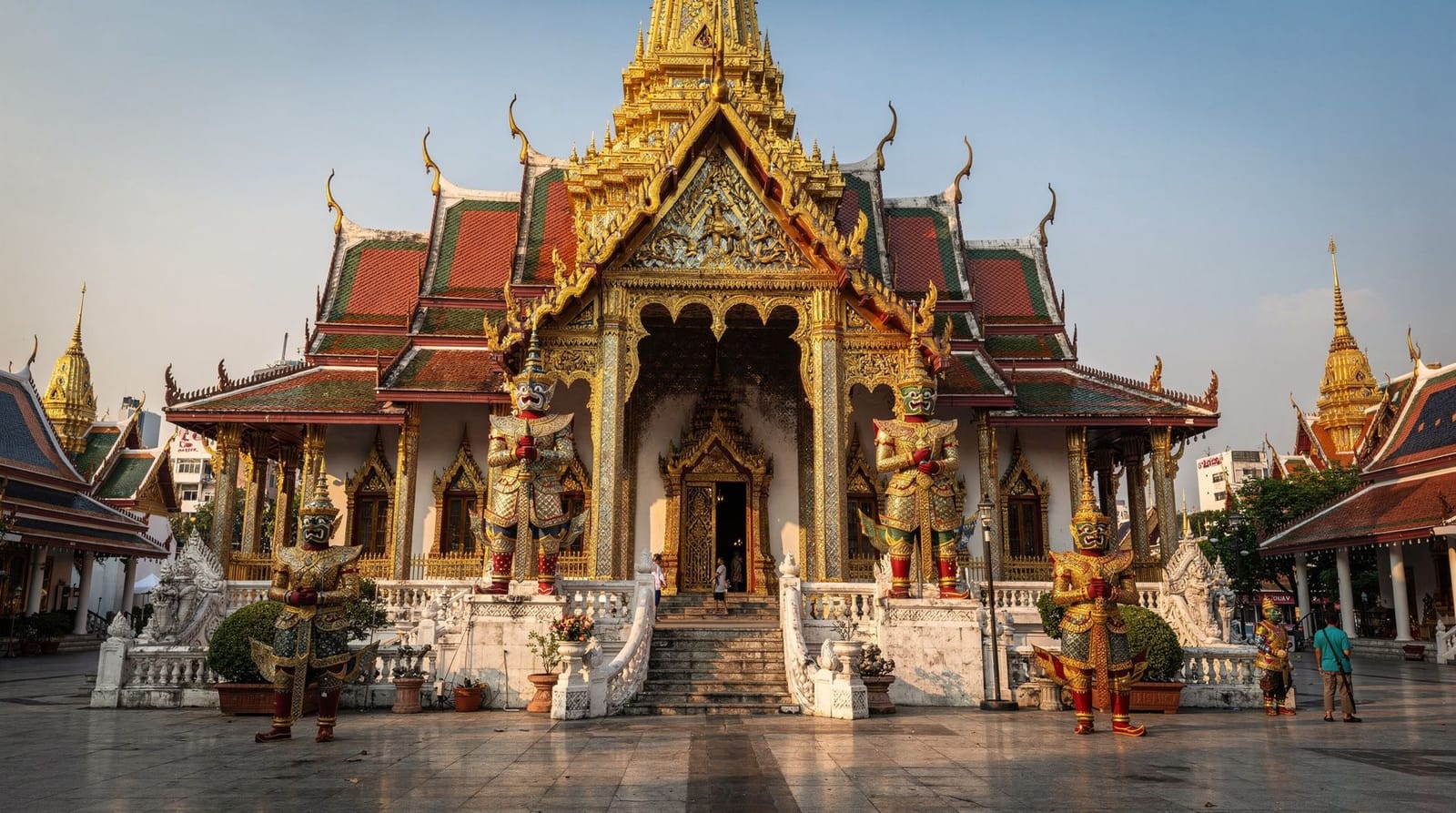
This is the part most visitors miss, and the part I love most. Tucked into the lanes are dozens of small Chinese shrines — smoky, red, hung with coiled incense, glinting with gold — that have nothing to do with tourism and everything to do with the daily devotion of the community. You turn a corner expecting another noodle stall and find an ornate shrine wedged between two shophouses, an old man lighting joss sticks, the air thick with sandalwood. The grand version of this is Wat Traimit, home to the world’s largest solid-gold Buddha — five and a half tonnes of it, accidentally rediscovered when a plaster casing cracked. Entry is around 100 baht and it is genuinely worth seeing. But the tiny anonymous shrines in the lanes are, to me, the soul of the place.
The food you stumble into
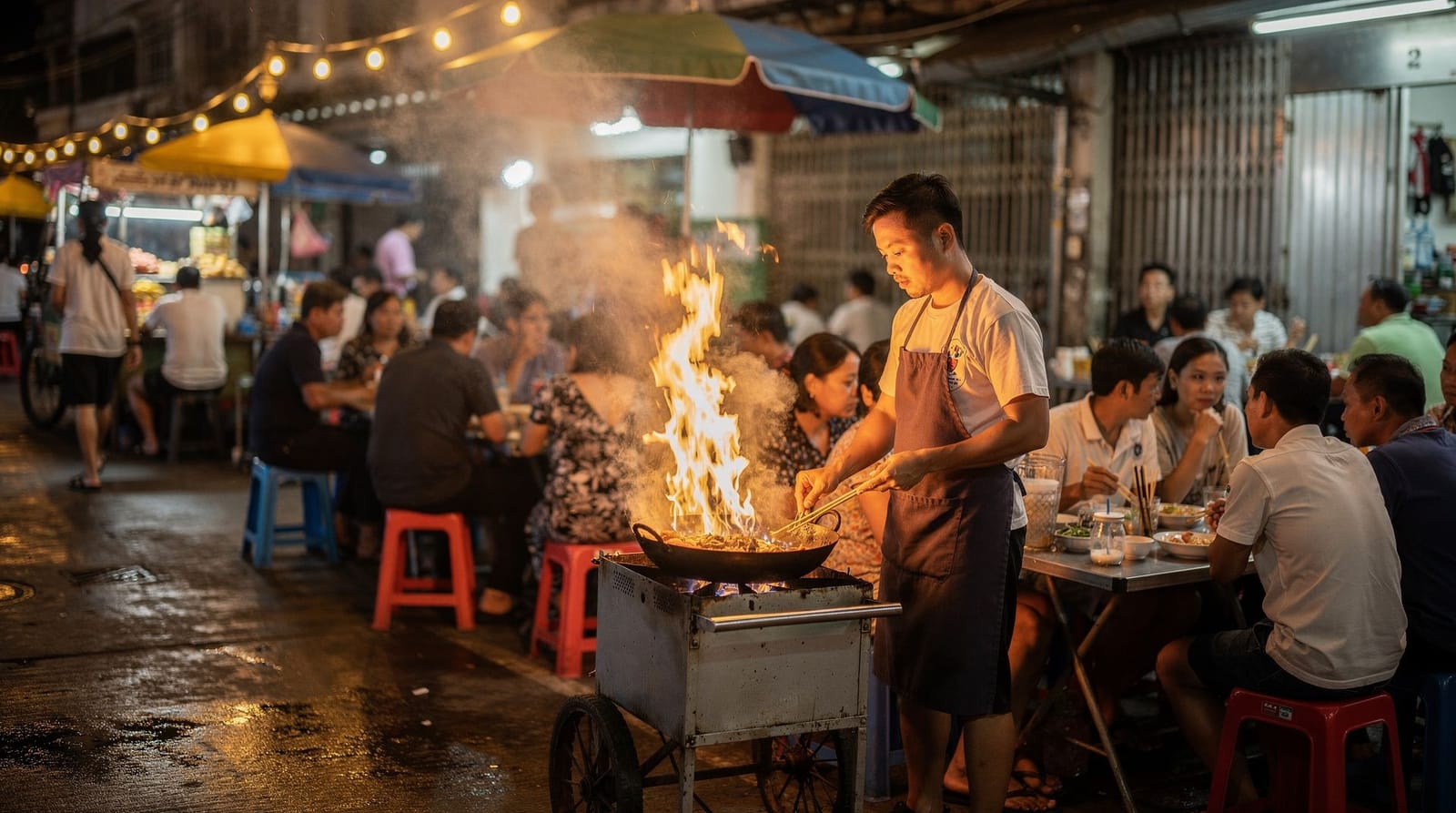
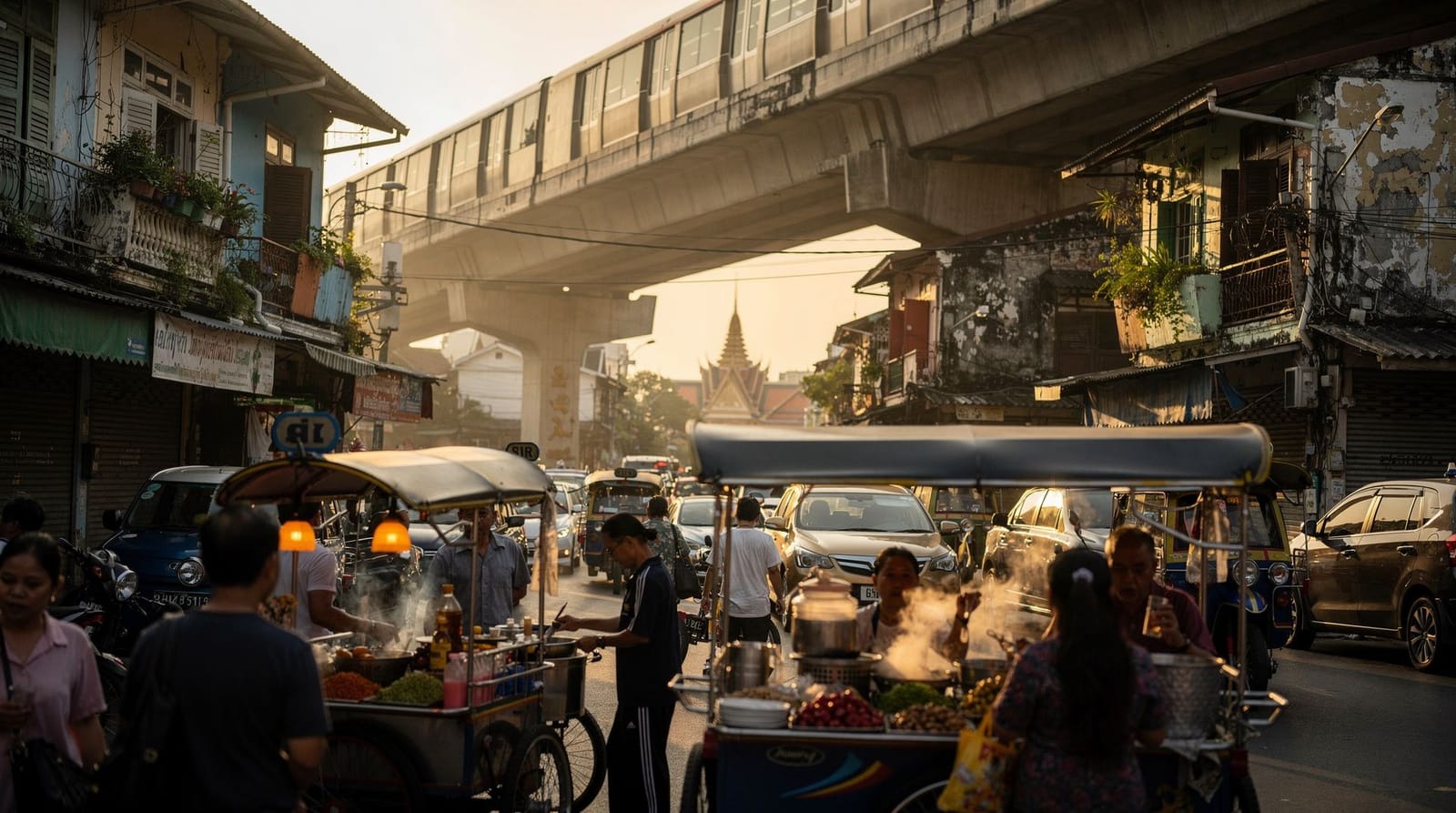
Of course, you cannot get lost in Chinatown without eating, and the genius is that the best food is exactly the food you stumble into. A stall with a queue of locals turns out to serve the peppery kuay jab noodles. A cramped shophouse does a single perfect dish of stewed pork leg over rice. A cart sells charcoal-toasted bread with custard. The Yaowarat Chinatown food guide names the famous ones, but half the joy is the unnamed discovery — the bowl of something delicious you could never find again because you have no idea where you were when you ate it.
When to come, and how the district changes through the day
Chinatown is really two different places depending on the clock, and knowing this shapes a good visit. By day it is a working commercial district: the gold shops trading, the wholesale lanes heaving, the dried-goods and herbal-medicine shops doing brisk business, the temples quiet and cool to step into out of the heat. This is the time for Sampeng Lane, the shrines, and Wat Traimit, all of which are calmer and more legible before the evening crowds. I like to arrive around 4pm, wander the daytime district as it winds down, and let the transition happen around me.
Because after dark, from roughly 6pm, Yaowarat transforms into one of the great street-food destinations on earth. The seafood stalls fire up their charcoal, the neon blazes, and the pavements clog with queues for the famous vendors. The energy is electric but the crowds are real, so if you want the food without the crush, come on a weeknight rather than a weekend, and accept that the best stalls will have a wait. The Yaowarat Chinatown food guide and the broader Bangkok at night page both map the after-dark scene, but the simplest plan is to do your wandering in the late afternoon and your eating after the sun goes down.
Getting there and finding your way back
The single best thing to happen to Chinatown for visitors is the MRT Blue Line extension, which put a station, Wat Mangkon, right in the middle of the district. Before that you arrived at the edge by bus or boat and walked in; now you can surface in the heart of it and, crucially, escape easily when your feet give out. A ride on the MRT costs roughly 17 to 42 baht, and the station entrances are decorated in Chinese style so they are easy to spot once you know to look. The getting around and MRT subway guides cover the network.
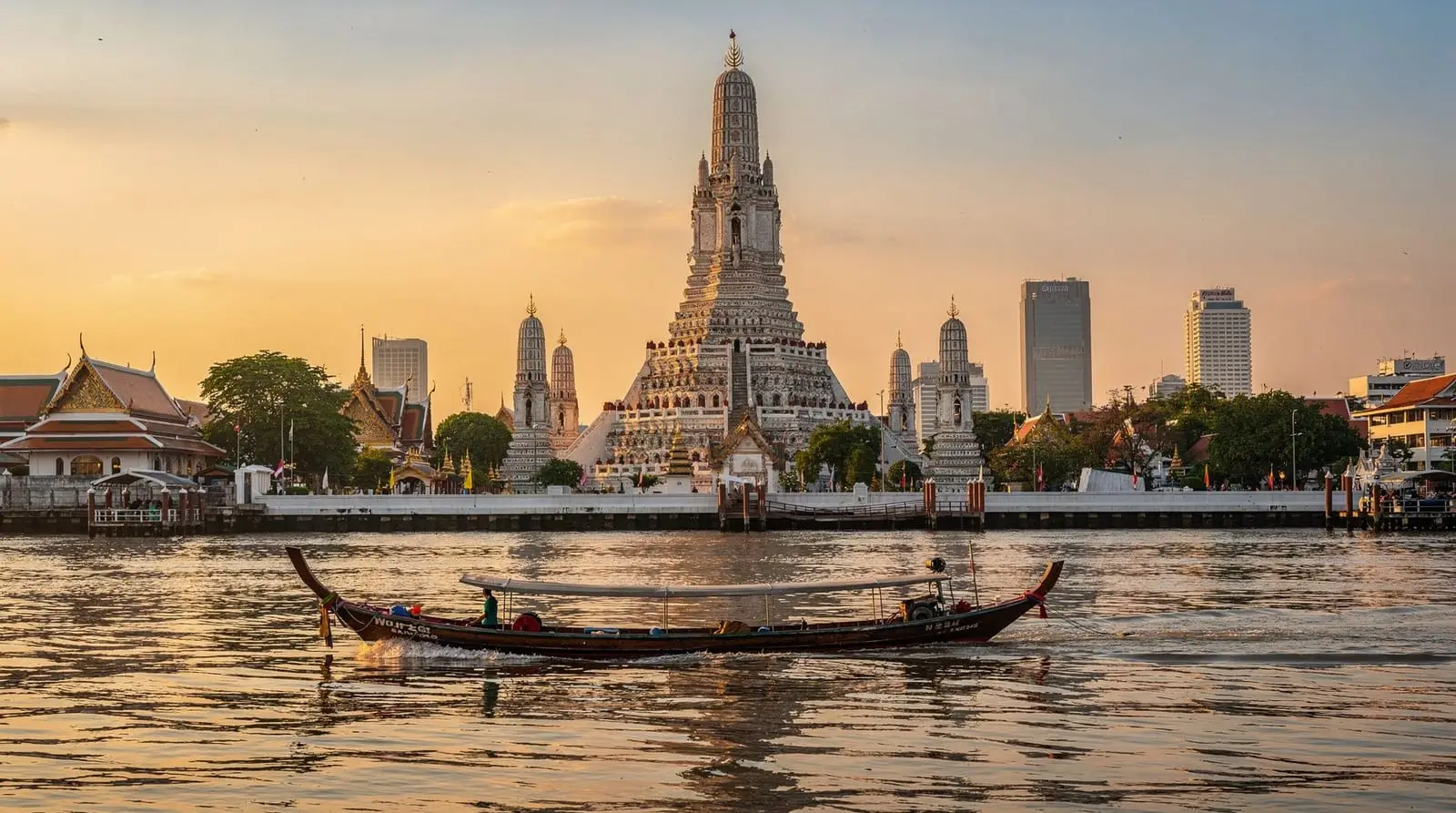
The river is the other great approach, and arguably the more atmospheric one. The Chao Phraya express boats stop at Ratchawong pier, a short walk into the food sois, and arriving by water for 16 baht with the temples sliding past is a fine way to begin a Chinatown evening. The genius of having both the MRT and the boat is that you can get gloriously lost in the middle, knowing two reliable exits bracket the chaos. So my advice stands: surrender to the lanes, but keep in the back of your mind that Wat Mangkon station or Ratchawong pier is never more than a ten-minute walk away when you have eaten yourself to a standstill.
When wandering meets Talat Noi
If you keep drifting south and west toward the river, Chinatown bleeds into Talat Noi, the old riverside district of car-parts shops, street art and crumbling Sino-Portuguese mansions. The Talat Noi guide covers it in depth, but the transition is seamless when you are wandering — one minute you are in the gold-and-incense intensity of Chinatown, the next in the rusting, arty calm of Talat Noi, with no clear border between them. This is the kind of discovery you only make by getting lost.
Wander west and you reach Little India
The other border worth crossing on foot is the one nobody tells you about. Keep drifting west along the lanes and Chinatown shades, almost imperceptibly, into Phahurat, Bangkok’s Little India, a compact quarter of sari shops, fabric wholesalers, Sikh temples and the smell of cumin and frying samosas replacing the sandalwood and grilled pork of Yaowarat. The shift is sudden and wonderful: one minute you are buying dried mushrooms, the next you are surrounded by bolts of glittering cloth and the music of Bollywood spilling from a shopfront. There is no signboard marking the change; you simply notice the script on the shops has turned from Chinese to Devanagari.
This is the kind of seamless transition that makes wandering this part of the city so rewarding. Within a fifteen-minute stroll you can pass from the gold-and-incense intensity of Chinatown through Little India and on toward the flower market at Pak Khlong Talat, three completely different worlds with no clear seams between them. I have spent whole afternoons just tracing these soft borders, eating my way from kuay jab to a plate of dhal to a garland of jasmine, and it remains one of my favourite slow walks anywhere in the city.
If you only have two hours
Not everyone can give Chinatown a whole afternoon, so here is the version of wandering that still works on a tight schedule. Enter at Wat Mangkon MRT, walk Yaowarat Road for the gold shops and the general spectacle, duck into Sampeng Lane for ten minutes of market chaos, then let yourself drift one block off the main road toward whichever alley looks most interesting rather than trying to see everything. Two hours is not enough for the full transformation from day to night, so pick a lane: come at 4pm for the working daytime district and the shrines, or come at 6:30pm and go straight for the street food. Trying to do both in two hours means rushing both. The best cheap eats and Michelin street food guides are useful shortlists if your two hours are squarely about eating rather than wandering.
The district, area by area
| Area | Character | Best time |
|---|---|---|
| Yaowarat Road | Gold shops, neon, main spine | Late afternoon into night |
| Sampeng Lane | Wholesale market, narrow and chaotic | Daytime |
| Hidden shrines | Quiet, smoky, community devotion | Daytime |
| Talat Noi | Street art, car parts, riverside calm | Any time, quieter |
| Phahurat (Little India) | Sari shops, Sikh temples, samosas | Daytime |
If a drink afterward appeals, a newer layer worth knowing about is the district’s growing scene of Chinatown speakeasies tucked behind unmarked doors and old shopfronts — a fittingly secretive way to end a day built on not knowing where you are going.
When to let a guide do the navigating
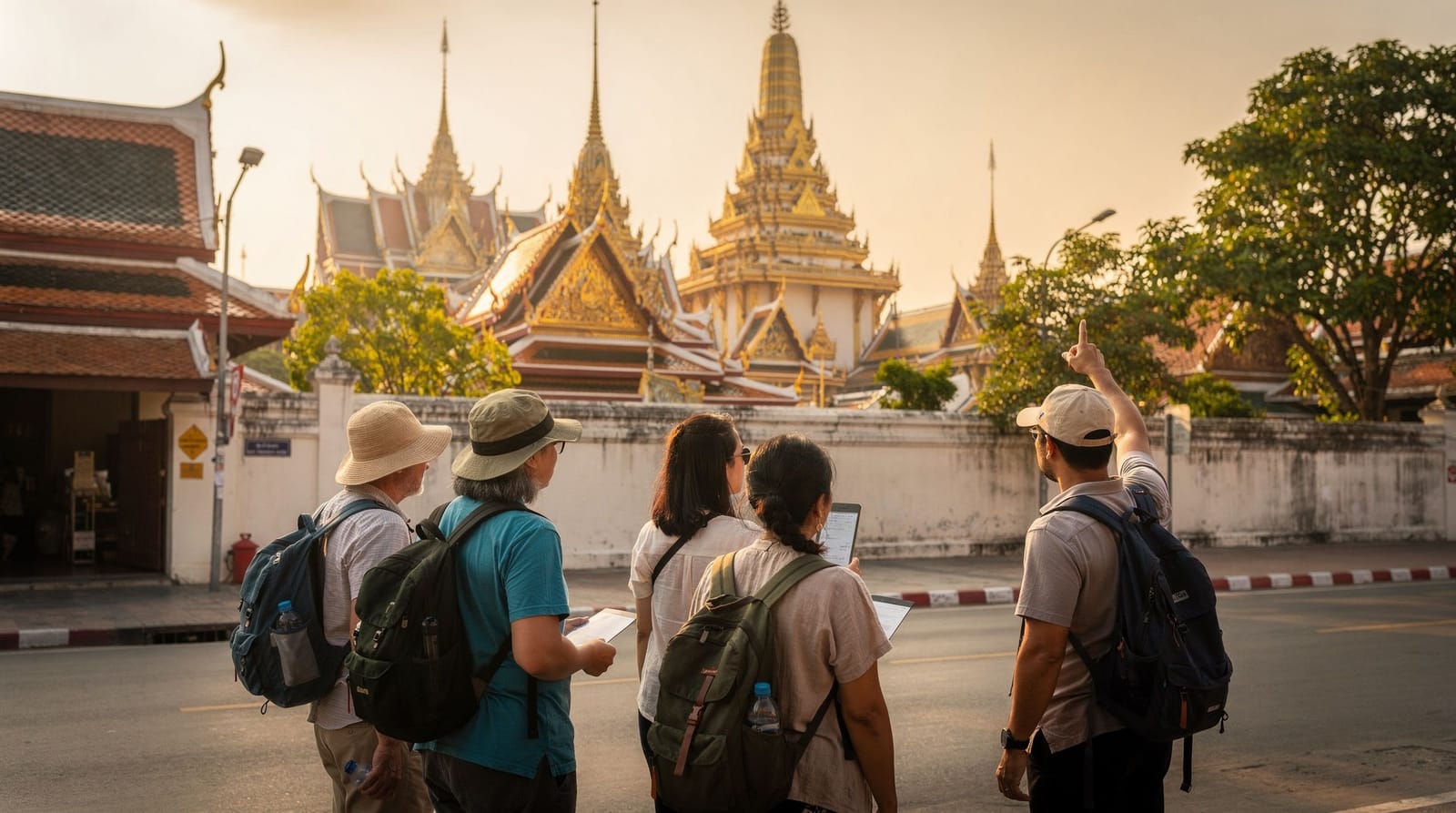
There is a contradiction here I should be honest about. The deepest pleasure of Chinatown is wandering without a guide, but a guide also unlocks things wandering never will — which shrine is two hundred years old, which stall the locals queue for, what that festival is, what that symbol means. So I do both. On a first visit, especially, having someone make sense of the chaos is genuinely valuable. A walk through the back alleys of Chinatown reveals the lanes you would never find alone, and a self-guided Chinatown and Wat Traimit walking route gives you structure while leaving room to drift. The walking tours guide compares the options.
The case for getting lost
Bangkok is a city that rewards surrender, and nowhere more than Chinatown. The map will tell you where the famous Buddha and the famous noodles are, and you should see them. But the things you will actually remember — the shrine in the alley, the impossible market lane, the noodle bowl you could never find again, the cat asleep on a sack of dried shrimp — those come only when you put the phone away, pick a lane at random, and let the oldest, densest, most alive corner of Bangkok pull you wherever it wants. Get lost on purpose. It is the whole point.
Frequently asked questions about Bangkok’s Chinatown
How do I get to Bangkok’s Chinatown?
Take the MRT to Wat Mangkon station, which sits in the heart of the district, or to Hua Lamphong. The area is dense and walkable; once there, exploring on foot is by far the best approach.
What is the best thing to do in Chinatown Bangkok?
Wander. Eat street food on Yaowarat Road, lose yourself in Sampeng Lane’s market chaos, find the hidden shrines, and visit Wat Traimit’s solid-gold Buddha. The unplanned discoveries are the highlight.
Is Bangkok’s Chinatown safe to wander?
Yes, very. It is busy, well-populated and welcoming day and night. Mind your belongings in the crush of Sampeng Lane, but getting happily lost here is one of the safest pleasures in the city.
What is the best time to visit Chinatown?
By day it is a working market district, calmest for Sampeng Lane, the shrines and Wat Traimit. After about 6pm Yaowarat transforms into a street-food spectacle. Arriving around 4pm lets you experience both as the district changes.
How do I get to Chinatown by public transport?
Take the MRT to Wat Mangkon station, right in the heart of the district, for around 17 to 42 baht, or arrive by Chao Phraya express boat at Ratchawong pier for 16 baht. Both leave you a short walk into the food lanes.
Can I walk from Chinatown to Little India?
Yes. Keep drifting west and Chinatown shades seamlessly into Phahurat, Bangkok’s Little India, a quarter of sari shops, Sikh temples and Indian food, with no clear border between the two. It is one of the city’s best slow walks.