The best tom yum I found in Bangkok (and how I judged it)
I went looking for the best tom yum in Bangkok the way some people go looking for the best pizza in Naples — obsessively, repeatedly, and with strong opinions I was prepared to defend. Over one long, sweaty, gloriously sour-and-spicy fortnight, I ate tom yum goong at street stalls, neighbourhood shophouses, a Michelin-listed noodle joint and one fancy restaurant, and I came away with a clear winner, a deeper understanding of what makes a great bowl, and a permanent low-grade addiction. Here is the hunt, the verdict, and how to find your own best bowl.
| Where | Everywhere; Banthat Thong and Yaowarat are the richest hunting grounds |
| Cost | 60–180 baht street/shophouse, up to 350–400 baht sit-down |
| Time needed | One bowl, 20–30 minutes; a proper hunt takes a few days |
| Getting there | BTS National Stadium for Banthat Thong; MRT Wat Mangkon for Yaowarat |
| Best time | Lunch or dinner; follow the local queue, not the clock |
What tom yum actually is, and why it is hard to get right
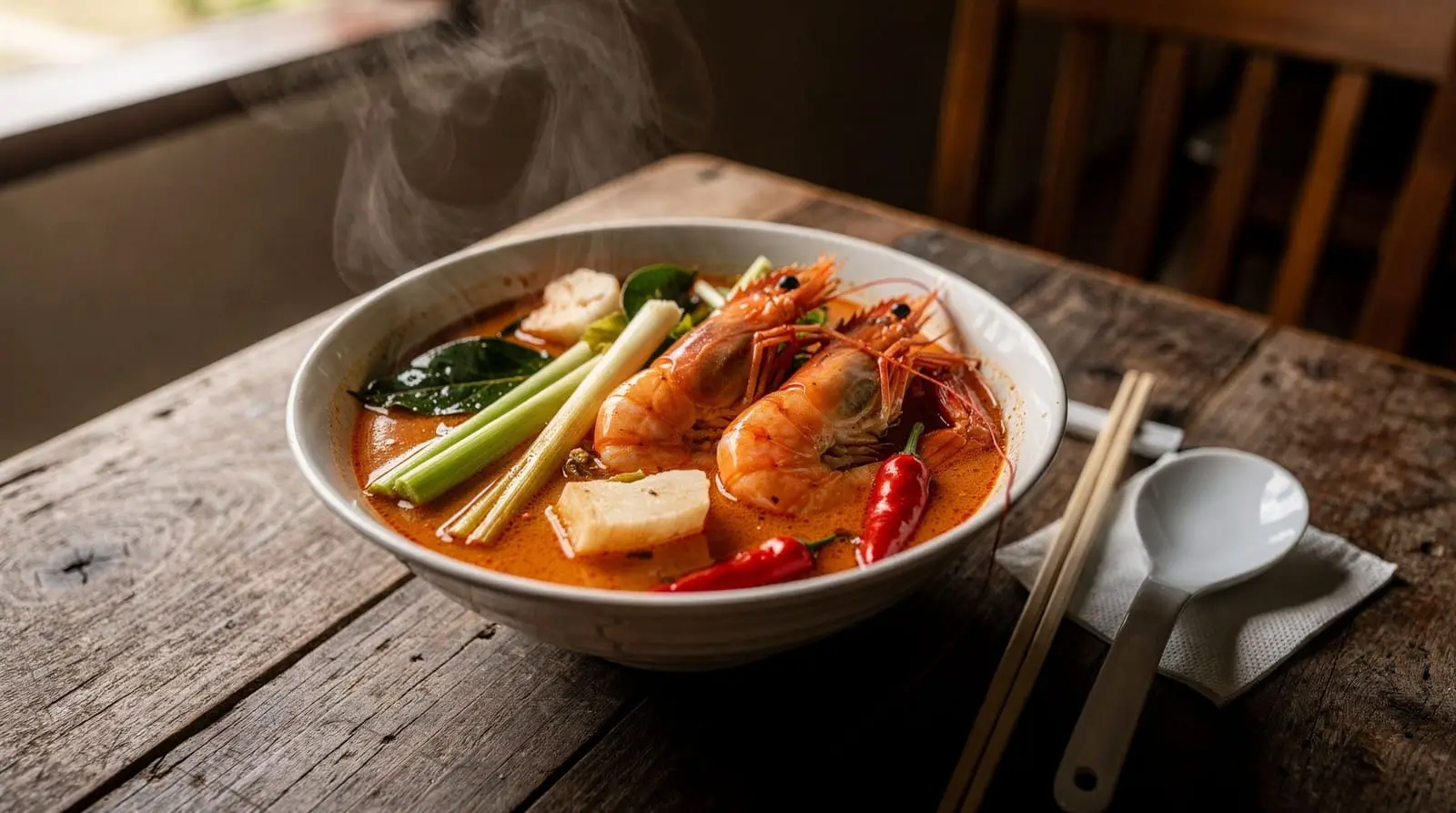
Tom yum is the iconic hot-and-sour Thai soup, and the classic version, tom yum goong, is made with prawns. The flavour is built on a foundation of lemongrass, galangal, kaffir lime leaves, lime juice, fish sauce and bird’s-eye chilli, producing a broth that hits sour, spicy, salty and aromatic all at once. There are two main styles you will meet: the clear nam sai version, bright and sharp and clean, and the creamy nam khon version, enriched with evaporated milk or coconut and chilli paste until it turns a rich orange. Both are legitimate; people have fierce loyalties. A great tom yum balances all those competing forces so no single one dominates — get it wrong and it is just sour, or just hot, or just salty. Get it right and it is one of the great soups of the world. The what to eat guide places it in the wider canon of Thai dishes worth chasing.
My judging criteria
To keep myself honest, I judged every bowl on four things. First, balance — does the sour, spicy, salty and aromatic sit in harmony, or does one bully the others? Second, the broth’s depth, that elusive savoury backbone that separates a great bowl from a merely fiery one. Third, the prawns — fresh, plump, properly cooked, ideally with the heads on so the rich tomalley enriches the broth. Fourth, aromatics — you should be able to smell the lemongrass and kaffir lime before the bowl even reaches you. Anyone can make a sour, spicy soup; the masters make a balanced, fragrant, deep one.
The contenders
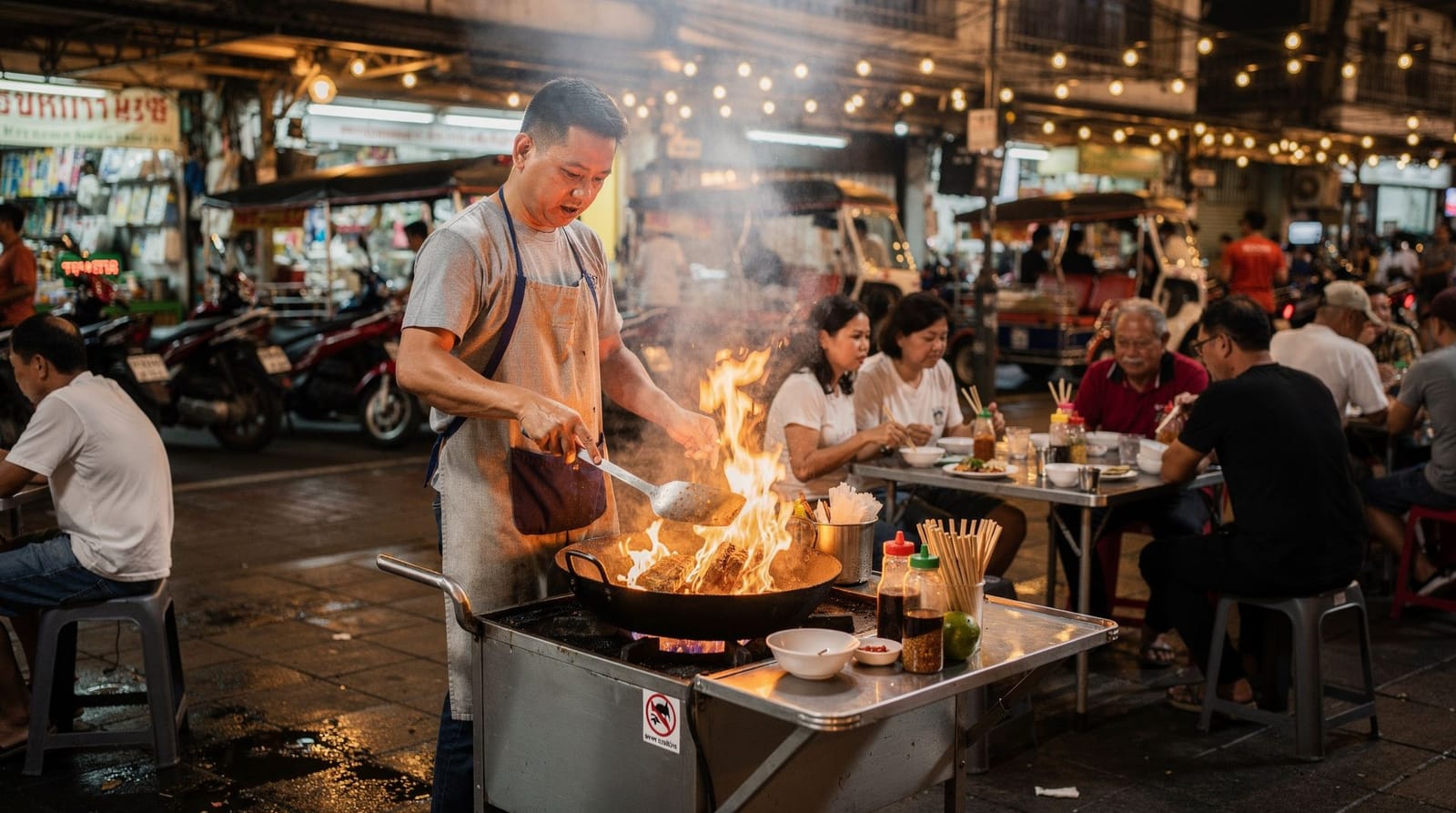
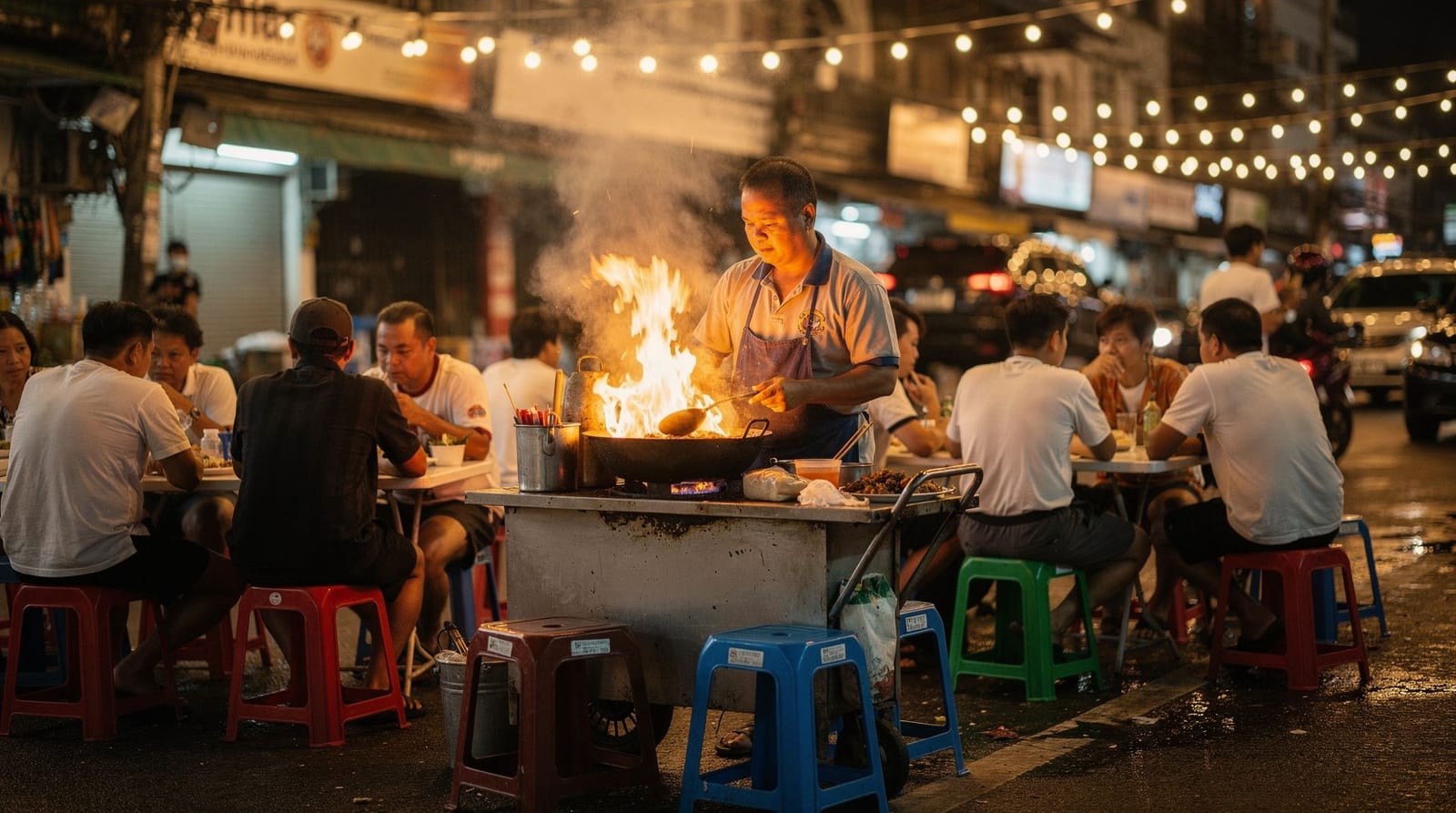
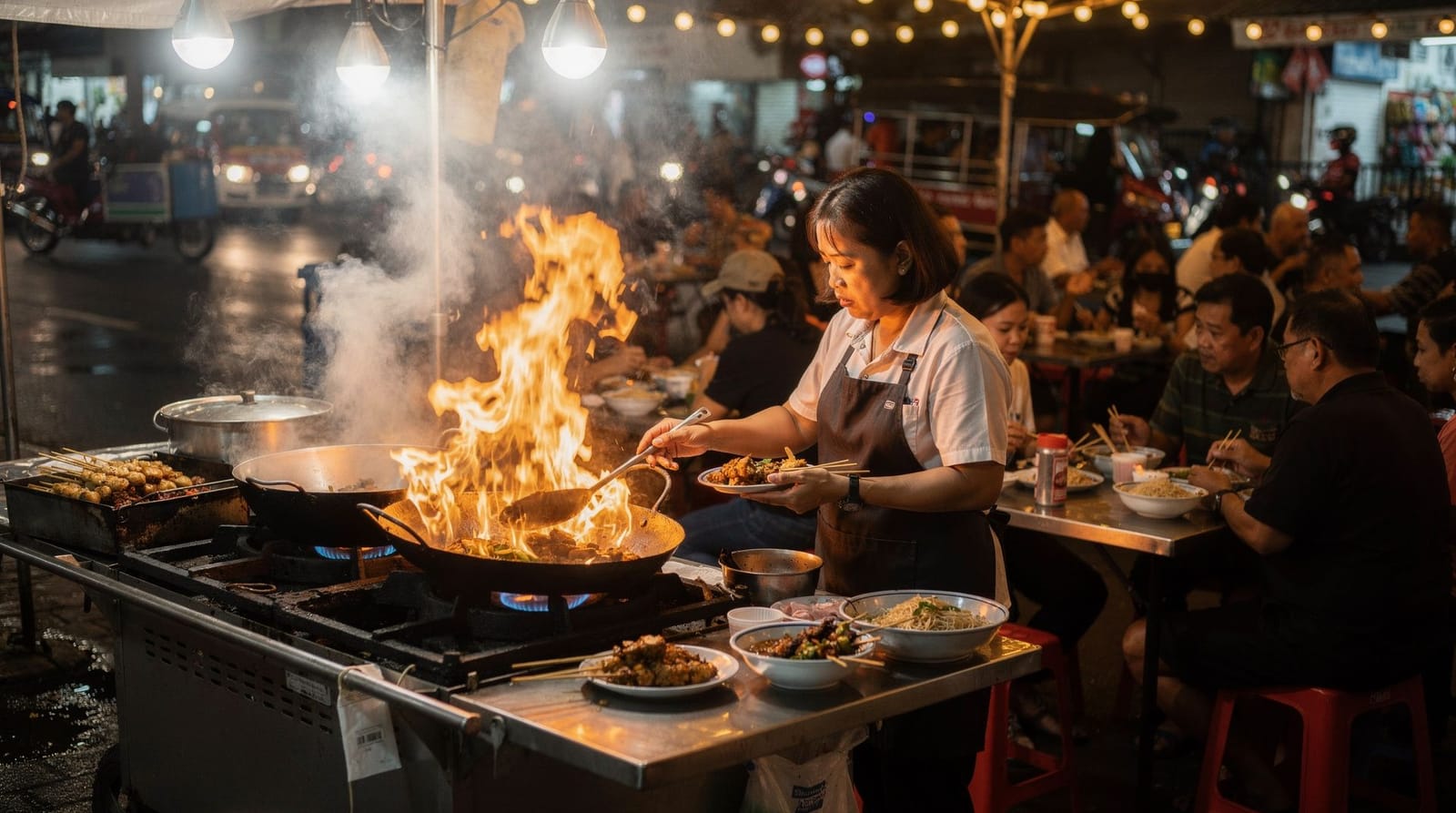
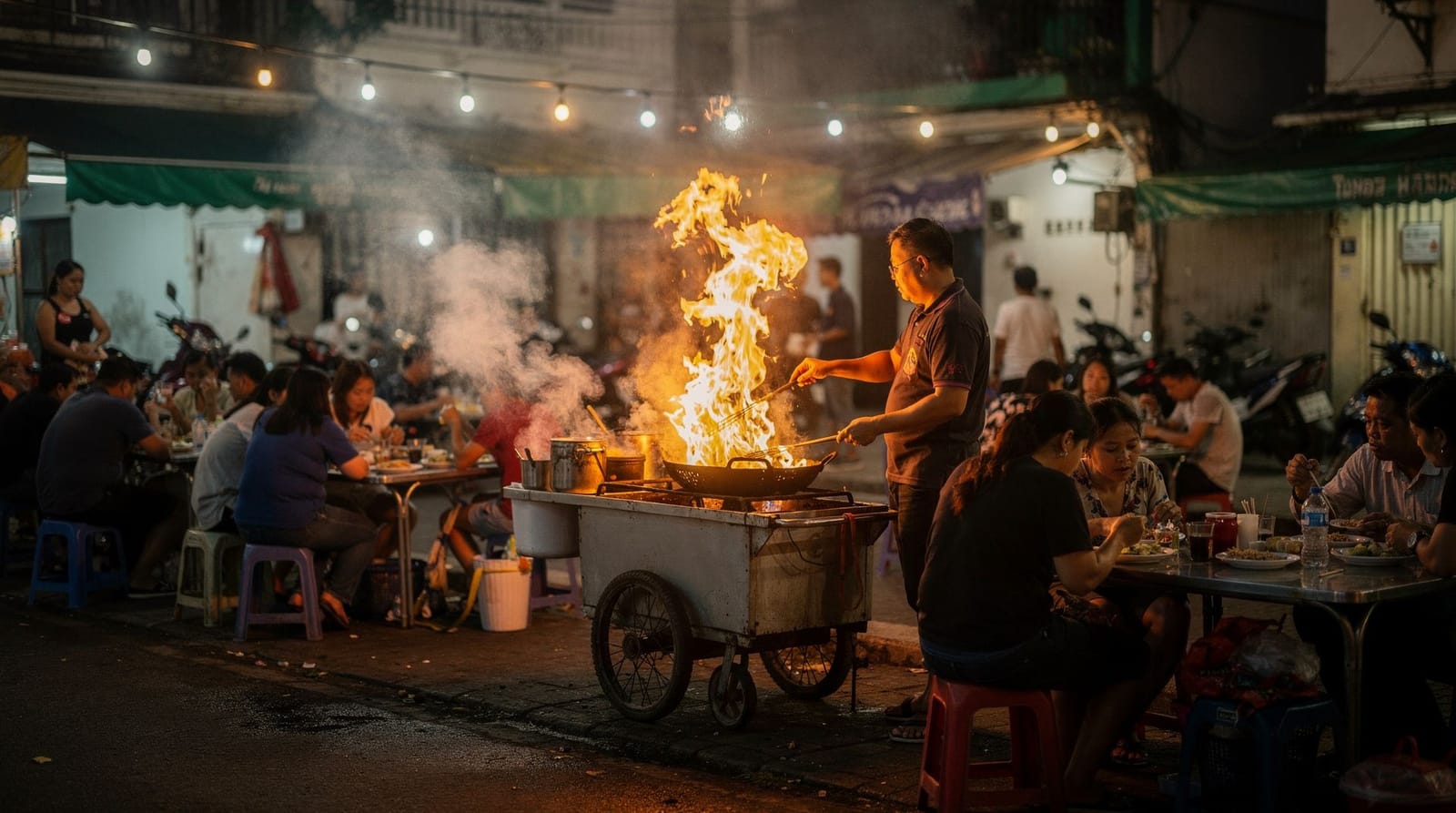
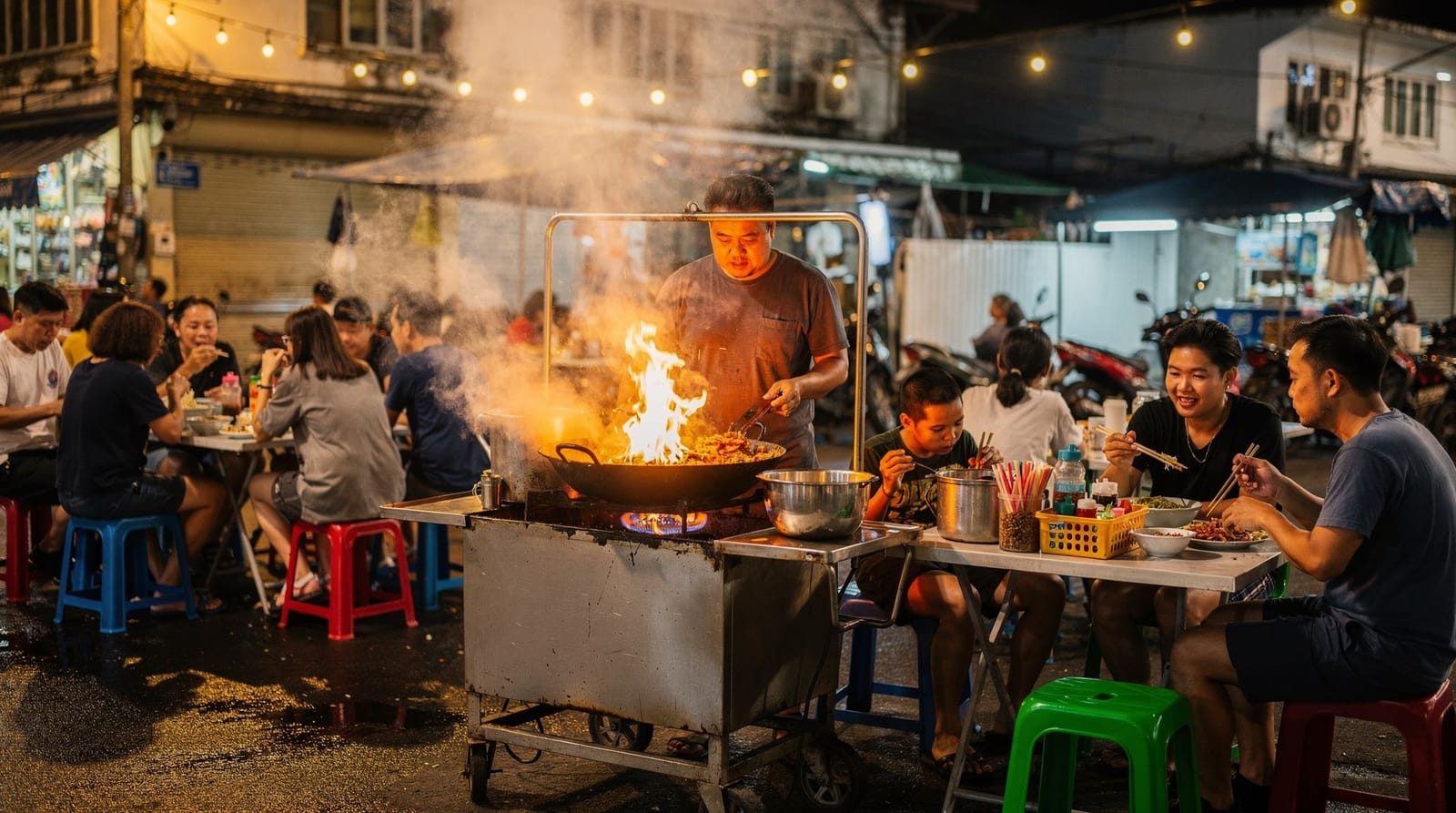
I ate widely. The street stalls gave me cheap, fierce, no-frills bowls for 60 to 100 baht — sometimes brilliant, sometimes one-note. The Banthat Thong food street, a stretch that has become one of the city’s hottest eating strips, served me a creamy nam khon version so rich it was almost a curry, packed with prawns, for around 150 baht, and it was a serious contender. A famous shophouse known for its tom yum noodle bowls did a clear version with a broth so concentrated it made my eyes water in the best way. And one proper sit-down Thai restaurant produced a refined, perfectly balanced bowl for 350 baht that was technically flawless but somehow less thrilling than the rougher street versions. The best cheap eats and street food guides map the territory if you want to run your own hunt.
The winner
My favourite bowl, the one I went back for three times, was a clear nam sai tom yum goong from an unassuming shophouse near Banthat Thong — fierce with chilli, electric with lime, deep with a broth that had clearly been built on real prawn shells, and crowded with fat river prawns whose heads I squeezed into the soup with indecent enthusiasm. It cost 180 baht, which felt like theft for something that good, and it taught me my main lesson: the best tom yum is rarely the most expensive or the most refined. It is the one made by someone who has been making it the same way for thirty years and gets the balance exactly right every single time.
How to order it like a local
A few tips from the hunt. Specify your style if you can — nam sai for clear, nam khon for creamy. If you do not want it punishingly spicy, say “mai phet” or “phet nit noi” (a little spicy), because the default at a Thai-facing shop can be ferocious. Order it with prawns (goong) for the classic, but it is also wonderful with chicken (gai) or mixed seafood (talay) or even mushrooms. Eat it as Thais do, as one dish among several shared over rice, rather than as a starter — tom yum is a component of a meal, not a course on its own. And do not be alarmed by the chunks of lemongrass, galangal and lime leaves in the bowl; those are aromatics, not meant to be eaten, so push them aside.
Make it yourself
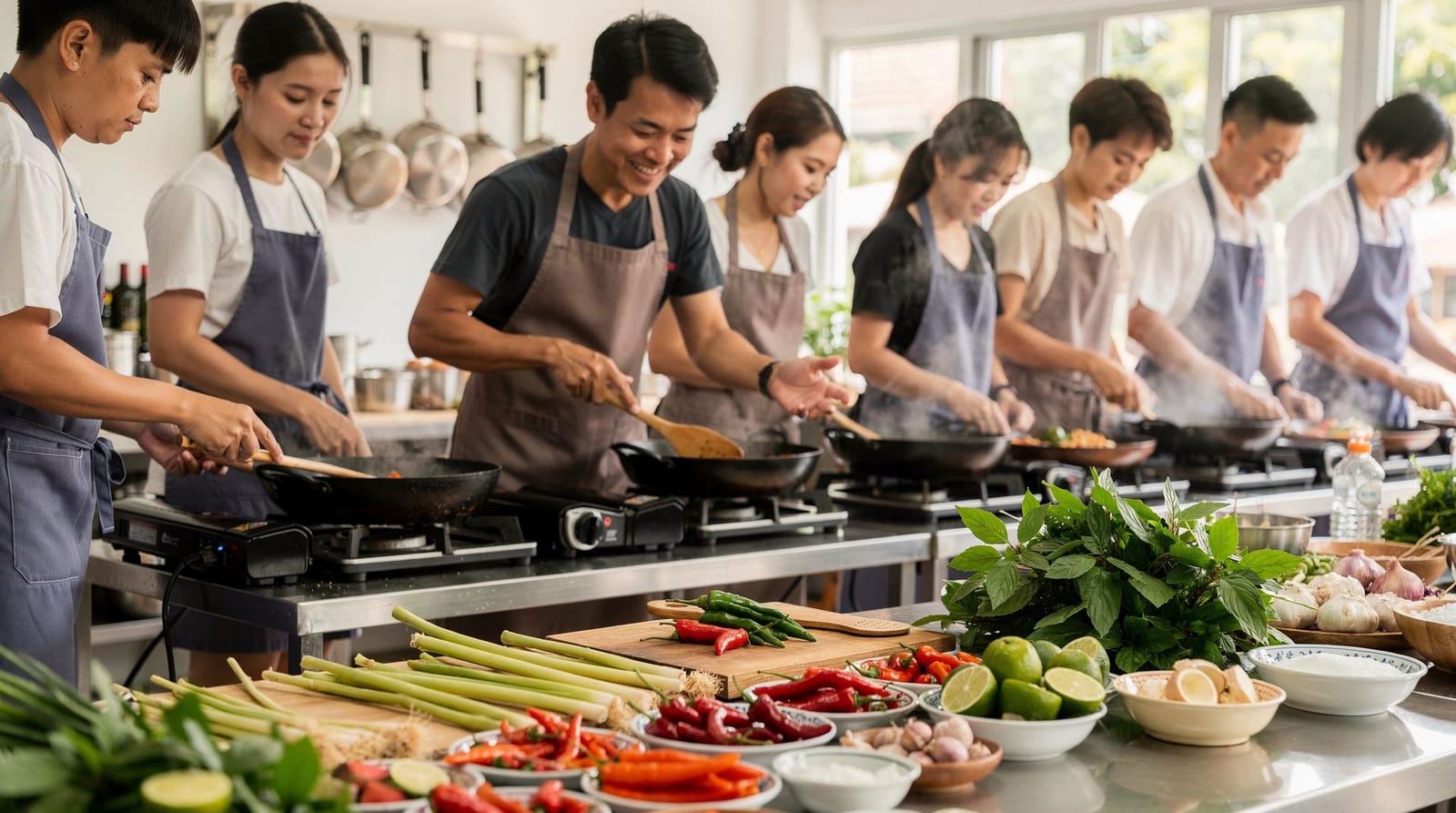
The deepest way to understand tom yum is to make it, and Bangkok’s cooking classes almost always feature it precisely because it teaches you the architecture of Thai flavour-balancing. After two weeks of eating it, I took a class partly to learn why my favourite bowl worked, and pounding the chilli paste and balancing the lime and fish sauce by taste gave me a whole new respect for the dish. A Thai cooking class that starts with a market tour usually includes tom yum and lets you carry the recipe home, which is the only way to keep eating it once you leave. The cooking class guide compares the options.
Tom yum goong versus tom yum nam khon, and the noodle version
Two distinctions caused me the most confusion early in the hunt, so let me clear them up. The first is the clear-versus-creamy split I have mentioned, which is purely about the broth: nam sai is clear and sharp, nam khon adds chilli paste and evaporated milk for body. The second is the soup-versus-noodle question. Tom yum the soup is a shared dish in a communal bowl, eaten with rice alongside other plates. But you will also see tom yum noodles — a single-person bowl where rice noodles, pork, fish balls and the works swim in a tom-yum-flavoured broth, often with a spoon of ground peanuts, chilli and sugar stirred in at the table. That noodle version, sometimes called “tom yum” at a noodle shop, is a fast, cheap, brilliant lunch for 50 to 70 baht and is where I ate some of my most memorable broths. They are cousins, not the same dish, and a serious tom yum hunt should chase both. The best food markets and Banthat Thong food street are good places to compare the two side by side.
Where in the city to hunt
The bowl is everywhere, but a few areas reward a dedicated tom yum mission. Banthat Thong, the food street near the National Stadium BTS that has exploded in popularity, was my richest hunting ground — a dense run of stalls and shophouses where you can taste three or four different bowls in an evening for under 500 baht total. Chinatown along Yaowarat delivers fierce, seafood-heavy versions from stalls that have been doing it for generations, and the Yaowarat food guide maps them. Around Victory Monument the boat-noodle stalls often do a punchy tom yum noodle bowl on the side. And the riverside neighbourhoods near the markets turn out clear, prawn-shell-deep versions that lean on fresh river prawns. Wherever you go, the queue is the signal — a Thai crowd at a tom yum stall has never once steered me wrong.
A note on the heat, and surviving it
I should be honest about the chilli, because the default tom yum at a Thai-facing stall can be genuinely punishing for an unaccustomed palate. The bird’s-eye chillies are not for show; a properly fiery bowl will have your nose running and your scalp prickling within three spoonfuls. This is part of the dish and part of the pleasure once you build a tolerance, but on a first encounter ask for “phet nit noi” and work up. Eat plain rice alongside to dampen the burn, and reach for the iced water or a sweet Thai tea rather than trying to power through. Crucially, do not eat the lemongrass stalks, galangal slices and torn lime leaves floating in the bowl — they are there to perfume the broth, and biting into a chunk of raw galangal is a memorable mistake. Push them to the side, spoon up the liquid and the prawns, and let the aromatics do their work from the edge of the bowl.
Vegetarian and vegan tom yum
Tom yum’s base is naturally vegetable-forward, which makes it one of the easier Thai dishes to adapt, but the classic version relies on fish sauce and often shrimp paste, so you do need to ask. Say “tom yum jay” for a vegan-leaning version, or specify no fish sauce and no shrimp paste, and most kitchens will substitute soy sauce and swap the prawns for mushrooms or tofu without losing much of the character — the lemongrass, galangal and lime aromatics that define the dish are all plant-based to begin with. It will not be identical to the prawn-head-enriched broths I chased on this hunt, but a good vegetarian version is still a genuinely satisfying bowl. The vegetarian and vegan Bangkok guide points to kitchens that handle this well without watering down the flavour.
How tom yum stacks up against Bangkok’s other iconic dishes
Tom yum was my obsession for this hunt, but it is one contender among several in Bangkok’s canon of dishes people build whole trips around, some of which now carry Michelin street-food recognition. Pad thai has more universal appeal and a gentler learning curve for newcomers — the best pad thai guide runs its own version of this hunt. Khao man gai, the simple chicken-and-rice dish, is the comfort-food counterpart to tom yum’s fire, and the khao man gai guide is worth reading if the chilli ever gets to be too much. Whatever you chase, the street food safety guide’s queue-reading advice applies just as well to soup stalls as to anything else.
The takeaway
The best tom yum in Bangkok is not a fixed address; it is a moving target you find by eating widely and trusting the balance. Chase the clear-versus-creamy debate, follow the queues, squeeze the prawn heads into the broth, learn to ask for it the way you want it, and judge every bowl on harmony rather than heat. My winner near Banthat Thong may not be yours, and that is exactly the joy of it — in a city this serious about its food, the perfect bowl of tom yum is always one shophouse away. If you want to build a whole trip around eating like this, the food tour question and a foodie itinerary are the natural next steps.
Where I ate it, compared
| Venue type | Price | Style | Verdict |
|---|---|---|---|
| Street stall | 60–100 baht | Fierce, no-frills | Sometimes brilliant, sometimes one-note |
| Banthat Thong shophouse | 150 baht | Creamy nam khon | Serious contender, almost a curry |
| Tom yum noodle shop | 50–70 baht | Clear, concentrated | My most memorable single lunch |
| Sit-down restaurant | 300–400 baht | Refined, balanced | Technically flawless, less thrilling |
| Winning shophouse (Banthat Thong) | 180 baht | Clear nam sai | My favourite, three visits in |
Frequently asked questions about tom yum in Bangkok
What is the difference between clear and creamy tom yum?
Clear tom yum (nam sai) is bright, sharp and clean, built purely on lime, chilli and aromatics. Creamy tom yum (nam khon) adds evaporated milk or coconut and chilli paste for a richer, orange broth.
How much does tom yum cost in Bangkok?
Street and shophouse bowls run 60 to 180 baht, while sit-down restaurant versions reach 300 to 400 baht. Some of the best bowls come from humble shophouses rather than the priciest restaurants.
How do I order tom yum if I do not like it too spicy?
Say “phet nit noi” (a little spicy) or “mai phet” (not spicy). Specify nam sai for clear or nam khon for creamy, and choose your protein: goong (prawn), gai (chicken) or talay (seafood).
Where is the best tom yum in Bangkok?
There is no single address, but Banthat Thong near the National Stadium BTS, the seafood stalls of Yaowarat in Chinatown, and humble long-running shophouses tend to beat the priciest restaurants. Follow the local queues and judge each bowl on balance.
What is tom yum noodle, and is it the same as the soup?
It is a related but separate dish: a single-portion noodle bowl in a tom-yum-flavoured broth, usually with peanuts, chilli and sugar added at the table, for 50 to 70 baht. The soup is a shared bowl eaten with rice. Both are worth chasing.
Can I get vegetarian tom yum in Bangkok?
Yes. Ask for “tom yum jay” or specify no fish sauce and no shrimp paste, and most kitchens substitute soy sauce and swap the prawns for mushrooms or tofu. The vegetarian and vegan Bangkok guide points to kitchens that do it well.
What other Bangkok dishes should I hunt the way I hunted tom yum?
Pad thai and khao man gai are the two obvious next hunts — the best pad thai and what to eat guides are good starting points, and both reward the same street-stall-over-restaurant instinct that found my winning bowl.