Kanchanaburi and the Death Railway: a day trip guide
Bangkok: Kanchanaburi, River Kwai & Death Railway Tour
Is the Kanchanaburi Death Railway worth visiting from Bangkok?
Yes — Kanchanaburi is the most moving day trip from Bangkok. About 130km west, it is the site of the WWII Thai–Burma 'Death Railway' built by Allied prisoners of war and Asian labourers, including the bridge over the River Kwai, where roughly 100,000 people died. The war cemetery, the railway museum and Hellfire Pass are genuinely sobering. Many trips combine the history with a ride on the surviving railway and the turquoise Erawan Falls. Expect 2–3 hours each way.
Kanchanaburi is the most moving day trip you can take from Bangkok, and the one that stays with people longest. About 130km west of the capital, it is the site of the Thai–Burma Railway — the “Death Railway” — which the Japanese forced Allied prisoners of war and tens of thousands of conscripted Asian labourers to build during the Second World War. Around 100,000 people died from disease, starvation and brutality during its construction, including the bridge over the River Kwai immortalised (and substantially fictionalised) by the 1957 film. This guide covers the history honestly, what each site is really like, and how to combine the memorial with the spectacular Erawan Falls without rushing.
| Where | Kanchanaburi, ~130km west of Bangkok |
| Cost | 1,500–3,000 THB guided; 600–900 THB independent |
| Time needed | A full day, 2–3 hours each way |
| Getting there | Minivan, SRT train, or guided tour with pickup |
| Best time | Cool season (November–February) |
The sites compared
| Site | Cost | Why go |
|---|---|---|
| Bridge over the River Kwai | Free to walk across | Context, not spectacle — the history matters more than the structure |
| War Cemetery | Free | The emotional heart of the visit |
| Thailand–Burma Railway Centre | ~150 THB | Clear, unsentimental explanation of the history |
| Hellfire Pass | Free (donations welcome) | The single most powerful site — go here if you only pick one |
| Erawan Falls | 300 THB park entry | An uplifting, swimmable close to the day |
The history, briefly
In 1942 the Japanese began building a 415km railway to supply their Burma campaign, cutting through dense jungle and mountain. The work was done in barely a year under appalling conditions. The most notorious stretch, Hellfire Pass, was hacked through solid rock largely by hand; the cuttings were lit at night by torchlight, giving the pass its name. The Kanchanaburi War Cemetery holds nearly 7,000 Commonwealth and Dutch graves; many thousands of Asian labourers who died are unrecorded. Understanding this before you go transforms the visit from sightseeing into remembrance.
Getting to Kanchanaburi
Kanchanaburi lies about 2–3 hours west of Bangkok. Minivans from the city’s bus terminals are the cheapest scheduled option (120–150 THB, roughly two hours). The SRT train from Thonburi station is slower (around three hours) but it actually runs along part of the surviving Death Railway — a profound way to arrive. Most visitors take a guided day tour with hotel pickup, which is the practical choice given the distance and the number of spread-out sites.
Kanchanaburi River Kwai and Death Railway day tourSee the day-trip transport guide for the train timetables and minivan terminals.
Hellfire Pass is a cutting dug by hand through solid rock, eighty kilometres beyond the bridge and well past where most day tours turn around: a private River Kwai and Hellfire Pass tour goes the extra distance that separates the photographed bridge from the part of the line that killed people.
The key sites
The Bridge over the River Kwai is the famous one, and the honest truth is that it is smaller and more touristed than you expect — a black iron span you can walk across, ringed by a souvenir market. Its weight comes from the history, not the architecture. Go for context, not spectacle.
The Kanchanaburi War Cemetery, in the centre of town, is immaculate and quietly devastating — row upon row of headstones for men in their twenties. It is free, and it is the emotional heart of the visit.
The Thailand–Burma Railway Centre, opposite the cemetery, is an excellent modern museum (around 150 THB) that explains the railway’s construction and human cost clearly and unsentimentally.
Hellfire Pass, about 80km up the valley, is the most powerful site of all — an Australian-funded memorial museum and a walking trail through the rock cutting itself, with audio testimony from survivors. If you have time for only one place to truly understand what happened, make it this.
Kanchanaburi War Cemetery and Death Railway guided tourThe Death Railway train ride
A surviving section of the line still carries an ordinary SRT passenger service, and the highlight is the Wampo (Tham Krasae) Viaduct — a wooden trestle that clings to a cliff face above the River Kwai. The train crawls across it slowly, and the combination of the view and the knowledge of how it was built is unforgettable. Many tours include a stretch of this ride; doing it is strongly recommended.
Combining with Erawan Falls
About 65km from Kanchanaburi town, Erawan National Park protects one of Thailand’s most beautiful waterfalls — seven turquoise tiers cascading through the forest, with pools you can swim in. Pairing the war history (morning) with the falls (afternoon) gives the day an uplifting close without diminishing the memorial sites. The national park entry fee is 300 THB for foreigners. It is a long day, so wear good shoes and bring swimwear.
Kanchanaburi Erawan Falls and Death Railway train full-day tourElephants done ethically
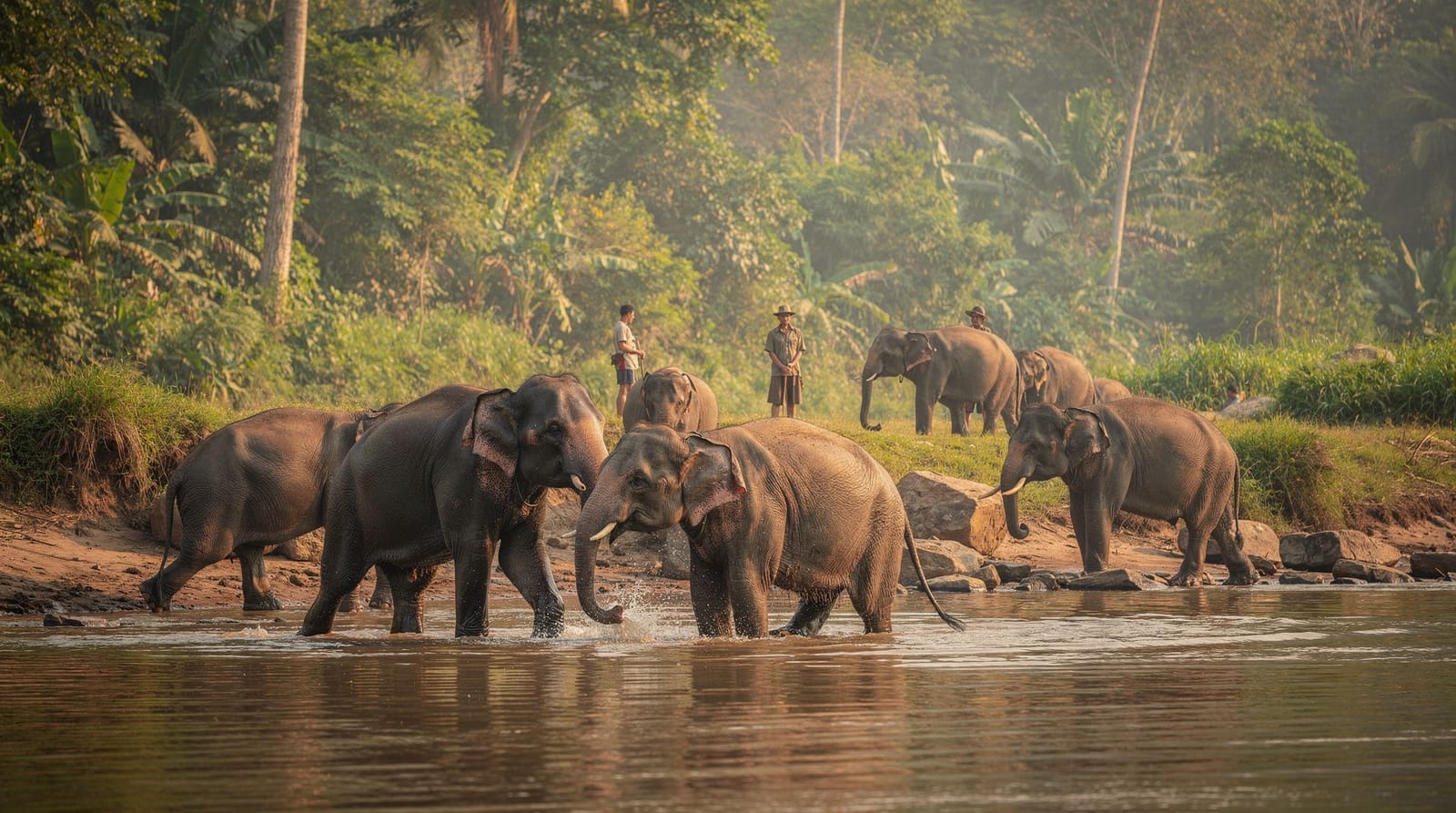
Several genuine sanctuaries near Kanchanaburi let you feed, walk with and bathe rescued elephants — no riding, no shows. These are a meaningful add-on, but choose carefully: avoid any operation that offers elephant rides or circus-style performances. Our ethical elephant sanctuary guide and ethical elephant tourism guide explain how to tell the difference.
Kanchanaburi elephant sanctuary and Erawan Waterfall tourCosts and practicalities
A guided day tour from Bangkok runs 1,500–3,000 THB per person depending on inclusions; doing it independently might total 600–900 THB but is a long, complicated day. The cemetery is free, the museum about 150 THB, and the Erawan park fee 300 THB. Bring water, sun protection, modest clothing for any temple stops, and swimwear if you are visiting the falls. The cool season (November–February) is most comfortable. For wider budgeting, see Bangkok travel costs.
How it fits your trip
Kanchanaburi is a full, emotionally heavy day — give yourself a gentle evening afterwards. It pairs well in an itinerary with a lighter history day at Ayutthaya or a nature day at Khao Yai, but do not stack all three back to back. Slot it into the Bangkok with day trips itinerary, and return to the day trips from Bangkok overview to weigh your other options.
Self-guided vs guided: which to choose
Kanchanaburi’s sites are spread out — the cemetery and museum sit in town, but Hellfire Pass is 80km further up the valley, and Erawan Falls is a separate 65km detour. Doing it independently by minivan and local transport works if you have a full, unhurried day and are comfortable navigating between spread-out stops, and it costs roughly a third of a guided tour. A guided day tour removes that friction entirely: pickup, a fixed route covering the cemetery, museum, bridge and often Hellfire Pass or the falls, and someone who can explain the history rather than leaving you to read plaques alone. For most first-time visitors, especially given how emotionally weighty the sites are, a guided tour is worth the extra cost — the context a guide provides matters here more than at a typical sightseeing stop.
Frequently asked questions about Kanchanaburi and the Death Railway: a day trip
How do I get from Bangkok to Kanchanaburi?
What is there to see in Kanchanaburi?
Is the Bridge over the River Kwai impressive?
Can I combine Kanchanaburi with Erawan Falls in one day?
How much does a Kanchanaburi day trip cost?
Is the Death Railway train ride safe and worth it?
Is it appropriate to visit if I want a relaxed day out?
Top experiences
Bookable activities with verified prices and instant confirmation on GetYourGuide.