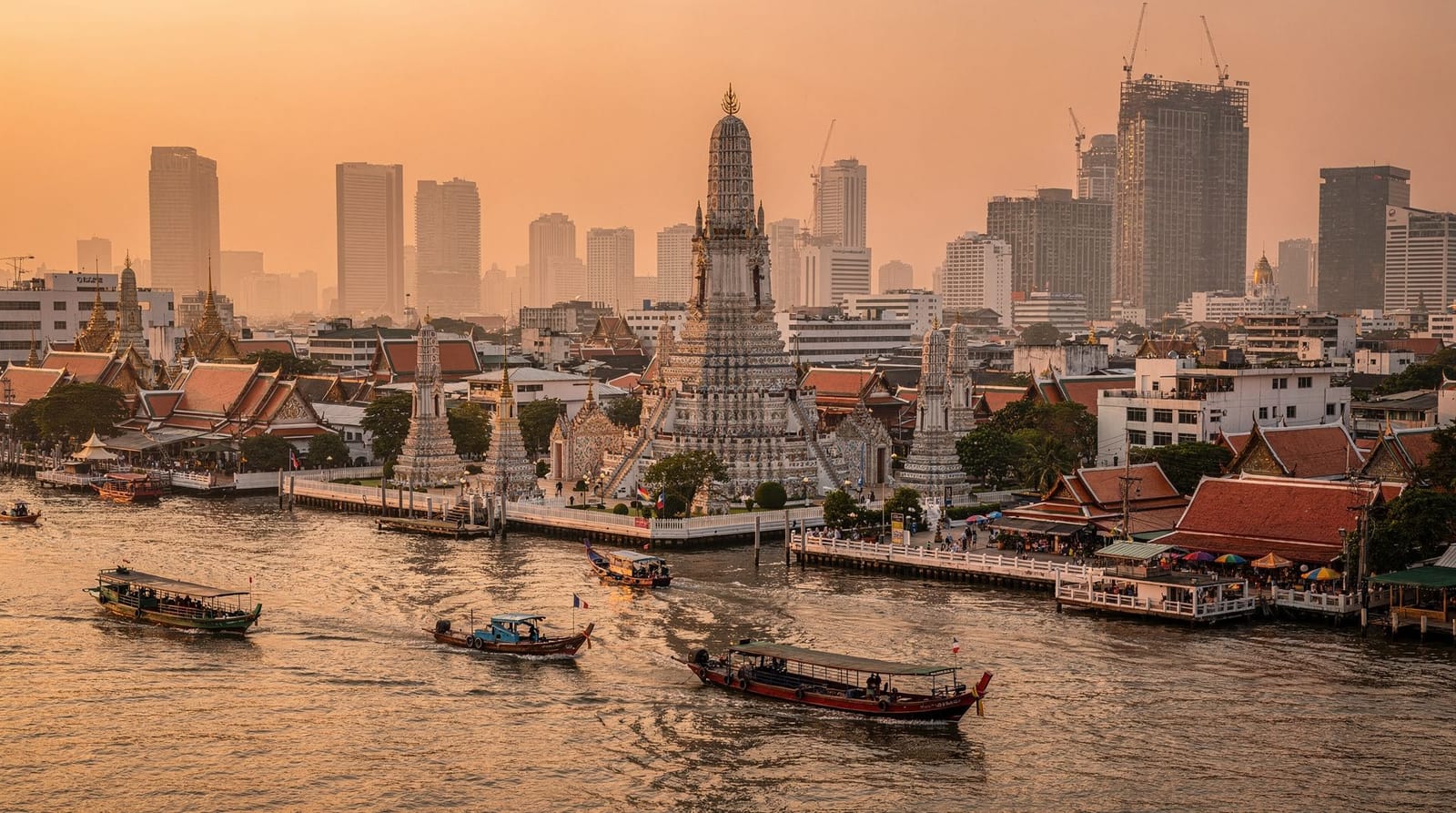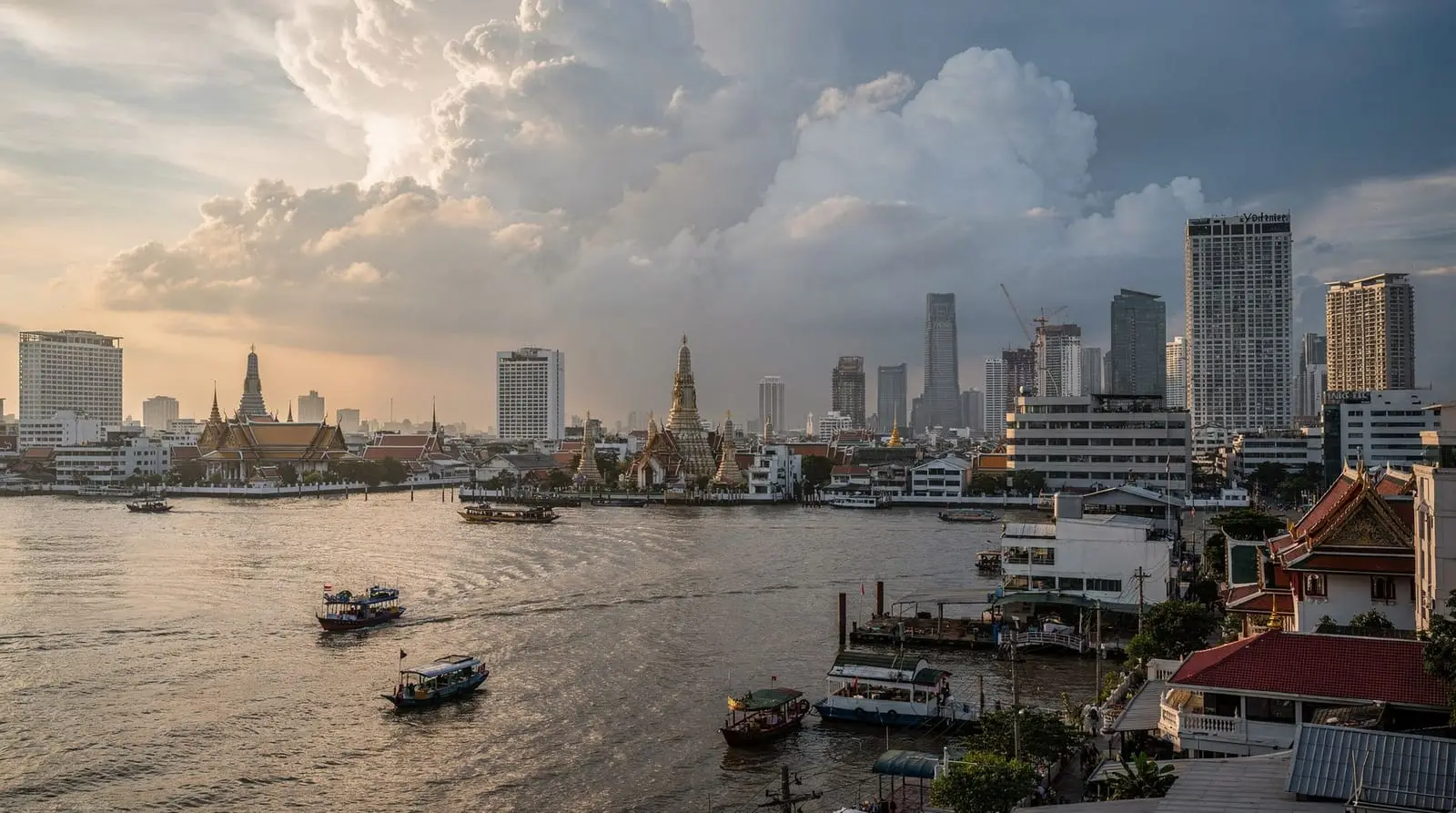
Surviving Bangkok's rainy season (and secretly enjoying it)
The first time I visited Bangkok in September, I apologised to people for my bad timing, and several Thai friends looked at me like I had said something faintly ridiculous. Why apologise for the green season — cheaper, quieter, dramatic, and far cooler than the brutal April furnace? Three rainy-season trips later, I have come around entirely. The monsoon is not the enemy of a Bangkok holiday; it is just a thing you plan around, and once you do, it has real advantages. Here is what surviving — and quietly loving — the rainy season actually involves.
| Season | Roughly May to October, peaking September–October |
| Daily pattern | Hot morning, afternoon downpour (3–5pm), clear evening |
| Crowds & prices | Lowest crowds and cheapest hotels/flights of the year |
| Pack | Compact umbrella, quick-dry clothes, dry bag for electronics |
| Watch out for | Flash flooding on low-lying sois after heavy storms |
What the rainy season is really like
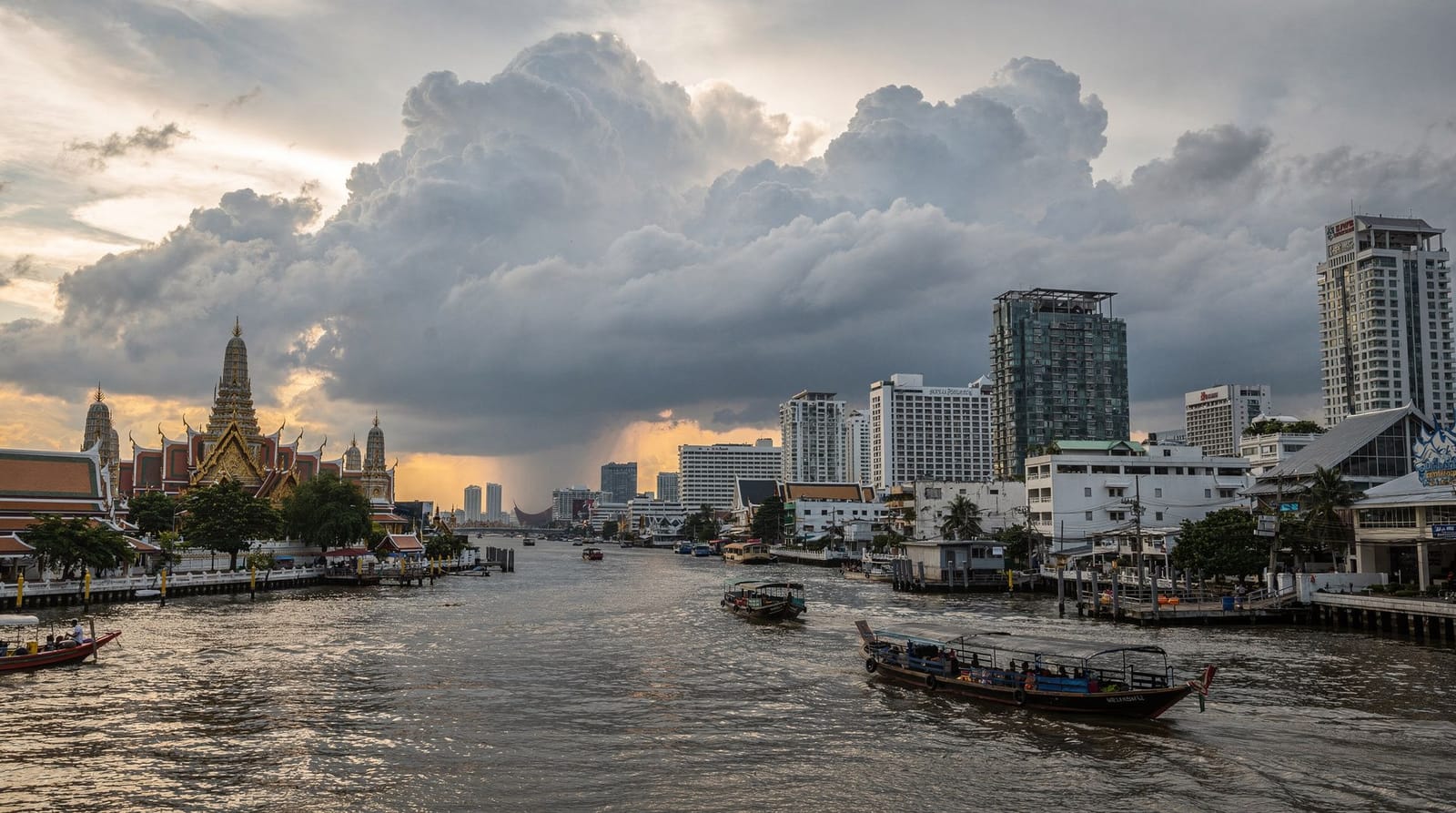
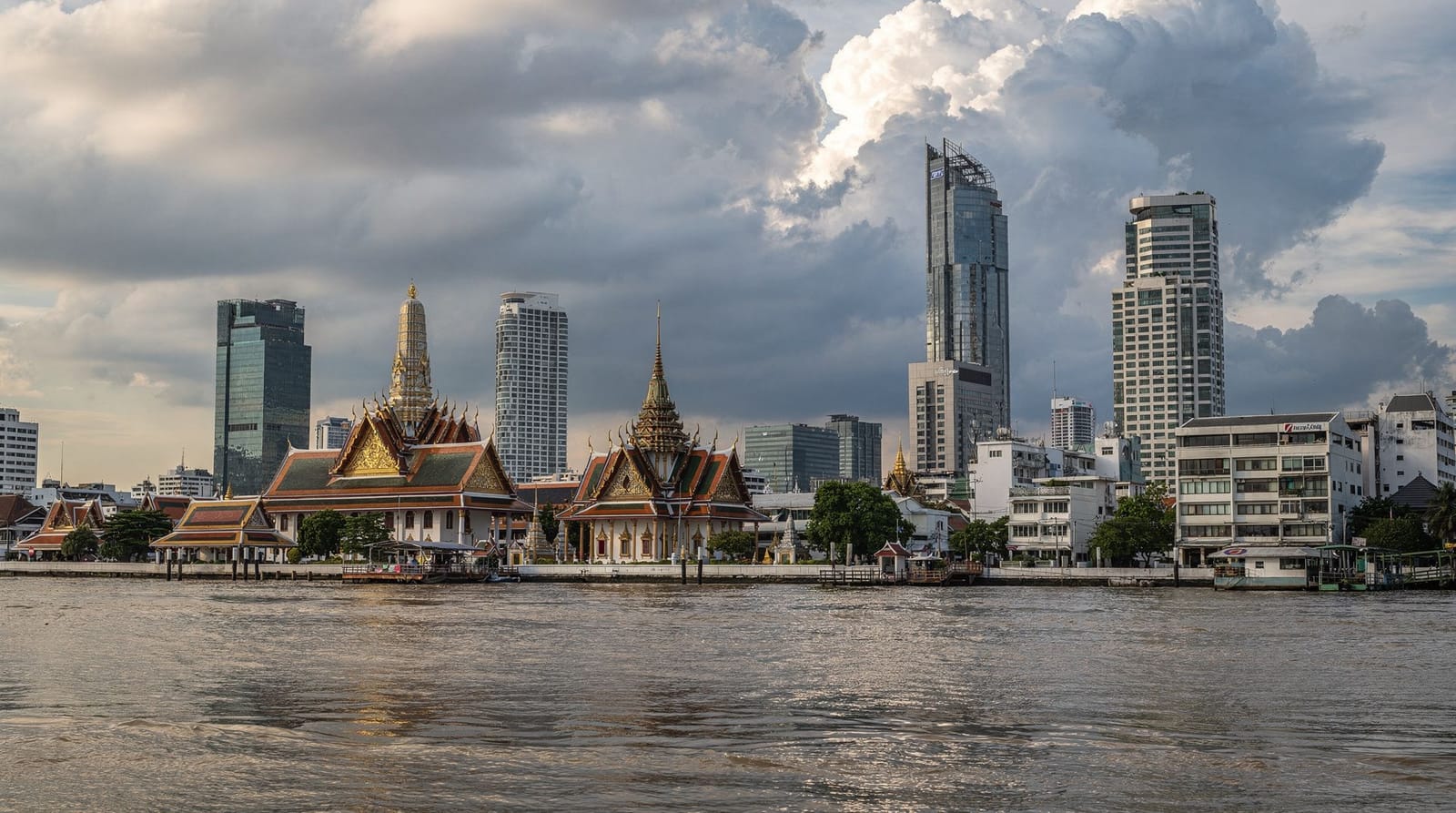
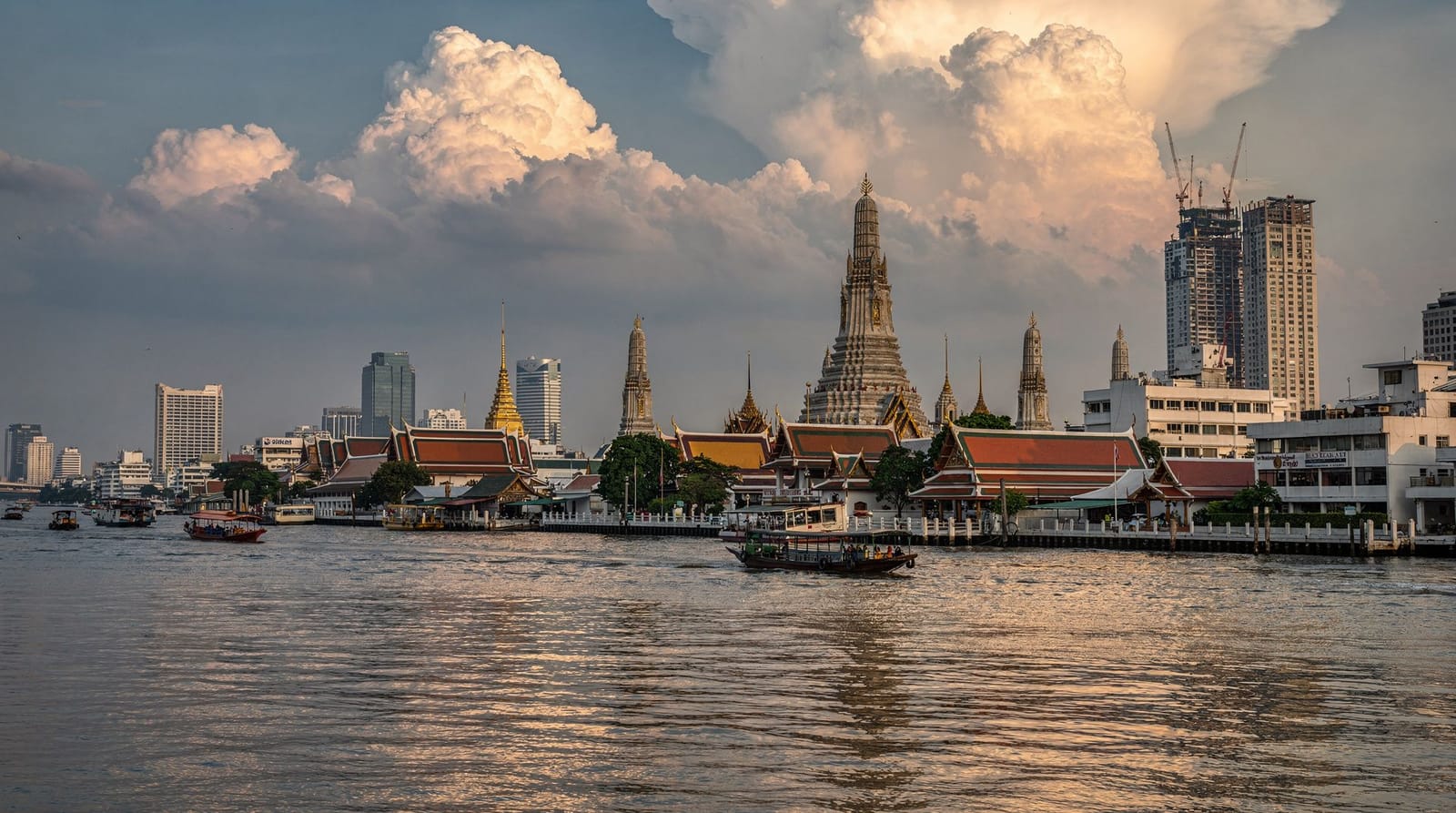
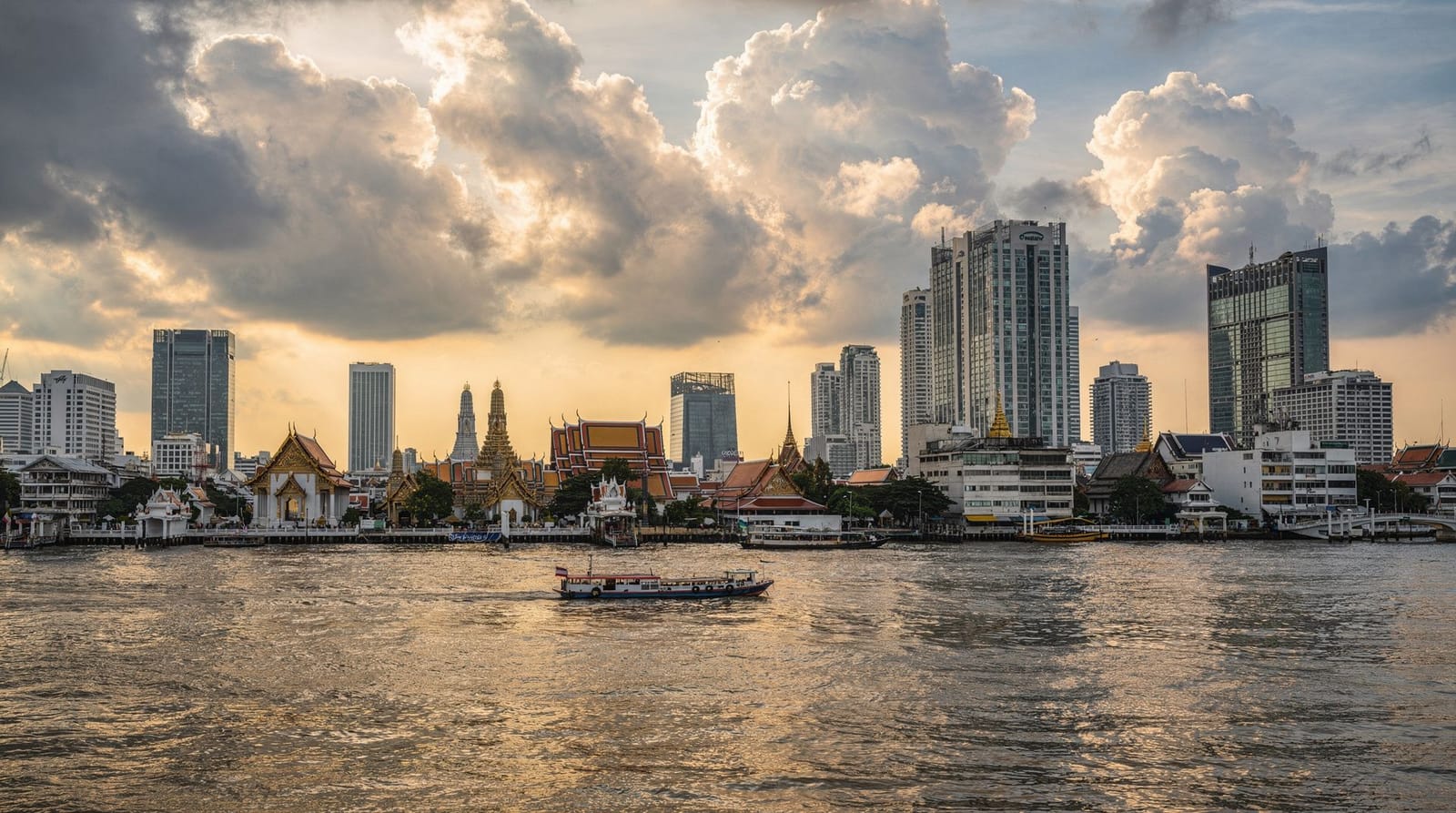
Bangkok’s wet season runs roughly from May to October, peaking in September and October when the monsoon is at its heaviest. The crucial thing every first-timer needs to understand is that it does not rain all day. The classic rhythm is a hot, humid morning, building cloud through early afternoon, then a dramatic, theatrical downpour around 3 to 5pm that can last anywhere from twenty minutes to two hours, after which the air clears and the evening is fresh and walkable. The rainy season guide and the month-by-month weather breakdown map this precisely, and understanding it changes everything about how you plan a day.
The exception is when a tropical depression parks itself over the city, in which case you can get a full day of rain and some serious street flooding. These happen a handful of times a season and are worth watching the forecast for.
It is also worth knowing that the rain rarely arrives without warning. You usually get twenty to thirty minutes of darkening sky, a sudden cool gust and the smell of wet dust before the first fat drops land, which is just enough time to duck into a 7-Eleven, a mall or a covered noodle shop. I learned to treat that gust as a cue rather than a nuisance — it became my signal to stop, find shelter, and turn the next hour into a coffee or a long lunch rather than a soaking. Locals barely break stride; they simply step under the nearest awning, wait it out, and carry on. Adopting that rhythm is the single biggest mental shift that turns the rainy season from frustrating to pleasant. The Bangkok in the rain guide is essentially a catalogue of where to take that shelter.
The flooding is real but rarely catastrophic
Yes, the sois flood. Bangkok sits barely above sea level, the drainage struggles, and after a heavy downpour certain low-lying streets — parts of Sukhumvit’s side sois, sections of the old city — can turn ankle- or even knee-deep within minutes. I have waded through warm brown water to reach a BTS station more than once. It is inconvenient and occasionally gross, but it usually drains within an hour or two, and the elevated BTS keeps running above it all regardless.
The practical responses are simple: wear sandals or shoes you can rinse, not your good trainers; carry a small dry bag for your phone and valuables; and time your movements around the afternoon deluge rather than fighting through it. The what to pack guide has a sensible rainy-season list.
One thing nobody tells you about the flooding is which areas to avoid when the radar turns purple. The lowest-lying, worst-draining spots tend to be the old city around the canals, parts of the Sukhumvit side sois in the 20s and 30s, and patches of Chinatown, all of which can become ankle-deep quickly. The elevated, well-drained neighbourhoods along the BTS line — Silom, the upper Sukhumvit stations, Ari — fare much better, which is another quiet argument for basing yourself near the Skytrain. If you do end up wading, keep to the middle of the road where you can see the surface rather than the gutters near the pavement, where open or missing drain covers are a genuine hazard. It sounds alarming written down; in practice it is a warm, brief, mildly comic inconvenience that drains away within the hour.
Why I now travel in it on purpose
Here is the contrarian case. Rainy season is low season, which means cheaper flights, cheaper hotels — sometimes dramatically so — thinner crowds at the temples, and a city that feels less besieged by tourists. I have had the Grand Palace courtyards almost to myself in the gap after a morning shower. The landscape outside the city, all those rice paddies on the way to Ayutthaya and Kanchanaburi, is lush and green rather than the parched brown of the dry months. And the heat, while still humid, is meaningfully less savage than the April peak. The best time to visit guide is refreshingly honest that the wet season is a legitimate, even smart, choice for value-conscious travellers.
The rainy-day playbook
The skill is having indoor options ready for when the sky opens. Bangkok is superbly equipped for this. The malls are vast, cool and endless. The Jim Thompson House is a lovely covered-and-garden visit that handles a passing shower gracefully. A long lunch at a Chinatown noodle shop is the perfect way to wait out a downpour. The Bangkok in the rain guide is essentially a list of things to do when you are stuck indoors, and the rainy day with kids page extends it for families.
Some of my best rainy-season afternoons have been spent doing the most indoor things imaginable — a Thai cooking class while the rain hammered the roof, a long massage, a museum, a film in a mall cinema. The weather forces you to slow down, and slowing down in Bangkok is no hardship.
When the rain does trap you, a covered cultural outing is ideal. A Jim Thompson House tour paired with a Thai cooking experience is the perfect wet-afternoon plan — covered, hands-on, and you eat what you make while the storm passes overhead.
Month by month: not all wet season is equal
Lumping May through October together does the season a disservice, because the experience changes a lot across it. May and June are the shoulder of the wet season — hot, humid, with building afternoon storms but plenty of dry hours and still-thin crowds, which in my view makes them the sweet spot for value with relatively low rain risk. July and August carry on in much the same vein, often with a slightly drier spell in some years. September and October are the genuine peak: the heaviest, most reliable rain, the highest flood risk, but also the lowest prices, the greenest countryside and the emptiest temples. By late October the rain is easing toward the glorious cool dry season that begins in November. If you want the value of the green season with the least disruption, aim for June or late October; if you do not mind the drama and want the city at its cheapest and quietest, September delivers. The month-by-month weather guide breaks down rainfall by week, and the rainy season deep dive is honest about the trade-offs.
Month by month, at a glance
The prose version above is the honest texture of it; here is the same information as a quick-scan table for planning purposes.
| Month | Rain level | Crowds | Prices | My take |
|---|---|---|---|---|
| May–June | Building | Thin | Low | Sweet spot: value with least disruption |
| July–August | Steady | Thin–moderate | Low | Similar to shoulder, occasional drier spell |
| September | Peak | Lowest | Lowest | Cheapest, emptiest, most dramatic storms |
| October | Peak, easing late | Low | Low | Best value if you want green season with less flood risk by month’s end |
What locals do differently
Watching how Bangkokians handle the rain taught me more than any packing list. Nobody runs. When the sky opens, people simply step under the nearest awning — a shophouse overhang, a bus shelter, a 7-Eleven doorway — and wait it out without visible frustration, often continuing a phone conversation or eating a snack they had in hand. Motorbike taxi drivers pull ponchos from under their seats in seconds; they have done this a thousand times, and a Grab car is usually the sanest way to move any real distance once the sky opens. Restaurants and market vendors roll down clear plastic sheeting along open frontages within moments of the first drops, so a meal barely pauses. The lesson I have taken from this: build slack into your day rather than a tight schedule, treat a downpour as a built-in coffee break rather than an emergency, and you will handle the rainy season with the same shrug the locals do.
Rainy-season hotel deals: what I actually negotiate
Low season is where a little initiative pays off. Many mid-range and upscale hotels drop their rack rates 20 to 40 percent between June and September, and some throw in a free room upgrade or late checkout if you ask nicely at check-in, since occupancy is genuinely lower and they would rather keep a guest happy than have an empty room. I have had good luck emailing smaller boutique hotels directly during rainy season asking about a rate below what is listed online — worth a two-minute email before you book through a platform. The where to stay guide covers neighbourhoods, but the rainy-season play is simple: book flexible-cancellation rates in case a tropical depression changes your plans, and do not be shy about asking what else is included at the price. For the wider cost picture, the Bangkok on a budget guide shows how far the low-season savings stretch.
The best rainy-season splurge: an indoor spa afternoon
When a proper tropical-depression day hits and outdoor plans are simply off, I stop fighting it and book something indoors and unhurried instead of white-knuckling through a soaked sightseeing list. A spa voucher at a well-regarded central Bangkok massage house turns a washed-out afternoon into one of the best few hours of the trip, and it is exactly the kind of splurge that feels justified precisely because the alternative is standing under an awning getting rained on.
Day trips and the rain: what still works
The worry I hear most is that rain ruins the day trips, and it mostly does not, if you choose well. The covered, indoor-leaning excursions carry on regardless — the Kanchanaburi death railway and war museums, the historical buildings, the cooking classes. The ruins of Ayutthaya are actually atmospheric in a passing shower and far cooler to explore than under the dry-season sun, though I would skip the bicycle on a heavy day and take a guided van instead. Where rain genuinely interferes is the open-water and longtail-boat trips — the floating markets at Damnoen Saduak and Amphawa lose their charm in a downpour, and some boat operators pause in severe weather. The fix is to keep these for a morning, when rain is least likely, and front-load them early in your trip so you have spare days to reshuffle. The day trips from Bangkok guide notes which excursions are weather-proof.
A few survival essentials
Always carry a compact umbrella; you can buy a cheap one at any 7-Eleven for around 150 baht if you forget. Wear quick-drying clothes and rinseable footwear. Keep a dry bag or zip-lock for electronics. Build flexibility into your day so you can swap an outdoor plan for an indoor one when the radar turns purple. And download a weather radar app — watching the storm cells approach in real time is genuinely useful for deciding whether to make a dash for the station or order another coffee.
The verdict
Bangkok’s rainy season is not something to survive so much as something to work with. The downpours are dramatic rather than constant, the city is built to absorb them, and the rewards — lower prices, fewer crowds, a greener landscape, cooler air — are real. Pack sensibly, plan around the afternoon storms, keep a few indoor options in your back pocket, and you may find, as I did, that the green season is quietly the best time to have the city to yourself.
Frequently asked questions about Bangkok’s rainy season
When is the rainy season in Bangkok?
Roughly May to October, peaking in September and October. It rarely rains all day; expect a dramatic afternoon downpour most days, often clearing to a fresh evening.
Does it rain all day in Bangkok during the wet season?
No. The typical pattern is a hot morning, then a heavy late-afternoon storm lasting twenty minutes to a couple of hours, followed by a clear evening. Full-day rain happens only a few times a season.
Is it worth visiting Bangkok in the rainy season?
Often, yes. It is low season, so hotels and flights are cheaper, crowds are thinner, the heat is less brutal, and the countryside is green. Just plan indoor options around the afternoon rain.
Which is the wettest month in Bangkok?
September and October are the wettest, with the heaviest and most reliable rain and the highest flood risk. They are also the cheapest and least crowded. May and June are far drier within the wet season, making them a good-value sweet spot.
Will the rain ruin my Bangkok day trips?
Not usually. Indoor-leaning trips like Kanchanaburi and cooking classes are unaffected, and Ayutthaya is cooler and atmospheric in light rain. Open-boat trips and floating markets suffer most, so book those for a morning early in your stay; the day trips from Bangkok guide flags the weather-proof ones.
What should I pack for Bangkok’s rainy season?
Quick-drying clothes, rinseable sandals or shoes you do not mind soaking, a compact umbrella, and a dry bag or zip-lock for electronics. A weather-radar app is genuinely useful. The what to pack guide has the full list.