Street food I was scared to try (and what I think now)
For my first few trips to Bangkok I ate like a coward. I would walk past stalls steaming with things I could not identify and order, yet again, the pad thai, because it was safe and named and familiar. Then one trip I made myself a rule: try one thing that scares you every day. Some of those things became favourites. A couple I will never order again. All of them taught me something, and most of them were far less frightening than my imagination had insisted. Here is the honest roll-call of the Bangkok street foods that intimidated me, and what I actually think now that I have been brave.
| Where to start | Yaowarat / Chinatown, and the boat-noodle alley near Victory Monument |
| Cost per dish | Around 15–400 baht depending on the food |
| Spice control | Say “mai phet” (not spicy) or “phet nit noi” (a little spicy) |
| Portion control | Ask for “nit noi” (a little) to taste without committing to a full plate |
| Best time to go | Evening, when stalls are busiest, freshest and most forgiving of hesitation |
Durian: the smell precedes the reward
I will start with the famous one. Durian, the spiky fruit banned from hotels and the BTS for its smell, is the great divider, and I avoided it for years on reputation alone. The smell is real — a heady mix of custard, onion, and something faintly sulphurous — and you can buy it from carts and markets across the city, often pre-cut in styrofoam trays for 100 to 300 baht depending on grade and season (it peaks roughly April to July). My verdict, after finally trying it: I get it. The flesh is rich, creamy, almost like a savoury-sweet custard, complex and lingering. I do not love it, but I respect it, and I am glad I no longer flinch past the durian carts. The what to eat guide treats it with appropriate seriousness.
Insects: easier than I expected
The fried-insect carts — crickets, silkworm pupae, grasshoppers, the occasional scorpion — are clustered around the tourist nightlife areas precisely because they make great dare-photos, which is a slightly cynical setup. But insects are a genuine part of Thai and especially Isaan cuisine, and I made myself try the crickets and silkworms properly rather than as a stunt. The crickets, deep-fried and seasoned, are honestly just crunchy and savoury, like a slightly nutty crisp; I would eat them again. The silkworm pupae were creamier and more challenging in texture, and once was enough. A small bag costs 20 to 50 baht. My verdict: the crickets are genuinely fine, the fear is mostly cultural, and the touristy presentation undersells a real food tradition.
Blood soup and offal: the texture test
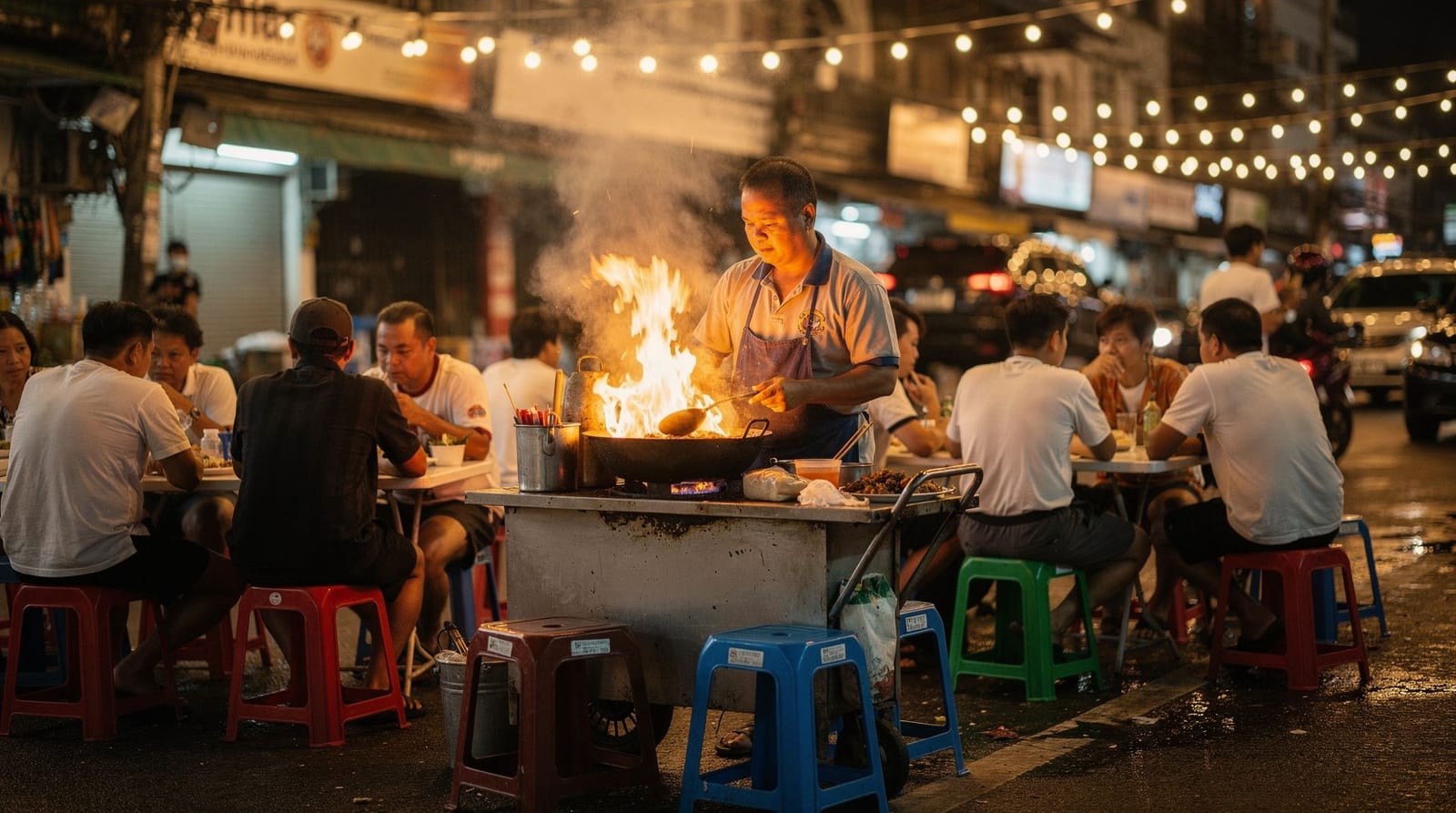
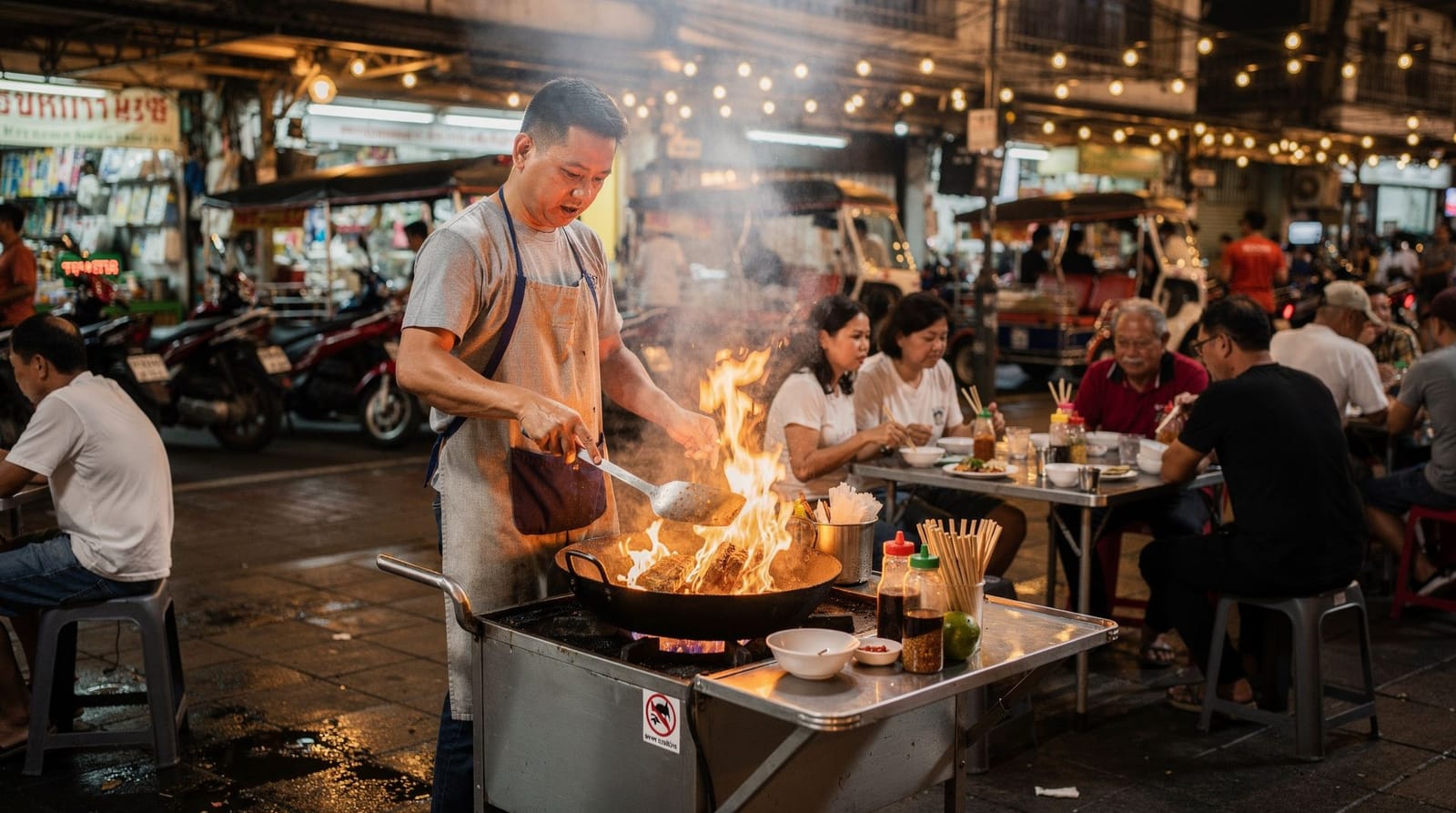
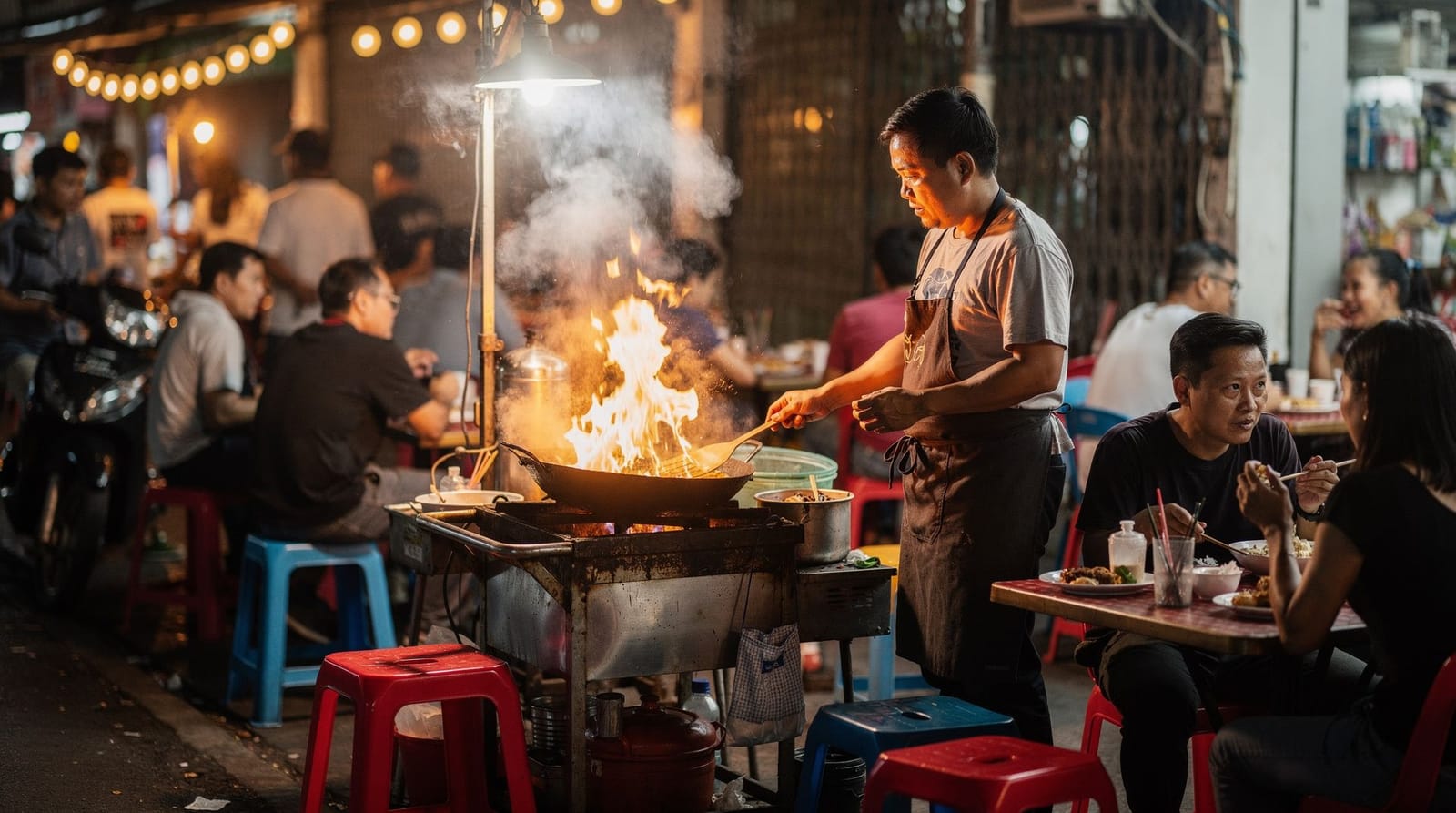
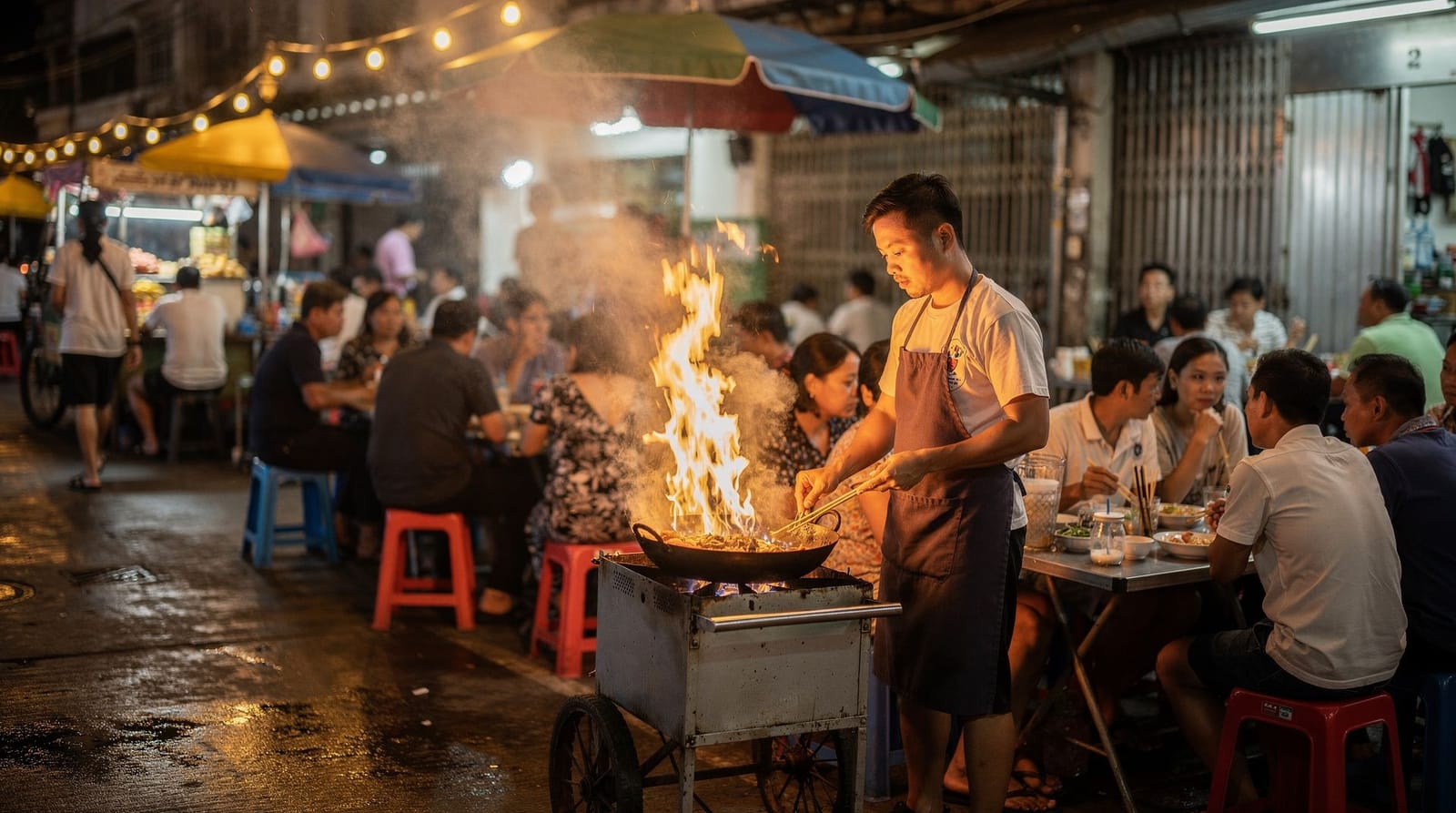
This was the hardest category for me. Many of Bangkok’s best noodle soups — the kuay jab of Chinatown, the boat noodles near Victory Monument — feature offal, and the boat noodles in particular get their dark, intense broth partly from pork blood. I had a real psychological block here, and I pushed through it at a boat-noodle stall in the alley behind Victory Monument BTS, where bowls run 15 to 20 baht and you stack them up as you go. I ordered the full version. The verdict surprised me: the blood thickens and enriches the broth into something deep and almost chocolatey, and the offal, when fresh and well-prepared, is tender rather than alarming. I now order boat noodles with the works. The Yaowarat food guide and the dedicated boat noodles guide name the stalls if you want to follow my path.
Fermented and pungent dishes: pla ra and friends
Som tam, the green papaya salad, comes in versions of escalating intensity, and the most authentic ones are made with pla ra — fermented fish sauce that is to regular fish sauce what blue cheese is to milk. The smell of pla ra cleared my sinuses the first time. My verdict: the milder som tam thai is a genuine favourite, bright and addictive, but the full pla ra version remains a step beyond my comfort even now. That is fine — being brave does not mean pretending to love everything. Knowing my limit is also a kind of progress.
The bizarre fruit I now seek out
Not everything scary is gross — some of it is just unfamiliar. The Thai fruit world is full of things that intimidated me purely because I did not know them: mangosteen with its purple shell and segments of perfumed white flesh, rambutan like a hairy lychee, the custardy custard apple, rose apple, longkong, snake fruit with its scaly skin. Every one of these turned out to be a delight, and the only barrier was unfamiliarity. A bag of mixed cut fruit from a cart costs 20 to 40 baht and is the easiest possible way to be adventurous. My verdict: this was the category where bravery paid off fastest, and I now seek out fruit I cannot identify on purpose.
The stinky-and-sour deep end: a few honest losses
Bravery is more honest when you admit the misses, so here are mine. Larb leuat, the Isaan minced-meat salad served with a side of raw, lightly congealed blood, defeated me — I tried it once near a Yaowarat side stall, paid my 50-odd baht, and managed three respectful spoonfuls before conceding. The texture, not the taste, was the problem, and I do not pretend otherwise. Sa-te khrueang nai, skewered grilled offal in its more challenging cuts, was another I could admire in theory and not finish in practice. And the durian-stuffed sticky-rice sweets sold around the markets in season tested even my hard-won peace with durian. None of these were unsafe or badly made; they simply sat beyond my line. I think it matters to say that, because the “eat everything fearlessly” travel-writer pose is a bit of a fiction. Real bravery includes the right to say “tried it, not for me,” pay your respects to the cook, and move on to the next stall without shame.
How I actually order the scary stuff
A few practical mechanics, because half the fear is not the food but the not-knowing-how. I learned to point and watch — stand at a busy stall, see what the locals in front of me get, and point at theirs. The phrase “an nan” (that one) plus a point covers most situations. For heat, “phet nit noi” asks for a little spicy and “mai phet” for not spicy, though som tam vendors will still occasionally test you. I carry small notes — most stalls cannot break a 1,000-baht bill and many cannot break 500 — so I keep 20s, 50s and 100s handy, which also makes the whole transaction faster and friendlier. And I always start with a small portion of anything new; “nit noi” (a little) lets you taste without committing to a full plate of something that might join my list of honest losses. These tiny scraps of language and cash discipline did more to dissolve my timidity than any pep talk, because they turned an intimidating encounter into an ordinary one.
What being brave taught me
Two big lessons. First, the fear is almost always bigger than the food. Nearly everything that intimidated me — durian, crickets, blood soup, strange fruit — turned out to be either genuinely good or, at worst, merely not for me, and none of it was the ordeal my imagination promised. Second, knowing it is safe makes bravery much easier. The street food safety guide is genuinely reassuring: Bangkok’s high turnover means the food is fresh, it is cooked in front of you, and busy stalls are your guarantee. Once I trusted that, the only thing standing between me and a new favourite was my own timidity.
The scorecard: every scary food, ranked
Laid out side by side, the fear-to-reward ratio becomes obvious, and it is not what my nerves predicted.
| Food | Fear level (before) | Verdict (after) | Typical price |
|---|---|---|---|
| Durian | High | Respect, not love | 100–300 baht |
| Fried crickets | Medium | Genuinely good, eat again | 20–50 baht |
| Silkworm pupae | High | Once was enough | 20–50 baht |
| Boat noodles with blood and offal | High | New favourite | 15–20 baht/bowl |
| Som tam with pla ra | Medium | Milder version wins, full version still too much | 40–60 baht |
| Mixed exotic fruit | Low | Easiest win, seek out now | 20–40 baht |
| Larb leuat (raw blood salad) | Very high | Honest loss, not for me | ~50 baht |
Regional dishes waiting for my next brave day
Bangkok’s street food is really the whole country compressed into one city, and some of the categories that still make me hesitate are the regional imports rather than anything strictly Bangkok. Isaan food from the northeast pushes the furthest — beyond the som tam and larb already covered, there are ant-egg soups and fermented sausages (sai krok Isaan) sold from carts around the viral-famous Banthat Thong food street that I have circled a few times without committing. Halal Bangkok food, concentrated around a few specific neighbourhoods, is its own vast and under-explored category for me, heavy on slow-cooked curries and grilled meats I still have not worked through. And the rice-and-curry shop culture — khao man gai being the gentle, unscary gateway drug to it — hides spicier southern curries a few steps further along the same counters. None of this is exotic in the insect-and-blood sense; it is just unfamiliar, which the fruit chapter of this list already taught me is usually the easiest fear to beat. Even the vegetarian and vegan side of the street has a few dishes that still intimidate me on flavour alone, not just texture. My plan for the next trip is to work through the best cheap eats list one unfamiliar regional dish at a time, the same rule that got me through the durian.
The shortcut to being brave
If you want to fast-track past the fear, eat with someone who knows what everything is. A guided food walk takes the guesswork and the anxiety out of it — the guide tells you what you are eating, vouches for the stall, and orders the things you would never have dared point at. A Chinatown food walk through the Michelin-listed stalls is the perfect way to be adventurous with a safety net, and a bizarre-food challenge tour by tuk-tuk exists precisely for travellers who want to be pushed out of their comfort zone with someone to laugh alongside. The food tour worth it guide weighs whether you need one — and for conquering food fear, it genuinely helps.
The verdict on being a coward
I wasted years in Bangkok eating safe, named dishes while a whole world of flavour steamed away one stall over. The rule that fixed it was simple: one scary thing a day. Some became favourites, a couple I crossed off, and all of them shrank my fear of the unfamiliar. The food here is too good, and too safe, to eat timidly. Trust the busy stalls, point at the thing you cannot name, and find out for yourself which of your fears were worth having.
Frequently asked questions about adventurous Bangkok street food
Is adventurous street food in Bangkok safe to eat?
Yes. Bangkok’s enormous turnover means food is fresh and cooked in front of you. Choose busy stalls with queues, and even the more unusual dishes — offal soups, insects, fermented salads — are safe.
What unusual Bangkok foods are actually worth trying?
Durian and exotic fruits like mangosteen and rambutan, fried crickets, and offal-rich boat noodles all reward the brave. The fruit especially is an easy, delicious way to push past unfamiliarity.
How do I get over the fear of trying Bangkok street food?
Trust that busy stalls are safe, try one new thing at a time, and consider a guided food walk where someone explains and vouches for each dish. The fear is almost always bigger than the food itself.
What is the single easiest “scary” Bangkok food to start with?
Tropical fruit. A 20 to 40 baht bag of cut mangosteen, rambutan or rose apple from a cart is delicious, harmless, and asks nothing of you but curiosity. It is the gentlest way to push past unfamiliarity before you tackle offal or insects.
Is it rude to refuse food I do not like in Bangkok?
Not at all, as long as you are polite. Taste a little, thank the cook, and move on. Vendors deal with hesitant first-timers constantly, and a friendly “aroi” (delicious) or a smiled apology covers you either way. Honesty beats forcing down something you hate.
If you want a fuller map of where to eat your way through the city, the Bangkok street food guide, the what to eat in Bangkok overview, the Michelin street food list and the best food markets guide are the ones I lean on, with Chinatown food for the bravest crawl of all.