Best Thai cooking classes in Bangkok: honest picks by type
Bangkok: Blue Elephant Thai Cooking Class
What are the best Thai cooking classes in Bangkok?
There is no single best class — the right one depends on what you want. For the full experience with a guided market visit, choose a market-based class. For a relaxed atmosphere, a garden-setting school. For polished, refined instruction, a premium restaurant cooking school like Blue Elephant. For maximum participation, a fully hands-on class. This guide ranks the best options by type so you can match a class to your priorities, group, and budget.
Bangkok has hundreds of Thai cooking schools, and on paper many look identical — pound a curry paste, cook three or four dishes, eat the result. But the experiences vary meaningfully in format, atmosphere, group size, and depth, and the “best” class genuinely depends on what you want from it. This guide ranks Bangkok’s best cooking classes by type — market-based, garden-setting, premium restaurant school, and fully hands-on — so you can match a class to your priorities, your group, and your budget, rather than booking blind.
If you haven’t yet read the broader Thai cooking class guide, start there for the fundamentals of cost, format, and dietary needs. This page is the curated comparison.
| Best format | Market-based class for the fullest experience |
| Typical cost | 1,000–2,500 THB standard; 3,000 THB+ premium |
| Duration | 2–3 hours studio-only; 4–5 hours with a market visit |
| Booking | A day or two ahead, especially for weekends |
| Good for | Solo travellers, couples, families and groups |
The four class types compared
| Type | Typical cost | Duration | Best for |
|---|---|---|---|
| Market-based | 1,200–2,500 THB | 4–5 hours | The fullest, most educational experience |
| Garden-setting | 1,200–2,200 THB | 3–4 hours | A calm, scenic atmosphere and couples |
| Premium restaurant school | 3,000 THB+ | 3–4 hours | Special occasions and refined instruction |
| Fully hands-on | 1,000–2,000 THB | 2–3 hours | Serious learners who want maximum participation |
Best for the full experience: market-based classes
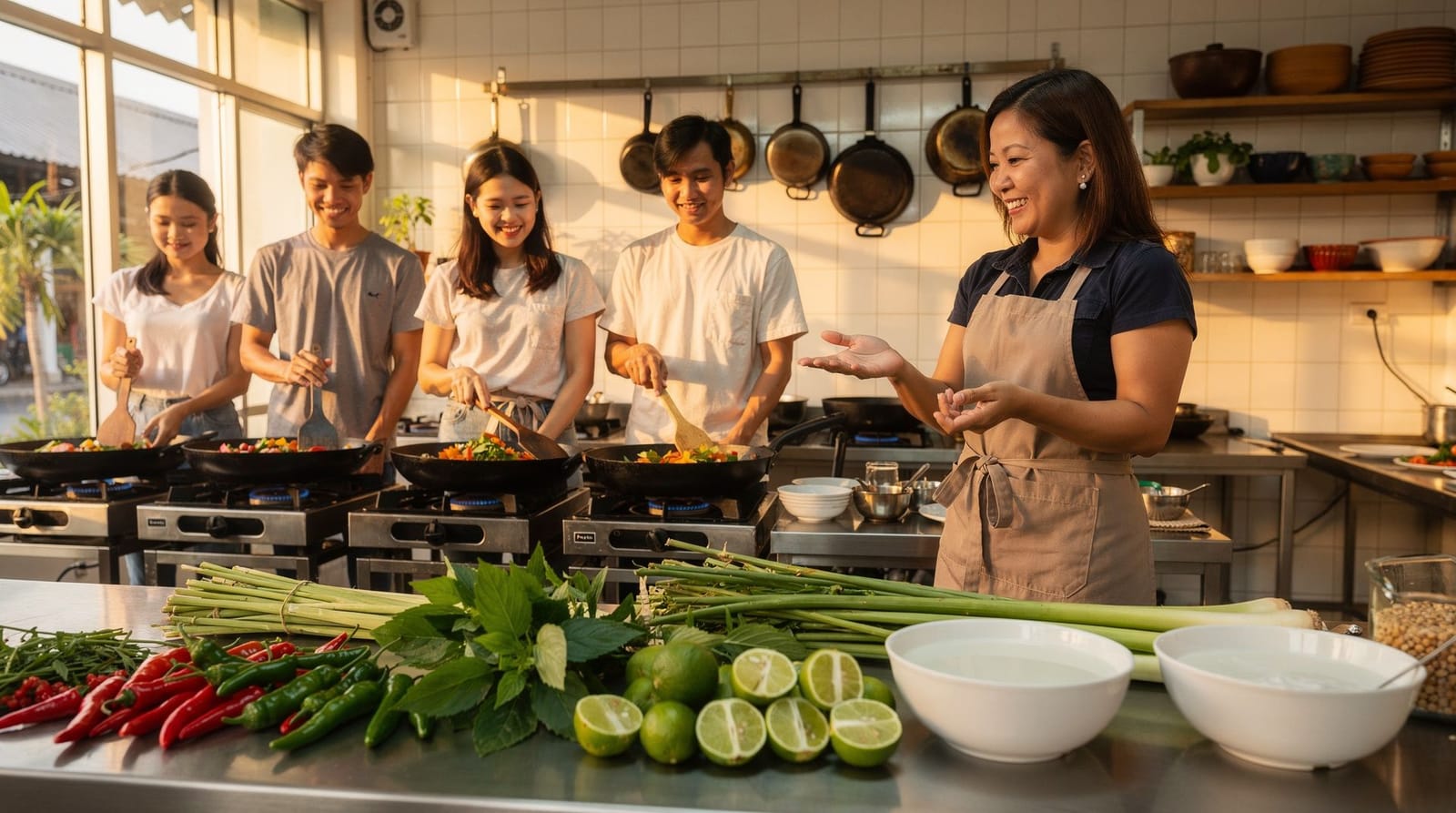
For most travellers, a class that includes a guided market visit is the most rewarding choice. You spend time in a fresh market learning to identify Thai herbs, vegetables, curry pastes, and produce, then shop for ingredients before cooking. It turns a cooking lesson into a fuller cultural experience, and the market walk is often the highlight.
The best of these genuinely teach you to shop — what to look for, how Thais buy ingredients — rather than rushing through. Some add a tuk-tuk ride to the market for extra fun, like the cooking class with market visit by tuk-tuk. A solid, well-organised standard option is the half-day cooking class with market tour. These run longer (4–5 hours) but deliver the deepest experience. The dedicated cooking class with market guide covers this format in detail.
Best for: Travellers who want context, education, and the full immersion, and have the half day to spare.
Half the difficulty of Thai cooking is recognising the ingredients — three basils, four chillies, two kinds of lime leaf — and that is learned at a stall, not a worktop: a cooking class with a tuk tuk ride and market tour puts the market before the kitchen, which is the right order.
Best for atmosphere: garden-setting classes
Some of Bangkok’s loveliest classes take place in garden or relaxed semi-outdoor settings on the city’s quieter fringes, away from the urban bustle. Cooking among greenery, often at a calmer pace, makes for a particularly pleasant experience, and these schools frequently include a small market visit too.
The Silom cooking class in a garden setting with market combines a tranquil atmosphere with a market component and central convenience.
Best for: Travellers who value a calm, scenic atmosphere over a purely urban studio, and couples wanting a relaxed shared activity.
Best for a premium experience: restaurant cooking schools
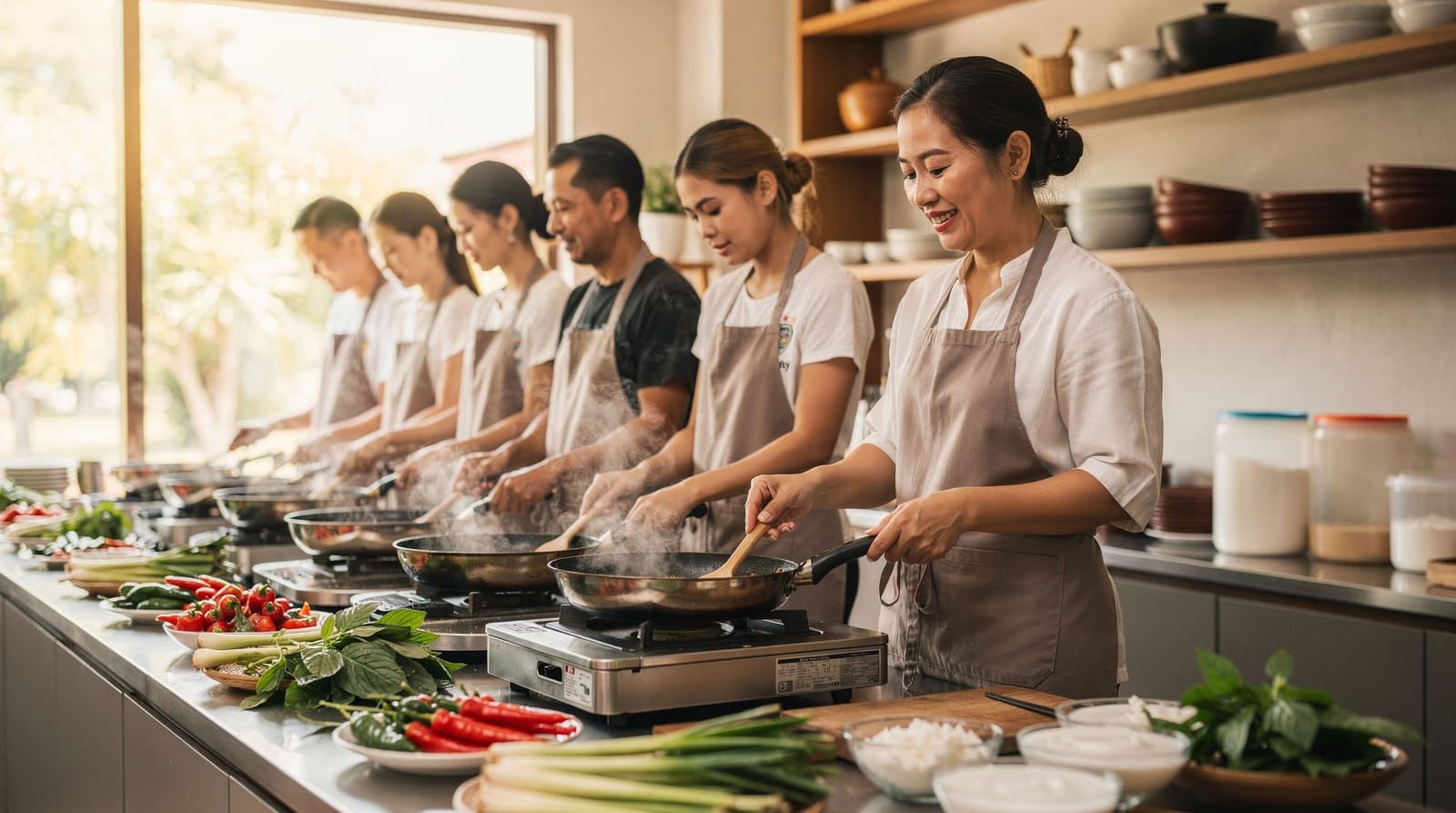
At the top end, restaurant-attached cooking schools offer refined, professional instruction in elegant settings. The most famous is Blue Elephant, housed in a grand colonial-era mansion in Bang Rak and attached to the renowned restaurant of the same name. Expect skilled instructors, an elegant environment, and a more polished, structured experience — at a higher price (around 3,000 THB and up).
The Blue Elephant cooking class is the standout in this category, ideal for a special occasion or for travellers who want the most refined version of a Thai cooking class.
Best for: Special occasions, food enthusiasts wanting depth and refinement, and those for whom setting and polish matter as much as the cooking.
Best for full participation: hands-on classes
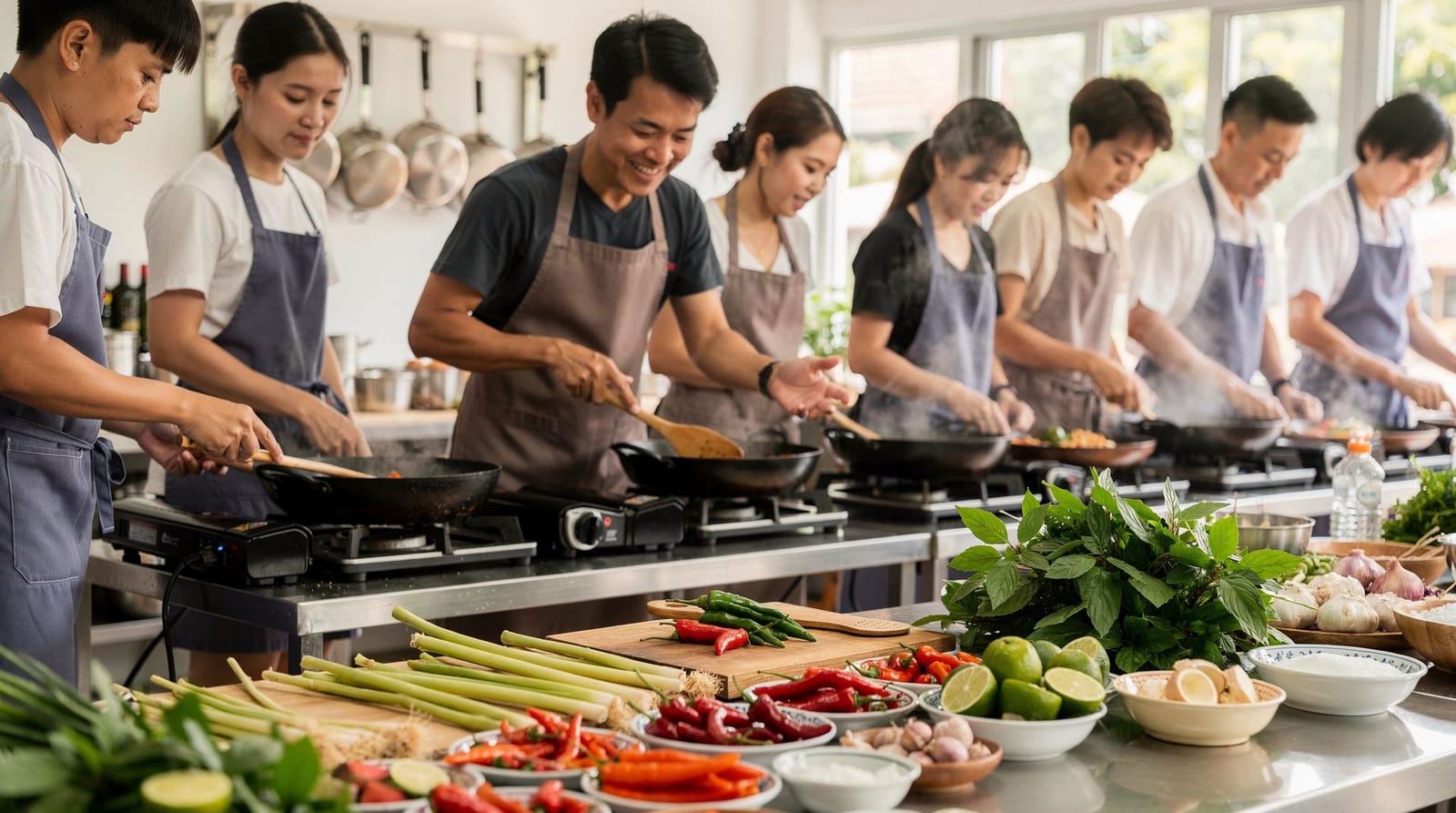
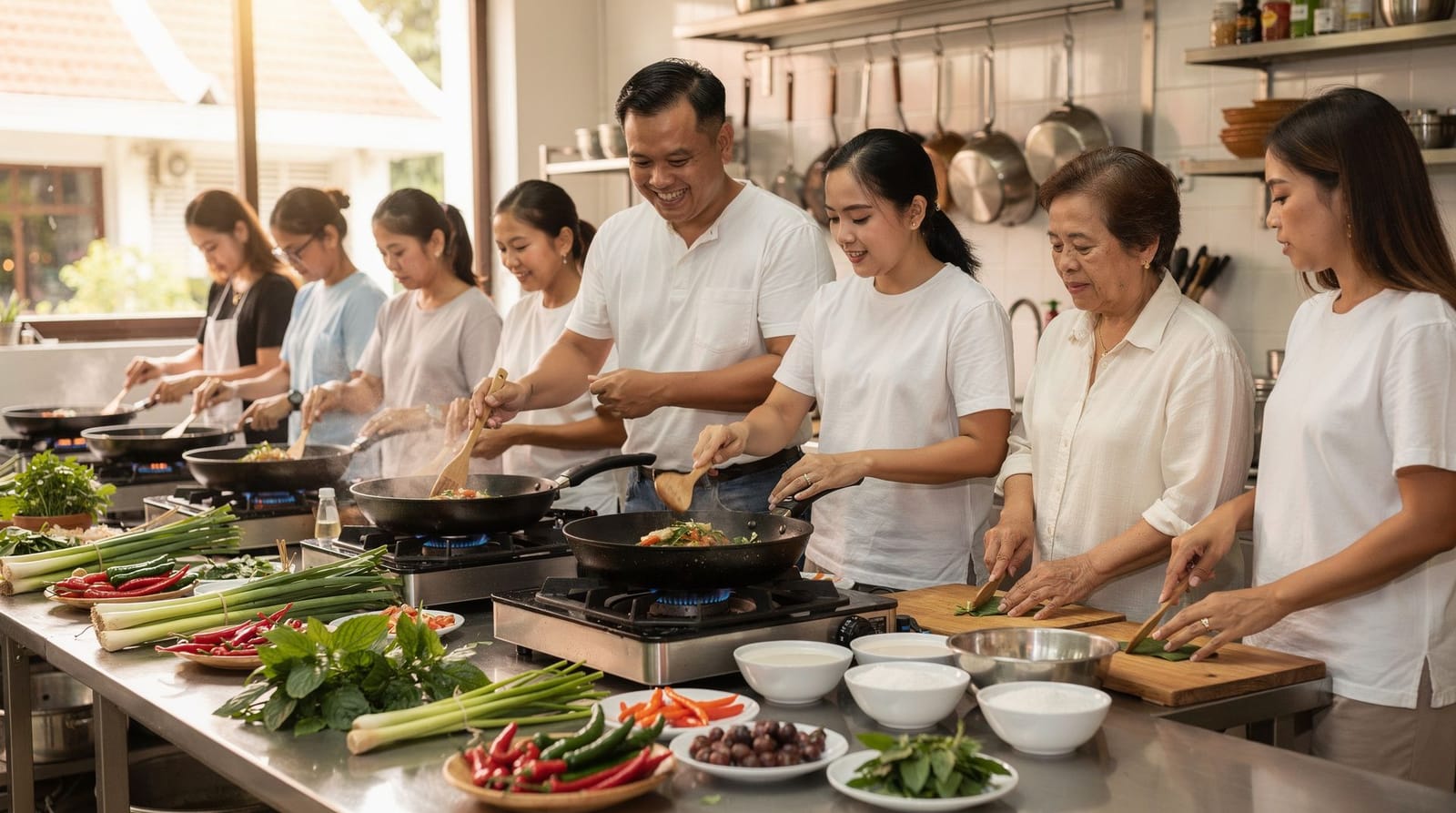
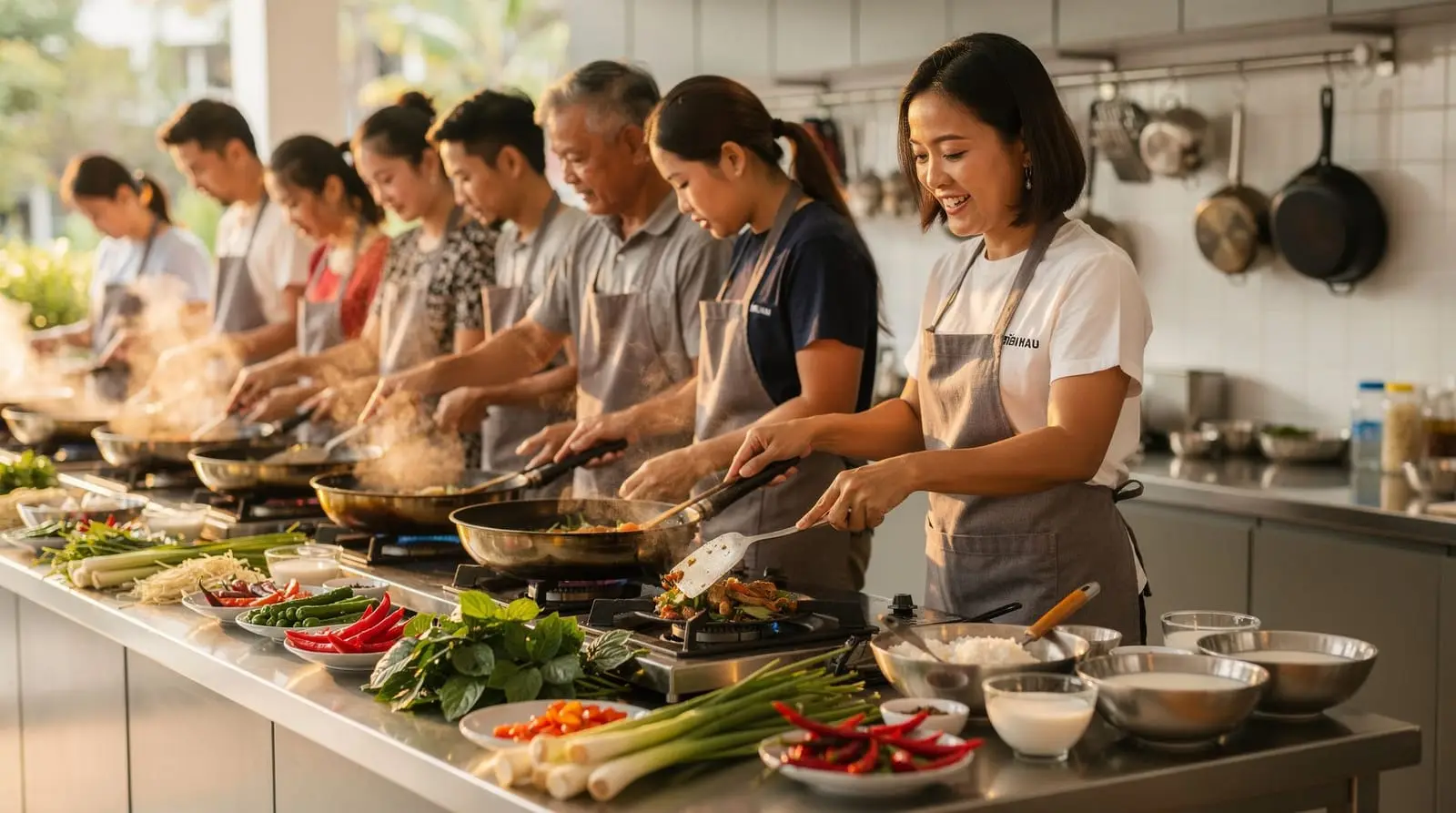
If you want to do everything yourself rather than watch a demonstration, choose a class that emphasises full hands-on participation — every student at their own station, cooking each dish individually under guidance. These classes maximise the learning, since you physically perform every step.
The hands-on cooking class with market visit combines this active format with a market component, giving you the most complete and participatory experience.
Best for: Serious learners, repeat cooking-class takers, and anyone who wants to leave genuinely able to reproduce the dishes.
What dishes will you actually cook?
Almost every Bangkok cooking class, whatever the format, teaches a similar core menu, and knowing it in advance helps you choose based on setting rather than worrying you will miss a favourite dish. Expect some combination of: a curry paste pounded by hand in a stone mortar (usually green or red curry), pad thai, tom yum goong (hot and sour prawn soup), a stir-fry such as pad kaprao or cashew chicken, spring rolls or fresh summer rolls as a starter, and mango sticky rice or another simple dessert to finish. Most schools let you pick two or three dishes from a longer list, so you can steer toward what you actually want to eat rather than a fixed set menu. If a specific dish matters to you — say you want to learn massaman curry or khao soi — check the school’s menu before booking, since not every class offers every regional dish.
Cooking class or just eating out — which is worth your time?
It is a fair question in a city with this much extraordinary street food: is a three-to-five-hour class worth the time you could spend eating instead? For most travellers, yes, but for a specific reason — a cooking class is really a hands-on cultural activity and a skill you take home, not simply another meal. You learn to identify ingredients, understand how Thai flavour balancing actually works, and leave with techniques (and often a recipe booklet) that let you recreate the food long after the trip ends. If your goal is purely to eat the best possible Thai food in the time available, street food and the best Thai restaurants guide will get you further per hour. If you want an activity, a skill, and a memorable few hours, a class earns its place on the itinerary.
How to choose between them
The classes teach similar core dishes well, so the differences come down to a few factors:
- Format: market visit (immersive, longer) vs studio-only (convenient, shorter).
- Atmosphere: garden, urban studio, or grand restaurant.
- Group size: smaller means more personal attention — check this in recent reviews.
- Dishes: confirm you can cook the ones you most want (green curry, pad thai, tom yum).
- Budget: 1,000–2,500 THB standard; 3,000 THB-plus premium.
- Dietary needs, location, and timing: confirm all three when booking.
For the full decision framework, see the Thai cooking class guide. For the food itself, see what to eat in Bangkok and best Thai restaurants.
Classes for families, groups, and special interests
- Families and groups: cooking classes are a great social, hands-on activity. Many schools welcome families, adjust spice for children, and offer private classes for larger groups. See Bangkok with kids and kid-friendly Bangkok food.
- Evening and short classes: plenty of studio classes run afternoon and evening, with some shorter 2–3 hour formats for the time-pressed.
- Creative add-ons: for something different, a fruit and vegetable carving class teaches the beautiful Thai art of decorative carving — see the fruit carving class guide.
The honest verdict
The best Thai cooking class in Bangkok is the one that matches what you want. Choose a market-based class for the fullest, most educational experience; a garden-setting class for atmosphere; a premium restaurant school like Blue Elephant for polish and occasion; and a fully hands-on class to maximise the learning. All teach the core dishes well, so decide by format, atmosphere, group size, and budget, confirm dietary needs at booking, and pick for convenience. Whichever you choose, you’ll eat brilliantly and leave with a skill that lasts. For the fundamentals, see the Thai cooking class guide; for the market format, the cooking class with market guide.
Frequently asked questions about Best Thai cooking classes in Bangkok: honest picks by type
Which Thai cooking class is best for beginners?
What is the best cooking class with a market tour?
Is the Blue Elephant cooking class worth it?
How do I choose between cooking classes in Bangkok?
Are there evening or short cooking classes in Bangkok?
Can families and groups take a cooking class together?
Do cooking classes include a recipe book?
Top experiences
Bookable activities with verified prices and instant confirmation on GetYourGuide.